Is 60 Humidity High? What It Means and Practical Steps to Take
Is 60 humidity high? Yes, 60% relative humidity in your home is on the high side. Experts generally say anything above 60% is too humid and can cause problems.
You should lower it to avoid problems. Mold and dust mites can grow. They cause health issues and damage.
High humidity at 60% means your home feels damp and sticky. It also makes it easier for allergens and moisture damage to form. First, check your air conditioner.
Make sure it works well. Also, check if it is the right size.
Keep an eye on how long the humidity stays at 60%. Short periods may be okay.
But if it lasts days, it can hurt your health and home. Ventilate rooms and use exhaust fans in kitchens and bathrooms to help control moisture better.
Key Takeaways
- Humidity above 60% inside your home is generally considered too high.
- High indoor humidity can encourage mold growth and dust mite infestations.
- Check if your HVAC or dehumidifier is clean, serviced, and sized properly.
- Use exhaust fans in moisture-prone areas like bathrooms and kitchens.
- Ventilate your home regularly to reduce excess indoor moisture.
- Short spikes to 60% humidity are less harmful than continuous high levels.
Is 60% Humidity Too High for Your Home?

Indoor humidity at 60% is considered high and sits just above the ideal range. The EPA says keep relative humidity between 30% and 50%. This helps avoid mold problems.
It also stops dust mites from growing. So 60% pushes your home into a zone where moisture problems become more likely.
At 60%, your home feels more humid than most people find comfortable. Moisture can start to condense on windows and walls, especially in cooler spots. That condensation can lead to mold growth or damage if it sticks around.
To check if 60% humidity is too high, use this list. First, make sure your hygrometer shows the right number. Then go through the other steps.
Second, check if you see condensation or damp spots anywhere inside. Third, find possible moisture sources like leaks, cooking steam, or poor ventilation.
Spotting wet surfaces or signs of mold means you need to act quickly. Lowering humidity is key right away. When your home is dry and feels good, you can watch humidity for a few days.
No rush to act immediately. Consider improving ventilation or using a dehumidifier if levels stay at or above 60% for long.
Remember, the risk grows the longer your home stays above 60% humidity. Short spikes during humid weather are less worrying than constant dampness.
Homes in cooler climates or with air conditioning usually keep humidity lower. So 60% indoors means moisture control needs attention.
Maintaining humidity below 50% prevents most moisture problems and dust mite growth. Sixty percent humidity isn’t a strict danger point. It’s where you should pay close attention.
Check your home’s condition more often then. Acting early is cheaper than fixing mold or structural harm later.
What Risks Does 60% Humidity Pose to Your Health and Home?

Health Effects Linked to 60% Humidity
Humidity around 60% can make your home feel sticky and uncomfortable. It often worsens breathing problems for people with asthma or allergies. This happens because higher humidity encourages mold and dust mites to grow.
Mold spores trigger respiratory issues and may cause allergies. Dust mites thrive in moist air, increasing allergy symptoms. Keeping humidity below 60% helps reduce these risks.
Mold Growth and Structural Concerns
Humidity consistently over 60% creates a prime environment for mold. Damp areas like walls, ceilings, and closets can stay wet enough for mold to form. It damages surfaces and can cause costly repairs if ignored.
Condensation often shows as water drops on windows or cold surfaces. Over time, this moisture can harm wood, drywall, and insulation. Mold isn’t just unsightly; it can weaken your home’s structure.
Common Myths About 60% Humidity
Some people think 60% humidity is safe and won’t cause damage. The truth is that it sits at a borderline level. While short periods may not hurt, longer exposure raises mold risk.
Another myth is that condensation always means there’s an immediate leak or plumbing issue. Often, it’s just excess moisture in the air. Managing humidity levels lets you avoid many condensation problems.
Practical Steps to Monitor and Manage Risks
Start by measuring rooms where humidity tends to gather using a hygrometer. It identifies spots with higher moisture. Track readings several times a day over a week to spot trends.
Check surfaces regularly for signs like musty smells or visible mold. Also watch for recurring condensation on windows or walls. Catching these signs early helps avoid bigger problems.
Keep indoor humidity ideally between 30% and 50% to prevent mold and discomfort.
When 60% Humidity Becomes a Problem
Brief periods at 60% usually aren’t harmful if there’s good ventilation. But long-lasting humidity over 60% raises health and home risks. Persistent dampness lets mold grow and can worsen asthma or allergies.
Indoor humidity at this level may not show damage immediately. Still, repeated exposure keeps surfaces moist enough for mold spores to take hold. Pay attention to how long humidity stays high and act accordingly.
How Long Is It Safe to Have Humidity at 60% Indoors?
Short bursts of 60% humidity indoors rarely cause harm. You might see this level when cooking, showering, or doing laundry. Running exhaust fans during these activities and for 20 minutes after helps clear moisture quickly.
Problems start if 60% humidity lasts for several hours or days. Surfaces like windows, closets, or walls may get damp. Watch for peeling paint or bubbling wallpaper.
Musty smells also show high moisture. These signs mean moisture has been too high too long.
Persistent 60% humidity means your home isn’t drying out properly. Cooler rooms can show higher relative humidity without adding moisture. Checking for wet spots on colder surfaces can confirm if moisture is a real issue.
Sustained 60% levels encourage wood to swell and warp. Moisture builds up inside walls, under floors, and in ceiling spaces. This damage happens gradually but can become costly if ignored.
Note when humidity hits 60% or higher. Watch how long it stays high. Use this to decide if 60% is safe.
A quick rise after showering is usually okay. Humidity above 60% for several hours needs attention. Don’t ignore it.
Measure humidity several times daily during suspicious periods. Readings over 60% all day mean you must improve airflow.
Also check moisture sources in your home. Fix leaks, improve airflow, and use dehumidifiers if needed.
Keeping indoor humidity below 60% for most of the time is ideal. This prevents mold growth and material damage.
A small dehumidifier costs $150 to $300. It helps avoid expensive repairs later.
Short-term spikes are manageable with simple steps. Long-lasting high humidity needs changes to your home or habits. Watching patterns, controlling moisture, and knowing when it’s too long helps you keep your space safe.
What Common Factors Cause Your Indoor Humidity to Reach 60%?
Indoor humidity hitting 60% can come from many everyday causes. Outdoor weather affects indoor humidity, especially in warm, humid summers. Air conditioners can struggle to keep moisture low during this time.
This makes indoor air feel damp and uncomfortable. Your HVAC system size and airflow also affect indoor humidity.
Poor ventilation or wrong sizing can trap moisture inside your home. This causes humidity levels to stay high even when the weather is dry.
Activities inside your home add moisture that pushes humidity higher. Cooking, showering, and drying clothes indoors release water vapor.
Opening windows on humid days lets in moisture from outside. Sealed homes with little air exchange trap this inside.
| Cause | How It Raises Humidity | Fix or Control Method |
|---|---|---|
| Outdoor Weather | Warm, moist air seeps inside | Use A/C or dehumidifier; close windows during humid days |
| Cooking and Showering | Release steam and water vapor | Run exhaust fans; open windows briefly; use lids on pots |
| Poor HVAC Performance | Inadequate air exchange traps humidity | Schedule HVAC maintenance; improve ventilation; check filter status |
| Air Leaks and Cracks | Let outdoor moist air in | Seal leaks; weather-strip doors and windows |
| Drying Clothes Indoors | Evaporates water into air | Use a dryer vented outside or dry clothes outdoors |
Your humidity stays near 60% daily, rain or shine. This means weather isn’t the main cause of high humidity. Look at other factors like HVAC or ventilation issues.
Check for leaks or airflow blockages in your HVAC system first. Even cozy-sealed homes can trap moisture that keeps humidity higher.
Running kitchen and bathroom fans helps push humid air out during daily activities. Air conditioners remove some moisture but can struggle if too small for your home’s size. Sealing cracks around windows and doors costs little but cuts outdoor moisture from coming inside.
How to Accurately Measure and Track 60% Indoor Humidity
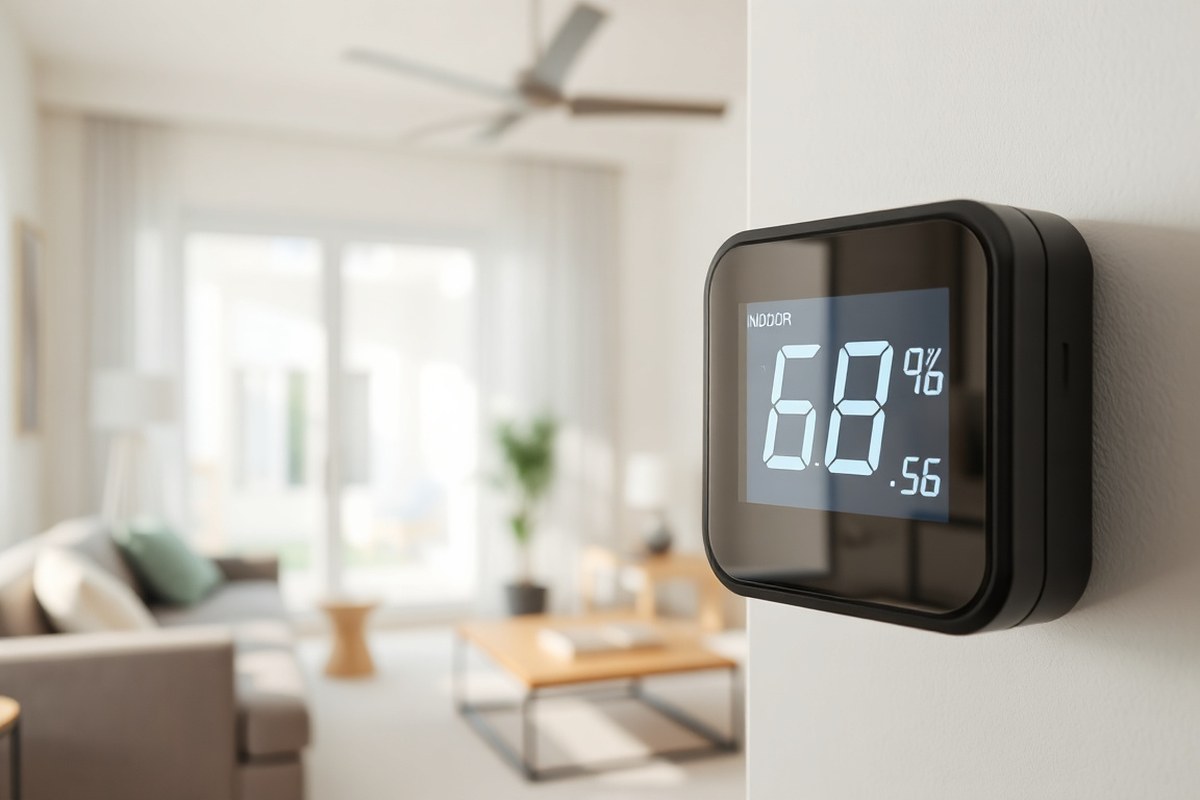
Use a reliable hygrometer to measure indoor humidity around 60%. Proper placement and regular tracking help spot true humidity levels. This keeps your readings accurate and useful for managing your home’s air.
Choosing the Right Hygrometer
Select a digital hygrometer with good reviews and consistent accuracy. Basic models cost about $10 to $15 and provide solid baseline readings. Higher-end units with data logging may cost more but offer more details over time.
A wired or wireless external monitor can improve accuracy over built-in sensors on thermostats. Check the device’s resolution and response time. A fast response helps catch quick changes in humidity that affect your comfort.
Proper Placement for Accurate Readings
Place hygrometers away from direct sunlight, heat sources, or drafts. These factors skew the measurements and show false highs or lows. Put devices at breathing height, typically 3 to 5 feet off the floor.
Measure humidity near places where moisture accumulates, like kitchens, bathrooms, or basements. Avoid placing them too close to windows or vents. These areas can cause the device to misread short-term spikes instead of room averages.
Recording and Understanding Data over Time
Track humidity daily using a simple log or app when available. Take readings at the same times each day for consistency. This helps you notice patterns linked to daily activities or weather changes.
Try measuring at several spots in your home for a fuller picture. Basements tend to be more humid, so test levels there and upstairs. Look for trends where humidity stays near or over 60% over several days.
- Buy an accurate digital hygrometer from a hardware or online store.
- Place it in a main living area at about chest height.
- Move it to key rooms with moisture, like kitchen or bathroom.
- Check and record readings two or three times a day.
- Note any changes after cooking, showering, or heating your home.
- Compare progress over 1, 2 weeks to spot persistent humidity levels.
- Adjust placement if readings seem inconsistent with visible moisture.
Interpreting Short-Term Spikes Versus Baseline Levels
Don’t worry about quick rises after cooking or showers. Humidity may jump briefly above 60% but often drops within an hour. Focus on baseline levels that stay at or above 60% for several hours or days.
Persistent humidity signals a balance problem in ventilation or moisture control. If your readings hover near 60% with no clear temporary cause, it means your home holds too much moisture. That’s when you need to explore reductions or professional advice.
Keep a hygrometer running continuously for at least a week to see real humidity cycles.
Effective Ways to Reduce Indoor Humidity At 60%
You can lower indoor humidity from 60% to a safer level. Use a dehumidifier and improve ventilation. Adjust your HVAC settings to help too.
These approaches reduce moisture quickly and keep it consistent. Addressing moisture sources inside your home also plays a key role.
Using Dehumidifiers Effectively
A dehumidifier helps pull excess moisture right out of the air. At 60% humidity, run a portable dehumidifier in problem areas. This can reduce humidity to the recommended 30-50% range.
Choose a dehumidifier sized for your room. Most units specify coverage, such as 300 square feet.
Run it continuously if humidity stays high. Check the water collection bucket regularly and empty it to keep it working well.
Whole-home dehumidifiers, often built into the HVAC return duct, remove moisture from every room. These units cost $1,000 to $3,000 but perform better for large homes. Maintenance includes filter cleaning and occasional servicing.
Improving Home Ventilation
Ventilation lowers humidity by bringing in dry outdoor air and expelling moist indoor air. This is especially important in kitchens, bathrooms, and laundry rooms. Use exhaust fans during and after activities that create moisture.
Open windows or doors for at least 10 minutes daily. This helps if your home lacks proper ventilation. Installing ventilators or air exchangers offers a more consistent option.
Keep vents clear for good airflow. Make sure furnace and dryer vents lead outside. They should not vent into the attic or walls.
Be cautious in humid climates; opening windows can sometimes raise indoor humidity. In such cases, rely more on mechanical ventilation and dehumidifiers to control moisture levels.
Optimizing HVAC and Air Conditioning Settings
Air conditioning naturally removes moisture while cooling your home. Running your AC consistently during summer lowers humidity below 60%. Set your thermostat between 74°F and 78°F. This balances comfort with moisture removal in the air.
Keep AC filters clean and schedule routine HVAC maintenance. Dirty filters reduce airflow, lessening dehumidification efficiency.
Check for HVAC leaks or poor insulation. This helps if humidity stays high despite using AC regularly.
Whole-home dehumidifiers integrate with HVAC, improving performance. With programmable thermostats, you can better manage indoor humidity and comfort levels simultaneously.
Managing Moisture from Household Activities
Daily activities like cooking, showering, and laundry add moisture to the air. Use range hoods vented outside and run exhaust fans during these tasks. Keep shower water temperature moderate to avoid excess humidity.
Limit long, hot showers. Use a fan or open the bathroom door afterward.
Dry clothes outdoors or in a well-ventilated area rather than inside. Fix any leaks in plumbing or roof promptly. Repairing these helps prevent the buildup of humidity and related damage over time.
- Run a dehumidifier in high-humidity rooms continuously.
- Turn on bathroom and kitchen exhaust fans during activities that produce moisture.
- Open windows daily for at least 10 minutes if outdoor air is dry.
- Set your air conditioner thermostat between 74°F and 78°F for best moisture removal.
- Keep HVAC filters clean and schedule yearly maintenance checks.
- Dry clothes outside or use well-ventilated dryer venting.
- Fix plumbing and roof leaks to stop moisture intrusion.
- Consider installing a whole-home dehumidifier for persistent humidity problems.
How Season and Temperature Affect the Impact of 60% Humidity
Sixty percent humidity feels different depending on the season and temperature. In cooler months, the air can hold less moisture. So 60% humidity might feel muggy but less oppressive.
In summer, 60% humidity holds more water vapor. This makes the air feel heavy. It becomes uncomfortable to breathe.
The dew point explains why humidity at 60% feels different. It measures the actual amount of moisture in the air. For example, a dew point below 55°F feels dry and comfortable.
But a dew point above 65°F feels oppressive. This means 60% humidity at 70°F dew point feels stickier than at 50°F.
To understand seasonal changes, look at how temperature and humidity combine. Air at 30°F with 100% humidity feels dry. It is crisp, not wet.
You might find it surprising. In summer, 60% humidity with dew point over 65°F feels muggy.
It can raise mold risks at home. This harms indoor comfort.
Mornings often show higher relative humidity because temperatures approach the dew point. Heat in the afternoon lowers relative humidity, even if moisture stays constant. This daily fluctuation means 60% humidity might feel less noticeable in the afternoon than early morning.
Risk varies with season too. Cooler seasons with 60% humidity often see less mold growth but still risk condensation on windows.
Warmer seasons increase mold risk and health problems with the same 60% humidity. This happens because warm air holds more moisture and supports mold growth better.
For most homes, 60% humidity is worth watching but not always dangerous. Measure temperature and humidity with a thermometer and hygrometer. Use these tools at the same spot.
This helps calculate the dew point. This helps you know if your home’s air feels muggy or comfortable and when to act.
When to Call a Professional About Persistent 60% Humidity Issues
Persistent indoor humidity at 60% may hide more serious moisture problems. Moisture collecting on walls or windows can lead to mold growth behind surfaces. You might smell a musty odor that won’t disappear.
You could also see discoloration on drywall or wood. These signs indicate moisture issues in your home.
You should call a professional when you see mold signs. Also, get help if your breathing problems get worse. Don’t wait to address these health risks.
You tried better ventilation and a dehumidifier but still have problems. Expert help can find hidden leaks or HVAC problems.
They know where to look and what to fix. Long-term humidity over 60% often points to structural moisture issues needing a thorough check.
- Visible mold or water stains on walls, ceilings, or floors
- Consistent dampness or condensation on windows beyond a few hours
- Musty or moldy odors that linger indoors
- Health symptoms like persistent coughing or worsening allergies
- Humidity readings above 60% recorded regularly for weeks or months
- Signs of water leaks near plumbing, roof, or foundation
- Inefficient HVAC, often unable to control moisture levels
Professional moisture inspections often involve using moisture meters to find wet spots behind walls. Mold inspections may use air sampling to detect spores invisible to the eye. Costs range from $200 for a basic mold check to $1,000 or more.
Detailed moisture audits and HVAC exams bring higher fees. Prices depend on the problem’s size and complexity. Quick detection helps avoid costly repairs like rotting wood or damaged insulation.
Don’t ignore subtle signs like window condensation or mild odors, these can signal bigger problems.
Certain rooms need special attention. Bathrooms, basements, kitchens, and laundry areas often show early moisture issues. Electronics stored in humid places risk damage, so checking these areas helps prevent losses.
Your HVAC must keep humidity under 60% all year. If it can’t, hire a pro to check airflow and system function. This prevents mold and keeps air comfortable.
Step-by-Step Action Plan to Manage 60% Indoor Humidity
Start with simple checks and actions to bring your home’s humidity to a safer level. Track your progress with a humidistat or hygrometer.
- Day 1: Measure your current indoor humidity with a reliable hygrometer to confirm the 60% level.
- Day 2: Find spots with moisture like bathrooms or the kitchen. Use exhaust fans when you cook or shower. This helps lower moisture build-up.
- Week 1: Use a dehumidifier in rooms that feel damp. Check if humidity level drops to 50% or less. Adjust settings if it stays higher.
- Week 2: Watch the outdoor humidity daily. Open windows only when outside air is dry. Close them when humidity outside is high.
- Week 3: Look around your home for leaks or wet spots. Fix these problems quickly to stop moisture coming in. Repeat inspections regularly.
- Week 4: Put silica gel packs in closets or storage areas. Change these packs every month to keep moisture down. This stops mold and smells.
- Ongoing: Maintain your HVAC system and change filters regularly to improve air circulation and control moisture.
Frequently Asked Questions
Is 60% Humidity Too High for Pets Indoors?
Yes, 60% humidity can stress pets, causing breathing and skin issues. Keep your pet’s area well ventilated and avoid prolonged exposure to such humidity.
Can 60% Humidity Worsen Allergies Inside the Home?
It can worsen allergies by encouraging dust mites and mold growth. Reducing humidity below 50% helps ease allergy symptoms frequently caused by indoor moisture.
Does 60% Humidity Affect Wood Furniture?
Yes, 60% humidity can cause wood to swell and warp over time. Use dehumidifiers to maintain stable humidity and protect your furniture’s finish.
Is 60% Humidity Harmful to Electronics at Home?
Yes, it raises the risk of moisture damage inside devices. Keep sensitive electronics in well-ventilated, drier areas to prevent problems.
Can Houseplants Tolerate 60% Humidity?
Many houseplants thrive at 60% humidity, but some prefer less moisture. Adjust the room’s humidity or choose plants that do well in higher levels.
Does 60% Humidity Cause Condensation on Windows Overnight?
Yes, it can cause condensation, especially if indoor temperature drops. Improving air flow near windows can reduce this moisture buildup.
The Bottom Line
Sixty percent humidity is on the high side for most homes. It can cause discomfort and damage if left too long. Start by checking your home’s humidity and using a dehumidifier to get closer to 50%.