How to Cut Bushes: A Complete Guide for Healthy, Beautiful Shrubs
Knowing how to cut bushes right keeps them healthy and looking good. Trim them regularly with clean, sharp tools to avoid damage and disease. Start by choosing the right tool based on your bush’s size and growth.
Cutting too close or too far can hurt branches. So aim for a careful, well-planned cut.
For small bushes under three feet tall, hand shears work best. Bigger bushes or overgrown ones need loppers or pruning saws.
Check your tools before starting to make sure they cut smoothly without crushing branches. Always wear gloves and eye protection for safety, especially with thick branches.
Watch out for dead or damaged branches and remove those first for a cleaner, healthier bush. Cutting just above an outward-facing bud helps the bush grow in the right shape. Avoid cutting too much at once, cut about one-third of the bush at a time to prevent stress.
Key Takeaways
- Use hand shears for bushes under 3 feet tall to make clean cuts.
- For mature stems over 1 inch thick, use loppers and avoid tearing bark.
- Cut branches back to a side branch at least one-third their diameter.
- Trim close to ¼ inch above an outward-facing dormant bud for good growth.
- Remove dead, damaged, or diseased branches first to promote bush health.
- Spread heavy pruning over multiple years to protect the root system.
How to Cut Bushes Without Damaging Them
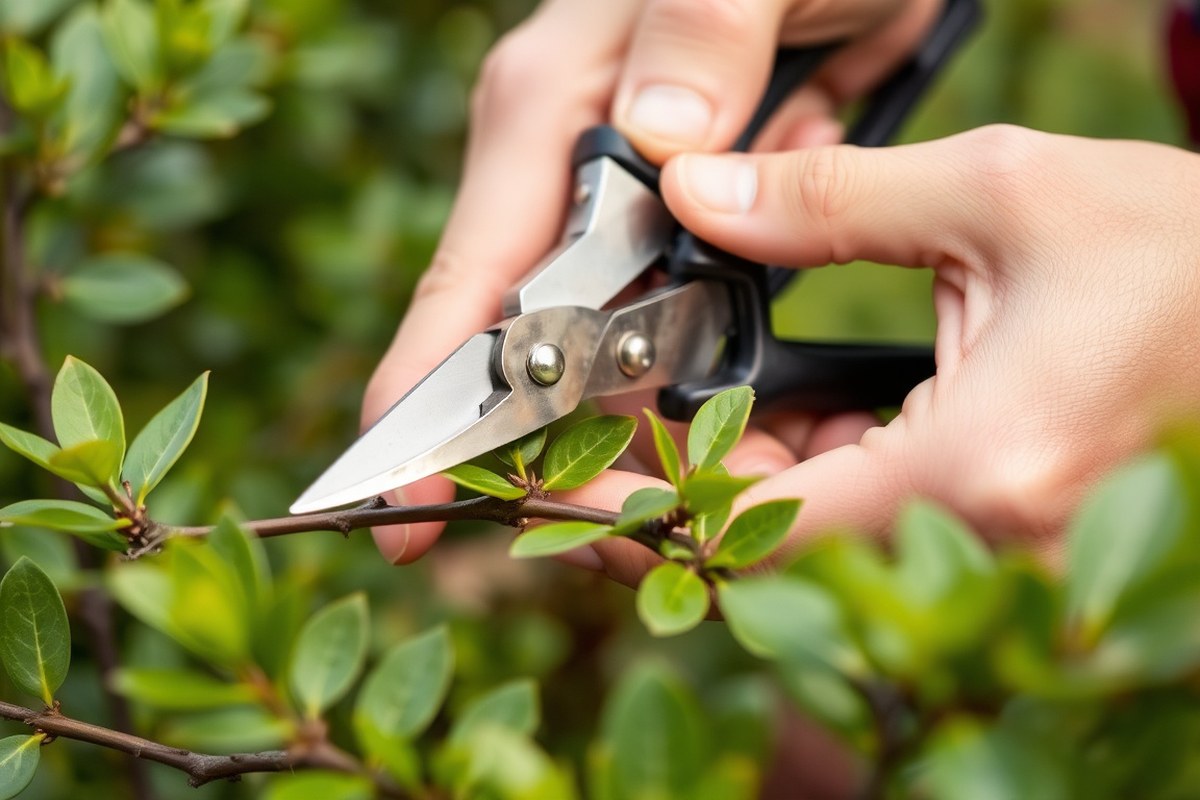
Cutting bushes the right way means making clean, angled cuts just above a bud. This helps the bush heal faster and grow outward, not inward. Avoid cutting too much at once to protect the bush’s health and shape.
Prune bushes when they are healthy and not stressed by extreme weather. For most evergreen bushes, late winter or early spring is best. Flowering bushes vary: cut spring-flowering types right after bloom.
Summer-flowering ones before bud break. Keep the base wider than the top when trimming sides so sunlight reaches lower branches.
Here’s how to cut bushes without causing damage:
- Identify the right buds: Look for healthy, outward-facing dormant buds. Position cut ¼ inch above these buds to encourage outward growth.
- Use sharp, clean tools: Sharp blades make smooth cuts that heal quickly. Clean tools prevent disease spread.
- Make angled cuts: Cut at a 45-degree angle for water runoff, preventing rot. Avoid flat or jagged cuts.
- Limit trimming amount: Remove no more than one-third of the bush’s growth at once. Cutting more can stress or kill the plant.
- Avoid cutting large branches all at once: Cut thick branches over 1 inch with two steps. This helps stop the bark from tearing.
- Shape for health: Trim sides so the bush is wider at the base. This lets sun reach the whole plant.
- Finish with light shaping: After structural cuts, do small heading cuts to tidy uneven growth. These encourage fullness without shocking the bush.
Choosing the Right Tools for Different Bush Sizes

Choose pruning tools based on bush size and branch thickness. Small bushes and thin branches do best with hand pruners.
Medium branches need loppers or manual saws. Thick branches require pruning saws, while power trimmers suit formal hedges and quick shaping.
Manual Tools
Hand pruners cut branches up to 3/4 inch thick precisely. They are perfect for small bushes and detailed cuts. Loppers reach into dense spots and cut branches up to 2 inches thick.
Pruning saws handle branches thicker than 2.5 inches. Use them carefully to avoid damaging the branch collar. Manual tools need sharpening but offer better control on tight cuts.
Manual tools cost between $35 and $75, making them affordable for most. They are lightweight and don’t need batteries or power cords. Keep them clean and sharp for the best results.
Electric and Gas Trimmers
Power hedge trimmers work well on formal hedges like boxwood or yew. Use them for thin branches under 1/2 inch thick to get a flat, even cut. Cordless models cost $180 to $220, offering good mobility around your yard.
Power tools speed up trimming but can shred delicate bushes. Avoid them on flowering shrubs because they create many tiny wounds. Always hold trimmers level and make slow strokes from left to right.
Power trimmers reduce labor but are less precise than manual tools. You still need the right manual tool nearby for thicker or awkward branches. Follow safety instructions carefully to prevent accidents.
Specialized Saws and Accessories
Pruning saws with curved blades cut thick branches cleanly. Choose razor-sharp blades to slice through wood without tearing. These saws cost about $40 to $50 and last a long time with care.
Some loppers have long handles for deep canopy reach. This helps trim tall or dense bushes without ladders. Accessories like sharpening kits keep your tools ready for every job.
Use pruning gloves and eye protection when handling thick branches or power tools. These accessories reduce injury risk when cutting tough wood. Replace worn blades promptly to avoid tool failures.
| Tool Type | Best Used For | Recommended 2026 Model | Estimated Price |
|---|---|---|---|
| Bypass Hand Pruners | Stems up to 3/4″ thick; precision cuts | Felco F-2 Classic (Swiss-made, replaceable parts) | $55 – $65 |
| Bypass Loppers | Branches range from 3/4 inch to 2 inches thick with a wide canopy. | Corona BP 3180 (24-inch handles, forged steel) | $35 – $45 |
| Pruning Saw | Deadwood or live branches over 2.5″ thick | Silky Gomboy 210 (Curved blade, impulse-hardened) | $40 – $50 |
| Hedge Shears | Only formal hedges (boxwood, yew); leaves & twigs under 1/4 inch | ARS HS-KR1000 Professional | $70 – $85 |
| Power Hedge Trimmer | Formal shaping; branches under 1/2 inch | STIHL HSA 56 (Cordless) | $180 – $220 (Tool only) |
This table shows tools matched with bush sizes to help you pick correctly. Using the wrong tool wastes time and may damage your plants. Keep at least one sharp hand pruner close for tough spots.
Keep bypass hand pruners handy even when using power trimmers for accuracy.
When to Trim Different Types of Bushes
The best time to trim bushes depends on when they bloom each year. You should prune flowering bushes right after their flowers fade. Non-flowering bushes get trimmed late winter or early spring before new growth.
Shrubs blooming in early spring do best with pruning 3 to 4 weeks after. Trim them soon after the flowers finish to help new buds form.
This lets the plant develop new buds for the next season. Cutting a spring-blooming bush in fall can stop it from flowering next year.
Summer-flowering shrubs respond well to a late winter or early spring trim. Cutting before growth begins helps shape the bush and encourages strong blooms later.
Hard pruning can be done if bushes got neglected. But expect to skip blooms for a year.
| Bush Type | Bloom Time | Best Pruning Time | Additional Tips |
|---|---|---|---|
| Spring-flowering | Early spring | Right after flowers fade (within 3-4 weeks) | Prune too early, and you cut off next year’s buds |
| Summer-flowering | Summer | Late winter or early spring before new growth | Prune just before growth starts for stronger blooms |
| Non-flowering | None | Late winter or early spring | Twice a year trimming can encourage healthy shape |
| Severely neglected bushes | Varies | Late winter hard pruning to 6-12 inches tall | Expect a year without flowers but lets plants renew |
Regular trimming usually happens twice a year: late spring and midsummer. This schedule works well for foundation shrubs and keeps bushes neat. For formal hedges, you might trim 3 to 4 times each year to maintain their shape.
Some bushes, like dogwood or lilac, do well with a three-year renewal method. Cut the oldest third of the canes to ground level in late winter over three years. This keeps the bush healthy and prevents it from getting too dense.
Identifying and Pruning Dead, Diseased, and Damaged Branches
Dead branches lack leaves and look dry or brittle. Diseased branches often show spots, discoloration, or fungal growth.
Damaged branches may have cracks, splits, or broken ends. These branches block sunlight and air, hurting plant health and appearance.
Remove dead, diseased, and damaged branches as soon as you spot them. Cutting them out improves airflow and stops diseases from spreading. Use sharp pruning shears for small branches.
For bigger branches, use a pruning saw. The saw works well for branches about 5 to 6 inches thick.
Here’s a checklist for spotting and safely removing these branches:
- Look for brown or black spots and peeling bark on diseased branches.
- Check for stiff, leafless twigs to identify dead branches.
- Find cracks, broken tips, or bent stems to spot damage.
- Cut diseased wood at least 6 inches below the infection.
- Prune damaged branches back to a healthy side branch or main stem.
- Dispose of pruned material away from healthy plants to prevent spread.
- Clean tools with rubbing alcohol after cutting diseased wood.
Always cut at a slight angle and avoid tearing bark around the cut. For tall or tough branches, a folding pruning saw works best. Spray and wipe your pruning tools when moving between bushes to avoid spreading pathogens.
You can remove dead or damaged branches any time of year. But acting quickly keeps your bushes healthier.
Taking time to look deep inside the shrub helps you find hidden problem branches. Removing the 3Ds prevents crowded growth and keeps your landscape looking neat and healthy.
Step-by-Step Guide to Cutting Overgrown Bushes Safely
You shouldn’t cut a bush all the way to the ground at once. Doing so can stress the plant or even kill it. It’s best to avoid this to keep the bush healthy.
Instead, take a multi-year approach to reduce overgrowth safely. This plan gradually removes old branches while keeping the bush healthy and strong.
Year 1: Remove Oldest Canes
Start by identifying the oldest, thickest canes. These are usually woody, less productive branches that slow the bush’s growth. Cut about one-third of the canes down to the ground.
Do this in late winter before new growth starts. This helps prepare the plant for new shoots.
Next, remove small branches growing in the center or base of the bush. These suckers take energy from the main stems. Clearing them opens the bush for better air and light, helping its health.
- Choose late winter for pruning to avoid cold or heat stress.
- Look for the oldest, thickest canes, usually at least a few years old.
- Cut up to one-third of these oldest canes all the way to the ground.
- Remove small interior branches to thin the bush’s center.
- Trim sides and top lightly to shape the bush without heavy cutting.
- Dispose of removed branches to prevent pests and disease.
Cut old canes all the way to the ground, not just shorter. This encourages new, healthy growth from the base.
Year 2: Continue Rejuvenation
In the second year, remove half of the old stems left from year one. This encourages fresh growth. It keeps the bush growing strong and healthy.
This helps lower bush density without shocking the plant. Focus on canes that look less healthy or are crowded.
Trim the sides and top to keep your desired bush shape. In this phase, balance rejuvenation with shaping so the bush looks neat and fills out right. Work slowly to avoid cutting too much at once.
Maintenance in Following Years
Once you complete the two-year rejuvenation, follow a yearly maintenance plan. Cut back dead, diseased, or damaged branches each late winter. Remove new suckers yearly to keep energy focused on main stems.
Regular shaping trims the bush nicely and maintains health. You don’t want to remove large portions all at once after rejuvenation. Instead, mow lightly each year for steady growth and a tidy look.
Shaping Bushes: Natural vs Formal Styles
Cutting bushes for a natural look means using hand pruners and keeping branches loose. You trim irregularly, following the plant’s natural shape. Avoid heavy shearing, which can stress the bush and cause dense growth only on the outside.
For formal shapes, hedge trimmers help create clean lines and tight shapes like squares or spheres. Start by trimming the sides before the top. This order helps maintain the shrub’s structure and stops the shape from looking flat or top-heavy.
When trimming formal hedges, always cut the sides at a slight angle. Make the base wider than the top by about an inch or two. This technique lets sunlight reach the lower branches.
It keeps foliage thick all over. Not just at the top.
Begin close to the bottom, trimming upward with gentle passes. Don’t cut too deeply in one go. Heavy cuts can remove too much growth and leave bare spots.
Move the trimmer about 1 inch past the last cut. Do this on top. It helps keep a natural taper.
Start by pruning thick structural branches on your bush. Then shape the smaller twigs.
Removing or shortening large branches improves air flow and encourages healthy growth. For formal bushes like boxwoods, keep them dense by pruning yearly.
Natural-style pruning suits flowering or fruit bushes that need more space to grow. Formal shaping often fits evergreen hedges used for privacy or neat borders.
Pick your cut style by how you want your garden to look. Also think about how your bush grows.
Sanitizing Tools and Avoiding Common Trimming Mistakes
Sanitizing your pruning tools stops diseases from spreading from one bush to another. Use gentle cleaning solutions to protect your blades while removing germs. Avoid common trimming mistakes to keep your bushes healthy and looking good.
Proper Tool Cleaning Methods
Clean your pruning tools after each use to prevent disease transfer. Warm, soapy water works well to remove sap and dirt. Dry the tools fully to avoid rust.
Instead of bleach, use rubbing alcohol or a 70% isopropyl alcohol solution for sanitizing. Wipe all blade surfaces with a cloth soaked in alcohol and let them air-dry. This kills pathogens without damaging steel blades.
Sharpen your blades regularly. Dull blades tear branches, which invites infection and slows healing.
Common Pruning Errors
Cutting with dull tools is a widespread mistake. It leaves ragged edges that can brown and get infected. Clean cuts help plants heal faster and reduce disease.
Trimming just the outer layer causes thick, crowded bushes inside. Poor airflow inside the bush lets fungus and insects spread. Pruning only the outside reduces airflow and light.
Leaving damaged branches allows disease to spread. Even healthy-looking damaged branches can open the plant to pests and infection.
Fixes and Prevention Strategies
- Prune into the center of the bush to improve airflow.
- Remove all dead or diseased branches back to healthy wood or the trunk.
- Always use sharp blades trimmed at an angle for quick healing.
- Schedule trimming early in the morning or late afternoon to avoid sun damage.
- Disinfect tools after pruning each plant to avoid cross-contamination.
Follow these tips to stop disease and promote healthy growth. You’ll see faster healing and less damage in your bushes. Clean, sharp tools and smart cuts make a big difference.
Cutting Bushes Close to Houses and in Special Situations
Keep at least 3 feet between small bushes and your house walls. For taller shrubs, leave 5 feet to avoid foundation damage and pest problems. This space helps air flow and sunlight reach the wall, preventing damp and mold.
Trim bushes near your house carefully. Cut no closer than half an inch from the main stems to protect buds from injury.
Trimming too close can kill buds and weaken the bush. That makes it look patchy and less healthy.
Prune evenly on both sides of the bush. When one side leans toward the house, cut the opposite side the same. This helps keep the shrub balanced.
This keeps your shrub balanced and reduces stress. Stress causes uneven growth or leaning. That also keeps it from leaning on the wall.
For bushes with seasonal dieback, wait until new growth starts before trimming. This lets you see live branches to avoid cutting healthy parts. Cutting too early wastes energy and slows recovery.
Some hardy species like boxwood or holly need slower, gentler trimming. Use sharp pruners and do not remove more than 25% of the foliage at once. This prevents shock and keeps the plant healthy.
Do not cut bushes too close to windows or walkways. Shrubs can block light or narrow paths when left untrimmed. Trim enough to keep views clear and allow easy access without hurting the plant.
In some cases, bushes near foundations or with dense roots require professional pruning. Call a landscaper if branches are tough or tangled. Big cuts near your home need special care.
Professionals help avoid damage to your house. Professionals protect your house and plant better.
Always leave at least a half-inch of green wood near the stem when cutting. Cutting closer risks killing the branch’s growing buds.
Step-by-Step Action Plan for Cutting Your Bushes
Follow these steps to trim your bushes safely and keep them healthy all season. Each step is designed to help you see real results.
- Before you start: Gather sharp, clean pruning shears or loppers based on bush size. Check tool cleanliness to prevent spreading disease.
- Day 1: Remove all dead, diseased, and damaged branches first. Healthy-looking cuts signal you’re doing it right.
- Week 1: Trim the bush lightly to shape it naturally or formally. Stop when the bush looks balanced and healthy.
- Week 2: For overgrown bushes, cut back no more than one-third at a time. This avoids stressing the plant.
- After 1 month: Check the bush for new growth and adjust your trimming style if needed. New green shoots mean good health.
- Seasonal check: Trim your bush at its best time. Avoid heavy cuts during active growth. Don’t prune much when it’s dormant.
Frequently Asked Questions
What Can I Use to Cut My Bushes?
Use hand shears for small bushes under 3 feet tall. For bigger branches, use loppers or a pruning saw to avoid damage.
How Much Can I Trim a Bush Without Killing It?
Cut no more than one-third of the bush at once. Cutting too much can stress or kill the plant.
Do You Cut the Top or Sides of Hedges First?
Trim the sides first, angling them so the base is wider than the top. Then cut the top to keep shape.
Can You Cut a Bush All the Way Down?
You can cut a bush back hard if it’s healthy and dormant. Avoid this on flowering bushes that bloom on old wood.
When Is the Best Time to Trim Evergreen Bushes?
Trim evergreens in late winter or early spring while dormant. This timing helps keep them healthy.
How Do I Prevent Sun Damage After Cutting Bushes?
Trim bushes in early morning or late afternoon. This avoids sunburn on the fresh cuts.
Before You Go
Trimming bushes correctly keeps them healthy and looking good. Start by safely removing damaged branches today. Watch how your bushes respond and enjoy a fresh, neat garden.