

Can Earthworms Feel Pain? What Science Really Shows About Worm Sensitivity
Can earthworms feel pain? The simple answer is: they react to harmful stimuli. They may not feel pain like we do.
Earthworms have nerve cells that detect damage, triggering quick withdrawal or escape behaviors. Their reactions appear more like reflexes than true pain experiences.
Earthworms’ nervous systems are very different from ours, with simpler nerve cords and fewer neurons. These systems likely handle basic sensing and movement, not emotional pain. That means their responses to harm focus on survival, not suffering.
To treat earthworms kindly, avoid rough handling or cutting them unnecessarily. Watch how they respond to touch to avoid stressing them too much. Treat earthworms gently, especially if you use them for compost or bait.
Key Takeaways
- Earthworms react to harmful stimuli but probably do not feel pain as humans do.
- Their nervous system has about 302 neurons organized in simple nerve cords.
- Special receptors in their skin detect touch, vibration, light, and chemicals.
- Earthworms withdraw quickly when injured, showing reflexes rather than pain behaviors.
- Proteins like B-endorphins in worms suggest some capacity for pain signaling.
- Emotional or conscious pain in earthworms has not been proven and remains unclear.
Can Earthworms Actually Feel Pain or Just React to Harmful Stimuli?
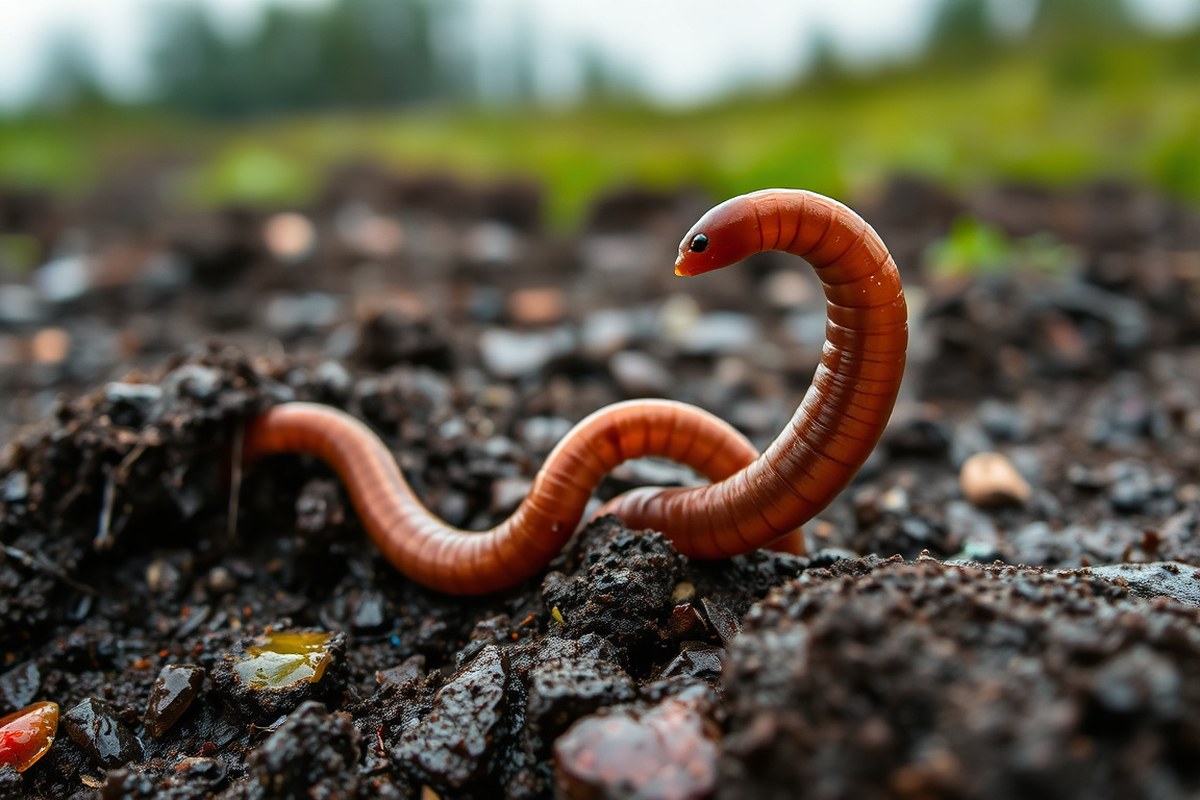
Earthworms respond quickly to harmful stimuli, like being cut or hooked. This reaction is mostly reflexive, meaning their nervous system detects damage and triggers a withdrawal. However, reflexive responses don’t prove that worms feel pain the way humans do.
Feeling pain means more than sensing damage. It involves a subjective experience of suffering or discomfort.
Worms have simple nervous systems that detect harmful stimuli, called nociception. But they likely lack the brain structures needed for conscious pain.
Scientists found worms thrash when injured, showing they notice harm and try to escape it. Some research found pain-related molecules like B-endorphins in worms, hinting at a capacity to experience pain. Still, it’s unclear if worms actually feel emotional or long-term pain.
The main difference between pain and nociception is awareness. Nociception triggers instant reflexes to avoid damage. Pain requires a conscious experience of unpleasant feelings, which worms probably do not have.
Worms seem to feel sensations and actively avoid harmful situations. For example, a hooked worm will try to escape quickly. This shows a basic protective response but not necessarily emotional suffering.
Because worms lack complex brains, they probably do not suffer like vertebrates. Their “pain” is more like a warning signal rather than a feeling. This distinction matters when handling worms humanely, especially in fishing or vermiculture.
How Is the Earthworm Nervous System Structured to Detect Harm?
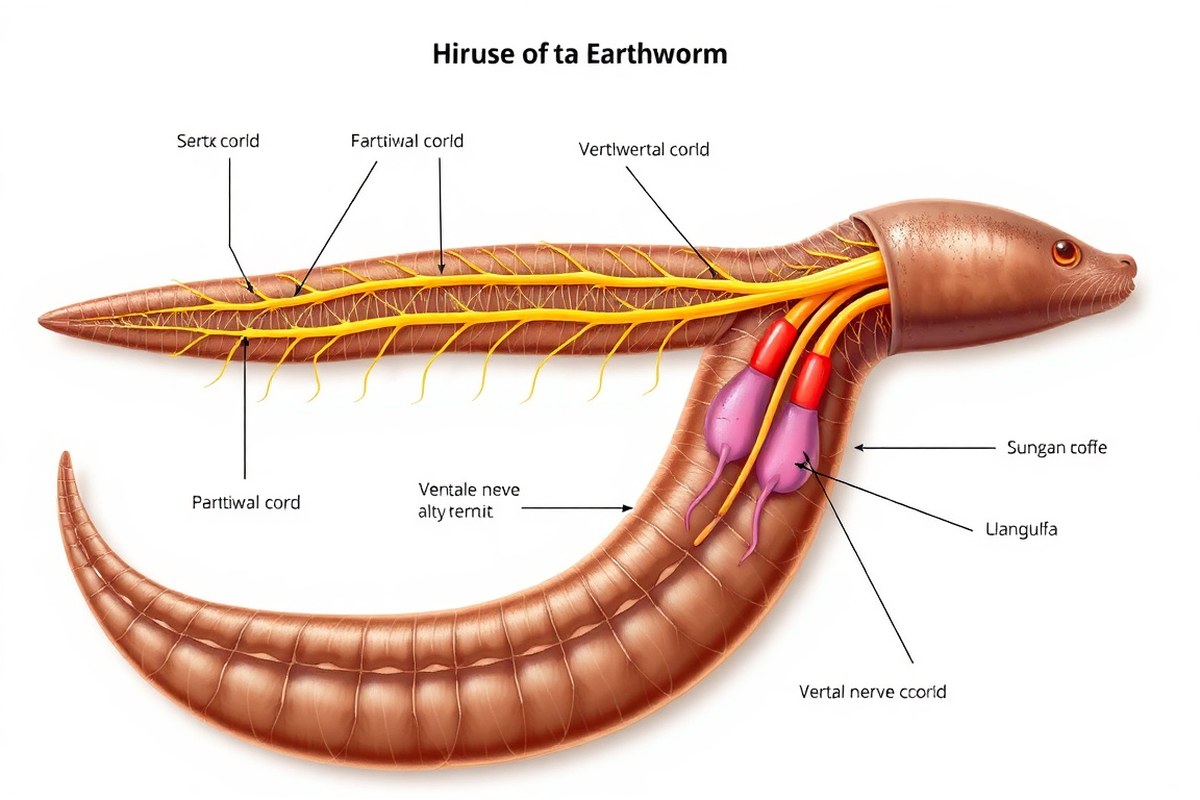
Earthworms have a simple but effective nervous system made to detect harmful stimuli. Their system includes ganglia, a nerve cord, sensory receptors, and nerve fibers. These parts work together to sense and respond to mechanical and chemical dangers.
Ganglia and Mini-Brains
Ganglia are clusters of nerve cell bodies found in each body segment. They act like mini-brains, processing information locally in the worm’s body. This helps the worm react quickly to touching or damaging stimuli without needing a large brain.
Because worms lack a central brain like mammals, each ganglion handles signals for its segment. The worm can react through reflexes.
It probably doesn’t feel pain like humans do. This setup allows quick responses only.
Ventral Nerve Cord Role
The ventral nerve cord runs along the worm’s underside from head to tail. It connects the ganglia and acts like a highway for nerve signals. This cord sends information about touch, pressure, and chemicals up and down the worm’s body.
Signals from the sensory receptors travel through the ventral nerve cord to the ganglia. The ganglia then coordinate the worm’s responses such as curling or moving away.
Key Sensory Receptors in Worms
Sensory receptors detect mechanical, chemical, and light stimuli. They help worms sense their surroundings and potential threats. Different receptors respond to touch, vibration, chemicals, or changes in light.
There are several main receptor types. Epidermal receptors detect touch.
Mechanoreceptors sense pressure, chemoreceptors react to chemicals, and photoreceptors detect light. These specialized cells send signals to the nerve cord when they detect something.
Nerve Fibers and Signal Transmission
Nerve fibers bundle together to carry signals from receptors to ganglia and the nerve cord. These fibers transmit data quickly to help worms respond to dangers. Their nervous system uses chemical and electrical signals like more complex animals.
Because nerve signals in worms share basic chemistry with humans, drugs like anesthetics can affect them. This similarity in signaling shows how earthworms detect harmful stimuli at a fundamental level.
The table below shows key nervous system parts. It explains their function in sensing harm. Each part has a specific role.
| Nervous System Component | Description |
|---|---|
| Ganglia | Clusters of nerve cell bodies, serve as mini-brains |
| Nerve Cord | A long nerve cord runs along the worm’s body length. It acts as a central pathway for nerve signals. This cord helps coordinate movement and reactions. |
| Nerves | Nerve fiber bundles branch out from the main cord. They send messages to different body parts. These bundles help the worm sense its surroundings. |
| Sensory Receptors | Specialized cells for detecting stimuli and sending signals |
| Ventral Nerve Cord | Main nerve cord located on the underside of the worm |
Each part has a specific role to detect and respond to the worm’s environment. This basic system protects the worm but does not suggest complex pain sensation.
Handle earthworms gently to avoid unnecessary stress or injury to their simple nervous system.
Molecules and Proteins Behind Worms’ Sensory Responses
Earthworms detect harmful stimuli using specific molecules and proteins. Channels like TRPV1+ help sense heat and chemicals, triggering responses. They also use neuropeptides, which are small proteins linked to pain signaling.
TRPV1+ Channels and Their Role
TRPV1+ channels are ion channels that detect heat and irritating chemicals. In worms, these channels react to harmful conditions by opening and letting ions flow, signaling danger. Blocking TRPV1+ can reduce pain signals, showing their key role in sensing pain.
These channels appeared early in animal evolution and are found in many species, including worms. They help the worm avoid damage by triggering quick withdrawal or escape movements.
Presence of B-Endorphins and Enkephalins
Earthworms produce neuropeptides, but not the same B-endorphins seen in mammals. Instead, they use smaller peptides that modify their sensory and motor responses. These peptides might lessen harmful sensations but are not exact matches to mammalian painkillers.
Enkephalins are neuropeptides tied to pain relief in vertebrates. Scientists have not definitively found them in earthworms yet.
Their presence in worms remains unconfirmed. This difference suggests worms manage pain signaling differently, without the complex emotional side mammals experience.
Calcitonin Gene-Related Peptide in Worms
This peptide family plays a role in pain signaling in mammals by transmitting pain information. Related proteins first appear in nematodes, which are distant relatives of earthworms. Worms may share parts of this pathway, helping to detect and respond to harmful stimuli.
The presence of these peptides could explain why worms show quick withdrawal to damage. They likely help transmit pain signals without causing emotional suffering.
Comparison to Mammalian Pain Molecules
Worm molecules like TRPV1+ and neuropeptides are simpler than mammalian ones. Mammals have full systems for emotional pain, partly due to complex peptides like B-endorphins. Worms mostly rely on basic sensory molecules to detect injury and react.
Worms use a simpler system to avoid harm. This system likely does not cause pain like mammals feel it.
It helps worms survive without complex pain. Their pain signaling focuses on survival, avoiding threats rather than experiencing unpleasant feelings.
Here’s a table showing key molecular components in worm nociception and their mammalian equivalents:
| Type | Worm Molecules | Mammalian Equivalents | Role |
|---|---|---|---|
| Ion Channels | TRPV1+, TRPA1 | TRPV1+, TRPA1 | Detect heat and irritating chemicals |
| Neuropeptides | Limited peptides, no B-endorphins | B-endorphins, enkephalins | Modify pain perception and relief |
| Calcitonin Gene-Related Peptide | Related proteins in nematodes | Calcitonin gene-related peptide (CGRP) | Pain signal transmission |
Understanding these molecules helps explain how worms detect and respond to harm. It shows the ancient origins of pain pathways and highlights differences from mammalian pain systems.
Do Earthworms Show Behavior That Suggests They Feel Pain?
Earthworms do more than just reflexively pull away from harm. They sometimes thrash or squirm quickly, which might seem like pain. But thrashing can be a hardwired reflex acting fast to avoid immediate danger.
Worms also show behaviors that hint at more than a simple reflex. Some worms change their behavior after facing bad tastes often. They also react when exposed to very hot or cold temperatures repeatedly.
This shows they adapt to avoid unpleasant experiences. They learn to avoid those stimuli later on. This learning means they remember what caused discomfort.
Research on the earthworm Eisenia hortensis found worms could avoid places linked to noxious stimuli. This avoidance is more than just pulling away. It needs some memory and flexible behavior, which usually suggest more complex sensing.
- Swift escape actions often follow harmful touch or temperature
- Repeated exposure leads worms to change their usual movement
- Avoidance grows stronger when bad stimuli happen again quickly
- Worms exposed to bitter tastes later reject the same food
- Reflex actions happen in milliseconds without learning involved
- Learning avoidance takes several exposures and minutes to hours
- Behavioral changes last beyond the initial stimulus exposure
The ability to learn and avoid tells us worms sense something harmful. But it’s different and simpler than the pain mammals feel. Their nervous systems are primitive, so the feeling might be basic.
Thrashing alone doesn’t prove pain experience. It can be a fast reflex triggered by nerves.
But by watching avoidance learning, you see worms respond with memory and choice. This behavior suggests they detect and want to avoid unpleasant sensations.
How Earthworms’ Pain Experience Compares with Other Invertebrates
Earthworms have simpler nervous systems and less evidence for pain than octopuses and some insects. Octopuses show stronger signs of pain perception due to their complex brain and behaviors. Insects fall between worms and octopuses, with mixed evidence depending on species and nervous system features.
Nervous System Size and Complexity
Nervous system size generally relates to an animal’s pain experience. Large, centralized brains often signal more complex sensory processing. Earthworms have small, simple nerve cords, lacking a brain like octopuses.
Octopuses contain roughly 500 million neurons and a highly centralized brain. This supports advanced learning and complex sensory integration. In contrast, earthworm ganglia are small and dispersed, limiting cognitive processing.
Evidence of Pain in Octopuses
Octopuses show strong signs of pain through learning and behavior changes after injury. They avoid harmful stimuli and demonstrate long-term memory tied to pain. Their brain complexity lets them likely experience pain as an emotional state.
Research flags octopuses’ opioid peptide systems and nociceptors similar to vertebrates. These support a pain modulation system closer to ours. They also form relationships and adapt behavior, signs of sophisticated awareness.
Insect Nociception Compared
Insects show mixed evidence for pain and nociception, depending on their nervous system. Many have simple nerve clusters but some can learn and respond to noxious stimuli. Their pain experience is debated, often assumed less than vertebrates.
Studies show insects contain opioid-like substances and react to opiates. But it’s unclear if they share the same receptors as vertebrates. Experimental challenges and species differences make conclusions tricky.
Position of Earthworms on Pain Spectrum
Earthworms’ nervous systems lack centralization needed for conscious pain experience. They have nerve cords and ganglia but with limited sensory integration. Their reactions may be reflexive rather than emotional pain.
Studies led by Professor Wenche Farstad suggest most invertebrates, including earthworms, do not feel pain. Worms respond to stimuli but lack complex pain processing. They fall on the lower end of the pain spectrum compared to octopuses and some insects.
The table compares brain size, neuron count, and pain signs. It shows earthworms, octopuses, and insects. It also lists nervous system features for each animal.
| Animal | Neuron Count | Brain Complexity | Pain Evidence | Nervous System Structure |
|---|---|---|---|---|
| Octopus | ~500 million | Highly centralized, complex brain | Strong behavioral and biochemical evidence | Central brain with large ganglia |
| Insects | Thousands to millions (varies) | Less centralized, small ganglia | Mixed evidence; opioid-like response | Clustered ganglia with some centralization |
| Earthworms | Very few (exact low number unknown) | Simple, decentralized nerve cords | Limited; reflexive responses likely | Segmented nerve cords with dispersed ganglia |
The complexity of the nervous system signals how pain might be processed. Octopuses’ large and central brains allow for more sophisticated pain experience. Earthworms’ simple systems suggest their responses reflect basic nociception, not emotional pain.
Handle earthworms gently to avoid unnecessary stress; their simple nerves still detect harmful stimuli.
What Research Shows When Earthworms Are Given Painkillers or Harmful Stimuli
Earthworms react when injured or exposed to harmful stimuli. Their movements often slow, they coil up, or try to escape. These actions appear automatic, showing a reflex rather than signaling pain awareness.
Researchers use painkillers to see if worms’ responses change. When treated with analgesics, earthworms show less reaction to the same harmful stimulus.
This finding suggests their reflexes dampen. But it doesn’t confirm they actually feel pain like humans do.
Testing earthworm reactions involves careful steps. You need to check if less reaction means real pain relief. It could also mean nerve signals are blocked.
Both tests help understand the effect better. You can follow these steps to observe their behavior.
- Place the earthworm on a moist surface at room temperature, around 70°F.
- Apply a small harmful stimulus, such as gently pricking it with a fine needle.
- Observe and record how fast and how much it writhes or moves away.
- Administer a known painkiller, like lidocaine or a mild analgesic, in controlled doses.
- Wait 10-15 minutes for the painkiller to take effect on the worm’s nervous system.
- Repeat the harmful stimulus and note changes in the worm’s reaction speed or intensity.
- Compare these results to reactions without painkiller treatment to check for response reduction.
- Ensure environmental conditions like temperature and moisture are consistent during tests.
This method helps show that earthworms’ responses can diminish with painkillers. However, these reactions are likely nociceptive reflexes, not emotional pain signals. Earthworms don’t seem to predict or feel pain as an emotional experience, unlike vertebrates.
Because animals often hide pain to avoid predators, interpreting behavior adds complexity. This testing focuses on reflex changes instead of measuring conscious suffering. Future research will study chemicals that change worm sensory responses.
Scientists want to know how these molecules work. This needs detailed chemical tests.
Why It’s Difficult to Confirm Emotional Pain in Earthworms
Emotional pain requires complex brain functions linked to consciousness. Earthworms have simple nervous systems with no centralized brain like mammals. Their neurons help them react to danger but probably don’t support feelings like suffering.
Consciousness involves self-awareness and processing experiences over time. Earthworms do not show these cognitive abilities. Scientists struggle to prove worm consciousness since worms only display basic reflexes, not thoughtful responses.
Without clear signs of awareness, researchers are cautious about saying worms feel emotional pain. Some suggest worms might feel pain differently, maybe even more intensely without understanding it. But testing this is hard because worms can’t communicate or express emotions like bigger animals do.
There’s no current way to measure how or if a worm experiences suffering. New technology might help in the future.
But right now, science relies on observation and comparison to other creatures. This limits claims about worm consciousness and emotional pain for the time being.
Practical Advice for Handling Worms Humanely and Ethically
Handling earthworms with care reduces potential harm, even if their exact pain experience is unclear. When using worms as bait, chilling them slightly slows movement and makes them less stressed. Avoid squeezing or cutting worms unless really necessary.
Their reactions show they feel more than simple reflexes. Treat them gently when handling.
For vermiculture, keeping worms in a moist, oxygen-rich environment helps them thrive. Feed them balanced organic scraps like vegetable peels and avoid acidic or oily foods.
Turning the compost gently every few days prevents worm clumping and injury. Regular checks ensure they stay healthy and active, improving compost quality.
Anglers can change their approach by using synthetic bait. Alternatives don’t involve live animals. These options can protect worms and still catch fish.
This choice might reduce ethical concerns but could affect fishing success. Some states regulate live bait, so check local rules before deciding. Handling worms carefully when you must use them supports better worm welfare.
- Keep worms cool but not frozen. About 50 to 60°F (10 to 15°C) works well.
- Handle worms gently with wet hands to avoid damaging their skin.
- Use clean tools if cutting worms, and minimize cuts to only what is needed.
- Store worms in moist, dark containers with organic bedding for transport.
- In compost bins, maintain humidity near 70% to 85% and avoid strong smells.
- Turn compost slowly to prevent crushing worms or disturbing their habitat.
- Consult local fishing regulations about live bait use and disposal methods.
Chilling worms for 10-15 minutes before use can calm them, cutting down stress.
In labs, researchers sometimes use prilocaine anesthesia to avoid harming worms during experiments. This precaution reflects care despite uncertain pain awareness.
Following similar practices in other settings ensures ethical treatment. Caring for worms well helps their survival and supports cleaner compost or better fishing results.
Simple Steps to Care for Earthworms Thoughtfully
Handle earthworms carefully to respect their sensory responses. Follow these steps to reduce harm and observe their needs.
- Before Handling: Moisten your hands with clean water to protect the worm’s skin. Worms move smoothly, showing comfort if you’ve done this right.
- During Handling: Hold the worm gently on a soft surface, without squeezing. When the worm stays relaxed and moves steadily, you’re gentle enough.
- After Moving: Place the worm back in damp soil promptly. Watch for burrowing; this shows the worm feels safe and unharmed.
- Daily Care: Keep soil moist and rich to prevent stress. Regularly check for worm activity; less movement might indicate distress.
- Weekly Observation: Note any unusual behavior like prolonged immobility or excessive twisting. These signs may mean the worm is uncomfortable or hurt.
- When Using Tools: Use soft, steady tools like small spoons to move worms gently. Avoid sharp or rough materials that could injure.
- Storing Temporarily: Keep worms in a cool, dark place with moist bedding. Worms staying lively mean you’re meeting their basic needs.
- Before Release: Return worms to soil that matches their original habitat. The worm should quickly burrow, signaling readiness to resume life.
Frequently Asked Questions
Can Earthworms Learn to Avoid Painful Stimuli over Time?
Yes, earthworms can show changes in behavior after harmful stimuli. They often avoid areas linked to pain, indicating a basic form of learning or memory.
Are Earthworms More Sensitive to Some Types of Injury Than Others?
Earthworms respond more strongly to injuries like cutting than to mild pressure. Their reaction varies with the type and severity of harm.
Do Earthworms Produce Natural Painkillers to Ease Pain?
Earthworms seem to produce molecules like enkephalins that act as natural painkillers. These help reduce the effects of injury and stress.
How Fast Do Earthworms Respond After Being Injured?
Worms react to injurious stimuli immediately, often by thrashing or withdrawing. This quick response helps protect them from further damage.
Can Earthworms Regenerate After Injury Without Feeling Pain?
Earthworms can regenerate parts, but still likely feel pain during healing. Their movements and reactions show discomfort after injury.
Is There a Difference in Pain Sensitivity Among Earthworm Species?
Different species likely vary in pain sensitivity due to nervous system differences. However, all show basic responses to harmful stimuli.
The Bottom Line
Earthworms detect harmful stimuli but do not likely feel pain like animals with brains. Treat them gently to avoid stress or injury. Try these care tips during your next gardening or fishing activity to keep them safe.


