

How to Grow Peach Tree from Seed: A Complete Guide for Beginners
How to grow peach tree from seed starts with patience and care. You can grow a healthy peach tree.
But it takes several years before it fruits. Typically, expect about 3 to 5 years before your tree produces peaches you can enjoy.
Begin by extracting seeds from fresh peaches, then prepare them for planting. Stratifying the seeds in cold, moist conditions improves germination rates. Use a pot 10 to 15 gallons in size to give the seedling room to grow.
Place the container in a warm spot with good light but avoid direct harsh sun. Water consistently to keep soil moist but not soggy to prevent rot. Protect young trees from frost below 28°F with cloth or burlap covers.
Key Takeaways
- Peach trees from seed take about 3-5 years to start producing fruit.
- Extract seeds from ripe peaches and clean them before planting.
- Stratify seeds at 34-40°F for 8-12 weeks to break dormancy.
- Plant seeds about 3 inches deep in containers 10-15 gallons in size.
- Keep seedlings in bright, indirect light and water moderately.
- Protect young trees from frost below 28°F with frost cloth or burlap.
Can You Grow a Peach Tree from Seed? What to Expect

| Aspect | Seed-Grown Peach Tree | Grafted Peach Tree |
|---|---|---|
| Fruit Production Timeline | 3 to 5 years before fruit appears | 2 to 3 years before fruit appears |
| Fruit Taste and Appearance | May differ from the original peach | True to the parent tree variety |
| Tree Vigor and Adaptability | Often stronger root system, adapts well to soil | Depends on rootstock and graft union |
| Reliability of Fruit Quality | Unpredictable due to genetic variation | Consistent and predictable fruit quality |
| Practicality for Home Gardeners | Good for hobbyists and experimenting | Better for reliable fruit harvest sooner |
You can grow a peach tree from seed. The process is straightforward and rewarding for gardeners who enjoy growing plants from scratch. The fruit your tree grows may not taste like the original peach.
It might also look different. This happens often with seed-grown peach trees.
Growing from seed means the tree grows on its own roots. It can build a stronger root system and sometimes handle local soil conditions better.
But the seed’s genetics vary. So the peaches could differ widely in size, sweetness, or color.
Most peach trees started from seed take about 3 to 5 years to produce fruit. This is longer than grafted trees, which usually bear fruit in 2 or 3 years. The wait can feel long.
Many gardeners like watching their tree grow from seed. They learn how it changes over time. This helps them understand their tree better.
Seed-grown peach trees suit gardeners who like experiments. They enjoy growing trees from scratch. This process takes patience and attention.
You want fruit faster or better quality, choose grafted trees. Nurseries offer these trees ready to fruit sooner. They provide consistent peach quality.
These grafted trees are clones of known varieties. So the fruit tastes like you expect.
Remember, peach trees need a period of cold weather to produce fruit. This dormancy period should include at least 800 chill hours with temperatures under 45°F. Without enough chill hours, your seed-grown tree might grow but won’t bear fruit well.
Extracting and Preparing Peach Seeds for Planting
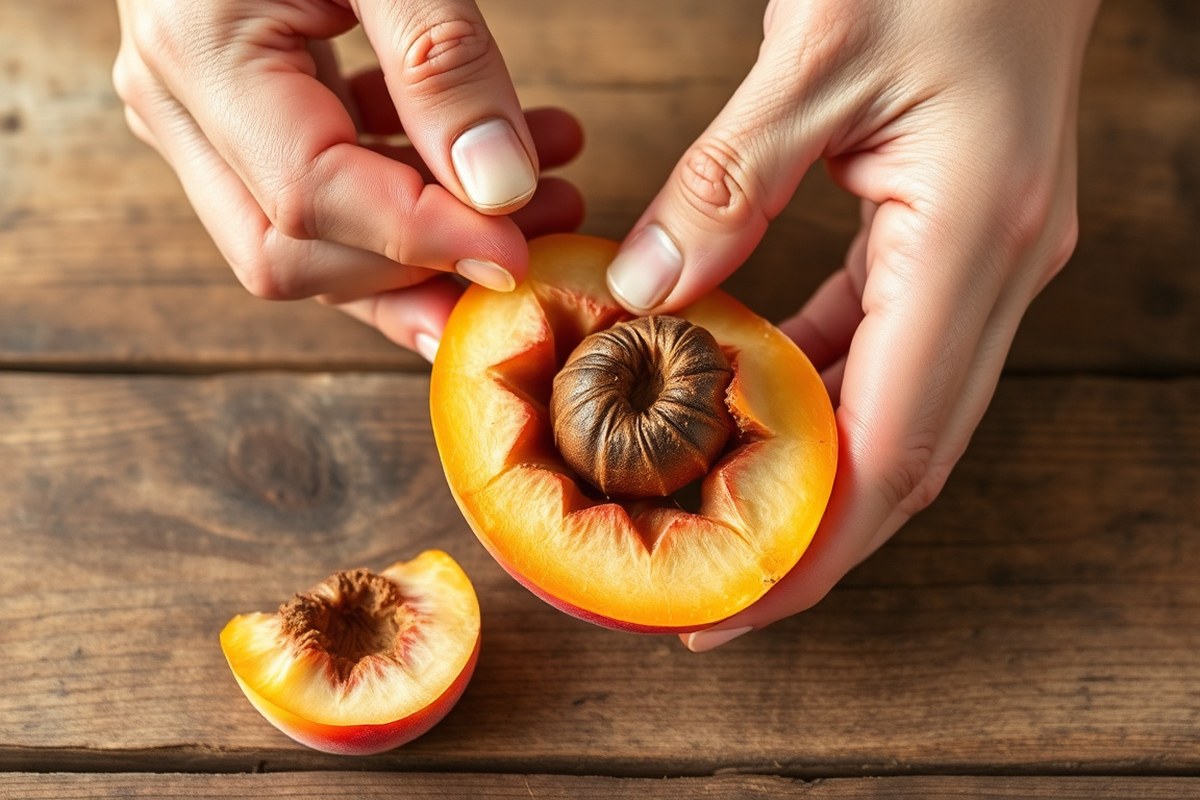
To grow a peach tree from seed, start by removing the seed. You need to take the seed out from inside the peach pit. This is the first step before planting.
This step is important because the seed is protected by a hard shell inside the pit. Carefully crack open the pit to get the seed out.
Clean the seed well and then dry it. This prepares the seed for planting.
How to Crack Open a Peach Pit Safely
Peach pits are very hard. So you need to be careful and use the right tools.
The goal is to split the pit without damaging the seed inside. Using a nutcracker or a hammer gently does the job well.
- Place the pit on a hard surface like a cutting board.
- Hold the pit firmly with one hand to keep it steady.
- Use a nutcracker or a small hammer to apply gentle pressure.
- Tap the pit lightly until you hear a crack, or until it splits.
- Open the split pit carefully with your fingers or a small tool.
- Remove the seed found inside the pit shell.
- Check that the seed shell is intact; avoid cracking the seed itself.
Use slow, gentle pressure with tools to avoid damaging the seed inside.
Cleaning and Drying the Extracted Seed
Once you extract the seed, cleaning it helps reduce mold and disease risk. Rinse the seed under cool water to remove leftover pit bits and peach flesh. Then let the seed dry properly before planting.
Dry the seed in a cool, dry place for a couple of weeks. This drying period helps trigger the seed’s natural germination signals. Avoid leaving the seed in direct sunlight.
Sunlight can dry the seed too quickly. Keep it in a shaded, dry spot instead.
Let the seed dry for about two weeks at room temperature before planting.
Safety Precautions for Handling Peach Seeds
Peach seeds contain tiny amounts of cyanide compounds, which can be harmful if chewed or crushed. Avoid biting or grinding the seed. Use tools to crack pits and handle seeds with care, especially around children and pets.
Seeds from store-bought peaches often can be used. But beware of treated or sprayed fruit. Washing the seed well and drying it properly lowers risks and improves germination chances.
Always wash your hands after handling peach seeds to avoid chemical exposure.
Why and How to Stratify Peach Seeds for Better Germination
Stratification means giving peach seeds cold treatment to mimic winter. This cold period breaks the seed’s dormancy so it can sprout. Without it, peach seeds often won’t start growing because they need to feel winter’s chill first.
Peach seeds usually need 6 to 8 weeks of cold stratification at about 34 to 41°F. You keep them cold in a refrigerator, not a freezer. This process tricks the seed into thinking winter has passed.
You can cold stratify peach seeds several ways. One common method is to wrap them in a damp paper towel inside a plastic bag.
Another way mixes the seeds with moist sand or peat moss in a sealed container. Both need to stay moist but not soaked to avoid rot.
Where you store the seeds matters too. The fridge is best because it stays steady at the right cold temperature.
Make sure the container is airtight to keep moisture in and prevent mold. Check seeds weekly to keep them damp but not soggy.
| Stratification Method | Material Used | Moisture Level | Storage Location | Duration |
|---|---|---|---|---|
| Damp Paper Towel | Paper towel | Damp, not dripping | Plastic bag in fridge | 6 to 8 weeks |
| Moist Sand | Clean sand | Moist, not wet | Airtight container in fridge | 6 to 8 weeks |
| Peat Moss Mix | Peat moss | Moist, no excess water | Sealed container in fridge | 6 to 8 weeks |
This checklist helps set up stratification right:
- Gather clean seeds and discard any that float.
- Moisten your chosen medium until just damp.
- Wrap seeds in paper towel or mix with sand/peat moss.
- Place inside an airtight plastic bag or container.
- Put the container in the fridge at 34 to 41°F.
- Check weekly for moisture and mold, adding water if dry.
The timeline for cold stratification runs about 6 weeks minimum. Sometimes 8 weeks gives better results, especially in warmer fridges.
Too short a chill period can leave seeds dormant. Too long might risk mold.
Stratification takes patience but boosts your chance of seeing peach seed sprouts. Skipping this step often leads to poor or no germination. Keep the seeds cold, moist, and watch for healthy signs after the right time passes.
Planting Peach Seeds: Containers, Soil, and Placement
Use a container about 10 to 12 inches wide and 10 to 15 gallons in size. Fill it with well-draining, nutrient-rich potting soil. Plant your peach seed 1½ to 3 inches deep.
Use a container with good drainage. Keep it where it gets plenty of sunlight.
Choosing the Right Container Size
Start peach seeds in containers that are 10 to 15 gallons. This size supports growth but stays easy to move. Containers smaller than 10 gallons limit root space and stunt the seedling.
Choose pots with drainage holes to avoid water buildup. Drainage helps stop root rot and keeps soil moist but not soggy. Plastic or clay pots work well but avoid anything without holes.
Selecting Nutrient-Rich but Well-Draining Soil
Use a potting mix designed for fruit trees or make your own blend. It should be sandy and rich to help roots grow well. Avoid heavy garden soil that holds too much water.
Use a raised bed outdoors for planting peach seeds. Make sure the soil is sandy and drains well.
This helps protect the roots. Poor drainage leads to root rot, so drainage is key in any planting spot.
A good potting mix costs around $10 to $20 for a large bag, lasting many plants. This investment gives your seedling a better start and fewer growth problems.
Placing the Seed at Optimal Depth
Plant the peach seed about 1½ to 3 inches deep in the soil. This depth protects the seed while allowing it to sprout easily.
Too deep and the seed struggles to break the surface. Too shallow and it dries out.
Press the soil gently above the seed to hold it in place. Water the soil lightly after planting to keep moisture steady but not soaked.
- Gather a 10 to 15-gallon container with drainage holes.
- Fill the container with sandy, nutrient-rich potting mix.
- Plant the stratified peach seed 1½ to 3 inches deep.
- Press soil lightly over the seed without compacting it too hard.
- Water gently to moisten the soil evenly.
- Place the container in a sunny spot indoors or outdoors. It needs at least six hours of sunlight every day. Make sure it gets enough light.
- Check soil moisture regularly and water only when the top inch feels dry.
Caring for Peach Seedlings: Watering, Light, and Growth
Seedlings need steady moisture but shouldn’t sit in water. Water peach seedlings when the top inch of soil feels dry.
Pour just enough water to moisten the soil evenly without flooding it. Overwatering invites root rot, a common problem with young peach trees.
Peach seedlings grow best with plenty of bright light. Place them where they get 12 to 16 hours of indirect sunlight daily.
If natural light falls short, use a fluorescent grow light 6 to 12 inches above the plants. Good light helps the seedlings develop strong stems and green leaves.
Watch closely for damping off, a fungal disease that kills seedlings quickly. It shows as a thin, soft stem near the soil line.
Avoid it by watering from the bottom or the sides, not on top. Keep air moving around seedlings with a small fan or by opening a window daily.
Start feeding seedlings lightly after their first true leaves appear. Use a half-strength balanced fertilizer every two weeks to avoid burning roots. Fertilizing too soon or too strong stunts growth and can cause leaf yellowing.
Don’t let the soil dry out completely or get soggy, both can kill peach seedlings.
Seedlings may grow unevenly in dim light or show pale leaves from poor nutrition. Move plants closer to light or adjust your fertilizer schedule. Brown or black spots on leaves could mean fungal infection; remove affected leaves immediately.
Temperature matters, too. Keep seedlings in a warm space, about 65 to 75 °F, to encourage steady growth.
Too cold slows growth and invites diseases. Avoid places with drafts or sudden temperature swings.
When and How to Transplant Peach Seedlings Outdoors
Transplant peach seedlings outdoors after the last frost, once they reach 6 to 12 inches tall. Pick a sunny, well-draining site with at least 6 hours of daily sun. Before transplanting, harden off seedlings by slowly introducing them to outdoor conditions over a week.
Ideal Transplant Size and Leaf Stage
Peach seedlings should be 6 to 12 inches tall before moving outdoors. Count the sets of true leaves; at least two full sets indicate readiness. Transplanting too early can stunt growth or kill the seedling.
Wait until the seedling’s stem feels sturdy when you gently touch it. At this stage, roots have developed enough to handle the move. Seedlings still small or fragile won’t survive transplant shock well.
Selecting a Sunny, Well-Draining Site
Pick a place in your garden with 6+ hours of sun daily. Make sure it gets direct sunlight.
Sun helps young peach trees grow strong and supports future fruiting. Avoid shaded corners or areas with poor airflow.
Check soil drainage by digging a hole and filling it with water. Water drains well when it leaves the soil within 4 hours.
Good drainage means the soil suits peaches. Heavy clay or constantly wet soil can suffocate roots and cause disease.
Prepare soil by loosening it and mixing in organic compost. Aim for a neutral to slightly acidic pH between 6.0 and 7.0. Good soil prep encourages root spread and healthy growth.
Hardening Off Seedlings Before Transplanting
Hardening off reduces transplant shock by slowly exposing seedlings to outdoor sun and wind. Carry your seedlings outside for a few hours daily, increasing time over 7 days. Start shady and calm, then add sun and breeze gradually.
Keep soil moist but not soaked during this period. Watch seedlings closely for wilting or leaf burn. Stop if harsh weather hits and wait for milder days.
After a week, seedlings should look strong and ready. Hardening off prepares them to handle outdoor stress and boosts transplant success. Follow these steps to transplant your peach seedling safely:
- Choose a sunny, well-draining spot in your garden or a larger container.
- Prepare soil by loosening and mixing in organic compost.
- Harden off your seedlings outdoors for 7 days to adjust gradually.
- Dig a hole twice as wide and as deep as the seedling’s root ball.
- Gently remove the seedling from its original container, keeping soil intact.
- Place the seedling in the hole, making sure the root collar is level with soil.
- Backfill with soil, pressing gently to remove air pockets.
- Water thoroughly to settle the soil around roots and reduce transplant shock.
Long-Term Peach Tree Care and Fruiting Expectations
Pruning a seed-grown peach tree starts in year two. Use sharp, clean shears to cut back weak or crossing branches.
Aim for an open center shape to let sunlight reach inside. Remove about one-third of the new growth each year during late winter before buds swell.
Water your peach tree deeply about once a week in dry periods. Check soil moisture by feeling it 2 inches deep; water if dry. For feeding, use a balanced 10-10-10 fertilizer in early spring.
Apply it again in early summer for best results. Follow package instructions for young trees, usually about ½ cup per application.
Most seed-grown peach trees start fruiting between year 3 and year 5. Expect fruit to be smaller and less predictable in flavor than nursery trees.
Quality varies since seed-grown peaches don’t always match the parent fruit exactly. Patience is key, as growing good fruit from seed takes time and effort.
Protect young trees from frost by covering them when temperatures near 28°F. Use frost cloth, burlap, or old sheets and secure the covering to keep warmth in. Plant your tree in a spot sheltered from cold drafts and frost pockets to reduce risk. Early blossoms are especially vulnerable to late frosts.
Keep pests away by inspecting the tree regularly for signs of aphids, scale, or borers. Use insecticidal soap or neem oil as needed, following label directions carefully.
Remove fallen fruit and prune out dead branches to reduce insect habitat. Healthy trees resist pests better and produce more fruit.
Water the tree steadily for the first 3 to 5 years. Check for pests all year. Prune the tree once a year.
Avoid overwatering which can cause root problems and reduce fruiting. Each winter, prune again to thin out crowded areas and promote strong growth next season.
Common Challenges Growing Peach Trees from Seeds and How to Fix Them
Peach seeds often don’t sprout because they miss the right cold. Planting them too shallow also causes this problem. Both stop good growth.
Drying the seed fully before chilling cuts down mold risk. So let the seed dry at room temperature for up to a week. Use a fridge set at 34 to 40°F (1 to 4°C) for stratification.
Keep the seed in moist sand or peat. Leave it there for 6 to 8 weeks.
Damping off is a fungal disease common in peach seedlings. It makes stems thin, weak, and brown near the soil line. This damage kills young plants fast.
Watch for these signs early. This usually happens if soil stays too wet or lacks airflow.
To prevent it, water seedlings from below and keep the soil moist but never soggy. Use sterile potting mix and good drainage in containers.
Peach seedlings attract pests like aphids, mites, or scale insects. These bugs feed on leaves or sap. They stunt the plant’s growth.
Wash off small insect problems with mild soap and water. Do this spraying in early morning or late afternoon.
It helps avoid plant damage. For bigger problems, use insecticidal soap or neem oil, following the label instructions carefully.
- Seed fails to sprout: Check if seed got enough chilling and wasn’t too dry
- Damping off: Use sterile soil and avoid overwatering
- Pests: Spray with soap solution or insecticides as needed
- Poor sunlight: Seedlings need 6-8 hours of bright light daily
- Planting too deep or shallow: Plant seeds about 1 to 2 inches deep
- Overwatering kills roots: Let soil dry slightly between watering
- Temperature swings: Keep seedlings where temps stay around 65-75°F
Sunlight matters a lot. Seedlings grow slowly or stretch tall if placed in low light. Avoid putting containers where temperatures drop below 50°F (10°C) at night.
Hot midday sun can dry out or burn tender leaves. Adjust watering based on how warm and dry your room or garden space is.
Always write the seed date and peach type on your containers. This helps track growth and care. Never skip labeling your seeds.
Step-by-Step Action Plan
This plan helps you start growing your peach tree from seed today. Follow each step closely for the best results.
- Day 1: Extract the peach seed from the fruit and clean off any remaining flesh. You want a clean seed to help prevent mold.
- Days 2-90: Put the seed in a damp paper towel inside a plastic bag. Keep the bag in the fridge for 8 to 12 weeks. Check each week to keep the towel wet.
- After Stratification: Fill a pot with soil that drains well. Plant the seed 1 to 2 inches deep in the soil. Water it lightly to keep the soil moist. Keep the soil moist but not soggy.
- Weeks 1-4: Place the container where it gets bright indirect sunlight. Water when the top inch of soil feels dry. Watch for sprouts.
- After 4 weeks: Wait for seedlings to grow 6 to 8 inches tall. Make sure they have a couple of leaf sets. Move them outside for short periods to adjust. Move them outdoors for a few hours daily.
- After 6 weeks: Transplant seedlings outdoors in a sunny spot with rich, well-draining soil. Space young trees at least 15 feet apart to allow room.
- Year 1 onward: Water deeply once a week during dry spells. Add mulch around the base to keep moisture in and weeds out.
- After 3-4 years: Expect your peach tree to start fruiting. Prune it each winter to keep it healthy and productive.
Frequently Asked Questions
How Long Does It Take for a Peach Tree Grown from Seed to Bear Fruit?
Peach trees grown from seeds typically start producing fruit after 3 to 4 years. This period is longer compared to nursery-bought young trees that fruit earlier.
Why Does Peach Seed Stratification Improve Germination?
Stratification mimics winter cold, breaking seed dormancy for better germination rates. Without it, peach seeds often fail to sprout or take much longer.
Can Peach Trees Grown from Seed Match the Fruit Quality of the Parent?
Peach trees from seed rarely produce fruit identical to the parent peach. The new tree could yield different tasting or sized peaches.
What Soil Type Works Best for Planting Peach Seeds?
Peach seeds do best in well-draining, fertile soil with good aeration. Heavy or waterlogged soils can cause seed rot or poor growth.
How Do You Protect Young Peach Seedlings from Pests?
You can protect peach seedlings by using netting or organic insect sprays carefully. Early protection helps prevent damage from insects and small animals.
Is It Necessary to Prune Peach Trees Grown from Seed?
Yes, pruning peach trees from seed helps shape growth and improves fruit production. Start light pruning when the tree is young and increase as it matures.
Wrapping Up
Growing a peach tree from seed requires patience but can be rewarding. Start by stratifying your seed correctly to improve germination. Watch for new seedlings to appear in your soil.
Take good care of them by watering and feeding regularly. You’ll grow fresh peaches in a few years.


