Where to Plant Strawberries: Complete Guide with Best Spots and Tips
Wondering where to plant strawberries for the best crop? Plant them outdoors in full sun that gets at least eight hours daily.
This sunlight helps berries grow big and sweet, so pick a sunny spot first. Avoid areas with tall plants or structures that shade the strawberries during the day.
Strawberries need well-draining soil with room to spread out. Avoid soggy or shady places near trees or fences that block light.
Good airflow helps keep diseases away and supports healthy plants. Make sure water doesn’t pool around the roots after heavy rain.
Before planting, loosen the soil and add organic matter to improve drainage. Compost or aged manure work well for adding nutrients.
Space the plants 12 to 18 inches apart to give each crown its needed room. This setup encourages multiple harvests and healthy runners to grow well.
Key Takeaways
- Choose a sunny location with at least 8 hours of direct sun daily.
- Plant strawberries in soil that drains well and is free of heavy shade.
- Space plants 12 to 18 inches apart for proper growth and runner spread.
- Improve soil by mixing in compost or organic matter before planting.
- Protect flowering plants from frost when temperatures drop below 30°F.
- Use raised beds or containers if your ground soil has poor drainage.
Best Location for Planting Strawberries Outdoors
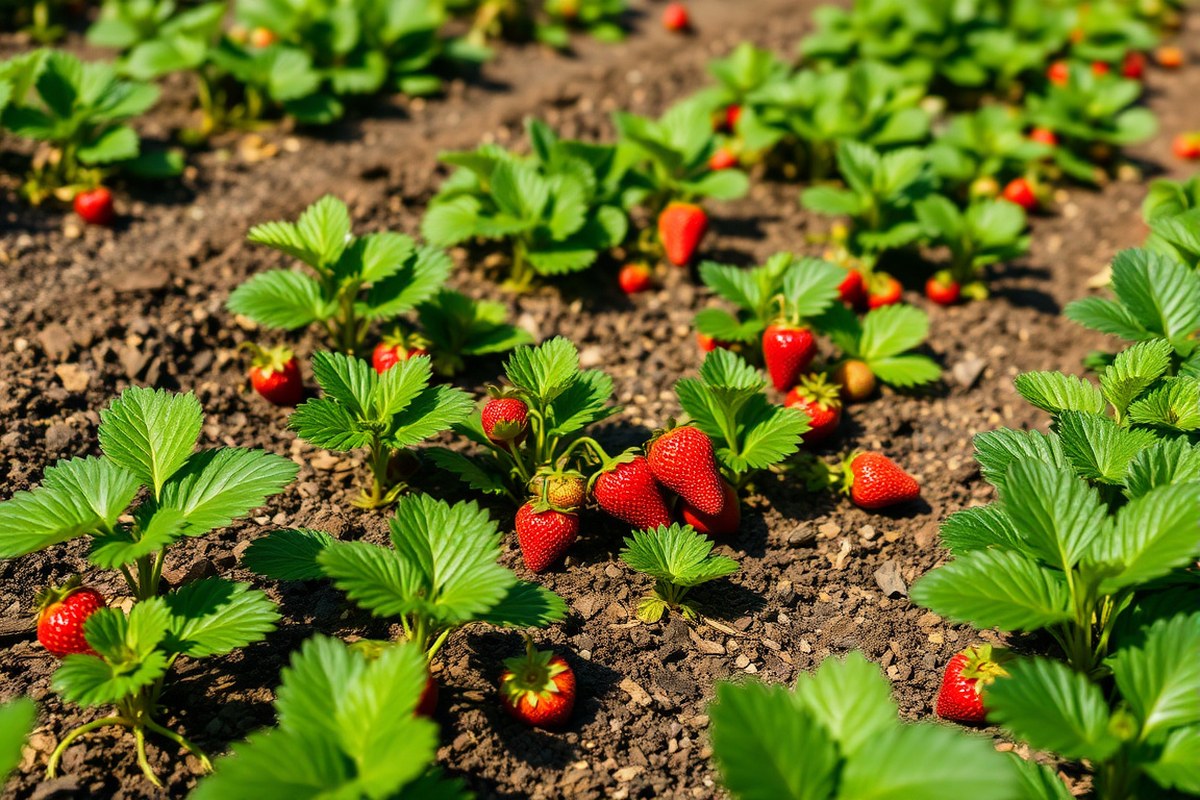
Pick a garden spot with full sun daily. It needs 6 to 8 hours of sunlight. Strawberries grow best with enough light each day.
Strawberry plants need plenty of direct sunlight to produce juicy, sweet berries. A shady or partly sunny spot lowers your harvest. You get smaller, less flavorful berries.
Look for soil that’s loose, well-drained, and rich in organic matter. Aim for a soil pH between 6.0 and 6.5, which helps strawberries absorb nutrients well. Don’t plant in heavy clay or soggy soil.
Strawberries hate wet roots and may die. Good drainage is key for healthy plants.
Give your strawberry plants space to spread. Plant them about 12 to 18 inches apart in rows 2 to 3 feet apart. This lets the runners grow without crowding, which improves air circulation and reduces disease risks.
Press soil gently around roots to hold them in place. Leave the crowns exposed to air and sun. This stops the crowns from rotting.
Add compost or garden soil if your soil is poor. Mix it well before you start planting.
This improves soil structure and fertility with minimal cost and effort. Good soil prep helps your plants settle in faster and start producing fruit sooner.
Some gardeners plant strawberries in matted rows, spacing 18 inches apart. This is good if you want plants to multiply naturally with runners. You can plant closer in raised beds or pots.
Space plants about 12 inches apart for best growth. Adjust based on your space and how much harvest you want.
Choosing Between Raised Beds, In-Ground, and Container Planting

Raised beds, in-ground planting, and containers all work for growing strawberries. Each method has clear benefits and some challenges to consider. Your choice depends on space, soil quality, and how much effort you want to put in.
Raised Beds: Benefits and Setup
Raised beds help keep strawberry soil well drained and warm. You can control soil quality better by adding compost and proper amendments. These beds also make harvesting easier and reduce weeds around plants.
To set up, build a bed 6 to 12 inches high. Use loose, fertile soil with a 2 to 4 inch compost layer on top. Plant strawberry crowns 4 to 6 inches deep to support root growth.
Raised beds often cost more upfront because you need wood or bricks. But, they last several years and usually improve fruit yield. Watch for drying out faster in hot weather.
In-Ground Planting: Advantages and Limitations
Planting strawberries directly in your garden soil is simple and low cost. They do well in soil that drains well. You need 6 to 8 hours of sun.
This helps them grow healthy. This method uses the natural soil ecosystem for healthy roots.
You should dig holes about 4 to 6 inches deep. Avoid planting in spots prone to standing water; strawberries dislike “wet feet.” Adding compost on top can improve nutrient availability for the plants.
In-ground beds can face more weed pressure and soil pests. Poor soil or compacted spots may limit root growth and reduce fruit quality. It needs more regular soil testing and amendments as plants age.
Container Growing: Best Practices and Constraints
Containers work well if you have small outdoor space. They also fit sunny indoor windowsills. This lets you grow strawberries anywhere.
Use pots that are at least 8 inches wide. The depth should be 6 inches for each plant.
This gives roots enough space. Strawberries also do well in hanging baskets or strawberry planters.
Use quality potting mix designed for fruit or vegetables, not garden soil. Containers must drain well to avoid soggy roots that can cause rot. Water frequently but don’t leave water sitting in saucers.
Containers dry out faster, so you’ll need to check moisture daily in hot weather. Fruit yield can be smaller than beds unless you choose compact varieties. Fertilizing regularly every 2 to 4 weeks supports continuous growth and fruiting.
| Aspect | Raised Beds | In-Ground Planting | Container Growing |
|---|---|---|---|
| Soil Control | High, add compost, control mix | Low, depends on garden soil quality | High, use quality potting mix |
| Drainage | Excellent, raised above ground | Variable, depends on soil and location | Good, soil drains quickly if pot holes exist |
| Sunlight Needs | 6-8 hours direct sun | 6-8 hours direct sun | 6-8 hours direct sun or bright windowsill |
| Watering Frequency | Moderate, retains moisture better than containers | Moderate, natural soil holds water better | High, dries quickly, needs daily checks |
| Weed Control | Lower, raised bed easier to manage | Higher, more weeds possible without mulch | None, no weeds in containers |
| Cost and Setup | Moderate, materials, soil amendments | Low, use existing garden space | Low to moderate, pots and potting soil |
| Space Needed | Medium, dedicated bed area | Large, garden patch | Small, patio, balcony, or windowsill |
Your garden space affects how you plant strawberries. Also, think about how much care they need. These decide which planting method is best.
Raised beds warm the soil quickly and keep drainage just right. In-ground planting fits bigger gardens but requires attention to soil and weeds. Containers offer flexibility but demand frequent watering and feeding.
Make sure your container has drainage holes to avoid root rot in strawberries.
How to Prepare Soil for Successful Strawberry Planting
Preparing soil well boosts your strawberries’ growth and fruit quality. Test the pH, improve soil texture, and add compost before planting. These steps ensure good drainage and nutrients.
Testing and Adjusting Soil pH
Strawberries thrive when soil pH ranges from 5.5 to 6.5. Checking soil pH requires a test kit from a garden store. Testing beforehand stops nutrient issues while plants grow.
To adjust pH, add lime if soil is too acidic (below 5.5). Use sulfur to lower pH if it’s above 6.5. Add these amendments a few weeks before planting and retest if possible.
Improving Drainage and Soil Texture
Strawberries dislike soggy soil, so drainage is key. Clay soil needs at least 4 inches of compost worked in well.
This improves drainage and makes it easier for roots to grow. This loosens the clay and prevents waterlogging.
Building raised mounds or beds also helps. Rake the amended soil into raised rows about 6 to 8 inches high. Better drainage reduces disease risks and warms the soil earlier in spring.
Sandy soil should be lightly worked before you add a 1-inch compost layer. Compost adds nutrients and helps the soil hold moisture better.
This boosts moisture retention while keeping soil loose. Avoid compacted or waterlogged spots entirely.
Adding Compost and Nutrients
Strawberries are heavy feeders needing good organic matter. Spread 2 to 3 inches of well-rotted compost over the soil surface. Work it into the top 6 to 8 inches before planting.
Good compost improves soil health, water retention, and drainage. Composted leaves, fully rotted sawdust, or products like Miracle-Gro Organic Garden Soil work well too. Compost also supports beneficial microbes.
After planting, apply a balanced 10-10-10 fertilizer. Then top dress beds with more compost and fertilizer each spring to keep plants productive. Follow these steps to prepare strawberry soil:
- Clear the planting area of weeds and debris.
- Test soil pH with a kit and adjust between 5.5 and 6.5.
- Amend clay soils with 4 inches or more of compost.
- Form raised mounds 6, 8 inches tall in heavy or poorly drained soil.
- For sandy soils, lightly cultivate and mix in 1 inch of compost.
- Work 2 to 3 inches of compost into the top 6, 8 inches of soil.
- Apply balanced fertilizer (10-10-10) at planting time.
- Water soil lightly but thoroughly before planting strawberries.
Optimal Planting Times and Temperature Considerations
Plant strawberry seedlings after the last frost date for your area. You usually plant strawberries in early to mid-spring. This falls between March and May.
Timing depends on your local climate. The soil should be above 60°F for the best root development.
Strawberries grow best in temperatures between 60°F and 80°F during the day. Cooler nights around 50°F to 55°F help flowering and fruit formation.
Temperatures above 85°F can slow down fruit development. They might also reduce the quality of the fruit.
Protect plants if a late frost is forecast in spring, especially when flowers appear. Cover strawberries with frost cloth or old sheets if temperatures dip below 30°F. Remove coverings during the day to avoid overheating and allow pollinators access.
For areas with intense heat, provide afternoon shade or mulch to keep roots cool. Avoid fertilizing late in the growing season in cold climates. This prevents new growth that could be damaged by early frosts.
You can plant day-neutral strawberries in spring or late summer. They produce fruit all season long. This gives you continuous harvests.
They tolerate temperature changes better than June-bearing types. This flexibility helps if you miss the early spring planting window.
Fall planting works well in milder climates. Plant late summer or early autumn so roots can develop before winter. Protect plants with a 6-inch straw mulch layer during cold months to guard against freezing damage.
Space your plants 12 to 18 inches apart. This helps air flow between plants. It also reduces frost pockets near the ground.
Planting near a south-facing wall or fence captures extra heat. This microclimate helps extend the growing season and improve fruit yield.
Proper Spacing and Managing Runners in Strawberry Beds
Space strawberry plants 12 to 18 inches apart to keep good airflow. Leave 2 to 3 feet between rows for healthy growth and easy picking. Manage runners by either pinning them to create new plants or pruning to avoid crowding.
Spacing Guidelines for June-Bearing vs Day-Neutral
June-bearing strawberries suit a wider space layout. Plant these 18 to 24 inches apart. Space rows 2 to 3 feet wide.
Let runners fill the gaps naturally. For day-neutral types, space plants closer, about 12 to 18 inches apart.
Day-neutral varieties produce runners moderately, so prune extra ones to prevent overcrowding. June-bearing plants send out many runners.
So wider spacing helps prevent disease and boosts airflow around crowns. Adjust your spacing depending on how many runners you want to keep.
Pinning and Pruning Runners to Control Spread
Use runners actively to expand your strawberry patch. Pin runners into soil or small pots about 12 inches from the mother plant. Wait until roots form before cutting the runner to make a new independent plant.
Prune extra runners to avoid overcrowding and reduce disease risk. Removing blossoms in the first season improves root growth and makes the mother plant stronger. Regularly check and thin runners to keep your bed healthy and productive.
- Identify healthy runners extending from mother plants.
- Place runners on bare soil or in pots 12 inches away.
- Secure runners with pins or small stones to hold them in place.
- Wait 3 to 4 weeks until new roots form on runners.
- Cut runners from the mother plant once established.
- Remove any extra runners or weak plants to prevent crowding.
Keep runners pruned if you plant strawberries close together. Crowded plants get diseases and yield less.
Setting Up Matted Rows vs Single-Site Plants
Matted rows work well with June-bearing varieties that send plenty of runners. Start plants 18 to 24 inches apart. Let runners fill in between over time.
They will form a thick bed. Rows should be about 2 to 3 feet wide.
Space plants 12 to 18 inches apart in single-site planting. Remove runners regularly. This helps plants grow stronger individually.
This method suits day-neutral types or gardeners who want neat rows. Proper spacing keeps air moving and lowers fungus risk.
Planting Strawberries Indoors and in Limited Light Conditions
Strawberries can grow indoors or in partial shade, but expect smaller yields. They need about 6 to 10 hours of direct light daily to thrive.
So natural indoor light is often not enough. You’ll want to add a grow light to provide the extra light strawberries need.
Choose LED or fluorescent grow lights that offer a full spectrum. Position the light 6 to 12 inches above the plants.
Keep it on for 12 to 16 hours daily. Using a timer helps keep the light consistent and prevents burning the leaves.
Use pots at least 8 to 12 inches deep with drainage holes to avoid waterlogging. Wide containers work best for strawberries because their roots spread out.
Avoid traditional strawberry pots with many holes on the sides. They can dry out unevenly and stress the plants.
Place your pots near a south-facing window if possible. This gives your plants the best natural light during the day.
When sunlight is weak or limited, add grow lights. Use them to meet the light needs.
Keep the soil moist but not soggy. Strawberries do not like standing water, which can rot roots. A well-draining potting mix designed for vegetables or fruits works best indoors.
Temperatures inside should stay between 60 and 75°F to keep plants growing strong. Avoid cold drafts or very warm spots near heaters. Strawberries can endure brief cooler temps, but steady warmth and light ensure better fruit.
Watch plants closely for slow growth or pale leaves, signs light or nutrients might be lacking. Adding a balanced fertilizer every 4 to 6 weeks during the growing season helps. You can use a liquid fertilizer diluted to half strength for indoor strawberries.
With this setup, expect smaller harvests than outdoor plants in full sun. Still, you can enjoy fresh strawberries year-round inside.
Growing plants indoors needs patience and steady care. They will give sweet fruit even with less light.
Common Mistakes When Choosing Where to Plant Strawberries
Planting strawberries in the wrong spot wastes time and plants. They need 6 to 8 hours of direct sunlight daily to produce well. Too little sun means fewer or smaller berries, and plants may struggle to grow.
Soil quality plays a big role in growing strawberries well. Strawberries grow best in slightly acidic soil, with a pH from 5.5 to 6.8. Soil that stays too wet or is too alkaline can harm the plants and cause root rot.
Avoid planting in places where cold air or water tends to collect. These frost pockets can harm plant crowns and lower your harvest.
Poor spacing is another common issue. Crowded plants stop air flow and lead to diseases like gray mold.
Runners that aren’t managed take nutrients from fruiting plants. Plant strawberries about 12 inches apart for best growth and easy care.
- Plant crowns ½ inch deep; too deep causes rot, too shallow means dry plants
- Water deeply after planting, but avoid soaking the soil or wetting crowns
- Space plants about 12 inches apart to reduce disease and give roots room
- Pick a sunny spot with well-drained, slightly acidic soil for healthy plants
- Avoid planting near tomatoes or potatoes to prevent disease spread
- Steer clear of low spots where frost or water pools
Look for yellowing leaves or weak growth as signs of poor conditions. Berries that are small, thin, or have mold often point to poor soil or too little space between plants.
Correct these by improving soil drainage, adjusting pH, or relocating plants. Spacing can be fixed by thinning or transplanting crowded strawberries.
Strawberries planted at the right depth and place grow strong. They sprout within two weeks and bear berries in about 90 days. Proper care, space, and a sunny, well-drained site make a noticeable difference in your harvest.
Companion Planting and Site Selection Tips for Strawberries
Strawberries grow well near garlic, which helps keep pests away naturally. You can plant garlic in rows beside or between strawberry beds without crowding them. This companion planting reduces bugs and doesn’t compete for nutrients or sunlight.
Other good neighbors include lettuce and spinach. These low-growing leafy plants shade the soil and prevent weeds from sprouting.
They also use water differently than strawberries. So you won’t overwater or dry out either plant.
Choose full sun spots that get at least six hours of light daily. Strawberries need bright, direct sun to produce sweet fruit. Avoid plants or trees that create heavy shade.
Shade keeps soil damp too long. Damp soil can cause fungal problems.
Plant strawberries in well-draining soil with a slightly acidic pH between 5.5 and 6.5. Adding bone meal helps boost phosphorus for strong roots, especially in older garden beds.
You can add blood meal to go organic. Blood meal adds nitrogen and keeps leaves green.
In cooler climates, wait until after your last frost date for planting outdoor strawberries. In warmer climates, autumn or early spring works best. Cut off first flowers on summer-fruiting plants if growth is weak.
This helps the plant grow strong. Then it can fruit better.
For pest control, spreading a weed-suppressing membrane before planting can save a lot of work later. Some gardeners reuse membranes to save money. Make sure membranes are clean before reusing.
They must not block water flow. This also helps keep runners from spreading too quickly.
Remove strawberry runners throughout the growing season to focus energy on fruit production.
Step-by-Step Action Plan for Planting Strawberries
Follow these steps to plant your strawberries right and boost your harvest. Check each step to make sure your plants grow strong.
- Before planting: Choose a sunny spot with well-drained soil. Test soil pH and make sure it is between 5.5 and 6.5.
- Day 1: Prepare the soil by mixing in compost or aged manure. The soil should feel loose and crumbly.
- Day 2: Lay out plants with 12 to 18 inches between each one. Check spacing carefully to avoid crowding later.
- Day 3: Plant strawberries so crowns sit just above soil level. Water each plant gently but deeply.
- Week 1: Keep soil evenly moist but not soggy. Look for green, healthy leaves and firm crowns.
- Week 2-4: Remove any runners to focus energy on fruit production. Watch for new buds forming on plants.
- Month 2 onwards: Add mulch around plants to hold moisture and control weeds. Check plants weekly for pests or signs of stress.
Frequently Asked Questions
Can Strawberries Be Planted in Shady Areas?
Strawberries need full sun to thrive, so avoid shady spots. Less than eight hours of sunlight will reduce fruit production and plant health.
Is It Better to Plant Strawberries Near Other Fruits or Vegetables?
Avoid planting strawberries close to nightshades like tomatoes, potatoes, or eggplants. These plants can share diseases that harm strawberries, so keep some distance.
How Deep Should Strawberry Roots Be Planted?
Plant strawberry roots just covered by soil, about one to two inches deep. Too deep or too shallow planting can stunt growth or cause rot.
Can Strawberries Grow Well in Sandy Soil?
Sandy soil can work if well-amended with organic matter. Adding compost improves water retention and nutrients the plants need.
Should Strawberries Be Planted Near a Water Source?
Yes, but good drainage matters more than proximity to water. Strawberries hate standing water. So ensure soil drains well even if you water them often.
Is It Okay to Plant Strawberries Where Other Strawberries Grew Before?
Avoid replanting in the same exact spot for a few years. This reduces risks of soil diseases and nutrient depletion.
Wrapping Up
Strawberries grow best in sunny spots with good soil and space. Start planting with care and check your plants often. Your next step is to pick the right spot and prep your soil this weekend.