How Much Water Does a Tomato Plant Need Each Day? A Complete Guide for Gardeners
Most tomato plants use around 0.6 to 1 gallon (2.3 to 3.8 liters) of water each day. How much water your plant needs varies with its growth, weather, and soil type. Change your watering based on these factors to keep the plant healthy.
Tomatoes in containers often require 1 to 1.5 gallons (3.8 to 5.7 liters) on hot days. Water outdoor tomato plants every 2 to 3 days at first. Check the soil moisture often to avoid over- or underwatering.
Remember, watering needs change as your tomato grows and as the weather shifts. A 2-inch layer of mulch can save water by keeping soil cool and moist longer. Pay attention to how your plant looks and the feel of the soil.
Key Takeaways
- Water tomato plants about 1 to 1.5 inches per week for healthy growth.
- Potted tomatoes need more water than in-ground ones, especially when fruiting.
- Start by watering outdoor tomato plants every 2 to 3 days in warm weather.
- Use mulch to keep soil cooler and reduce water evaporation around plants.
- Always check soil moisture before watering to avoid overwatering your tomatoes.
- Mature tomato plants may use 2 to 3 gallons daily during peak heat.
How Much Water Does a Tomato Plant Need Daily?
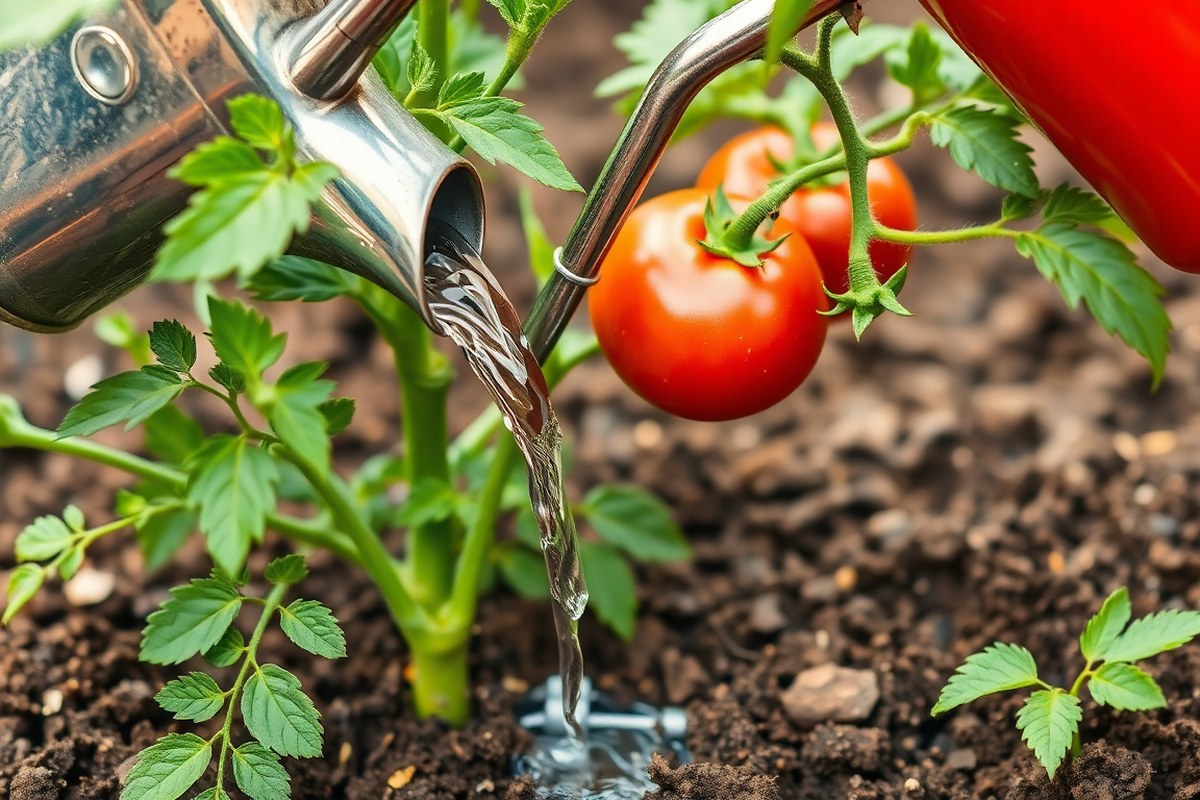
Tomato plants generally use 0.6 to 1 gallon (2.3 to 3.8 liters) daily. This amount shifts depending on growth stage, weather, and pot size.
Seedlings need roughly 0.25 to 0.5 gallons (0.9 to 1.9 liters) every 2 or 3 days. Mature plants drink 1 to 1.5 gallons (3.8 to 5.7 liters) daily.
Growing in a hot climate or container can increase water needs significantly. Potted tomato plants dry out faster than those in the ground. They can need up to 4 gallons (15 liters) of water each day.
This higher need comes from the limited soil volume inside pots. In contrast, those planted in the ground usually require between 1.5 and 2 gallons (5.7 to 7.6 liters) daily, benefiting from deeper soil moisture retention.
To estimate daily water needs, consider the plant’s stage and weather. For instance, during fruiting in warm weather, a mature plant might need 1.5 gallons (5.7 liters) daily. Meanwhile, seedlings need less frequent watering, around 0.5 gallons (1.9 liters) every 2 or 3 days.
Water more often if the soil dries faster than normal. Cut back on watering after heavy rain events. Also, increase watering when daytime temperatures go over 85°F.
How Growth Stage and Climate Influence Water Requirements

Tomato plants need different amounts of water as they grow and depending on the climate. Seedlings require less water than mature fruiting plants. Hot climates demand more frequent watering, while cooler weather lets you water less often.
Seedling Water Needs
Seedlings have small root systems, so they need gentle watering. In a cool climate, water every two days to keep the soil moist but not soggy.
Hot climates call for daily watering. Extreme heat may require watering twice a day.
Too much water at this stage can drown seedlings. Too little slows their growth. Light but regular watering helps establish strong roots before the plant grows larger.
Vegetative and Flowering Stages
During vegetative growth, tomato plants develop leaves and stems. Water every two to three days in cool areas.
But every day or every one to two days in moderate climates. Hot climates need daily watering, and extreme heat may require watering twice a day.
Flowering plants also need stable moisture to support blossom formation. Consistent watering around the base prevents fruit cracking and fungal problems. Deeper watering sessions are better for mature plants than frequent shallow watering.
Fruiting and Ripening Stages
Once fruit appears, the water needs increase with greater leaf area and fruit size. Cool climates need watering every one to two days.
Moderate and hot climates should maintain daily watering. But in extreme heat, plan for twice daily.
Proper water supplied consistently helps avoid sudden swelling of fruit, which causes cracking. Water deeply to anchor the large plants and improve the uptake of nutrients through the roots.
| Growth Stage | Cool Climate | Moderate Climate | Hot Climate | Extreme Heat |
|---|---|---|---|---|
| Seedling | Every 2 days | Daily | Daily | Twice daily |
| Transplant | Every 2 days | Daily | Daily | Daily |
| Vegetative | Every 2, 3 days | Every 1, 2 days | Daily | Daily |
| Flowering | Every 2 days | Daily | Daily | Twice daily |
| Fruiting | Every 1, 2 days | Daily | Daily | Twice daily |
This table helps you plan watering by matching your tomato’s growth stage and climate. Adjust the watering amount to about 1 to 2 inches per week total, including rain. Look at your plant size and leaf area to fine-tune it.
Water in the early morning to reduce evaporation and prevent leaf diseases.
In-Ground vs. Container Tomato Plant Watering Differences
Tomatoes in containers need more frequent watering than those in garden beds. Pots dry out faster because they hold less soil and water. Here’s a clear look at how watering changes depending on where you grow your tomatoes.
Water Requirements for Garden Beds
Tomato plants in soil garden beds soak up water from a large area. They usually need about 1 to 2 inches of water per week. Water deeply but less often to encourage strong roots that grow wide.
Daily watering isn’t usually needed unless the weather is very hot and dry. You can check soil moisture by feeling the top 2 inches.
If that soil feels dry, add more water. Keep checking before each watering to avoid overwatering.
Water Needs for Containers and Pots
Tomatoes grown in pots or grow bags usually need watering every day in warm weather. A standard 20 to 25 gallon container holds about 4 gallons of water.
But it dries out quickly. During heat waves or in greenhouses, watering twice a day might be necessary.
Containers lose water faster because they heat up and drain more than garden soil. Water until the container releases excess water from the drainage holes to ensure thorough soaking.
Adjustments for Raised Beds and Greenhouse Tomatoes
Raised beds drain better than traditional gardens but hold less water. So watering might be needed 3 to 4 times per week. Mulch helps keep moisture steady here.
In greenhouses, you often water daily or more than once. This happens because temperatures stay high and humidity stays low there. Plants dry out faster under these conditions.
Greenhouse tomatoes demand close moisture monitoring. Check soil daily. Don’t let it dry out to keep plants healthy and fruit producing well.
Here’s a table listing watering methods for tomato types. It shows efficiency and water loss for each method. Use it to choose the best watering way for you.
| Method | Efficiency | Water Loss | Best For |
|---|---|---|---|
| Drip Irrigation | 90, 95% | 5, 10% | Large gardens, water saving |
| Soaker Hose | 80, 90% | 10, 20% | Row gardens, raised beds |
| Hand Watering | 70, 80% | 20, 30% | Small gardens, containers |
| Overhead Sprinkler | 50, 70% | 30, 50% | Large areas, lawns |
Hand watering fits containers since it is easier to control the amount. Drip irrigation suits garden beds or raised beds for consistent, efficient watering. Raised beds benefit from soaker hoses to keep roots moist without waste.
How to Check Soil Moisture and Know When to Water
Push your finger 1 to 2 inches deep near the tomato plant. Check if the soil feels moist or dry. That depth gives a good sense of water availability at the root zone.
The soil feeling dry means the plant probably needs water. Soft, moist soil means you can hold off.
Plant roots can dig deeper, especially in ground soil. So dig about 3 inches if you have larger plants or hot weather. Be cautious not to disturb roots.
Check soil dampness below the surface. Dry soil under wet surface harms the plant.
Tomato plants will show clear signs if thirsty or overwatered. Look for these signs around the plant:
- Leaves wilting or curling downwards means thirst.
- Yellowing lower leaves signal overwatering or poor drainage.
- Cracked or splitting fruit from inconsistent water supply.
- Soft, limp stems suggest too much water.
- Slow growth or leaf drop can come from both extremes.
Check soil moisture every day or two, especially in summer’s heat. Morning checks suit best since you can water then if needed. Avoid watering in evening or midday to reduce disease risk.
To get accurate moisture readings, test a few spots near each tomato plant. This helps catch dry patches or overwatering zones. Keep using this habit every few days as weather and plant size changes.
So you water at the right time. That way, water reaches deep roots and keeps your tomatoes healthy.
Best Watering Techniques for Healthy Tomato Plants
Water your tomato plants slowly at the base using drip irrigation or hand watering. These methods save water and help roots grow deep. Avoid spraying water on the leaves to reduce disease risk.
Drip Irrigation Benefits
Drip irrigation delivers water directly to tomato roots through tubes or hoses with small holes. This watering style uses less water than sprinklers.
So you save both money and effort. It also keeps leaves dry, lowering fungal disease chances like powdery mildew.
Setting up drip irrigation usually costs about $20 to $50. Small garden kits fall in this price range. You can install it in a few hours.
Arrange the lines so water drips slowly along each plant’s base. Use a timer to water early morning or late evening to minimize evaporation.
| Watering Method | Efficiency | Suitability | Main Advantage |
|---|---|---|---|
| Drip Irrigation | High (saves water) | Large/small gardens | Targets roots, reduces disease |
| Soaker Hose | High | Raised beds, rows | Slow water release at soil level |
| Hand Watering | Medium | Small gardens, zones | Control over water amount |
| Overhead Sprinklers | Low | Large lawns, not tomatoes | Water on leaves, higher evaporation |
Drip irrigation and soaker hoses give the best water control. Hand watering is good if you water carefully near the base. Sprinklers waste water and may cause leaf diseases.
Hand Watering Techniques
Use a watering can or a hose with a soft spray nozzle. Pour water slowly at the soil near each tomato plant’s stem. This helps water soak in deeply and reach roots.
Water 1 or 2 times a day in hot weather. Aim to give about 1 to 2 inches of water weekly. This total helps keep plants healthy.
Avoid wetting the plant’s foliage. Check soil moisture regularly with your finger or a moisture meter.
Water early morning to reduce evaporation and allow leaves to dry by evening. This practice reduces fungal diseases and helps plants absorb water overnight.
Why Avoid Overhead Sprinklers
Sprinklers spread water high on tomato plants and nearby soil, increasing wet leaves. Wet leaves create ideal conditions for fungal diseases like blight or powdery mildew. These diseases can damage fruit and stunt plant growth.
Water droplets on leaves can also block sunlight and reduce photosynthesis. Sprinklers often waste water because of evaporation and runoff, especially on windy days. Too much water on foliage invites pests that harm your tomatoes.
Use drip irrigation or hand watering at the base instead. These methods keep leaves dry and soil evenly moist, leading to healthier plants and better yields.
Water tomato plants early in the day to let leaves dry and avoid disease.
When and How Often to Water Tomato Plants for Best Results
Water your tomato plants early in the morning. This timing cuts down evaporation and lets plants soak up water all day. Aim to finish watering before 9 a.m. When the sun rises fully.
How often you water depends on temperature and weather. Tomato plants need steady moisture but not soggy soil. Adjust your schedule as conditions change to keep soil moist without overwatering.
Use the table below to decide how often to water tomato plants by weather and temperature. It also helps match watering volume to your season. This guide suits typical home garden setups well.
| Temperature & Weather | Watering Frequency | Water per Session | Key Rule |
|---|---|---|---|
| Above 85°F, sunny | Every 1, 2 days | 1, 2 quarts | Keep top 2 inches moist |
| 65°F, 85°F, partly cloudy | Every 3 days | 1, 1.5 quarts | Soil moist but not wet |
| Below 65°F or rainy | Every 4, 6 days | 1 quart or less | Test soil before watering |
Testing soil moisture before watering guides timing. Check the top 2 inches for dryness. When the soil remains damp, wait before watering.
Here’s the morning watering routine you can try: first, look for dry soil on the surface. Next, water slowly around the base of the plant to let roots absorb deeply. Then, avoid wetting leaves to lower disease risk.
Common Watering Mistakes and How to Avoid Them
Overwatering tomato plants is a common mistake that leads to root rot and yellow leaves. Excess moisture keeps the soil soggy and starves roots of oxygen. You can fix this by cutting back on watering and checking soil moisture first.
Underwatering shows up as wilting leaves and dry, cracked soil. Tomato plants may stop producing fruit if they get too little water. You can help by soaking the soil deeply.
Wait until the top 2 inches are dry. Then water them well.
Watering at the wrong time also harms tomato plants. Watering in the evening leaves wet leaves overnight, which invites diseases. The best time to water is early morning to let leaves dry throughout the day.
- Don’t water daily with small amounts; water deeply every few days instead.
- Check soil moisture before watering to avoid overwatering.
- Aim for morning watering, not at night.
- Adjust watering frequency for hot or windy days.
- Use mulch to keep soil moist and reduce watering needs.
Correct common watering problems by adjusting how much and when you water. Give your tomato plants a few weeks to bounce back after you fix watering errors.
Watch the soil moisture and leaf health closely. This helps grow juicy, healthy tomatoes.
Using Mulch and Soil Amendments to Improve Water Retention
Mulching tomato plants helps keep soil moisture steady. It also cuts watering needs in half during hot months.
It forms a barrier that reduces evaporation and keeps the soil cooler. Over time, organic mulch breaks down, improving soil structure and feeding roots.
Different mulches suit tomatoes, but some work better for moisture retention and weed control. Apply mulch 2 to 3 inches thick around your plants. But keep it an inch away from the stem to stop rot.
Adding soil amendments like compost or coconut coir helps soil hold water. It also improves nutrient retention.
- Straw or hay: Great for moisture retention and weed control
- Wood chips: Slow to break down, good for long-term moisture
- Grass clippings: Use dried ones to avoid matting and bad smells
- Compost: Mix into soil to improve texture and water holding
- Coconut coir: Holds water well, helps sandy or poor soils
- Shredded leaves: Add organic matter and retain moisture
- Kraft paper or newspaper layers: Cheap mulch option, avoid printed ink
Mulching cuts down how often you need to water by holding moisture in the soil. It also stops weeds from stealing water and nutrients from your tomatoes.
Organic matter makes soil spongy, so roots get water between watering days. This helps tomato plants grow better.
Apply mulch in late spring after the soil warms to avoid trapping cold moisture.
Avoid piling mulch against stems to prevent mold and rot. Well-amended soil drains slower, so check moisture levels by feeling the top inch.
Water deeply when this layer dries, rather than frequent shallow watering. Good mulch and soil care mean healthier roots and stronger tomato plants with less daily watering.
Step-by-Step Action Plan for Watering Tomato Plants
Follow these steps to water your tomato plants just right every day. Adjust based on soil feel and plant health.
- Before planting: Prepare soil with mulch or compost to hold moisture. Check that soil drains well.
- Week 1: Water seedlings lightly every day or every other day. Soil should feel moist but not soggy.
- Weeks 2 to 4: Increase watering to 1 to 1.5 inches per week. Water deeply so soil stays wet about 6 inches down.
- After 1 month: Check soil moisture twice a week. Water only when top 1 to 2 inches feel dry.
- During hot or dry weather: Add extra watering days. Monitor plant leaves for drooping or dry edges.
- Once fruit appears: Keep soil evenly moist to prevent cracking. Avoid wetting leaves to reduce disease risk.
- End of season: Reduce watering gradually as plants finish fruiting. Let soil dry out between watering.
Frequently Asked Questions
How Much Water Does a Young Tomato Seedling Need Daily?
A young seedling needs about 0.25 to 0.5 gallons per day. This supports early growth without overwatering or drowning its roots.
Can Overwatering Tomato Plants Reduce Fruit Production?
Yes, too much water can reduce fruit set and cause root problems. It’s important not to keep soil soggy to prevent this.
Does the Type of Soil Affect How Much Water Tomato Plants Need?
Yes, sandy soil drains fast so it needs more frequent watering. Clay soil holds water longer, so water less often.
Can Rainfall Replace Watering for Tomato Plants Completely?
Rainfall can reduce how often you water, but don’t rely on it alone. Check soil moisture to decide if watering is still needed.
How Does Watering in the Morning Benefit Tomato Plants?
Morning watering lets plants dry off during the day, reducing disease risk. It also ensures roots absorb water before heat sets in.
Should You Water Tomato Leaves or Only the Soil?
Water only the soil, not leaves to prevent fungal diseases like blight. Use drip irrigation or water at the base of the plant.
Final Thoughts
Tomato plants need about 1 to 2 inches of water daily, adjusted by growth and weather. Use soil checks to avoid over or underwatering. Start by testing your soil moisture and watch how your plants respond today.