

What Is an Algal Bloom? A Complete Guide to Causes, Types & Effects
What is an algal bloom? It’s a rapid rise of algae in water.
This growth happens when conditions like sunlight, warmth, and nutrients align just right. Too many nutrients from farms, sewage, or urban runoff can fuel it fast.
Algal blooms can change water colour, making it green, blue, or even red. They often produce unpleasant smells from decaying algae.
Some blooms are harmless. But others release toxins that can harm people, pets, and wildlife nearby.
Water temperature and sunlight control how fast blooms grow. Calm, warm days help algae multiply quickly. Heavy rains can wash extra nutrients into lakes or rivers, triggering blooms suddenly.
Keeping an eye on water bodies is key to spotting blooms early. Local authorities use monitoring to manage risks from toxic blooms. Staying away from affected water protects your health and pets’ safety.
Key Takeaways
- Algal blooms happen when nutrient levels in water rise sharply.
- Not all algal blooms are toxic, but some can produce harmful toxins.
- Warm, calm, and sunny conditions encourage blooms to spread quickly.
- Stay away from water with unusual colour, smell, or scum on top.
- Report any suspected harmful blooms to health or environmental agencies.
- Excess fertilizer and sewage runoff often trigger blooms in lakes and rivers.
What Is an Algal Bloom and How Does It Form?

An algal bloom is a rapid rise in algae growing in water. These tiny plants, called phytoplankton, usually float in fresh or saltwater. When too many algae grow fast, their colors show on the water.
The colors range from green to red or brown. You can see this on the water’s surface.
Conditions must align perfectly for an algal bloom to form. Algae need lots of nutrients, warm water, plenty of sunlight, and calm waters without strong winds. When these factors come together, algae multiply quickly and outgrow other aquatic plants.
Warming water speeds up algae growth because it reduces water mixing. This creates stagnant, stable conditions that algae love. More sunlight provides energy for photosynthesis, helping algae double or triple their numbers within days.
Sometimes, algae follow an internal yearly cycle to bloom. For example, Alexandrium fundyense in deep waters blooms at regular times. In shallow waters, factors like temperature shifts trigger rapid algae growth more directly.
As the bloom thickens, dark algae mats absorb more sunlight. The water warms up more, which speeds up algae growth. This creates a cycle that is hard to stop.
The faster growth makes the water even warmer. Nutrients from human activity, like farm runoff, also fuel these blooms.
A fast surge in algae that you can see means problems may begin. You don’t need a microscope to notice this. It often signals environmental troubles ahead.
Decomposing algae consume oxygen, which water animals need to survive. Large algae blooms can kill many fish and spoil the water.
This harms water quality near lakes and coasts. Such blooms are a big worry for nearby communities.
Types of Algal Blooms: Which Are Harmful and Which Are Not?
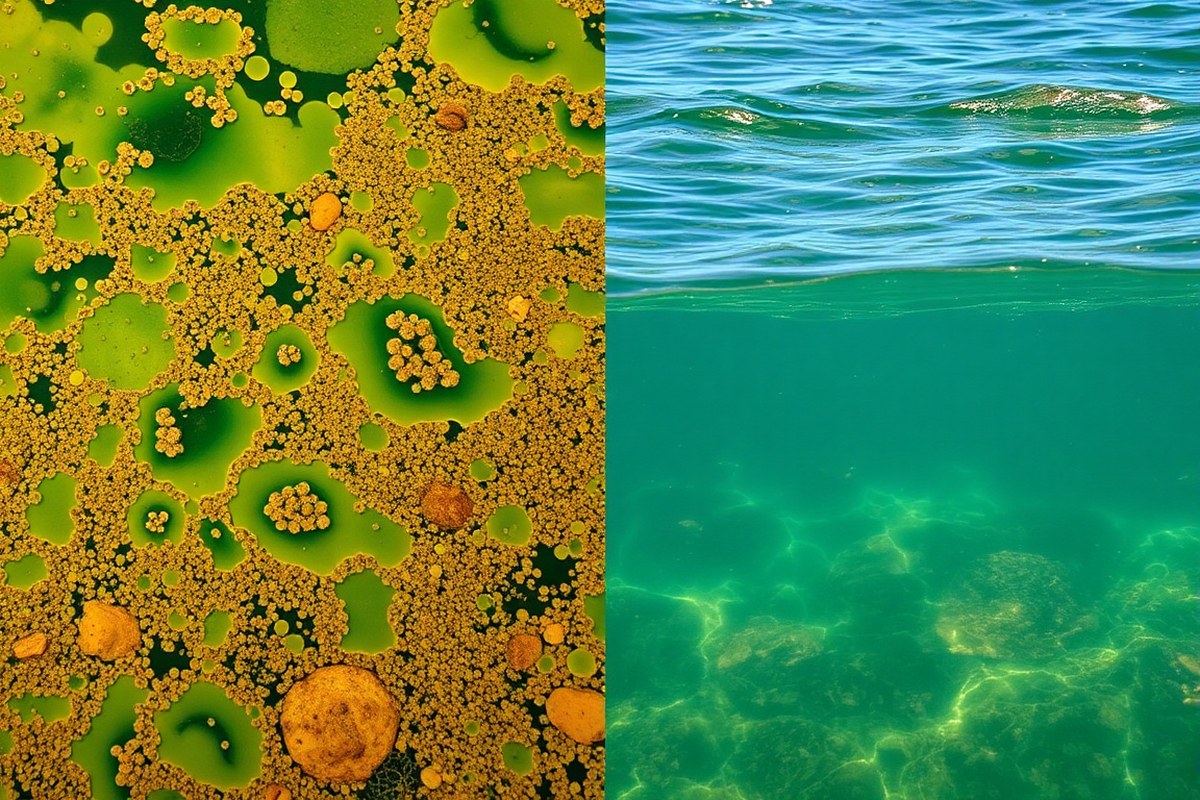
Not all algal blooms are harmful. Some algae grow quickly but do not produce toxins or damage the environment. Harmful algal blooms (HABs) happen when some algae make toxins.
These toxins cause problems for animals, plants, and people. Other algae also cause trouble without toxins.
Algal blooms come from different groups of algae and bacteria. Many HABs are caused by phytoplankton like dinoflagellates or cyanobacteria, also called blue-green algae. These specific types release toxins that can hurt fish, shellfish, marine mammals, birds, and humans.
The table below shows common types of algal blooms. It lists which groups cause them.
It also tells if they produce toxins or other issues. Knowing this helps communities and officials decide when a bloom is a serious health risk.
| Algal Bloom Type | Organism Group | Toxicity | Examples |
|---|---|---|---|
| Harmful Algal Bloom | Dinoflagellates | Produces toxins | Red tides, Paralytic Shellfish Poisoning |
| Harmful Algal Bloom | Cyanobacteria (blue-green algae) | Produces toxins | Microcystins, contaminated freshwater lakes |
| Non-toxic Algal Bloom | Green algae | No toxins, can disturb ecosystems | Dense green scum on freshwater |
| Non-toxic Algal Bloom | Diatoms | No toxins, sometimes causes foam | Brownish water discoloration |
Even non-toxic blooms can hurt aquatic environments by blocking sunlight or using up oxygen. Toxic HABs cause more damage than other blooms.
Their poisons can contaminate water, seafood, and nearby air. This contamination harms many living things.
Never touch or swim near an algal bloom unless local health officials say it’s safe.
HABs can happen in both freshwater and marine water. Agencies like NOAA handle marine HABs, while the EPA focuses on freshwater blooms.
Identifying the algae type and toxicity helps manage risks and plan cleanups. Public reports and monitoring improve safety and prevent exposure to toxins.
Why and Where Do Algal Blooms Occur?
Algal blooms happen most often in waters rich in nutrients, especially nitrogen and phosphorus. These nutrients come from natural sources. Most come from human actions like farming runoff.
Sewage leaks also add to the nutrient levels. Excess nutrients speed up algae growth, causing dense patches on lakes, rivers, and coastal waters.
Natural events also influence blooms. Heavy rains can wash more nutrients into water bodies. Calm, warm weather with plenty of sunlight promotes algae growth.
Changes in water flow can cause sudden nutrient surges. Upwelling can do this too. This favors toxic algae, especially in salty coastal zones.
Climate change adds another factor by raising water temperatures and altering rainfall patterns. Warmer water and longer warm seasons help algae multiply faster and can extend bloom seasons. Climate shifts change ocean currents and salinity.
These changes affect when and where blooms appear. This is clear in New England and worldwide.
Lakes and rivers near farms often have more blooms. Urban areas add to nutrient pollution too. These places are hotspots for blooms.
Lake Erie had a bad toxic bloom in 2014. It left 500,000 people without safe drinking water. This shows how serious blooms can be.
Big rivers carry nutrients far downstream. This can cause blooms many miles away. The Murray River in Australia is one example.
Algal blooms occur in fresh, salt, and brackish waters worldwide. The exact mix of factors depends on the location. Warmer temperatures change food webs and pollution levels.
Invasive species also play a part. These effects vary by region. Managing these blooms means controlling nutrient sources and understanding local natural cycles.
Environmental, Economic, and Health Effects of Algal Blooms
Algal blooms can damage ecosystems by using up oxygen and blocking sunlight. This suffocates fish and underwater plants, leading to dead zones where life struggles to survive. Toxic blooms release poisons that harm many creatures, including fish, birds, and shellfish.
People face risks too, especially with toxic blooms. Skin contact or swallowing water during a bloom can cause rashes, vomiting, or diarrhea. Some toxins affect the nervous system, creating more serious health problems.
Pets and livestock can get very sick from toxic algae. They can even die from this exposure. Protect your animals by avoiding contaminated water.
These blooms cause big financial problems for communities relying on fishing and recreation. Small fishermen often lose income fast due to fish kills or unsafe seafood.
Tourism drops when beaches close to protect public health. Costs add up in monitoring water, closing areas, and treating illnesses.
Many freshwater blooms in the U.S. Now cost about $4.6 billion every year. This number includes medical bills, lost wages, and reduced business income.
Local governments must spend money on testing and cleanup efforts too. These expenses hit small towns especially hard since they have fewer resources.
Trying to manage these blooms means paying attention before they grow large. Early warnings help protect water supplies and reduce health risks. Agencies use tools to track blooms.
So communities can close beaches or waters as needed. People should follow local alerts and keep pets away from affected waters during an outbreak.
How Long Do Algal Blooms Last and How Do They Change over Time?
Algal blooms usually last from several days to a few weeks. Sometimes, they can persist for several months if conditions stay favourable. Factors like nutrient levels and temperature affect how blooms grow.
Sunlight and water movement also change how fast blooms shrink. These controls determine bloom length and size.
Warmer water temperatures and excess nutrients from runoff feed the algae, letting the bloom get larger. Calm, low-wind days help algae stay near the surface, giving them more sunlight to multiply. When these conditions change, like cooler temperatures or reduced nutrients, the bloom starts to break down.
The lifecycle starts with algae slowly building up. They look for the right nutrient and temperature balance. This slow start sets the stage for growth.
Rapid growth then occurs over days or weeks. Rain can add fertilizers, speeding up this growth. These bursts cause blooms to expand quickly.
Blooms reach a peak and then shrink. This happens when nutrients run out or storms cool the water. Mixing from storms can also stop growth.
At Lake Winnipeg, algal coverage has grown for 30 years. The steady rise is due to ongoing nutrient pollution. This shows pollution’s long-term impact.
Some blooms make toxins that change each week. Conditions like temperature and nutrients alter toxin amounts.
This makes toxicity unpredictable. This means a bloom might be harmful one day and less so shortly after.
Watch local water reports closely during warm months. Check especially after heavy rains for harmful blooms. Staying alert helps avoid health risks.
Detecting, Monitoring, and Reporting Harmful Algal Blooms
Detecting harmful algal blooms starts with knowing what signs to watch for. You can also use scientific tools to confirm their presence. Reporting what you see helps experts track blooms and alert communities.
Visual Signs to Look For
Look for discolored water that appears green, blue-green, red, or brown. Some blooms look like paint spilled on the water surface or form thick mats. Dead fish or unusual odors near the water also signal a bloom may be happening.
Sometimes, the water smells rotten or like chemicals. Blooms happen in lakes, ponds, bays, and rivers. They form where water looks still.
Warm water often helps blooms grow. Sightings at different spots along a water body help know how widespread the bloom is.
Using Water Testing and Remote Sensing
Water tests measure toxins or algae concentrations to confirm harmful blooms. You can collect samples in clean bottles from the surface or just below it. Sending samples to a local lab helps identify the bloom type and risk level.
Remote sensing from satellites and drones tracks blooms by detecting changes in water color or brightness. NOAA gives free reports on blooms. They cover places like Lake Erie.
The Gulf of Maine is included too. Environmental DNA (eDNA) tests detect harmful algae early by finding genetic material in the water.
Reporting Bloom Occurrences
Report blooms to environmental agencies or local health departments quickly. Tell when and where you saw the bloom. Describe how the bloom looked to you.
Report any effects on animals or water use. Photos and exact locations (GPS coordinates) improve response accuracy and speed.
Most states have dedicated phone lines or online forms for harmful algal bloom reports. Check NOAA’s Harmful Algal Bloom Forecast System too. It gives updates on current blooms.
It also shows how to report blooms. Prompt reports help manage water safety and protect public health.
Follow these steps to detect and report an algal bloom you suspect:
- Observe the water for unusual colors, scums, or dead fish.
- Take photos showing the bloom clearly and note the exact location.
- Collect a water sample carefully if you have clean containers available.
- Use local resources or NOAA’s online tools to check for bloom alerts.
- Contact your local environmental agency or health department promptly.
- Provide detailed information including date, location, bloom description, and photos.
- Follow safety advice from authorities and avoid contact with bloom-affected water.
Practical Prevention and Management Strategies for Communities
Communities can prevent algal blooms largely by cutting back on nutrient pollution. Managing the sources of nitrogen and phosphorus helps stop algae from growing too fast. When blooms start, treatments like aeration or chemicals can help.
They control blooms but cost a lot. Large lakes or coasts are harder to treat this way.
Reducing Agricultural Runoff
Runoff from farms is a main source of nutrient pollution. Farmers can help by timing fertilizer use carefully to avoid rain washing it away. Adding buffer strips of plants along waterways catches nutrients before they reach the water.
Sustainable farming also means rotating crops to improve soil health and reduce fertilizer needs. These steps keep nutrients on the land and out of rivers, lowering bloom risk. Actions to try include:
- Apply fertilizers only when crops need them and soil can absorb nutrients
- Use buffer strips with grasses or trees along streams and ditches
- Rotate crops to keep soil fertile without excess fertilizer
- Manage manure carefully to prevent leaks and runoff
- Maintain healthy soil to reduce erosion and nutrient loss
These methods take planning and some investment but improve water quality steadily. Rain patterns affect runoff amounts, so monitoring helps adjust practices.
Sewage and Stormwater Treatment Improvements
Wastewater plants often release nitrogen and phosphorus into local waters. Upgrading these facilities reduces nutrient loads by removing more before discharge. Communities have lowered blooms by investing in advanced treatment technology.
Stormwater from cities carries fertilizers, pet waste, and chemicals. Adding green infrastructure like rain gardens and permeable pavement slows runoff and traps nutrients on land. These tools help urban areas cut bloom-causing pollution.
Steps to consider are:
- Improve sewer treatment to remove more nutrients
- Install rain gardens or bioswales to absorb stormwater
- Use permeable pavement to reduce runoff volume
- Fix sewage leaks promptly to prevent contamination
- Educate residents on reducing fertilizer and waste runoff
Some improvements need large budgets and planning. Long-term benefits include cleaner lakes and fewer algae problems.
Using Clays and Chemical Treatments
When blooms appear, treatments like clay can remove algae by making it sink. Chemical algaecides kill algae but risk harming other water life. These options suit small waterbodies, not large lakes or coasts because of cost and environmental impacts.
Aeration adds oxygen, disrupting blooms and improving water health. However, it requires power and infrastructure, limiting its use to certain sites. NOAA works on safer, more affordable methods but prevention remains the best path.
Common control methods include:
- Applying specially designed clays to settle algae from water
- Using aerators to raise oxygen levels and reduce blooms
- Carefully applying algaecides under expert guidance
- Monitoring treatment effects to avoid damage
These treatments can cost thousands for small areas. They work less well if nutrients remain high. Removing nutrient pollution first makes control work better.
Common Myths, Mistakes, and How to Stay Safe Around Blooms
Some common myths say all green or colored water is safe to swim in. Many people ignore warning signs and swim too close to blooms. Recognizing risk signs protects you and pets from harmful exposure.
Myth: All Green Water Is Harmless
Green or discolored water often signals an algal bloom, not just harmless algae. Toxic blooms can release substances harmful to skin, lungs, and internal organs.
Not all green or red water means danger. But many toxic blooms look similar to non-toxic ones. Assume caution when water looks unusually colored or murky.
Mistake: Ignoring Toxin Warnings
Skipping posted warnings or beach closures puts you at risk of allergic skin reactions or worse. Breathing in airborne toxins, especially near blooms, can cause difficulties breathing.
Often, people don’t realize water with blooms hides dangers below. Sharp debris or strong currents might be under the surface.
These risks can make water unsafe to swim in. Stay off water marked with bloom alerts to avoid these hazards.
Safety Measures for Pets and People
Keep pets out of water showing signs of bloom. Dogs and cats can get severe poisoning from drinking or swimming in these waters.
Wash your skin and clothes thoroughly after any water contact near visible blooms. Wear a mask if airborne particles near bloom areas cause irritation.
Avoid water with visible scum or unusual color, even if no sign is posted.
Recognizing Toxic Bloom Indicators
Toxic blooms often look like thick mats or scum on the surface. They may color water green, blue-green, red, or brown due to dense algae cells.
Any unusual foul or musty odor from water may point to a bloom producing harmful toxins. Avoid swimming, diving, or allowing pets near this water.
Step-by-Step Action Plan to Handle Algal Blooms
Follow these steps to spot, prevent, and manage algal blooms in your area. Each stage shows you what to do and how to tell it’s working.
- Before bloom season: Check local water quality reports weekly. Notice fewer red flags or warnings.
- At first signs: Report odd water colors or smells to local authorities. Confirmation means early detection is working.
- During a bloom: Avoid swimming or fishing in affected waters. Health departments usually say when it’s safe again.
- While the bloom lasts: Use natural or approved treatments like aeration if allowed. Watch for clearer, less smelly water.
- After the bloom ends: Clean up nearby fertilizer sources and waste. Look for fewer blooms next season.
- Year-round: Educate your community about runoff and safe gardening. Resistance to blooms should improve gradually.
Frequently Asked Questions
Can Algal Blooms Affect Drinking Water Safety?
Yes, toxic algal blooms can contaminate drinking water. In 2014, 500,000 Americans lost safe water due to a bloom in Lake Erie. Always check local water advisories during bloom events to stay safe.
Do Algal Blooms Only Happen in Warm Weather?
No, algal blooms can occur in different seasons. Temperature impacts growth, but factors like nutrients and sunlight matter too. Some blooms happen in early spring or fall, not just summer.
Can Pets Get Sick from Algal Blooms?
Yes, pets can get poisoned by toxic algal blooms. Dogs are especially vulnerable when swimming or drinking affected water. Keep pets away from discolored water and contact a vet if symptoms appear.
What Role Do Nutrients Play in Algal Blooms?
Excess nutrients like nitrogen and phosphorus fuel algal blooms. These come from fertilizers, sewage, and runoff. Managing nutrient sources helps reduce bloom frequency and severity.
Are Algal Blooms Predictable?
Scientists improve HAB predictions using genetics and environmental data. Systems like NOAA’s forecasts help warn communities in places like Lake Erie. Tracking blooms early allows better preparation and response.
Can Algal Blooms Cause Long-Term Ecosystem Damage?
Yes, toxic blooms can disrupt aquatic life for years. They reduce oxygen, kill fish, and alter biodiversity. Recovery depends on bloom severity and ongoing nutrient control.
Wrapping Up
Algal blooms happen because of extra nutrients and still water. You can help protect your local lakes by spotting early signs and reporting them. Start by learning your lake’s quality updates this month.


