
Does a Pine Tree Have a Tap Root? Answers and Root System Insights
Does a pine tree have a tap root? Yes, many pine trees start life with a tap root.
This main root grows straight down to anchor the seedling firmly into the soil. However, this tap root often shrinks or stops growing as the tree matures.
As the pine grows, lateral roots become the main support system. These roots spread wide near the soil’s surface to absorb water and nutrients. Young pine trees need a tap root to grow strong.
Older pine trees mostly depend on shallow side roots. This change helps them get water and nutrients better.
Knowing this helps you understand pine root behavior during planting or root removal. Watch out for widespread lateral roots near the surface before digging. It’s best to assess root types by tree age and local species before handling roots.
Key Takeaways
- Pine seedlings usually have a tap root that grows straight down early on.
- Lateral roots mostly replace the tap root as the pine tree matures.
- Most pine roots spread wide near the soil surface within 12 to 18 inches.
- Older pine trees depend more on lateral roots for support and nutrient uptake.
- Expect less tap root development in mature pines compared to young trees.
- Check root growth patterns before digging to avoid damaging large lateral roots.
Do Pine Trees Have a Tap Root?
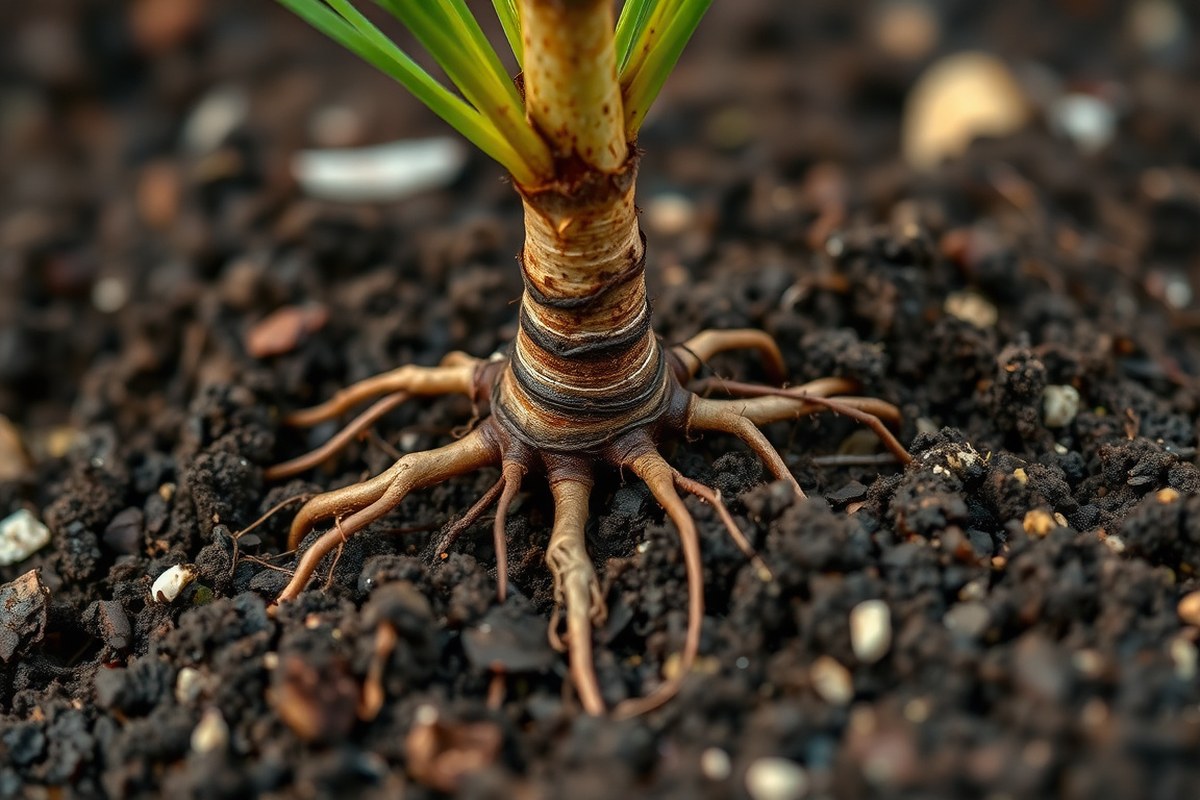
Pine trees usually do not keep a taproot as they grow older. Young pine seedlings start with a taproot. This taproot helps anchor the tree.
It also reaches deep water for the tree. As the pine grows, the taproot shrinks or disappears.
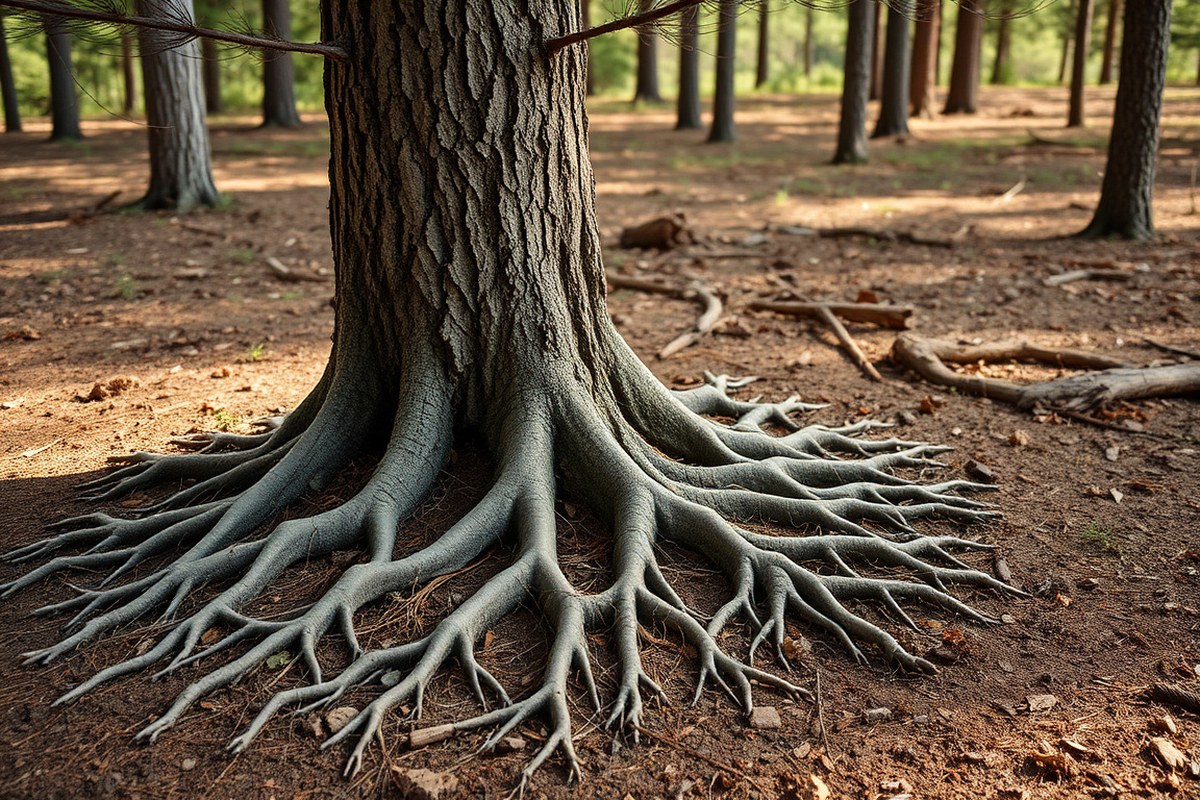
Lateral roots spread widely instead. These roots help support the tree.
Not all pine species develop a clear taproot at maturity. Longleaf pine seedlings grow a deep taproot. It can reach 8 to 12 feet deep.
This taproot helps with stability and nutrients. Austrian and Eastern white pines use mainly lateral roots.
The taproot forms about 15% of root biomass. This is for mature trees, according to research.
| Common Pine Species | Taproot Presence at Seedling Stage | Taproot Status at Maturity | Typical Taproot Length (feet) |
|---|---|---|---|
| Longleaf Pine (Pinus palustris) | Yes, strong taproot | Retains deep taproot | 8 to 12 |
| Eastern White Pine (Pinus strobus) | Yes, present in seedlings | Mostly lateral roots, minor taproot | Less prominent, under 5 |
| Austrian Pine (Pinus nigra) | Often shallow taproot | Dominant lateral root spread | Minimal or none |
Taproot development depends on soil conditions and disturbance too. Hard soil or past land damage can stop a taproot from forming. It may also kill a taproot if it already started.
Pines lose their taproot often during nursery transplanting. This affects how roots grow after planting. It changes the pine’s root system development.
Pines between 25 and 30 years old mature fully. They grow lateral roots spreading as wide as their height. This root spread helps support the tree.
Pine roots can grow between 35 and 75 feet deep. Depth depends on soil type and climate factors.
Good soil and climate allow deeper roots. This variety in root structures helps pine trees stay stable and resilient in many environments.
How Pine Root Systems Change as Trees Mature
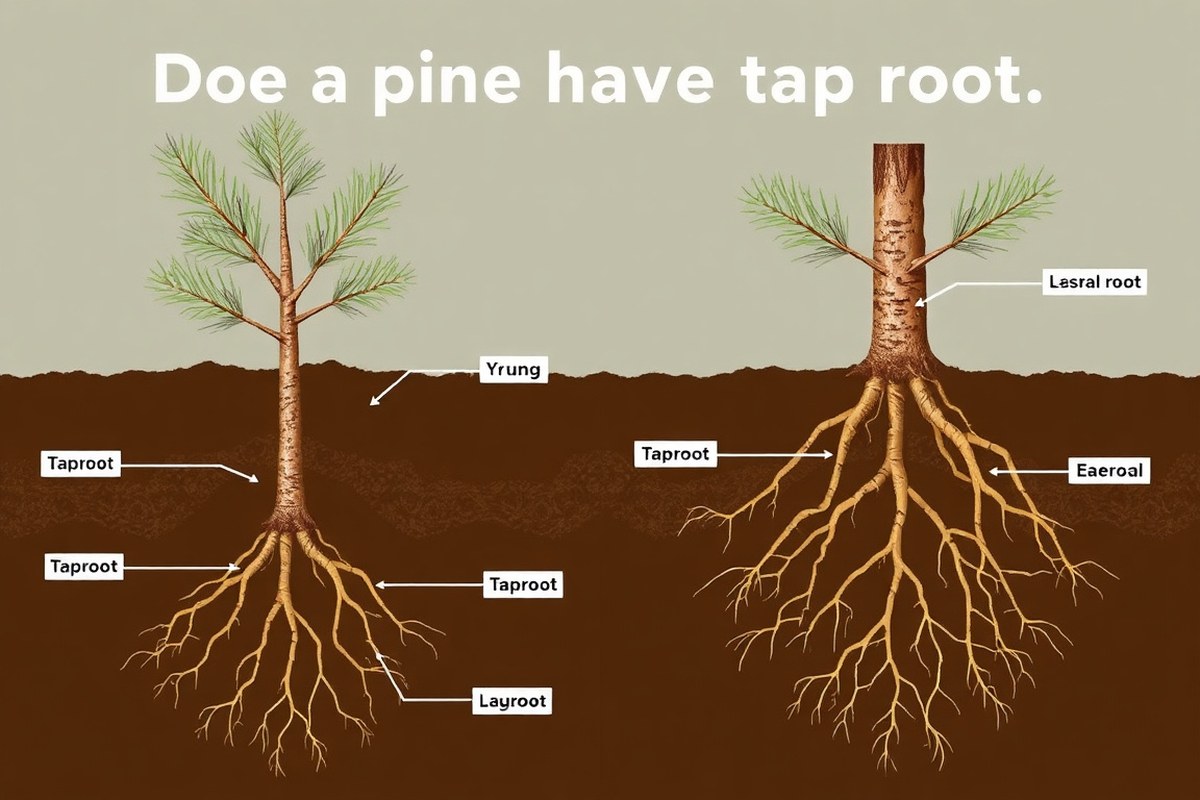
Pine trees start with a strong taproot as seedlings. But this taproot fades in importance as the tree grows. Over time, lateral roots spread out over a wide area.
They carry most of the tree’s support. They also take in most nutrients for the tree.
Mature pines keep some taproot. But their root system is mostly lateral, extending far beyond the canopy.
Seedling Stage: Taproot Development
At the seedling stage, pine trees produce a primary taproot that grows straight down. This root anchors the young tree deeply and helps it access water from deep soil pockets. The taproot often grows several inches during the first few months.
During this phase, small lateral roots start growing from the taproot’s sides. These thin roots explore the near-surface soil for nutrients and moisture. The young pine depends heavily on its taproot for stability.
Transition Phase: Taproot Decline and Lateral Growth
After about 2 to 5 years, the pine’s taproot slows in growth and becomes less dominant. The tree begins focusing growth energy on lateral roots. These lateral roots expand sideways, sometimes past the tree’s drip line.
Lateral roots become thicker and spread quickly when soil conditions near the surface are good. The taproot doesn’t disappear but plays a smaller role in water and nutrient absorption. The lateral roots form a broad, shallow network.
Mature Stage: Dominance of Lateral Roots
By around 10 years old, most pines rely on a lateral root system for stability. The lateral roots extend outward well beyond the treetop edges. This extensive network collects most oxygen and nutrients.
Some species, like Ponderosa pine, keep a taproot that reaches deeper soil layers. Still, the wide lateral roots provide better support and resource uptake in mature trees. This root structure reduces damage risks to nearby foundations.
Young pines have a strong vertical anchor. But mature pines feature an extensive sideways root system. Check the steps to observe and understand pine root changes over time:
- Plant a pine seed and watch for the primary downward taproot.
- Monitor young seedlings for lateral root growth alongside the taproot.
- Record growth patterns over 1 to 3 years, noting taproot size vs lateral root spread.
- Check for slowed taproot growth and increased lateral root width after 3 years.
- Observe mature trees (over 10 years) for wide lateral root networks beyond the canopy.
- Compare root depth and spread among different pine species if possible.
- Note any retained taproot depth in species like Ponderosa pine.
- Use this knowledge when planning tree placement near structures or gardens.
Expect lateral roots to extend farther out than the tree’s drip line as pines age. Avoid planting too close to buildings or pipes.
Factors Influencing Pine Root Depth and Spread
Pine root depth and spread depend on soil type, species, climate, and nearby plants. These factors affect how deep the roots grow and how far they stretch. Understanding them helps you manage pine trees better in your yard or landscape.
Soil Texture and Drainage Effects
Sandy, silty, or loamy soils allow pines to develop deeper roots. These soils have medium particle sizes from 0.002 to 0.02 mm. They drain well and provide good moisture and oxygen levels for roots.
Pines struggle in heavy clay soils because water and air don’t reach the roots easily. Poor drainage keeps roots shallow and weak. Well-drained soils encourage taproots or deep sinker roots, especially in dry climates.
Species Variation in Root Depth
Different pine species vary in root depth and spread. Some species grow roots deeper in porous soils but lack a true taproot like hardwoods. Ponderosa pine, for example, can reach root depths of 10 to 15 feet in good soil.
Most pine roots spread wide but stay near the soil surface. They usually grow within the top 12 to 24 inches of soil. This shallow spread helps the tree absorb water and nutrients efficiently.
Roots often extend out three times wider than the tree’s canopy. Species differences guide how far and deep roots go.
| Species | Typical Root Depth | Soil Preference | Root Spread |
|---|---|---|---|
| Ponderosa Pine | 10 to 15 feet in deep soil | Well-drained, porous | Up to 3x canopy width |
| General Pine Species | 12 to 24 inches mainly | Sandy, silty, loamy | 3x or more canopy width |
| Species in Poor Drainage | Shallow, under 12 inches | Heavy clay or compacted | Limited root spread |
Knowing species and soil helps set realistic watering and planting plans. Deep roots anchor the tree and improve drought resistance in good soil.
Impact of Moisture and Competition
Moisture levels in the soil affect how deep pine roots grow. Higher moisture encourages roots to extend deeper for more nutrients. Dry conditions push some pines to develop deeper sinker roots.
Competition from other plants can limit root spread. Nearby trees and shrubs compete for water and space. Pines may send roots deeper or spread wider to avoid crowded areas.
Managing nearby plants and watering properly supports healthy root systems. Avoid overwatering compacted soils since roots need oxygen as much as water.
Comparing Taproots and Lateral Roots in Pines
The taproot in trees usually grows straight down and serves to anchor the tree. It also reaches deep water and nutrients not available to surface roots. Pine trees rarely develop a strong taproot.
They grow lateral roots instead. These roots spread wide just under the surface.
Lateral roots in pines spread horizontally and form most of the root system’s biomass. Studies show lateral roots make up most root weight. They can be 80 to 90 percent of it.
This shows how important they are. Lateral roots stabilize the tree by growing far underground.
They absorb water and nutrients over a large soil area. This feeding helps the pine tree grow.
The lateral roots are key to a pine’s survival in poor soils or windy places. The roots hold the tree firmly in place. They get nutrients from upper soil where organic matter is common.
This supports the tree’s health and stability. Without a deep taproot, pines rely on this network to keep stable and grow well.
Almost all the support and nutrient uptake in pines come from their lateral roots. The taproot, if present, is often small and short-lived. The taproot has a minor role anchoring the tree.
It also takes in fewer nutrients than lateral roots do. Its role is small compared to spreading roots.
Knowing which roots have most biomass helps with landscaping. It also matters for construction near pine trees. This info guides how to protect the tree’s roots.
Since lateral roots dominate, disturbance near the surface affects the tree more severely. Digging near pines first hits spreading lateral roots.
A deep taproot is rare and usually small. So, most roots you find lie near the surface.
Gardeners and arborists should therefore focus on protecting lateral roots to keep pines healthy. Cutting or compacting lateral roots reduces tree stability. It also limits nutrient access for the tree.
This can cause stress or lead to the tree declining. The taproot is small and less helpful for support.
Lateral roots provide the long-term strength and nutrition instead. The taproot doesn’t help as much.
Safety Considerations When Removing Pine Roots
Cutting pine roots too close to the trunk can cause serious stability problems. It’s best to avoid root cuts within 10 feet of the trunk.
Roots near the base support the tree’s weight and keep it steady. So damaging them raises the risk of the tree falling later on.
Root removal can stress the tree and even kill it if done carelessly. You need to clear the soil 6 to 12 inches around roots before cutting.
This step helps avoid tearing the bark and disturbing too much soil. Always use hand tools like shovels, axes, or saws carefully to minimize damage.
Never cut roots closer than 10 feet unless a professional assesses the tree’s stability first.
Here are safety steps to follow when cutting pine roots:
- Wear safety goggles and ear protection when using power tools.
- Dig 6, 12 inches around each root to clear soil before cutting.
- Use sharp hand tools for clean cuts to prevent bark tearing.
- Keep all cuts at least 10 feet away from the pine’s trunk.
- Do not remove too many lateral roots at once to avoid stress.
- Water the tree well before and after cutting to reduce shock.
- Inspect the tree regularly after root removal for signs of stress.
Root cutting’s impact varies by pine species and soil type. Trees with shallow roots handle cutting differently than those with deeper systems.
Before starting, check if your pine has a true tap root or mostly lateral ones. So you know what to protect.
Removing roots far from the tree or cutting only smaller ones reduces risks. But removing roots under the root protection zone risks tree health and safety. Sometimes you need to leave the stump in place to keep roots intact.
You may also want to call an arborist for advice. They can help with the best approach. This extra care lowers the chance of tree failure or costly damage.
Root removal costs time and effort. But careful work avoids future problems and keeps your pine healthy.
Proper Methods for Removing Pine Tree Roots
Removing pine tree roots can be done manually, mechanically, or chemically. Each method has pros and cons. They depend on your goal.
Also, consider the tree’s health. Manual removal is safest for trees but takes more time and effort.
Manual root removal works best for young or small pine trees. Start by digging around the main root zone with a shovel. Cut roots about 6 inches from the trunk using a hand saw or loppers.
Pull out loosened roots carefully to avoid damaging the tree. You may need to water and treat the area to promote healing. This method usually takes several hours or days, depending on root size.
Mechanical removal uses heavy machines like excavators or stump grinders. It’s very fast and effective for large roots but often damages or kills the tree. You might remove some aboveground roots, yet the pine may not survive.
Mechanical removal raises soil erosion risk a lot. It can increase by up to 50%. The US Forest Service reports this.
Chemical root removal involves applying herbicides directly to roots. This method kills roots over weeks to months. It may leave the main trunk standing but eventually kills the tree.
Chemicals can harm nearby plants and require careful handling and local approval. This approach suits areas where complete root death is needed without excavation.
| Method | Speed | Tree Safety | Soil Impact | Tools/Materials |
|---|---|---|---|---|
| Manual | Slow (hours to days) | High (can save tree) | Low | Shovel, hand saw, loppers |
| Mechanical | Fast (minutes to hours) | Low (likely kills tree) | High (up to 50% more erosion) | Excavator, stump grinder |
| Chemical | Slow (weeks to months) | Low (kills roots/tree) | Medium (possible chemical contamination) | Herbicides, sprayers |
Select a removal method based on tree size and your outcome. Use manual removal if you want the pine tree to survive.
Mechanical removal works for clearing large root systems quickly but expect tree loss and soil damage. Chemical tools fit spots where digging isn’t feasible but take longer.
For manual removal, avoid cutting roots close to the trunk to prevent stress. Moving slow and steady helps keep the tree healthy post-removal.
Mechanical and chemical methods need local permission and safety gear. Choosing the right method depends on tree age, root size, and your tolerance for soil effects.
How Soil and Environment Affect Pine Root Growth
The type of soil has a big impact on pine tree root growth. Sandy soil lets water drain quickly and air move freely, encouraging roots to grow deeper.
Clay soil holds water longer but has less oxygen. So roots spread out near the surface instead of going down.
When soil stays wet or compacted, pine roots tend to stay shallow. Poor drainage or heavy clay blocks oxygen from deeper roots. This forces the tree to rely on surface roots.
Surface roots get water and nutrients instead. Dry soil can also limit root depth because roots need moisture to grow stronger and longer.
Pines adjust their roots to survive tough soil conditions. In poor or rocky soil, pine trees grow more lateral roots. These roots stay near the top.
They catch water from rain and dew. This spreading helps stability and nutrient uptake when deep roots can’t develop well. Roots also respond to soil temperature, growing best between 55 and 75°F to maximize activity.
Managing soil helps pine roots stay healthy and strong. You can improve clay soils by adding compost or coarse sand to boost drainage and oxygen.
Avoid compacting soil around the trunk by limiting heavy foot traffic or machinery. Mulching keeps soil cool and moist, which encourages deeper root growth.
Watering strategies matter too. Deep, infrequent watering encourages pine roots to grow downward in search of moisture. Shallow, frequent watering keeps roots near the surface.
These roots don’t go deep. That can make trees weaker during drought. Monitoring soil moisture with simple probes or finger tests helps you know the best watering timing.
Healthy pine roots resist disease and hold the tree firmly. Poor soil or bad watering habits cause shallow roots. Shallow roots raise the risk of wind or storm damage.
Trees become less stable this way. Improving soil quality helps pine trees support themselves better.
Managing moisture is also important. Together, these steps strengthen a tree over time.
Variations in Pine Taproot Development by Species
Some pine species keep their taproots longer and deeper than others. Longleaf pines grow a deep taproot that lasts well into maturity. Eastern White pines start with a taproot when young.
They quickly switch to a fibrous root system. They lose their taproots early on.
Longleaf Pine Taproot Characteristics
Longleaf pine seedlings grow a strong taproot. It can reach 3 to 6 feet deep. This happens during the first year.
This taproot helps the tree access deep water during dry spells. The taproot often remains dominant for several years.
As the tree grows, lateral roots develop but the taproot stays longer compared to other pines. This deep root is one reason longleaf pines survive well on sandy or poor soils. Maintaining the taproot supports stability and drought resistance.
Eastern White Pine Root Traits
Eastern White pines begin with a taproot. They lose it within 1 to 2 years. This happens after germination.
They soon develop a shallow, wide-spreading root system. This fibrous network spreads out to capture surface water efficiently.
This root pattern suits moist and fertile soils where deep water isn’t critical. The fibrous roots also help with wind resistance by anchoring closer to the surface. Rapid taproot loss lets Eastern White pines adapt to varying conditions.
Species Less Likely to Maintain Taproots
Pines like Scots pine (Pinus sylvestris) and Lodgepole pine tend to lose their taproots early. These species shift focus to lateral roots within the first year or two. Their roots spread horizontally to gather nutrients near the surface.
Early taproot loss usually happens in species growing in moist or compacted soils. Shallow root systems can be less stable but quicker to exploit available nutrients. That tradeoff depends on soil type and climate.
Here’s a quick reference comparing taproot presence among common pines:
| Species | Taproot Duration | Typical Taproot Depth (1st Year) | Root System Type |
|---|---|---|---|
| Longleaf Pine | Retained several years | 3-6 feet (0.9-1.8 m) | Deep taproot with lateral spread |
| Eastern White Pine | Lost within 1-2 years | 1-2 feet (0.3-0.6 m) | Fibrous, wide-spread lateral roots |
| Scots Pine | Lost early (1 year) | Less than 1 foot (0.3 m) | Shallow lateral roots dominate |
| Lodgepole Pine | Lost early | Less than 1 foot (0.3 m) | Shallow lateral roots |
To assess taproot development in your pine species, follow these steps:
- Identify your pine species by needle length, cone shape, or bark texture.
- Check seedling age to know typical taproot stage (usually first 1-3 years).
- Dig carefully near the base to expose the root system without breaking roots.
- Measure root depth focusing on the largest downward root.
- Compare findings to common taproot lengths for your species in local soil.
- Assess soil conditions, as sandy soils support longer taproots than clay soils.
- Observe if lateral roots are beginning to branch early; this may indicate taproot loss.
- Repeat checks yearly to monitor root system changes over time.
Don’t dig too deep or close to the trunk. You risk harming the tree’s roots.
Step-by-Step Action Plan for Managing Pine Tree Roots
Follow these steps to handle pine tree roots safely and effectively. This plan helps keep your trees stable and your soil healthy.
- Before planting: Check your soil type and drainage to expect root growth. Pine roots grow best in well-drained, sandy soils.
- At planting: Plant young pine trees deep enough to encourage taproot growth. You’ll see stronger tree stability after the first year.
- Within first 3 years: Monitor for lateral root spread near the surface. This shows the taproot is maturing and roots are establishing.
- After 3 years: Avoid heavy digging near the trunk to protect the taproot and main roots. Damaged roots can cause instability or poor health.
- If removal is needed: Use hand tools to carefully loosen soil around large roots. Successful removal means the tree can be replanted or the stump fully cleared.
- After root removal: Fill holes with loose soil and water well to prevent settling. Healthy soil helps nearby plants and trees recover.
- Ongoing care: Mulch the base and keep roots shaded to prevent drying out. Roots stay healthier with consistent moisture and protection from heat.
Frequently Asked Questions
Does a Pine Tree Have a Tap Root?
Pine trees usually don’t keep a tap root as adults. Seedlings start with one main root.
As they grow, roots go wide and shallow. This helps them stay supported and get nutrients.
How Deep Can Pine Tree Roots Grow?
Pine roots can reach 3 to over 75 feet deep. This depends on tree size, species, climate, and spacing.
Do Pine Roots Damage Foundations?
Mature pine roots spread wide and shallow. They usually don’t get down to deep foundations.
This reduces risks to deep building bases. Still, keep trees about 20 feet away from buildings to avoid risk.
How Quickly Do Pine Tree Roots Develop?
Pine trees get deep roots slowly, taking 25-30 years to mature fully. Root spread matches this growth pace.
Can You Use Pine Tree Roots for Mulch?
Pine roots don’t make good mulch. They’re woody and break down slowly, so sticks and needles work better.
Are Pine Tree Roots Easy to Dig Up?
Pine roots can be tough to remove. Their wide spread and depth need careful digging to avoid tree damage.
Before You Go
A pine tree does have a taproot when young. But it spreads out more as the tree grows.
Understanding its root system helps you plant and care for your pine wisely. Start by checking your soil and planting depth to support healthy root growth from the start.


