
Are Ants Good Swimmers? Insights on How Ants Survive and Move in Water
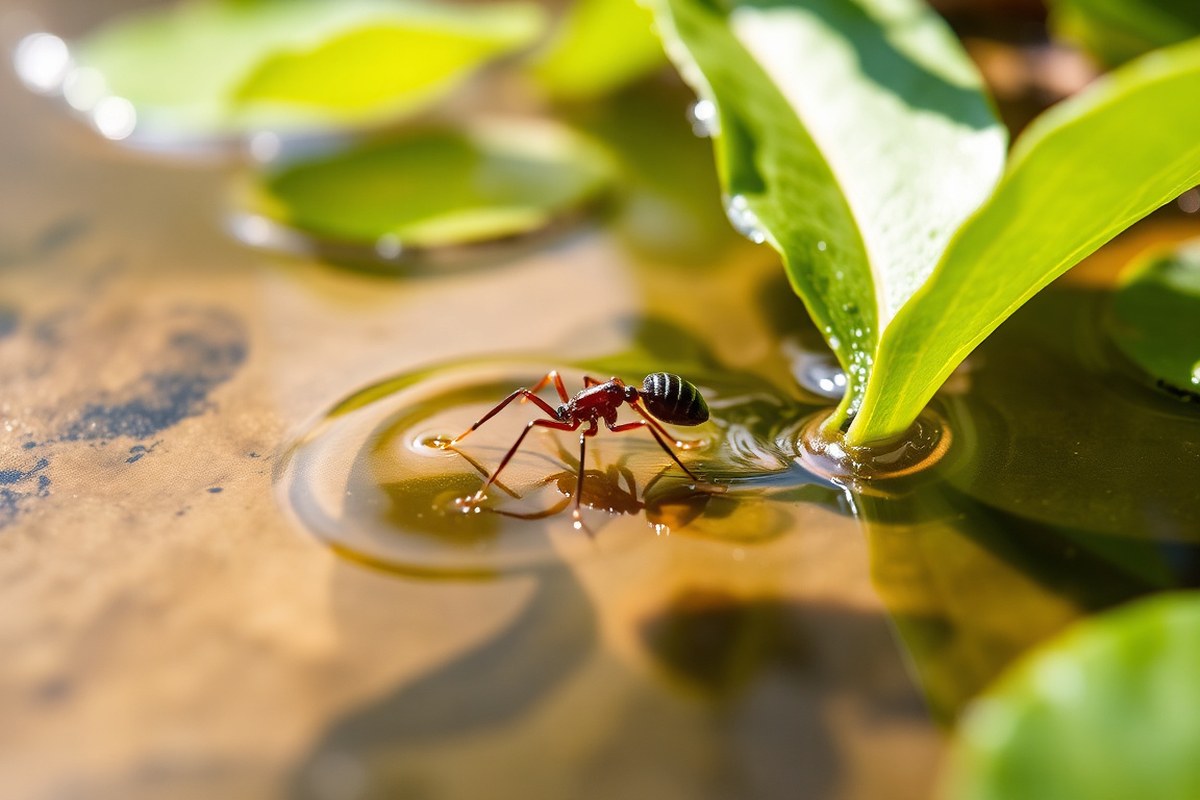
Are ants good swimmers? Most ants can swim, but not all of them swim well.
Some swim strongly and steer, while others mostly float on water. Their swimming ability depends on the species and their size.
Carpenter ants and fire ants are among the better swimmers. They can paddle through water using their legs and body to steer. Smaller or less muscular ants often struggle and get stuck on the surface.
Ants don’t have lungs like humans, so they don’t breathe underwater. Instead, they close tiny holes called spiracles to keep water out. This lets them survive underwater for minutes to hours, or even longer for some species.
Watch ants near water carefully, some may be swimming while others are just floating to safety. Understanding this shows how ants survive floods. It also shows their hard work moving through water.
Key Takeaways
- Not all ants swim well; species and size affect their ability.
- Carpenter ants and fire ants are among the strongest swimming species.
- Ants use their legs like paddles to steer and move in water.
- They close spiracles to stop water from entering and hold air inside.
- Survival time underwater ranges from minutes to hours or even days.
- Water temperature affects how long ants can survive underwater.
Can Ants Swim or Do They Just Float on Water?
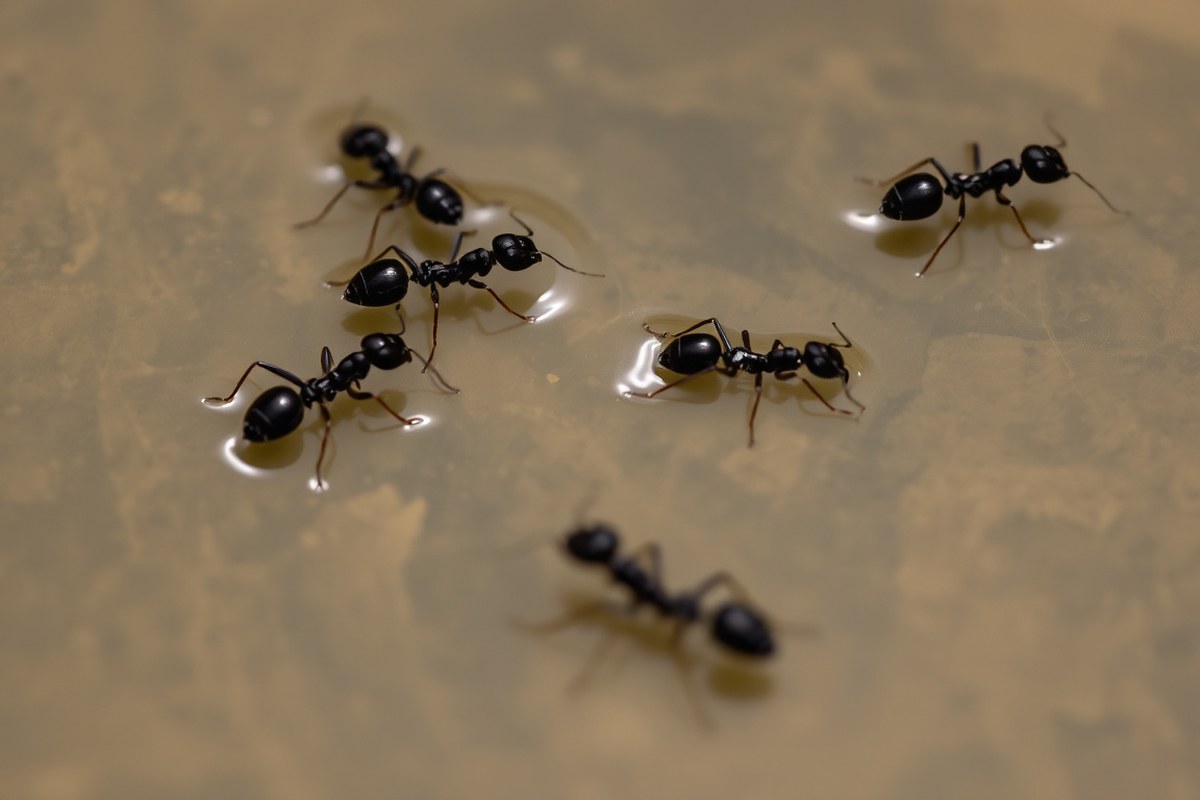
Ants can both swim and float on water, but these are different actions. Floating happens when ants simply stay on the surface without moving their legs much. This happens because their bodies trap air and water’s surface tension holds them up.
Swimming means ants actively move their legs to push forward and steer. A few species like carpenter ants and diving ants swim by paddling their legs. They change leg strokes to control direction, moving toward dry land or safety.
Most ants don’t swim but rely on floating to survive water encounters. They conserve energy by resting on the water’s surface, waiting or drifting with currents. During flooding, some ants even form living rafts by linking together, floating as a group.
Active swimming requires more effort and skill, letting certain ants cross wider water bodies. Floating is more common and passive.
Ants just hold their position without moving much, like a tiny boat. This distinction matters because swimming ants can escape water hazards faster.
Ants lose grip on rough or soapy water surfaces. They can sink and drown in it.
Most ants avoid strong swimming unless necessary. They depend on floating or forming rafts to survive until they reach land again.
Which Ant Species Are Strong Swimmers and Which Are Not?

Some ant species are strong swimmers, while others barely manage water surface tension. Carpenter ants stand out for swimming power, using their longer forelegs to propel fast through water. Diving ants like Colobopsis schmitzi swim underwater with purpose, hunting small prey beneath the surface.
Fire ants cannot swim well but survive floods by forming floating rafts. These rafts keep them above water for days by rotating members between wet and dry positions. Army ants, on the other hand, struggle with water and cannot survive submerged for long.
| Ant Species | Water Locomotion Ability |
|---|---|
| Fire Ant | Cannot swim; survive by forming floating rafts |
| Carpenter Ant | Strong swimmers; fast and powerful surface swimmers |
| Army Ant | Poor swimmers; cannot survive extended time in water |
| Diving Ant (Colobopsis schmitzi) | Deliberate underwater swimmer; hunts small aquatic prey |
Carpenter ants are among the best swimmers in temperate zones. They move at speeds over three body lengths per second by using muscular forelegs. Their big size helps them swim better than smaller ants.
They have strong muscles that improve their swimming. This sets them apart from silky field ants.
Diving ants specifically evolved to swim underwater to catch tadpoles and other small creatures. These ants use controlled strokes to stay submerged and navigate underwater. In contrast, fire ants avoid swimming but excel at floating to survive floods.
Fire ant rafts can last for days on water. Ants share wet and dry roles to stay afloat. This teamwork helps them avoid drowning.
Army ants and smaller ants struggle on water. They often get trapped or drown at the surface. Swimming is harder for them than larger ants.
Knowing these differences can help you understand why some ants disappear quickly near water. Others seem at home on or in it.
How Do Ants Swim and Steer Through Water Mechanically?
Ants move through water by paddling with their legs and steering with their hind legs. Their front and middle legs push water backward to create forward movement. They also trap air bubbles on their bodies to help float and steer effectively.
Leg-Driven Propulsion in Swimming Ants
Most ants use their forelegs and middle legs to paddle in a dog paddle-like motion. These legs push against the water to drive the ant forward. Meanwhile, the hind legs act like rudders, steering the ant in the desired direction.
The front legs generate the most propulsion, pushing water backwards with a quick stroke. The middle legs add power through rowing movements, supporting continuous forward motion. Hind legs stay extended and angled to keep the ant on course.
Role of Body Shape and Muscle Mass
Ants have cylindrical bodies and short legs which limit efficient swimming. This shape doesn’t slice through water easily, causing more resistance than flat-bodied insects. Their small size and thin legs also provide little surface for powerful propulsion.
Despite the shape challenges, some ants like black carpenter ants have enough muscle to paddle strongly. They move faster by using leg movements like human swimming strokes. The legs work together to push water backward.
This action helps them swim on or under the water surface. This coordination allows better control and speed despite their build.
Use of Air Film for Buoyancy and Steering
Ants trap tiny air bubbles on their bodies, especially on their exoskeleton hairs. This air film acts like a flotation aid, helping them stay afloat longer. It also reduces water contact on their spiracles, critical for breathing while underwater.
The air film adds buoyancy and allows ants to use leg movements more effectively for steering. Losing this air layer causes the ant to sink more quickly. It then struggles to steer or control its direction.
Without the air, the ant can’t swim properly. Saltwater helps ants float slightly better than freshwater because of its density. But waves make holding air bubbles harder.
How Long Can Ants Survive Underwater and What Influences This?
Ants may live underwater from minutes up to one full day. Survival times vary by species, water temperature, and cleanliness. Not all ants can hold breath underwater equally long.
Survival Times by Ant Species
Some species live in wet habitats and handle submersion better. For example, ants nesting in mangrove mud can survive close to 24 hours underwater. These ants adapt to regular flooding and have ways to avoid drowning.
Most ants don’t have such adaptations and only last a few minutes underwater. Fire ants can’t swim well but form rafts to survive floods. They rely on teamwork instead of holding breath long.
Effect of Water Temperature
Water temperature heavily impacts how long ants survive underwater. Cold water slows down their metabolism, extending survival time up to several hours. Warm water speeds breathing, which shortens survival to just minutes for some ants.
Ants used to mild climates can survive in 50 to 70°F water. They might stay underwater for about 10 to 20 minutes.
This time frame depends on the ant and conditions. Higher temperatures above 80°F usually reduce this time drastically.
Impact of Water Quality
Oxygen levels in water affect how long ants can survive submerged. Clean water has more dissolved oxygen, helping ants hold on longer. Dirty or stagnant water lowers oxygen, cutting survival time.
Saltwater or brackish habitats require special adaptations. Some mangrove ants tolerate saltwater well, which helps them survive longer underwater than freshwater specialists.
Size, Weight, and Depth Influence
Bigger ants with more body fat might survive underwater longer by using stored air. Smaller ants have less reserve, so they drown quicker. Water depth also matters; shallow water lets ants access air pockets easier.
When ants get trapped deep underwater, their survival times shrink. They struggle more to reach air and respond slower in deep water or strong currents.
Other Factors Affecting Underwater Survival
Factors like the presence of predators or algae can harm ants underwater. Some ants avoid predators by quickly climbing plants or floating on water’s surface. Time spent underwater also depends on the ant’s ability to close body openings tightly.
Ants can trap air bubbles around their body to breathe longer. But only some species do this well. The exact survival time varies a lot based on these small but important traits.
Can Ants Breathe Underwater or Hold Air to Stay Alive?
Ants cannot breathe underwater because they use spiracles, small openings on their bodies, to breathe air. These spiracles can shut tight to keep water out, allowing ants to hold their breath temporarily. This ability helps ants survive brief submersion but doesn’t replace the need for air completely.
Some ants trap tiny air bubbles on their bodies or in their hairs. These bubbles act like air pockets, letting them survive underwater just a little longer. The trapped air surrounds their spiracles, giving ants a short supply of oxygen while submerged.
While ants can manage underwater for some time, they can still drown. Water flooding their spiracles clogs their breathing passages, stopping airflow and causing suffocation. Ants often close their spiracles tightly to avoid drowning.
They rely on the air trapped around them. This trapped air helps keep them alive underwater.
Fire ants survive floods by closing their spiracles tightly. They float thanks to air bubbles trapped around their bodies. This trick helps them stay above water.
These air pockets keep ants afloat on water surfaces. They also let ants breathe briefly underwater.
Then ants reach dry land or build air pockets in nests. Still, if underwater too long without fresh air, even these ants will drown.
Soap in water breaks the air layer ants need. Without it, ants lose buoyancy and sink quickly. This causes them to drown fast in soapy water. Avoid using soaps if you want ants to escape water safely.
What Survival Strategies Do Ants Use When Facing Floods and Water Challenges?
Ants use clever behaviors to survive floods and water challenges. They form rafts, dive underwater, and build air pockets. These strategies help them avoid drowning and find food despite water obstacles.
Rafting and Colony Cooperation in Fire Ants
Fire ants can’t swim well alone. They survive floods by linking legs and mandibles to form rafts. These rafts act as floating islands that keep the colony above water.
The ants grip tightly, preventing water from seeping through the raft. The colony moves ants from bottom to surface to avoid drowning. This rotation spreads work evenly among them.
It keeps the colony safe in water. This teamwork lets thousands of ants stay afloat for days during floods.
Army ants also form rafts and living bridges during migrations. These body bonds allow safe crossing over streams. Rafting stops water from reaching the colony during floods.
The ants stick together to stay safe. This shows their strong group survival skills.
Diving Ants and Food Retrieval Underwater
Some ants are expert swimmers and divers. They dive underwater to collect prey from pitcher plants and other watery spots. These ants have body parts adapted for swimming and trapping air.
Diving ants use special hairs to hold bubbles of air while submerged. This lets them breathe underwater for longer periods. Their swimming skills help them reach food others can’t, giving them a unique survival edge.
Air Pocket Construction and Hiding Strategies
Besides rafts and diving, ants use air pockets to survive water. Ants trap air in tiny body structures or hold bubbles. They keep these bubbles under leaves for breathing.
This helps them survive underwater temporarily. This keeps them breathing during short submersion.
These air pockets protect ants from flooding without needing to swim or raft. Ants hide in sheltered spots where trapped air lasts longer. This strategy pairs well with their food and water storage methods, letting colonies endure wet spells.
How Does Temperature and Water Type Affect Ants’ Ability to Swim and Survive?
Water temperature affects how ants swim and survive underwater. Warm water speeds up their movements but uses energy faster. Cold water slows them down and can reduce their swimming ability.
Ants struggle in very cold or very warm water. When water is below about 50°F, ants slow down and may drown fast.
In warm water around 70°F to 80°F, they swim better but cannot stay underwater long. Above 85°F, ants get stressed and swim less efficiently.
Water quality also influences ants’ survival. Ants cannot swim in soapy or polluted water because it breaks surface tension.
Soapy water spreads out the ants’ body weight, making them sink. Pollutants might also poison the ants or clog their tiny breathing tubes.
So, ants swim best in clean, fresh water around room temperature. To test this yourself, fill shallow containers with water at various temps.
Make sure the water has no soap or chemicals. Drop an ant gently onto the water’s surface and watch if it floats or swims.
Swimming ability decreases in cold water under 50°F or in contaminated water. Clean water near 70°F lets ants move well and survive longer. Avoid soapy or dirty water if you want to observe swimming ants.
Temperature and water type combine to decide how long ants survive while swimming. Cooler, cleaner water supports more swimming time. Warmer or dirty water shortens their survival and reduces their ability to travel through water safely.
Common Myths About Ants and Swimming Debunked
Not all ants can swim. Some species float or struggle in water. For example, black carpenter ants and trap-jaw ants swim better than most others.
The idea that ants drown easily is misleading. Water won’t kill an entire colony. Drowning only affects individual worker ants, not the queen or the nest.
Ants don’t have lungs like humans do. Instead, they breathe through tiny holes called spiracles. This means ants can’t truly drown like animals with lungs can.
Still, most ants can’t survive long in water. They usually avoid it or get swept away. Swimming depends heavily on the ant’s species and water conditions.
- All ants breathe through spiracles, not lungs
- Only some species swim actively, like carpenter ants
- Drowning kills workers but not the colony or queen
- Most ants avoid water or float without controlled swimming
- Swimming ability varies with water temperature and cleanliness
- Floods don’t wipe out entire ant colonies easily
- Some ants use survival tactics, like forming rafts
Because water can’t suffocate ants, flooding alone won’t clear infestations. Instead, ants cope with wet conditions by seeking shelter or using air pockets. Knowing this helps you understand ant behavior near water.
Avoid trying to kill ants with water alone. It won’t remove the colony and can cause messes instead.
Misunderstanding how ants interact with water leads to wrong pest control methods. Using water as a weapon only removes a few ants temporarily.
How to Observe Ants and Their Swimming Skills
Watch ants near water to see if they swim or float. Use this plan to study their behavior safely and clearly.
- Before you start: Look for a small water spot. It could be a puddle or the edge of a pond. Make sure you see ants near the water.
- Day 1: Place a stick or leaf partly in the water. Watch how ants use it to enter or exit the water.
- Day 2: Gently drop a few ants onto a calm water surface. Note if they paddle or just float.
- Week 1: Compare different ant species if possible. See which swim actively and which seem weaker in water.
- Week 2: Observe water temperature and type, such as fresh or salty. Note any effect on their swimming or survival.
- Week 3: Try removing distractions like wind or surface waves. Check if ants change their swimming method without disturbances.
- After 1 month: Record your observations. Decide which ants are good swimmers and which shelter during floods.
Frequently Asked Questions
Are Ants Naturally Strong Swimmers or Just Good Floaters?
Ants can swim but mostly float using surface tension. Some species, like carpenter ants, paddle effectively across water surfaces. This skill helps them escape floods or cross streams when needed.
Do All Ants Use the Same Swimming Technique?
Different ants use varied methods to swim or float. Carpenter ants use strong legs to paddle on the water surface.
Diving ants swim underwater, kicking their legs to move. Swimming style depends on their habitat and survival needs.
Can Ants Survive If Fully Submerged Underwater?
Many ants can survive underwater for hours by trapping air bubbles. Carpenter ants may last up to 24 hours submerged.
Fire ants up to 48 hours. Survival time varies by species and water temperature.
How Do Ants Steer or Control Their Direction in Water?
Ants use their legs to steer and adjust speed in water. They paddle like tiny oars to navigate, adjusting movements based on water currents. This helps them avoid drowning and reach dry ground.
Do All Tropical Ants Swim Equally Well?
No, swimming ability varies among tropical ants. Some, like Gigantiops destructor and Odontomachus bauri, are strong swimmers, while others perform poorly. Swimming skills often tie to their environment and lifestyle.
What Tricks Do Ants Use to Survive Floods Besides Swimming?
Ants build raft-like colonies or cling together to float during floods. Some climb vegetation or seal tunnels to avoid water. These behaviors reduce drowning risk and help the colony survive challenges.
Final Thoughts
Ants can swim, but their skill varies by species and conditions. Watching them closely shows these small survivors use surprising tricks. Try this near your home to unlock their watery world yourself.


