Does Hay Help Grass Grow? A Complete Guide for Healthy Lawn Growth
Does hay help grass grow? Yes, it can. Hay acts like a natural blanket that holds moisture and protects seeds from birds and wind.
Hay also keeps soil warmer, which helps seeds sprout faster. Spread hay evenly once grass reaches about 2 to 3 inches tall for best results.
Use just enough hay to cover about half the ground. This balance lets light reach seeds while retaining moisture and shielding from harsh weather.
Too thick a hay layer can block sunlight and slow growth. Always use dry hay, not straw, since straw behaves differently and may trap too much moisture or rot faster. Hay also adds some organic matter as it breaks down, improving soil texture over time.
Key Takeaways
- Apply hay when grass reaches 2 to 3 inches tall for best results.
- Spread a thin layer, about 1 to 2 inches thick, over new seed.
- Cover around 50 percent of the soil with hay to allow light through.
- Use dry hay, not straw, to avoid mold and growth issues.
- Remove half the hay when grass grows 1 to 2 inches to improve light access.
- Keep soil temperatures above 50°F for good seed germination.
Does Hay Help Grass Grow and How?

Hay does help grass seed grow by protecting it during germination. It acts as a mulch that holds moisture in the soil. This moisture is key because seeds need it to sprout and grow roots.
Hay helps keep soil temperatures steady, especially when soil is below 50°F. It shelters the seeds from wind and birds that might blow or eat them. These protections improve seed survival chances and lead to more uniform growth.
Besides physical protection, hay contains seed heads and organic matter. As it breaks down, it adds nutrients to the soil. This slowly feeds the new grass and improves soil health beyond just acting as a cover.
Applying hay means spreading a thin layer over freshly seeded soil. Too much hay can block sunlight and slow grass growth. When grass is 1 to 2 inches tall, rake some hay off.
This helps plants get more light. It also improves air flow around the grass.
Hay helps keep moisture in the soil. It also keeps soil temperature steady. Hay can protect plants from pests and stop weeds.
It adds nutrients to the soil too. This combination makes hay a strong helper for getting grass seeds growing. The key is to apply it right and remove excess hay later.
Differences Between Hay and Straw for Grass Seed Covering
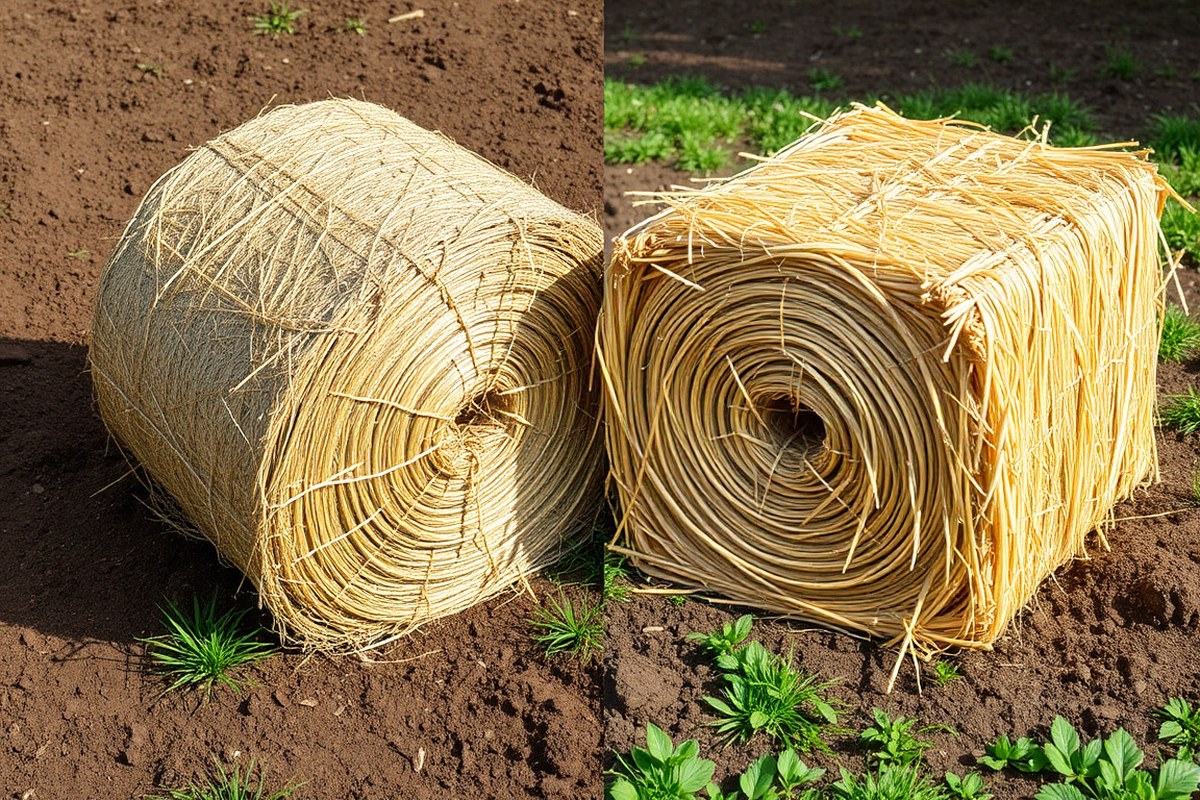
Hay and straw both work as mulch over grass seed, but they are different. Hay has more nutrients but also many seeds, which can grow weeds. Straw is cleaner and safer for covering grass seed.
It protects new grass better. That makes it the best choice for most lawns.
What Hay Is and Its Composition
Hay is made from grass plants cut before they fully dry. It includes stems, leaves, flowers, and seed heads. Hay is full of nutrients, which helps feed new grass.
It breaks down and nourishes the soil. This makes it a good seed cover.
Because hay contains seed heads, it often carries plenty of seeds from wild grasses and weeds. These seeds sprout alongside your lawn grass, potentially spoiling your new grass with unwanted plants. Remember to check hay for seed content before using it as mulch.
How Straw Differs from Hay
Straw comes from stalks of cereal plants like wheat or oats. These stalks stay after the grain is taken. Barley straw is another common kind.
It mostly contains hollow stems without seed heads. This clean structure means straw has far fewer seeds that could grow as weeds.
Since straw doesn’t have many seeds, it’s better at keeping new grass safe from weed contamination. Straw also holds soil moisture well and protects grass seeds from wind or birds. It generally costs a little more than hay but reduces the need for weeding later.
Risks of Using Hay vs. Straw
Hay’s main risk is that it brings a large number of weed seeds to your lawn. These seeds grow and compete with your new grass. This can slow down or ruin the results of your seeding effort.
Another downside of using hay is that it can attract pests like mice or insects. Straw is less attractive to these critters and usually safer if you have pest problems. Both materials keep the soil moist, but hay’s added seeds make it riskier.
Spread a light, even layer of straw or hay over seeds. This protects them from birds and bad weather.
Proper coverage helps seeds grow well. You should avoid thick piles of hay or straw because they can suffocate grass seedlings.
Here’s a table comparing hay and straw for grass seed covering:
| Feature | Hay | Straw |
|---|---|---|
| Source | Grass plants with stems, leaves, flowers, seeds | Stalks of grain plants after harvest |
| Seed Content | High; many weed seeds included | Low; few or no seeds |
| Nutrient Supply | Provides nutrients as it decomposes | Minimal nutrients |
| Weed Growth Risk | High risk of unwanted weeds | Low risk |
| Attracts Pests | More likely to attract pests | Less likely |
| Moisture Retention | Good | Good |
| Cost | Usually less expensive | Usually more expensive |
Table shows straw is usually better for seed mulch because it has fewer weed seeds. You still get moisture protection with straw, though it doesn’t add nutrients like hay.
Only use hay if you’re sure it has few weed seeds. Otherwise, stick to straw.
When and How to Apply Hay over Grass Seed
Apply hay right after seeding the grass to protect the seeds. Aim for a thin, even layer about half an inch to one inch thick. Spread roughly one bale of hay per 1,000 square feet to cover without smothering.
Ideal Temperature and Weather Conditions
Apply hay when the soil is moist but not soaking wet. The air temperature should be mild, ideally between 50 and 70 degrees Fahrenheit. Avoid laying hay just before heavy rain or extreme heat, which can harm young seedlings.
Choose a calm day with little wind to prevent the hay from blowing away. Morning application is best so dew can help keep seeds moist overnight. This timing also lets hay protect seeds from sun and birds during the day.
How to Spread Hay for Best Coverage
Spread hay by hand or with a garden hay scatterer for control. Use light, even strokes to avoid clumps that can smother seeds. The goal is about 50 percent coverage with visible seed underneath.
Check the coverage from several angles to confirm even spread. Add or remove hay as needed to reach the right thickness and coverage. Dense patches stop airflow and light, which young grass seeds need.
Follow these steps for best results when covering your grass seed with hay:
- Prepare the soil by mowing and loosening it lightly.
- Spread grass seed evenly over the prepared area.
- Break hay into manageable pieces for even distribution.
- Sprinkle hay thinly over the seed to cover about half an inch.
- Walk lightly over the area to settle the hay gently.
- Water the lawn lightly to keep seeds moist under the hay.
- Remove excess hay if it smothers seedlings after germination.
Recommended Hay Amount and Thickness
Use one bale of hay per 1,000 square feet of seeded lawn for proper coverage. A layer between half an inch and one inch thick works best. This thickness keeps seeds moist and safe without blocking sunlight.
Thicker layers beyond one inch can trap moisture and cause rot. Thinner layers may fail to protect seeds from birds and drying out. Balance is key to help new grass grow steadily and evenly over time.
How Long to Leave Hay on Grass Seed and When to Remove It
Hay should stay on grass seed until the seedlings grow about 2 inches tall. This usually takes around two to three weeks. Leaving hay too long can block sunlight and slow grass growth.
Check the grass daily once it starts emerging. Remove any thick or matted hay patches carefully to avoid damaging young shoots. Scattering the hay lightly again can help if you need to keep moisture in.
The best time to remove most of the hay is when grass blades start showing actively. By then, roots are developing enough to hold soil without extra cover. Use your hands or a rake with wide, soft tines to lift hay gently.
Keep a thin layer of loose hay until grass fills in and roots deepen. This process can take four to six weeks depending on weather and grass type. Temperature, rainfall, and seed variety affect how quickly you can remove hay fully.
If your climate is hot or dry, remove hay earlier to prevent overheating or mold on grass. In cooler or wetter areas, a longer coverage keeps soil moist and helps seeds germinate better. Watch for moldy or weather-beaten hay and take it off sooner to prevent issues.
Removing hay too early leaves seeds exposed to wind and birds, which harms germination. Waiting too long risks a dense mat that blocks air and light. Adjust the timing based on your lawn’s growth and local conditions for best results.
Potential Drawbacks and Risks of Using Hay on Grass
Using hay over your grass seed might bring some problems. Hay often contains weed seeds that can sprout alongside your grass. These unwanted plants compete for nutrients and space, slowing your lawn’s growth.
Hay also attracts pests like rodents and insects. Mice and voles might hide in the hay and dig up seeds or young grass shoots. Insects could also damage seedlings, harming the grass before it fully establishes.
Another risk comes from nutrient competition. Fresh or poorly aged hay may use up soil nutrients as it breaks down. This takes away from what your grass seedlings need to grow strong and healthy.
Mold is another concern, especially if the hay stays wet for too long. Mold growth can spread to the grass and cause diseases.
Straw tends to have more mold issues than hay in damp climates. But damp hay can still lead to problems.
Check your hay for visible weed seeds. Let it dry well first. Then apply over new grass seed.
To reduce these risks, choose well-aged hay free of weed seeds when possible. Spread it in a thin layer to block sunlight but not suffocate the grass. Water your lawn carefully to keep the hay moist but avoid soggy conditions that encourage mold.
Spot pests or mold? Remove the hay right away. Use hay from local sources that match your area.
This lowers weed seed problems. Healthy grass seedlings with good soil care will better compete against weeds and pests over time.
Alternatives to Hay for Covering Grass Seed
Straw works well to cover grass seed because it holds seeds in place. It slows soil drying and creates a lighter cover than hay. Grass clippings break down fast and add nutrients to the soil.
They can mat down if piled thickly. This matting blocks sunlight from reaching the grass.
Sawdust mulch keeps soil moist but can tie up nitrogen. So add fertilizer when seeding.
Synthetic mulches or seed mats offer even coverage and protect seeds from birds and wind. They can cost $0.30 to $0.50 per square foot, more than natural options.
| Cover Type | What It Is | Pros | Cons |
|---|---|---|---|
| Straw | Dried cereal grain stalks | Holds seed, slows drying, lightweight | Can harbor weed seeds, less nutrient |
| Grass Clippings | Freshly cut lawn grass | Adds nutrients, decomposes fast | Can mat and block light, risk of disease |
| Sawdust Mulch | Wood shavings from sawmills | Keeps soil moist, natural | May reduce nitrogen, needs fertilizer |
| Synthetic Mulch | Plastic or fabric mats | Even seed cover, blocks birds and wind | Costly, no nutrients added |
Applying straw or grass clippings is simple: spread a thin layer about ¼ inch thick. Sawdust requires a bit more care; mix it with fertilizer to avoid nitrogen loss. Synthetic mulches go down as sheets, pinned at edges to prevent shifting.
Grass seed under natural covers germinates well if you water daily until sprouts appear. With synthetic mats, keep soil moist below but don’t overwater. Check plastic covers in sunny spots for mold or too much heat.
Both can hurt seedlings. Keep an eye on temperature and moisture levels under the plastic.
Tips for Using Hay Effectively and Avoiding Common Mistakes
Applying hay too thickly can smother young seedlings, stopping growth. Spread a thin, even layer roughly ¼ to ½ inch thick to avoid clumps. Let the grass grow 2 to 3 inches tall first.
Then add hay carefully. This lowers the chance of suffocating the new grass.
Timing is essential for hay application. Adding hay during peak growth can trap moisture and heat, which harms grass roots.
Cover grass seed immediately after broadcasting to protect from birds and sun. But remove hay once seedlings emerge and are sturdy.
Check for uneven spots where hay piles up or leaves bare patches. This causes patchy growth since some seeds get too much cover while others get none. Raking gently after spreading will help keep the hay level and fluffy for better air circulation.
- Apply hay when grass is about 2 to 3 inches tall
- Spread a thin, even layer about ¼ to ½ inch thick
- Remove hay once seedlings show strong growth, usually 2 to 3 weeks
- Rake gently after laying hay to avoid clumps or bare spots
- Do not add hay during peak grass growth to prevent smothering
You’ll know hay is helping if seedlings emerge evenly and appear healthy. Harming shows as yellowing, mold, or bare spots under thick hay. Also, watch for pests nesting in dense hay layers, which can damage seedlings.
Light, well-timed hay helps seeds germinate and stay moist without blocking sun. Don’t layer hay too thick or add it at the wrong time.
These steps help your grass start healthy. You get a fuller, greener lawn.
Seasonal and Climate Considerations When Using Hay for Grass
Hay can help grass grow by keeping seeds moist and protected. But cold and wet weather can slow down germination. Using hay well depends on the season and local climate, especially for winter use.
Using Hay in Spring and Summer
Spring’s mild weather suits using hay to cover new grass seed. The hay traps moisture, stopping seeds from drying out during sunny days. This helps seeds sprout faster and grow evenly.
Summer heat can dry seeds quickly, so hay helps keep the soil damp longer. Make sure your hay layer isn’t too thick, about an inch or less. Too much can overheat the soil and harm sprouts.
Effectiveness of Hay in Fall and Winter
Fall is good for planting with hay because cooler, wetter weather aids seed growth. Hay keeps moisture trapped as temperatures drop, protecting seeds from drying out. But if temperatures fall below 40°F, seed growth slows down regardless of the hay.
Hay also provides some insulation in winter, but it won’t prevent freezing. Seeds usually don’t grow much under frozen ground, though hay stops erosion and holds moisture.
You can leave hay on a new seed lawn during light frost. Take it off before heavy snow arrives. The hay protects the young grass from cold.
Hay doesn’t help grown grass much in winter. Mature grass handles moisture changes better. So, hay isn’t very useful for established lawns then.
Don’t leave a thick hay cover on during winter. It can trap too much snow, causing rot.
Adjusting Use for Different Climates
In dry climates, hay’s moisture-trapping power is very useful year-round. Use a thin layer and water seeds well to keep soil moist. In humid or wet climates, check regularly to prevent mold in the hay layer.
Cold climates require timing hay use carefully. Apply hay after seeding in early fall to protect seeds before winter. Remove it in spring when soil warms so grass can grow freely.
For mild climates with little frost, you can use hay to protect seeds nearly all year. Just avoid heavy layering, or seeds may rot in overly wet soil.
Step-by-Step Action Plan for Using Hay on New Grass Seed
Follow these steps to cover grass seed with hay the right way. This helps protect seeds and boost growth.
- Before planting: Clear your lawn area of debris and rake the soil smooth. This gives seeds good ground contact.
- Day 1: Spread grass seed evenly over your prepared soil. Check that distribution looks uniform.
- Right after seeding: Apply a thin layer of hay, about ¼ to ½ inch thick. Avoid thick mats that block sunlight.
- First 2 weeks: Water gently but regularly to keep soil moist. Look for signs of sprouting, usually within 7, 14 days.
- Week 3: Monitor hay cover and thin patches where grass struggles. Add a light extra hay layer if needed.
- After 3-4 weeks: Gradually remove hay once grass reaches 2 inches high. This prevents mold and allows stronger growth.
- After hay removal: Continue watering and start mowing when grass is about 3 inches tall. Mow carefully to avoid pulling young grass.
Frequently Asked Questions
Will Grass Grow If I Put Hay Down?
Yes, hay can help grass grow by shielding seeds from birds and harsh weather. It also keeps moisture in, which helps seeds sprout more evenly.
What Helps Grass Grow Quickly?
Good soil, proper watering, and warm soil temperatures help grass grow quickly. Using mulch like hay keeps seeds moist and protected, speeding up germination.
What Does Hay Do to Your Lawn?
Hay protects new grass seedlings from birds and wind while holding moisture in the soil. It also keeps soil temperature steady, which helps seeds sprout.
Should I Put Hay over My Grass Seed?
Yes, lightly spreading hay over grass seed helps protect it from being washed or eaten. Use a light layer and remove some once grass reaches 1 to 2 inches.
Can Hay Cause Problems for New Grass Seedlings?
Hay can smother grass if too thick or left too long. It’s best to remove excess hay when grass gets taller to allow better air and light.
Is Hay Better Than Straw for Covering Grass Seed?
Hay offers more nutrients but may carry seeds and weeds, unlike straw. Choose based on your lawn needs and clean hay to avoid unwanted plants.
Wrapping Up
Using hay can help your new grass get started, if you use it right. Watch your seed in the first weeks to know when to adjust the hay cover. Start today by spreading your grass seed, then add hay thinly to protect it.