How Deep Tulip Bulbs Should Be Planted: A Complete Guide for Gardeners
Wondering how deep tulip bulbs should be planted? The best depth is between 6 and 8 inches.
This depth stops squirrels and other pests from digging them up. It also helps bulbs stay cool in summer, which is great for their growth.
Planting too shallow makes bulbs vulnerable to drying out and damage. Dig your holes 6 to 8 inches deep and set bulbs pointy end up. Keep them spaced about 4 to 6 inches apart for healthy roots and flowers.
Start planting when the soil temperature drops below 60°F. Well-draining soil is a must to avoid bulb rot. Planting at this depth and time gives tulips the best chance to bloom well next spring.
Key Takeaways
- Plant tulip bulbs 6 to 8 inches deep to protect from pests.
- Space bulbs 4 to 6 inches apart for good root growth.
- Place bulbs pointy end up and flat side down.
- Use well-draining soil to prevent bulbs from rotting.
- Wait until soil temperature falls below 60°F before planting.
- Dig holes deep enough to keep bulbs cool during summer.
What Is the Ideal Depth for Planting Tulip Bulbs?
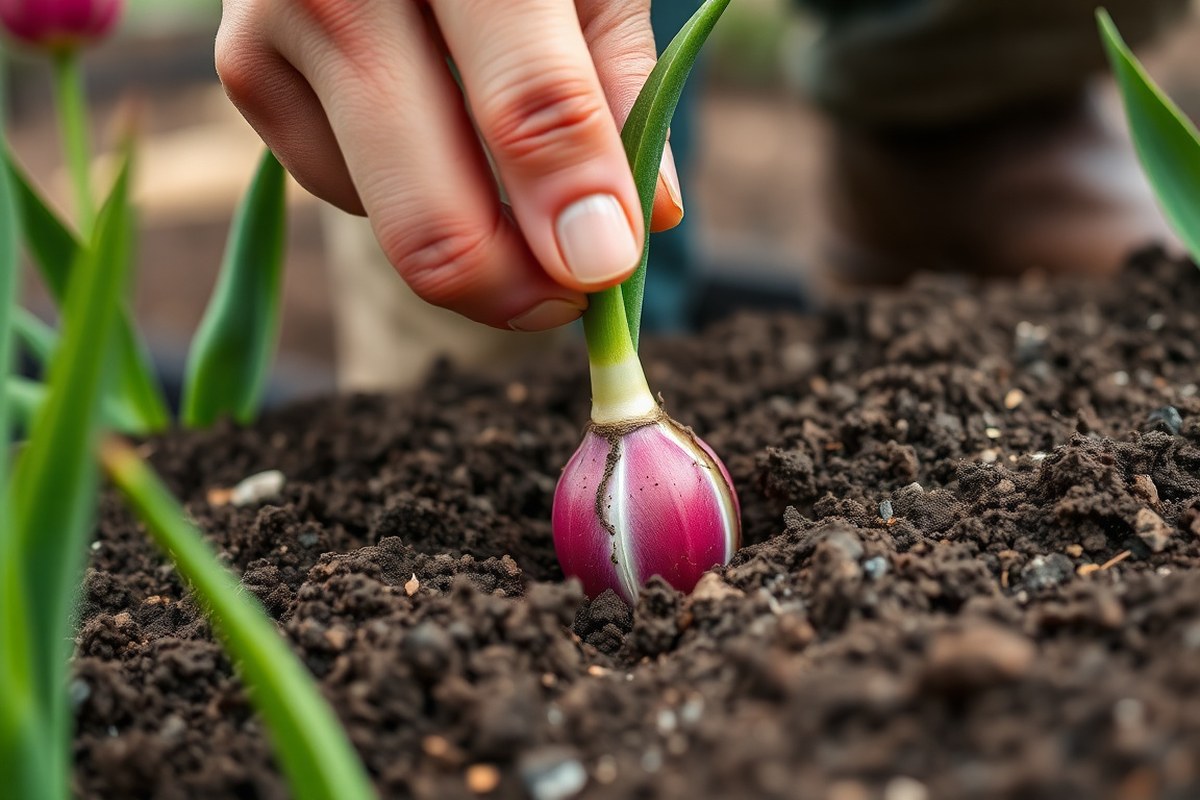
Plant tulip bulbs 6 to 8 inches deep to keep them safe from frost. This depth also lets roots spread out well. Make the hole this deep, put the pointy end up and the flat base down.
This planting depth keeps bulbs safe from squirrels and other pests that dig near the surface. When bulbs are too shallow, animals can easily pull them out or nibble on them. Planting bulbs less than 4 inches deep can make them come out.
Freeze-thaw cycles push them up. Deeper planting stops this from happening.
Planting bulbs within this range creates a stable environment for root development. Soil 6 to 8 inches down usually stays cool and moist. It does not get too wet or soggy.
This balance helps bulbs grow well. This balance helps avoid rot while reducing the chance of bulbs splitting in summer heat.
In sandy soil, plant bulbs closer to 8 inches deep. This helps keep bulbs moist and safe from frost. Sandy soil dries out quickly so deeper is better.
Heavy, clay soils may need bulbs planted slightly shallower, about 6 inches. So they don’t sit wet too long and rot. Adjusting depth to your soil keeps bulbs healthy and strong.
When planting, dig a hole about three times taller than the bulb’s height for best anchoring. A 2-inch tall bulb needs about 6 inches of soil above it. This covers the bulb fully.
It protects the bulb during winter. This “rule of three” helps the bulb stay put and grow stems that don’t flop over.
How Bulb Size and Tulip Variety Affect Planting Depth

Planting depth depends on the bulb size and tulip variety you have. Larger bulbs need to go deeper to protect them and encourage strong roots. Smaller species and specialty tulips require shallower planting, or they may struggle to bloom properly.
Standard vs Species Tulips Planting Depths
Standard garden tulip bulbs usually measure about two inches tall. Plant these bulbs around six to eight inches deep, which is roughly three times their height.
Species tulips and smaller varieties often don’t need that much depth. Four to six inches of soil is best for small bulbs.
This depth helps them avoid rot. It also helps the bulbs grow well.
Adjust planting depth based on soil drainage. Clay soils hold moisture longer. So planting too deep can cause bulbs to rot more easily in heavy soil.
Depth Adjustments for Large or Heavy Bloom Tulips
Bigger bulbs need planting deeper, around eight inches or more. Darwin hybrids and large Triumph tulips fall in this group. They grow better with more soil above them.
This deeper planting mimics their native mountain habitats. It keeps bulbs cooler in the summer and helps bulbs survive over multiple years.
Plant these bulbs 10 to 12 inches deep to keep squirrels away. This depth also helps bulbs come back year after year. It increases your chances for perennials.
Recommended Depths for Specialty Varieties
Specialty tulips like parrot and double late bloom later. These tulips usually go deeper than smaller ones.
Viridiflora types also need extra depth. They do well at 8 to 10 inches deep.
Each depth layer in a garden or container can hold different tulip types. This method, called lasagne planting, lets you enjoy blooms from late winter to late spring.
Species tulips on top layers can add earlier colors. Deeper bulbs bloom late for a long-lasting display.
| Tulip Type | Typical Bulb Size | Recommended Planting Depth |
|---|---|---|
| Species Tulips | Small (less than 2 in.) | 4-6 inches |
| Single Early and Darwin Hybrids | Medium (about 2 in.) | 6-8 inches |
| Triumph and Lily-flowered | Medium to large | 6-8 inches |
| Parrot, Double Late, Viridiflora | Large | 8-10 inches |
| Large hybrid tulips (deep planting) | Large | 10-12 inches |
Plant bulbs about three times their height, adjusting for soil type and variety. This keeps bulbs safe from pests and rot. Layering different depths also helps extend your tulip season.
Check bulb height before planting. Dig three times that depth for the best growth.
Why Planting Depth Matters for Tulip Growth and Protection
Planting tulip bulbs at the right depth helps roots grow strong and steady. Tulips can reach over 50 centimeters tall. So roots need to be deep enough to hold the plant upright.
When bulbs are too close to the surface, stems flop. Roots can’t hold well. This causes unstable plants.
Planting too shallow lets frost heave push bulbs up sometimes. Freezing and thawing cause this. It can expose the bulbs.
This can damage bulbs by exposing them to cold or drying winds. Correct depth keeps the bulbs safe and steady, helping tulips bloom fully.
Planting bulbs too deep may stop them from reaching the surface. Bulbs planted deep often sprout late or miss blooming. They use up their energy trying to grow up.
Plant bulbs deep enough for protection from outside harm. But too deep and sprouts might get stuck underground.
Depth also keeps squirrels and other rodents from digging up bulbs. Add rough or bitter stuff like kitty litter to holes. Thorny branches also help keep pests away.
Shallow bulbs are easy for animals to find and disturb. This can damage bulbs before they grow.
The correct depth supports firm roots, strong stems, and sturdy flowers. Change planting depth for bulb size and soil type. Aim for two to three times the bulb’s height.
For example, a two-inch bulb needs four to six inches deep. This helps it grow well.
This depth gives bulbs a good start, safeguards against frost, and keeps pests away. Proper depth helps tulips bloom on time and stand strong. Healthy stems support colorful flowers nicely.
How Soil Type Influences the Depth for Tulip Bulbs
Clay soil holds water tightly, so plant tulip bulbs at about 6 inches deep. This depth helps prevent bulbs from rotting in soggy soil. Avoid planting deeper because excess moisture can cause bulb decay.
Sandy soil drains quickly and can dry out fast. Dig about 7 to 8 inches deep for planting tulip bulbs. This depth helps you reach soil moisture that lasts longer below ground.
It keeps bulbs hydrated during dry spells. Deeper planting in sandy soil improves root stability and helps bulbs access water during dry spells.
Loamy soil balances moisture and drainage well. Stick to planting bulbs 6 to 8 inches deep based on bulb size.
The soil holds enough moisture without drowning the bulbs. So drainage is usually not a concern here.
Good drainage is key in all soil types. Tulip bulbs need to be in soil that doesn’t stay waterlogged. Adding compost or grit can improve drainage in heavy clay and support healthier roots.
Soil pH doesn’t change planting depth much but affects bulb health. Tulips prefer slightly acidic to neutral soil around pH 6 to 7. When soil is very acidic or alkaline, add amendments before planting.
Adjusting pH helps tulip bulbs grow healthy and strong. Test soil first to know what to add.
After planting bulbs at the right depth, water once to settle the soil. Then wait for rain to keep the soil moist until spring.
Overwatering in clay soil can cause fungus or rot. So only add water if soil is dry.
Best Practices for Planting Tulip Bulbs with Correct Depth and Spacing
Digging Correct Depth Holes or Trenches
Dig holes or trenches 6 to 8 inches deep to fit the bulbs comfortably. Plant bulbs at the right depth to fit your soil and climate. Staying in this depth range helps protect bulbs from frost damage.
It also keeps pests away from the bulbs. A trench works well for many bulbs and speeds up planting.
Loosen the soil in the planting area with a shovel or spade. Soft soil helps roots establish quickly after planting.
Spacing and Orientation Techniques
Space bulbs 4 to 6 inches apart when planting. This stops overcrowding and lets each tulip grow well. Give each bulb enough room for roots.
Overcrowded bulbs can compete for nutrients, leading to smaller flowers. Spacing also improves airflow and reduces disease risk.
Place each bulb with the pointed end up. This is the growth tip where the stem emerges. So planting it upside down delays sprouting or causes poor growth.
Recommended Tools for Accurate Planting
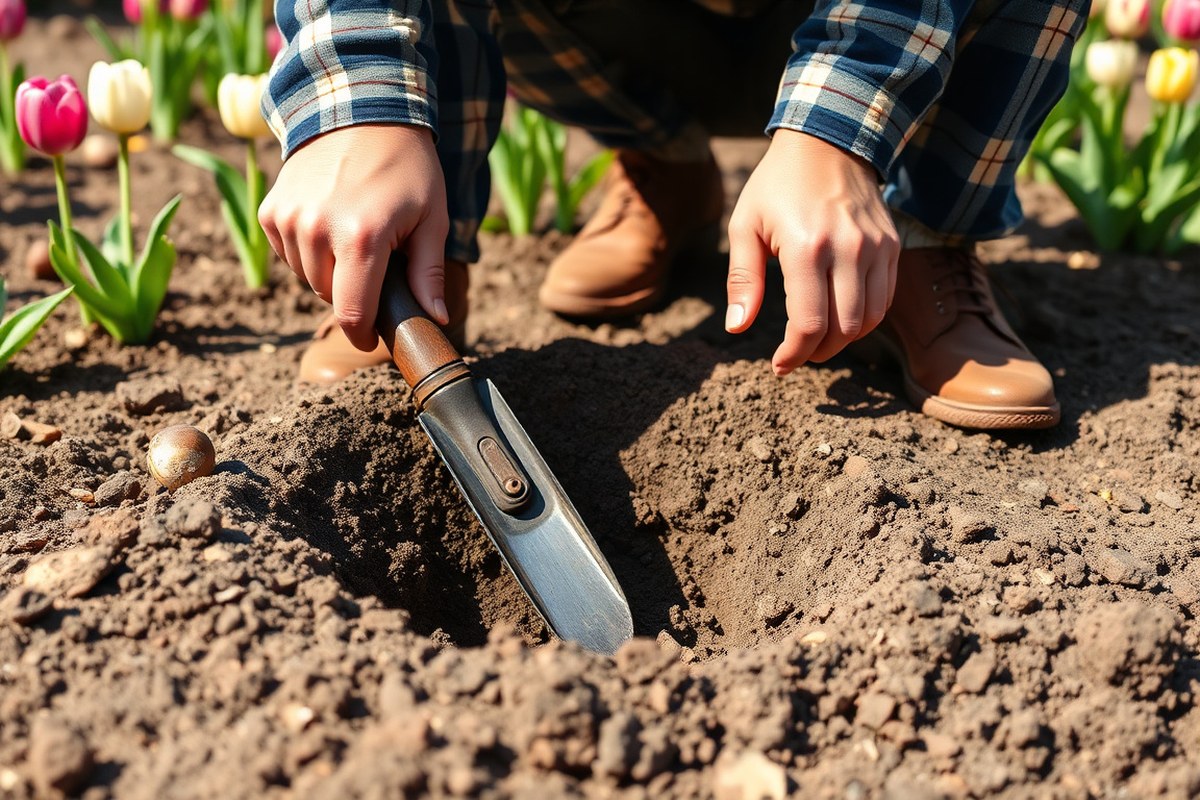
Use a bulb planter or hand trowel to dig holes fast. These tools help you dig to the right depth easily. They make planting bulbs quicker and neater.
These tools help avoid digging too shallow or too deep. A garden ruler or stick can help maintain consistent spacing.
Wear gloves for bulb handling to protect from soil fungi or skin irritation. Gloves also keep bulbs clean and make it easier to push them into the soil. Follow these steps to plant tulip bulbs properly:
- Loosen the soil where you want to plant.
- Dig holes or a trench 6 to 8 inches deep using a trowel or bulb planter.
- Place each bulb with the pointed end facing up inside the hole.
- Space bulbs 4 to 6 inches apart to ensure room for growth.
- Cover bulbs with soil and gently press down to remove air pockets.
- Water the area lightly to settle the soil around bulbs.
Planting bulbs too shallow can expose roots and let frost damage them.
Adjusting Planting Depth in Containers and Raised Beds
Choose a pot at least 8 inches deep to plant tulip bulbs. This depth fits the 6-inch planting depth plus extra soil for root growth. Containers shallower than this may stunt root development and cause poor blooms.
Fill the pot with well-draining soil mixed with some sand or perlite. Good drainage avoids rotting bulbs, a common issue in containers. Keep at least 2 inches of space beneath the bulbs so roots can spread comfortably.
Press each tulip bulb into the soil, positioning the pointed end facing upward. Cover the bulb with 6 inches of soil for stability and insulation. You can add 1 to 2 extra inches of soil on top.
This helps protect bulbs from freeze in cold climates. It gives better insulation during winter.
Plant bulbs deeper than you would in the ground because containers freeze more easily. Extra soil layers keep the bulb safe from temperature swings. This helps tulips survive in pots during winter when ground soil stays warmer.
Layering different bulbs creates a longer bloom season and a lively pot arrangement. Start with tulip bulbs 6 inches deep as the base layer. Plant shallow-rooted bulbs like crocus, snowdrops, or miniature iris on top.
Cover them with about 3 inches of soil. This helps keep them safe and moist.
Water lightly after planting to settle soil but avoid soggy conditions. Place containers in a cool, shaded spot until the soil chills. This triggers tulips to start strong when the weather warms.
Choose wider pots to space bulbs about 4 inches apart. Crowded bulbs compete for nutrients and reduce flowering. Wider pots also hold more soil, improving moisture control and temperature buffering.
Adjust soil mix for containers to keep it light and loose. Heavy garden soil often compacts and holds too much water. Well-aerated soil helps roots breathe and prevents bulb rot.
Start by planting your tulips first. Cover them with a layer of soil. Then add shallow bulbs on top, and cover those too.
This method maximizes space without disturbing roots. The early bloomers will push through the upper layers as spring arrives.
When and How to Plant Tulip Bulbs for Best Rooting Depth
Plant tulip bulbs once the soil temperature falls below 60°F. This ensures good root growth before winter. Timing also ties to your local frost dates and the bulbs’ chilling needs.
Optimal Soil Temperature to Plant Tulips
Tulip bulbs root best when the soil cools to under 60°F. Roots will grow well if the ground stays cold but not frozen. Planting too early in warm soil risks weak roots and poor blooms.
The bulbs need time to form strong roots before the ground freezes. Soil that stays above 60°F can cause bulbs to sprout too soon. This early growth can kill the shoots during frost.
Timing by Climate Zone
In colder zones like USDA 3 and 4, plant bulbs from September to early October. The soil cools fast there, and freezing starts early. Mulch the bulbs well to protect roots through winter.
Zones 5 and 6, such as Ohio and Pennsylvania, suit mid-October to November planting. This timing matches the natural drop in soil temperature. Most hybrids do best planted in this window without pre-chilling.
In warmer zones like 7 and 9, hold off until November or later. The soil needs to cool below 55°F. Bulbs may also need chilling before planting to meet cold requirements.
Cold Storage and Chilling Requirements
Tulips need 12 to 16 weeks of cold below 45°F to bloom well. In very mild climates, bulbs must chill indoors 8 to 12 weeks before planting. Keep them in a refrigerator, not next to fruits that release gases.
Plant chilled bulbs only when soil has cooled sufficiently. Dropping bulbs into warm soil wastes the chilling effort. It can lead to poor root growth and weak flowers.
This careful timing between chilling and soil temperature helps bulbs develop deep roots. Deep roots support strong shoots and full blooms the next spring. Avoid planting too early or too late to get the best results.
Protecting Tulip Bulbs by Planting Deep Enough Against Pests and Weather
Plant tulip bulbs 6 to 8 inches deep for best protection. This depth stops squirrels and rodents from digging them up. It helps bulbs stay safe underground.
Squirrels dig up bulbs near the surface because of fresh soil smell. That smell means food to them.
They find bulbs by scent often. Digging deeper keeps bulbs hidden and less tempting, especially in areas with many hungry critters.
Deeper soil helps reduce fungal infections by keeping bulbs cooler and drier. Tulip fire fungus thrives when soil rises above 60°F, often near the surface by afternoon. Planting bulbs 8 inches deep keeps them shaded and below this temperature, lowering infection risk.
A deep planting also buffers bulbs against freeze-thaw cycles common in Zones 3 and 4. Adding an extra inch or two of soil stops bulbs from moving. It keeps them from popping out in freezing winters.
This protects bulbs from harsh weather. This stable soil protects delicate roots and keeps bulbs ready for growth when spring arrives.
In hot summer climates, deeper planting shields bulbs from heat damage too. Soil several inches down stays cooler than sun-exposed topsoil. This protects bulbs from overheating, which can weaken or dry them out before dormancy.
For best protection, plant bulbs 8 inches deep in loose, well-draining soil. Firm the soil but avoid compacting it, so bulbs have air and moisture balance. After planting, mulch can add insulation against temperature swings and reduce soil disturbance that attracts rodents.
Try mixing sharp sand or crushed eggshells on top of the soil. This helps deter persistent squirrels after planting. It creates a rough surface they avoid.
This technique discourages digging by making the surface less pleasant. Remember that disturbed soil invites pests. So keep planting areas undisturbed once bulbs are placed.
Plant bulbs deeply and firm soil gently to keep rodents out and bulbs stable over winter.
Common Tulip Planting Depth Mistakes and How to Fix Them
Planting tulip bulbs too shallow often causes weak stems and smaller flowers. You’ll see bulbs poking above the soil or drying out quickly.
When that happens before shoots appear, dig gently and add soil. Cover the bulb by 6 to 8 inches.
Planting too deep means your tulips may struggle to push through the soil in spring. You’ll notice delayed or poor blooming and floppy stems. To fix this, dig bulbs carefully in spring or fall.
Replant bulbs at the right depth. Plant them about 6 to 8 inches deep, depending on bulb size.
Bulbs planted upside down will still grow but blooms might be weak or uneven. Always place the pointy end up so shoots grow straight. You can lift and reset bulbs carefully before shoots appear if you sense wrong orientation.
- Keep spacing about 4 to 6 inches apart to avoid crowding
- Avoid planting bulbs too close; it stunts growth
- Fix shallow planting within weeks after planting before shoots emerge
- Don’t plant bulbs deeper than 8 inches unless in loose soil
- Ensure the pointed side of the bulb faces up
- Use the trench method for planting many bulbs evenly
- Check soil moisture; too wet causes rot, too dry causes poor rooting
Poor bloom support often comes from inconsistent depth and spacing. Tulips planted unevenly may fall over or bloom at different times. Set spacing and depth right as you plant bulbs.
Transplant bulbs when the soil is soft. This helps bulbs grow evenly.
For better perennial bulb returns, avoid planting bulbs that are too shallow or crowded. Space bulbs well and keep to the 6 to 8-inch depth rule.
Tulips planted well last 3 to 5 years with good care. Darwin hybrids do well with deep planting.
Step-by-Step Action Plan for Planting Tulip Bulbs at the Right Depth
Follow this plan to plant tulip bulbs at the best depth and get strong spring blooms. Each step helps your bulbs settle well in the soil.
- Before planting: Check your soil type and measure your bulb size. Larger bulbs need deeper planting than smaller ones.
- Day 1: Dig holes two to three times the bulb’s height deep. For example, a 2-inch bulb goes 4 to 6 inches deep.
- Day 1: Place the bulbs pointy side up in the hole. This helps shoots grow up properly.
- Day 1: Cover bulbs with loose soil and pat gently. Avoid compacting to help roots spread easily.
- After planting: Water the area well to settle soil and start root growth. The soil should feel moist, not soggy.
- First month: Watch for leaf shoots in early spring. Healthy shoots show bulbs rooted at the right depth.
- Seasonally: Mulch with 2 inches of straw or bark to protect from temperature swings and pests. Replace mulch each fall.
Frequently Asked Questions
How Can I Tell If My Tulip Bulbs Are Planted Too Shallow?
Tulip bulbs planted less than 4 inches deep often get dug up by squirrels. They can also heave out during freeze-thaw cycles. Aim for at least 6 inches deep for better protection and stability.
Does Soil Temperature Affect How Deep I Should Plant Tulip Bulbs?
Yes, bulbs need soil below 55°F to avoid diseases like tulip fire. Planting too early in warm soil risks bulb infection. Wait for cooler soil before planting at the usual 6 to 8 inch depth.
Can I Plant Tulip Bulbs Deeper to Improve Summer Cooling?
Planting bulbs 8 inches deep helps keep the basal plate cooler in summer. This mimics their natural mountain habitat and reduces bulb splitting. Use this depth especially in hotter climates.
Does Bulb Size Change How Deep I Plant Tulips in Containers?
Smaller bulbs can be planted 3 to 4 inches deep, even in containers. Larger standard bulbs still need 6 to 8 inches for good root growth. Adjust depth to bulb size but keep well-drained soil.
Will Planting Tulip Bulbs Too Deep Delay Their Blooming?
Yes, planting bulbs deeper than 8 inches can slow growth and delay blooms. Bulbs need enough warmth and light exposure. Stick to 6 to 8 inches to balance protection and timely flowering.
How Far Apart Should I Plant Tulip Bulbs for Healthy Growth?
Space tulip bulbs 4 to 6 inches apart to avoid crowding. Crowded bulbs compete for nutrients and water, stunting growth. Good spacing also helps airflow to prevent fungal diseases.
Final Thoughts
Plant tulip bulbs two to three times their height deep. This depth helps them grow strong. It also supports good blooming.
Make sure the soil is loose and moist after planting. Begin by digging a hole at the right depth today.
Then water the bulbs after planting. Add mulch to keep them safe.