
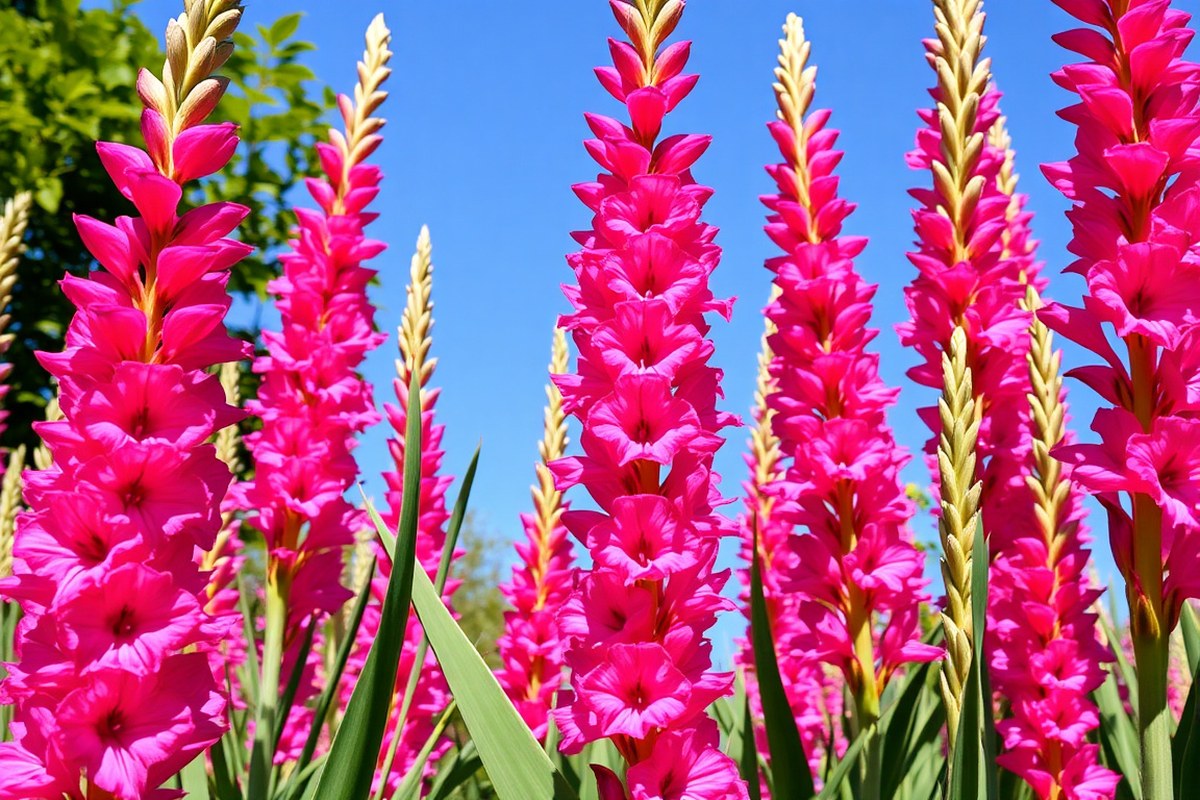
How to Grow Gladiolus: Simple Steps for Healthy, Tall Blooms
How to grow gladiolus starts with picking the right planting time. Plant gladiolus corms about two weeks before your last frost date.
This timing helps corms avoid cold damage and encourages early growth. Dig holes 6 inches deep and space corms 3 to 5 inches apart for best growth.
Choose a sunny spot where the soil drains well and warms up quickly. Gladiolus corms planted too shallow or too close will struggle or fall over.
Make sure the pointy side faces up when you plant them. Cover lightly with soil to protect from birds and pests.
Keep soil moist but not soggy, especially while corms sprout. Water deeply to encourage strong roots and tall, healthy stalks.
Too much water invites rot, so watch for soggy soil after rains. Mulch around plants to keep moisture consistent and control weeds.
Key Takeaways
- Plant gladiolus corms 6 inches deep, pointy side up, spacing 3 to 5 inches.
- Choose a sunny spot with well-drained soil to prevent rot and encourage growth.
- Start planting about two weeks before your last spring frost date.
- Water deeply but avoid standing water to keep corms healthy.
- Loosen clay soil or use raised beds for better root development.
- Space larger corms deeper, around 4 to 6 inches, to support taller plants.
How to Plant Gladiolus Corms for Best Growth

Plant gladiolus corms in spring after any frost danger passes. This timing prevents cold damage to young shoots. Check your local last frost date and plan for two weeks before to get ready.
Soil matters a lot. Loosen the ground to about 12 inches deep and mix in compost. This helps roots grow strong.
It stops soil from holding too much water. Too much water can rot the corms.
The right depth depends on the corm size. Bigger corms get planted deeper to steady tall flower spikes. Give each corm enough space for leaves to grow.
Keep a few close together. This makes a strong flower display.
- Dig and loosen the planting bed about 12 inches deep.
- Mix in a few inches of compost to improve soil texture and nutrients.
- Place each corm with the pointed end facing up.
- Plant corms 4 to 6 inches deep, heavier corms closer to 6 inches.
- Plant the corms 6 to 10 inches apart. This gives them enough room to grow. Use this spacing in garden beds.
- Water the area gently after planting to settle the soil around the corms.
- Choose a sunny spot that gets at least 6 hours of direct sunlight daily.
Clay soil holds water too long. Raised beds improve drainage and keep roots dry. They are the best choice for clay soil.
Raised beds should also be loosened and amended with compost each year. Use potting soil that drains well.
Plant corms 2 to 3 inches deep in pots. Space them about 4 inches apart.
Plant at least seven corms in groups to make a fuller flower display. The right depth and spacing reduce the need for staking later and encourage healthy, upright flowers.
Step-by-Step Gladiolus Care and Watering Tips
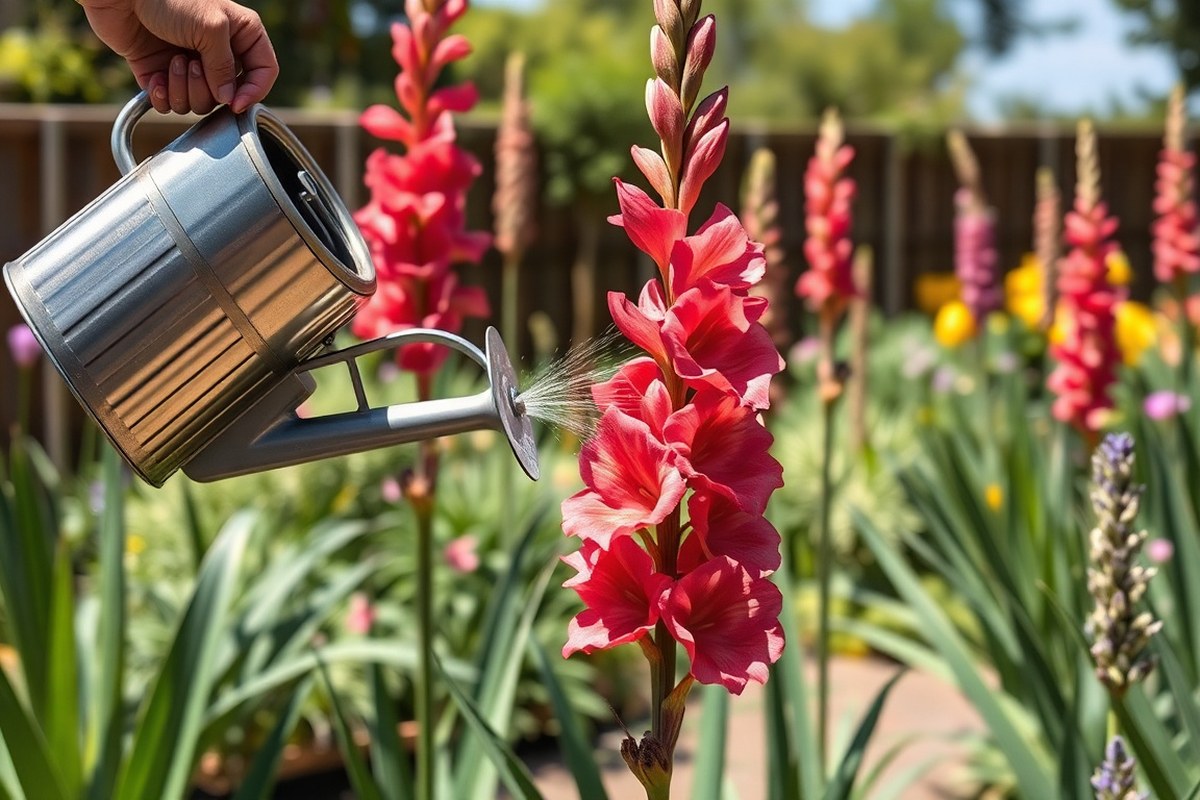
Gladiolus plants need full sun, regular watering, and support during growth. Water gladiolus about 1 inch each week. Wait until plants grow 6 to 10 inches tall.
Start using fertilizer when plants reach that height. Tall flower spikes usually need staking to stay upright and avoid damage.
Watering Schedule and Best Practices
Keep the soil around gladiolus evenly moist without letting it get soggy. Too much water can cause rot and too little will make the flower spikes weak. Aim for about 1 inch of water total every week, including rainfall.
Water deeply to encourage strong roots, especially during hot, dry periods. Avoid overhead watering to reduce the risk of fungal diseases on the leaves. Compost-rich soil helps keep moisture steady, which means watering less often.
Check soil moisture by sticking your finger about 2 inches deep. Water if it feels dry at that depth.
Fertilizing Gladiolus at Key Growth Stages
Start fertilizing when gladiolus plants grow 6 to 10 inches tall. Mix water-soluble fertilizer as the label says. Apply fertilizer 4 to 6 inches from each stem.
Avoid putting fertilizer too close to the plants. This feeding supports healthy growth and bloom development.
Repeat fertilizing every two weeks until flowering ends. Avoid letting fertilizer touch the plant directly to prevent leaf burn. Balanced fertilizers with similar nitrogen, phosphorus, and potassium levels work well.
Use fertilizers labeled for flowering plants to give the right nutrients for strong blooms.
Supporting Tall Gladiolus Stems
Tall gladiolus, like ‘Yellowstone,’ can reach up to 5 feet and often need support. Staking prevents bending or snapping, especially on windy days. You can also plant gladiolus near taller plants or in groups to help stems stay upright.
Hilling soil around the base can stabilize corms. But string grids or individual stakes offer better spike support. Use bamboo stakes or green garden stakes and soft ties to avoid damaging the stems.
- Place stakes in the ground near the gladiolus without disturbing roots.
- Tie the flower stalks loosely to stakes using soft garden ties or twine.
- Check ties regularly and adjust as the plant grows taller.
- Create a string grid between stakes for multiple plants in a row.
- Hill soil gently around the plant base if extra support is needed.
- Remove stakes and ties once flowering finishes and stems die back.
Don’t tie the stems too tightly to stakes; this can break fragile flower stalks.
Choosing Gladiolus Varieties and Planting Options
Gladiolus come in a variety of sizes that fit both small gardens and larger landscapes. Most grow to between 17 and 24 inches tall, perfect for medium flower beds.
For tight spaces, choose compact types that only reach 12 to 18 inches. These smaller varieties save room but still give you beautiful spikes of flowers.
When picking gladiolus, some types stand out for height. Large-flowered varieties can grow 3 to 4 feet tall, especially when planted in the ground. These tall spikes add drama and are great for cutting.
You can also grow tall gladiolus in containers. But use pots that are at least 18 inches deep for stability and healthy roots.
| Variety | Typical Height | Best Use | Planting Option |
|---|---|---|---|
| Large-flowered varieties | 3 to 4 feet | Tall flower spikes, cut flowers | Ground or deep container (18 in) |
| Medium varieties | 17 to 24 inches | Flower beds, borders | Ground or standard containers |
| Compact varieties | 12 to 18 inches | Small gardens, containers | Small containers or ground |
| Gladiolus communis subsp. Byzantinus | Varies (early blooming) | Early flowers, magenta pink spikes | Ground or container |
Growing gladiolus in containers works well, especially if you use the right pot. Choose containers with good drainage holes and enough depth for the corms.
Tall varieties need pots 18 inches deep to avoid tipping. For smaller types, a 12-inch pot will do.
Plant gladiolus corms in fresh potting mix that’s light and drains well. Water them after planting and keep soil moist but not soggy.
Position containers in full sun for the brightest flower colors. Moving pots can help you adjust light as needed.
When and How to Harvest Gladiolus Flowers
Cut gladiolus flower spikes when one or two blossoms have just opened. This timing helps your flowers last longer after cutting. Always cut in the morning and place spikes in water immediately.
Recognizing Flower Maturity
Look for flower spikes with one or two open florets near the bottom. The rest of the florets should remain closed or just starting to open. This stage means the flower is mature enough to cut but not fully bloomed yet.
The spikes can have up to 20 florets. But cutting early prevents them from wilting too soon.
If the lower two or three florets show color or one is fully open, it’s a good sign. Avoid waiting until most flowers are fully open to harvest.
Cutting and Handling Flower Stalks
Use sharp, clean garden clippers or a knife to cut spikes just above the soil. Avoid cutting too low to keep as much foliage intact as possible. Leaving the leaves helps the bulb gather energy to bloom again next year.
Cut in the cool morning hours when the air is damp. Immediately put the stems in lukewarm water. This helps prevent air bubbles that can block water uptake and shorten vase life.
- Check flower spikes for one or two open blossoms at the bottom.
- Use clean, sharp clippers to cut the stalk near the soil surface.
- Leave most of the gladiolus foliage on the plant intact.
- Place cut stems into a bucket of lukewarm water right away.
- Move flowers into a cool shaded spot for at least one hour.
- Remove any damaged or fully open florets for a neat appearance.
Extending Vase Life of Gladiolus
Keep cut gladiolus in fresh water to prolong vase life beyond a week. Change the water every two days to prevent bacteria buildup. Trim the stems slightly each time before placing them back in water.
Place the vase in a cool area away from direct sunlight or heat sources. Gladiolus flowers last longer in cooler temperatures around 60 to 70°F. Avoid drafty spots or near ripening fruit that emits ethylene gas.
Common Pests, Diseases, and How to Prevent Them
Thrips are the most common pest attacking gladiolus plants. These tiny insects suck sap from leaves and flower buds. You will notice white flecks, brown spots, or distorted flower petals if thrips are present.
Treat thrips early with insecticidal soap or neem oil. Spray every 7 to 10 days. Keep spraying until the damage stops.
Rot usually affects the corm and can ruin your entire crop if left unchecked. Soft, mushy corms or a foul smell indicate corm rot, often caused by fungi like fusarium. Prevent rot by buying firm, healthy corms without soft spots.
Allow corms to dry and harden for a week before planting or storing. Avoid overwatering; keep soil moist but never soggy to reduce rot risk.
Leaf and stem fungal diseases show up as rust-colored or brown spots. Gladiolus rust causes orange or reddish pustules on leaves and flower stems. The leaves may yellow and fall off early.
Space plants far enough to allow good airflow. Water only the soil, not the leaves.
This helps prevent fungal diseases. Remove and destroy infected leaves promptly to stop spread.
Good hygiene and proper corm handling lower pest and disease chances greatly. Plant gladiolus in full sun and well-drained soil. Inspect plants regularly for early signs of thrips or fungal issues.
Managing these problems helps your gladiolus grow tall and bloom bright. It keeps the plant strong and free from pests or rot.
Never plant gladiolus corms that feel soft or spongy. Healthy corms are firm and dry, which keeps rot at bay.
How to Overwinter and Store Gladiolus Corms
Gladiolus corms don’t come back in cold winters unless you live in a warm area. In zones 7 and 8, you can leave them in the soil all winter.
In colder areas, dig them up after leaves die back. Store them indoors in a cool, dry spot until spring.
Timing and Method to Dig Up Corms
Dig up gladiolus corms after the foliage turns yellow and dries, usually in late fall. Waiting until leaves fully die back helps the corms store energy for next season.
Use a garden fork or trowel to lift the corms carefully. Avoid bruising or cutting them while digging. Handle them gently to avoid damage.
- Wait until gladiolus foliage has completely died and turned brown.
- Loosen soil around each plant with a garden fork.
- Lift corms gently from the soil, avoiding cuts or bruises.
- Brush off excess soil gently by hand, do not wash with water.
- Separate any small cormlets from main corms if you want to propagate.
Drying and Cleaning Gladiolus Corms
Place freshly dug corms in a warm, dry, and airy spot out of direct sunlight. This drying stage lasts about three weeks and prevents rot during storage.
Shake off loose soil, but avoid washing corms. Remove any shriveled or damaged ones to stop disease spread. Drying helps the corms harden and prepares them for long-term storage in cooler temperatures.
Proper Storage Conditions for Corms
Store dry gladiolus corms in breathable containers like mesh or paper bags to keep air flowing. Avoid plastic sealed bags that trap moisture.
Keep the corms in a cool, dry place with temperatures between 35 and 50 degrees Fahrenheit. Basements or unheated closets often work well.
Check stored corms occasionally for mold or rot. Remove any bad ones to protect the rest during winter.
Propagating Gladiolus: Division and Growing from Cormlets
Gladiolus corms do multiply in the ground by producing smaller cormlets. These cormlets grow underground around the parent corm.
You can separate them easily. Plant them to grow new gladiolus flowers.
Dividing gladiolus corms means carefully separating the small cormlets from the main corm. It helps you expand your gladiolus collection without buying new bulbs. The cormlets usually take about 2 to 3 years to grow into flowering plants.
Growing gladiolus from cormlets is a slow process, but it is rewarding. Small cormlets won’t bloom the first year.
Instead, you plant them and let them grow bigger over time. Once they reach about 1.5 inches in diameter, they can flower the next season.
Here are easy steps to divide and plant gladiolus corms and cormlets:
- Lift gladiolus corms after the foliage yellows in fall.
- Gently remove soil and separate the small cormlets from the main corm.
- Discard any corms or cormlets with mold or soft spots.
- Store healthy corms and cormlets in a cool, dry place through winter.
- In spring, plant larger corms about 4 inches deep, spaced 6 inches apart.
- Plant smaller cormlets in shallower soil or pots, about 2 inches deep.
- Provide regular watering and full sun once planted.
- Expect blooms from larger corms in 70 to 90 days. Cormlets may take 2 to 3 years.
Lifting and dividing corms every few years prevents overcrowding. Larger corms produce taller plants and more flowers. Cormlets need patience as they slowly mature underground before flowering.
Sunlight, Soil, and Environmental Factors Affecting Growth
Gladiolus need full sun to bloom their best. They will grow in partial shade, but flowers may be fewer and smaller.
Aim for at least six hours of direct sunlight every day. This helps the corms grow tall flower stalks.
These flowers thrive in well-drained soil that warms up quickly. Soil should be loose, sandy, or loamy for good root growth.
Heavy clay or wet soil can cause rot. So gardening in raised beds helps if your ground drains slowly.
Heat is key for gladiolus growth. Plant only after the soil reaches about 55 degrees Fahrenheit (13 Celsius).
This avoids any frost risk, which can harm or kill the corms. Late spring or early summer usually works fine in most regions.
Dry soil is not ideal either, but gladiolus tolerate drought once established. Water moderately during summer when your soil feels dry. Avoid waterlogging, which causes corm rot and weak plants.
Humidity does not strongly affect gladiolus health. But consistently damp air combined with poor soil drainage raises disease risk.
Keep your garden airy to prevent fungus. Avoid overhead watering late in the day.
Clay-like soil needs improvement. Mix in compost or peat moss for better texture. This lightens the soil and improves drainage.
Raised beds or mounds cost time and materials. They let you plant where clay is heavy.
Temperatures below freezing stunt gladiolus growth and damage corms. After frost, yellow or brown leaves signal it’s time to cut back. Leaving leaves too late can reduce next year’s corm quality.
Plant gladiolus only after frost is gone. Make sure soil stays above 55°F to protect corms.
Your First 8 Weeks: A Step-by-Step Action Plan for Growing Gladiolus
Follow these steps to get your gladiolus growing strong and healthy from planting to bloom.
- Week 1: Plant gladiolus corms 4 to 6 inches deep in well-draining soil. Check soil moisture with your finger; it should feel moist but not soggy.
- Week 2: Water the newly planted corms thoroughly. Confirm the soil stays evenly moist by checking it every few days.
- Weeks 3-4: Watch for sprouting. Once shoots reach 3 to 4 inches, start fertilizing every two weeks with a balanced fertilizer.
- Weeks 5-6: Stake tall flower spikes to prevent wind damage. The plants should stand upright without drooping.
- Week 7: Monitor for pests like thrips or aphids. Spot any damage or insects and treat promptly with insecticidal soap.
- Week 8: Begin harvesting gladiolus flowers when buds start to open. Cut stems in the morning for the longest vase life.
Frequently Asked Questions
Do You Cut Gladiolus Down in the Fall?
Yes, cut gladiolus down to ground level once leaves turn brown. This helps the plant rest and prepares it for dormancy through winter.
Do Gladiolus Come Back Each Year?
Gladiolus come back each year only in zones 7 and 8 if left in the ground. In colder areas, you must dig up the corms and store them for winter.
What Is the Best Month to Plant Gladiolus Bulbs?
Plant gladiolus bulbs in late spring outdoors when soil warms up. You can start them indoors in early spring in pots.
Do Gladiolus Bulbs Multiply in the Ground?
Gladiolus corms multiply by producing small cormlets around the main corm. It usually takes 2 to 3 years for cormlets to grow into blooming plants.
How Do You Prevent Gladiolus from Falling Over?
Use stakes or support when gladiolus flower stems grow tall. This keeps flowers upright in wind or rain.
Can Gladiolus Grow Well in Containers?
Yes, gladiolus grow well in pots at least 12 inches wide. Plant 6 to 10 corms, spaced 3 to 5 inches apart, for best results.
Final Thoughts
Growing gladiolus is rewarding when you care for them step by step. Start by planting healthy corms deeply and keep soil moist. Now, check your garden today for good drainage and get your corms in the ground.


