

How to Plant Rosemary Seeds: A Complete Guide for Fast, Reliable Growth
Knowing how to plant rosemary seeds can save you time and frustration. Plant them indoors about 10 to 12 weeks before the last frost date. This gives seeds plenty of warmth and a good start before outdoor planting.
Rosemary seeds take a long time to sprout, usually between 15 and 30 days. You need to be patient and keep the soil moist but not soaked. Use seed-starting mix and keep the temperature between 70 and 80 °F for best results.
Starting seeds indoors is helpful. Outdoor soil may be too cold. Cold soil slows rosemary growth.
Make sure your seedlings get 6 to 8 hours of light daily once they pop up. That bright light helps them grow strong before you move them outside.
Key Takeaways
- Start rosemary seeds indoors 10-12 weeks before your last frost date.
- Keep soil humidity steady but avoid overwatering the seeds.
- Maintain soil temperature between 70 and 80 °F for fast germination.
- Rosemary seeds usually take 15 to 30 days to start sprouting.
- Provide 6 to 8 hours of light daily for healthy seedlings.
- Transplant seedlings outdoors only after frost danger passes.
How to Plant Rosemary Seeds Step-by-Step
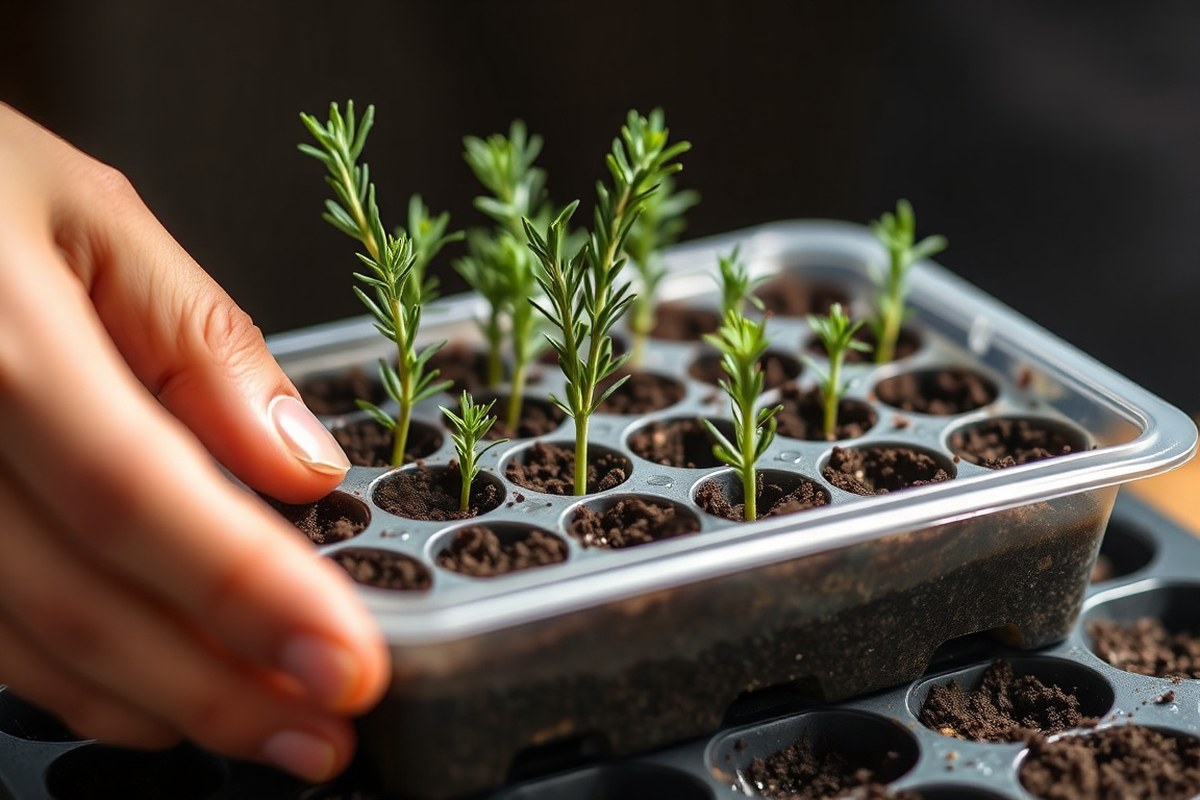
- Fill seed trays or small pots with a well-draining seed-starting mix. Avoid heavy garden soil because rosemary seeds need good drainage to prevent rotting.
- Moisten the soil thoroughly but don’t soak it. The soil should be damp to the touch, helping seeds settle without drowning them.
- Sprinkle rosemary seeds thinly on the soil surface. These seeds are tiny, so handle them gently to avoid clumping.
- Press seeds lightly into the soil without burying. Next, cover them with about 1/8 inch of soil or vermiculite. This helps give them light and keeps moisture just right.
- Space multiple seeds or pots at least 18 inches apart. Rosemary plants need room to grow and air circulation when you later transplant them.
- Place the seeded trays where soil temperatures stay between 65 and 70 degrees Fahrenheit. Consistent warmth avoids dormancy delays and boosts germination speed.
- Water again gently to settle the soil after covering. Use a spray bottle or light watering to avoid washing seeds away or creating soggy conditions.
- Maintain light moisture by watering lightly but infrequently. Soil should dry slightly between waterings since rosemary seeds dislike soggy, wet soil.
Pick containers with drainage holes for healthy root growth and no standing water. Seedlings will take 15 to 30 days to emerge in the right conditions.
Starting indoors about 12 weeks before transplanting gives seedlings time to grow strong. Avoid planting too deep, just a thin soil layer over seeds keeps them happy.
When and Where to Start Rosemary Seeds for Best Results

Start rosemary seeds indoors 8 to 12 weeks before the last spring frost. This timing usually means late winter or very early spring. It gives seedlings enough time to get strong before going outside.
For areas colder than USDA zone 7, start seeds inside. Cool outdoor temps slow or even stop the seeds from sprouting. In milder zones, plant seeds outdoors in spring after temps rise above 50°F (10°C).
Rosemary seeds need warmth and light to germinate well. Maintain soil temperature from 70 to 80°F (21 to 27°C) for best results. Provide 6 to 8 hours of direct sunlight daily, like near a south-facing window or below a grow light.
Plant seeds just on the soil surface. Don’t bury them, as rosemary seeds need light to germinate.
The seeds can take 2 to 4 weeks to sprout. So keep the soil warm and moist during this period.
| Starting Method | When to Start | Temperature Needed | Light Requirements | Recommended Location |
|---|---|---|---|---|
| Indoors | 8 to 12 weeks before last spring frost | 70-80°F (21-27°C) | 6-8 hours direct sunlight or grow light | South-facing windowsill or grow light setup |
| Outdoors (warm climates) | Spring, after frost risk passes | Above 50°F (10°C) | Full sun | Sunny garden spot |
| Outdoors (cooler climates) | Not recommended | Too cold, slows germination | N/A | Start indoors instead |
Keep soil moist but not soggy during germination, too much water can cause seed rot.
Starting rosemary seeds indoors helps control warmth and light for steady growth. Outdoor sowing only works if temperatures are reliably warm. Using a grow light indoors can replace natural sun, especially in late winter.
Keep track of your last frost date. Count yourself back 8 to 12 weeks to decide the right day to plant indoors. This approach helps avoid weak seedlings struggling outside in cold weather.
Preparing Rosemary Seeds to Improve Germination
Rosemary seeds can be stubborn and slow to sprout. Giving them a soak or cold stratifying helps wake them up gently. These tricks help your seeds sprout better.
They stop seed rot. This happens when seeds sit too long in wet soil.
Seed Soaking: How and Why
Soaking rosemary seeds softens their hard outer shell. This quick start helps water enter, triggering germination hormones inside. Soaked seeds often germinate faster than dry ones, reducing the waiting game.
Use room temperature water to avoid shocking the seeds. Soaked seeds can swell slightly and feel softer. Don’t soak longer than 24 hours to stop seeds from rotting or losing oxygen.
Try this soaking process before sowing to boost germination:
- Measure out the rosemary seeds you want to plant.
- Pour room temperature water into a small bowl or cup.
- Place the seeds gently into the water.
- Let them soak for 12 to 24 hours, no longer.
- Drain the water and pat seeds dry with a paper towel.
- Plant seeds immediately at the correct depth in moist soil.
Cold Stratification Process
Cold stratification mimics winter below ground. It tricks the seed into thinking it experienced cold months.
So it’s ready to grow once warmed up. This step can improve germination rates for slow or old seeds.
To stratify, keep seeds damp, not soaked. Wrap them in a slightly wet paper towel inside a sealed bag.
Place the bag in your fridge for 14 days at about 40°F (4°C). Check often to avoid mold or drying out.
After stratifying, plant your seeds in warm soil (70° to 75°F). This method takes some planning but helps coax stubborn rosemary seeds to sprout faster.
Recognizing and Preventing Seed Problems
Rosemary seeds often fail during germination because of rot or too deep planting. Seeds that stay wet too long can develop mold or die from lack of oxygen. The soil surface should be moist but never soggy.
Plant seeds only about 1/8 inch (3 mm) deep since they are tiny. Too deep slows or stops sprouts. Watch for discoloured, slimy seeds, these signals mean rot and require discarding.
Overcrowding is another problem. Spread seeds about an inch apart to stop fungus and help air circulate. Proper spacing and airflow protect delicate seedlings as they grow.
Caring for Rosemary Seedlings Until Transplanting
Water rosemary seedlings carefully to avoid damping off. Use a spray bottle to mist soil daily. Keep soil moist but not soggy.
Light misting helps without flooding the seeds. Overwatering invites fungal issues, which harm young plants quickly.
Place seedlings where they get 6 to 8 hours of direct sunlight each day. A south-facing window or a grow light set on a 12-hour daily schedule works well. Bright light helps the seedlings grow bushy and strong, avoiding leggy stems.
Keep the temperature between 65°F and 75°F for the best growth. Avoid cold drafts or hot spots near heaters. Consistent warmth encourages seedlings to develop steady roots and healthy leaves.
Check seedlings regularly for signs of good health. Healthy leaves are green and firm, not yellow or wilted. Stressed seedlings look pale, droopy, or shrunken.
Adjust watering to fix stress. Check light levels and change if needed.
As seedlings grow to about 3 inches tall, that’s your sign to prepare for transplanting. Harden seedlings off before moving outdoors. Put them outside a few hours each day.
Do this daily for a week. This reduces shock and encourages them to adjust well.
Fertilize lightly once seedlings have their second set of true leaves. Use a balanced, diluted liquid fertilizer every two weeks to support growth. Too much fertilizer too early can burn delicate roots, so keep it mild.
When and How to Transplant Rosemary Seedlings Outdoors or to Larger Pots
Transplant rosemary seedlings when they grow 3 to 4 inches tall. Space outdoor plants 24 to 36 inches apart for healthy growth. Use well-draining soil and harden off seedlings before moving them outdoors or to larger pots.
Timing the Transplant
Wait until seedlings reach 3 to 4 inches tall and have several leaf sets. This usually happens a few weeks after germination. Transplant in spring after the last frost to avoid cold damage.
Seedlings develop stronger roots and leaves by this stage. It helps them handle the move better and grow faster. Avoid transplanting too early, as young seedlings can easily die.
Preparing the Garden or Pots
Pick a sunny spot with well-draining soil for your rosemary plants. Dig holes the size of the seedling root ball for garden planting. Use a soil mix designed for rosemary if planting in containers.
A good soil mix includes sand or perlite to improve drainage. Rosemary does poorly in heavy clay or very acidic soil. Grow rosemary in pots when your garden soil isn’t suitable for plants.
Ensure pots are at least 6 inches wide to support root growth. Use fresh potting soil and avoid reusing old soil, which might harbor pests or diseases.
Harden Off Seedlings Gradually
Before transplanting outside permanently, harden off seedlings over 7 to 10 days. This helps plants adjust to outdoor light, wind, and temperature. Start by placing seedlings outside in partial shade for a few hours daily.
Increase time and sun exposure each day, but bring seedlings indoors at night. Check weather forecasts to protect seedlings during cold or windy days. Hardened-off seedlings handle stress better and grow stronger.
Planting and Spacing Guidelines
Space rosemary plants 24 to 36 inches apart in the garden. This helps air flow and allows room for growth.
In larger pots, keep seedlings about 1 inch apart initially. Thin weaker seedlings by removing them gently.
Remove weaker seedlings to prevent crowding and give stronger ones room to grow. Plant seedlings carefully and water lightly after transplanting. Avoid compacting soil around roots to keep soil loose.
Choose a sheltered spot protected from strong winds to prevent damage. Keep watering consistent but avoid overwatering, which can cause root rot.
- Check seedling height; wait until 3 to 4 inches tall.
- Prepare garden bed or pot with well-draining soil mix.
- Pick a sheltered location with full sun exposure.
- Harden off seedlings outdoors for 7 to 10 days gradually.
- Dig holes matching root balls in the garden or use larger pots.
- Space plants 24 to 36 inches apart outdoors or 1 inch apart in pots.
- Plant seedlings gently, firm soil lightly, and water right after.
- Monitor weather and protect seedlings from cold or wind.
Handle seedlings gently and avoid disturbing the roots during transplanting to prevent shock.
Light and Temperature Needs for Growing Rosemary from Seed
Rosemary seeds need plenty of light to grow well. Aim for six to eight hours of bright, indirect sunlight each day during all stages. Start seeds indoors by placing them near a sunny window.
Use a grow light if natural light isn’t strong or steady. This helps seedlings get enough light to grow well.
The soil temperature should stay around 70°F for best germination. Rosemary seeds sprout slowly, often taking two to three weeks. Keep soil moist, but not soaked, with a spray bottle to avoid overwatering.
Your home might be cool. Try a heat mat to keep soil warm. Warm soil helps rosemary seeds sprout faster and better.
Rosemary seedlings also prefer warm air between 65°F and 75°F. Avoid drafts or sudden temperature drops that can stress young plants. Rosemary grows well in warmer days once established. It prefers cool nights between 55°F and 60°F. This helps balance growth and plant health.
Rosemary doesn’t survive freezing temperatures. Bring pots indoors or cover outdoor plants with mulch as cold weather nears.
A thick layer of straw or leaves around the base helps protect roots from frost damage. This step becomes especially important if you live in zones with winter lows below 30°F.
Keeping consistent warmth and light helps rosemary thrive gently and steadily. Avoid rushing sprouts with too much heat or too little light, as this can weaken seedlings. Keep warm and steady light for your rosemary plant.
This helps it grow strong stems and leaves. You can harvest in 12 to 16 weeks.
Common Problems and How to Fix Rosemary Seed Germination Issues
Rosemary seeds often struggle to sprout because they need warmth, light, and well-drained soil. Seeds won’t germinate if the soil stays too wet or cold.
Also, old or poor-quality seeds might never sprout, so buying fresh seeds helps. You’ll usually see no growth after three weeks with bad seeds or overly wet soil.
Look for signs like swollen or molded seeds and weak, leggy seedlings. They turn pale or fall over when they lack enough light. Poor soil drainage can cause the same problems.
Both make seedlings weak and unhealthy. Uneven growth can also mean some seeds got more water or light than others. Move the container to a brighter spot to help seedlings.
Use grow lights if natural light is too low. Keep the lights on for 12 to 16 hours daily.
- Check soil moisture daily and only water when dry to the touch
- Use seed-starting mix or sandy soil with pH between 6.0 and 7.0
- Plant seeds no deeper than ¼ inch for proper light exposure
- Keep temperature steady between 65°F and 75°F for best germination
- Stop watering briefly if you spot white mold or seed rot
- Space seedlings 2 to 3 inches apart to improve air circulation
- Remove weak or dead seedlings early to focus energy on strong ones
To prevent damping-off disease, avoid overwatering and keep airflow steady around seedlings. Use a small fan or open a window periodically. Fungus thrives in wet, still air and kills young plants fast.
Thin seedlings so only the healthiest ones stay growing. This helps plants grow strong and even. Aim for strong plants that grow 2 to 3 inches tall.
Wait until they reach this size before repotting them. This helps them handle bigger pots better. That helps protect them from stress and disease, boosting your chances of success.
Timeline from Seeds to Harvest: What to Expect When Growing Rosemary
Rosemary seeds usually take about 2 to 4 weeks to germinate. After that, expect another 4 to 6 months before you can start harvesting leaves. The plant grows slowly at first but becomes ready for regular use with steady care.
Germination Period
Rosemary seeds usually sprout within 14 to 30 days after planting. Keep the soil damp without flooding it during this time. Avoid moving the seeds to prevent slowing or stopping their growth.
Patience is key during this stage. Some gardeners see sprouts at just two weeks, but others wait three full weeks. The soil temperature should ideally stay around 70°F for best results.
Seedling Growth Phases
Once sprouted, rosemary seedlings grow slowly during their first few months. They usually reach around 6 inches in height within 4 to 6 months. At this point, you can start pruning and training branches to encourage fuller growth.
The plant develops tough stems and woody branches as it matures. Seedlings need steady sunlight and well-draining soil during this stage. Growth speed varies, depending on light, temperature, and watering quality.
First Harvest Expectations
You can begin harvesting small amounts of rosemary once the plant is about 6 inches tall. Pick leaves carefully by pulling them off the stems, avoiding damage to new growth. Early harvesting encourages bushier plants if done gently.
Most gardeners wait at least 4 to 6 months before their first harvest. Taking too many leaves too soon can cause slow growth. Light pruning helps the plant spread and become fuller for future harvests.
Long-Term Growth and Maintenance
Rosemary is an evergreen shrub that can supply fresh leaves year-round once fully established. Regular pruning keeps plants healthy and promotes new shoots. Avoid cutting more than one-third of the plant at once.
With proper care, including sunlight and proper watering, rosemary plants will grow larger each year. Mature plants can live for many years. Watching growth stages helps you prune and harvest at the right times.
Here is a simple timeline to expect when starting rosemary from seed:
| Stage | Time Frame | What to Expect |
|---|---|---|
| Seed Germination | 14, 30 days | Sprouts appear; keep soil moist and undisturbed |
| Seedling Growth | 1, 4 months | Slow growth; seedlings develop leaves and stems |
| Pruning Start | 4, 6 months | Seedlings reach about 6 inches; start light pruning |
| First Harvest | 4, 6 months | Leaves can be harvested gently without harming plant |
| Mature Growth | 6+ months | Plant grows fuller; supports year-round leaf supply |
This timeline helps you plan your care and expectations clearly. Adjustments may be needed based on your environment or growing conditions.
Don’t dig around seeds during germination, or you may kill the fragile sprouts.
Step-by-Step Action Plan
Follow these steps to grow your rosemary from seeds successfully. Each phase helps you check your progress as the plant grows.
- Before you start: Soak rosemary seeds in warm water for 24 hours. Seeds that swell are ready to plant.
- Day 1: Fill seed trays with light, well-draining soil. Plant seeds on the surface, lightly covering them.
- Week 1: Keep soil moist but not soaked. Cover trays with plastic to keep humidity high.
- Week 2: Remove the plastic cover daily for fresh air. Look for tiny sprouts as the first sign of germination.
- Weeks 3, 4: Move seedlings to a bright spot with indirect sunlight. Keep watering lightly to avoid drying out.
- After 6 weeks: Seedlings should have 4 to 6 leaves by then. Slowly give them more light outside or by a south window. This helps them adapt without shock.
- After 8 weeks: Transplant seedlings into bigger pots or outdoors in well-drained soil. Watch for strong growth to confirm success.
Frequently Asked Questions
How Long Does It Take Rosemary Seeds to Germinate?
Rosemary seeds usually take 2 to 4 weeks to germinate. Patience is important because they sprout slowly, and some may take longer.
Can I Soak Rosemary Seeds Before Planting?
Yes, soaking rosemary seeds for 24 hours helps soften their hard coat. This can improve germination but don’t soak longer or seeds might rot.
Do Rosemary Seeds Need Light to Germinate?
Yes, rosemary seeds need light to germinate well, so don’t cover them deeply. Just press them lightly onto the soil surface and keep it moist.
What Type of Soil Is Best for Planting Rosemary Seeds?
A well-draining soil mix with some sand or perlite works best for rosemary seeds. Avoid heavy, water-logged soils to prevent seed rot and encourage root growth.
Can I Start Rosemary Seeds Outdoors?
Starting rosemary seeds indoors is better because they need warm, consistent temperatures. Outdoors, plant only after the last frost and when soil warms above 65°F.
How Do I Know When Rosemary Seedlings Are Ready to Transplant?
Rosemary seedlings are ready to transplant once they have several sets of true leaves. This usually happens about 3 to 4 months after sowing seeds indoors.
Before You Go
Growing rosemary from seeds takes patience. But it’s worth it for fresh herbs at home.
Start the soaking step today to get your seeds ready. Keep caring for seedlings steadily, and soon you’ll enjoy your own rosemary plants.


