

How to Take Care of Lily Plant: Complete Steps for Healthy Blooms
Caring for lily plants begins with planting bulbs at the correct depth. Dig a hole between 6 and 8 inches deep based on the bulb’s size. For a 2-inch bulb, plant it 6 inches deep to shield against frost and dryness.
Choose the best time for planting based on your local climate. Plant lily bulbs during the fall season. Do this around 2 to 4 weeks before the first frost.
This timing helps bulbs settle before winter. This timing lets bulbs settle and start root growth before winter.
Choose the right spot for your lilies with care. They need at least 6 hours of sunlight daily. Avoid areas that are shaded to keep plants strong and blooming well.
Key Takeaways
- Plant lily bulbs 6 to 8 inches deep for proper root protection.
- Time planting 2-4 weeks before your area’s first frost for better growth.
- Lilies need at least 6 hours of direct sunlight for strong, healthy blooms.
- Plant deeper (about 9 inches) in warmer climates to keep bulbs cool.
- Choose bulbs based on your garden’s sun exposure and winter zone.
- Insert stakes early to support tall lilies before their stems grow long.
How to Plant Lily Bulbs for Best Growth

Plant lily bulbs deep and spaced well to help them grow strong. Fall is usually best, about 2 to 4 weeks before your first frost. Spacing and depth depend on bulb size and your climate zone.
Preparing the Soil
Start by loosening soil 12 to 15 inches deep with a spade or rototiller. Lilies prefer rich, well-draining soil with organic matter and a neutral pH.
Add compost or well-rotted manure to improve soil nutrients and drainage. Mix in bulb food fertilizer from Breck’s or a similar product for stronger growth.
Depth and Spacing Guidelines
Plant lily bulbs about three times as deep as the bulb’s height. For example, if a bulb is 4 inches tall, plant it 12 inches deep.
Small lily bulbs need about 10 inches (25 cm) of space. Large bulbs require 20 inches (50 cm) apart. Place bulbs pointy side up.
Best Planting Times by Region
In colder zones, plant lily bulbs in fall, 2 to 4 weeks before the first frost. This timing lets roots establish before freezing.
Warmer regions can plant lilies in early spring or fall. Plant a little deeper, around 9 inches in warm climates, to protect bulbs from heat.
Planting Lilies in Containers
Use a large pot at least 10 inches wide and deep for three bulbs. Choose well-draining, organically rich soil suitable for bulbs.
Plant 4 to 6 bulbils half an inch deep, spaced one inch apart in smaller pots. Make sure containers have drainage holes to prevent rot. Water bulbs lightly after planting and place containers where they get full sun to partial shade.
- Choose a sunny spot with well-draining soil or container.
- Loosen soil 12 to 15 inches deep and mix in compost and bulb fertilizer.
- Measure bulb size to decide planting depth (three times bulb height).
- Dig holes spaced 10 inches apart for small bulbs, 20 inches for large ones.
- Place bulbs pointy side up in the holes.
- Fill holes with soil and press gently to remove air pockets.
- Water the ground thoroughly after planting to settle soil.
- Mulch garden beds well in fall to protect bulbs in cold zones.
Choosing the Right Lily Types for Your Garden
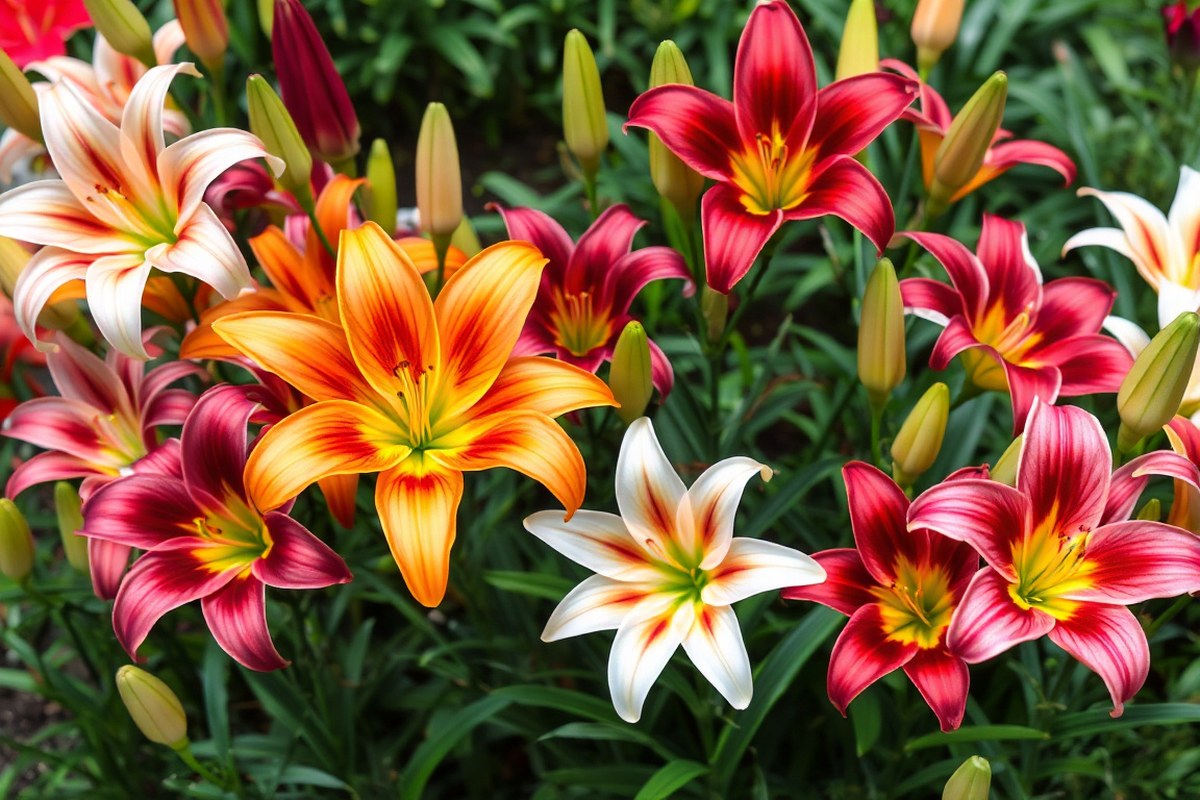
Lilies come in several popular types, each with distinct bloom times and sun needs. Asiatic lilies flower earliest, with little scent but bright colors.
Oriental lilies bloom later and offer large, fragrant flowers. Trumpet and Turk’s Cap lilies are tall and elegant while hybrids bring unique shapes and fragrances.
Asiatic Lilies
Asiatic lilies prefer full sun but tolerate some partial shade well. Their flowers come in a wide color range: reds, oranges, yellows, and purples. These lilies usually grow 2 to 4 feet tall.
They bloom in early summer. Often, that means May or June.
These lilies give off very little scent, so they suit scent-free gardens. Asiatic hybrid flowers come in trumpet, bowl, or Turk’s cap shapes. Their blossoms can reach up to 8 inches across and start blooming early in the season.
Oriental Lilies
Oriental lilies produce large flowers 6 to 9 inches wide. They have a strong, sweet smell.
They bloom mid to late summer, after Asiatic lilies finish. Their blooms are often pink with spots and upward facing.
These lilies usually grow taller, reaching up to 6 feet. They prefer moist but well-drained soil and tolerate partial shade but do well in full sun. Some varieties like ‘Stargazer’ grow well in containers and generally don’t need staking.
Trumpet and Turk’s Cap Lilies
Trumpet lilies grow tall, sometimes up to 8 feet, with large trumpet-shaped flowers. Turk’s Cap lilies have recurved petals that curl backwards, adding visual interest. Both types bloom from mid to late summer, similar to Oriental lilies.
They generally prefer full sun but can grow in some partial shade areas. Because of their height, these lilies often need staking to prevent bending or breaking in wind. Trumpet lilies have a noticeable scent but less intense than Oriental types.
Other Popular Hybrid Lilies
LA (Longiflorum-Asiatic) lilies are hybrids of several types. They often have big flowers and bloom earlier.
Orienpets mix Oriental and Trumpet lilies, offering striking shapes and scents with strong growth. Some hybrids like Black Beauty Roselily have double flowers and lighter fragrance.
Hybrid lilies vary in height, usually between 2 to 5 feet, fitting easily into mixed borders. These varieties offer choices for color, scent, and bloom time. You can pick what fits your garden spot.
Here is a table comparing major lily types on their key features. It helps pick the right lily type for your garden conditions and preferences.
| Lily Variety | Height | Bloom Time | Sun Requirement | Fragrance |
|---|---|---|---|---|
| Asiatic | 2, 4 ft (60, 120 cm) | Early summer (May-June) | Full sun to partial shade | Little to none |
| Oriental | 4, 6 ft (120, 180 cm) | Mid to late summer | Full sun to partial shade | Strong, sweet |
| Trumpet | Up to 8 ft (244 cm) | Mid to late summer | Full sun to partial shade | Noticeable but less intense |
| Turk’s Cap | 3, 6 ft (90, 180 cm) | Mid to late summer | Full sun to partial shade | Moderate |
| LA Hybrid | 2, 5 ft (60, 150 cm) | Early to mid summer | Full sun to partial shade | Moderate to strong |
| Orienpet Hybrid | 3, 6 ft (90, 180 cm) | Mid summer | Full sun to partial shade | Strong |
Asiatic lilies handle full sun well, so they suit hot gardens. They are a solid choice for those spots.
Oriental lilies suit spots with some afternoon shade, especially in warm climates. Taller types like Trumpets may need staking to keep their stems upright in windy sites.
Check how tall lilies will grow before planting them near paths. This helps avoid crowded or floppy plants.
Sunlight and Soil Requirements for Healthy Lilies
Lilies need plenty of sunlight, about 6 to 8 hours daily. Choose spots with morning sun and shade in the afternoon in hot places. Cooler regions benefit from midday and afternoon sun to grow strong flowers.
Well-draining soil is essential for lily health. They prefer soil rich in organic matter with a pH between 6.0 and 6.5. Avoid heavy clay soil or soggy areas that hold water.
Lilies dislike standing water and can develop root rot. Plant in soil that drains well to keep roots healthy. Before planting, mix compost into the soil to improve drainage and nutrient content.
Water lilies often during spring and early summer growth. Soil should stay moist but not drenched.
Water when the top 2 inches of soil are dry to the touch. Lilies in sunny spots need more water than those in shade.
- Choose a spot with well-draining soil, ideally sandy or loamy.
- Ensure the site gets at least 6 hours of sunlight daily for best blooms.
- Mix 2 to 3 inches of compost into soil before planting the bulbs.
- Water deeply once or twice a week, depending on sun exposure and soil dryness.
- Adjust watering in rainy weather to prevent waterlogging and root rot.
- In drought conditions, water more often to prevent stress and drooping.
- Use mulch to help retain soil moisture and regulate temperature.
Lilies can handle some drought but prefer consistent moisture to look their best. Heavy rains can damage bulbs in poorly draining soil, so soil preparation is key. Using mulch also helps keep water in during dry spells and protects roots during rain.
Supporting and Staking Tall Lily Plants
Tall lilies that grow over 3 feet (90 cm) often need staking to stay upright. Strong winds or heavy blooms can make stems bend or break. Staking helps protect your lilies, especially if they have large flowers that weigh the stems down.
The best stakes come from bamboo, metal, or sturdy wooden sticks. Bamboo is lightweight and won’t hurt roots if pushed into the soil carefully.
Use soft plant ties or strips of old pantyhose to fasten stems gently. Avoid tying too tight to prevent stem damage or cutting.
Start staking lilies as soon as they show signs of growing tall. Early support keeps them stable as they grow.
It also prevents sudden breaking in storms. Check stakes regularly, loosening ties as stems get thicker and taller.
Here’s how to stake your lilies step-by-step:
- Choose a bamboo or wooden stake about 12 inches taller than your lily.
- Push the stake gently into the soil 4 to 6 inches from the stem. Do this carefully to avoid hurting the roots.
- Place soft ties loosely around the stem and stake, allowing room for growth.
- Attach ties at intervals of 8 to 12 inches up the stem for balanced support.
- Adjust ties as your lily grows to prevent squeezing or cutting into the stem.
- Remove stakes after flowering fades to avoid restricting growth.
Staking early and using flexible ties stops lilies from falling over in wind or rain. Keep mulch a few inches away from stems to prevent rot around supported plants.
Your lilies may need extra support when taller than 5 feet. Use multiple stakes or a wire cage for stronger hold.
Feeding Lilies: Fertilizer Types and Schedules
Use a balanced fertilizer with equal nitrogen, phosphorus, and potassium. Choose formulas like 10-10-10 or 14-14-14. These keep nutrients steady for your lilies.
A slow-release fertilizer works best in early spring when growth starts. It feeds your lilies steadily without risking root burn.
Feed lilies every four to six weeks using liquid fertilizer. Start at early growth. Continue feeding until they finish blooming.
This regular feeding supports their big leaves and bright flowers. When lilies begin to bloom, applying a liquid feed helps keep the blooms strong and vibrant.
Organic options like compost or well-rotted manure work well too. Mix about two inches of compost into soil or potting mix. Do this before planting or for container lilies.
This works well for lilies replanted for a second season. These natural amendments release nutrients slowly and improve soil texture.
- Apply slow-release fertilizer once in early spring
- Use balanced liquid fertilizer every four to six weeks during growth
- Add two inches of compost or well-rotted manure for organics
- Stop feeding lilies six weeks before foliage dies back
- Feed container lilies when repotting or adding compost
Stop feeding about six weeks before lilies go dormant in late summer. This rest helps bulbs store energy for next spring. Keeping up fertilizing past this point can stress bulbs or reduce blooms next year.
Never overfeed lilies; too much fertilizer can damage their roots and reduce flowering.
Preventing and Treating Common Lily Pests and Diseases
Pests like lily beetles, aphids, slugs, and snails often attack lilies. Look for bright red beetles or shiny black larvae on leaves and stems. Aphids cluster on new growth, leaving sticky residue and curled leaves behind.
Fungal diseases such as botrytis show as gray, fuzzy mold on leaves, stems, or flowers. Lily mosaic virus causes yellow streaks or distortion in leaves. Yellowing or sudden wilting can also hint at infections.
To avoid problems, space lilies at least 12 inches apart for good air flow. Water early in the day, so foliage dries before night. Remove dead leaves or flowers promptly to stop mold spores from spreading.
- Inspect plants weekly for pests or unusual spots
- Handpick lily beetles and larvae early in infestations
- Use insecticidal soap or neem oil sprays on aphids and mites
- Set slug and snail traps or barriers near plants
- Apply organic fungicides like copper or sulfur at first mold signs
- Improve soil drainage to reduce fungal infections
Organic treatments work well if caught early and repeated every 7 to 10 days. Store-bought insecticides labeled safe for lilies help control severe beetle outbreaks. Avoid spraying in heat above 85°F to prevent leaf damage.
Preventive care costs mostly your time and attention. Check your lilies once a week for pests or dead parts. Removing them quickly helps prevent serious damage.
This small step keeps your plants healthy. Healthy lilies that grow in proper conditions recover faster from minor attacks or infections.
Dealing with Yellow Leaves, Drooping Flowers, and Other Problems
Yellow or brown leaves on lilies often mean too much sun or underwatering. Leaf scorch is common with indoor lilies exposed to strong light or dry air. Check soil moisture regularly and water deeply when the soil feels dry about an inch down.
Drooping or wilting flowers can result from heat stress, lack of water, or old age. Lilies like cool mornings and consistent watering to keep blooms firm. Remove faded flowers early to help the plant focus energy on new growth and prevent legginess.
Leggy lilies have long, weak stems that flop over or grow unevenly. This happens when plants stretch for light or when they’re crowded. To fix legginess, thin out crowded plants in early spring.
Use stakes for tall lilies to keep them upright. Pinch back the growing tips early to help stems grow stronger. This makes your lilies less likely to fall over.
Cut back lily stems after flowering finishes but keep foliage until it yellows. The leaves feed the bulb for next year’s blooms.
After foliage turns yellow, cut stalks to a few inches above the ground. Do this before the first frost to avoid disease risk and clean beds for winter.
- Yellow or brown leaf tips: check water and reduce direct sun exposure
- Drooping flowers: increase watering and deadhead spent blooms
- Legginess: thin crowded plants, stake tall stems, pinch early growth
- Cut back flowers as they fade, but keep leaves until yellow
- Prune yellowing foliage to 2, 3 inches above soil before frost
Some lily problems come from pests or disease, but environmental stress is more common. Watch plants daily during hot spells or dry periods.
Proper watering, deadheading, and timely cutting back keep lilies strong. Avoid cutting leaves early since that reduces the bulb’s energy reserves for next year.
Dividing, Propagating, and Overwintering Lilies
Dividing lilies every few years helps keep plants healthy and blooming well. Propagation can be from seeds or bulbs, depending on your goals. Winter requires protecting bulbs with mulch or storage to prevent freeze damage.
Dividing Bulbs for Best Results
Divide lily clumps in early autumn after the flowers fade. This timing lets bulbs settle in before the cold winter. Choose healthy bulbs with firm scales and roots for division.
Follow these steps to divide lily bulbs carefully and replant them for vigor:
- Dig around the lily clump gently to lift the bulbs out.
- Remove soil carefully and separate bulbs that have formed new bulblets.
- Inspect bulbs for softness or rot, discarding any bad ones.
- Trim damaged roots with clean scissors to prevent disease.
- Replant bulbs about 4 to 6 inches deep and 6 to 8 inches apart.
- Water well after planting to help bulbs establish roots.
- Mulch with 2 to 3 inches of straw or leaves to protect bulbs.
Wait to mulch until after mice have left, as they can eat tender bulbs.
Propagating Lilies from Seed
Growing lilies from seed takes longer but lets you try new varieties. Sow seeds about 6 mm deep in pots or seed trays. Plant seeds outdoors in autumn or indoors before the last spring frost.
Start seedlings in a well-draining mix and keep them moist but not soggy. Seedlings take several years to bloom but develop strong bulbs over time.
Winter Protection and Storage
Mulching helps keep lily bulbs alive through winter freezes. In late fall, apply 2 to 3 inches of organic mulch. Use pine needles or leaves as mulch.
This layer helps protect lilies through winter. This protects roots from frost heaving and moisture loss.
Dig bulbs for storage and keep them cool and dry. Store bulbs at about 40 to 50°F. This keeps them healthy until next planting.
Avoid storing bulbs near fruit, since ethylene gas can stop flowers forming. In colder zones, mulch up to 1 to 2 feet thick for better protection.
Don’t leave mulch on too early. Wait until mice go dormant to avoid bulb damage.
Step-by-Step Action Plan for Healthy Lily Care
Follow these steps to keep your lilies growing strong and blooming well.
- Before planting: Choose your lily bulbs and pick a sunny spot with well-draining soil. Good soil and sunlight set your lilies up for success.
- Planting day: Plant bulbs 6 inches deep, spacing them 8 to 12 inches apart. Proper depth prevents rot and overcrowding.
- Week 1: Water the new planting deeply every few days, keeping soil moist but not soggy. The soil should feel damp, not wet.
- Month 1: Apply a balanced fertilizer every four weeks. Use a 10-10-10 mix to boost growth and flowering.
- When stems grow tall: Stake lily plants to give support. This helps avoid bending or breaking during wind or rain.
- During bloom: Remove dead flowers regularly. This saves the plant’s energy for new buds.
- Late summer: Watch for pests like aphids and diseases like powdery mildew. Use insecticidal soap or fungicide to control issues promptly.
- Fall prep: Dig up and divide crowded lilies to refresh growth next season. Cut back stems after frost.
Frequently Asked Questions
How Often Should I Water My Lily Plants?
Water lilies once a week deeply, more if hot. Avoid soggy soil to prevent rot.
Can I Grow Lilies Indoors?
Yes, grow lilies indoors near bright, indirect sunlight. Use well-draining pots and keep soil moist.
What Is the Best Time of Day to Water Lilies?
Water lilies in the morning to avoid fungal issues. This allows leaves to dry during the day.
Do Lilies Need Pruning After Blooming?
Yes, cut back spent flower stalks to boost bulb energy. Leave leaves until they yellow naturally.
How Do I Protect Lilies from Deer and Rabbits?
Use physical barriers or repellents around lilies. These animals dislike strong smells and textures.
Can I Plant Lilies Near Other Flowers or Shrubs?
Yes, but give lilies enough space to spread. Avoid planting next to aggressive, root-heavy plants.
Wrapping Up
Lilies give beautiful flowers with the right care and attention. Start with good planting and stay consistent on watering and feeding. Your next step is to set a reminder for feeding and checking your lilies weekly.


