What Does Lime Do for Grass? A Complete Guide for Healthy Lawns
What does lime do for grass is a common question for healthier lawns. Lime raises soil pH levels, making the soil less acidic and more balanced. This allows grass roots to better absorb nutrients and grow strong.
You apply lime to adjust soil acidity, which helps fertilizers work better. It takes several months to see changes in soil pH and overall lawn health. Make sure to test your soil before liming to apply the right amount for your lawn.
Use pelletized lime for easy spreading over your grass. Water the lawn within a day to activate lime and start improving soil conditions. Apply lime carefully, keeping it 3 to 4 feet away from water bodies to avoid runoff.
Key Takeaways
- Soil testing helps decide if your lawn needs lime and how much to apply.
- Pelletized lime is easy to spread and suits most lawn liming jobs.
- Apply lime 2 to 3 months before reseeding your lawn to avoid damage.
- About 12 pounds of pulverized lime treats 1,000 square feet to raise pH by 0.5.
- Water your lawn with about 1 inch of water within 24 hours after liming.
- Do not expect immediate grass color changes; soil pH shifts take months.
What Does Lime Do for Grass and Soil pH Balance?

Lime’s key role in lawn care is to raise acidic soil pH. Acidic soil has a pH lower than 7 on a 0 to 14 scale. Lower numbers mean the soil is more acidic.
Most grasses, like tall fescue, Bermuda, and Zoysia, do best around pH 6.0. Centipede grass prefers slightly more acidic soil at about 5.5.
Lime changes soil chemistry by neutralizing acids, which reduces excess hydrogen ions. This chemical action shifts the pH closer to neutral. Adding lime reduces soil acidity.
This helps grass roots absorb nutrients better. For example, 12 pounds of pulverized lime per 1,000 square feet raises soil pH slightly.5 within two to three months.
Soil pH matters because it controls how well nutrients dissolve and reach your grass. Nutrients like nitrogen, phosphorus, potassium, and calcium are affected by pH levels.
In acidic soil, these nutrients become chemically locked up and unavailable. That’s why grass can look patchy or weak even if you fertilize regularly.
When lime raises soil pH above 6.0, it unlocks those nutrients and improves nutrient uptake. As a result, grass grows thicker and stronger.
Healthy soil pH helps control pests and diseases. A strong lawn resists stress better.
You don’t see lime’s effect in grass color immediately. Instead, watch soil test results improve over 6 to 12 months. Maintaining a balanced soil pH with lime every two years helps your lawn stay healthy long-term.
How to Know If Your Lawn Needs Lime: Key Signs and Soil Testing

Your lawn may need lime if it shows certain signs like yellowing grass or thin growth. The best way to know for sure is to test your soil’s pH. Soil testing gives a clear idea of lime needs and how much to apply.
Collecting Soil Samples Correctly
Collect soil samples carefully to get reliable test results. You should gather 3 to 5 small samples from different spots in the affected area. Mix these samples in a clean container to create one sample for testing.
- Remove any grass, mulch, or debris from the soil surface.
- Use a soil probe or a small shovel to dig down about 4 to 6 inches.
- Take a slice or core of soil from each spot, about a cup of soil total.
- Place all samples in a clean plastic bucket and mix them well.
- Put around 1.5 cups of the mixed soil into a clean container. Use a soil sample bag or another clean holder. This helps keep your sample ready for testing.
- Label the bag with your name, address, and sample information.
- Keep the soil dry and cool until you send it to the testing lab.
Sample your lawn areas separately if they show different growth issues or soil types.
Reading Soil Test Reports
Soil test reports list your soil’s current pH and the amount of lime needed. Lime needs are usually shown as pounds of pure calcium carbonate per 1,000 square feet. You’ll also find advice on which lime type suits your soil and grass best.
Stick to the exact lime amount advised to keep your soil balanced. Too much lime can increase pH and harm your lawn. A usual advice is 25 pounds of lime per 1,000 square feet, based on lime purity.
Interpreting Soil pH Levels for Lawn Types
Soil pH below 6.0 generally means your lawn might need lime to reduce acidity. Different grass types prefer pH levels from about 6.0 to 7.0. For example, cool-season grasses like bluegrass thrive best around 6.0 to 7.0 pH.
Lawn areas with pH lower than 6.0 usually benefit from lime applications. Some grasses tolerate slightly acidic soils, so check your grass type’s preferences before liming. Retest your soil every 2 to 3 years to track pH changes and liming needs.
Types of Lime for Lawns: Choosing Between Pelletized, Powdered, Dolomitic, and Calcitic
There are several types of lime for lawns, mainly pelletized, powdered, dolomitic, and calcitic lime. Choosing the right lime depends on your soil’s calcium and magnesium. You should also consider how fast you want the lime to work.
Most home lawns do well with pelletized lime. But you may need to pick calcitic or dolomitic lime based on your soil test results.
Differences Between Pelletized and Powdered Lime
Pelletized lime is limestone ground finely and shaped into pellets. You can spread it easily with a regular lawn spreader. Powdered lime, called pulverized lime, works quicker but is dusty and can blow away.
Pelletized lime is easy to spread on home lawns. It usually works slower but is less messy. These are why many homeowners prefer it.
Powdered lime works better for bigger or commercial areas. You get faster pH changes but must handle dust carefully.
This suits people who need quick results. Both types come as either dolomitic or calcitic lime, depending on their mineral content.
| Type of Lime | What It Is | How Fast It Works | How Easy It Is to Spread |
|---|---|---|---|
| Pelletized Lime | Finely ground limestone pressed into pellets | Moderate | Easy with a standard spreader |
| Powdered (Pulverized) Lime | Finely ground limestone, loose powder | Fast | Dusty, drifts in wind, harder to control |
| Dolomitic Lime | Limestone with calcium and magnesium carbonate | Depends on grind | Sold as pellets or powder |
| Calcitic Lime | Mostly calcium carbonate limestone | Depends on grind | Sold as pellets or powder |
Pelletized lime costs more but is less messy, making it a good fit for most homeowners. Powdered lime acts fast but needs care on windy days.
Wind can cause uneven spreading or waste of the product. Use it when conditions are calm for best results.
When to Use Dolomitic vs. Calcitic Lime
You need to use dolomitic lime if your soil test shows magnesium deficiency. This lime adds magnesium and calcium, which help improve soil aeration and drainage.
Calcitic lime is often better when your soil has normal magnesium. It helps balance the soil pH effectively.
Dolomitic and calcitic lime both raise soil pH. But calcitic lime works a bit faster due to its higher calcium carbonate content.
Checking your soil test report is the best way to pick the right lime type. Using the wrong lime wastes money and might not fix your soil problems.
Impact of Calcium and Magnesium Content
Calcitic lime contains mostly calcium carbonate and is the preferred type for most lawns. It encourages microorganism growth and supports healthy soil faster than dolomitic lime. Dolomitic lime adds magnesium, which benefits soil biodiversity and plant nutrition when magnesium is low.
Apply dolomitic lime only when your soil test confirms magnesium deficiency. Otherwise, adding magnesium unnecessarily can upset the soil balance.
Both lime types have about 70 to 95% calcium carbonate equivalent. This means they raise soil pH slowly but reliably over time.
| Material | Calcium Carbonate Equivalent* | Rate of pH Change | Max Recommended Application Rate** (lbs/1000 sq ft) | Other Comments |
|---|---|---|---|---|
| Dolomitic Limestone | 70, 95% | Slow | 50 | Also supplies magnesium |
| Ground Limestone (Calcitic) | 70, 95% | Slow | 50 | Does not add magnesium |
| Pelletized Limestone | 70, 95% | Fast (due to ease of spread) | 50 | More expensive but easy to apply |
| Burned Lime | 180% | Fast | 10 | Hazardous and difficult to apply |
| Hydrated Lime | 140% | Fast | 20 | Hazardous, not recommended for home lawns |
Using pelletized calcitic or dolomitic lime is safer and easier than hazardous quicklime types. These slow-release options give you better control over your lawn’s soil pH and health over time.
How Much Lime Should I Apply? Calculations and Application Rates
Your soil test usually suggests lime in pounds per 1,000 square feet. It means pounds of pure calcium carbonate for your lawn area. Lime products differ in purity, so adjust amounts with Calcium Carbonate Equivalent.
The CCE helps you figure how strong your lime really is. The CCE shows lime strength compared to pure calcium carbonate. It is a percentage number that tells you the lime’s power.
To find how much lime to spread, divide recommended pounds by CCE fraction. This gives the actual amount needed for your lawn.
For example, if you need 80 pounds of calcium carbonate per 1,000 square feet and your lime’s CCE is 85%, divide 80 by 0.85.85. That equals about 94 pounds of lime to apply per 1,000 square feet.
Clay soils need more lime than sandy soils for the same pH change. So check your soil type and adjust if needed. Do not apply more than 100 pounds of lime at once on 1,000 square feet.
This keeps your lawn safe from too much lime at once. If you need more, apply 50 pounds in spring and 50 in fall.
Then, test your soil again the next spring to check the pH. Spreading too much lime at once can stress your lawn and increase run-off risk.
Use a spreader to apply the lime evenly. For larger areas, break the total amount into two smaller applications about six months apart. Splitting applications helps lime absorb gradually and avoids sudden pH swings.
Also, apply lime before seeding or major lawn work if your soil pH is below 4. So it has time to adjust the soil.
Many garden stores sell lime with the CCE listed on the package. Pelletized lime usually costs around $5 to $10 per 20-pound bag. Powdered or agricultural lime is cheaper but harder to spread evenly.
After liming, it takes several months for the lime to fully adjust your soil’s pH. So retest every year or two. Avoid adding lime if your soil pH is already above 6.5 since too much lime can lock up nutrients.
When and How to Apply Lime for Maximum Effectiveness
Applying lime at the right time helps it work best for your lawn. You also need to use the right method so it spreads evenly. This gives your grass the best chance to absorb nutrients.
Choose a season when your grass is growing actively but not stressed by heat or cold. Use a fertilizer spreader to spread lime evenly across your lawn.
Water the lawn right after spreading the lime. Plan your fertilizer and seeding around when you apply lime.
Optimal Times of Year to Lime
Apply lime when the soil is moist. But avoid doing it on waterlogged or frozen ground. Early spring or early fall are best because the grass grows well then.
Frequent rains help lime react with the soil. For warm-season grasses, June works well, while for cool-season grasses, September is ideal.
Don’t apply lime during hot summer days or winter months. Grass struggling with heat or in dormancy won’t absorb lime properly. Choose mild weather for better results.
Split large lime amounts into two smaller applications months apart. This helps the lime work better in the soil. It also protects the grass from damage.
Preparing Your Lawn and Equipment
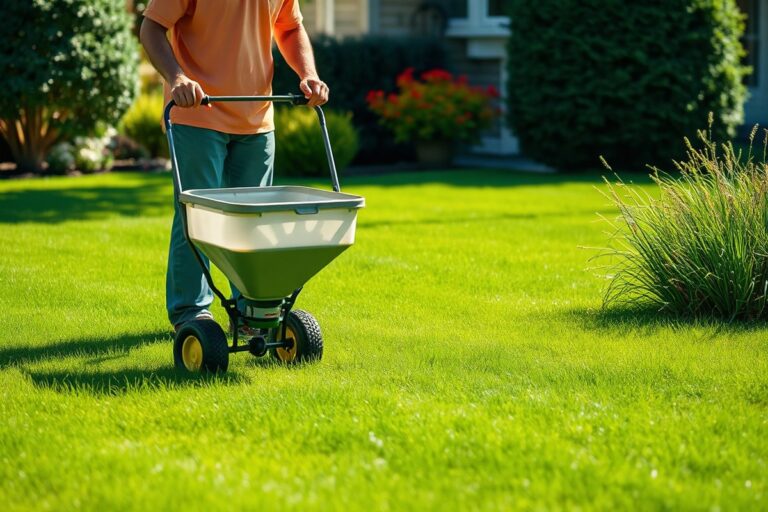
Mow your lawn to a moderate height before applying lime to ensure better coverage. Clear away leaves, sticks, and other debris so the lime can reach the soil evenly. Use a broadcast or drop fertilizer spreader for best results.
Pour pelletized lime into your spreader the same way as fertilizer. Adjust the spreader to release roughly 50 pounds or less every 1,000 square feet. Walk steadily, overlapping slightly to make sure every area gets covered.
- Mow grass to around 2 to 3 inches tall.
- Rake or remove all debris from the lawn surface.
- Fill your fertilizer spreader with the recommended amount of lime.
- Set the spreader to the proper application rate.
- Walk the lawn evenly, back and forth, overlapping your passes.
- Apply lime on dry grass surfaces to prevent clumping.
- Water the lawn immediately after spreading lime.
- Wait a few weeks after liming before fertilizing or seeding your lawn. This allows time for the soil pH to adjust. Proper timing helps your lawn absorb nutrients better.
Post-Application Watering Tips
Watering activates lime and helps it settle into the soil. Water your lawn with about half an inch soon after spreading lime. This rinses lime off the grass blades and starts the reaction in the soil.
Proper watering helps lime activate quickly. Avoid heavy watering that causes run-off.
Keep the soil moist but not soggy for several days after liming. This helps lime work efficiently and reduces the risk of leaf burn or grass stress. Fertilize and overseed your lawn at least two weeks after liming.
This matches your lawn’s natural growth cycle for best results. Waiting helps your lawn recover and grow strong.
Applying lime on wet or rainy grass can cause clumping and uneven coverage. So wait for dry conditions.
Common Mistakes and How to Avoid Them When Liming Your Lawn
Applying too much lime can raise the soil pH beyond the ideal range for grass. This creates nutrient lockout, where essential minerals become unavailable. Excess lime may cause yellowing grass, slow growth, or patchy areas in your lawn.
Skipping soil testing is a major mistake. You can’t tell if your lawn needs lime without a test. Testing shows if lime is needed and how much to apply.
Don’t guess; always check before treating your lawn. Applying lime unnecessarily wastes money and risks upsetting soil balance.
Soil pH changes slowly after liming. You usually see noticeable effects between three to six months. Patience is key since lime works gradually through rain and soil processes, not instantly.
- Not testing soil before liming risks over- or under-application
- Using too much lime raises pH too high, harming grass growth
- Applying unevenly causes some spots to have bad pH while others stay acidic
- Applying lime in cold or dry weather limits its effectiveness
- Failing to calculate lime product purity leads to wrong amount applied
Use a soil test to find the exact pounds of lime per 1,000 square feet. Check the product label to adjust for calcium carbonate purity. So you apply the right amount.
Spread lime evenly with a spreader to avoid uneven results. Avoid liming during dry spells or when soil is frozen since lime won’t dissolve well then.
After liming, continue regular soil testing every 6 to 12 months. This helps track pH changes and tells you if further lime is needed. Taking these steps prevents the most common liming errors and keeps your lawn healthy and green.
Lime Safety and Environmental Considerations for Lawns
Lime is generally safe for pets and insects once it’s watered into the soil. Pure agricultural lime is just ground rock that becomes inert after soaking. Avoid letting pets or kids roam on your lawn immediately after spreading lime.
Keep lime at least 3 to 4 feet away from water edges. This protects ponds, streams, and other bodies of water. Avoid putting lime too close to these areas.
This prevents runoff from changing water pH and harming aquatic life. Do not apply lime on windy days.
Wind can carry lime dust to flower beds. This can harm your garden plants nearby.
Wear gloves and a dust mask while handling lime to protect your skin and lungs. Hydrated lime is caustic and needs more protective gear, like goggles and long sleeves. For pelletized or powdered lime, cover your nose and mouth to avoid breathing dust.
Apply lime on dry grass when rain is expected within 24 to 48 hours. That way, water can activate the lime and wash it into the soil quickly. Water your lawn with about 1 inch of water after liming.
Do this within a day if no rain is expected. This helps the lime soak into the soil.
Store lime in a cool, dry place to prevent clumping or moisture damage. Keep the bag sealed tightly and off the ground to avoid contamination. Handle lime gently to reduce dust clouds and cleanup after spreading.
On lime application day, set your spreader properly. Walk steadily at the speed recommended for even coverage. Follow the spreader instructions for the best results.
Spread lime in two directions for even coverage. After spreading, water the lawn well before letting pets or kids play outside again.
How Long Does Lime Take to Work and What to Expect
Lime usually takes 6 to 12 months to start adjusting soil pH noticeably. Most lawns see clearer changes in soil pH within one to two years. The lime breaks down slowly, reacting with soil acids and raising pH over many months.
Grass improvements depend on how acidic your soil was and other factors like weather. You might see greener, thicker grass after six months. Full benefits may take up to two growing seasons to show because soil chemistry adjusts gradually.
Several factors speed up or slow lime’s effect. Fine powdered lime works faster than large pellets. Warm, moist soil helps lime dissolve and react quicker.
Cool or dry soil slows the process. Soil type matters too; sandy soils respond faster than clay soils.
After applying lime, keep the lawn moist but not soggy. Watering helps lime reach the root zone and react properly. Avoid adding too much lime.
It can raise soil pH too high. High pH can cause nutrient issues like yellow leaves from iron deficiency.
Check your soil pH once or twice a year with soil tests to monitor progress. Take samples from different lawn spots. Testing shows if lime is working in your soil.
It also helps decide if you should add more. You can adjust your approach based on test results.
Apply lime evenly and avoid piling it on grass blades. This keeps pellets touching soil for faster action.
Step-by-Step Action Plan for Liming Your Lawn
Follow these steps to apply lime correctly and improve your grass health. Check your progress along the way to avoid common mistakes.
- Before you start: Test your soil’s pH to see if lime is needed. Aim for a pH below 6.5 to apply lime.
- Week 1: Pick your lime type first. Pelletized lime spreads easily. Use powdered lime for big areas. Check the product label for application rates.
- Week 2: Spread lime evenly using a spreader on a dry lawn. Avoid overlapping to prevent uneven pH changes.
- After application: Water your lawn lightly to help lime activate. Watch for signs of gradual green-up over 4 to 6 weeks.
- Month 2: Monitor grass color and growth. Healthy green grass means your lime is working.
- Month 3 and beyond: Retest soil pH every 12 to 18 months to maintain balance. Reapply lime only if pH drops again.
- Ongoing: Avoid liming too often or applying too much. These can harm your grass and soil.
Frequently Asked Questions
What Does Lime Do for Grass?
Lime raises soil pH to reduce acidity, helping grass absorb nutrients better. Healthier soil means stronger, greener grass overall.
Will Lime Green Up Your Grass?
Yes, lime can help grass turn greener by improving nutrient uptake. It works best when your soil is too acidic.
What Happens If You Put Too Much Lime on Grass?
Too much lime may raise pH too high, causing nutrient problems and yellow grass. Overliming can harm grass and soil life.
How to Tell If Your Grass Needs Lime?
Poor growth and moss are signs your lawn might need lime. The best way is to do a soil pH test.
Can I Just Sprinkle Lime on My Lawn?
You can sprinkle lime, but mow and clear debris first for even coverage. Water it in right after spreading to avoid leaf burn.
Does Lime Help with Soil Compaction in Lawns?
Lime does not fix compacted soil. Aeration is better for loosening hard soil.
The Bottom Line
Lime helps your grass by adjusting soil pH to what grass prefers. Use it carefully and based on soil tests. Start with a soil test today to know your lawn’s needs.