

What Size Pot for Tomatoes: A Complete Guide to Choose the Best Container
What size pot for tomatoes matters a lot for their health and yield. The best container depends on tomato type and how big the plant will get.
A 14-inch wide and 12-inch deep pot works well for patio tomatoes. Bigger plants like indeterminate vines need larger pots.
Use pots of 15 to 25 gallons, about 18 to 24 inches deep for big tomatoes. Choosing the right pot size gives tomatoes enough room for roots and water retention. Small containers dry out quickly and stunt growth, while big pots hold moisture better.
Start by matching your tomato variety to the pot size. Compact types can do fine in 5-gallon pots.
But big vines want at least 15 gallons. Pot width and depth both matter for healthy growth.
Key Takeaways
- Choose at least a 5-gallon pot for compact tomato types.
- Use 10 gallons for determinate tomato varieties to support growth.
- Select 15, 25 gallon pots for indeterminate tomatoes for full root spread.
- Pot depth should be between 12 and 18 inches for most tomato plants.
- Wide pots (14 inches or more) hold soil moisture better than narrow ones.
- Growing multiple cherry tomatoes requires at least a 20-gallon pot.
What Size Pot Do Tomatoes Need for Healthy Growth?
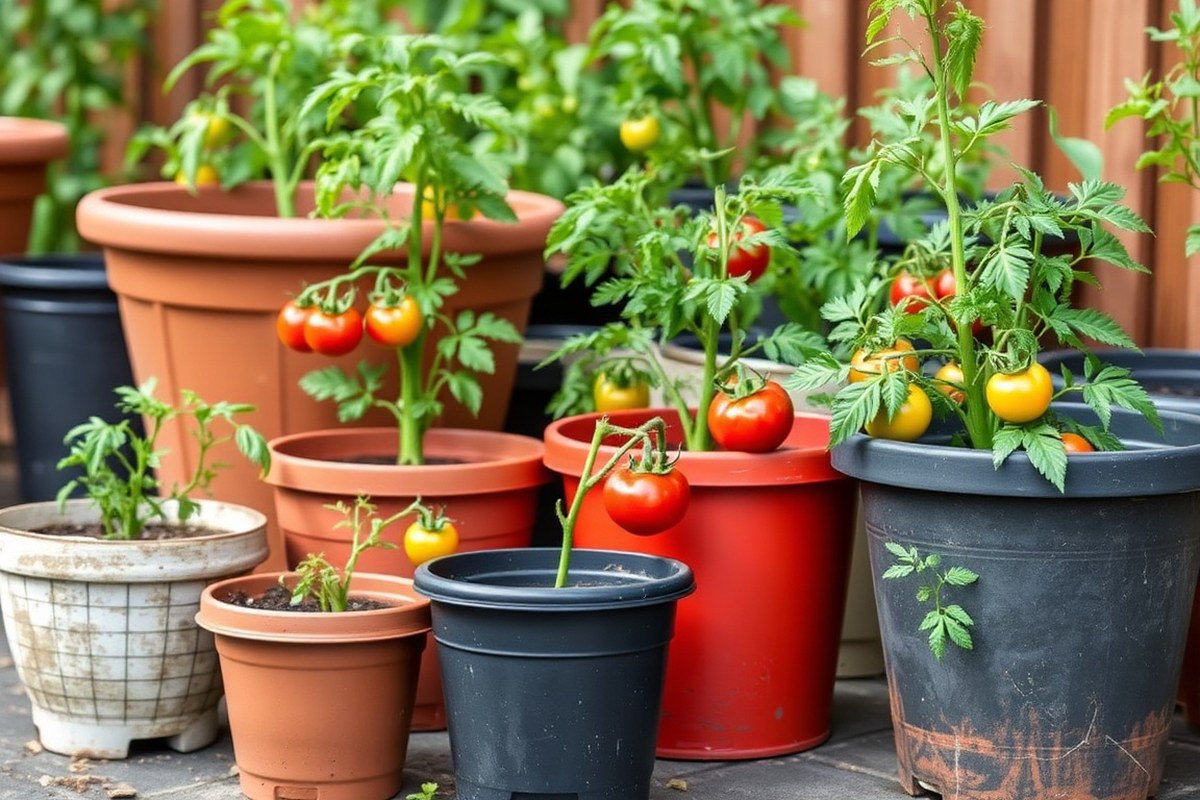
Tomatoes need different pot sizes depending on their variety and growth habit. Smaller types do well in 5-gallon pots. Larger, vining tomatoes require 15 gallons or more.
The pot needs enough depth and width for the roots. It must hold soil that stays moist and doesn’t dry fast. This keeps the plant healthy over time.
Pot Size for Determinate Tomato Varieties
Determinate tomatoes are bushy and stop growing once fruit sets. They need medium-sized pots, usually starting at 5 gallons. Increasing to 10-15 gallons helps the plant develop more roots and produce bigger harvests.
Look for pots about 12 to 18 inches deep and wide. This size offers enough space for the roots to grow. It also helps stop the plant from drying out fast.
That way, the plant stays healthy longer. A shallow or narrow pot restricts growth and reduces yield.
| Tomato Type | Minimum Size | Optimal Size | Pot Depth |
|---|---|---|---|
| Determinate (Bush) | 5 gallons | 10, 15 gallons | 12, 18 inches |
Using a pot with enough soil volume makes watering easier. You avoid soil drying out too fast and reduce stress on the plant. Smaller pots force you to water daily and stunt tomato growth.
Pot Size for Indeterminate Tomato Varieties
Indeterminate tomatoes keep growing and producing fruit all season. They need bigger pots to hold their large root systems. A minimum of 15 gallons is required, with larger sizes up to 20 gallons better.
These pots should be at least 18-24 inches deep and wide. This size allows roots to spread well and keeps soil conditions stable. Small pots limit fruit size and reduce flowering in vining types.
| Tomato Type | Minimum Size | Optimal Size | Pot Depth |
|---|---|---|---|
| Indeterminate (Vining) | 15 gallons | 15, 20+ gallons | 18, 24 inches |
Large pots retain moisture longer and provide stable nutrition. This lowers watering frequency and helps tomatoes yield more fruit. Avoid small containers that make the plant stressed and prone to disease.
Pot Size for Cherry and Patio Tomatoes
Cherry tomatoes can be determinate or indeterminate, so their pots vary. Compact or dwarf patio types do well in 3 to 5-gallon pots. Growing them in 5 to 7 gallons gives better yield and less frequent watering.
Micro-dwarf tomatoes, like Tiny Tim, thrive with just 1 to 2 gallons. Their roots don’t need much space, which fits windowsill containers. But larger pots still improve plant health if you have the room.
| Tomato Type | Minimum Size | Better Size | Pot Depth |
|---|---|---|---|
| Micro-Dwarf | 1 gallon | 2 gallons | 12 inches |
| Dwarf/Patio | 3, 5 gallons | 5, 7 gallons | 12 inches |
| Cherry (Compact) | 5 gallons | 7, 10 gallons | 12 inches |
Choosing the right size pot helps plants make better use of water and nutrients. Smaller pots are easier to handle but need careful watering. Larger pots also support bigger fruit yields and healthier roots.
How Depth and Width Affect Tomato Pot Performance

Tomato roots grow deep and need space to spread out sideways, too. A pot that is 12, 18 inches deep usually supports most tomatoes well. Depth matters because roots grow downward.
This helps the plant get water. It also helps steady nutrient access over time. A deep pot also prevents roots from circling at the bottom, which stunts growth.
Width controls how much room roots have to spread horizontally. A pot about 14 to 24 inches wide suits tomatoes depending on the type. Narrow pots might hold enough water but crowd the roots, stressing the tomato.
Wider pots give roots more soil to explore. They help stabilize the plant. This is useful in wind or heavy fruit.
Depth often limits tomato growth more than width because roots grow longer rather than wider. But a good pot balances depth and width. For example, a 14-inch wide by 12-inch deep pot works well for patio tomatoes.
Larger beefsteak or indeterminate types need 16 inches or more in width and 18 inches deep. A pot deep but narrow makes roots coil.
Coiled roots reduce water uptake. This hurts the plant’s health.
Tomatoes do well in pots holding enough soil. Enough soil keeps moisture steady. It also stops the soil from drying fast.
Pots with less depth dry out quicker, forcing more frequent watering. Pots with enough soil avoid moisture swings. Sudden moisture changes cause blossom end rot.
They also cause leaf curl. Support root growth with pots that keep soil cool.
Keep soil moist between waterings. This helps roots stay healthy.
Pick a pot at least 12 inches deep. Make sure it’s wide enough for roots. This prevents stress and low yields.
Choosing the Right Pot Material for Tomatoes
Choosing the right pot material affects how well your tomato plants grow. Different materials affect heat retention and weight, which can change watering needs and plant health. The best pot depends on your climate and space.
Think about how much you want to move the pots around. These factors help you pick the right container.
Plastic and Resin Pots
Plastic pots are lightweight and affordable, making them popular for beginners. They hold moisture well but can get very hot in sun. Sometimes the pot wall heats up to 138°F. That heat can harm your plants.
This overheating can stress tomato roots during hot days, especially in black plastic containers. Plastic pots come in many sizes. So it’s easy to find the right volume for your tomato type.
Fabric Grow Bags
Fabric pots allow air pruning, which prevents roots from circling and encourages healthy growth. They’re lightweight and foldable but dry out faster than plastic pots. So you’ll need to water more often.
Grow bags usually last fewer years and cost around $12 to $25. Choose a 15-gallon size for larger indeterminate tomato plants to ensure enough space.
Clay and Wooden Planters
Terracotta pots look nice and keep roots cooler because they breathe. They are heavy, which keeps them steady, but that weight makes moving them tough.
Clay dries out soil quickly and can crack in hard freezes. So they’re best in cooler, stable climates. Wooden planters insulate roots better but need maintenance to prevent rot.
Here’s a comparison table showing pros, cons, and best uses for common tomato pot materials:
| Material | Pros | Cons | Best For |
|---|---|---|---|
| Plastic | Lightweight, affordable, retains moisture, many sizes | Overheats in sun, less attractive | Beginners, budget gardeners |
| Fabric | Air pruning, foldable, good drainage, root health | Dries out faster, shorter lifespan | Experienced growers, root-focused care |
| Terracotta | Attractive, breathable, stable weight | Heavy, breaks easily, dries soil fast | Decorative gardens, cooler climates |
| Wood | Insulates roots | Requires maintenance, can rot | Insulated root needs, rustic gardens |
For hot climates, fabric pots may dry too fast unless you water frequently. Plastic pots risk overheating but hold moisture better. Clay works well in cooler spots but is heavy and fragile.
How Pot Size Influences Watering and Plant Health
Pots that are too small dry out very fast. Small containers can lose moisture by midday on hot days.
This stresses the tomato, making flowers drop and fruit crack. You may need to water twice a day if your pot is small.
Larger pots hold more moist soil around roots. Bigger soil volume means tomatoes face less drying stress.
For example, a 15-gallon pot keeps roots moist much longer than a 5-gallon pot. That slower drying lowers the risk of blossom end rot.
Check soil moisture daily by pressing a finger two inches below the surface. Water when this layer feels dry but not soggy.
Avoid letting soil alternate between very dry and soaking wet. This uneven moisture causes fruit splitting and blossom end rot.
Pot material also affects moisture retention and watering needs. Plastic pots hold moisture best, reducing how often you must water.
Terra cotta and ceramic pots dry out faster because they wick water through the sides. You’ll need to monitor these pots more closely during hot weather.
Young tomato plants in very large pots can suffer if roots sit in overly wet soil. A seedling in a 20-gallon pot surrounds itself with wet soil it cannot use.
That can lead to root rot before the plant grows strong. Seedlings benefit from smaller pots or careful watering to keep soil moist but not wet.
Tomatoes dislike the dry-then-flood pattern caused by too-small pots. Constant moisture helps prevent calcium lockout, which causes blossom end rot. During peak growth, tomato plants need more frequent watering but still want consistent moisture.
Set a watering schedule based on pot size. For small pots (<5 gallons), expect to water daily or twice daily in summer heat. Medium pots (5-10 gallons) usually need watering every 1-2 days.
Large pots hold more soil and water. You can water them every 3 days. This works well on cooler or cloudy days.
Remember to adjust for weather and pot material. Hot, dry, or windy days require more water. Plastic pots hold moisture longer, so you might water less often.
Check soil moisture inside the pot rather than sticking to a fixed schedule. This prevents both over and underwatering stress.
Common Container Mistakes and How to Avoid Them
A common pot mistake is choosing one that’s too small for your tomato plant. A 10-inch diameter pot, roughly 2 to 3 gallons, will not support a full-sized tomato. Most tomatoes need at least a 5-gallon pot, about 12 inches wide, to thrive.
Some gardeners think adding rocks at the bottom helps drainage or plant stability. This often harms the plant by reducing usable soil volume and water retention. Good drainage comes from pots with holes and well-draining soil, not rocks.
Plant stability links directly to pot size and weight. A larger pot holds more soil, making your tomato less likely to tip over in wind. Small pots can’t keep tall or indeterminate types stable.
This causes broken stems or lost fruit. They don’t hold enough soil for support.
- Avoid pots smaller than 5 gallons for most tomatoes.
- Do not add rocks at the pot’s bottom.
- Choose pots with drainage holes to prevent root rot.
- Use heavier containers or add weight for stability.
- Check pot volume, not just dimensions, before buying.
- For indeterminate tomatoes, opt for pots closer to 15-20 gallons.
Five gallons suit bush or patio varieties. But indeterminate or heirloom tomatoes need 15 gallons or more. Bigger pots reduce watering frequency and support fuller root growth.
Cherry tomatoes can grow well in 2- to 3-gallon pots. But they often do better in a 5-gallon container. The bigger pot helps with growth and yield.
You can use a 5-gallon pot for larger tomato types. Expect smaller fruit in these smaller pots. You’ll also need to water more often.
Smart pot choice means weighing the size, weight, and water needs of your tomato. A too-small pot drains fast, leaving roots dry by midday. More soil means more consistent moisture and healthier plants.
How to Plan for Multiple Tomato Plants in One Pot
Planting two tomato plants in one pot is possible but requires a much larger container. Use a pot of at least 15 gallons to give each plant enough soil volume.
The Royal Horticultural Society suggests spacing plants 14 to 18 inches apart. So your pot should be wide enough to hold both without crowding.
Crowding tomatoes in a smaller pot reduces airflow and root growth. This stress lowers yield and increases disease risk. Squeezing two plants in a 10- to 12-inch pot causes competition.
They fight over water and nutrients. This can stunt growth and lower tomato yields.
To decide between one or two plants per container, measure your pot’s width and volume. One tomato plant grows well in a 5-gallon pot for cherry types. Larger indeterminate types need 10 gallons or more.
This gives roots room to spread. For two plants, double that soil volume to at least 15 gallons. Space plants roughly 16 inches apart in the pot to reduce crowding.
Using containers like Smart Pots or VIVOSUN with 15-gallon capacity can support two full-size plants. They retain moisture better and encourage fuller root systems. Containers this size require more frequent watering sessions.
They help reduce drying stress better than small pots. This means your plants stay healthier.
In small spaces, two dwarf or cherry plants can share a 10- to 12-inch pot. This setup is okay but expect smaller harvests. The plants compete for resources.
You should still space seedlings to avoid leaves touching too much. For bigger tomatoes, avoid putting more than one plant in less than a 15-gallon container.
Be ready to feed tomato plants regularly when grown together in one big pot. Nutrients wash out faster with higher plant loads and frequent watering. Supplement with balanced liquid fertilizer every 1 to 2 weeks during flowering and fruiting.
Calculating Usable Soil Volume and Pot Filling Tips
Soil volume inside a pot is less than the pot’s full size. Thick walls or false bottoms can reduce how much soil fits. Many pots marked as “5-gallon” hold only 3 to 4 gallons of soil actually.
Drainage layers like gravel do not improve drainage for tomatoes. A gravel layer only takes up space and lowers the soil volume available for roots.
Fill your pot with loose, well-draining potting mix. Keep the soil surface about one inch below the pot’s rim. This space lets you add mulch to keep soil moist and stop hard crusts.
Mulch also helps water stay longer in hot weather. Roots need enough room in the soil to spread deeply and grow healthy. With small pots, limited soil volume means roots run out of space quickly.
Follow this step-by-step to find your pot’s usable soil volume and fill it well:
- Measure the pot’s inside diameter and depth in inches.
- Subtract 1 inch from the depth to allow for mulch space on top.
- Calculate volume: use the formula for cylinder volume, π × radius² × height.
- Convert inches³ to gallons by dividing by 231 (1 gallon = 231 in³).
- Check if your pot has thick walls or a false bottom. Reduce estimated volume by 20%-40% if so.
- Avoid adding gravel; fill pot from bottom up with high-quality potting soil only.
- Leave the top inch free for mulch to keep soil moist and protect roots.
- Water deeply until water flows from drainage holes to settle soil and check drainage.
For example, a pot is 16 inches wide inside and 18 inches deep. The radius is 8 inches, which is half of 16. This helps calculate the usable soil volume.
The fill height subtracting mulch is 17 inches (18 minus 1). Multiply 3.14 × 8² × 17 = 3,424 in³. Divide by 231 to get about 14.8 gallons of soil.
You might see nursery pots or grow bags marked by volume. But their design can cut usable soil. Fabric pots, for instance, need larger sizes to give roots enough air and room.
For tomatoes, aim for at least 5 gallons of usable soil for small determinate plants. Larger indeterminate tomatoes require 10 gallons or more so roots grow well without staying soggy.
Choosing Pot Size by Tomato Variety and Growth Goal
Choosing the right pot size depends on the tomato variety and your harvest goal. Bigger, fruit-heavy types like beefsteaks need larger pots to perform well. Smaller patio or cherry tomatoes do fine in modest containers, saving space and effort.
Size Recommendations for Beefsteak and Large Varieties
Beefsteak and other large-fruited tomatoes need pots starting at about 40 litres. For the best results, pots between 50 and 60 litres support their big root systems well. This size helps these types produce bigger, juicier fruits and higher yields over the season.
Use containers of 15 to 20 gallons. The diameter should be 18 to 24 inches. This size works well for tomatoes.
This offers enough soil volume to retain moisture and nutrients for these demanding plants. Skimping on pot size risks smaller fruit and weaker plants that may struggle to flower.
Pot Sizes for Cherry and Patio Tomatoes
Cherry tomatoes do well in pots of 40 to 50 liters. Indeterminate types like Tommy Toe or Sungold like these sizes.
A 10-gallon pot about 14 inches wide suits most cherry feeders nicely. This size lets their roots spread and supports steady flowering and fruiting.
Patio or dwarf varieties (such as Tiny Tim and Tatura Dwarf) need much less space. Their pots hold 20 to 30 liters or about 5 to 7 gallons.
They are 12 to 14 inches wide. A smaller container is enough since these plants stay compact and produce modest yields.
| Tomato Type | Minimum Pot Size | Preferred Pot Size |
|---|---|---|
| Dwarf / Patio | 5 gallons (12 in. Diameter) | 5, 7 gallons |
| Cherry Tomato | 5 gallons | 10 gallons (14 in. Diameter) |
| Determinate | 10 gallons | 10, 15 gallons (14, 16 in. Diameter) |
| Indeterminate | 15 gallons | 20 gallons (18, 24 in. Diameter) |
Using pots sized this way matches the root volume needs to each tomato’s growth habits. It boosts fruit size and total harvest by reducing stress from cramped roots.
Adjusting Pot Size Based on Harvest Goals
Growers aiming for maximum yield should pick the largest pots their space allows. Bigger pots hold more soil and water, supporting continuous fruiting for indeterminate vines.
A 20-gallon container usually produces more tomatoes than a 10-gallon pot. Both use the same tomato variety.
Space or weight limits mean you need smaller containers. Expect fewer tomatoes with smaller pots.
Smaller pots work for limited yields or patio settings but require more frequent watering and feeding. You’ll get fewer large fruits and less vigorous growth if the roots get cramped.
Choosing a pot one size larger than the minimum helps avoid root crowding and low yields.
Step-by-Step Action Plan for Choosing the Right Tomato Pot
Follow these steps to pick and use the best pot size for your tomato plants. Watch for healthy leaves and good fruit growth to know you’re on track.
- Before Planting: Choose a pot that is 18 inches wide. It should also be at least 12 inches deep. This size fits one tomato plant well. This size helps roots spread and gives your plant room to grow.
- Day 1: Fill the pot with high-quality potting mix that drains well. Shake the pot gently after filling to settle the soil and avoid air pockets.
- Week 1: Water the plant until water drains from the bottom. This confirms the soil is moist enough but not soaking wet.
- Week 3: Check leaf color and stem strength. Dark green leaves and firm stems show good root space and soil health.
- Week 6: Support the plant with stakes or cages if it grows tall. Adding support helps prevent damage and improves fruit yield.
- Week 8: Adjust watering frequency if leaves wilt or soil feels dry. Bigger pots dry slower, so watch moisture levels closely.
- After Harvest: Remove old soil and rinse the pot before reusing. Fresh soil reduces disease risk for the next tomato crop.
Frequently Asked Questions
What Size Pot Is Best for Growing Compact Patio Tomatoes?
A 5-gallon pot is ideal for compact patio tomatoes. This size gives the roots enough space without overwhelming smaller plants.
Can Small Tomato Varieties Grow Well in Pots Smaller Than 5 Gallons?
Small tomatoes can survive in smaller containers but grow better in 5 gallons or more. Smaller pots dry out faster, so watering needs increase.
How Do Pot Size Choices Affect Tomato Fruit Yield?
Larger pots generally produce more fruit because roots have room to spread. Choose bigger pots for indeterminate varieties if you want maximum harvest.
Is It Okay to Use a Shallow Pot for Tomato Plants If Wide Enough?
Depth matters more than width; shallow pots limit root growth and stress plants. Aim for at least 12 inches deep to support healthy roots.
What’s the Smallest Pot Size Suitable for a Determinate Tomato Plant?
Use at least a 5-gallon pot for determinate tomatoes to ensure stable growth. Smaller pots risk quicker drying and weaker plants.
Do Tomato Plants Perform Differently in Square vs. Round Pots?
Round pots promote better root circulation and reduce crowding compared to square ones. They also help prevent water buildup in corners that stresses roots.
Before You Go
Picking the right pot size helps your tomato grow better. It also means more fruit on the plant.
Start with a pot that fits your tomato variety’s root needs. Check your plants often, and adjust care to keep them thriving.


