How to Grow Strawberry Seeds: A Complete Guide for Fast Results
Growing strawberry seeds starts by chilling them in the fridge for 30 days. This cold step wakes them up and helps them sprout better. Proper germination is key for good fruit later.
After that, plant seeds on moist peat and organic soil mix and keep them warm. Aim for 65 to 70°F for the seedlings to sprout well. Put your seeds where they get lots of light.
A bright windowsill works well. You can also use a grow light if needed.
Strawberry seeds grow slowly and can take up to 45 days to sprout. Watch for their first leaves during this time. Be patient as they start growing.
Be patient but check that seedlings aren’t too close together. Once seedlings reach 1 to 2 inches, thin them out carefully.
This gives space for the strongest plants to grow well. Crowding can hurt growth and health.
Key Takeaways
- Start chilling seeds in the fridge at least 30 days before planting.
- Use a mix of 3 parts peat to 1 part organic-rich soil for sowing.
- Keep seeds at 65-70°F with good morning sunlight or grow lights.
- Be patient; strawberry seeds may take up to 45 days to sprout.
- Thin seedlings when they reach 1-2 inches to avoid crowding.
- Use seeds under 2 years old for best germination rates.
How to Germinate Strawberry Seeds Successfully
Strawberry seeds need a cold rest period called cold stratification before planting. This process tricks seeds into thinking they’ve gone through winter. It helps seeds break dormancy and start germinating when planted.
Most gardeners put seeds in the fridge for 3 to 4 weeks. Alternatively, freezing them for 2 weeks speeds the process. After that, seeds warm up at room temperature and get ready to sprout.
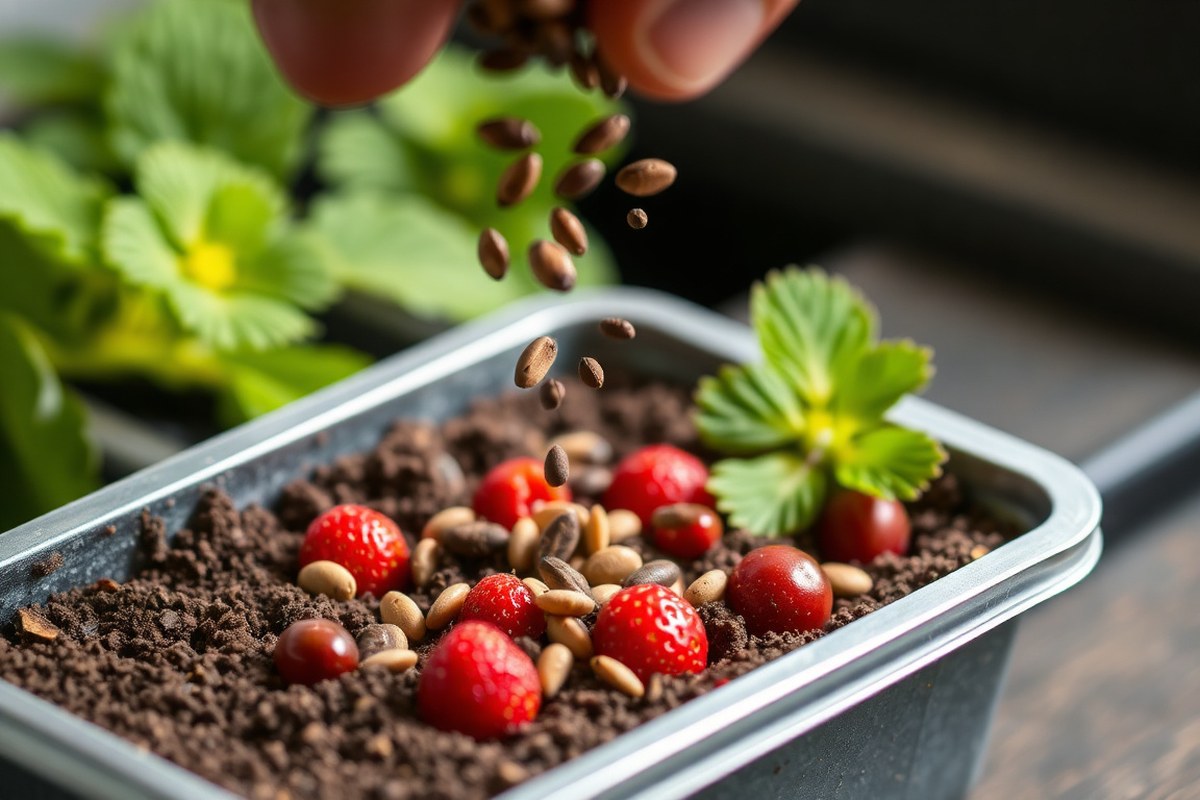
Strawberry seeds are tiny and must not be buried deeply. They also need light to germinate, so surface sowing is best. Use a light, well-draining soil mix and keep it moist but not soggy to support sprouting.
- Prepare seeds for stratification: Put strawberry seeds in a plastic bag. Add a damp paper towel inside. Seal the bag tightly. Put the bag in the fridge for 3 to 4 weeks. This keeps seeds cold and moist.
- Choose your containers: Use seed trays or small pots with drainage holes. Use a seed-starting mix that drains well but stays moist. Choose a mix with 3 parts peat and 1 part organic soil. Fill your pots with it.
- Sow the seeds: Sprinkle seeds lightly over the soil surface. Do not cover them with soil. Light helps seeds germinate, so only gently press them down into the mix.
- Maintain moisture and temperature: Keep soil moist by watering gently. Use a spray bottle or watering can. Avoid soaking the soil. Keep the containers in a warm spot around 65 to 75°F (18, 24°C).
- Provide light: Place containers in a bright spot, such as a sunny windowsill. Use a grow light about 2 inches (5 cm) above seeds for 12 to 16 hours a day when sunlight is low.
- Watch for germination: Wait 1 to 6 weeks for seeds to sprout. Be patient because the process varies. Once seedlings appear and grow 1 to 2 inches tall, thin to keep the strongest plants.
Seeds can stay viable up to 5 years. But younger seeds under 2 years old germinate better. When indoor humidity is below 40%, cover trays loosely with clear plastic.
This helps keep moisture in the soil. Avoid overwatering because soggy soil can rot seeds.
Successful germination means tiny green seedlings appear above soil. Wait six weeks for sprouts. No sprouts?
Check soil moisture and light levels. Adjust as needed. Poor results often come from seeds being too dry, too deep, or lacking cold stratification.
Optimal Temperature and Light for Seedling Growth
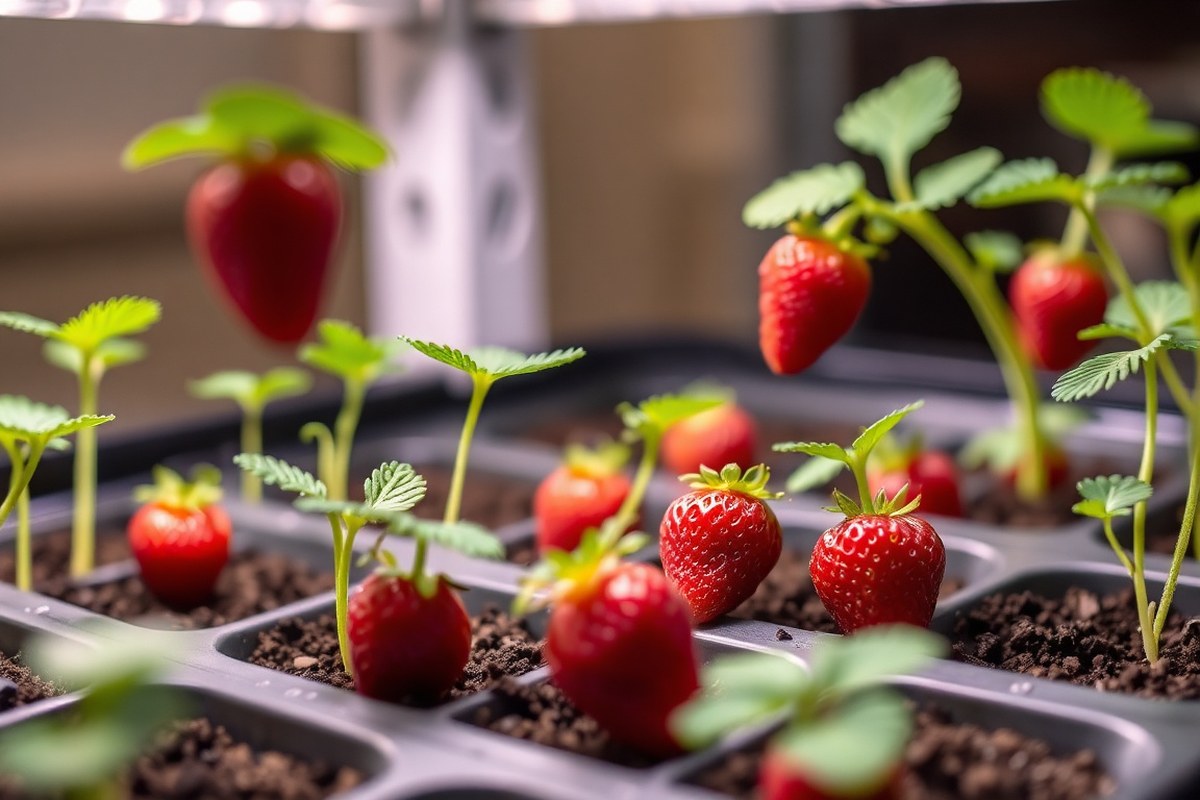
Strawberry seeds germinate best between 65 and 75°F (18 to 24°C). Consistently keeping the soil in this range encourages faster sprouting and steady growth. Putting your seed tray on a heat mat keeps it warm.
This helps, especially in cooler rooms. Warmth helps seeds sprout better.
After seedlings appear, they need about eight hours of bright light. Use indirect sunlight or grow lights for 12 hours. Both give plants enough light to grow.
Position grow lights six inches above the seedlings to avoid burning their leaves. Using a timer ensures they get a steady daily light cycle without overexposure.
Good airflow prevents mold and fungus while keeping humidity balanced. Mist the soil lightly to maintain moisture, but avoid soaking it. Open windows or small fans set on low can improve air movement without chilling the plants.
Temperature below 60°F slows seedling growth. Seeds may not sprout well then. Keep temperatures above 60°F to succeed.
Temperatures above 80°F risk drying out soil and stressing young plants. Keeping heat steady and avoiding drafts or hot spots near vents helps them thrive.
When growing indoors, grow lights can fully replace sunlight. They allow you to control light intensity and duration, important during winter or in darker spots.
Natural sunlight is fine but often inconsistent. So supplementing with grow lights leads to healthier seedlings.
Watch for soil drying or overheating if using heat mats and grow lights. This can kill seedlings fast.
Try to start seeds in a warm, bright space where you can control humidity well. A heat mat costs between $15 and $30. Grow lights usually cost $20 to $40.
Both help keep your seedlings growing well all year. Healthy seedlings have firm, bright green leaves and steady stem growth within two to three weeks.
Most failures come from temperature swings, poor light, or overwatering. Keeping conditions stable is worth the effort to get strong, healthy strawberry plants ready for transplanting.
How to Care for Strawberry Seedlings Before Transplanting
Take care of strawberry seedlings by watering, feeding, thinning, and keeping diseases away. Water your plants with one or two inches each week. Use light fertilizers to avoid overfeeding.
Thin seedlings once true leaves appear. Watch out for damping-off fungus. Healthy seedlings stand upright with green leaves and strong stems.
Watering and Humidity Control
Water seedlings enough to keep the soil moist but not wet. About one to two inches of water per week is a good target during early growth. Avoid flooding, which can drown roots and encourage fungus.
Use a spray mister or bottom watering to avoid disturbing the seeds or seedlings. Mist daily, especially if indoor air feels dry, to keep humidity steady around seedlings.
Place a clear cover over the tray. But remove it once seedlings appear to prevent excess moisture buildup.
- Water seedlings early in the day, so leaves dry before nightfall.
- Use room-temperature water to avoid shocking roots.
- Check soil daily to make sure it stays lightly damp.
- Avoid overwatering to prevent root rot problems.
- Provide airflow but keep drafts away to protect seedlings.
Maintain gentle humidity for healthy growth but avoid soggy conditions. Consistent moisture helps roots grow deep and strong. Watch for wilting or dry soil, which means they need more water.
Thinning Seedlings Correctly
Thin seedlings when they grow their first true leaves, which appear after the initial seed leaves. This usually happens two to three weeks after germination. Thin seedlings by cutting weaker ones at the soil line.
Leave the strongest seedlings. Space them two to three inches apart.
Avoid pulling seedlings by hand. That can disturb roots and harm nearby plants.
Use small scissors for cleaner thinning and less shock. This gives remaining seedlings room to grow without fighting for water and nutrients.
- Thin seedlings when they have 2-3 true leaves.
- Space seedlings 2-3 inches apart after thinning.
- Remove weaker or spindly seedlings first.
- Snip seedlings at soil level to avoid root damage.
- Thin gradually if unsure, rather than removing too many at once.
Proper thinning reduces competition and raises your plants’ chance of producing hardy berries later. Crowded seedlings can grow tall and weak, and may attract disease.
Fertilizing Seedlings Safely
Use a diluted, balanced liquid fertilizer once seedlings show their second set of true leaves. A formula with equal parts nitrogen, phosphorus, and potassium (10-10-10) is fine. Mix at quarter strength to avoid fertilizer burn.
Feed seedlings every two weeks to provide steady nutrients. Overfeeding can cause leggy growth or leaf burn, slowing your plants down. Avoid granular fertilizers at this stage; they’re too strong for delicate roots.
- Start fertilizing at second true leaf stage.
- Use a balanced liquid fertilizer, diluted to 25% strength.
- Feed seedlings every 14 days.
- Water before feeding to prevent root damage.
- Stop fertilizing 1-2 weeks before transplanting outside.
Regular feeding helps seedlings build healthy leaves and roots for transplanting. Signs of good feeding include bright green leaves and steady growth. Pale or yellow leaves could mean underfeeding or too much heat.
Preventing Common Seedling Diseases
Damping-off fungus attacks strawberry seedlings in wet, crowded, or poorly ventilated conditions. Avoid it by watering properly and giving seedlings space and airflow. Avoid overhead watering once seedlings appear.
Use sterile seed-starting mix and clean containers to reduce disease risk. Remove any yellow, wilted, or moldy seedlings quickly to stop spread. Provide a small fan on low near seedlings to improve air movement.
- Keep soil moist but not soggy.
- Avoid crowding seedlings after thinning.
- Use sterile potting mix and clean trays.
- Increase air circulation with a fan or open window.
- Remove diseased seedlings to protect others.
- Water at soil level, not leaves.
Healthy seedlings stay upright with deep green leaves and firm stems. Soft, discoloured, or collapsing seedlings often have disease or rot. Watch closely in warm, humid rooms where fungus grows fastest.
When and How to Transplant Seedlings Outdoors or into Pots
Transplant strawberry seedlings outdoors or into pots after the last spring frost. Wait until seedlings reach 2 to 3 inches tall and have several true leaves. Harden them off slowly before planting to avoid shock and stress.
Timing Your Transplant After Last Frost
Only move seedlings outside once the risk of frost has passed. This usually happens about six weeks after the last spring frost date. Seedlings need to be 2 to 3 inches tall.
Make sure they have at least 3 true leaves. These leaves grow after the first two seed leaves.
Cold weather can stunt young plants or kill them. So check your local frost dates.
Starting seeds indoors eight weeks before the last frost helps ensure they’re ready. Transplanting too early often causes wilting or frost damage.
Hardening Off Seedlings Gradually
Slowly expose your seedlings to outdoor conditions to toughen them. Start by placing them in shade for a few hours, gradually adding more sun exposure daily. Increase the time they spend outside over 7 to 10 days.
Do not leave seedlings outdoors overnight until they adjust fully. Bring them inside if temps drop below 50°F. Hardening off prevents sudden shock and prepares plants for wind and stronger sun.
Preparing Garden Beds or Containers
Loosen soil to a depth of 8 to 10 inches before planting. Remove weeds and add organic matter like compost or aged manure to boost fertility. Well-prepared soil helps roots grow and absorb water.
Choose pots or baskets 8 inches deep for planting. Make sure they are wide enough for one plant.
Use well-draining potting mix mixed with organic matter. Avoid heavy garden soil in containers.
Planting Spacing and Depth Guidelines
Space seedlings 12 to 24 inches apart, depending on variety size. For alpine types, 12 inches may be enough. Larger runners or day-neutral types need closer to 24 inches.
Plant with the crown level at the soil surface. Leave roots fully covered, but do not bury the crown. Planting too deep can cause crown rot, while shallow planting dries roots quickly.
Follow these steps to transplant seedlings successfully:
- Choose a mild, cloudy day or late afternoon for transplanting.
- Prepare garden soil or fill pots with suitable potting mix.
- Space planting holes 12, 24 inches apart; dig holes deep enough for roots.
- Carefully remove seedlings from trays, keeping roots intact.
- Place each seedling in a hole and cover roots with soil, keeping crown at soil level.
- Firm soil gently around the roots to remove air pockets.
- Water seedlings immediately with a gentle, thorough soaking.
- Keep soil moist but not soggy as seedlings adjust to new conditions.
Timeline from Seed to First Strawberry Harvest
Strawberry seeds usually sprout between 10 days and 5 months. Many factors affect this wide range, including seed quality and temperature. Early sprouting happens at 10 to 21 days in warm, consistent conditions.
Seedlings take about 4 to 6 weeks before developing runners. Removing runners in the first year helps the plants focus energy on fruit production. Some varieties, especially day-neutral types, start flowering 3 to 5 months after sowing seeds.
Flowering marks the start of fruit production. After flowers appear, expect strawberries to ripen in about 30 to 45 days.
The exact timing depends on the variety. Day-neutral cultivars can fruit repeatedly through the season.
| Growth Stage | Duration from Sowing | Details |
|---|---|---|
| Seed Germination | 10 to 150 days | Depends on conditions; warm and moist helps. |
| Seedling Growth | 4 to 6 weeks | Seedlings develop leaves; no runners yet. |
| Runner Development | 6 to 8 weeks | Can remove runners to boost fruit yield. |
| Flowering Begins | 3 to 5 months | Varies by cultivar; day-neutral types bloom earlier. |
| First Fruit Harvest | 4 to 6 months | Fruit appears about 30-45 days after flowering. |
Different varieties produce fruit at different speeds. F1 day-neutral types are the fastest, offering fruit within 3 to 5 months from seed. Other varieties might take longer and produce smaller berries from seed compared to store-bought plants.
Most home gardeners see their first strawberries by summer if they start seeds early. Plants grown in warm zones (USDA zone 8 or above) can fruit almost year-round. Running plants need about three years of care for maximum fruit production.
Remove young runners in the first year. This helps your plants focus on fruit. They won’t waste energy on new plants.
Selecting and Using Strawberry Seeds from Different Varieties
Some strawberry varieties suit seed growing better than others. Day-neutral types like Albion and Seascape germinate reliably and produce fruit longer through the season. Alpine strawberries are smaller and sweeter than regular ones.
They also work well for seed starting. However, they take more time to produce fruit.
You can start seeds from strawberries you buy in stores. Rub the skin gently to loosen seeds. Collect the seeds in a bowl.
Keep in mind most store strawberries are hybrids. So fruits may vary in taste and size. Refrigerating seeds for 4 to 6 weeks before planting speeds up germination.
| Variety | Type | Germination Rate | Time to Fruit | Best Climate |
|---|---|---|---|---|
| Albion | Day-neutral | High | 60 to 75 days | Temperate, mild winters |
| Seascape | Day-neutral | High | 60 to 75 days | Temperate, coastal areas |
| Alpine | Everbearing | Moderate | 75 to 90 days | Cool climates, partial shade |
| Store-bought (hybrid) | Mixed | Variable | 60 to 90 days | Depends on parent plants |
Day-neutral strawberries yield fruit over a longer season than everbearing types. Alpine berries produce smaller fruits but thrive in cooler zones or shaded spots. Most day-neutral varieties handle a wide range of climates well.
Choose Albion or Seascape for beginners because their seeds grow quickly. Refrigerate seeds before planting for better results. For cooler regions, alpine strawberries are a better option for consistent fruiting.
Common Mistakes When Growing Strawberry Seeds and How to Fix Them
Planting strawberry seeds too deep stops them from getting light. They need light to sprout well. Press seeds gently on the soil surface but don’t bury them.
Damping-off syndrome kills young seedlings. This happens when soil stays soggy and air is poor.
Look for thin stems, wilting, and spots near the soil line. To fix it, reduce watering and improve airflow around seedlings.
Leggy or pale seedlings mean they lack enough light or get too much heat. Move seedlings closer to a bright window or under grow lights. Keep daytime temperatures near 65-75°F to avoid stress.
Old seeds may have lower germination rates. Soak them in water for a few hours before planting. This helps wake them up.
It can improve seed germination. Plant extra seeds because some won’t sprout. Fresh seeds give better results but soaking helps revive aged ones.
Watering mistakes are common. Overwatering causes root rot and damping-off, while underwatering dries seeds out.
Use a spray bottle to moisten soil gently without flooding. Check soil moisture daily and water only when the top feels dry.
- Press seeds lightly on the surface; do not cover them
- Keep soil moist but not soaking wet
- Use a spray bottle for gentle watering
- Provide bright, indirect light to seedlings
- Keep temperature steady between 65-75°F
- Space out seedlings to improve airflow
- Soak old seeds 3-4 hours before planting
Watch seedlings daily for changes like drooping or yellowing leaves. Adjust light, water, or temperature if you notice problems early. Staying on top of these details saves a lot of frustration and wasted seeds.
How to Manage Strawberry Runners and Extend Plant Productivity
Runners are horizontal stems strawberry plants produce that grow new plants. They start showing during the first growing season. Managing these runners affects fruit yields and plant health.
Understanding Strawberry Runners
Runners are long stems your strawberry plants send out from the main crown. These stems root and form new plants nearby, helping the patch spread. You’ll usually see runners in the first or second year as plants mature.
While runners help the plant multiply, they take energy away from fruit production. Fruit buds form on the main plant.
So too many runners mean fewer strawberries to harvest. It’s normal for plants grown from seed to start sending runners during their first summer.
Controlling Runners to Maximize Fruit Yield
Removing runners the first year helps your strawberry plants grow strong. This focus puts energy into roots and leaves. It prevents spreading energy too thin.
Strong roots lead to better fruit production the following year. Most gardeners suggest pinching off runners and even flowers in that first season.
Space plants about 12 to 18 inches (30-45 cm) apart to give runners room without crowding. Let some runners root if you want new plants. Thin them out so they have room to grow.
Avoid planting them too close. Crowding reduces airflow and fruit quality.
Starting second-year plants with fewer runners can keep fruit yields higher. After two years, fruit production usually drops. So controlling runners helps extend the patch productivity around year two or three.
Pinch off runners early in the first season to grow stronger, fruiting plants later.
Using Runners for Propagation
You can use runners to grow new strawberry plants and expand your patch. Let a runner root in soil near the parent plant first. Wait until roots form before cutting the runner connection.
Then remove the runner to keep plants independent. This creates an independent young plant ready to transplant.
This method works well if you want more plants without buying seeds again. Use runners from the second or third year for stronger offspring. Carefully transplant new plants spaced 12 to 18 inches apart to maintain healthy growth.
Keep in mind that too many new plants can spread your resources thin. Choose only the healthiest runners to root. Don’t let them crowd older plants to protect fruit production.
Step-by-Step Action Plan to Grow Strawberry Seeds
Follow these steps to grow strawberry seeds into healthy plants. Each step helps you check your progress and adjust if needed.
- Before you start: Soak the seeds overnight in warm water. You’ll see some swelling on the seeds when done.
- Day 1: Plant seeds on the surface of moist seed-starting mix. Cover lightly or press gently to keep contact.
- Week 1: Keep the tray in a warm spot, around 65-75°F, with indirect light. Look for tiny sprouts.
- Week 2-3: Move seedlings to brighter light or a sunny window. Leaves should start spreading out.
- After 4 weeks: Thin seedlings by snipping the smallest plants. Now the strongest seedlings have room to grow.
- Week 6: Begin hardening off seedlings by placing them outside a few hours a day. Check they don’t wilt or dry out.
- Week 7: Transplant seedlings into bigger pots or garden soil with good drainage. Ensure they have 6+ hours of sun.
- After transplanting: Water regularly and watch for runners after a few months. You can trim runners to focus fruit growth.
Frequently Asked Questions
How Long Does It Take for Strawberry Seeds to Germinate?
Strawberry seeds can take anywhere from 2 to 6 weeks to sprout. Patience helps since they are slow to germinate compared to other seeds. Keep the soil moist and warm during this time for the best results.
Can I Use Frozen Strawberry Seeds to Speed Up Germination?
Yes, freezing seeds for 2 weeks can help simulate cold stratification. This process tricks the seeds into thinking they experienced winter. It can improve sprouting rates but is not strictly necessary.
Should I Soak Strawberry Seeds Before Planting Them?
Soaking seeds overnight isn’t required but can soften the seed coat. This step can help speed germination but only slightly. Using a moist seed-starting mix works well alone for growing strawberry seeds.
How Do I Thin Strawberry Seedlings Properly?
Thin seedlings when they reach 1 to 2 inches tall to avoid crowding. Keep the largest and strongest plants, removing the weakest. This helps the remaining seedlings grow bigger and healthier.
Can I Grow Strawberry Seeds Indoors All Year Round?
Yes, growing indoors is possible with enough light and warmth. Using grow lights helps provide the 12 to 16 hours of light they need. Control temperature around 65 to 75°F for steady growth.
What Soil Mix Is Best for Starting Strawberry Seeds?
A mix of three parts peat to one part organic-rich soil works well. This provides good drainage and nutrients without being too heavy. Avoid too much fertilizer early, as it can harm fragile seedlings.
Before You Go
Starting strawberry seeds takes patience and care, but it’s rewarding. Give your seedlings good light, water, and space. Now, get your seeds ready to soak and start planting today.