
What Does a Strawberry Plant Look Like? A Complete Visual Guide with Care Tips
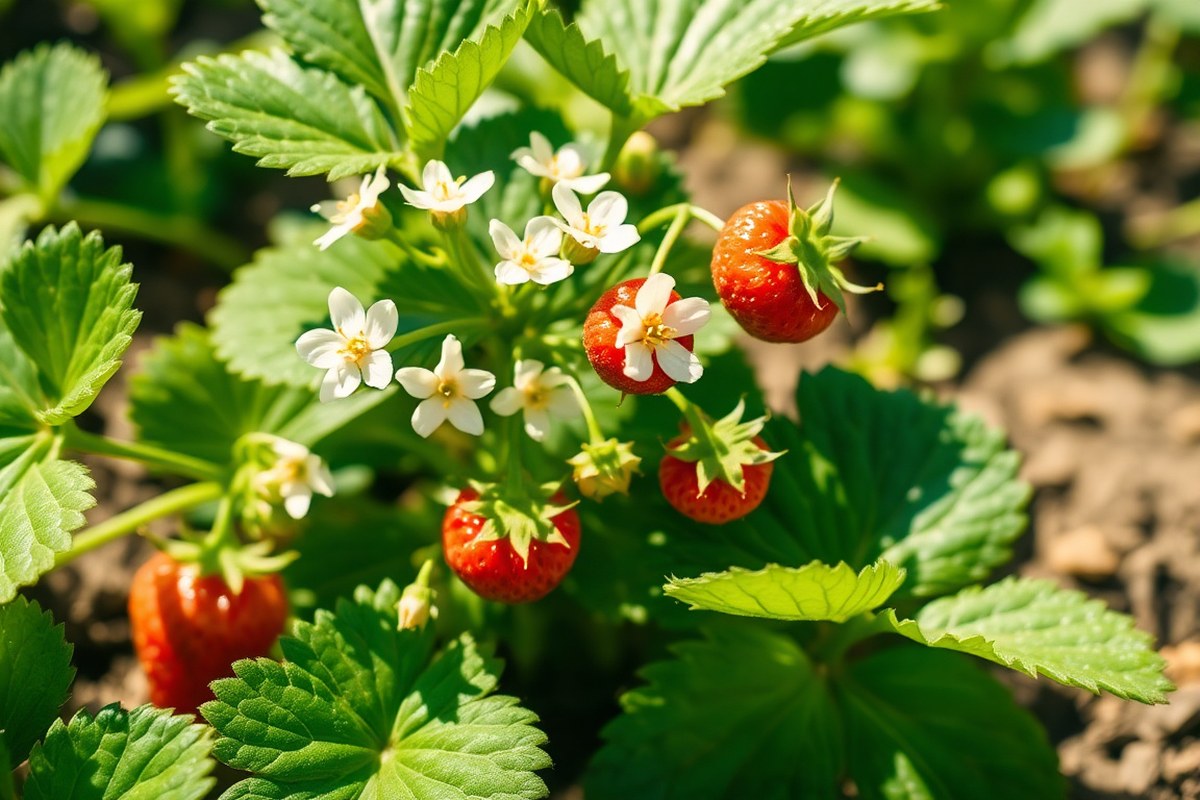
What does a strawberry plant look like? It has three-part leaves and low spreading stems.
The leaves grow on hairy petioles, reaching 4 to 6 inches long. The plant usually stands 6 to 12 inches tall, with a crown at soil level.
Strawberry plants show white flowers with five petals before they fruit. The fruit starts green, then turns red as it matures. Roots spread shallowly around 12 inches deep, making the plant vulnerable to drought.
Look for compact clusters of leaves and runners that stretch horizontally. The crown, where stems and roots meet, should sit right at soil surface. Starting with healthy soil and sun exposure helps your plant thrive.
Leaves have serrated edges and a slightly shiny texture on top. Runners produce new baby plants that root and grow nearby quickly. This spreading helps strawberries cover more ground for bigger harvests.
Key Takeaways
- Leaves have three leaflets on hairy stalks, each 6 to 8 inches wide.
- White, five-petal flowers appear before strawberries develop.
- The crown grows 6 to 12 inches tall and stays near soil level.
- Roots spread shallowly within the top 12 inches of soil.
- Runners extend horizontally, helping the plant multiply.
- Keep soil moist but well-drained to protect shallow roots.
What Does a Strawberry Plant Look Like at Different Growth Stages?

Strawberry plants go through clear stages from sprouting to fruiting. New plants are small with just a few bright green leaves growing from a central crown. White flower buds form soon after the leaves appear, signaling the start of fruit production.
Leaves grow larger and remain trifoliate with toothed edges. The crown, usually 6 to 12 inches tall, strengthens as the plant matures. White flowers bloom with yellow centers.
Small green berries grow next. They turn red when ripe.
Horizontal runners, also called stolons, begin forming after the plant establishes itself. These runners spread out to produce new daughter plants nearby, helping the patch grow denser. Fruit usually shows up a few weeks after flowering and continues to ripen over several weeks.
Here’s a typical timeline to watch for visual changes in a strawberry plant:
- Recognize the sprout: A new strawberry plant has 3 to 5 leaves. They are small and bright green. These leaves surround a short crown. Watch for early flower buds soon after.
- Observe leaf growth: Leaves become larger, stay shiny and toothed, spreading 6 to 8 inches wide. The crown gains height and thickness.
- Notice flowering: Small white blossoms appear with five petals and yellow centers. These blooms mean berries will grow next.
- Track fruit development: Green berries develop from flowers, gradually swelling and changing color. Ripening turns them red and juicy.
- See runners form: Thin, horizontal stems stretch away from the main plant. They create plantlets at intervals and expand your strawberry bed.
- Watch for fruit ripening: Red strawberries appear 4 to 6 weeks after flowers bloom. They hang on the plant until ripe. Pick when firm but tender.
- Spot multiple crowns: Some strawberry types grow more than one crown. This means more leaves and flowers.
June-bearing strawberries often produce many runners and one big crop early summer. Everbearing types grow multiple crowns and fewer runners, with smaller crops over the year. Day-neutral plants stay compact and fruit several times, sometimes starting in the first year.
Knowing these growth stages helps you time care tasks like watering and harvesting. You’ll also spot problems if leaves stay small or flowers never open. Watching runners shows if your patch is spreading well or needs thinning.
How to Identify a Strawberry Plant by Leaves, Flowers, and Stems
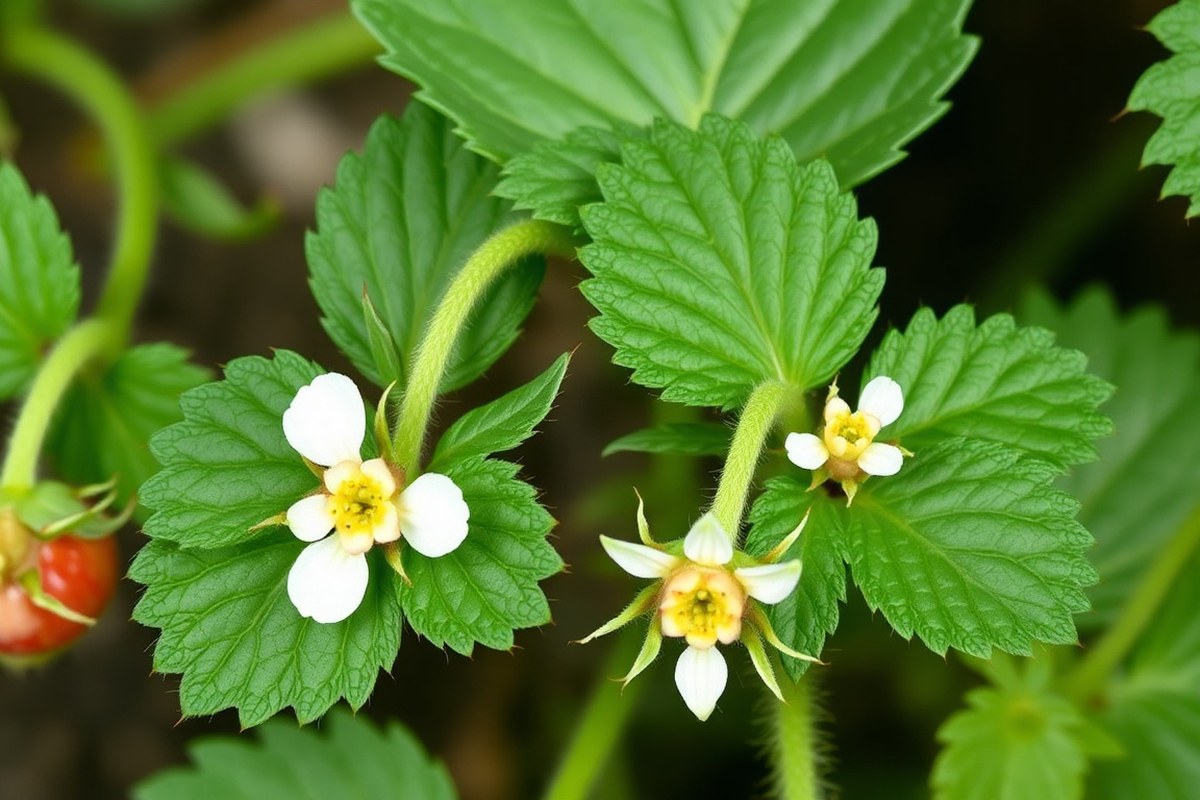
You can recognize strawberry plants by looking at their leaves, flowers, and stems. The crown is another part to check.
Their leaves have three toothed leaflets, and flowers are small with five white petals. The crown sits low with leaves and stems growing out from it.
Strawberry Leaf Shape and Texture
Each strawberry leaf is made of three oval-shaped leaflets joined at one stem. These leaflets have sharp, small teeth along the edges. The leaf surface feels slightly hairy and looks bright to dark green, depending on the variety.
Leaves grow on stems about 4 to 6 inches long, with visible veins running through them. The trifoliate shape is a key sign you have a strawberry plant. Leaf color and hairiness help protect the plant from pests and sun damage.
Characteristics of Strawberry Flowers
Strawberry flowers are small and white with five rounded petals. They often have a yellow center called the pistil that holds tiny seeds. Flowers grow near the crown on short stems, standing out against the green leaves.
Flowers usually appear in early spring, signaling fruit will follow. They attract pollinators with their bright white color and sweet scent. The flowers’ simple shape contrasts with more complex garden blooms, making them easy to identify.
Stem and Crown Features
Strawberry plants have two main stem types. Some stand upright with leaves and flowers. Others run along the ground as runners.
Upright stems come directly from the crown, the plant’s base where roots attach. The crown is generally 6 to 12 inches tall and lies right at the soil surface.
Runners stretch out several feet to start new plants. They look like thin, flat, green shoots growing sideways from leaf axils.
Keep the crown at soil level to avoid rot. This also helps the leaves and flowers grow strong.
Plant the crown just above soil to stop rotting. This lets the plant grow healthy and strong.
Key Parts of a Strawberry Plant and Their Functions
The strawberry plant has several key parts that work together to grow fruit. These include roots, a crown, leaves, runners, flowers, and fruit. Each part has a clear role in helping the plant survive and reproduce.
Role of the Crown and Roots
The crown is the thick, central stem at the soil surface. It’s where all the leaves, flowers, and runners grow from. Without a healthy crown, the plant cannot produce fruit or spread itself.
The roots reach about 12 inches deep and spread under the soil. They absorb water and nutrients while firmly anchoring the plant. Strong roots are essential for steady growth and good fruit production.
Function of Leaves and Stems
Leaves grow from the crown in groups of three leaflets called trifoliate leaves. Each leaflet has jagged edges and helps the plant convert sunlight into energy. The leaves support photosynthesis, which fuels flowering and fruit development.
Stems hold the leaves upright and transport nutrients between roots and leaves. They also carry water where it’s needed in the plant. Without sturdy stems, the plant cannot support its leaves or fruit.
Runners and Reproduction Process
Runners, or stolons, are long, thin stems that grow horizontally from the crown. They touch down on soil and form new baby plants at their tips. This allows the strawberry plant to reproduce without seeds.
Each runner creates a small plantlet with its own roots and leaves. As the plantlet grows, it becomes independent and can produce fruit. Runners help spread strawberry plants quickly in a garden.
From Flowers to Fruit Development
Strawberry flowers grow on stems at the crown and have white petals with yellow centers. These flowers contain the reproductive organs needed to form fruit. Pollination helps the flowers turn into strawberries.
After pollination, the flowers’ ovaries swell and develop into fruit over several weeks. The green fruit slowly ripens, turning red and sweet. Healthy flowers lead to a good strawberry harvest.
Visual Differences Between June-Bearing, Everbearing, and Day-Neutral Strawberries
Strawberry plants come in three types: June-bearing, everbearing, and day-neutral. Each has a unique size, spread, and fruiting habits.
These traits affect how they grow and look in your garden. Knowing the differences helps you pick the right one for your space and harvest goals.
| Variety Type | Height (inches) | Spread (inches) | Fruiting Season | Yield per Plant (lbs) | Lifespan (years) |
|---|---|---|---|---|---|
| June-Bearing | 6, 8 | 12, 24 | Spring only | 0.75, 1.2 | 2, 3 |
| Everbearing | 6, 9 | 10, 18 | Spring, Fall | 0.5, 0.7 | 2, 3 |
| Day-Neutral | 8, 10 | 12, 20 | Continuous | 0.8, 1.0 | 1, 2 |
June-bearing plants tend to have a taller height but a wider spread than everbearing types. They produce most runners in mid-summer after fruiting fades.
Their leaves and flowers are larger, and they mainly fruit once in spring. This means they look fuller but rest for the rest of the year.
Everbearing strawberries usually start fruiting the first season. They have a smaller spread and produce runners less aggressively.
They fruit twice, in spring and fall, keeping their leaves green longer. Their flowers appear in clusters, and the plant looks fairly compact compared to June-bearing.
Day-neutral plants grow the tallest and hold a medium spread. They produce runners moderately but keep flowering all through the growing season. Their fruiting is continuous.
So the plant often has flowers and small berries at once. This keeps the plant busy and lively, though it may lose vigor in the second year.
How Environmental Factors Affect Strawberry Plant Appearance and Health
Strawberry plants need at least 6 to 8 hours of direct sunlight every day. Strong sunlight helps them grow larger leaves and produce sweeter fruit.
Too little light makes leaves pale and growth weak. Too much harsh sun can cause leaf scorch and dry soil quickly.
Soil type matters a lot. These plants prefer well-drained, slightly acidic soil. Poor or compacted soil slows root growth, leading to smaller plants and fewer berries.
Roots reach down 12 to 18 inches. But they mostly stay in the top 3 inches, which hold 70% of their roots. That zone dries out fast in drought, causing leaves to yellow and plants to wilt.
Watering is key to healthy leaves and fruits. Underwatering causes drought stress, shrinking leaf size and dulling color. Overwatering invites fungal diseases, which shows as leaf yellowing or root rot.
To avoid trouble, keep soil moist but never soggy. You can check moisture by feeling soil an inch down.
Strawberry plants face pests like aphids and diseases such as fungal infections. Yellow or spotted leaves and slow growth often mean pests or disease.
Finding a red core in roots signals fungus that damages the plant’s health. Treat early by removing affected parts and using safe pest control methods to stop spread.
Temperature extremes influence growth too. High heat makes leaves curl and dry.
Frost kills delicate flowers and slows runner growth. Strawberry plants do best in moderate temperatures between 60°F and 80°F. Moving containers to shade or using frost cloth can protect them when heat or cold strikes.
Check soil moisture deeply at least twice a week during hot weather. Dry weather needs extra checking to keep roots happy. This helps leaves stay green and healthy.
Checklist to Recognize a Healthy vs. Unhealthy Strawberry Plant
Strawberry plants show clear signs you can check to see if they are healthy. Healthy leaves will have a deep, rich green color with a smooth texture. Brown, yellow, or spotted leaves often mean the plant is stressed or sick.
Look closely for fuzzy or gray spots. These spots suggest gray mold. Gray mold is a common strawberry disease that harms leaves and fruit.
Flowers and runners tell a lot about your plant’s vigor. Bright white flowers with no wilting show the plant is ready to produce fruit.
Healthy runners are firm and green, ending with small plantlets. Weak, shriveled runners may mean the plant lacks energy.
Roots and crowns lie beneath the soil and need care, too. Check roots after gently digging down 6 to 8 inches. Healthy roots appear firm and straw-colored without mush or black patches.
Dark, soft roots show root rot. Root rot is a serious problem.
Fix it fast to save the plant. Damage to the crown, the base where stems meet roots, can stop growth entirely.
- Leaf color: deep green means healthy; yellow or brown spots are warning signs
- Gray fuzzy patches on leaves or fruit suggest gray mold infection
- Flowers: look for bright white petals without wilting
- Runners: firm, green runners ending with new plantlets signal good spread
- Roots: straw-colored, firm roots indicate vigor; black and mushy roots show rot
- Crown: firm and undamaged crown is essential for new growth
- Soil moisture: keep consistent to support root health and leaf condition
Consistent soil moisture helps avoid many problems, especially root rot. Dry soil weakens roots, and overly wet soil invites fungal diseases. Spot problems like spots, deformed flowers, or bad roots.
Act quickly to protect your strawberry plants. Removing affected parts and improving growing conditions helps your strawberry plant bounce back. Healthy plants usually produce more fruit the second year as their roots fully grow.
How to Distinguish Strawberry Plants from Look-Alikes and Wild Varieties
Strawberry plants vary visually depending on whether they are wild or cultivated. Garden strawberries tend to have rougher leaves and droopier fruit.
Wild strawberries show smoother leaves and fruit held above the foliage. It’s also easy to confuse certain weeds or plants with strawberries without careful observation.
Visual Traits of Wild vs. Cultivated Strawberries
Wild strawberries have smoother leaves without the tiny hairs found on garden varieties. Their fruit usually stands more upright above the leaves instead of hanging below. Cultivated strawberries’ leaves feel a bit rough to touch.
They are like fine sandpaper. This texture comes from tiny hairs on the leaves’ surface.
Their fruit grows mostly beneath or among leaves on stems that droop slightly. In contrast, wild fruit often appears more exposed on thick stems.
Both have crowns that thicken near the soil. But cultivated ones show more developed crowns in garden beds or rows.
Common Strawberry Look-Alikes
Plants like barren strawberry and certain cinquefoils often get mistaken for strawberries. Their leaves may look similar but lack the fresh smell or leaf texture true strawberries have. Many of these look-alikes don’t produce red, sweet fruit or have fruit held differently.
Most strawberry look-alikes do not have fruit. If they do, the fruit is dry. It also lacks the tiny seeds on the outside.
False strawberries have leaf shapes like strawberries. But their growth and flower structures are different. These differences help tell them apart.
Safety and Edibility of Wild Strawberries
Wild strawberries are generally safe to eat and have a sweet taste stronger than cultivated types. They have been enjoyed by people for hundreds of years. However, avoid eating any strawberry look-alikes without positive identification, as some may not be safe.
Pay attention to the fruit’s texture and position on the plant before trying any wild berry. The plant with smooth leaves and upright fruit likely matches strawberry traits.
It is usually safe to try. Eat only small amounts to be sure.
How Runners Affect Strawberry Plant Spread and Growth Habit
Strawberry plants spread through long, thin stems called runners or stolons. These runners grow along the ground. They spread sideways.
New plants form where runners touch soil. Typically, a single strawberry plant can spread from 12 to 18 inches alone. But runners allow it to cover much more ground quickly.
Runners start from the crown, the plant’s main hub. They usually grow after flowering and fruiting begins. They root at many points.
Each root creates a new plant. These look like small clones of the original. New plants help your patch grow fast.
The patch can double in one season. This happens if runners aren’t controlled.
Runners let strawberry plants spread naturally. Gardeners can use them to make new plants. You can cut runners off the mother plant.
Then you can root them in pots or soil. This helps you grow fresh plants without buying seeds or new crowns.
- Check runners weekly to see how many new plants are forming.
- Pin runner tips into soil using small stakes or clips.
- Let roots develop for 2 to 3 weeks before cutting the runner from the mother plant.
- Trim excess runners to avoid overcrowding and reduce stress on the original plant.
- Use runners to fill gaps in your strawberry patch or share with other gardeners.
Controlling runners is important because too many can drain the mother plant’s energy. When plants spend too much energy making runners, they produce fewer strawberries. To keep your patch healthy and productive, limit runners during peak fruiting times.
Cut runners early to focus on fruit. Later, allow some runners to grow new plants.
Don’t let runners root where you don’t want more plants. They can take over quickly.
Removing runners is an option too. This keeps your patch small with bigger fruits. Growing systems like raised beds benefit from managing runners strictly to keep plants tidy.
Runners help strawberry plants spread naturally. But managing them balances growth and fruit quality well.
Step-by-Step Action Plan to Identify and Care for Your Strawberry Plant
Follow these steps to spot your strawberry plant and keep it healthy. Each step helps you see real signs your plant is doing well.
- Before planting: Check for three-part leaves with toothed edges and white flowers with yellow centers. This shows you have a real strawberry plant.
- First two weeks: Water new plants regularly but don’t soak them. Leaves should look bright green and firm, not droopy.
- Week 3 to 4: Watch for runners growing from the main plant. Healthy runners are green and help your strawberry spread.
- Month 2: Look for early berries if you have day-neutral or everbearing varieties. Berries should start red with small seeds on the surface.
- Month 3: Remove any yellow or spotted leaves. This keeps disease from spreading and keeps plants strong.
- After fruiting: Cut back old leaves and runners that look weak. This supports new growth for next season.
- Ongoing: Check plants weekly for pests or discoloration. Early action helps keep your strawberries healthy and productive.
Frequently Asked Questions
What Does a Strawberry Plant’s Crown Look Like?
The crown is a small, thick part at the plant’s center. It’s where leaves and roots grow and stores nutrients to help the plant survive.
How Can You Tell a Strawberry Plant’s Roots from Other Plants?
Strawberry roots are fine and grow mostly in the top 3 inches of soil. They spread horizontally and help the plant find water quickly.
Do Strawberry Plant Stems Have a Special Name?
Yes, the stems that run horizontally are called stolons or runners. They let the plant spread and produce new plants nearby.
What Color and Size Are Strawberry Plant Flowers?
Strawberry flowers are white with five petals and bloom before fruit appears. They usually measure about 1 inch across and attract pollinators like bees.
Can Strawberry Plants Have Other Leaf Shapes Besides Toothed?
The typical leaves have three toothed leaflets. But some wild types might show slight differences. Still, three-part leaves are the main identifier.
What Changes in Appearance Do Strawberry Plants Show When Diseased?
Diseased plants might have round spots on leaves or gray mold on fruit. These signs mean poor health and can kill most of the crop if not treated.
Wrapping Up
A strawberry plant has leaves, flowers, and runners. These parts show what stage the plant is in. Watch them to understand your plant better.
Knowing these signs helps you care for your plant well. Look closely at your plant’s leaves and flowers today.
This helps confirm you have a strawberry plant. Check each part carefully before you start.





2 Comments