Do Jade Plants Flower? What Actually Works to Get Them to Bloom
Jade plants bloom, but they often take years and proper care. Usually, you need a jade plant that’s 3 to 5 years old. Blooming doesn’t happen quickly, so you have to stay patient for flowers.
Jade plants usually bloom with enough light and proper care. Jade plants require 4 to 6 hours of bright sunlight daily. Sunlight helps the flowers develop well.
Without enough light, the plant may not bloom. Growing your jade plant inside means giving it extra light.
Indoor plants usually need more light than those outside. You might consider placing them near a sunny window.
Temperature also matters for jade flowers. They prefer warm room temperatures between 65 and 75 degrees Fahrenheit. Keep humidity moderate, around 30 to 50 percent, to help your plant thrive and flower.
Key Takeaways
- Jade plants start flowering when they’re 3 to 5 years old.
- Provide your jade plant 4 to 6 hours of direct sunlight daily.
- Indoor plants need more than 6 hours of bright light to bloom well.
- Maintain room temperatures between 65°F and 75°F for best growth.
- Keep humidity between 30% and 50% to encourage blooming.
- Repot jade plants every 2 to 3 years to avoid becoming root-bound.
Do Jade Plants Flower Indoors and Outdoors?

Jade plants can flower both indoors and outdoors, but indoor blooming is rare. They usually start flowering when they are 3 to 5 years old.
Outdoors, jade plants get more natural light and seasons change. This helps them bloom better than inside.
Indoor environments often prevent blooming due to insufficient sunlight. Jade plants need at least 4 to 6 hours of bright direct sunlight to trigger flowers.
Getting enough light is easier outside or near a sunny window. Warm climates make this even simpler.
Jade plants need cooler nights in fall and winter to bloom. Aim for 50 to 60°F during these months. Outdoors, these conditions happen naturally.
Indoors, try moving your plant to a cooler place for a few months. This can trigger blooming.
Young jade plants focus on growing leaves and stems. So don’t expect flowers before they are 3 years old. Overwatering, inconsistent light, and skipping the plant’s rest period can stop buds from forming.
Use well-draining soil for your jade plant. Keep it in cool, dim places during fall to help bloom.
The flowers are a special bonus since even outdoor jade plants don’t bloom every year. Outdoor jade plants grow well in 65 to 80°F temperatures.
Keep humidity low, between 30 and 50 percent. Indoors, dry air and steady warm temperatures often slow or stop flowering.
How Long Does It Take for Jade Plants to Bloom?
Timeframe for Jade Plant Flowering
Jade plants usually begin to bloom after they reach 3 to 4 years old. This minimum age allows the plant to mature enough for flowers to form. Younger plants generally won’t produce blooms, so expect a few years’ wait for flowers.
Waiting longer improves your chances. Plants around 5 to 7 years old bloom more reliably than younger ones. The plant needs extra time to grow stronger stems.
Larger leaves develop next. These support the flowers later.
Maturity: Size and Age Effects
Flowering depends not just on age but also on size and overall maturity. A jade plant must be big enough to handle flowering without stress. This size usually happens when the plant is at least 3 to 5 years old.
Older plants have more energy stored in their branches and roots. This helps them produce blooms more often than smaller, younger plants.
The plant might need more time to flower. It looks small or fragile.
Growing Conditions Impact Blooming Time
The right conditions speed up flowering, but they cannot replace maturity. Even with perfect light and temperature, a plant younger than 3 years rarely flowers. Give 6 to 8 hours of bright, direct light daily.
This helps flowers develop. The plant must be mature first.
Nighttime temperatures dropping to 50, 55°F in the fall can trigger flower buds to form. This cooler period simulates the natural dormancy that jade plants need before blooming. Avoid keeping the plant too warm at night during the fall.
How to Support Early Blooming
Stress can sometimes push a mature jade plant to flower. Watering less frequently in autumn, about every 3 to 4 weeks, helps create mild drought stress. You still want to keep the soil slightly moist but not soaked or bone dry.
Fertilizer plays a role too. Using a low-nitrogen, high-phosphorus fertilizer like 5-10-10 supports flower development. Apply fertilizer in late summer or early fall for the best chance of blooms.
Patience and Care Tips
Flowering jade plants require steady care over years. Avoid repotting too often, about every 2 to 3 years is enough. Repotting too frequently can stunt growth and delay flowering.
Be patient with smaller or younger plants. Trying to force blooms before maturity wastes effort and risks plant health. Let your jade plant grow strong, then watch for flowers as it gets older.
Keep your jade plant at least 3 years old and well-established before expecting flowers.
What Jade Plant Flowers Look Like and When They Appear
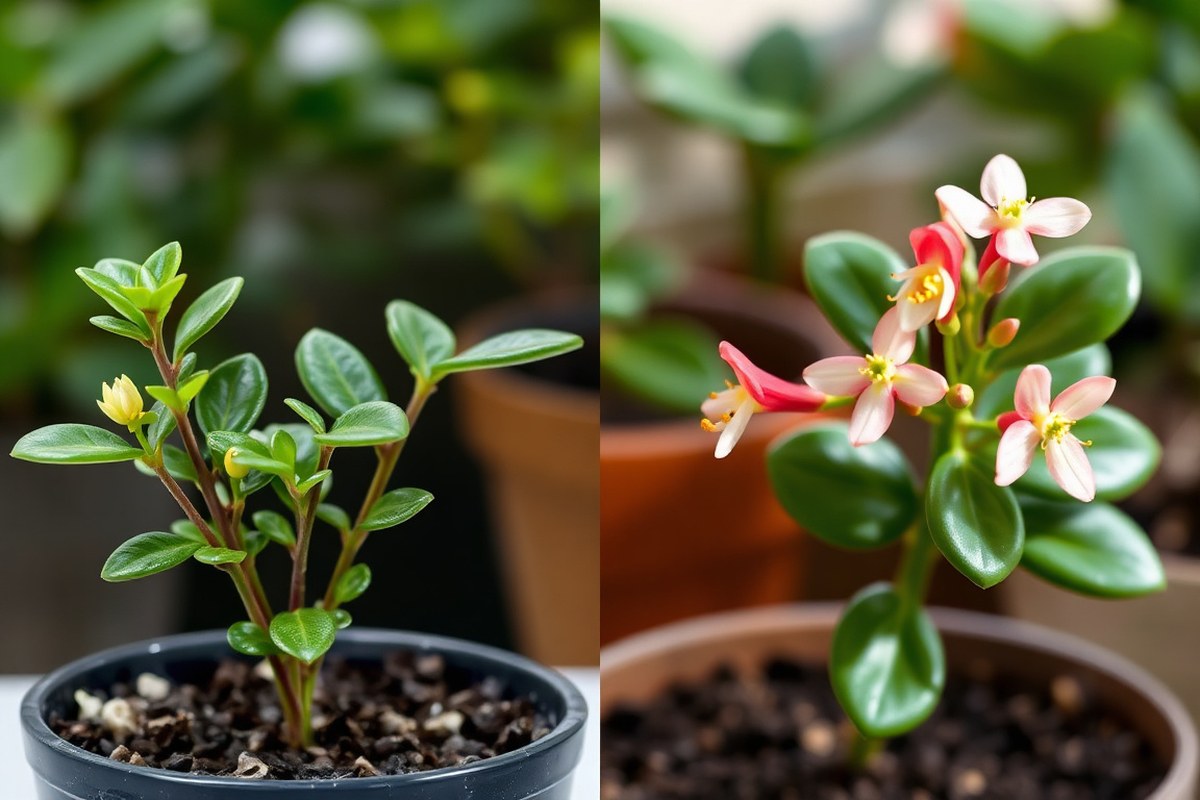
Jade plant flowers are small star shapes, measuring 1/4 to 1/2 inch across. They grow in clusters on extended stalks rising above the glossy green leaves. These blooms appear in white or pale pink shades, offering a delicate contrast to the dense leaves.
Flowers usually show up during winter or early spring in mature plants. Shorter daylight acts as a signal, starting the blooming cycle. A resting phase with 12 to 16 hours of total darkness each night helps buds form.
Once jade plant flowers appear, they may last a few days up to several weeks. The exact length depends on care and environment, including temperature and humidity levels. Cooler indoor temperatures around 65-75°F help flowers stay healthy longer without wilting.
Sunlight Requirements to Encourage Jade Plant Blooming
Your jade plant needs plenty of bright light to bloom well. Aim for 6 to 8 hours of direct sunlight each day. Artificial lights can help if natural sun is limited.
They need to be strong enough for good growth. Keep them on for enough hours each day.
Ideal Daily Sunlight Hours
Jade plants thrive with 6 to 8 hours of direct sunlight daily. At least four hours of bright, indirect light can also help. Less than four hours usually won’t trigger blooming.
The best results come from 8 to 12 hours of bright, direct sunlight. This much light encourages flower buds to form. Without enough light, your jade may stay green but won’t bloom.
Natural Sunlight vs Grow Lights
South-facing windows provide the strongest natural sunlight for jade plants. This light is ideal for bloom production. East or west-facing windows offer less intense light but still work with longer exposure.
Grow lights can substitute natural sunlight in rooms with little sun. Use full-spectrum LED or fluorescent grow lights. Keep the lights on 10 to 12 hours daily to mimic natural sun length.
Place grow lights 6 to 12 inches above your plant. This gives bright light without too much heat. Adjust the height if it feels too hot.
A timer can help maintain consistent lighting hours. Without enough light from grow lights, blooming chances drop.
Best Placement for Maximum Light Exposure
Position your jade plant near a south-facing window to get the strongest light. A balcony or patio with direct sun is ideal. Plants need 4 to 6 hours of sun daily.
This setting works well for outdoor jade plants. Move indoor plants outside during warmer months for better light.
- South-facing windows get consistent, strong sunlight all day
- East or west windows provide bright morning or afternoon sun
- Keep leaves clean to absorb more light
- Avoid shaded spots or north-facing windows with low light
- Outdoors, choose a spot with at least 4 hours of direct sun
- Use grow lights if natural light is under 6 hours daily
Make sure your jade doesn’t sit in the shade or behind curtains. Even bright indirect light for less than four hours daily won’t be enough. Good light exposure is key to seeing your jade plant bloom.
Temperature and Humidity Factors Affecting Flowering
Jade plants need daytime temperatures around 65 to 75°F to encourage flowering. Cooler nights between 50 and 55°F help trigger blooms by mimicking natural conditions. Low humidity levels, near 40 to 50%, also support their flowering process.
Maintaining Daytime Temperatures
Keep your jade plant in a spot where daytime temperatures stay steady between 65 and 75°F. This range is warm enough to support healthy growth without stressing the plant. Avoid placing the plant near heat vents or cold drafts that cause temperature swings.
During spring and summer, move your jade plant outside. Pick a spot with lots of sun. This helps keep the right temperature for your plant.
Shield it from harsh afternoon sun to avoid leaf burn while still providing plenty of light. Indoors, south-facing windows are best for warmth and brightness.
Creating Nighttime Cooling Conditions
Lower the temperature at night to about 50 to 55°F to help the plant start blooming. Cooler nights signal the plant to enter a rest phase, encouraging flower buds. Even a 10-degree temperature drop compared to daytime can make a difference.
Try putting your plant in a room you don’t use much. You could also place it near a window that cools down at night. Both spots can help your plant rest.
Shut the door to keep out warm air and keep the space cooler. Lower the heat in the room during fall when you want blooms.
Cooler air encourages your jade plant to flower. This simple change makes a difference.
Steps to create nighttime cooling for your jade plant:
- Move the plant to a cooler room or spot at night.
- Keep the temperature between 50 and 55°F during those hours.
- Shut doors or windows to maintain cooler air around the plant.
- Avoid heating units or warm air sources nearby.
- Reduce watering to lower humidity and stress the plant slightly.
- Keep the plant in this cooler condition through fall.
Don’t expose your jade plant to temperatures below 50°F for long periods, or risk damaging it.
Managing Indoor Humidity Levels
Jade plants come from dry climates, so they prefer humidity between 40 and 50%. High humidity can prevent flowers by causing too much moisture around the leaves. Use a room humidifier or dehumidifier to keep levels steady within that range.
To lower humidity naturally, avoid overwatering and ensure good air circulation. Placing the plant near a small fan or opening a window can help reduce moisture buildup. Keeping humidity in check encourages the plant to flower and stay healthy.
Watering and Fertilizing Strategies to Promote Flowers
Water your jade plant sparingly to encourage blooming. These plants need less water in fall and winter.
This rest helps flower buds form. Overwatering can keep jade plants healthy but stop them from flowering.
Use fertilizer to support growth before the blooming season. A diluted tomato fertilizer works well. Use it at half strength once every 4 to 6 weeks.
Do this during active growth months. That usually means spring and summer.
Stop fertilizing when fall arrives. This helps the plant prepare for flowering by reducing nutrient supply.
Constant feeding can delay or prevent blooms. So cut back to no fertilizer during blooming months.
- Water only when the top 1 to 2 inches of soil are dry
- Use a balanced fertilizer or tomato fertilizer diluted to half strength
- Feed every 4 to 6 weeks during spring and summer only
- Skip fertilizer from fall through winter
- Ensure good drainage to avoid root rot from overwatering
- Provide bright indirect sunlight to support blooming
- Allow cooler nighttime temperatures during fall for flower development
Following these steps balances stress and nutrition, a key to bloom production. Keep water low and fertilizer limited as seasons change. This approach motivates jade plants to use energy for flowers instead of just leaf growth.
Pruning, Repotting, and Maintenance for Flower Production
Pruning jade plants encourages healthy growth and can boost flower production. Cutting back leggy branches helps light reach more leaves. It also keeps your plant compact and neat.
Thick branches should be trimmed to improve growth. Prune your jade plant in spring or summer.
Remove about one-third of branch length each time. This helps avoid stressing your plant too much.
Jade plants like a tight home, so they don’t need repotting often. Repotting every three years with fresh soil is enough to replace nutrients and support blooms. Pick a pot only a little bigger than the old one.
Too much root space can slow down flowering. The right pot size improves growth and blooms.
Stress can actually help jade plants bloom. They need cooler weather and less water in fall and winter.
But too much stress, like damaging roots during repotting, stops flowers from forming. Handle the roots gently and avoid repotting right before bloom season.
- Prune in spring or early summer, cutting back about one-third of branch length
- Remove leggy or crowded branches to improve light and airflow
- Repot every three years using well-draining succulent soil mix
- Choose pots only 1 to 2 inches wider in diameter than current pot
- Repot in spring or early summer, giving plants time to recover
- Reduce watering in fall and winter to create mild drought stress
- Avoid disturbing roots or repotting during fall and winter bloom period
Fresh soil is important since jade plants rely on nutrients for blooms. Use a mix made for succulents with sand or perlite to keep drainage fast.
Healthy roots mean healthy flowers. This care routine helps keep the plant strong, compact, and ready to bloom in winter.
Troubleshooting Common Problems Preventing Blossoms
Mature jade plants sometimes don’t bloom because of pests, low light, or overwatering. Pests suck sap, making the plant weak and less likely to flower. Without enough bright light, jade plants cannot produce the energy needed for blooms.
Overwatering is a common mistake that stops blooming. Jade plants need well-draining soil and should dry out between waterings. Too much water leads to root rot, which stresses the plant and prevents flowers.
Here are key issues to check and fix to help your jade plant bloom:
- Inspect leaves and stems for pests like mealybugs or spider mites.
- Move the plant to a spot with 4-6 hours of bright, direct sunlight daily.
- Water only when the top 1-2 inches of soil feels dry.
- Use a succulent soil mix to improve drainage and avoid soggy roots.
- Trim any dead or damaged branches to focus energy on healthy growth.
- Fertilize lightly with a balanced, low-nitrogen fertilizer during spring and summer.
- Avoid repotting during the bloom season to reduce stress on the plant.
Handling pests means wiping affected areas with a cotton swab dipped in rubbing alcohol. Repeat treatment weekly until you see no signs of bugs. Moving your plant to better light takes a few weeks.
You need patience to see blooms grow. This change does not show results immediately.
Overwatering signs include yellow leaves and a mushy stem base. Cut back watering and check for root rot by gently lifting the plant. Healthy roots are white or light tan, while dark or soft roots need trimming.
Keep your jade plant in a bright window and water sparingly to avoid common bloom blockers.
Step-by-Step Action Plan to Encourage Jade Plant Flowers
Follow these steps to help your jade plant bloom. Each step gives you clear signs your plant is responding.
- Before you start: Pick a healthy jade plant. Look for firm leaves with no pests.
- Week 1: Put your plant in a sunny spot. It should get 4 hours of direct sunlight each day. Look for brighter, sturdier leaves.
- Week 2: Begin watering only when the top inch of soil feels dry. Check that leaves stay firm and don’t wrinkle.
- Month 1: Feed with a balanced fertilizer every 6 weeks during spring and summer. You should see new growth within a month.
- Month 2: Lower nighttime temperatures to around 55°F when possible to encourage budding. Watch for small buds near leaf clusters.
- Month 3: Prune lightly to remove any leggy or dead branches. Healthier stems encourage flower production.
- Anytime: Repot only if roots crowd the pot, using well-draining soil. Expect less stress and better blooms after recovery.
Frequently Asked Questions
Can Jade Plants Flower More Than Once a Year?
Jade plants usually bloom once a year, mostly in late fall. Their flower cycles depend on environmental clues.
They also need mature growth. This limits how often they bloom indoors or outdoors.
Does Soil Type Affect Jade Plant Flowering?
Yes, well-draining, slightly acidic soil helps jade plants bloom better. Use cactus or succulent potting mix to avoid root rot.
This mix helps roots grow strong and healthy. Strong roots support flower blooms.
Can Stress Cause a Jade Plant to Flower?
Mild stress like cooler temperatures or less water can trigger blooming. Stress mimics natural winter conditions, encouraging buds to develop as the plant prepares to bloom.
Do Jade Plants Need a Dormant Period to Flower?
Jade plants benefit from a cooler, drier dormant phase in fall. This rest period helps them form flower buds and encourages bloom when conditions improve.
Can Jade Plants Flower Indoors Without Direct Sunlight?
They rarely flower without bright direct or indirect sunlight indoors. Jade plants need at least 4-6 hours of strong light to trigger blooms.
How Does Pruning Affect a Jade Plant’s Flowering?
Pruning shapes the plant and can promote blooming by encouraging growth. Removing leggy or old stems lets the plant focus energy on forming flowers.
Final Thoughts
Yes, jade plants do flower if you give them the right care and conditions. Keep your plant sunny, moderately watered, and cool at night. Start adjusting light and temperature this week to watch buds appear in a few months.