

Can You Grow Herbs Indoors? A Complete Guide with Expert Tips
Can you grow herbs indoors? Yes, you can successfully grow herbs inside your home year-round.
Herbs need good light and proper care to thrive indoors. You can start with hardy herbs that tolerate indoor conditions well.
Most herbs need 6 to 8 hours of bright light daily. A sunny south-facing window or a good grow light works best for them. Also, keep your herbs at comfortable room temperature, about 65 to 75 degrees Fahrenheit.
Use pots that have drainage holes to prevent root rot. Choose containers at least 4 inches wide for your plants. This size helps your herbs grow well indoors.
Choose a light, well-draining soil mix made for indoor plants. These steps will set your herbs up for healthy growth indoors.
Key Takeaways
- Choose herbs like parsley or thyme that grow well indoors in 6+ hours of sunlight.
- Position herbs near south-facing windows for optimal natural light exposure.
- Use pots with drainage holes and at least 4 inches wide to prevent root issues.
- Maintain room temperatures between 65 to 75 degrees Fahrenheit for best growth.
- Use well-draining soil suitable for indoor herb gardening.
- Supplement natural light with grow lights placed about 12 inches above plants.
Can You Grow Herbs Indoors Successfully Year-Round?
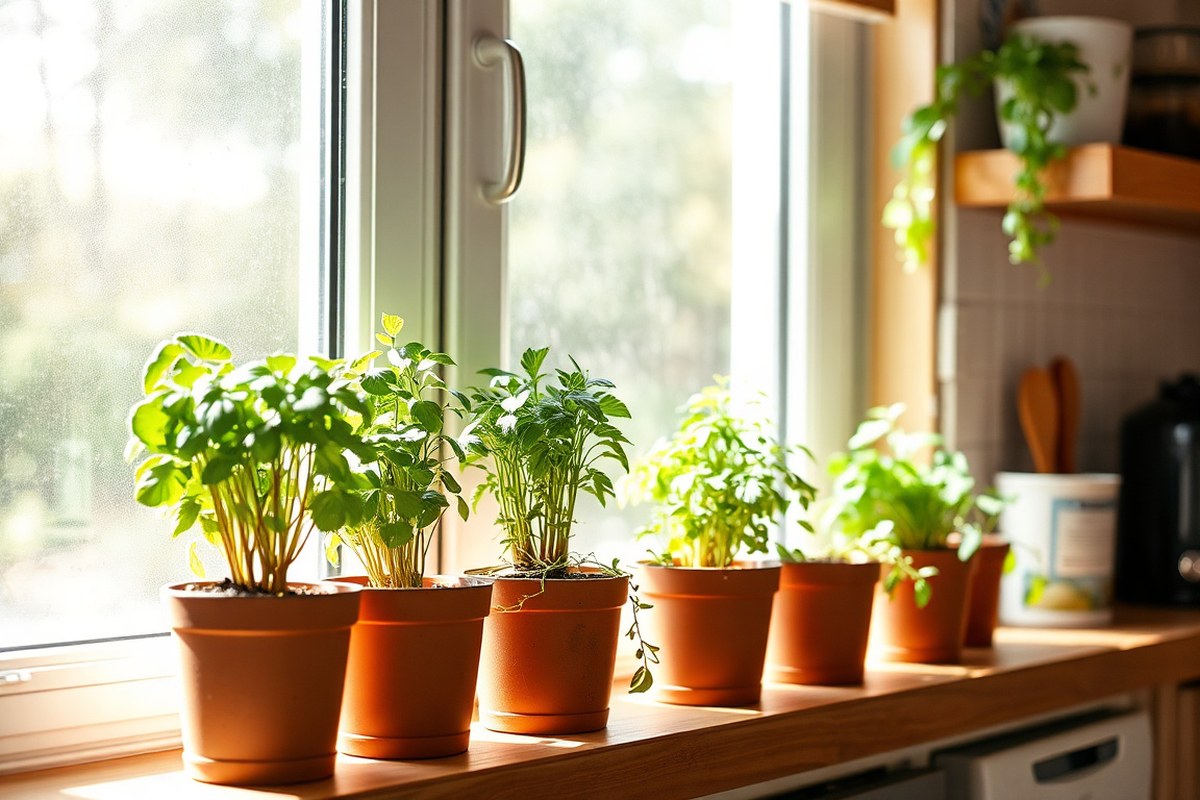
Yes, you can grow herbs indoors successfully all year. They need steady temperatures between 65 and 75°F for the best growth. Avoid placing them where cold drafts or heat vents might stress the plants.
Lighting is a key factor. Most herbs require at least 6 hours of bright light daily.
A sunny windowsill works well for many, especially south-facing ones. When natural light is limited, use grow lights for steady light.
Good drainage is another must. Herbs do not like soggy soil.
So use pots with drainage holes and well-draining soil. Watering should be regular but moderate, letting topsoil dry slightly between watering sessions.
Starting with established plants in fall helps you harvest herbs quickly through winter. Mint, basil, and parsley bounce back well indoors and tolerate various conditions. You may need to rotate pots weekly so herbs get even light and grow straight.
Some herbs, like rosemary and thyme, grow slowly in low light. Cooler temperatures can also slow their growth.
They still survive indoors but might produce less. You can boost growth by supplementing light or adjusting care routines.
Automated herb garden kits with built-in lighting, watering, and nutrients make indoor year-round herb gardening easier. These systems can cost around $70 to $200 but save time and improve chances of success. Still, paying attention to temperature, light, and soil remains necessary.
Even with good conditions, indoor herb gardening takes some trial and error. Watch for yellowing leaves or leggy stems.
These signs mean changes in watering or light. With steady care, you’ll enjoy fresh herbs on your kitchen windowsill no matter the season.
Best Herbs to Grow Indoors: Choices by Light and Care Needs

Many herbs do well indoors, but some are easier to grow than others. Herbs like basil, mint, parsley, chives, and thyme adapt well to indoor conditions. They usually need 4 to 6 hours of sunlight daily.
You can get this from a sunny windowsill. A grow light also works well.
Some herbs prefer full sun for 6 to 8 hours, such as sage, oregano, and thyme. Others like parsley, chives, dill, and mint can handle partial shade and cooler temperatures. Basil needs plenty of light but stays tender and flavorful indoors.
| Herb | Light Needs | Ease of Care | Notes |
|---|---|---|---|
| Basil | Full sun (6-8 hrs) | Easy | Best with plenty of light; tender green herb |
| Mint | Partial shade to sun (4-6 hrs) | Easy | Tolerates lower light; grows fast indoors |
| Parsley | Partial shade to sun (4-6 hrs) | Easy | Thrives in cooler spots; good indoors |
| Chives | Partial shade to sun (4-6 hrs) | Easy | Grows well with less light; flexible location |
| Thyme | Full sun (6-8 hrs) | Easy | Needs good light; dry soil preferred |
| Dill | Partial shade to sun (4-6 hrs) | Easy | Likes cooler temps; grows well indoors |
| Sage | Full sun (6-8 hrs) | Moderate | Needs bright light and warmth |
Some herbs struggle indoors without enough light or proper temperatures. Sage can be trickier because it demands bright, full sun and warmer conditions.
Herbs like chervil do better in cooler, shadier indoor spots, making them good beginner choices. Lack of light leads to weak growth and less tasty leaves.
Use a grow light if your windowsill doesn’t get enough natural sunlight. Herbs rarely get too much light indoors, so lighting won’t usually harm them.
Herbs grow best on a south-facing windowsill. They need at least 4 hours of bright light daily. Your home may not get enough sunlight.
Use a grow light suited to your herb’s needs. Herbs needing full sun want 6 to 8 hours. Partial sun herbs do fine with 4 to 6 hours.
Setting Up Your Indoor Herb Garden: Containers, Soil, and Location
Choose pots with good drainage and a size fitting each herb’s roots. Use potting soil made for indoor containers to keep roots healthy. Find a sunny spot, ideally near a south-facing window or in your kitchen, for best growth.
Choosing the Right Pots and Drainage
Pick containers with holes to let extra water escape. Without drainage, herbs risk root rot from soggy soil. Terra cotta pots work well since they’re porous and help soil breathe.
Keep pots at least 4 inches wide for small herbs. Bigger pots, 8 to 10 inches, work better for fast-growing or sprawling herbs. Avoid garden soil because it’s too dense and holds water.
Selecting Quality Potting Soil
Use potting mixes made for indoor plants, not garden dirt. These mixes drain well yet hold enough moisture for roots. Look for a rich, lightweight potting soil labeled for containers.
Some common herbs like basil and mint do fine in regular potting soil. Adding a bit of perlite or sand helps improve soil drainage. Avoid heavy soils that stay wet too long.
- Use a soilless or indoor potting mix
- Ensure the mix retains moisture but drains well
- Add perlite or sand for extra drainage
- Avoid garden soil to prevent compaction
- Buy fresh soil rather than reusing old, depleted soil
- Choose soils without added fertilizers for better control
Fresh potting mix encourages healthy root growth and prevents fungal problems. Quality soil means stronger plants and less risk of overwatering damage.
Locating Your Herb Garden Indoors
Place herbs where they get bright light daily. South-facing windows usually offer the most natural sunshine. East or west-facing windows can work if south-facing isn’t available.
Keep herbs away from cold drafts or heat vents, which stress plants. Aim for temperatures between 65 and 75 degrees Fahrenheit. Kitchens are a great spot because you can harvest herbs easily for cooking.
How Much Light Do Indoor Herbs Need and How to Provide It
How Much Light Do Indoor Herbs Need and How to Provide It
Most indoor herbs need at least six hours of sunlight each day to grow well. Some herbs tolerate as little as four hours of sunlight but grow better with brighter conditions. Natural light might not be enough.
Use grow lights 12 to 16 hours daily. This keeps your herbs healthy and growing well.
Ideal Natural Light for Herbs
South-facing windows give the best sunlight for herbs. They get bright, direct light. This lasts six or more hours.
East- or west-facing windows give about four hours of sunlight. Herbs like parsley and mint grow well there.
These herbs handle lower light. Avoid north-facing windows, as they usually don’t provide enough sun for most herbs to thrive.
Herbs such as thyme and basil need the full six hours of direct sunlight. Parsley can tolerate less and still grow well.
Keep herbs away from shaded corners or behind curtains, where light is almost always insufficient. Rotate pots weekly to make sure sunlight reaches all sides evenly.
Using Grow Lights Indoors
LED grow lights are ideal when sunlight is limited or missing. Keep the light 6 to 12 inches above your herbs. This stops leaf burns.
It also keeps light strong and helpful. Run grow lights 12 to 16 hours daily.
Artificial light is weaker than sunlight. Your herbs need longer light time to grow well.
Full-spectrum LED lights work best since they mimic natural sunlight across all colors herbs need. Compact LED panels cost about $20 to $40. They work fine for a small indoor herb garden.
These are easy to use and save space. Fluorescent bulbs work for herbs, too.
Keep them within a foot of your plants. This helps the herbs get enough light.
Using grow lights lets you grow herbs inside year-round, even in winter months. Just adjust how long the light runs based on how dark your space gets. Keep the lights on a timer to maintain a consistent daily routine without forgetting.
Adjusting for Seasonal Light Changes
Light levels drop in fall and winter. So your indoor herbs may need more help from grow lights then. Increase grow light time to 14 to 16 hours during short daylight months for steady growth.
In spring and summer, set lights to 12 hours. You can also depend mostly on sunlight. That’s fine if you have bright windows.
Keep watch on your herbs’ leaves for signs of light stress. Pale leaves or leggy stems often mean not enough light. Move your herbs closer to windows if they look weak.
Raise grow lights if you see poor growth signs. This is key during low-light seasons.
Adjusting light based on season keeps your herbs healthy and flavorful throughout the year. It takes a little attention but helps your plants stay strong without wasting electricity or sunlight.
Watering and Temperature Needs for Healthy Indoor Herbs
Water indoor herbs when the top inch of soil dries. This usually means watering every 5 to 7 days.
But it can vary based on your home’s humidity and temperature. Pour water directly onto the soil, not the leaves, to avoid mold and rot.
Check soil moisture by feeling it with your finger. Check if the soil feels dry about an inch down. If it does, go ahead and water your herbs.
Avoid soaking the soil too much. Herbs like soil that is a bit moist but not soaked.
This helps stop root rot. It also keeps pests like fungus gnats away.
Indoor herbs thrive in temperatures between 65 and 70 degrees Fahrenheit. This range suits most homes, so you don’t need a separate heat source. Too chilly or too hot air stresses herbs, slowing growth or causing leaves to wilt.
In winter, keep herbs away from cold drafts or heating vents. These spots dry out soil quickly and can shock your plants. Instead, place herbs near stable temperature areas with moderate warmth to keep them growing steady.
Some herbs, like rosemary or thyme, handle drier soil better and need watering less often. Some herbs, like basil and parsley, want soil to stay moist.
They may need watering two times each week. Adjust watering based on each herb’s needs and feel the soil regularly.
Water your herbs slowly. Keep watering until water comes out the pot’s holes. This keeps roots wet without overdoing it.
Harvesting, Pruning, and Maintaining Indoor Herb Plants
You can start harvesting herbs when the plant is well-established and has enough leaves. Pruning regularly helps keep herbs bushy and productive. Simple upkeep like checking water and light will maintain your plants’ health.
When to Start Harvesting
Wait until your herb plant has grown at least 4 to 6 inches tall before harvesting. You want it to be healthy with plenty of leaves to support growth. Taking too much too soon can weaken the plant.
Take small amounts at a time. Cut 2 to 4 inches of stem. Snip just above a leaf node.
This encourages new growth from that spot. Harvest often to keep the plant producing fresh leaves.
Pruning Techniques for Healthy Growth
Pinch or cut stems back to just above a leaf node. This spot is where new branches will grow. Use clean scissors or your fingers to avoid damaging the plant.
Prune regularly to stop herbs from getting leggy or woody. This keeps plants bushy and helps air circulate. Removing flower buds also redirects energy to leaf growth.
Routine Maintenance Tasks
Check soil moisture and water when the top inch feels dry. Avoid letting soil stay soggy or completely dry out. Water needs vary by herb type and room conditions.
Give herbs plenty of light. Use a LED grow light 6 to 12 inches above. Keep the light close to the plants.
Rotate pots every week for even growth. Remove dead or yellow leaves to prevent pests and disease.
- Regularly pinch back stems to encourage bushiness
- Harvest a few stems at a time, above leaf nodes
- Water only when the top inch of soil feels dry
- Use a grow light if natural light is weak or uneven
- Rotate plants weekly for balanced growth
- Remove dead or unhealthy leaves right away
Troubleshooting Common Indoor Herb Growing Problems
Yellowing leaves and a soggy soil surface usually signal overwatering. Roots drown without air, leading to root rot and a smelly pot. Pull your herb gently from the pot.
Trim any parts of the roots that appear black and mushy right away. Repot in fresh, well-draining soil and water only when the top inch is dry.
Avoid cheap pots that trap water; use ones with holes. This fix helps herbs recover within a couple of weeks if done quickly.
Underwatering shows as dry, crispy leaf edges and slow growth. The soil will pull away from pot sides, looking dry three or more days after watering. For thirsty herbs, soak the soil until water drains from the bottom.
Do this once a week or more, depending on your home’s temperature and humidity. Mist herbs prone to dryness like rosemary to boost leaf moisture.
Leggy herbs stretch toward weak light, leading to skinny, tall stems. Basil and parsley often show this when grown indoors with poor light. To improve this, place your herbs where they get more brightness or use a grow light.
Turn pots 90 degrees each week to shine light on every side. Pinch stems back to about 6 inches to help bushes grow fuller.
Spider mites are the most common pests on indoor herbs, especially if air is too dry. Watch for tiny webs and speckled leaves. Spray your plants with a strong jet of water or wipe leaves with soapy water weekly.
Increase humidity by misting or placing a tray of water nearby. Avoid using harsh chemicals on edible plants. Keep pests in check to prevent damage and stress on your herbs.
Low light reduces herb flavor and slows growth. Basil, in particular, suffers indoors without bright light. Add a grow light or move your herb nearer a sunny window if leaves are dull and growth slows.
Set a timer to give your herbs about 10 to 12 hours of light daily. Good light keeps herbs compact and full of flavor. So they smell great and taste fresh.
Using Grow Lights vs. Windowsill Light: Choosing the Best Option
Herbs need plenty of light, or they get leggy and weak. Place your herbs close to a sunny window if they look spindly. South- or west-facing windows work best for natural light.
But short winter days often give too little sun. So adding grow lights helps your herbs thrive year-round.
Grow lights come in different types. But LED lights are the most popular for indoor herbs. They use less energy and last longer than fluorescent types.
Choose full-spectrum LEDs designed for plants because they cover the light herb leaves need for photosynthesis. These usually cost between $20 and $50 depending on size and quality.
Use grow lights about 12 to 16 hours a day to mimic natural sunlight. Position the lights 6 to 12 inches above your herbs. Leaves stretch and look weak when the light is too far away.
Keep the light close enough so leaves get steady brightness. Do not put it too close. Too close can burn or dry out the leaves.
Your home setup matters. Use natural light only when you have a bright window space. It needs four or more hours of direct or strong indirect sun.
Watch your herbs for leggy stems after two weeks. Add a grow light with low brightness when the leaves stretch. In dimmer spaces or north-facing windows, rely on grow lights fully during winter months.
Different herbs also vary in light needs. Parsley and mint can handle less sun. So they do better near a bright window even in winter.
Basil and thyme need more steady light. So they benefit more from grow lights when sunlight drops. Adjust light times by checking leaf firmness and plant shape.
Keep grow lights on timers so you don’t forget to turn them off at night. Herbs need a dark rest period too.
Step-by-Step Action Plan to Start Growing Herbs Indoors
Follow these simple steps to get your indoor herb garden going quickly. You’ll see your first healthy leaves in just a few weeks.
- Before you start: Pick herbs that match your light. Basil grows well in sunny spots. Mint does better with less light. This ensures your herbs can thrive indoors.
- Day 1: Pick containers with drainage holes and fill them with well-draining potting soil. This prevents root rot and keeps plants healthy.
- Day 2: Plant herb seeds or seedlings at the depth the seed packet recommends. Check sprouting in about 7 to 14 days for seeds.
- Week 1: Set your pots where they get 6-8 hours of sun. Or use grow lights for 12-16 hours daily. Watch for dark, leggy growth as a sign of too little light.
- Week 2: Water herbs when the top inch of soil feels dry, about twice a week. Avoid overwatering by checking soil moisture before watering again.
- After 3 weeks: Start harvesting your herbs by snipping the newest leaves. This encourages bushier growth and keeps plants productive.
- Week 4 and beyond: Prune regularly and check for pests like aphids or mold. Early action stops bigger problems.
Frequently Asked Questions
Can You Grow Herbs Indoors Without Natural Sunlight?
Yes, you can grow herbs indoors using grow lights. They provide the right kind of light when sunlight isn’t available. This helps your herbs get enough energy to thrive year-round.
Do I Need Special Soil for Indoor Herbs?
Yes, choose well-draining potting soil for your indoor herbs. This type of soil keeps water from pooling around roots, preventing rot. Avoid garden soil, which can be too dense and hold too much moisture.
How Often Should I Fertilize Indoor Herbs?
Fertilize your indoor herbs every 4 to 6 weeks with a balanced liquid fertilizer. Use a diluted version to avoid burning the roots. Regular feeding supports healthy growth without causing buildup.
Are There Herbs That Do Well in Low Light Indoors?
Yes, mint and chervil tolerate lower light better than most herbs. Mint even bounces back fast after harvesting. These herbs are good choices if you have limited direct sun indoors.
Can Indoor Herbs Survive Dry Indoor Air?
Indoor herbs can survive dry air but prefer some humidity. You can mist their leaves or use a small humidifier. This helps prevent leaf drying and keeps herbs healthier.
Is It Better to Start Herbs Indoors from Seeds or Seedlings?
Seedlings grow faster indoors, but starting from seeds gives more variety. Seeds take longer to sprout and need warmth. Decide based on time, space, and how many plants you want.
Final Thoughts
Growing herbs indoors is doable with the right lighting, watering, and care. Start with easy herbs in the right spot.
You’ll enjoy fresh greens all year. Grab some seeds today and give your windowsill a green boost.




2 Comments