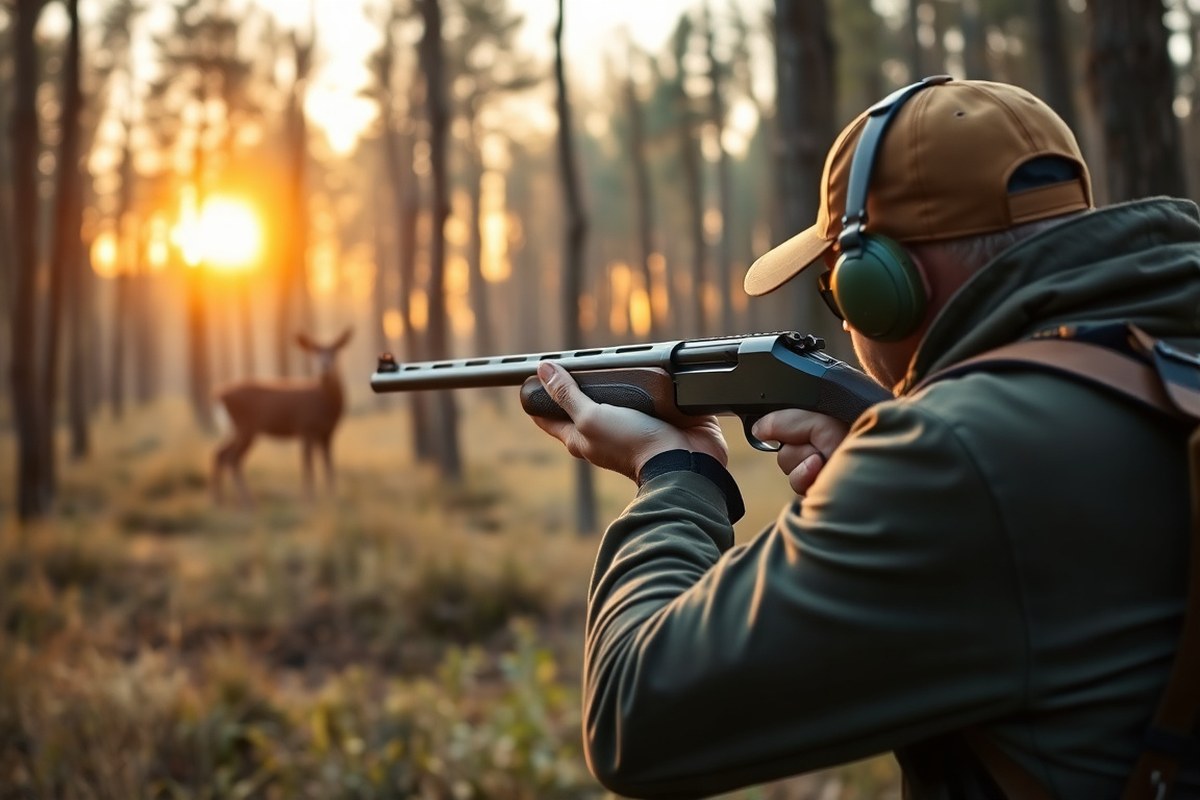
Can a 410 Kill a Deer? What Actually Works for Ethical Hunting
Can a 410 kill a deer? Yes, but with some important limits. A .The 410 shotgun can kill deer if it has the right slugs.
Use it only for close-range shots, though. Always pick good slug ammo for better results. It’s not as powerful as bigger shotguns, so you must pick your shots carefully.
This small shotgun is popular for its light weight and ease of use. Many hunters debate its effectiveness for deer.
But modern slug designs have made it more viable. Close shots with solid ammunition give you the best chance for a clean kill.
Start with the proper slug type and understand your gun’s effective range before hunting. Know local laws because some areas restrict .410 use on deer. Ethical hunting means making every shot count for a quick, humane kill.
Key Takeaways
- Use modern .410 slugs designed specifically for deer hunting for best results.
- Practice shooting at close range; the effective range is usually under 40 yards.
- Check local hunting laws to confirm .410 shotgun use is legal on deer.
- Choose a longer barrel within 18 to 36 inches to help with accuracy.
- Focus on important zones to ensure a clean and ethical kill with a .410.
- Use light, easy-to-carry gear when hunting with a .410 for better mobility.
Can a 410 Shotgun Kill a Deer Effectively?

A .410 shotgun can kill a deer, but it takes very precise shot placement. It’s less powerful than typical deer rifles or bigger shotguns like 12-gauge models. You need to hit key spots like the heart or lungs.
Aiming here ensures a quick, ethical kill. This is important for responsible hunting.
The .410’s smaller size means it has less energy and penetration. Modern slug designs help, but the effective range stays short, usually under 40 yards.
Hunters using a .410 must be confident in close shots and steady aim. Missing or hitting non-vitals can result in wounding the deer, which is unethical and cruel.
Choosing the right slug matters a lot when hunting deer with a .410. You want heavy, well-constructed slugs designed for penetration.
Some manufacturers even market specific .410 slugs for small to medium game like deer. Using these improves your chances of a clean kill, especially in thick woods or brush.
The .410 is often favored for its light weight and ease of handling. This makes it a good option for young or beginner hunters. Only hunt deer with it if allowed by your local laws.
Know the responsibility it takes before you use it. Follow all rules to be safe. Being realistic about its limits is key to ethical hunting practices.
Shot placement takes on more importance with a .410 than with larger calibers. Larger guns offer more forgiveness on less-than-perfect hits. With a .410, any deviation from the important zone reduces your chances significantly.
Practice aiming and shooting at close range to improve your skill. This helps you use it right on deer. Regular practice makes a big difference.
Comparing .410 Slug Types for Deer Hunting

.410 slugs come mainly in three types: Foster, Brenneke, and Sabot. Foster slugs have a hollow base and are common for smoothbore barrels.
Brenneke slugs use a solid front with rubber petals and offer better penetration. Sabot slugs are plastic-cased and perform best in rifled barrels, improving accuracy and range.
Penetration and accuracy matter since deer require a clean, ethical shot. Brenneke slugs are popular because they punch through deer tough hide and bone better.
Sabot slugs fly straighter, especially in rifled barrels, letting you take shots slightly farther. Foster slugs work but tend to lose accuracy and power at longer ranges.
| Slug Type | Description | Best Use | Pros | Cons |
|---|---|---|---|---|
| Foster | Hollow base, smoothbore compatible | Close range, general use | Affordable, widely available | Less accurate, limited penetration |
| Brenneke | Solid nose, rubber petals | Medium range, deer hunting | Good penetration, better accuracy | More recoil, pricier than Foster |
| Sabot | Plastic casing, rifled barrels | Longer range, highest accuracy | Extends range, very precise | Requires rifled barrel, more costly |
You’ll want to pick Brenneke slugs for reliable penetration on deer. Sabots win if your .410 has a rifled barrel and you want better accuracy at distance.
Foster slugs can work in a pinch but expect less effectiveness. Always check your shotgun type before choosing slugs because sabot rounds need rifling to stabilize.
Make sure your .410 shotgun barrel matches the slug type to avoid poor results.
The cost varies, with Foster being cheapest and sabot the most expensive. Brenneke slugs sit in the middle but deliver a solid balance of power and accuracy.
For tight woods, a Brenneke slug’s stopping power is usually enough without pushing range limits. Sabot slugs add versatility if you sometimes have clearer, longer shots.
What Is the Effective Range for a .410 Shotgun on Deer?
The effective range for a .410 shotgun slug on deer is quite limited. You can usually count on reliable accuracy and lethality out to about 35 to 40 yards. Beyond this, the slug loses energy and accuracy rapidly, making clean shots difficult.
Range affects both accuracy and stopping power. At close distances, the slug delivers enough energy to cause a humane kill.
Past 40 yards, the round drops more and hits with less force. This increases the chance of a wounding shot instead of a quick kill.
Estimating distance accurately is essential when using a .410 for deer. Use natural markers like trees or obvious landmarks to judge ranges. Avoid shooting if the animal is clearly beyond 40 yards to stay ethical and effective.
- Keep shots within 35 to 40 yards maximum
- Aim carefully to place the slug behind the scapula
- Use barrel length of 24 inches or more for better accuracy
- Practice estimating distances outdoors before hunting
- Avoid shots beyond 40 yards due to energy and accuracy loss
- Use slugs specifically designed for the .410 for best results
Barrel length plays a role in accuracy. Longer barrels, like 28 to 36 inches, can help stabilize the slug better than short barrels. This makes shots at the edge of the effective range slightly easier to place well.
Choosing a good shooting position that supports stability also improves range performance. Steady shots increase the chance of hitting the important zone. You need that to be sure of your shot.
Even small errors matter. Beyond 30 yards with a, you’ll miss or hit poorly.410 slug.
Legal and Ethical Considerations for Using a .410 on Deer
Hunting deer with a .410 shotgun isn’t legal in every state. Some places require bigger calibers or specific types of firearms for deer hunting. Check your state’s wildlife agency website to find exact rules for your area.
You’ll need the right hunting license and sometimes special permits. This often includes a general hunting license plus a deer tag or permit. The price varies by state, usually around $10 to $50, depending on residency and season.
Legal rules often cover minimum caliber, shot size, and hunting methods. Using a .410 may not meet minimum caliber rules in some states. Other rules focus on hunting seasons, bag limits, and allowed hunting zones.
- Confirm your state allows deer hunting with a .410 shotgun
- Obtain a valid hunting license and deer permit
- Follow minimum caliber and ammunition restrictions
- Stick to designated hunting seasons and hours
- Respect bag limits and reporting requirements
- Use only approved hunting methods and equipment
Ethical hunting means taking clean, humane shots to avoid unnecessary animal suffering. A .410 requires skill to place shots accurately due to its lower power and short effective range. Avoid shooting beyond about 30 yards to reduce wounding risk.
Using proper slugs designed for deer helps improve ethical kills. You should practice shooting carefully to ensure confidence with your .410 before hunting. If your shot isn’t sure to be lethal, it’s better to wait or pass on the shot.
Each state has its own nuances in rules and ethics for .410 deer hunting. Some states have no restrictions beyond the usual licenses.
Others ban small shot sizes or the .410 entirely for deer. Confirm local laws early in your planning to avoid legal trouble.
Best Hunting Techniques When Using a .410 Shotgun
Hunting deer with a .410 shotgun needs careful planning and skill. You must pick good spots, aim well, and time your shot perfectly. Each step counts because this gun has a smaller caliber and limited power.
Picking the Right Hunting Spot
Choose thick cover where deer move close and slow. Dense brush or oak thickets work well because deer feel safer there. Open fields are less ideal unless you expect very close shots.
Steep hillsides with wind blowing downhill can help. The sound of your approach carries less, letting you get nearer. Early morning and late evening are best times when deer use these areas actively.
Improving Aim and Shot Placement
Aim for the important organs in the chest, just behind the front shoulder. This spot offers the best chance to drop a deer quickly.
Avoid shots to the neck or head. The .410 slug may not penetrate well enough.
Practice steady shooting from different positions before your hunt. Hold your breath to reduce movement and focus on your target. Taking a breathy shot or rushing can cause a miss or a wounded animal.
Choosing When to Take the Shot
Wait until the deer is broadside or slightly quartering toward you. This angle exposes the heart and lung area best. Ignore shots when the deer faces you directly.
Only shoot when the deer is calm and standing still. Avoid firing at running or walking deer, which lowers accuracy and ethical kills. Patience helps you make a clean, humane kill with your .410.
- Scout for areas with thick brush or natural funnels deer use.
- Approach slowly, keeping the wind direction in mind to avoid detection.
- Set up where your shooting lane is clear up to 30 yards or less.
- Focus on a solid rest for your shotgun to steady your aim.
- Aim just behind the deer’s front shoulder at the chest cavity.
- Hold your breath briefly before squeezing the trigger smoothly and steadily.
- Observe the deer after the shot and be ready for a follow-up if needed.
Do not shoot at distances over 30 yards. The .410 slug loses power quickly beyond that.
How to Choose the Right Gear for .410 Deer Hunting
You want gear that boosts accuracy and power for your .410 deer hunting. Optics improve your shot precision. Use proper ammunition and barrel setups to get the most from a .410.
Optics Options to Improve Precision
Adding a scope or red dot can help you hit small targets at close ranges. A compact 1-4x zoom scope works well with a .410 because it offers quick target acquisition and clear sight picture. Red dot sights let you keep both eyes open.
This helps you track deer better. It makes following their movement easier.
Look for optics with good light transmission, so you can shoot in low light. Choose models with fiber optic or tritium sights for faster aiming. When mounting, use sturdy bases designed for shotguns to keep your scope steady under recoil.
Top Ammunition Choices and Brands
Select loads labeled for big game or deer use to ensure proper penetration. Slug rounds use rifled slugs or sabot slugs. These give better accuracy than birdshot.
Accuracy improves especially beyond 20 yards. Popular ammo brands like Federal and Winchester offer specialized .410 slugs for deer that balance speed and controlled expansion.
Some .410 ammo uses Hevi-Shot or steel shot to improve power. But for deer hunting go with heavier slugs in 000 or 0000 buckshot sets. Make sure the ammo matches your barrel type, whether smoothbore or rifled, for best results.
- Federal Power-Shok .410 rifled slugs
- Winchester Super-X .410 sabot slugs
- Hevi-Shot 000 buckshot loads
- Remington .410 rifled slug rounds
- Fiocchi heavy slug options
Test different loads on targets before hunting to see which groups tighter with your gun.
Barrel and Choke Considerations
A rifled barrel greatly improves long-range accuracy with slugs. It stabilizes the slug and offers tighter shot groupings. A choke tube narrows the shot spread inside the barrel.
This improves pellet density at longer ranges. It tightens the pattern for better hits.
Use cylinder bore or improved cylinder choke for deer. These keep enough pellet density. They don’t cause too much spread.
Avoid tight chokes like full choke for close range. Too tight chokes thin out the shot too much. This reduces effectiveness nearby.
Switching to a rifled barrel costs around $100 to $300, depending on brand and quality. Chokes run from $30 to $60. Pick barrels and chokes that match your shotgun model.
Also choose ones suited for your slug or buckshot ammo. This gives the best results.
Limitations and Common Challenges of Using a .410 for Deer
The main limit of a .410 slug is its power compared to larger shotgun rounds. It delivers less energy on impact.
This means it won’t stop a deer quickly at longer ranges. Effective shots usually need to be within 40 yards to ensure a humane kill.
Even though the recoil is light, making it easier on your shoulder, the .410 is harder to shoot accurately. The small bore size means the pellet spread is tight but inconsistent beyond short distances. This requires precise shot placement and steady aim.
Hunters often make common mistakes that hurt success rates. Rushing shots or aiming beyond 40 yards lowers accuracy and effectiveness.
Also, using the wrong slug type can reduce penetration. Selecting slugs designed for deeper penetration helps improve results.
Failing to practice aiming with the .410’s unique recoil and shot pattern causes problems too. The light kick can make you flinch less.
But it also hides subtle movements in your aim. Dry fire training and shooting at varying ranges build muscle memory and steadiness.
Another challenge is carrying a .410 for long hunting trips. Its light weight helps.
But you may carry extra ammo to make up for less stopping power. Expect to shoot more carefully because you get fewer second chances after a poor first hit.
It’s easy to underestimate how much steadiness this shotgun needs. Breathing control and trigger squeeze matter a lot to hit small important zones. Erratic shots happen when you try to shoot quickly or without enough practice.
Success with a .410 shotgun depends on shot size and range. Choose the right load. Aim close for better results.410 slug comes from understanding its limits and adjusting your approach.
Shoot close, pick the right ammo, and practice often to hit clean and fast. Ignoring these factors can lead to missed or wounded deer, which isn’t safe or ethical.
How to Practice and Prepare for Hunting Deer with A .410
To get good with a .410 for deer hunting, you need steady practice focused on precision. Consistent shooting drills improve your aim with slugs. Clear simulation prepares you for real hunting conditions.
Practice a few times a week. Mix dry-fire and live-fire drills. This builds your skill and confidence.
Setting Up a Consistent Practice Routine
Practice regularly to keep your skills sharp and your aim tight. Shoot at least twice a week.
Spend 30 to 45 minutes each session. Focus only on accuracy with your .410 shotgun.410 slugs.
Break your sessions into warming up, aimed shooting, and recovery shots. This approach helps build muscle memory and mind focus under controlled muscle tension and breathing.
- Check your shotgun is clean and your slugs are consistent.
- Start with a short warm-up of 5 shots at 10 yards.
- Move to deliberate shots at 20 and 30 yards using a rest.
- Track your hits and adjust your sights every 10 shots.
- Finish with slow, aimed shots to reinforce control.
- Record your session notes to compare progress.
Practice on a regular schedule. Skipping days hinders your steady improvement.
Dry-Fire and Live-Fire Drills
Dry-firing is valuable for practicing trigger control and stance without wasting ammo. A .410 requires smooth release because its low recoil means poor trigger habits show up quickly.
Combine 10 minutes of dry-fire drills with live shots to solidify muscle memory. Work slowly on keeping your eye on the front sight and breathing steady.
Hunting Simulation Exercises
Try shooting from different positions to mimic real hunting setups. Practice standing, kneeling, and even shooting from cover or behind brush to simulate obstacles.
Use targets that move or pop up at random distances between 15 and 30 yards. This replicates deer movement and forces you to adjust your aim quickly.
Check your hunting gear and load your shotgun the night before to avoid stress. Bring a checklist of gear.
Include slugs, safety glasses, and ear protection. Take a spotting scope if you use one.
Your Step-by-Step Action Plan for Hunting Deer with A .410
Use this plan to get started hunting deer with your .410 shotgun safely and responsibly.
- Before hunting season: Check your local hunting laws to confirm .410 use is legal. This ensures you follow rules and avoid fines.
- 2 weeks before season: Practice shooting .410 slugs at 20 to 30 yards. Aim for tight groups to confirm accuracy and confidence.
- 1 week before season: Select your ideal .410 slug type based on your practice and local recommendations. This optimizes your chance for a clean shot.
- 3 days before season: Prepare your gear, including a comfortable shotgun sling and quality ammo storage. Check that your shotgun functions smoothly under field conditions.
- Day 1 of hunting season: Hunt at dawn or dusk. These are deer’s most active times. Stay within 30 yards to maximize slug effectiveness.
- During your hunt: Take slow, deliberate shots aiming at important zones like the chest or neck. Watch for a quick response to confirm a good hit.
- After the shot: Track your deer calmly but promptly to find it before it wanders far. Bring a hunting partner if possible for safety and help.
- After your hunt: Review your experience, noting any challenges with slug accuracy or range. Plan your next practice to improve for the next hunt.
Frequently Asked Questions
Can a .410 Shotgun Kill a Deer with a Single Shot?
Yes, a .410 can kill a deer with the right slug and shot placement. Precision is key because the .410 delivers less energy than larger calibers.
Is a .410 Shotgun Suitable for Hunting Larger Deer Species?
The .410 is better for smaller deer or close-range hunting. Larger deer may require stronger calibers for ethical kills and deeper penetration.
What Type of Ammunition Works Best When Hunting Deer with A .410?
Slugs designed specifically for .410 deer hunting work best. These slugs offer better accuracy and stopping power than birdshot or standard buckshot.
How Does Shot Placement Impact Lethality When Using a .410 on Deer?
Shot placement is critical due to the .410’s lower power. Aim for important organs like the heart or lungs to ensure a quick, humane kill.
Can Young or Beginner Hunters Effectively Use a .410 for Deer Hunting?
Yes, the .410’s light recoil suits beginners well. It allows new hunters to practice accuracy without the intimidation of heavier guns.
Does Hunting with a .410 Shotgun Require Different Tracking Skills?
Yes, because the .410 may cause less blood trail than bigger calibers. Hunters need good tracking skills to find wounded deer after the shot.
The Bottom Line
The .410 can kill a deer, but you must be skilled and precise. Start practicing now to improve your shot confidence at close range. Train regularly and follow local laws for ethical, safe hunting.