Does Worms Feel Pain? Science-Based Answers and Ethical Insights
Does worms feel pain? The short answer is worms probably sense harmful things. They might not feel pain like humans do.
Their responses to injury involve simple nerve signals rather than complex feelings. Scientists see thrashing and withdrawal as reflexes to danger, not signs of conscious pain.
Worms have very basic nervous systems with around 302 neurons. This setup allows quick reactions but probably lacks the brain structures needed for pain awareness. Some molecules linked to pain in humans, like B-endorphins, appear in worms, hinting at limited sensations.
Because worms react mostly through reflexes, it’s best to handle them gently. Avoid cuts and harsh treatments to prevent unnecessary stress. Watching how worms move and respond can help you tell if they encounter harm.
Key Takeaways
- Worms detect harmful stimuli but likely don’t feel pain as humans do.
- Their nervous system is simple with about 302 neurons for reflex actions.
- Worm thrashing signals injury reflex, not necessarily pain awareness.
- Molecules like B-endorphins found in worms hint at basic pain-sensing.
- Handle worms gently to minimize injury and stress responses.
- Observe worm behavior carefully to recognize signs of damage or stress.
Do Worms Feel Pain or Only React to Harmful Stimuli?

Worms react quickly to harmful stimuli like pokes or pinches, pulling away almost instantly. This reaction is called nociception. It’s an automatic, built-in response to avoid damage.
It’s not the same as feeling pain like people do. This reaction happens without any conscious feeling involved.
Nociception means detecting danger and moving away. But it doesn’t require consciousness or a feeling of suffering.
Worms have simple nervous systems without the brain centers humans use to experience pain. Their quick thrashing or curling up after injury likely happens without any awareness.
Researchers debate whether worms experience pain as a conscious feeling or just unconscious reflexes. They can sense dangers and react.
But the reactions don’t prove that worms actually feel pain the way larger animals might. Without higher brain functions, their response remains a biological safety mechanism, not true pain.
This difference matters if you handle worms or use them as bait. The thrashing doesn’t mean they suffer like mammals.
It’s a sign they are trying to escape harm. But it’s also true that how we define pain depends on complex brain activity worms lack.
Scientists find it tricky to test for pain in worms. Showing a worm pulling away doesn’t confirm pain feelings.
Worms’ reactions are reliable, but they fall short of showing emotional or conscious experience. For now, most agree they act to protect themselves, not because they feel pain.
How Does a Worm’s Nervous System Work Compared to Humans?
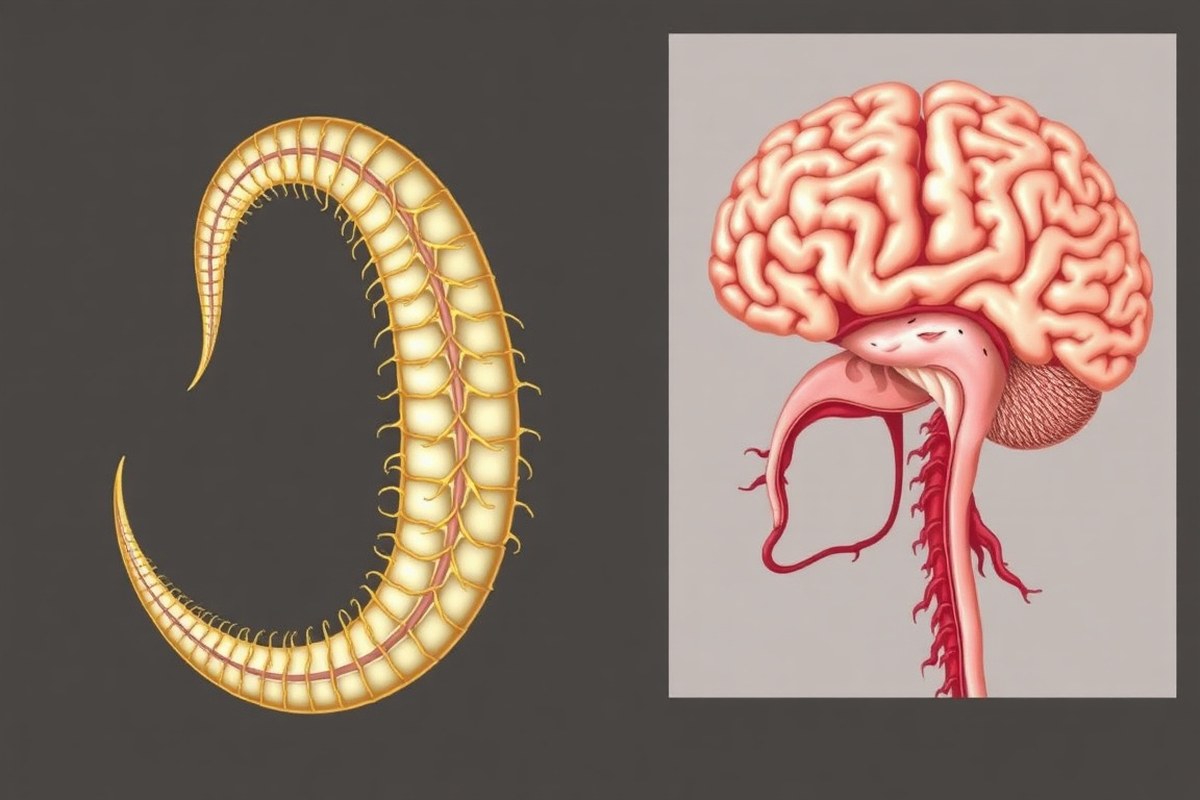
A worm’s nervous system is much simpler than a human’s. Worms have a ventral nerve cord instead of a brain. This limits their ability to process complex information.
Humans have billions of neurons concentrated in a brain with many regions. Worms have only hundreds of neurons in nerve clusters called ganglia. This difference affects how sensation and reactions happen.
| Feature | Human Response | Worm Response |
|---|---|---|
| Nervous System | Centralized Brain | Ventral Nerve Cord |
| Pain Processing | Cortical Activity | Reflexive Withdrawal |
| Emotional State | Complex Feelings | None Detected |
| Neural Nodes | Billions of Neurons | Hundreds of Neurons |
Worms sense stimuli mainly through reflexes. Their bodies react quickly to touch or harm without advanced brain activity. Humans, in contrast, experience pain in many parts of the brain leading to emotional feelings.
Having fewer neurons means worms can’t create the lasting, integrated responses humans call pain. Instead, worms likely feel unpleasant stimuli but not pain like we do. Their simpler nervous system is enough for survival but not conscious suffering.
Handle worms gently to avoid triggering unnecessary stress or damage.
What Molecular Mechanisms Enable Worms to Detect Harmful Stimuli?
Worms detect harmful stimuli using specific molecular sensors shared with many animals, including humans. They rely on ion channels and neurotransmitters to sense danger and trigger reactions. Some of these pathways resemble those that process pain signals in more complex animals.
Pain-Related Ion Channels in Worms
Worms have ion channels that detect physical and chemical damage. TRPA1 is an example; it senses irritating chemicals and can trigger avoidance. Acid-sensing channels also detect damage from low pH environments.
These channels open when harmful stimuli happen. That creates electrical signals in nerve cells to alert the worm about danger.
Ion channels are ancient and widely found. Their presence alone doesn’t prove worms feel pain like humans do.
- TRPA1 ion channels respond to irritating chemicals
- Acid-sensing channels detect damage from harmful pH levels
- Ion channel activation causes nerve signals warning of danger
- These channels evolved early and are common across many animals
- They help worms avoid harmful conditions through reflexive actions
Neurotransmitters Influencing Worm Sensory Responses
Worms use neurotransmitters similar to humans for transmitting sensory information. Chemicals like glutamate and serotonin help relay signals from the sensors to the nervous system. This process modulates their reflexes and movement in response to harmful stimuli.
Research shows blocking opioid receptors changes worm movement-related brain activity. This change affects about 10 to 20 percent. This suggests these neurotransmitters regulate basic physiological functions rather than clearly indicating pain sensation.
Endogenous Opioids and Their Role in Worm Physiology
Worms produce endogenous opioids, including molecules like enkephalins. These act as neuromodulators affecting worm behavior and physiology.
Their main job is controlling movement and body functions. They do not provide pain relief like human opioids do.
Their opioid system shows evolutionary links to vertebrate opioid pathways. The effects seen are small and mainly change worm reactions.
They don’t clearly show worms feel pain. Understanding these differences matters for interpreting worm responses to harmful stimuli.
What Behaviors Indicate Worms Sense Discomfort or Injury?
Worms show clear behaviors suggesting they sense discomfort or injury. They react with quick movements and avoid areas linked to harm. Worms can also learn to steer clear of painful situations.
Immediate Reflexive Responses to Injury
When injured, worms often pull away or squirm rapidly. For instance, earthworms snap away if touched roughly or cut. These swift reactions help protect them from further injury.
Exposure to electric shocks triggers fast avoidance moves. This reaction is not random but directed to lessen discomfort. Such reflexes act like a warning system to keep worms safe.
Avoidance Learning in Worms
Worms don’t just respond instantly; they can remember harmful spots. They learn to avoid places where bad stimuli happened before. This shows worms change behavior based on past pain.
Studies on Eisenia hortensis reveal worms alter responses through learning. They use memory to avoid repeated shocks or noxious conditions. This behavior needs more than a simple reflex; it requires awareness.
Steps to test worm avoidance learning include:
- Place a worm in a divided container with safe and harmful zones.
- Apply mild electric shocks to one zone intermittently.
- Observe worm’s movements for preference of the safe zone over time.
- Repeat testing to confirm consistent avoidance behaviors.
- Record time spent in each zone across sessions to assess memory.
Long-Term Behavioral Changes After Harm
Unlike some animals, worms don’t show long-term anxiety or complex emotions. Their behavior returns to normal once the threat is gone. This suggests discomfort is brief, not lasting.
However, worms still link specific locations with pain, which changes movement patterns. This learned avoidance lasts longer than immediate reflexes. It hints worms have some kind of affective experience related to harm.
How Do Worms’ Pain Responses Compare to Other Invertebrates?
Worms have simpler nervous systems than octopuses and crabs, affecting how they sense harm. Octopuses, with about 500 million neurons, show complex learning and long-lasting responses tied to pain. Crabs act differently when injured than worms.
They react more strongly. This is probably because crabs have more complex brains.
Some researchers argue worms might feel pain despite their small brains. Worms contain opioid-like substances, but their receptor systems differ from vertebrates’. This makes understanding their true pain experience tricky compared to octopuses or crabs.
Evolution shapes how different animals experience pain. Animals with higher cognitive abilities, like octopuses, can remember and avoid painful situations longer. Worms might feel some discomfort from harm.
They probably don’t have the brain parts needed for human-like pain. Their brain circuits are much simpler.
| Animal | Neurons | Nervous System Type | Behavior Suggesting Pain | Opioid-like Substances |
|---|---|---|---|---|
| Earthworm | ~300 | Simple, distributed nerve cords | Withdrawal from harmful stimuli | Present, but function unclear |
| Crab | ~30,000,000 | Centralized brain with ganglia | Prolonged grooming, injury avoidance | Present, likely functional |
| Octopus | ~500,000,000 | Highly centralized brain | Long-lasting avoidance, learning | Present and active |
Octopuses show the clearest signs of pain-like responses among invertebrates. Their brains allow learning and memory linked to harm. Crabs fall between worms and octopuses, showing clear protective reactions but less complexity than octopuses.
Handle creatures with simpler nervous systems gently, as their pain experience is uncertain but possible.
What Are the Ethical Implications of Worm Pain and How Should We Handle Them?
We should think carefully before assuming worms suffer like bigger animals. Worms have about 302 neurons, so they probably don’t feel pain as humans do. Still, injuries like cuts and hooks likely cause them some kind of harm or distress.
To reduce harm, handle worms gently when using them for bait or compost. Pull worms out carefully and avoid breaking or cutting them.
Keep bait worms moist and cool, ideally below 70°F, to minimize stress. In composting, avoid disturbing them too much or letting the temperature rise above 95°F.
No clear laws protect worms from pain because their capacity for suffering is uncertain. Norway once studied invertebrate pain to consider possible legal changes, showing that this question matters. We don’t know for sure if worms feel discomfort.
Use a simple rule. Treat worms as if they can feel discomfort.
This means minimizing injury or stress whenever you deal with worms. Avoid unnecessary handling or letting them dry out. This cautious approach costs little time but can help you be more ethical without much effort.
People who crack or hook worms roughly risk damaging them and potentially causing suffering. Gentle handling leads to fewer injured worms and a healthier bait supply. Respecting worms’ possible pain doesn’t require big changes, just more care.
Does Administering Painkillers Affect Worm Behavior or Physiology?
Administering painkillers to worms can change their movement and behavior. But this does not prove they feel pain like humans. Drugs that block opioid receptors, such as naloxone, alter worm locomotion patterns.
These effects suggest something similar to pain pathways might exist. But they don’t confirm emotional pain.
Effects of Opioid Receptor Blockers on Movement
When worms receive opioid receptor blockers, their movement often changes noticeably. For example, naloxone causes alterations in how worms crawl or react. These shifts suggest opioid-like systems affect their nervous responses.
These movement changes don’t match signs of suffering in complex animals. They don’t show emotional pain the way higher animals do. These differences suggest simpler nervous systems react differently.
Worms don’t appear to anticipate pain or show distress in their behavior. They simply react differently on a physical level.
Behavioral Changes After Painkiller Exposure
After painkillers or opioid blockers, worms sometimes slow down or move less in response to stimuli. Researchers measure their locomotor patterns to see these differences. Changes include less twitching or altered speed after injury or irritation.
These behavioral shifts can help identify nerve pathways that react to harmful stimuli. Here’s what researchers look for in worms after drug exposure:
- Reduced withdrawal movements from noxious touch
- Altered crawling direction or speed
- Changes in reaction time to mechanical stimuli
- Less overall movement compared to untreated worms
- Variation in muscle contractions or body posture
This information offers clues about how worms detect and respond to damage. It also hints at the role of opioid-like receptors.
Limitations of Pharmacological Pain Studies in Worms
Treating worms with painkillers doesn’t prove they experience pain emotionally or consciously. Movement changes alone can reflect reflexes, not feelings. These drugs influence basic nervous system activity rather than pain perception as humans know it.
Worm brains are simple and lack regions tied to pain awareness in mammals. So, interpreting responses as pain must be cautious. Pharmacological tests reveal molecular effects but not emotional states or suffering.
Why Is It Difficult to Definitively Say If Worms Feel Pain?
Worms have very simple nervous systems that lack complex brain structures. Because of this, scientists have a hard time proving worm pain. They don’t know if worms feel pain like humans.
Worms might just react automatically to harm. Worms show quick reflexes when harmed, such as curling. But those are often basic responses, not signs of real suffering.
Distinguishing reflex from true pain needs careful experiments. Researchers observe if worms change their behavior over time or avoid harmful stimuli in the future. Worms only reacting to damage without learning shows reflex, not pain.
Reflexes don’t involve awareness or lasting changes in behavior. This suggests worms don’t consciously feel pain.
Many worms don’t produce neurochemicals like endorphins that help mammals feel and handle painful stimuli. This absence makes it harder to confirm that any reaction means they actually suffer. The reflexes might be natural physical reactions rather than pain experiences.
Proving conscious pain would require tests showing memory, learning, or avoidance based on unpleasant experiences. These take time and need controlled setups with repeated trials to rule out random reactions. Such research can cost thousands of dollars and use specialized equipment like microscopes and tracking software.
Future studies might use genetic tools or brain imaging in larger invertebrates to bridge the gap. Detecting neural activity linked to discomfort could clarify if worms’ actions come from feeling pain. Until then, it’s tricky to say for sure since behavior alone doesn’t tell the full story.
Never cut a worm in half. Even simple reactions mean it’s not good for their well being.
Step-by-Step Action Plan to Understand Worm Pain
Start exploring worm pain by observing simple signs and studying their reactions. Use these steps to guide your learning.
- Day 1: Watch worms react to mild disturbances, like gentle poking. See if they change movement or posture.
- Week 1: Read about worm nervous systems to understand their basic structure. Focus on how their neurons compare to yours.
- Week 2: Study behaviors linked to injury, such as withdrawal or secretion. Note how quickly worms respond.
- Week 3: Compare worm responses to those of insects or snails you can observe. Notice differences in complexity.
- Week 4: Explore ethical discussions about worm handling in gardening or fishing. Decide your personal approach.
- Month 2: Look for studies on painkillers in worms. Check if their behavior or health changes.
- Month 3: Reflect on how certain you feel about worm pain. Keep learning but accept some unknowns remain.
Frequently Asked Questions
Can Worms Remember Painful Experiences?
Worms can learn to avoid harmful stimuli after bad experiences. This shows they have basic memory linked to harmful events. Such learning helps worms survive in risky environments like soil or water.
Do Worms Produce Chemicals When Injured That Are Like Pain Signals?
Yes, worms release molecules that signal damage to nearby cells. These chemicals help trigger protective withdrawal or escape behaviors. They function similarly to pain signals in higher animals.
Can Worms’ Reactions to Injury Change over Time with Repeated Exposure?
Worms often show reduced reaction after repeated harmful stimuli, called habituation. This means they learn to ignore non-threatening discomforts to save energy. Habituation is a sign of simple nervous system processing.
Do Worm Species Differ in Their Sensitivity to Pain or Harmful Stimuli?
Different worm species vary widely in sensing damage or harmful stimuli. Species that live in rougher environments usually show stronger protective responses. That diversity complicates general statements about worm pain.
Is the Thrashing Motion of an Injured Worm a Sign of Pain or Just Reflex?
Thrashing is mostly a reflex to injury, but it may also involve distress. It helps the worm escape predators or further damage. Scientists debate whether it implies conscious pain or a simple automatic response.
Are There Signs Worms Avoid Situations That Caused Them Pain in the Past?
Worms avoid places linked to painful or harmful events through simple learning. This suggests they can associate specific environments with discomfort. Such avoidance increases their survival chances in nature.
Before You Go
Worms react to harm but may not feel pain like we do. Watching their behavior carefully helps you learn their limits. Start with simple observations to see what worms really do under stress.