

How Much Does a Yard of Mulch Cost? A Complete Cost Guide and Savings Tips
How much does a yard of mulch cost? On average, it runs between $72 and $87 per cubic yard. This price usually includes the delivery and installation fees.
Different mulch types change the price a lot. For example, pine bark mulch costs $30 to $40 per cubic yard. Rubber mulch is $80 to $160 per cubic yard.
Buying mulch in bulk saves you money compared to bagged mulch. Bulk mulch can be 15 to 35 percent cheaper per yard.
First, figure out how much mulch you need for your yard. Measure your yard’s size and decide the depth of mulch you want.
Use these numbers to calculate the total mulch amount. This saves you from ordering too much or too little.
Key Takeaways
- Expect to pay $72 to $87 per yard for full mulch installation.
- Pine bark mulch is cheaper, rubber mulch costs more upfront.
- Bulk mulch is 15, 35% cheaper than bagged per yard equivalent.
- One cubic yard covers about 108 square feet at 3 inches deep.
- Local mulch types affect prices, especially on the West Coast.
- Rubber mulch lasts a decade but doesn’t improve soil health.
What Is the Average Cost of a Yard of Mulch?

The cost of a yard of mulch varies mainly by material and service. On average, mulch costs between $30 and $135 per cubic yard. Basic types like pine bark or shredded hardwood fall in the $30 to $50 range.
Most people spend about $275 to buy and put down 3 cubic yards of bark mulch. That breaks down to nearly $90 per yard including the cost of labor and delivery. How much you pay for installation varies from $40 to $85 per yard based on your yard’s setup.
Here’s a clear look at typical mulch costs. Without delivery or installation, expect to pay $30 to $110 per cubic yard for materials alone. Add delivery and installation.
The price rises to $50 to $155 per cubic yard. Smaller orders often cost more per yard, with total delivered prices running $100 to $250.
When buying mulch, know what the price covers. Material-only costs mean you’ll need to handle pickup and spreading yourself.
Delivery usually adds $70 to $140 per yard, depending on distance and volume. Hiring pros for installation costs extra but saves you time and heavy labor.
Expect prices to vary based on mulch type and service. Premium or synthetic mulches cost more, sometimes $120 or more per cubic yard.
Cheaper bulk options like wood chips or pine straw stay closer to $20 to $55. Rubber mulch for playgrounds runs $80 to $160 per yard installed.
Always ask what is included in your mulch quote. Some prices cover just materials; others bundle delivery and installation.
Knowing this helps avoid surprise fees. Planning ahead with these cost details makes your yard refresh smoother and more affordable.
How Different Mulch Types Affect Your Costs
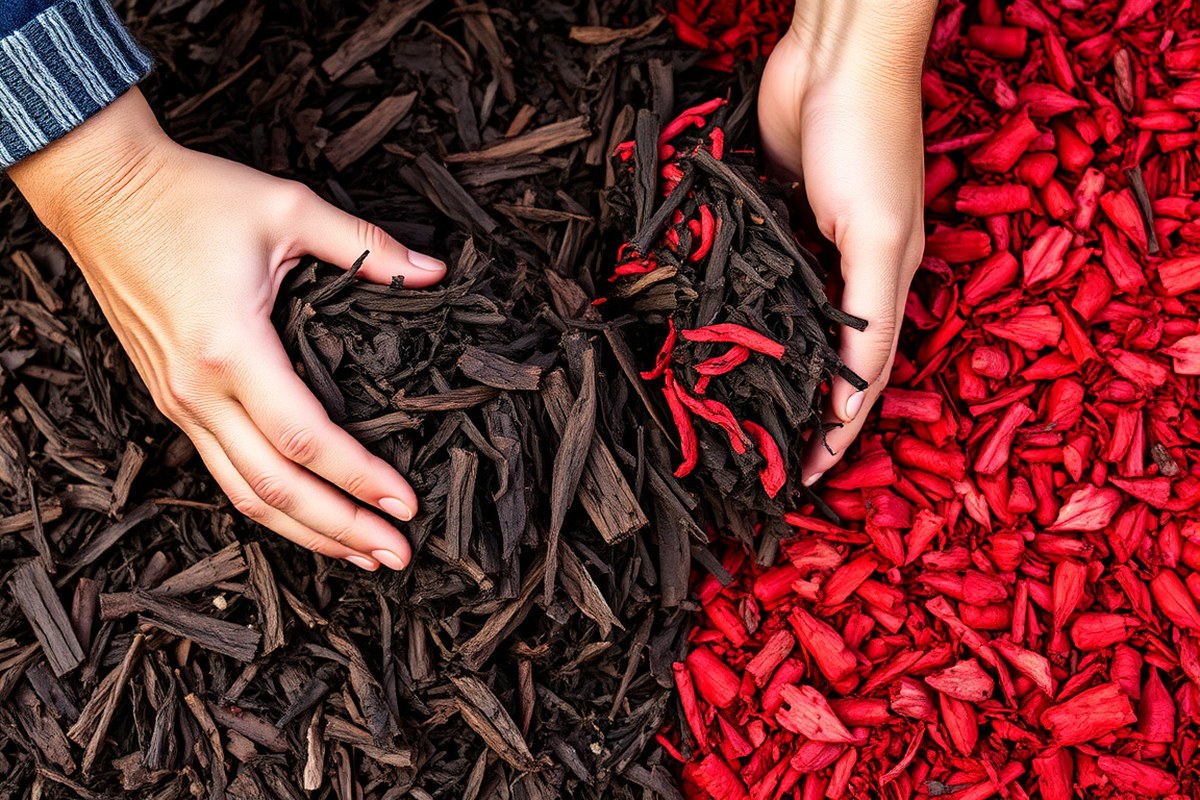
Mulch types vary widely in price, durability, and appearance. Organic mulches like hardwood and pine bark cost $30 to $60 per cubic yard. They help enrich soil but need replacing every 1 to 4 years due to decomposition.
Colored mulch, often dyed hardwood, ranges from $35 to $60 per yard. It holds color for 1 to 2 seasons, offering a fresher look but higher cost. Cedar and cypress mulches cost between $45 and $80 per yard.
They resist insects better than regular hardwood mulch. That makes them a popular choice for many.
Rubber mulch is pricier at $80 to $160 per yard. It lasts over 10 years, ideal for playgrounds and paths but doesn’t benefit soil health. Synthetic pine straw runs about $40 to $60 per yard.
It offers a lightweight and tidy look. This mulch is common in warmer areas.
- Hardwood mulch: $30, $50 per cubic yard, budget-friendly, breaks down in 1, 2 years
- Dyed mulch (black, brown, red): $35, $60 per yard, attractive color, fades in 1, 2 years
- Pine bark nuggets: $37 to $60, last 3, 4 years, good for acidic soil plants
- Cedar mulch: $45, $75, naturally insect-resistant, lasts about 3, 5 years
- Cypress mulch: $45, $80, slow to decay, resists matting
- Rubber mulch: $80, $160, lasts 10+ years, no soil benefits
- Synthetic pine straw: $40, $60, lightweight and neat, popular in the Southeast
Choosing the best mulch depends on balancing cost and lifespan. Rubber mulch has the highest upfront cost but saves money over years.
Hardwood and dyed mulches cost less but need more frequent replacement. Cedar and cypress give pest resistance at a moderate price.
Buy mulch in bulk for better prices and avoid small bags when covering large beds.
Bulk vs Bagged Mulch: Which Is More Cost Effective?
Buying mulch in bulk usually saves you 15 to 35 percent per cubic yard. Bagged mulch costs about $3 to $7 for a 2-cubic-foot bag.
Since one cubic yard equals roughly 13.5 bags, this adds up to $40 to $95 per cubic yard. Bulk mulch prices range from $25 to $55 per cubic yard before delivery fees.
Delivery adds about $40 to $100 per trip for bulk mulch. So buying less than 3 cubic yards may make bags a cheaper choice. Say you buy 2 cubic yards of bulk mulch at $40 each.
The delivery fee is $60. Your total cost would be $140.
Meanwhile, 27 bags (13.5 bags per yard times 2 yards) at $4 each cost $108. So bags cost less for small projects.
Buying 3 cubic yards or more favors bulk mulch. For instance, 4 yards at $40 each plus $60 delivery totals $220. 54 bags of $4 mulch run about $216.
But buying 5 yards bulk at $40 each plus $60 delivery costs $260. 67.5 bags cost $270. Bulk mulch saves money once you cross the 3-yard point.
Bags waste time because you unpack many bags. Bulk gives a cleaner, faster spread for big yards.
How Mulch Delivery and Installation Impact Total Cost
Delivery usually costs between $40 and $80 per load. This fee covers 3 to 10 cubic yards of mulch. The exact amount depends on your order size.
Distance to your home also affects the charge. Larger orders may get free delivery or lower fees per yard.
Professional installation adds roughly $20 to $45 per cubic yard in labor. This covers spreading mulch evenly by hand or using a blower. Mulch blowing usually costs $38 to $60 per cubic yard.
It speeds up the job significantly. It also works well for tough-to-reach spots.
Here’s a quick list of labor cost factors to keep in mind:
- Flat spreading costs $20-$45 per cubic yard.
- Blowing mulch typically adds $38-$60 per cubic yard.
- Weed fabric installation can cost $0.10-$0.40 per sq ft extra.
- Removal of old mulch might run $0.50-$1.50 per sq ft.
- Minimum job fees range from $100 to $200.
DIY installation cuts labor fees but takes more time and effort. You’ll need equipment like a rake or blower and must spread evenly over your garden beds. It’s best for small areas or if you enjoy doing yard work.
Professional installation suits bigger or uneven yards. Experts ensure consistent depth, tidy edges, and avoid damage to plants. Mulch blowing costs more at first.
It saves time and effort. This is especially true with heavy or large mulch loads.
How to Calculate Mulch Needed Based on Yard Size and Depth
To calculate how much mulch you need, measure your bed’s square footage first. Then decide the mulch depth, usually 2 or 3 inches. Using a simple formula, convert the area and depth into cubic yards for the right amount.
Understanding Cubic Yards and Coverage
One cubic yard of mulch is a 3-foot cube, holding 27 cubic feet of material. This amount covers around 162 square feet at 2 inches deep. It also covers about 108 square feet when spread 3 inches thick.
This shows how coverage changes with depth. Depth affects coverage because thicker mulch means fewer square feet covered per yard.
For example, a 3-inch depth covers about two-thirds the square footage of a 2-inch layer. Avoid going too thin since mulch under 2 inches won’t suppress weeds well. More than 3 inches wastes material and can harm plants.
Calculating for Rectangular and Square Beds
First, measure the length and width of your bed in feet. Multiply these two numbers to get the square footage. Then decide on your desired depth in inches, usually 2 or 3 inches for new beds.
Calculate cubic yards like this: multiply square feet by depth in inches. Then divide that number by 324.
For example, a 400 square foot area at 3 inches deep needs about 3.7 cubic yards. It’s smart to buy a little extra to handle settling or measurement errors.
- Measure your bed’s length in feet.
- Measure your bed’s width in feet.
- Multiply length by width to get square footage.
- Choose your mulch depth in inches (2 is common, 3 for fresh beds).
- Multiply square footage by depth in inches.
- Divide the total by 324 to convert to cubic yards.
- Round up to the nearest quarter yard to avoid shortages.
Measure twice and round up mulch quantity to avoid a second trip.
Adjusting for Irregular Shapes and Slopes
For irregular beds, break the area into rectangles or circles. Measure each section separately, then add square footage totals before calculating mulch needed. A circular bed uses the formula: π × radius² to find area.
Sloped beds need extra mulch because depth isn’t uniform and can wash away. Increase your amount by 10 to 15 percent for slopes. Using landscape fabric underneath reduces mulch loss on hills.
Regional and Seasonal Factors Influencing Mulch Prices
Mulch prices change depending on where you live and the time of year. West Coast prices tend to be lower than the Northeast due to local sourcing. Buying mulch outside peak spring months can save you 10, 20%.
Mulch Price Trends by U.S. Region
Mulch costs vary sharply between regions because of local supply and demand. The West Coast enjoys reasonably priced cedar mulch from nearby forests.
The Northeast faces higher prices from dense urban markets. The Midwest and South fall somewhere in between, with moderate costs reflecting local availability.
Below is a table with typical mulch costs per cubic yard. It includes delivery and labor fees.
The costs cover different U.S. Locations.S. Cities. This illustrates the cost range across the country.
| City | Cost per Cubic Yard ($) |
|---|---|
| Manchester, NH (Northeast) | 82, 99 |
| New York, NY (Northeast) | 102, 124 |
| Dothan, AL (Southeast) | 63, 76 |
| Atlanta, GA (Southeast) | 67, 81 |
| South Bend, IN (Midwest) | 64, 78 |
| Chicago, IL (Midwest) | 78, 95 |
| Salem, OR (Northwest) | 77, 94 |
| Seattle, WA (Northwest) | 81, 98 |
| Roswell, NM (Southwest) | 67, 82 |
These price ranges reflect typical materials like hardwood or cedar mulch. Keep in mind that specialty mulches like rubber cost more across all regions.
Seasonal Demand and Cost Spikes
Mulch prices rise by 10, 20% during April and May. This spike happens because many homeowners prep yards for Memorial Day. Try to schedule purchases in fall or late summer.
Demand tends to be lower then. This can save you money on mulch.
Buying bulk mulch just before or after peak spring is cost-effective. Seasonal sales at big-box stores often start in late summer or early fall. Aim to stock up during these sales if your yard’s ready for mulch then.
Impact of Local Sourcing and Supply
Local sourcing keeps mulch costs down by cutting trucking fees. For example, cedar mulch in the Pacific Northwest costs $38, $60 per yard. This range stays reasonable thanks to local wood availability.
Regions without local wood sources pay more due to shipping. Urban areas like New York often face higher prices because suppliers have overhead costs. Try to find mulch grown or processed near you to save money.
Planning your mulch delivery from a local supplier can speed up service and reduce fees. Confirm distances and ask about bulk delivery discounts to get the best deal. Local supply chains usually offer fresher mulch than long-haul shipments.
Money-Saving Tips and Hidden Fees to Watch Out For
Mulch prices often include hidden fees that can add up quickly. Delivery fees usually range between $50 and $140. Many places require a minimum order of 1 to 2 cubic yards.
Avoid extra costs by confirming all fees upfront. Ask for a clear written estimate before agreeing. This helps you know exactly what you’ll pay.
Labor charges for spreading mulch typically run $20 to $60 per yard. You can negotiate prices for large projects. Some suppliers have a job minimum fee between $75 and $200.
Try to lower it if your order is big. Sometimes labor is charged as a flat fee. So ask if you can save by providing your own tools or helping out.
Planning your mulch purchase during the right season lowers costs. Prices drop in cooler months when demand is lower. Ordering mulch in late fall often cuts delivery fees.
Winter orders also give you more supplier choices. This timing saves money and gives you options.
- Ask suppliers upfront about delivery minimums and fees
- Compare bulk versus bagged mulch costs for your project size
- Negotiate labor fees, especially on bigger jobs or minimum charges
- Time purchases for off-peak mulch season, like fall or winter
- Rent equipment for spreading if labor quotes seem too high
- Inspect your mulch delivery closely for correct volume and quality
Renting a small skid-steer or garden tractor costs about $100 to $200 per day. You can use these machines to spread mulch quickly. This helps save time and effort.
This can be cheaper than labor fees on big projects. You’ll spend extra effort, but you control timing and quality.
Watching out for these fees matters. Some suppliers charge for loading mulch onto your truck. They may add extra fees for travel beyond delivery zones.
Check these fees before ordering to avoid surprises. Checking everything before you buy stops surprises and keeps your project on budget.
When to DIY Mulch Installation vs Hiring Professionals
Installing mulch yourself can save money but takes time and effort. You’ll need a wheelbarrow, rake, garden gloves, and a shovel. Also grab a hoe or landscape rake.
These help spread and level the mulch evenly. A DIY mulch job with 5 cubic yards can take a whole day.
It feels longer if you are new or working solo. Take breaks and work steady.
Hiring professionals costs more but can save a lot of time and hassle. Labor typically adds $20 to $45 per cubic yard on top of mulch material. Spreading, edging, and cleanup are included.
A team can finish mulch installation in a few hours. Time depends on how big the yard is. Tricky spots can slow them down.
- DIY tools: wheelbarrow, rake, shovel, garden gloves, landscape rake.
- DIY time: 6 to 10 hours for 5 cubic yards, varies by skill level.
- Professional labor: costs $40 to $80 per cubic yard.
- Mulch material costs $30 to $40 per cubic yard for basic types.
- Pros finish mulch spread and cleanup faster and neater.
Doing the mulch yourself saves about $100 to $200. It’s good if you like working with your hands. Also, you control how the work gets done.
You control the pace and quality, but it demands physical work and patience. Pros are a smart call when handling steep slopes, large areas, or tricky edges. Pros have tools and know-how that makes mulching better.
They avoid mistakes like uneven mulch or mulch blowing away. That leads to a neater, longer-lasting result.
Try wetting the mulch slightly before spreading. It helps keep dust down and mulch in place during installation.
Paying for mulch delivery plus pro installation costs about $325. This price fits usual rates for 5 cubic yards of mulch. Prices can change where you live.
Doing it yourself can cut out the $100 to $175 labor cost. But you must invest your time and energy. Think about your skill level and budget before choosing.
Also, decide how soon you want the mulch done. These factors help you pick the right option.
Choosing the Right Mulch Type for Your Budget and Needs
Choosing between organic and inorganic mulches depends on your budget, landscape needs, and soil goals. Organic mulches cost less upfront and improve soil health. Inorganic mulches last longer but often come with higher prices.
Organic Mulch Benefits and Typical Costs
Organic mulches like shredded hardwood or pine bark usually run $20 to $80 per cubic yard. They break down naturally in 1 to 3 years, feeding nutrients back into the soil. This helps your plants grow better over time.
You need to replace organic mulch every 1 to 2 years. This keeps it looking good and working well.
These mulches also help regulate soil temperature and keep weeds down. Their natural look fits well with most gardens and flower beds.
Inorganic Mulch Types and Lifespan Costs
Inorganic mulches include rubber and plastic types. They cost between $25 and $300 per cubic yard depending on the kind.
Rubber mulch can cost $80 to $150 per cubic yard but lasts 10 years or more. This reduces your replacement costs significantly over time.
Colored mulches, like dyed hardwood, cost about $40 to $50 per cubic yard. They add visual pop but usually have a shorter lifespan than rubber. Plastic mulch costs roughly $35 per cubic yard but can degrade under sun exposure.
Rubber mulch on a 500 square foot bed costs $600 to $900. This price covers about 10 years of use.
Organic mulch for the same area costs $200 to $400 every 1 to 2 years. Over 10 years, this can total $2,000.
Choosing Mulch for Durability vs Soil Health
Organic mulch improves soil but needs frequent replacement. This adds to long-term costs and work. Choose organic mulch for better soil health and natural benefits.
Inorganic mulch lasts longer, saving money on replacements. Rubber mulch resists decomposition and sunlight well, making it a good choice for low-maintenance landscapes. However, it doesn’t improve soil quality and may look less natural.
Think about your landscape goals before buying. Use organic mulch for flower beds and vegetable gardens where soil benefits matter. Choose inorganic mulch like rubber for playgrounds, paths, or areas where durability beats soil improvements.
Step-by-Step Action Plan for Budgeting Your Mulch Project
Use this simple plan to estimate your mulch costs and finish the job right. Follow each step to stay on budget and get good results.
- Before you start: Measure your garden beds to find total square feet. This helps calculate the yards of mulch you’ll need.
- Day 1: Decide on the mulch type based on cost, look, and durability. Check local prices for bulk and bagged options.
- Day 2: Compare delivery fees versus picking up mulch yourself. Note how much delivery adds to your cost.
- Day 3: Calculate total mulch cost by multiplying price per yard by yards needed. Add delivery and any hidden fees.
- Day 4: Decide if you’ll DIY or hire a pro for installation. Factor labor costs into your budget if hiring out.
- Week 1: Purchase materials and schedule delivery or pickup. Choose a dry, calm day for installation.
- Week 1, next day: Install mulch to your planned depth, usually 2, 3 inches. Check that coverage looks even.
- After 2 weeks: Inspect mulch for settled spots or missed areas. Add more if soil shows through.
Frequently Asked Questions
How Much Does the Cost of Mulch Vary by Type?
Mulch costs differ mainly by material, ranging from $30 to $135 per cubic yard. The type you pick affects price and durability in your garden.
Is Buying Bagged Mulch Worth the Extra Cost over Bulk Options?
Bagged mulch usually costs about 35% more than bulk mulch per cubic yard. It’s easier to handle but less budget-friendly for large areas.
Does Mulch Delivery Cost Extra If I Order Less Than One Cubic Yard?
Delivery fees often apply to orders over one cubic yard. Small orders might cost more per yard.
This makes small orders less price-efficient. Ask your supplier about minimum order sizes before buying.
Can Mulch Prices Be Higher in Certain States?
Yes, regional factors like local supply affect mulch prices. Cedar mulch costs less in the Pacific Northwest.
Local help matters for price. Expect some price swings by state or coast.
How Does Rubber Mulch Cost Compare to Hardwood Mulch?
Rubber mulch costs $80 to $160 per cubic yard. Hardwood mulch goes for about $55 to $110.
Rubber usually costs more than hardwood. Rubber lasts longer but has a higher upfront cost.
What Hidden Fees Can Inflate the Total Mulch Cost?
Extra fees might include disposal charges or site prep costs outside installation. Always confirm what’s included to avoid surprise expenses.
Final Thoughts
A yard of mulch usually costs between $30 and $75 plus delivery and installation. Knowing how much mulch you need and your local prices helps you save money. Start measuring your beds today to get your budget on track.


