Which 4 Wheel Drive Is Best for Snow: A Complete Guide with Top Picks
Which 4 wheel drive is best for snow? The simple answer: a 4WD system with selectable modes works best. You get better control in deep snow and rough roads.
Choose the right setting for the conditions. It helps you handle the tough spots more safely.
4WD systems let you switch to low gear for serious snow or mud. That extra torque helps move your vehicle without spinning tires. This isn’t just about power; traction goes way up compared to standard two-wheel drive.
Still, four-wheel drive alone won’t make you invincible on snow. Winter tires and careful driving remain essential. Drive slowly and smoothly to keep traction on slippery roads.
It helps you steer safely. This way, you avoid losing control easily.
Key Takeaways
- 4WD with selectable high and low modes handles deep snow better than AWD.
- Use 4L mode for steep hills and unplowed roads covered in deep snow.
- Winter tires are a must to complement any 4WD system for traction.
- Slow, smooth inputs improve braking and steering on snowy roads.
- 4WD is mostly found on trucks and SUVs suited for rugged winter terrain.
- All-wheel drive suits moderate snow but 4WD gives more control in tough spots.
Which 4 Wheel Drive System Works Best in Snow?
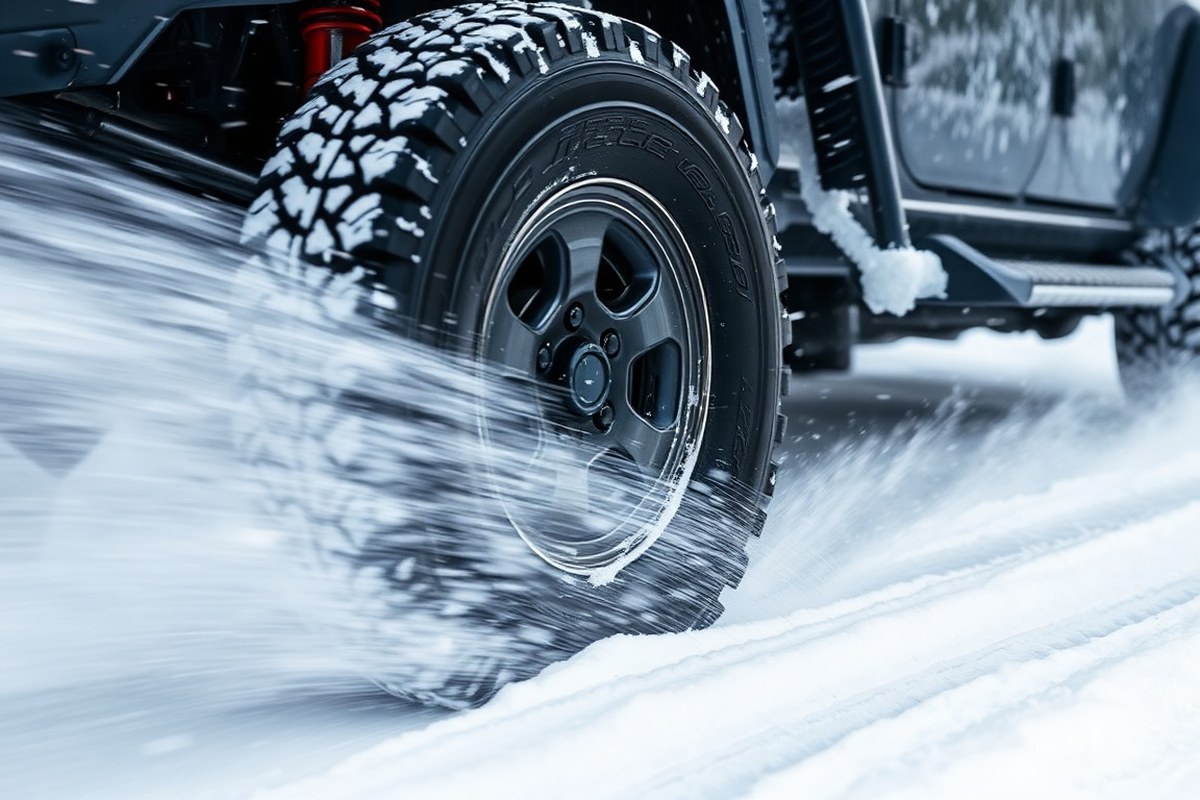
4-wheel drive (4WD) gives the best traction in deep snow or on rough, uneven surfaces. You switch to 4WD manually when you need extra grip. It helps with starting or climbing steep, snowy hills.
However, 4WD doesn’t improve braking or high-speed handling. So you still need winter tires and cautious driving.
All-wheel drive (AWD) works automatically and adjusts power to wheels with the most traction. This system suits city or suburban drivers in mixed snow and ice. It helps keep control in turns and lane changes.
AWD isn’t good for deep snow or mud. You might need the low-gear torque that 4WD gives.
Two-wheel drive (2WD) can work in light snow, especially front-wheel drive (FWD). Rear-wheel drive (RWD) struggles more in snow and ice. Heavy snow or unplowed roads make 2WD risky.
It often won’t provide enough grip. The right tires are critical no matter what drivetrain you have.
| System | Helps With | Not For |
|---|---|---|
| 4WD (4H/4L) | Starts, deep ruts, uneven surfaces | Shorter stops, high-speed corners |
| AWD (Automatic) | Mixed grip, steady tracking, lane changes | Very deep drifts with low clearance |
| Winter Tires | Braking, turning, cold-road grip | Warm-weather wear and feel |
| Stability Control | Skid correction, straight-line control | More traction than tires allow |
| Anti-Lock Brakes | Steer-while-braking control | Short stops on glare ice without grip |
For moderate snow in mostly paved areas, AWD plus winter tires is ideal. Use 4WD if you often drive on unplowed roads or need to climb slippery hills.
Avoid relying on 4WD in normal city streets. It’s not designed to improve stopping or cornering on ice.
Pick AWD for regular winter driving. Use 4WD for rural or off-road snow with deep drifts.
Keep winter tires on year-round during snowy months regardless of drivetrain. Slow, smooth driving inputs matter more than just having four-wheel power.
Types of 4WD Systems and Their Snow Performance
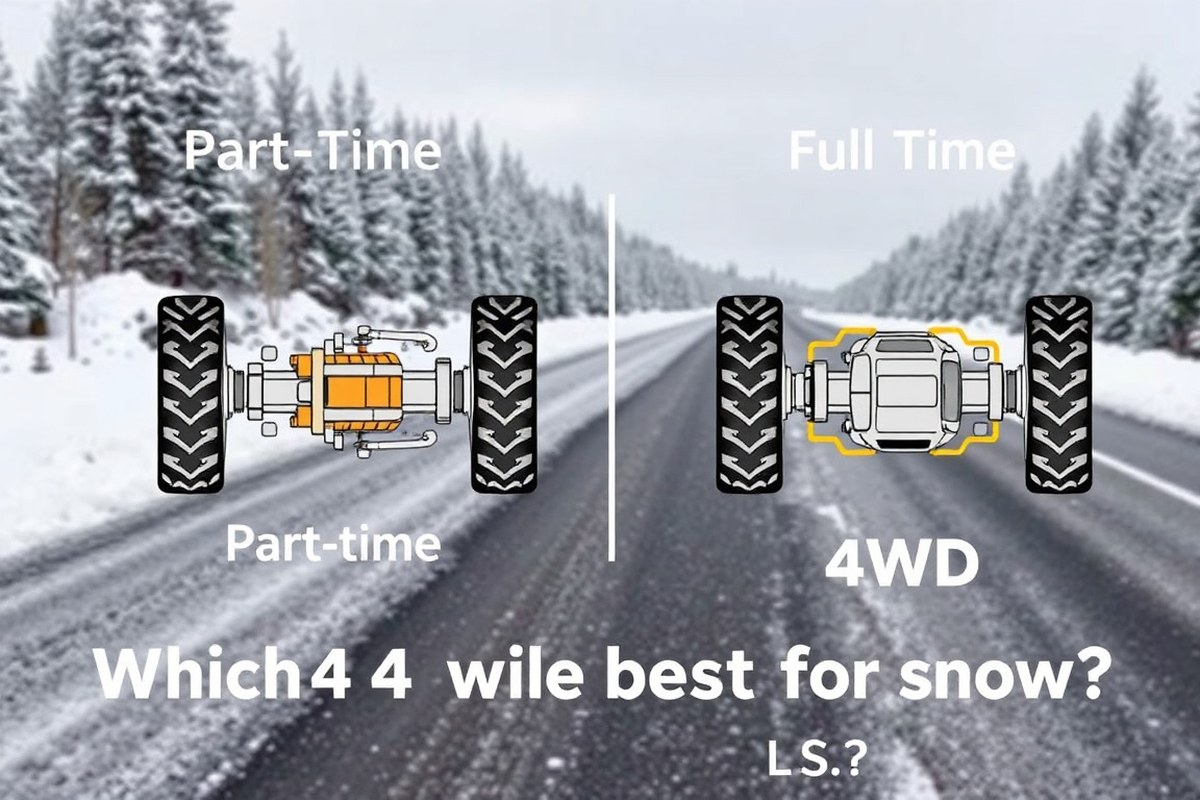
There are two main types of 4WD systems: part-time and full-time. Each works differently in snow and suits various driving needs. Selecting the right 4WD system depends on snow depth and road conditions.
Part-Time 4WD Explained
Part-time 4WD means you switch it on when extra traction is needed. It uses two-wheel drive in normal conditions to save fuel and reduce wear. You activate 4WD when snow is deep or roads get slippery.
This system locks power to all four wheels, which helps in deep snow or uneven terrain. It’s simple, cost-effective, and common in trucks and SUVs built for rugged use. But driving on dry pavement with 4WD engaged can cause drivetrain damage.
Part-time 4WD is best if you regularly face deep snow or off-road conditions. Expect more maintenance if you use it often in tough terrain. It doesn’t adjust power distribution automatically like full-time systems.
Full-Time 4WD Benefits and Drawbacks
Full-time 4WD works constantly, sending power to all wheels all the time. It operates like all-wheel drive but offers manual controls for different modes. This system improves traction on both snow and dry roads without driver input.
It handles packed snow and icy roads well by distributing power where needed. Full-time 4WD is smoother and safer for everyday winter driving, though it can cost more initially. Maintenance tends to be less frequent but can be pricier due to complexity.
This system suits those who want consistent traction in mixed conditions. You get better control on streets, snow, and light off-road use. However, it may not deliver the maximum torque required for very deep snow or rugged trails.
Using 4H and 4L Modes Effectively in Snow
4H (4 High) is a mode used on slippery or packed snow roads. It sends power to all wheels at regular speeds, improving traction. You should shift into 4H while driving on snow-covered streets or easy trails.
4L (4 Low) is for deep snow, mud, or serious off-roading. It provides maximum torque at low speeds by locking in low gear ratios. Use 4L when stuck in deep snow.
It helps you climb steep icy hills. It gives better control and prevents wheel spin.
Shift into 4L only when stopped or moving slowly. Using it at high speeds can cause damage. Avoid forcing the system.
Switch back to 2WD or 4H once you’re back on flatter, packed roads. The right timing between these modes avoids strain on vehicle parts.
Don’t engage 4WD on dry pavement; it can cause costly drivetrain damage.
How Tires and Vehicle Setup Affect 4WD Snow Performance
Winter tires are key to getting the most from your 4WD in snow. They improve traction far more than all-season tires. Ground clearance and vehicle weight also change how well you handle snow and deep slush.
Choosing the Right Winter Tires
Winter tires use special rubber that stays soft in temperatures below 45°F. This softness improves grip on icy and snowy roads. Choosing tires designed for snow and ice is better than relying on all-season ones.
Deep tread helps clear away snow and slush while gripping the road surface. A tread depth of at least 6/32 inch is ideal for winter tires to maintain traction. Old tires with less than 4/32 inch tread will perform poorly on snow.
Switch to winter tires when temperatures drop in the fall. Usually, change when nights reach the low 40s. 2 | Changing tires might need one extra trip to the shop.
But the safety boost is worth it. 3 | Keep tire pressure right and check winter tread depth. Also confirm your vehicle’s clearance.
These help your 4WD work better in snow. Keep them on until spring when temps consistently rise above 45°F. This switch can take one extra trip to the tire shop but is worth the safety boost.
Ground Clearance and Weight Considerations
Higher ground clearance helps your vehicle avoid getting stuck in deep snow. At least 8 inches of clearance allows better movement through flakes and drifts. Low clearance vehicles may drag or pack snow underneath, reducing traction.
Heavier vehicles press tires harder into packed snow, which can add grip but hurt fuel efficiency. A balanced weight helps maintain control without causing the vehicle to dig in. Lighter SUVs with good clearance often fare well in snow.
Keep your cargo weight balanced and avoid overloading the vehicle. Excess weight in the rear or front can throw off stability on snowy hills. Drive with care when carrying extra gear to maintain traction and control.
Maintaining Tire Pressure for Cold Weather
Cold weather causes tire pressure to drop by about 1 psi for every 10°F decrease. Low tire pressure makes tires less responsive and reduces grip on the road. Check tire pressure monthly during winter and inflate to the manufacturer’s recommended level.
Proper pressure ensures the tire’s tread contacts the road correctly for best traction. Don’t overinflate tires as that decreases the contact patch and can make handling worse. Use a reliable gauge and adjust pressure when the tires are cold.
- Inflate tires to the pressure listed on the door jamb or manual
- Check pressure before driving, ideally in the morning
- Inspect tires regularly for cuts, cracks, or worn tread
- Use a digital or high-quality analog gauge for accuracy
- Rotate winter tires every 5,000 to 7,000 miles to even out wear
Proper tire pressure, good winter tread, and correct vehicle clearance make your 4WD more reliable in snow. Combine these settings with steady, cautious driving for the best results on winter roads.
Best 4WD Vehicles for Snow: Trucks, SUVs, and Crossovers
Pickup trucks like the Chevrolet Silverado 2020 model perform well in snow with 4WD. Their plow prep packages improve towing capacity and traction on snow and ice. This setup helps your truck push through deep snow and handle rough winter conditions.
SUVs often come with snow-specific features improving winter driving. The Toyota RAV4 has a mode that limits wheelspin for better grip on snowy roads. These vehicles usually have good ground clearance.
They also have traction control. Both help you in icy conditions.
Crossovers offer a middle ground between trucks and SUVs. They tend to have AWD but can switch to 2WD for better fuel efficiency. The ride is comfortable in these vehicles.
You might lose some off-road ability. Trucks and SUV 4WD systems handle off-road better.
| Vehicle Type | 4WD/AWD System | Snow-Specific Features | Fuel Efficiency Impact |
|---|---|---|---|
| Pickup Truck (Chevy Silverado) | 4WD with plow prep package | Improve towing, better snow traction | Decreases when 4WD engaged |
| SUV (Toyota RAV4) | AWD with snow mode | Limits wheelspin, improved traction | Switches between AWD and 2WD |
| Crossover | AWD usually, some switch to 2WD | Standard traction control | Better fuel efficiency in 2WD |
Look for trucks and SUVs with features like snow mode or plow prep packages. Snow modes adjust power delivery to prevent slipping.
Plow prep packages boost torque and stability on snowy roads. Focus on brands known for durability if you buy used.
Fuel economy drops when you keep 4WD on in trucks and SUVs. Switch to 2WD or AWD modes on crossovers when roads clear. This saves gas and reduces wear without hurting winter traction.
When and How to Use 4WD Modes for Optimal Snow Driving
Using your 4WD modes correctly can make a big difference driving in snow. Four-high (4H) is best for normal snowy roads where you want extra traction without losing speed. Four-low (4L) is for tougher spots like deep snow or icy ruts.
It helps when you need more torque. Use it for slow driving on steep hills or tough terrain.
Engage 4H when snow covers the road but traffic is moving steadily. It adds power to all wheels, helping avoid slips on slippery surfaces. Keep speeds under 55 mph when driving in 4H.
This reduces stress on the drivetrain. It also helps you keep control safely.
Switch to 4L only if you’re moving slowly through deep snow or climbing slippery grades. 4L multiplies torque and limits speed, ideal for crawling through tricky spots or towing heavy loads. Stay below 25 mph in 4L mode for safety.
Use gentle steering to avoid wheel spin. Apply the throttle slowly to protect the drivetrain.
Here’s a step-by-step guide to picking and using 4WD modes in snow:
- Check road and snow depth, use 2WD on dry or cleared streets.
- Shift to 4H before you hit snowy patches with steady movement.
- Drive smoothly, avoid sudden acceleration or braking in 4H.
- Spot deep snow, ruts, or hills, slow down and shift to 4L.
- Keep your speed below 25 mph in 4L to protect vehicle parts.
- Use steady throttle and slow steering inputs in 4L.
- Shift back to 4H once you clear the deep or rough areas.
- Return to 2WD when roads dry or snow thins out.
Always shift into 4WD while stopped or moving slowly. Some vehicles may allow shifting when driving. Check your owner’s manual for your vehicle’s rules. Sudden shifts at high speed can damage the system.
Common 4WD Mistakes in Snow and How to Avoid Them
4WD can help you get better traction in snow. But it won’t prevent all winter accidents. It sends power to all four wheels.
But you still rely on your tires’ grip for braking and steering. Relying on 4WD alone can give a false sense of security.
Some drivers think turning off traction control is safer with 4WD in snow. That’s usually wrong.
Traction control helps stop wheels from spinning and keeps the vehicle stable. Turning it off can cause loss of control, especially on icy or packed snow surfaces.
Engaging 4WD improperly is another common mistake. Using the wrong mode, like 4L at high speeds, can damage your drivetrain or cause skidding. Low-range 4WD (4L) is meant for slow, tough spots like deep snow or steep hills.
- Switching to 4WD only after getting stuck, engage it before conditions worsen.
- Using 4WD on dry pavement, this can strain mechanical parts and reduce handling.
- Ignoring winter tires, 4WD can’t replace the need for proper snow tires.
- Driving too fast for conditions, even with 4WD engaged.
- Not practicing smooth throttle and brake inputs to prevent wheel spin.
- Leaving traction control off during slippery driving.
- Failing to understand your vehicle’s specific 4WD system and its limits.
You can avoid many risks by learning your 4WD system before winter arrives. Use 4H (high range) for normal snowy roads at moderate speeds.
Save 4L (low range) for deep snow, uneven terrain, or when you need extra torque. Always accelerate and brake smoothly to keep control.
Remember, even the best 4WD systems won’t help if you treat snow like dry pavement. Safe winter driving means adjusting speed and following extra space rules. If you face deep drifts or rural routes, pick a 4WD vehicle with low-range gearing and good ground clearance to handle those rough spots better.
Maintenance and Winter Prep for 4WD Vehicles
Before winter hits, check your 4WD system carefully. Look at transfer case fluid and gear oil levels. Low fluid can cause damage in cold weather due to poor lubrication.
Inspect the drive shafts and U-joints for any wear or rust. These parts face extra stress in snow and slush. Replace or grease them as needed to avoid sudden failure.
Compared to AWD or 2WD, 4WD systems need more attention. You’ll want to manually shift modes and ensure the locking hubs or electronic controls work smoothly. These parts can freeze or stick if not maintained.
- Check transfer case and differential fluids; change if dark or dirty.
- Inspect drive shafts for cracks, rust, or wear on U-joints.
- Test selector switches or locking hubs for smooth operation.
- Examine CV joints and boots for cracks or leaks.
- Grease fittings should be lubricated every 12 months or 12,000 miles.
- Look for loose bolts or damaged skid plates under the vehicle.
- Check tire tread deeply, aiming for at least 6/32 inch for snow.
Fluids in the 4WD system should follow your owner’s manual schedule. Changing fluid every 30,000 to 50,000 miles helps prevent corrosion.
Cold temperatures thicken fluids, making proper levels critical. Some owners buy synthetic fluids for better cold flow in winter.
Regular inspections before snow season help catch wear that worsens in cold. Look closely at CV boots; cracks let in moisture, leading to joint failure.
Also, slippery spots on selector switches may indicate freezing risk. Fixing these before snow keeps your 4WD reliable and responsive.
How Driving Habits and Safety Practices improve 4WD Snow Control
Driving habits make a big difference in how well 4WD helps you handle snow. Slow speeds, careful steering, and proper use of traction devices improve control and safety. You should adapt your driving to road conditions and always plan for longer stopping distances.
Adjusting Speed and Following Distance
Drive slower than usual on snow-covered roads. Reducing speed by at least half lets you react safely to obstacles. Most experts say 4WD trucks feel better on snow at 20 mph.
Driving around 30 mph is also good. This speed range works well on packed snow.
Increase your following distance to three or four times normal. Snow and ice mean your stopping distance can be five times longer. Leaving plenty of space gives you time to brake gently and avoid skidding.
- Cut speed sharply on curves and hills
- Keep headlights on for visibility
- Watch for black ice spots
- Use low gears on downhill slopes
- Check rearview mirrors often for traffic behind
Effective Braking and Steering Techniques
Start braking early and gently to avoid sliding. Instead of slamming the brakes, ease off gradually to keep traction. On many 4WD trucks, ABS (anti-lock braking system) activates to prevent wheel lockup.
Steer gently to maintain control. Sudden turns cause 4WD to lose effectiveness and can lead to spinouts. Keep your hands steady and make small, smooth movements.
Hard braking or sharp steering can make 4WD lose traction suddenly.
Using Chains and Traction Devices Safely
Traction chains improve grip on icy roads even when you have 4WD. Chains add extra bite, which 4WD alone cannot provide. Use chains when highways or local laws require them during heavy snowfall.
Chains must be installed correctly to avoid damage or accidents. Don’t drive faster than 30 mph with chains on. Remove chains once you reach clear roads to prevent tire and vehicle damage.
- Check local rules on when chains are mandatory
- Test chains on dry pavement before snowy trips
- Carry gloves and tools for quick installation
- Use close-fitting chains to limit bounce
- Inspect chains regularly for wear or breaks
Step-by-Step Action Plan for Driving 4WD in Snow
Use this plan to get your 4WD vehicle ready and handle snowy roads safely. Follow these steps for better control and fewer surprises.
- Before winter hits: Check your tire tread for wear. Replace tires with winter ones if tread is low. You’ll know it worked if you see better traction on icy roads during test drives.
- One week before snow: Inspect your 4WD system for any issues or leaks. Engage and disengage the modes so they work smoothly. The system is ready when it switches easily.
- After the first snowfall: Drive slowly on a quiet road. Test each 4WD mode one by one. You’re using the system right when you feel extra grip. No wheel slip shows it works well.
- Weekly during snow season: Clean your vehicle’s undercarriage to remove salt and slush. This keeps parts from rusting and your 4WD reliable.
- Every two weeks: Check tire pressure to keep it at the recommended level. Correct pressure improves how well your 4WD grips snow.
- After a heavy snowstorm: Clear snow from around tires and wheel wells before driving. This prevents blockages that hurt 4WD performance.
- Weekly ongoing: Practice smooth steering, gradual acceleration, and gentle braking. These habits preserve traction and reduce the risk of sliding.
Frequently Asked Questions
What 4WD System Is Safest for Deep Snow?
Part-time 4WD with a low gear setting is best for deep snow. It gives you control and better traction on unpaved or steep snowy roads.
Can I Use 4WD on Clear Roads?
You should avoid using 4WD on dry pavement to prevent drivetrain damage. Use it only when snow or ice reduce traction.
Do 4WD Vehicles Need Special Winter Tires?
Yes, winter tires improve 4WD performance on snow and ice. They help grip the road better than all-season tires.
Is 4WD Always Better Than AWD for Snow?
Not always. AWD adjusts automatically and works well for light snow. 4WD is better for deep snow and rough terrain.
How Often Should I Switch 4WD Settings in Winter?
Switch to 4WD only when you encounter snow, ice, or mud. Avoid frequent shifting to keep the system in good shape.
Does Using 4WD Mean I Can Drive Faster in Snow?
No, 4WD improves traction but doesn’t increase stopping power. Drive slowly and carefully regardless of the drive mode.
Key Points to Remember
The best 4WD system for snow is one paired with good tires and smart driving habits. You get the most control by preparing your vehicle properly and using 4WD modes carefully. Start today by checking your tires and practicing slow, steady driving on a snowy road.