How Is Fertilizer Made: A Complete Guide to Processes and Types
How is fertilizer made? Fertilizer is made by combining key raw materials through chemical and physical processes.
It often starts with ammonia, produced from natural gas under high pressure and heat. This step creates nitrogen fertilizer, essential for plant growth.
Next, phosphorus and potassium compounds are processed separately. They are then mixed with nitrogen to form balanced fertilizer blends. These materials are granulated and blended for easy use and even nutrient delivery in fields.
The manufacturing process controls temperature, pressure, and catalysts to keep product quality high. Purity of raw materials is important to avoid unwanted substances in the fertilizer. Plants absorb nutrients better when the fertilizer is consistent and clean.
Environmental controls help manage emissions from ammonia production. Reducing greenhouse gases lowers the fertilizer’s carbon footprint. Proper handling makes fertilizer safer for farms and surrounding ecosystems.
Key Takeaways
- Ammonia synthesis uses about 60% natural gas as raw material and energy.
- Nitrogen fertilizers often originate from ammonia converted into other compounds.
- Phosphorus and potassium typically come in solid bulk forms for processing.
- Granulation and blending create uniform fertilizer granules for easy application.
- High pressure and temperature with iron catalysts are key for ammonia synthesis.
- Controlling emissions in fertilizer making helps reduce environmental impact.
How Is Fertilizer Made Step-by-Step

The production of fertilizer transforms raw materials into products that plants can use easily. It has several important steps. Each step plays a special role.
These steps make nutrients safe and easy to use. You’ll see the mix of grinding, reacting, and shaping all come together in this process.
The time to complete fertilizer production varies, often lasting a few hours to a full day. Factors like plant capacity, type of fertilizer, and weather can affect how long each step takes. Control is very important during granulation and blending.
This helps achieve the right nutrient balance. It also ensures the right physical form.
- Collect raw materials. Gather inputs such as natural gas, phosphate rock, potash, and nitrogen sources. These materials come from mining or synthesis and arrive at the plant in bulk for processing.
- Grind and process raw inputs. Crush and grind mineral rocks to increase surface area for chemical reactions. This improves nutrient extraction and ensures uniform mixing later on.
- Convert chemicals. For nitrogen, synthesize ammonia usually from natural gas using the Haber-Bosch process. Convert ammonia into other compounds like urea or ammonium nitrate. For phosphorus and potassium, treat mined minerals chemically to make soluble nutrient forms.
- Mix and blend nutrients. Combine processed materials in precise ratios depending on the fertilizer formula, like 10-10-10 or 20-5-10. Careful blending ensures even nutrient distribution and consistent product quality.
- Granulate or prill fertilizer. Shape the blended materials into granules or pellets for easy handling, transport, and application. Granulation involves spraying moisture onto powders and forming them in rotating drums or discs. Prilling forms droplets into spheres by cooling in air.
- Dry and cool the material. Remove excess moisture to prevent caking and maintain physical stability. Drying usually involves heated air, and cooling helps grains harden and maintain size.
- Coat (optional step). Apply a thin layer to control nutrient release or improve dust suppression. This step depends on specific fertilizer types or market needs.
- Package and distribute. Bag or load fertilizer in bulk for transport and storage. Proper packaging protects fertilizer from moisture and makes delivery manageable for farmers or retailers.
Key Raw Materials and Their Sources
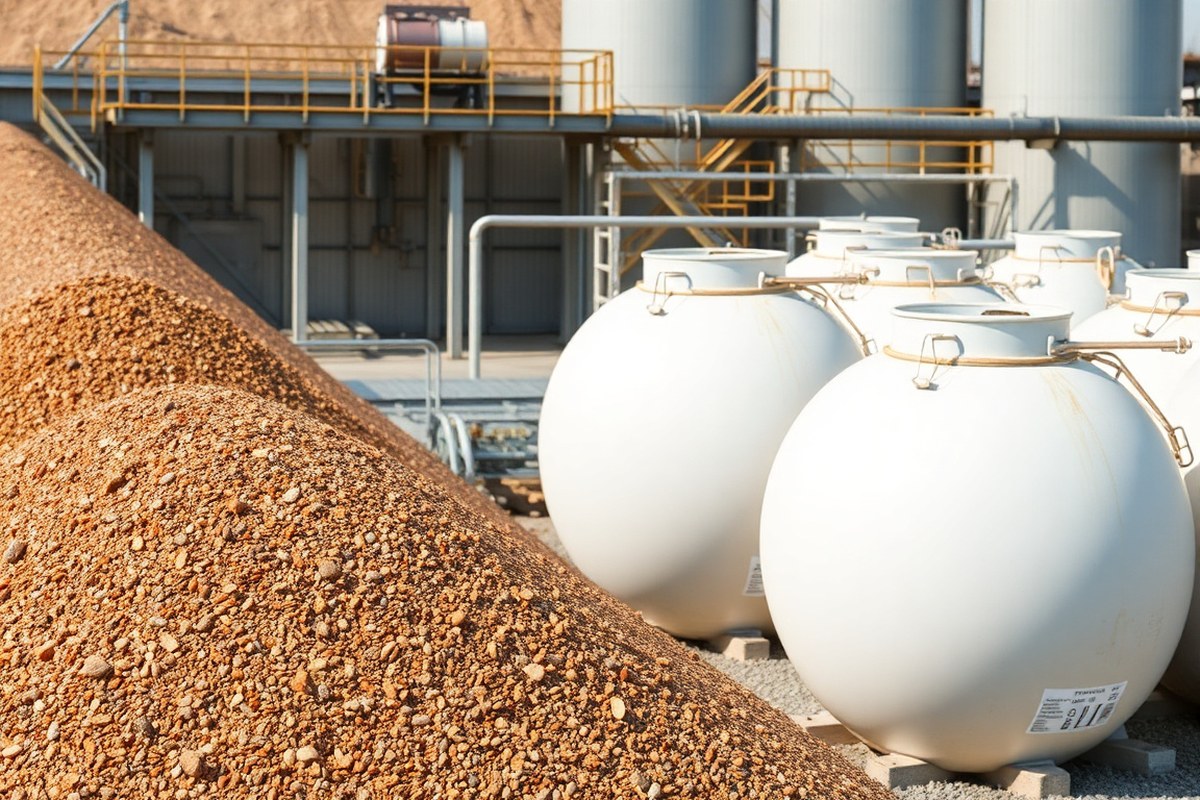
Fertilizers depend mostly on nitrogen, phosphorus, and potassium. Nitrogen often comes from ammonia, which forms by mixing nitrogen from air with hydrogen from natural gas. The Haber-Bosch process uses heat and pressure to make ammonia for many nitrogen fertilizers.
Phosphorus is typically sourced from phosphate rock, which is mined from natural deposits. Potassium comes mainly from minerals like potash, also mined from underground. These raw materials must be carefully selected because their purity and content affect the fertilizer’s effectiveness.
Natural gas plays a important role. It provides the hydrogen needed for ammonia synthesis and supplies energy for the chemical reactions. The quality and cost of natural gas directly impact fertilizer production expenses and availability.
- Nitrogen: synthesized from air and natural gas via the Haber-Bosch process
- Phosphorus: mined phosphate rock, chemically processed to make it plant available
- Potassium: mined potash or potassium minerals
- Ammonia: the basic nitrogen compound produced using natural gas
- Sulfur and other nutrients: added based on specific fertilizer formulas
Collecting these raw materials involves mining or chemical reactions. Mines for phosphate rock and potash can be deep underground or open-pit mines. The extraction methods affect costs and environmental impact.
Air and natural gas go into industrial plants for ammonia. These plants keep pressure near 200 atmospheres. They also hold temperatures near 400 to 500 degrees Celsius.
Handling natural gas safely is very important. Leaks or impurities can stop ammonia production. They can also create dangerous conditions.
Fertilizer plants often locate near natural gas sources or mines to reduce transport costs. That helps keep prices steady, though global supply issues can still cause spikes. Farmers get nutrients tailored to the soil’s needs.
The source of raw materials affects how fast nutrients release. It also affects their environmental impact.
Chemical Processes Behind Nitrogen Fertilizers
Nitrogen fertilizers start with ammonia made by the Haber-Bosch process. This process turns nitrogen from the air and hydrogen from natural gas into ammonia. The ammonia then changes into common fertilizers like urea and ammonium nitrate.
Haber-Bosch Ammonia Synthesis
The Haber-Bosch process combines nitrogen gas from the air with hydrogen gas. This happens under high pressure and heat. The gases then react to make ammonia.
It uses an iron catalyst to speed up the reaction, making ammonia (NH₃). The hydrogen typically comes from natural gas, which breaks down to provide hydrogen atoms.
This reaction happens inside a reactor at around 400, 500°C and pressures near 150, 300 atmospheres. Plants run this continuously because the process needs a stable environment for steady ammonia output. The iron catalyst lowers energy needs but requires careful handling to avoid contamination and reduced efficiency.
Conversion to Urea and Ammonium Nitrate
Ammonia from the Haber-Bosch process rarely goes straight to fields. First, it reacts with carbon dioxide to form urea, a solid nitrogen fertilizer. Alternatively, ammonia reacts with nitric acid to produce ammonium nitrate, another common nitrogen fertilizer form.
These steps happen in separate, controlled chemical reactors that maintain specific temperatures and pressures. Urea synthesis happens at about 170°C and high pressure. These conditions help keep carbon dioxide and ammonia reacting well.
This is key to making urea efficiently. The final products are cooled and granulated for easy handling and application.
Steps to turn ammonia into usable nitrogen fertilizer:
- Extract nitrogen from the air and hydrogen from natural gas.
- Combine gases under high pressure and temperature in the Haber-Bosch reactor with an iron catalyst.
- Collect ammonia gas produced by the reaction.
- React ammonia with carbon dioxide to produce urea.
- Alternatively, react ammonia with nitric acid to form ammonium nitrate.
- Cool and granulate the solid fertilizer products.
- Package the fertilizers for distribution and use.
Environmental Impact and Energy Use
The Haber-Bosch process uses large amounts of energy, mostly from natural gas. This reliance adds to greenhouse gas emissions during fertilizer production. Improvements are ongoing to cut energy use and increase efficiency.
Ammonia plants must carefully manage emissions and energy costs. Catalyst quality and reactor conditions heavily influence energy consumption. Efficient nitrogen fertilizer helps farmers get better crop yields.
It also needs careful use to avoid excess nitrogen runoff. Managing this reduces environmental harm.
Processing Phosphorus and Potassium Components
Phosphorus starts as phosphate rock, mined mainly from places like Morocco and Florida. The rock undergoes a chemical reaction with sulfuric acid, which breaks it down into phosphoric acid. This acid forms the basis for phosphorus fertilizers such as single and triple superphosphate.
The process involves mixing phosphate rock with sulfuric acid at controlled temperatures. This happens in big reaction vessels.
Heat can reach 65 to 70°C. The heat helps the reaction go faster. The acid dissolves the phosphate, leaving behind impurities that can be managed or recycled.
Potassium comes from potash, which is mined from ancient seabed deposits buried underground. After extraction, potash is processed mainly into potassium chloride, the most common potassium fertilizer form.
Potassium sulfate and potassium nitrate also exist. They require extra chemical steps to make.
Potash processing starts by crushing the raw mineral. Then it removes salt and other minerals.
This often includes flotation, washing, and sometimes heating to improve purity. The result is a product high in potassium content, ready to help plants grow efficiently.
- Phosphate rock reacts with sulfuric acid to form phosphoric acid
- Phosphoric acid is used to make superphosphate fertilizers
- Potash is mined from underground seabed deposits
- Potash is purified through crushing, washing, and flotation
- Potassium chloride is the most common fertilizer produced from potash
- Additional steps create potassium sulfate and nitrate fertilizers
- Phosphorus and potassium fertilizers provide essential nutrients for crops
Final phosphorus fertilizers are granulated. This makes them easier to handle. They mix with nitrogen and potassium products too.
Potassium chloride fertilizers typically contain about 60% potassium oxide (K2O). Such standardized forms help you know exactly what nutrient amounts your soil receives.
Quality control during these steps ensures nutrients stay available to plants without harmful impurities. Problems like incomplete reactions or contamination can reduce fertilizer effectiveness. Recycling residuals from these processes helps reduce environmental impact and conserves resources for future use.
Granulation, Blending, and Forming Fertilizers
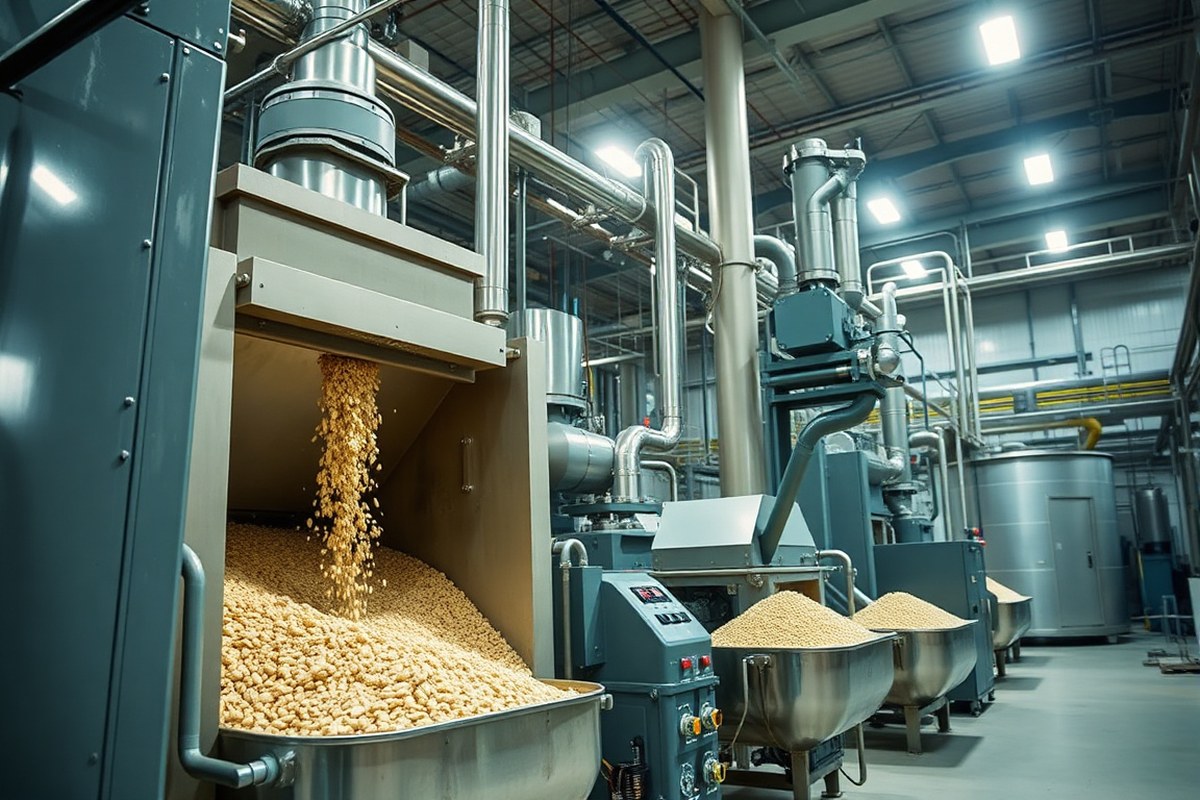
Granulation changes mixed fertilizer powders into uniform pellets or granules. This step helps create fertilizers that are easy to handle, store, and apply. It also controls how fast nutrients come out into the soil.
This affects how well plants grow. It also changes the impact on the environment.
The process depends on the desired pellet size and nutrient release. Some fertilizers need prilling, where droplets of melted material cool into small, round pellets.
Others use drum or pan granulators that tumble powders with liquids to form granules. These methods work well for both simple and complex nutrient mixes.
Blending nutrient powders evenly is key. Farmers want consistent nutrient ratios like NPK 10-10-10 or customized blends based on soil tests.
The powders are mixed in large batches using ribbon blenders or paddle mixers. This ensures each granule delivers the right mix of nitrogen, phosphorus, potassium, and other needed nutrients.
Coating pellets can slow nutrient release to reduce runoff and pollution. Popular coatings include sulfur or polymer layers that dissolve slowly in water.
Coated fertilizers feed crops steadily over weeks or months, matching plant needs better than quick-release types. Some advanced coatings respond to soil moisture or temperature, giving more control.
- Prilling creates uniform, round pellets from melted fertilizer material.
- Granulators tumble powders with liquids to form solid granules.
- Ribbon and paddle mixers blend powders uniformly in large batches.
- Coatings use sulfur or polymers to slow nutrient release.
- Slow-release coatings reduce nutrient runoff and water pollution.
- Blends match crop needs based on soil testing and analysis.
Mixing and granulation take energy and precise timing to avoid dust or uneven pellets. Production usually runs 20 to 30 hours for a batch, depending on scale.
Uniform pellet size between 2 and 4 millimeters suits most spreaders and applications. Larger or smaller granules are made for special uses like fertigation or foliar feeding.
Careful moisture control during granulation prevents pellets from becoming too soft or dusty.
Choosing the right granulation and coating method reduces fertilizer waste and environmental impact. It also boosts farmers’ efficiency by providing more predictable nutrient delivery. You can change these steps for your crop type.
Doing this helps the fertilizer work better. It also fits the local climate and field conditions.
Quality Control and Environmental Safety Measures
Fertilizer makers ensure quality and safety by testing each batch carefully. They check nutrients, control impurities, and use systems to cut pollution. Keeping the environment safe is part of making fertilizer the right way.
Nutrient Analysis and Regulation Compliance
Each batch of fertilizer undergoes nutrient testing to match industry standards. Labs measure total nitrogen, phosphate, and potassium content to confirm consistency. Regular checks prevent uneven nutrient levels that could harm crops or soil.
Samples are drawn at different production stages, ensuring ingredients mix accurately. Moisture, temperature, and cooling times are monitored during drying to keep nutrient stability. These steps make sure the fertilizer delivers nutrients reliably every time.
Heavy Metal and Impurity Limits
Heavy metals like cadmium and lead are tested to remain below legal limits. Manufacturers control impurities strictly to avoid toxic buildup in soil. Low impurity levels protect crop health and stop pollution from entering the food chain.
Materials used, including recycled inputs, must meet contaminant standards before use. Testing records prove compliance for regulators and customers alike. Failing these checks means discarding or reprocessing the batch to maintain quality.
Emission Controls and Wastewater Treatment
Plants install scrubbers and filters to cut dust and chemical fumes from the air. These units reduce particulate matter and gases that harm air quality and workers. Controlling emissions meets environmental laws and protects nearby communities.
Wastewater undergoes thorough treatment to remove nutrients and chemicals before release. Treatment prevents fertilizer runoff into rivers, which can cause algae blooms and water damage. Factories carefully manage all wastes, recycling or disposing of them safely.
Energy-efficient machines and cleaner fuel sources help reduce greenhouse gases like CO2 and N2O. Those emissions mostly come from fertilizer applied in fields.
But factories also minimize their share. This approach supports sustainable fertilizer production with less harm to the planet.
Comparing Organic, Inorganic, and Biofertilizer Production
Organic and inorganic fertilizers start with very different raw materials. Organic fertilizers come from natural sources like manure, compost, and crop residues. Inorganic fertilizers use mined ores and synthetic chemicals processed in factories.
The production steps differ, too. Organic fertilizer making involves collecting and composting organic waste.
Inorganic fertilizer production requires chemical reactions, such as synthesizing ammonia for nitrogen fertilizer. These chemical methods need high energy and precise control.
Biofertilizers are different from both. They use living microorganisms, like bacteria or fungi, to boost nutrient availability. These microbes grow under controlled conditions in labs or factories.
They often come in liquid or powder form. Farmers apply them to soil or seeds directly.
| Fertilizer Type | Raw Materials | Production Process | Nutrient Delivery | Advantages | Limitations |
|---|---|---|---|---|---|
| Organic | Animal manure, compost, crop residues | Composting and natural decomposition | Slow, gradual nutrient release | Improves soil health, sustainable | Lower nutrient concentration, slower action |
| Inorganic (Synthetic) | Mined ores, synthetic chemicals | Chemical synthesis and granulation | Fast, concentrated nutrient supply | High nutrient content, predictable results | Requires energy, may cause emissions |
| Biofertilizer | Living microbes (bacteria, fungi) | Microbial cultivation under lab conditions | Improve nutrient availability biologically | Improves soil biology, eco-friendly | Less nutrient content, sensitive storage |
Organic fertilizer adds nutrients slowly as microbes break down material. It supports soil structure and water retention, helping crops long term. Synthetic fertilizers deliver nutrients to plants fast.
This supports quick growth early on. But you must control doses carefully to stop runoff.
Biofertilizers improve plant nutrient uptake by fixing nitrogen or solubilizing phosphorus. They cost less energy to produce but need careful handling to keep the microbes alive. You can mix biofertilizers with organic or inorganic fertilizers to balance quick results and soil health.
Innovations Shaping the Future of Fertilizer Manufacturing
New technologies are making fertilizer production more sustainable and efficient. These include green ammonia, precise nutrient blending, and recycling water in plants. These steps reduce emissions, save energy, and improve nutrient use on farms.
Green Ammonia and Low-Carbon Production
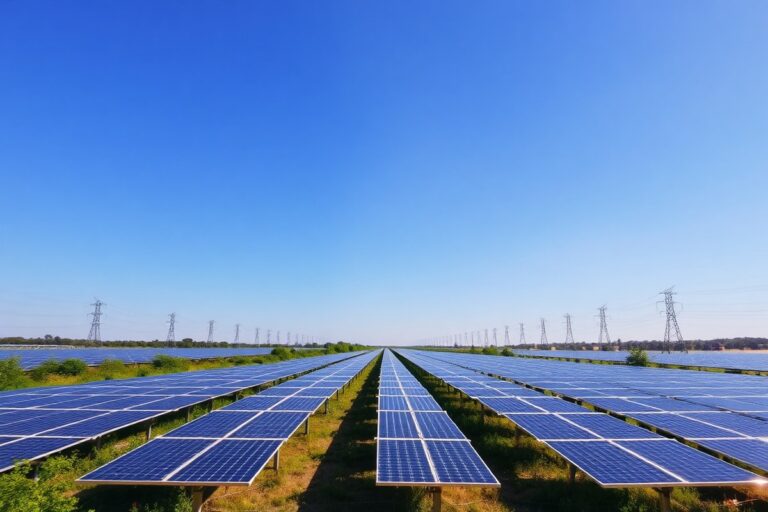
Green ammonia uses renewable power to split water and make hydrogen. Then hydrogen combines with nitrogen to produce ammonia. This process uses clean energy throughout.
This process cuts carbon dioxide emissions compared to traditional methods that burn fossil fuels. These plants need renewable power like solar or wind and a reliable source of clean water.
Magnetite catalysts speed up the ammonia synthesis reaction, reducing energy use. Efficient reactors operating around 400, 500 °C help lower fuel consumption.
Switching to green ammonia requires upfront investment in new equipment and renewable energy supplies. But it reduces greenhouse gases significantly over time.
To decide if green ammonia fits your factory, compare local power costs and emissions rules. It works best where renewable energy is affordable and emission limits are strict. Facilities without easy access to renewables might delay switching until technologies become cheaper.
Precision Blending and Controlled Release Coatings
Precision blending mixes fertilizers so nutrients match crop needs exactly. This reduces waste and runoff by targeting nutrients to the right time and place. Plants get what they need without excess that can pollute soil and water.
Blending gear changes with the size and fertilizer type used. Common tools include high-speed mixers, paddle mixers, or drum blenders. Each suits different production needs.
These machines help evenly distribute nutrients and can handle granular or liquid forms. Controlled-release coatings slow nutrient release, matching plant uptake rhythms and reducing leaching.
Choosing the right blending method depends on your crop and soil. Start with soil tests to identify nutrient deficits.
Then adjust blends to target these, reducing total fertilizer use. This approach cuts costs and environmental risks.
Water Recycling and Circular Economy Practices
Fertilizer plants use and treat large volumes of water during production. Recycling process water lowers freshwater demand and reduces wastewater discharge. This saves money and avoids environmental fines.
Some plants capture and reuse ammonia or nutrient-rich liquids from waste streams. Reprocessing these materials keeps valuable nutrients in use and cuts raw material needs. Installing filtration and treatment steps costs money but pays off in saved water and resources.
Decide on recycling based on your plant’s size, water costs, and local rules. Larger plants benefit most from complex systems. Smaller ones may adopt simpler measures like settling ponds or basic filtration to reduce waste.
Test water quality regularly when recycling to avoid contamination that damages equipment.
Step-by-Step Action Plan to Understand and Use Fertilizers Properly
This plan helps you pick and use fertilizers based on how they’re made. Follow these steps to get started with confidence.
- Day 1: Learn the main fertilizer types, organic, inorganic, and biofertilizers. Know their raw materials and production styles to tell them apart.
- Day 3: Identify your soil’s nutrient needs using a soil test. This tells you which nutrients your plants require most.
- Day 5: Choose a fertilizer type that matches your crop and soil needs. Check if you want quick-release or slow-release nutrients.
- Week 2: Understand application rates and timing. Use fertilizer labels and local guidelines to avoid over or under-fertilizing.
- Week 3: Practice safe handling and storage of fertilizers. Follow safety tips to protect yourself and the environment.
- Week 4: Monitor plant growth and soil health after applying fertilizer. Adjust your plan based on crop response and weather.
Frequently Asked Questions
What Raw Materials Are Most Common in Fertilizer Production?
Fertilizers mainly use nitrogen, phosphorus, and potassium minerals. These three nutrients make up about 60% of global fertilizer use.
They are important for crop growth. Farmers rely on them heavily for healthy plants.
How Does Ammonia Factor into Fertilizer Manufacturing?
Ammonia is a key nitrogen fertilizer made from inexpensive materials. It often gets converted into easier-to-handle substances for farmers, not just applied as pure ammonia.
Why Are Natural Gas and Ammonia Synthesis Important?
Ammonia synthesis mainly relies on natural gas as feedstock. This process produces about one-third of fertilizer sector emissions, showing its environmental impact.
What Role Does Granulation Play in Fertilizer Making?
Granulation shapes powders into firm granules for easy handling by farmers. This step also includes coating granules to improve their application and storage.
How Is Fertilizer Quality Checked Before Shipping?
Manufacturers test granule size, nutrient levels, and impurities before shipping. These checks ensure the fertilizer meets standards and is safe for the environment.
Why Is Managing Emissions Important in Fertilizer Production?
Fertilizer production releases greenhouse gases like CO2 and N2O. Managing emissions protects the climate and supports sustainable farming practices.
Before You Go
Fertilizer production shapes how useful a fertilizer is for your land. Knowing how fertilizers are made helps you pick the best one. Start with a soil test to choose the right fertilizer today.