

How Much Light Does a Snake Plant Need: A Complete Guide for Healthy Growth
How much light does a snake plant need to thrive indoors? It needs about 8 to 10 hours of bright, indirect or filtered light each day.
Direct sunlight can be too harsh. Very low light slows growth and dulls leaf color.
Place your snake plant within 2 to 5 feet of a window. It should get plenty of natural daylight there. This helps it thrive better indoors.
East or southeast windows usually give the right amount of bright, indirect light your plant prefers. Watch for leaf yellowing or wrinkling. These signs mean the plant gets too much or too little light.
Use a 15 to 20-watt full-spectrum LED grow light when sunlight is weak. Hang it 12 to 24 inches above your snake plant. Run the light 6 to 8 hours each day to promote healthy growth.
=== TAKEAWAYS===
Key Takeaways
- Provide your snake plant 8-10 hours of bright, indirect light daily.
- Place the plant 2-5 feet away from east or southeast-facing windows.
- Use a 15-20W full-spectrum LED grow light if natural light is insufficient.
- Keep LED lights 12-24 inches above the snake plant for best results.
- Watch for yellow or wrinkled leaves as signs of improper light levels.
- Move your plant closer to the window during winter for more light.
How Much Light Does a Snake Plant Need Daily?

Snake plants do best with about 8 to 10 hours of bright, indirect light every day. This amount helps them grow firm, upright leaves and steady new shoots. Bright indirect light is gentler than direct sun, which can sometimes scorch the leaves.
Direct sunlight for 2 to 6 hours is okay. But shouldn’t last the whole day. Too much direct sun can cause leaf burn.
Too little light slows growth and makes leaves floppy. Your plant may stop growing new leaves after months of light. The light’s intensity or duration might be too low.
| Daily Light Duration | Light Type | Effect on Snake Plant |
|---|---|---|
| 8-10 hours | Bright, indirect | Optimal health and steady growth |
| 2-6 hours | Direct sunlight + bright indirect | Good growth, possible leaf scorch if overexposed |
| 6-8 hours | Indirect light only | Healthy, but slower growth than 8-10 hours |
| < 6 hours | Low or medium light | Survives, but growth slows; leaves may be limp |
Place your plant 2 to 5 feet from a south or east window. This spot gives steady bright indirect light. Move your plant to the best-lit spot every day.
This helps especially during the shorter days of winter. Use a timer to track your plant’s light hours. You can also note daylight hours on your phone.
Snake plants are pretty flexible. Snake plants survive with less than 6 hours of light. Growth will be slower, and the plant may look less healthy.
On the other hand, too much direct sun for over 6 hours can burn leaves. Check your plant’s leaves for firmness and color. This helps find the right daily light exposure.
What Types of Light Best Support Snake Plant Growth?
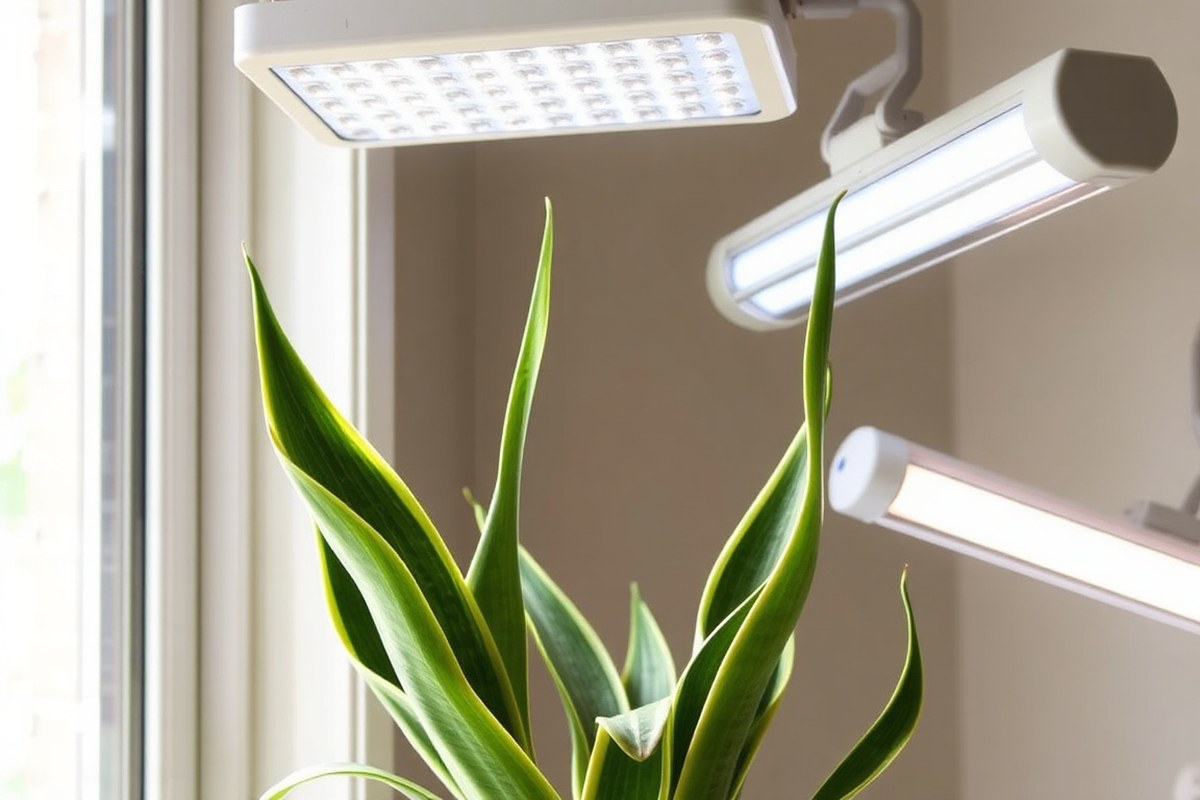
Snake plants do well with different types of light. But natural sunlight or full-spectrum LED grow lights support their growth best.
LEDs deliver the right spectrum and intensity for healthy leaves. Fluorescent and incandescent lights work but aren’t as efficient or balanced.
Natural Sunlight Characteristics
Sunlight offers the full spectrum of light needed for photosynthesis. Early morning or late afternoon sun is best since it’s less harsh. Direct midday sun can scorch snake plant leaves because the light is too intense.
Natural sunlight helps snake plants grow leaves with strong colors and patterns. However, if sunlight is too weak or indirect, growth may slow. Place your snake plant near a bright window.
Use filtered light for the best balance. This gives your plant enough light without burning it.
Best LED Grow Light Options
Full-spectrum LED grow lights simulate natural sunlight perfectly, providing a mix of blue and red wavelengths. A 15 to 20-watt LED light with a color temperature around 5000 to 6500K is ideal. It matches daylight and promotes healthy growth.
Position the LED about 12 to 24 inches above your snake plant. Run it for 8 to 10 hours daily to mimic natural light cycles. Using LED lights lets you keep plants in rooms with no windows without sacrificing growth quality.
Fluorescent and Incandescent Light Uses
Fluorescent lights emit mostly blue light, which encourages leaf growth. They are a budget-friendly choice but often lack red wavelengths essential for full development. Position them about 12 inches above your plant and run 12 to 14 hours a day.
Incandescent bulbs emit more red light but produce too much heat. This can damage snake plants if placed too close. They are generally less energy-efficient and not recommended for long-term plant care.
LED lights save energy and run cooler. So keep the light 12, 24 inches from your snake plant to avoid leaf burn.
How to Recognize If Your Snake Plant Is Receiving Too Much or Too Little Light
Your snake plant will show clear signs if the light is wrong. Watch the leaf color and growth pattern closely. These clues help you fix the light before serious damage happens.
Symptoms of Too Much Light
Snake plants in too much direct sun develop brown or yellow leaf patches. These spots often look dry and crispy, especially on leaf tips and edges. The plant may also twist or curl its leaves to avoid sun damage.
Leaves bleaching out or fading in color shows light stress on your plant. 2 | Yellow leaf tips and edges happen with low light. Growth tends to slow too.
3 | Leaves with sunburn need damaged tips trimmed. Change light slowly over weeks.
Too much light often slows growth as the plant tries to protect itself. Sudden exposure to direct sun can shock the plant for up to three weeks.
Symptoms of Too Little Light
Leaves in low light turn dark green or dull and may lose variegation. Your snake plant might stop growing or produce no new leaves for months. It can start leaning toward the light source, causing the plant to look uneven or droopy.
Yellowing leaf tips and edges also occur with low light but usually come alongside very slow growth. The plant puts energy into survival, so leaf color and texture weaken. Flowering, if it happens, will be sparse and slow in dim conditions.
Corrective Actions to Take
Move your snake plant 1 to 3 feet away from windows with strong direct sun. Using a sheer curtain helps soften harsh light during summer afternoons. If leaves show sunburn, trim damaged tips and adjust the light gradually over two to three weeks.
For low light, bring your plant closer to bright, indirect light near east or west-facing windows. Avoid sudden moves that expose your plant to harsh sun. Staged adjustments allow leaves to adapt without shock.
Keep monitoring leaf color and growth every one to two weeks after changing light. Adjust placement again if stress signs return or worsen. Consistency is key for your snake plant to stay healthy and grow well.
Best Indoor Placement for Snake Plants Based on Window Direction
Snake plants do best with bright, indirect light near east or north-facing windows. They can handle some direct sunlight from south or west windows if shielded. Keep snake plants about 4 to 6 feet from these windows for balanced light without damage.
East-Facing Windows and Morning Light
East-facing windows provide gentle morning sun that won’t burn snake plant leaves. Place your plant 3 to 6 feet from the window. This gives it steady bright, indirect light.
Avoid direct sunlight that can harm leaves. This light is mild enough to avoid leaf scorching while supporting healthy growth.
Moving the plant closer in winter helps make up for reduced daylight hours. Rotate the plant every few weeks to let all sides get light evenly. This also prevents leaves from leaning too much toward the window.
South and West Windows, Managing Intensity
South and west-facing windows offer stronger sunlight that can harm snake plants if too direct. Keep plants 4 to 6 feet away from the window. Or use sheer curtains to soften harsh rays.
This helps prevent leaf scorch. This distance delivers 500 to 1,000 foot-candles of light, ideal for vigorous leaf growth.
In summer, when sunlight is more intense, move the plant farther back or increase shading. Check for leaf browning or curling as a sign the light is too strong. Adjust placement seasonally based on light intensity and leaf health.
Here’s how to position your snake plant near strong-light windows:
- Measure a distance of 4 to 6 feet from the south or west window.
- Place the plant there for indirect, filtered sunlight exposure.
- Use sheer curtains if direct sun touches the leaves.
- Rotate the plant every month for even light distribution.
- Move the plant farther from the window during summer months.
- Monitor leaves weekly for signs of sun damage or stress.
North Windows and Low Light Tolerance
North-facing windows offer the lowest natural light, roughly 25 to 100 foot-candles. Snake plants survive here but grow slowly and show fewer new leaves. Keep them close to these windows or within 3 feet to access all available light.
Move your plant closer when you can. If not, place it near a brighter window sometimes. This gives it needed breaks of stronger light.
This simple step helps prevent weak roots and leggy growth. Rotate the plant to encourage balanced leaf shape even in low light.
How to Use Artificial Lights When Natural Light Is Insufficient
Artificial lights can keep your snake plant healthy when natural light is too weak or missing. Using full spectrum LED grow lights mimics sunlight well for indoor plants. Place the light 12 to 24 inches above your snake plant.
This height gives enough brightness. It also prevents leaf burn.
Run the grow light for 10 to 12 hours daily to support photosynthesis. Younger plants need fewer hours, around 8 per day. Mature snake plants can handle 12 hours.
Leave your snake plant in darkness for 6 hours each day. This rest helps it breathe. It also reduces stress.
You can easily set up lights on a desk or shelf near your plant. A small clip-on LED grow light is a good choice for a desk. It usually costs $15 to $30.
This is a budget-friendly option. For shelves, use a longer LED strip light.
Hang or stick it about 18 inches above the plant. This setup provides even light coverage.
- Choose full spectrum LED lights with at least 10,000 lux output
- Keep light 12 to 24 inches above the plant
- Run lights 10 to 12 hours per day for best growth
- Provide dark time of 6 hours for plant respiration
- Use clip-on lights for desks and LED strips for shelves
- Check for leaf yellowing or stretching as a sign of too much or too little light
- Make sure heat from bulbs doesn’t overheat your plant
Strong LED lights can fully substitute for sunlight when placed properly. But sunlight still offers the best natural spectrum. Artificial light prevents your plant from wilting or losing leaves during darker months.
Most snake plants tolerate office fluorescent lighting. But dedicated grow lights promote better growth and fuller leaves.
Turn off the grow light during the plant’s sleep hours. This prevents stress on its metabolism. It helps the growth cycle stay healthy.
Measuring and Monitoring Light Intensity for Your Snake Plant
Measuring light for your snake plant helps you find the right spot. A lux meter gives you a clear numeric value.
The hand shadow test lets you judge light fast and for free. Knowing these numbers and signs helps your plant grow strong and keep its color.
A lux meter shows how much light reaches your plant in lux units. Values between 2,500 and 10,000 lux are medium light, perfect for most snake plants. Light under 2,500 lux is considered low light for your plant.
Light over 10,000 lux is bright but best if indirect. Avoid placing your plant in direct sun at this brightness.
The hand shadow test is a simple way to check light without tools. You hold your hand about 6 inches above your plant and watch the shadow it casts. A sharp, clear shadow means bright light.
A blurry shadow means medium light. A faint or no shadow means low light. This test works best during the daytime when sunlight comes through a window.
Here’s how to use a lux meter for your snake plant:
- Turn on the lux meter and calibrate it if needed according to the manual.
- Place the sensor at the plant’s leaf height facing the light source.
- Wait a few seconds for the reading to stabilize.
- Note the lux value displayed on the meter.
- Compare your reading to this table:
| Light Level | Lux Range | Shadow Test Result |
|---|---|---|
| Low Light | Under 2,500 lux | Shadow barely visible or absent |
| Medium Light | 2,500 to 10,000 lux | Shadow blurry or diffused |
| Bright Light | Above 10,000 lux (no direct sun) | Clear, sharp shadow |
Both tests help you adjust placement. Test in several spots near windows or lights. Check at different times as sunlight shifts during the day and year.
Snake plants adapt. But you want the best light to keep leaves upright and green.
Adjusting Snake Plant Light Based on Age and Growth Stage
Young snake plants need less intense light than mature ones. Seedlings grow best with moderate indirect light, around 4 to 6 hours daily.
Too much direct sun can scorch their small leaves. So keep them away from bright windows until they grow stronger.
As snake plants mature, increase their light exposure to bright indirect light. Expect steady growth of 4 to 12 inches per year with this adjustment. You can slowly move the plant closer to a window.
Another way is to provide extra light for 6 to 8 hours every day. Watch leaves for signs of stretching, which shows they need more light.
During winter, snake plants enter dormancy and need less light. Reduce daily light duration to about 3 to 4 hours or adjust artificial lighting accordingly.
The plant’s growth will slow down, so avoid pushing for more light. This helps prevent stress and excess water use during cold, darker months.
To adjust lighting by growth stage, start seedlings under moderate light for 6 to 8 weeks. Then gradually increase to brighter light over 2 months as leaves thicken.
Mature plants thrive with bright indirect light around 8 hours daily outside winter. Cut back to 3 or 4 hours in dormancy, usually November through February.
For seasonal changes, observe your snake plant weekly. Leaves leaning or stretching toward the window? Increase the light they get.
During dormancy, reduce light and watering. Use this simple rule: Give more light if growth slows or leaves stretch. Give less if leaves brown or curl.
Setting up a grow light timer helps with these shifts. Use a 12- to 14-watt fluorescent or LED grow light. Run it 6 to 8 hours daily during active growth.
Cut back to 3 to 4 hours in winter. This method prevents overwatering mistakes linked to light changes.
Transitioning and Acclimating Snake Plants to New Light Conditions
Sudden light changes can stress your snake plant and cause leaf damage. Gradually adjusting light exposure helps the plant adapt without shock. Snake plants usually need 2 to 3 weeks to fully adjust to big light shifts.
You’ll notice stress if the leaf tips curl, wrinkle, or burn. Leaves might also curl inward or show discolouration. These signs mean the plant needs more gradual care or a smaller light change.
Here’s a simple way to increase or decrease your snake plant’s light exposure safely. Follow each step slowly to avoid overwhelming your plant. Adjust the schedule based on your plant’s stress signs or leaf condition.
- Pick a starting point with your current light level and location.
- Change the plant’s placement by about 1 to 2 feet closer or farther from the light.
- Watch the plant for 3 to 5 days for any curling or leaf browning.
- Adjust again by the same distance if there are no signs of stress.
- Repeat this process every 3 to 5 days. Keep doing it until your snake plant gets enough light.
- Move the plant back to less intense light when leaves scorch or curl.
- Provide indirect light to variegated snake plants since they need slightly brighter light.
- Use a small LED grow light during low natural light periods to prevent leaf tip crinkling.
Don’t rush the process; give your plant time to adjust before increasing light again.
Step-by-Step Action Plan for Perfect Snake Plant Lighting
Follow these clear steps to give your snake plant the right light daily. Check results by watching its leaf color and growth.
- Day 1: Place your snake plant near an east or west-facing window. Look for soft, indirect sunlight for 6 to 8 hours.
- Week 1: Check leaves for yellowing or browning tips. Adjust the pot a few feet away from bright light if you see damage.
- Week 2: Use a smartphone app or light meter. Measure 100 to 200 foot-candles. Move the plant slightly if needed.
- Week 3: Start moving your plant to spots with lower light (north windows or shaded corners). Watch for slowed growth as a sign.
- Week 4: Add a fluorescent or LED plant light for 8 to 10 hours daily. This helps if natural light is low. Position it 12 to 18 inches above the leaves.
- After 5 weeks: Increase light slowly if leaves look pale. Also if they lean toward the light. Add 1 hour of light each week.
- After 6 weeks: Check new leaves for healthy dark green color and thick texture. This means your light setup works well.
Frequently Asked Questions
Can Snake Plants Survive in Complete Darkness?
No, snake plants cannot survive in complete darkness. They need at least some indirect or artificial light to live and grow properly.
How Often Should I Rotate My Snake Plant for Even Light Exposure?
Rotate your snake plant every two weeks for even light. This prevents one side from growing unevenly or leaning toward the light.
Does Snake Plant Light Needs Change During Winter?
Yes, snake plants need more light in winter when natural light is weaker. Move it closer to bright windows or use a grow light to meet its needs.
Can Snake Plants Get Sunburned from Too Much Direct Light?
Yes, direct sunlight can cause sunburn on snake plant leaves. They prefer bright indirect light, so avoid placing them in harsh afternoon sun.
Is Fluorescent Light Good Enough for a Snake Plant?
Yes, fluorescent light can support snake plants if it’s bright and lasts around 8 hours daily. Position the plant within a few feet of the bulb.
Can I Use a Regular Desk Lamp Instead of a Grow Light?
Yes, a desk lamp with a full-spectrum bulb can work well for snake plants. Keep it on for 6 to 8 hours to provide enough light.
Key Points to Remember
Snake plants thrive best with moderate, indirect light for most of the day. Watch your plant’s leaves closely to spot light problems early. Next, adjust your plant’s spot or light source for a greener, healthier snake plant.



3 Comments