How to Stake a Tomato: 8 Proven Methods and Essential Tips for Strong Plants
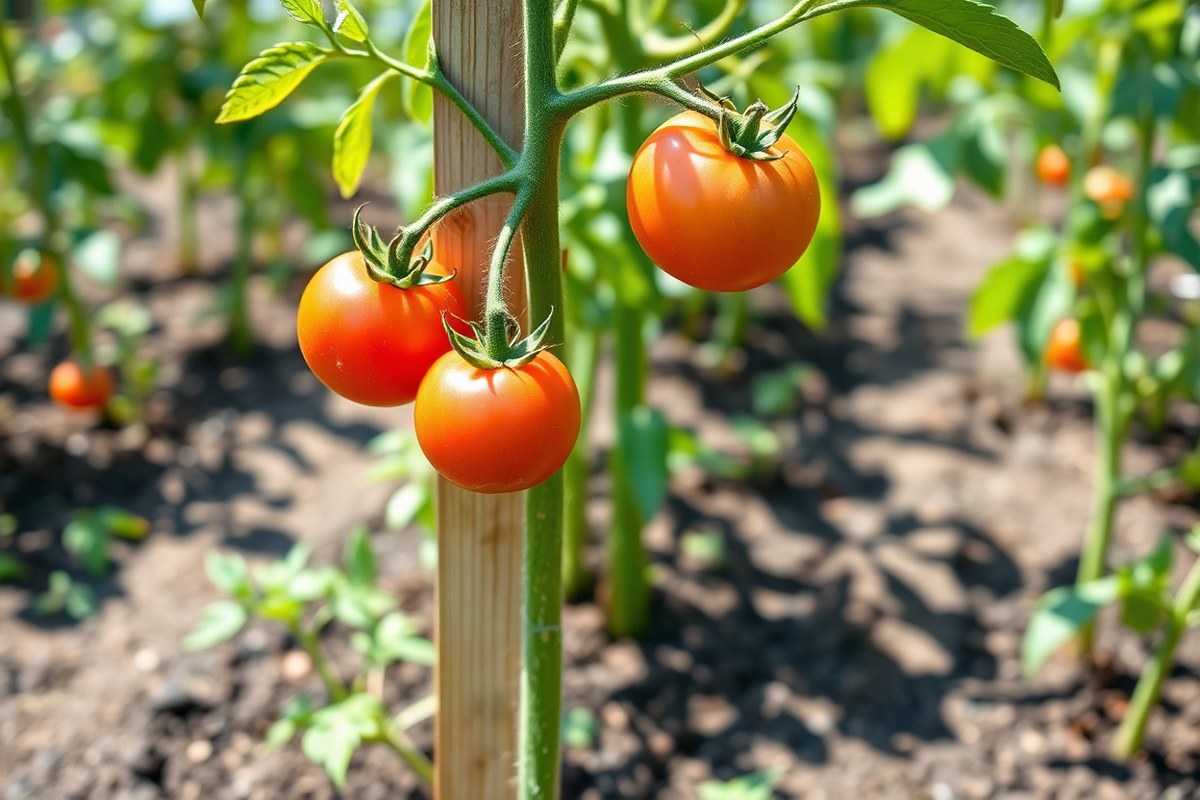
Knowing how to stake a tomato helps keep its branches upright and fruit off the ground. You start by driving a sturdy stake 12 inches deep near the seedling. Tie the main stem every 8 to 10 inches as it grows.
This gives strong support. It also helps avoid damage.
Place the stake 3 to 6 inches away from the tomato. This protects the roots.
Begin staking when your plant is 6 to 10 inches tall for easier handling. Using soft ties or clips prevents cutting into the stem as it thickens.
Choose tall stakes for indeterminate tomatoes since they grow 5 to 7 feet high. Shorter 3- to 4-foot stakes work well for determinate types that stop growing early. Proper staking improves airflow and sun exposure, reducing disease risks.
Key Takeaways
- Drive stakes 12 inches into the ground, 4, 6 inches from the tomato base.
- Start staking when plants grow 6 to 10 inches tall.
- Tie stems to stakes every 8 to 10 inches using soft, flexible ties.
- Use stakes at least 5 to 6 feet tall for indeterminate tomato varieties.
- Place stakes close enough to support but away from roots (about 3, 6 inches).
- Choose hardwood stakes like oak or bamboo for long-lasting strength.
1. How to Stake a Tomato Plant Step-by-Step
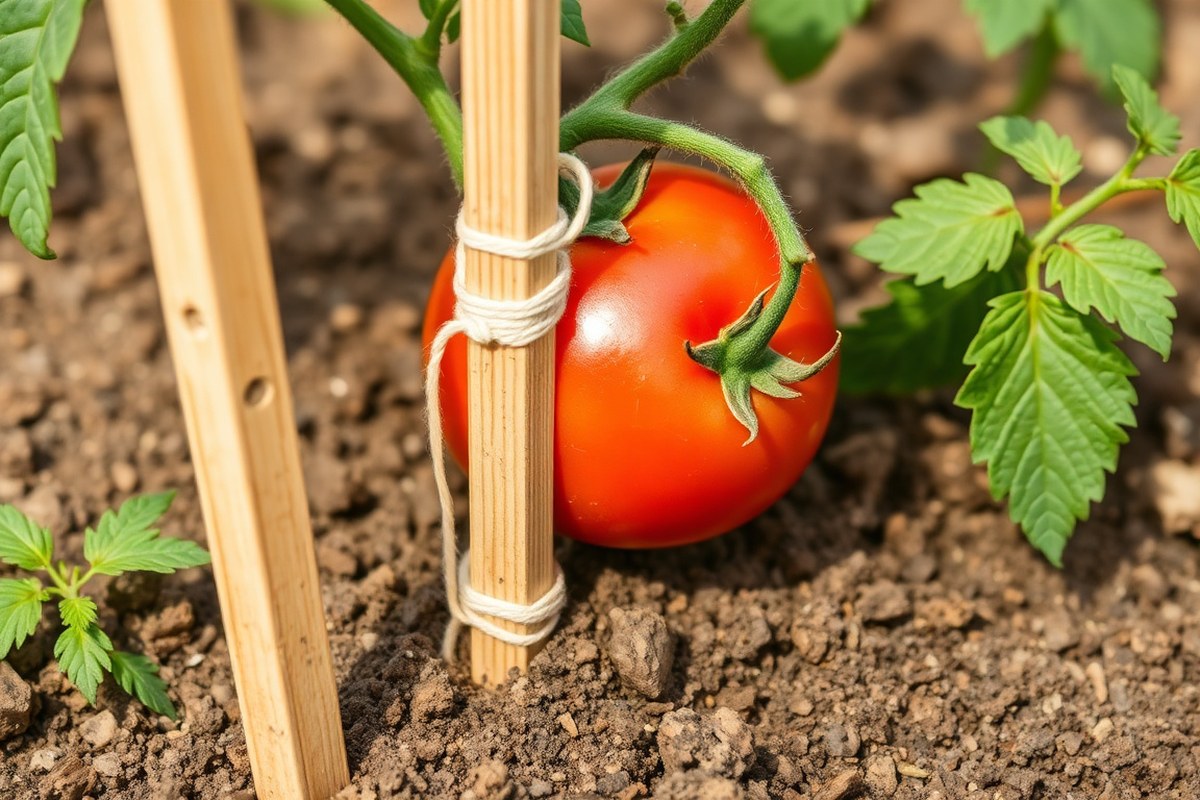
Start staking your tomato plant right after planting, when it’s about 6 to 10 inches tall. Use a sturdy wooden or metal stake at least 5 feet tall. Taller stakes work better for fast-growing tomato plants.
Choose a stake 5 to 6 feet or taller for strong types. Place the stake 3 to 6 inches from the stem. This avoids hurting roots while supporting the plant properly.
As your tomato grows, tie its main stem to the stake every 8 to 12 inches. Use soft ties like strips of cloth or commercial tomato clips to prevent hurting the stem.
Tie loosely with a figure-eight knot around the stake, not tightly around the plant stem. So it has room to grow without being crushed.
- Push the stake about 1 foot deep into the soil. Do this next to your tomato plant when you plant it.
- Tie the main stem to the stake near the base using soft cloth strips. Keep the tie loose enough to allow some movement.
- Keep tying the stem every 8 to 10 inches as it grows. Use figure-eight knots to secure the plant to the stake.
- Check ties regularly and adjust or add new ones as the plant becomes taller and thicker.
- Remove old ties if they start to cut into the stem or branches to avoid damage.
- For indeterminate tomatoes, use a stake at least 6 feet tall to support full growth.
Space the ties every 8 to 12 inches for even growth. This also means you tie the plant less often. Use soft cloth or nylon stockings for ties.
These materials protect the stem and give better support than twine. This staking method suits both containers and garden beds. It helps tomatoes grow straight and stay healthy.
2. Choosing the Best Stakes and Support Materials
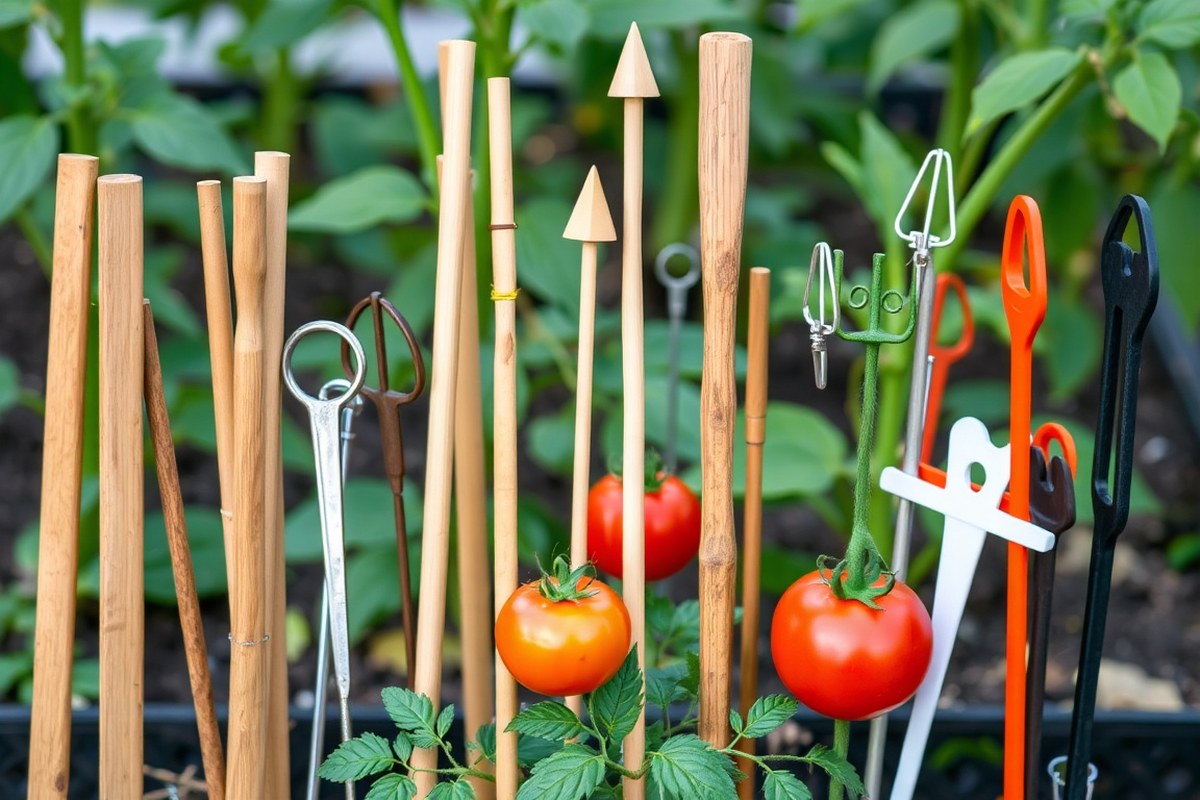
Tomato plants need stakes that fit their size and growth style. Bamboo, wood, metal, and fiberglass stakes all work. But some last longer and stand up better.
Indeterminate tomatoes can grow taller than 6 feet. They need strong stakes to hold heavy fruit. Stakes keep the tomatoes from falling down.
Bamboo stakes cost $3 to $5 for a 6-foot pole and look natural. They weather faster, lasting 2 to 3 seasons if kept dry. Wooden stakes come in different types.
Treated or painted stakes usually last up to 5 years. They can handle outdoor weather well. Metal stakes, like rebar or steel, can last many years but may rust without treatment.
| Material | Strength | Durability | Cost (per stake) | Eco-Friendliness |
|---|---|---|---|---|
| Bamboo | Medium | 2-3 years (outdoor) | $3 – $5 | High (renewable) |
| Wood (Treated) | Strong | Up to 5 years | $5 – $10 | Medium (treatment chemicals used) |
| Metal (Steel/Rebar) | Very strong | 10+ years (may rust) | $6 – $12 | Low (mining impact) |
| Fiberglass | Strong and flexible | 10+ years | $10 – $15 | Low (not biodegradable) |
Choose bamboo if you want a low-cost, eco-friendly stake that needs replacement every few years. Wood treated with a garden-safe finish offers a stronger hold but costs more.
Metal stakes resist breakage but sometimes rust. Fiberglass stays tough and weatherproof for many seasons but costs the most.
For determinate tomatoes that grow around 3 feet, a shorter wooden or bamboo stake often works. Indeterminate tomatoes benefit from longer stakes, at least 6 feet, to prevent bending. Always hammer stakes several inches deep for stability.
Use UV-resistant twine to tie plants so it doesn’t break or damage stems.
Budget-friendly options often mean bamboo or repurposed wooden stakes. Avoid thin or weak stakes under 1 inch thick, they can snap or fall over. Thick stakes that handle heavy fruit keep plants off the ground, reducing rotting and disease.
3. Determinate vs Indeterminate Tomatoes: Staking Differences
Not all tomato varieties need staking. Determinate tomatoes are bushier and often don’t require tall stakes.
Indeterminate tomatoes grow tall and need stronger, higher supports. Matching your staking method and stake height to your tomato type keeps plants healthy and productive.
Characteristics of Determinate Tomatoes
Determinate tomatoes grow to a set height, usually about 3 to 4 feet. They stop growing once fruit sets, forming a compact bush shape.
These tomatoes often only need short stakes about 5 feet tall. You can also use sturdy cages to keep branches off the ground.
These bush varieties can sometimes get by without staking if the branches are strong. Use a 5-foot hardwood or metal stake when staking tomatoes. This supports the plant without crowding your garden or wasting materials.
Characteristics of Indeterminate Tomatoes
Indeterminate tomatoes keep growing tall, sometimes reaching 6 to 8 feet or more. They produce vines, leaves, and fruit continuously until frost kills the plant. These tomatoes need higher stakes, usually 8 feet tall, made from hardwood like oak or poplar.
Heavy-duty cages about 4 to 5 feet tall also work. But you might need to extend the stake above the cage for extra height. Indeterminate types need regular pruning and careful tying to prevent sprawling and breakage.
Varieties That May Not Need Support
Miniature and some cherry tomato varieties often reach only 24 inches tall. Their bushy, compact shape lets them support their own weight.
So staking isn’t always necessary. You can use thin bamboo stakes for extra stability if you want.
Some determinate types that produce few branches also don’t require much support. It’s helpful to check the seed packet or plant label for growth habit before buying stakes. This saves money and avoids overbuilding your tomato supports.
4. 8 Common Staking Methods Explained
There are eight popular ways to stake tomato plants. Some methods work best for just a few plants.
Others suit long rows or large gardens. Your choice depends on how many plants you have and where they grow.
Single Stake and Double Stake Methods
The single stake method uses one stake per plant. Put the stake about 5 inches from the plant, so roots stay safe. Stakes need to be 5 to 6 feet tall for good support.
They hold the plant upright as it grows bigger. Taller stakes work better than short ones.
Tie the plant loosely to the stake once it reaches about a foot tall. Use twine, tape, or special tomato clips to keep branches upright. This method suits small gardens or container plants.
This method uses two stakes per plant or group. Put one stake on each side of the plant. Tie the plant between the stakes to keep it steady in wind.
Florida Weave and String Trellis
The Florida weave is great for rows of six or more plants. Space plants about 24 inches apart for best results. This method works well in long, straight rows.
You put stakes at both row ends and between every two or three plants. Then you weave twine back and forth around the stakes like a fence.
Start tying twine when the plants reach about 9 inches tall. Place the twine about 6 inches from the ground for support. This helps keep the plant stable early on.
Add more twine loops as the plants grow taller each time. Space each new loop 6 to 8 inches above the last one.
This gives the plants steady support up high. This keeps plants upright and well-spaced.
A string trellis involves string running vertically between stakes, letting vines climb up. This helps with airflow and sun exposure. Tie twine securely to stakes at the top and bottom.
Gently twist tomato vines around the twine as they grow taller. This keeps vines neat and supported.
Cages, Trellises, and Other Supports
Tomato cages come in various sizes. But most are about 3 to 4 feet tall.
They support plants that branch out in many directions. Use them for determinate and smaller indeterminate varieties in tight spaces.
Trellises are tall frameworks that support vining tomatoes. They can be wood, metal, or string-based. Place them early so tomato plants can climb as they grow taller than 3 feet.
Some gardeners use woven basketweave twine with stakes or a sturdy trellis. This approach requires fewer materials and creates straight tomato rows with good airflow. Prune branches that stray too far from the support for best results.
Here’s a simple table comparing main tomato staking methods. It shows how each fits different gardening needs and sizes. This helps pick the best method for you.
| Method | Best for | Materials Needed | Stake Height |
|---|---|---|---|
| Single Stake | Few plants, small gardens | 5-6 ft wooden/metal stakes, twine or clips | 5-6 feet |
| Double Stake | Windy locations, big plants | Two stakes per plant, twine/tape | 5-6 feet |
| Florida Weave | Rows of 6+ plants, row spacing 24 in | Stakes every 2-3 plants, garden twine | 5-6 feet |
| String Trellis | Vining tomatoes wanting vertical support | Tall stakes, strong twine | 6+ feet |
| Cages | Small vines, containers, determinate types | Metal or wire cages 3-4 ft tall | 3-4 feet |
Pick the staking style that matches your garden size and tomato type. This choice saves time and keeps your plants healthy. Right staking can improve your garden’s success.
For example, use single stakes on three or fewer plants. Go with Florida weave for longer rows. Cages work best where space is tight or plants are small.
5. Timing and Placement for Effective Staking
Set up stakes as soon as you plant your tomato seedlings. Waiting till plants grow bigger can damage their roots when pushing stakes in. Starting early keeps roots safe and supports healthy growth.
Place each stake about 12 inches deep, angling it away from the stem. This avoids hitting the root zone and gives strong support. Keep the stake 4 to 6 inches from the plant’s base.
This spacing prevents hurting the roots. Avoid putting the stake too close to the tomato plant.
For tomatoes planted in rows, put stakes every 2 feet along the line. Use one stake for each plant when they are scattered. This helps support each tomato plant properly.
Keep stakes near plants for good support. This spacing allows plenty of room for the tomato vines to grow upward without crowding.
You can stake bigger plants, but it takes care. Gently loosen soil around roots before inserting the stake.
Push the stake deeply and at an angle to avoid root injury. After staking, tie the plant loosely to the stake to prevent snapping.
Insert stakes early and angled away from the stem to protect roots and give solid support.
6. How to Tie Tomato Plants Without Damaging Them
Tie tomato plants with soft, gentle materials and use loose loops. This avoids damaging stems while keeping the plant upright. Regularly check and add ties to support growth without cutting into the stem.
Choosing Soft Tie Materials
Use soft materials like cloth strips, twine, or nursery tape. Avoid wire or anything that can cut into the stem or damage the plant. These materials bend with the plant and don’t restrict growth.
Ripped cotton strips or old t-shirts work well. They cost nothing if you have them at home.
Twine is inexpensive and biodegradable, making it a smart choice for gardeners. Nursery tape is stretchable and gentle but costs a few dollars per roll.
Step-by-Step Figure-8 Knot Technique
Tying a figure-8 knot keeps the stem from getting strangled or crushed. This knot loops around both the stake and stem, spreading pressure evenly. It’s easy to tie and untie as the plant grows.
Follow these steps to tie your plant without damage:
- Lift the tomato stem gently to avoid bending it sharply.
- Make one loop around the stake with your tie material.
- Make a second loop around the plant stem, creating a loose figure-8.
- Cross the loops over each other, ensuring the stem loop is loose enough for growth.
- Tie a simple knot to secure the loops in place without tightening too much.
- Check the knot to confirm the stem can move slightly and won’t be squeezed.
- Adjust or untie carefully if the plant grows thicker in that spot.
Signs You Need to Adjust or Add Ties
Check your plants every week for new growth or branches getting heavy. Add ties around every 8 to 12 inches along the stem.
Do this as it grows taller. This supports the plant properly and keeps it secure without pressure points.
Loose or broken ties and leaning stems mean you need to tie again. Watch for any signs of stem damage or pinching and loosen those ties immediately. Branches that droop heavily should get extra support with soft ties as well.
7. Preventing and Correcting Common Staking Mistakes
Many tomato growers use stakes that are too short or weak. Stakes should be 5 to 6 feet tall. Drive them 12 inches into the soil.
Place stakes near the plant base. A shallow stake can’t hold heavy fruits. This makes plants lean or fall over.
Placing the stake too far from the plant also reduces support. Keep the stake close, about 2 inches from the main stem, without damaging the roots. Position it on the north side to avoid shading leaves and slowing growth.
Watch for leaning plants or drooping branches. The stake might be failing. Check for loose ties that allow movement.
Add extra ties every 8 to 12 inches as the plant grows to secure branches well. Pruning some lower leaves and branches helps reduce weight and improve airflow for better support.
- Use a strong wood or metal stake at least 5 feet tall
- Sink the stake 12 inches deep near the plant’s base
- Place the stake on the plant’s north side to avoid shading
- Tie branches gently with soft garden ties every 8 to 12 inches
- Remove lower leaves to reduce weight and allow space for ties
- Add extra stakes or cages if the plant gets very large
- Adjust ties and prune as needed throughout the growing season
Plants can quickly outgrow a single stake. Consider adding a cage or a second stake to improve structure.
This prevents heavy branches from breaking and keeps fruit off the ground. Regular checks and adjustments every 10 to 14 days help you catch problems early.
Fixing staking errors before fruit appears saves time and protects your harvest. Avoid tight ties that cut into stems; they can slow growth or kill branches.
Use soft cloth or stretchy garden tape to let the plant move slightly without damage. This support method improves your yield and keeps tomatoes healthy.
8. Staking Tomatoes in Limited Space and Containers
In small gardens or containers, staking tomatoes helps save space and keeps plants healthy. Use shorter stakes, around 3 to 4 feet tall. Tomato plants won’t sprawl as much in tight spots.
This size fits better in smaller spaces. This way, plants don’t crowd each other or get tangled.
For container tomatoes, choose a sturdy stake like a wooden dowel or a broom handle. Drill two small holes near the top and bottom. Keep holes about ½ inch apart.
Use these holes to thread garden twine. This creates a simple frame to support the plant without taking much space.
Plant your tomato in a container at least 5 gallons. Push the stake into the soil next to the stem. This supports the plant as it grows.
Tie the plant loosely to the twine every 6 to 8 inches. Keep the ties soft to avoid cutting into the stem.
Check ties regularly as the plant grows. This keeps the plant upright and fruit off the soil.
Use tomato cages made for small pots to save space. Vertical trellises on walls or fences work well too. Choose what fits your garden best.
These guides train the tomato up rather than out. For balconies or patios, use a lightweight cage or frame.
Make it from PVC pipes sized for your container. This keeps your tomatoes stable without much weight.
Be mindful that overcrowding increases the risk of diseases in tomato plants. Airflow suffers, and leaves touching soil encourage fungal problems. Staking effectively in small spaces avoids this by keeping foliage off the ground and improving ventilation.
Use soft ties like strips of old t-shirts. They won’t damage tomato stems in containers. This helps your plant grow without stress.
Your Tomato Staking: Quick-Start Action Plan
Follow these steps to stake your tomato plants today. Each step helps set your plants for strong growth and better fruit.
- Before planting: Choose sturdy stakes or cages based on your tomato type. Pick wood, metal, or plastic that won’t bend.
- At planting: Push the stakes into the ground 3 to 4 inches deep. Place each stake about 3 inches away from the plant. This keeps roots safe and support firm.
- Week 1: Tie the main stem loosely to the stake using soft garden ties. Look for gentle snugness that won’t cut the stem.
- Weeks 2, 4: Add new ties every 6 to 8 inches as the plant grows. Check ties weekly for tightness and adjust as needed.
- When flowers appear: Make sure ties support heavier branches to prevent drooping. Stake branches if they lean too much.
- Mid season: Prune suckers for indeterminate varieties to keep your plant focused and easier to tie. Remove small side shoots at joints.
- Throughout growing: Watch for broken ties or leaning stakes after bad weather. Fix or replace them to avoid plant stress.
Frequently Asked Questions
How Far from the Tomato Plant Should I Place the Stake?
Place the stake 3 to 6 inches from the plant’s base. This keeps roots safe while giving strong support as it grows.
When Should I Start Tying My Tomato Plant to the Stake?
Begin tying when the plant reaches 6 to 10 inches tall. This gives the stem room to grow without stress.
What Type of Knot Is Best for Tying Tomato Plants?
Use a loose figure-eight knot for tying. It supports the stem while preventing damage or cutting.
How Often Should I Add Ties to the Tomato Stem?
Tie the main stem every 8 to 10 inches as it grows taller. This keeps the plant stable and upright.
Can I Use Materials Other Than Garden Twine for Tying?
Yes, soft plant ties or tomato clips work well. They hold the stem gently without bruising or cutting.
How Tall Should the Stake Be for Heirloom Tomato Plants?
Stakes for vigorous heirlooms should be 5 to 7 feet tall. This matches their growth and keeps fruit off the ground.
Wrapping Up
Staking your tomatoes right makes a big difference in fruit health and yield. Stay consistent with tying and adjusting support as plants grow. Start staking early and keep an eye on your plants weekly to catch issues fast.