When to Start Tomato Seeds: A Complete Guide for Best Timing and Care
Start tomato seeds indoors about 6 to 8 weeks before your last frost date. This gives the seedlings time to grow strong before moving outside. Starting too late often leads to small, weak plants that struggle to fruit on time.
Find your local last frost date online or from your extension service. Planting too early risks frost damage or weak seedlings. Keep seedlings warm and under bright light to help them grow sturdy.
Tomato seeds sprout best in soil between 70 and 85 degrees Fahrenheit. Soak seeds overnight in lukewarm water to speed up germination. Expect sprouts in 5 to 10 days with good warmth and light.
After sprouting, place seedlings in a sunny window or under grow lights. They need 12 to 16 hours of light daily for healthy growth.
Key Takeaways
- Begin indoor tomato seed planting 6 to 8 weeks before last frost date.
- Confirm your local last frost date through local gardening resources.
- Keep soil temperature between 70 and 85 degrees Fahrenheit for germination.
- Soak seeds in lukewarm water for 12 to 24 hours before planting.
- Expect sprouting within 5 to 10 days under ideal conditions.
- Use fresh seeds under five years old for better germination rates.
When to Start Tomato Seeds Indoors for Best Results

Sow tomato seeds inside about 6 to 8 weeks before your last frost day. For instance, start seeds between March 6th and 20th when frost ends May 1st. This helps young plants build strength before transplanting outside.
Tomato seeds usually take 5 to 10 days to germinate at about 75°F. Starting them too early means your seedlings might become leggy and weak by planting time. Starting too late risks small plants that can’t handle outdoor conditions when frost ends.
Use your local last frost date as a guide, but watch your weather. A cold, wet forecast calls for delaying planting by a week or two. This prevents your seedlings from slowing down in growth.
Give your seeds enough time indoors. So they reach 6 to 8 inches tall with sturdy stems before transplanting.
How to Find and Use Your Local Last Frost Date

Finding your local last frost date helps you time starting tomato seeds indoors. This date tells you when the risk of frost usually ends in your area. Count back 6 to 8 weeks to choose your seed sowing day.
Do this from your last frost date. This helps your seedlings grow indoors long enough.
What the Last Frost Date Means
The last frost date is the average day when the final freezing temperature happens each spring. Frost can damage young tomato plants.
So knowing this date avoids planting too early outdoors. It’s not a fixed day but an estimate based on historical weather data for your area.
Starting seeds indoors before the last frost date gives tomatoes a warm place to grow first. Transplant seedlings outside after the frost risk usually ends.
This is typically two to three weeks later. Then your plants avoid damage from cold.
How to Find Your Local Last Frost Date
Finding this date is quick and free and helps you plan your planting schedule accurately. Start by checking government or local extension websites. They offer reliable frost date information based on your ZIP code or county.
- Open your web browser and go to your state’s extension office website.
- Search for “last frost date” plus your ZIP code or county name.
- Check resources like the USDA Plant Hardiness Zone Map for regional averages.
- Note the average date listed for the last spring frost.
- Compare a couple of sources if you want to confirm the date.
- Record the date for reference in your garden planner.
These official sources use decades of weather data. So avoid relying on daily weather apps for this key date. They don’t forecast average frost but today’s weather, which varies too much.
Adjusting for Microclimates
Your local frost date might need tweaks depending on microclimates around your home. Urban areas often warm up faster, causing frost to come later or end earlier. Hills, valleys, and nearby water bodies also shift frost risks.
Think about your garden’s location carefully. Low spots collect cold air, while stone walls hold heat. Both affect how tomatoes grow.
Watch for early or late frosts in your garden area. Change your planting date by about a week. This keeps plants safer from frost.
Using the Last Frost Date to Time Starting Seeds
Work backward 6 to 8 weeks from your last frost date. This tells you when to start seeds indoors. It helps plants grow strong before planting out.
If your last frost is May 15, start seeds inside early. Sow tomato seeds between March 20 and April 3.
This timing fits your local frost schedule. This range gives seedlings time to grow strong before transplanting.
After the last frost, wait 2 to 3 weeks before moving seedlings outdoors. Warming soil and air is important for seedlings.
Waiting means less chance of frost hurting them. This gives young plants a better start.
Don’t rush transplanting tomatoes immediately after the last frost date. Waiting 2 to 3 weeks gives plants a safer start outside.
Calculating Your Ideal Tomato Seed Sowing Date
To find the perfect tomato seed sowing date, count backward from your local last frost date. Use your tomato variety’s maturity days to know how many weeks it takes before transplanting. Adjust for the type of tomato and your growing conditions to avoid problems.
Understanding Tomato Maturity Days
Tomato maturity days show how long a plant takes to be ready for transplanting, not harvest. This period usually ranges from 45 to 70 days depending on the variety. You can find this info in university trial reports or seed catalogs.
Starting seeds based on these days helps you avoid planting too early or late indoors. Seeds started too soon may grow leggy or weak.
Starting late leaves too little time before outdoor planting. Knowing maturity days keeps your seedlings healthy and ready on time.
Adjusting for Determinate vs Indeterminate Varieties
Determinate tomatoes grow bushy and produce all their fruit at once. They usually mature faster and need less support. Indeterminate tomatoes grow taller and keep producing fruit throughout the season, needing staking or cages.
Determinate types can handle later sowing dates by a week or so. Indeterminate varieties benefit from starting seeds earlier to grow the longer vines and produce over time.
Choose your tomato start date by its growth habit. Match it to your garden space and harvest plans.
Worked Example of Seed Starting Date Calculation
Find your sowing date by checking your last frost date. Look up how many days your variety takes to mature. Use this simple process to calculate your ideal seed starting date.
- Find your last frost date (for example, May 10 in USDA Zone 5).
- Check your tomato variety’s days to transplant readiness (Early Girl: 50 days).
- Count back from May 10 by 50 days to get your seed sowing date.
- Translate 50 days into about 7 weeks, so start seeds around March 24.
- Grow indeterminate tomatoes by starting seeds 1 to 2 weeks early.
- Consider warmer indoor temperatures (70 to 80°F) to speed germination.
- Adjust for your specific conditions like light and humidity for best results.
| Variety Type | Days to Transplant Readiness | Suggested Indoor Start Time Before Last Frost |
|---|---|---|
| Early (e.g., ‘Early Girl’) | 45, 55 days | 6, 7 weeks |
| Mid-Season (e.g., ‘Celebrity’) | 55, 65 days | 7, 8 weeks |
| Late/Heirloom (e.g., ‘Brandywine’) | 65, 75 days | 8, 9 weeks |
Optimal Conditions for Germinating and Growing Tomato Seeds Indoors
Tomato seeds need soil warmed between 70 and 85 degrees Fahrenheit to germinate well. Below 65 degrees, sprouting slows or stops, and the risk of seed rot rises.
Using a heat mat keeps the soil temperature steady between 70 to 80°F. It costs about $20 to $30. The mat fits right under your seed tray.
Once seedlings sprout, turn off the heat mat. Keep room temperature near 65°F. This helps seedlings grow well. This cooler setting helps seedlings develop strong roots and healthy leaves.
Using a humidity dome is helpful before seeds sprout, keeping moisture steady. But remove it right after they emerge to avoid fungal problems.
Light matters as much as warmth. Seedlings need 14 to 16 hours of bright light daily. A sunny windowsill usually isn’t enough because the sun moves and light dims early.
A full-spectrum LED or fluorescent grow light positioned two inches above seedlings works best. It stops them from stretching tall and thin, which happens under weak light.
Cover the seeds with a quarter-inch of fine seed-starting mix. Keep this medium evenly moist but not soggy by watering lightly every day.
Avoid overwatering; soggy soil invites damping-off disease. Feel the top; it should stay damp but never muddy.
Setting up your seed-starting spot near a timer for lights saves hassle. Adjust the light timing so seedlings get their full 14 hours without you watching a clock. Keep the heat mat on only until seeds sprout.
After that, use cooler room air. Too much heat can weaken seedlings later.
You can start tomato seeds any time indoors, but your environment controls growth. Good soil warmth and bright light give quick, even sprouting and sturdy plants.
Missing these factors risks leggy, pale seedlings that don’t transplant well. Investing in a heat mat and grow lights once can pay off for many seasons.
Indoor vs. Outdoor Seed Starting: Which Method to Choose?
Starting tomato seeds indoors gives you control over warmth and light. Seeds germinate best in warm soil around 70°F to 80°F. You can keep these temperatures indoors.
This extends the growing season by 6 to 8 weeks. Then plant your tomatoes outside.
Outdoor seed starting means sowing seeds directly in your garden or greenhouse soil. Tomatoes don’t do well with cold soil.
Soil must stay above 60°F consistently, which usually comes late spring or early summer. Cold soil slows germination and weakens seedlings.
| Starting Method | Ideal Timing | Temperature Needs | Benefits | Drawbacks |
|---|---|---|---|---|
| Indoors | 6 to 8 weeks before last frost | 70°F, 80°F soil & air | Early start; controlled environment; strong seedlings | Requires grow lights and regular watering |
| Greenhouse | 6 to 8 weeks before transplant | Unheated: similar to outdoors, may need heaters | Protected from weather; can start earlier than garden | Night temps can drop; heating can raise costs |
| Direct Sow Outdoors | When soil above 60°F & frost danger passed | At least 60°F soil consistently | Less equipment needed; natural light | Cold soil delays growth; seeds vulnerable |
You can start seeds in a greenhouse if it stays warm enough overnight. Use heating lamps or small space heaters in early spring to keep soil near 70°F. This avoids soil chill that hinders germination. In unheated greenhouses, follow the indoor 6 to 8 week schedule before moving outdoors.
Starting tomato seeds directly in warm garden soil is possible if soil stays above 60°F. Choose a sunny spot with rich, well-drained soil. Prepare soil ahead by adding compost or organic matter to help retain warmth and nutrients.
Sow seeds shallowly, about 1/4 inch deep, and keep soil moist. Expect slower germination and watch for cold snaps.
Do not plant tomato seeds directly if soil is below 60°F. Seedlings may not come up in cold soil. Wait for warmer soil.
Recognizing When Tomato Seedlings Are Ready for Transplanting
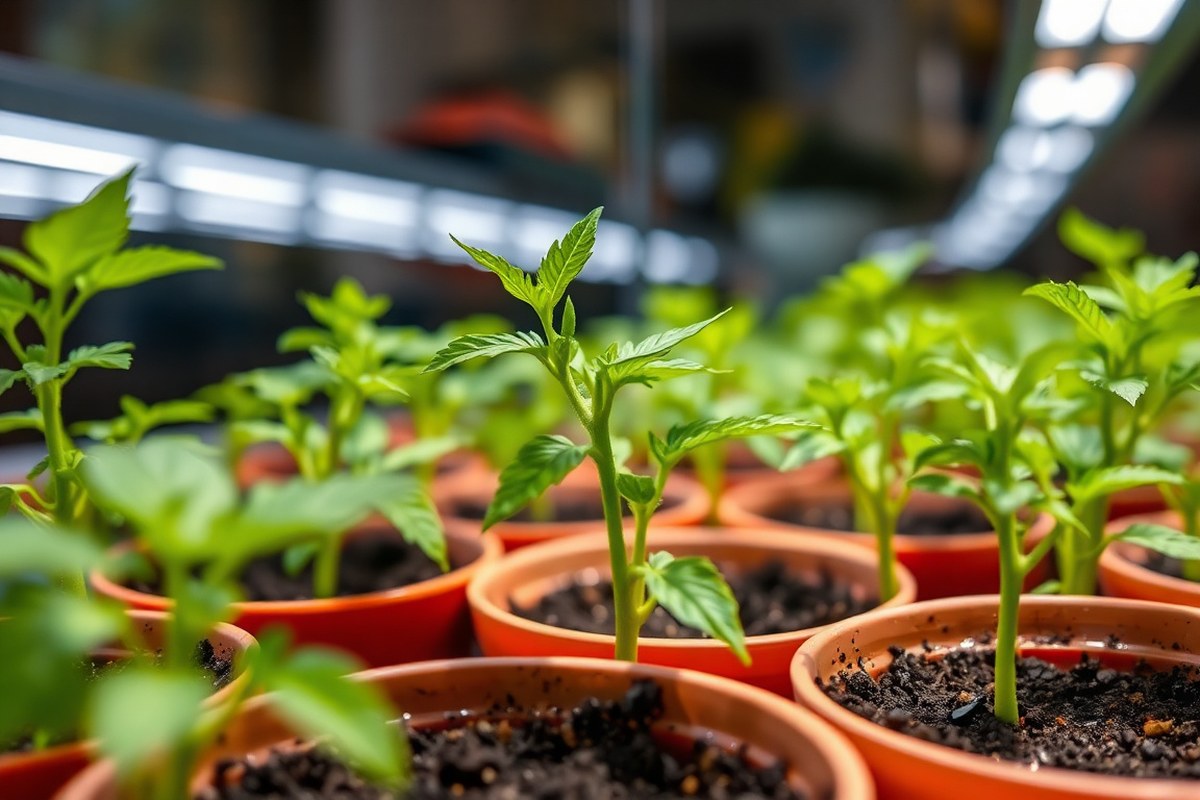
Tomato seedlings are ready for transplanting once they reach 6 to 8 inches tall. They should have at least 2 to 3 sets of true leaves. These are the pointed, mature-looking leaves that replace the initial round seed leaves.
Before transplanting, check the seedling’s stem. A thick, green stem signals strength.
The roots should be visible at the drainage holes of their pots, indicating good root growth. Roots that are sparse or brown need more time to grow first.
Seedlings that look weak usually have thin, spindly stems or yellowing leaves. These plants often struggle with transplant shock and may not recover well in the garden. Don’t rush transplanting just to free up space.
- Seedlings 6 to 8 inches tall
- At least 2 to 3 sets of true leaves present
- Thick, sturdy green stems without bending
- White, healthy roots visible through drainage holes
- Seedlings hardened off gradually before transplanting
Transplant shock happens when roots or stems get hurt. Seedlings also shock if conditions change too fast. To avoid this, harden off seedlings for 7 to 10 days.
Start by placing them outside in partial shade for a few hours. Slowly increase their outdoor time and sun exposure day by day.
Use pots at least 3 inches wide if you start seeds indoors. This size gives roots room to grow strong before transplanting.
Large containers with good drainage help seedlings avoid getting root-bound. Healthy seedlings transplanted on time grow faster and resist pests better.
Step-by-Step Hardening Off Process to Prepare Seedlings for Outdoors
Hardening off tomato seedlings means slowly getting them used to outdoor weather. It helps toughen their leaves and stems to avoid transplant shock.
The process usually takes about 7 to 10 days. Seedlings face more sun, wind, and cooler temperatures each day.
Starting with Short Outdoor Exposure
Begin by placing seedlings outside in a shady, protected spot for just a few hours. Pick a calm day with temperatures above 50°F (10°C) to avoid stressing the plants. Keep them away from direct sunlight and strong winds at this stage.
This short exposure starts building strength in the plant’s cells. It signals leaves and stems to adapt to outdoor conditions slowly.
Gradual Increase of Sunlight and Temperature
Each day, increase the time seedlings spend outside by 1 to 2 hours. Move them into indirect morning sun first, then gently add some afternoon sun as they adjust. Avoid harsh midday sun early in the process to prevent leaf burn.
Also, expose seedlings to mild wind and cooler night temperatures as the days go by. This exposure hardens the plants further by thickening cell walls. Watch carefully for signs of stress, like wilting or leaf yellowing, and reduce exposure if needed.
Final Preparations Before Transplanting
By day 7 or 10, seedlings can stay outdoors all day. They can handle several hours of direct sun.
At this point, leave them outside overnight only if temperatures stay above 50°F (10°C). Make sure the soil outdoors is warm enough to avoid root shock.
Extend the hardening off period by a few days when seedlings look fragile or limp. Once hardened off, plants will grow better and suffer less shock after transplanting into the garden. Use this simple step-by-step list to harden off your tomato seedlings:
- Place seedlings outdoors in shade for 2-3 hours on day 1.
- Increase outdoor time by 1-2 hours daily, adding gentle sun exposure.
- Introduce mild wind exposure and cooler nights gradually.
- Avoid midday sun until seedlings show no stress signs.
- On days 7-10, allow full outdoor days with direct sun for several hours.
- Leave seedlings outside overnight only if temperatures stay above 50°F.
- Watch for wilting, leaf curl, or discoloration; reduce exposure if seen.
- Extend hardening off by a few days if plants remain weak or limp.
Common Mistakes and How to Fix Them When Starting Tomato Seeds
Starting tomato seeds too early is a common mistake. Many gardeners plant seeds as soon as catalogs arrive in January. This often leads to leggy seedlings that look tall and weak.
These seedlings need more light and grow spindly because they stretch toward weak indoor light. To fix this, wait about six weeks before your last frost date in cool climates. That timing helps seedlings grow strong and not outgrow their pots.
Poor germination can also stop your tomato project before it really starts. Seeds that are fresh from tomatoes have much better germination rates than dried store-bought seeds. Fresh seeds can have over 80% germination, while dried ones might only hit 50%.
Check seed freshness and keep soil moist but not wet. Too much water or cold soil around 65°F to 75°F slows growth and causes seed rot. Use a small heating mat if your room is cool.
Lighting problems add to weak seedlings. Tomatoes need at least 12 to 16 hours of bright light daily to avoid legginess. Grow lights or sunny windows facing south work best.
Put the lights 2 to 3 inches above the seedlings and adjust as they grow. Without enough light, seedlings try hard to reach for it and get thin, weak stems.
- Start seeds six weeks before last frost in cool zones
- Keep soil temperature steady at 65°F to 75°F for germination
- Use fresh seeds or check germination rates before planting
- Provide 12, 16 hours of strong light daily to prevent legginess
- Water seedlings when soil surface starts to dry, avoid soggy soil
- Thin seedlings by snipping weaker ones to improve air flow
- Transplant before seedlings become root-bound in small pots
Starting seeds too late also hurts yield. If you sow seeds just two weeks before your last frost date, plants may not have time to mature. Tomatoes usually take 50 to 90 days from transplant to harvest.
Starting seeds at the right time maximizes your growing season. This approach helps you harvest more ripe tomatoes when the weather warms.
Keep grow lights close to young seedlings to avoid thin, weak plants.
Step-by-Step Action Plan for Starting Tomato Seeds
Follow these steps to start your tomato seeds correctly. This helps grow healthy seedlings. Your plants will be ready to transplant soon.
- 4-6 weeks before last frost: Start tomato seeds indoors in seed trays with moist seed-starting mix. Check for sprouting in 5 to 10 days.
- After seedlings emerge: Give them plenty of light using a sunny window or grow light. Seedlings should grow strong, not leggy.
- When seedlings have 2-3 sets of true leaves: Thin out weaker seedlings by cutting them at soil level. This prevents overcrowding and gives stronger plants space.
- Once seedlings are 3-4 inches tall: Feed them weekly with half-strength fertilizer. Use a balanced type to help them grow well.
- 1-2 weeks before transplanting outdoors: Begin hardening off by placing seedlings outside in the shade. Increase sun exposure a little each day.
- After hardening off: Transplant seedlings after frost danger passes. Make sure soil temperature is at least 60°F.
- 1 week after transplanting: Water seedlings deeply every few days. Check leaves for wilting to adjust watering.
- Throughout growing season: Watch for pests and diseases. Treat problems early to get the best tomato harvest.
Frequently Asked Questions
Can You Start Tomato Seeds Indoors Without Grow Lights?
Yes, but seedlings grow stronger with grow lights. Natural light often isn’t enough for healthy growth.
Is It Okay to Start Tomato Seeds in Peat Pots?
Yes, peat pots work well and can go straight in soil. They reduce root disturbance during transplanting.
How Often Should Tomato Seeds Be Watered While Germinating?
Keep the soil moist but not soaked. Water lightly daily to avoid drying out.
Does Seed Age Affect When to Start Tomato Seeds?
Older seeds may take longer to germinate, so start earlier. Fresh seeds usually sprout more quickly.
Can Tomato Seeds Germinate in Too Warm Conditions?
Yes, too much heat can reduce germination rates. Aim for about 70-75°F soil temperature.
Should You Label Tomato Seed Trays When Starting Seeds?
Yes, labeling helps track varieties and planting dates accurately. It prevents mix-ups later on.
The Bottom Line
Timing your tomato seed start carefully helps you grow strong plants and ripe fruit. Begin with your local frost date to plan seed starting. Next, get your seed trays and soil ready to start indoors on time.