What Are Beneficial Nematodes: A Complete Guide for Effective Pest Control
What are beneficial nematodes? They are tiny, worm-like creatures that fight garden pests. These microscopic helpers live in the soil and hunt pest insects that damage plants.
They enter pests like grubs, fungus gnats, and weevils and release bacteria that kill them rapidly. This natural process helps reduce harmful pests without affecting your plants, pets, or beneficial insects.
Beneficial nematodes need moist soil to survive and perform well. Applying them when soil temperatures are between 50°F and 80°F ensures the best pest control results.
Avoid using nematodes during hot, dry weather because they can die without enough moisture. You can keep the soil damp by watering before and after application to help nematodes spread evenly.
Key Takeaways
- Apply beneficial nematodes when soil temperatures are between 50°F and 80°F.
- Beneficial nematodes kill pests by releasing bacteria inside their hosts.
- Store nematodes in the fridge at 38-42°F if you don’t use them immediately.
- Beneficial nematodes work well in moist soil with high humidity levels over 75%.
- S. Feltiae nematodes are the best cold-tolerant species for surface pests.
- Repeat application in 1-2 weeks to control any leftover pests effectively.
What Are Beneficial Nematodes and How Do They Control Pests?
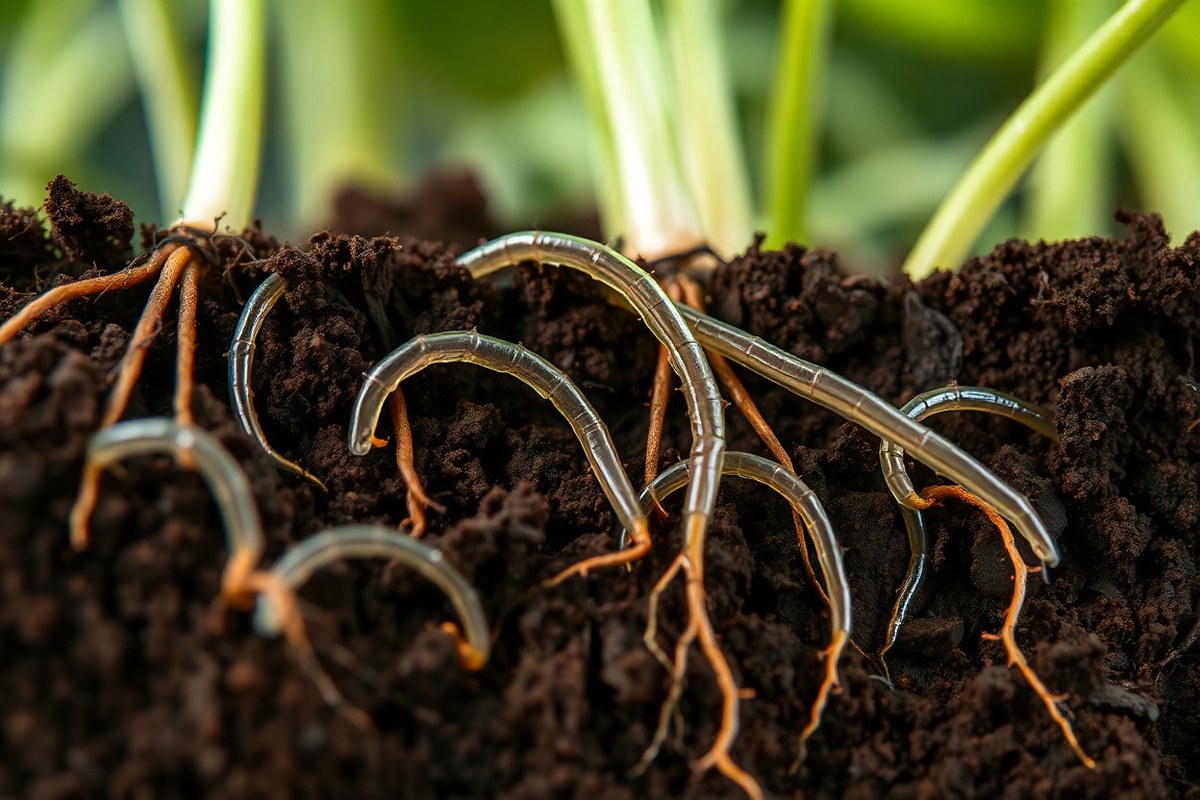
Beneficial nematodes are tiny roundworms that live naturally in soil. They hunt down and kill insect pests like larvae, white grubs, and caterpillars. These microscopic worms are a natural part of the ecosystem, helping control pests without chemicals.
They kill pests using a two-step process. First, nematodes enter insect larvae through natural openings like the mouth or breathing holes.
Once inside, they release bacteria that quickly kill the host. This bacteria also creates a food source for the nematodes to reproduce.
Using beneficial nematodes doesn’t harm your plants or pets. They only target specific insect pests and ignore helpful insects like bees and ladybugs. According to UConn Extension, these nematodes don’t infect people.
They also don’t harm pets or livestock when used right. You must use them as directed.
Because they naturally infect soil pests, nematodes provide safe, organic pest control for your garden. They work best on soil-dwelling stages of pests, attacking them when they’re most vulnerable. This makes them powerful allies against tough insects without risking your garden’s health.
Key Beneficial Nematode Species and Their Target Pests

Several beneficial nematode species are common in pest control. They target different insects and work well at various temperatures. Picking the right species depends on your pest and soil conditions.
Steinernema Feltiae: Surface Pests and Cooler Climates
Steinernema feltiae works near the soil surface, from 0 to 3 inches deep. It prefers cooler temperatures, making it a good fit for early season treatments. This nematode targets fungus gnat larvae, thrips pupae, and leaf miner larvae.
Use S. Feltiae preventatively during propagation or at the first sign of pests. It also controls cabbage maggot and some armyworms. Its surface activity suits indoor plants and greenhouses well.
Apply S. Feltiae in cool, moist soil for best results; avoid hot, dry conditions.
Heterorhabditis Bacteriophora: Grubs and Warm Soil
Heterorhabditis bacteriophora thrives in warmer soils above 59°F. It targets soil-dwelling pests like Japanese beetle grubs and black vine weevil larvae. Late summer or early fall is best for applying grub control.
Grubs are small and close to the surface then. This timing helps the treatment work well.
This species hunts deeper in the soil compared to S. Feltiae. It also controls ants, billbugs, and carrot weevil. Use it on lawns, ornamental beds, or vegetable gardens infested with root-feeding grubs.
Applying H. Bacteriophora at the right soil temperature improves grub control dramatically.
Other Species and Their Uses
Steinernema carpocapsae is a popular species targeting cutworms, armyworms, and some beetle larvae. It works best in warmer soils during early insect activity in the season. It also helps control shore fly larvae and wireworms.
Other nematodes like S. Riobrave and S. Kraussei handle pests such as black vine weevil and chafer beetles. They fill in gaps where S. Feltiae and H. Bacteriophora may be less effective. Choosing among these depends on your pest type and local soil temperature.
Match nematode species to pest and temperature to avoid wasted effort and cost.
When and Where Should Beneficial Nematodes Be Applied?
Best Soil Temperature for Applying Nemotodes
Beneficial nematodes work best when soil temperatures range from 40°F to 95°F. They become less effective below 41°F because their activity slows down. For warm-temperature species like Heterorhabditis bacteriophora, soil temperatures above 68°F are ideal.
Applying nematodes in cooler soil delays their movement and infection of pests. Avoid application if frost or ice is expected, since freezing kills them. This temperature range helps nematodes move well and find pest larvae quickly.
Importance of Soil Moisture Before and After Application
Beneficial nematodes need moisture to move through soil. They travel by swimming in water films around soil particles. Before applying, water your soil thoroughly to create a moist environment.
After application, keep the soil moist for at least a week. Dry soil kills nematodes quickly by desiccation. Watering daily or using drip irrigation maintains that moisture and improves nematode survival.
Applying Nemotodes Indoors and on Houseplants
You can use beneficial nematodes indoors on houseplants. Keep soil moist and temperatures between 40°F and 95°F. They work best in these conditions.
Indoor settings often maintain these stable conditions well. Treat soil directly where pests like fungus gnats or root weevils hide.
Ensure good watering habits inside, so the soil remains moist but not soggy. Avoid overwatering, which can cause mold or root rot. Indoor application can control many soil-dwelling pests without harmful chemicals.
Foliar Spray Effectiveness and Conditions
Foliar sprays with nematodes work best against pests like caterpillars under high humidity over 75%. They need moist, shaded conditions to avoid drying out or UV damage from sunlight. Early morning or late evening applications reduce exposure to heat and sun.
Foliar application is usually less effective than soil application. Nematodes are sensitive to drying and UV light. This reduces their effectiveness on leaves.
Use foliar sprays mainly in greenhouses or fields with controlled humidity. Keep temperatures between 60°F and 85°F for best results.
These conditions help nematodes survive. This setup protects nematodes and boosts pest control.
How to Apply Beneficial Nematodes for Best Results
To get the best results from beneficial nematodes, you need to prepare and apply them carefully. Using the right equipment and keeping the soil moist afterward helps nematodes survive and control pests. Following a good routine with timing and moisture boosts their effectiveness.
Preparing Nematodes for Use
Start by mixing nematodes in clean, cool water between 50 and 70°F. Use water without chlorine or chemicals for best results. Tap water works if you leave it sitting for 24 hours. This lets the chlorine evaporate naturally.
Stir the solution gently to spread the nematodes. Avoid shaking hard because it can hurt them. Keep movements smooth and slow.
Mix only the amount you need right away. Use about one billion nematodes per 1,000 square feet of soil. This ensures freshness and effectiveness.
Keep the solution cool and shaded during mixing and application. Heat and sunlight can kill nematodes quickly.
Protect them by working in the shade. Avoid exposing them to temperatures above 80°F because nematodes die quickly in hot conditions.
Selecting Application Equipment
Use a sprayer with a wide nozzle or a mesh screen larger than 100 mesh. This helps nematodes pass through without getting stuck. Choose the right sprayer to avoid clogging.
This setup prevents nematodes from clumping or getting stuck. Avoid fine mist sprayers or equipment with high pressure.
Nematodes are delicate and high pressure can injure them. Use gentle spray settings instead.
A garden hose-end sprayer suits small gardens well. For bigger areas, use a backpack sprayer with adjustable pressure. Both options let you control the flow safely.
After filling your sprayer with the nematode solution, apply it immediately. Do not let the nematodes sit too long in the tank. Usually, apply within two to four hours of mixing.
Proper Soil and Air Moisture Management
Apply nematodes only when the soil is moist but not flooded. Water your garden thoroughly before application so the nematodes can move through the soil easily. After spraying, lightly water the soil again.
This pushes nematodes into the upper soil where pests live. It improves their chances of finding the pests.
Keep the soil moist for at least 7 to 10 days after application. This moisture helps nematodes survive and find insect hosts.
Dry soil or strong sunlight can kill nematodes quickly. So watering at dusk or early morning is best to avoid drying effects during the day.
Timing and Frequency of Reapplication
Apply beneficial nematodes during cool parts of the day, such as early morning or late afternoon. Avoid application when soil temperatures exceed 80°F or air temperatures reach 95°F. These conditions damage the nematodes and reduce their pest control ability.
Reapply nematodes every 7 to 10 days for best control of target pests. Use multiple applications to boost nematode success. More treatments increase the chance they find and infect insect larvae.
Spacing them out over time works best. Consistent reapplication also helps maintain a steady nematode population in the soil for longer pest protection.
How Many Beneficial Nematodes Do You Need for Your Garden?
For most home gardens, using about 5 million beneficial nematodes covers roughly 1,600 square feet. That works well if you have standard pest pressure and a single pest type. You need more nematodes or a mix for many pests or large areas.
Applying nematodes once is helpful. But a second round increases control and keeps pests down longer. You can split the total amount into two or three parts.
Space them two to three weeks apart. For example, instead of using 5 million nematodes once on 1,600 square feet, try applying 2.5 million at each interval.
Some gardeners wonder if fewer nematodes applied more often works better. Regular, light applications can maintain pest control steadily and reduce chances of pests rebounding.
Skipping too many nematodes at once can slow the initial effect. This is worse if pest levels are high.
| Garden Size (square feet) | Recommended Nematodes per Application | Number of Applications |
|---|---|---|
| 1,600 | 5 million | 1 or 2 |
| 3,200 | 10 million | 1 or 2 |
| 1,600 | 2.5 million | 2 or 3 |
Take a garden of 1,600 square feet with moderate pests. You can apply 5 million nematodes once or split into 2.5 million twice, two weeks apart.
For larger gardens, multiply the nematode count in proportion to size. Two lighter doses often work well in organic systems that favor gradual pest decline.
Watch pest levels after each application. Stop applying more nematodes when pest numbers go down. Apply more only when pest signs return.
This approach saves nematodes and keeps your garden balanced. Nematodes can last up to 18 months in soil. Avoid winter or extreme heat for best timing.
Protect nematodes during application by keeping the mix aerated and avoiding temperatures above 95°F (35°C).
How to Store and Handle Beneficial Nematodes Safely
Store beneficial nematodes in a refrigerator at 38 to 42°F (2 to 6°C). This temperature keeps them alive and active for up to 2 to 4 weeks. Avoid freezing or letting them get warmer than 70°F, which can kill them quickly.
After receiving nematodes, remove them from the shipping box as soon as possible. Keep them loosely packed and unstacked in the fridge. This allows air circulation and prevents damage from pressure.
You’ll know nematodes have expired when the liquid carrier looks cloudy or smells bad. Another sign is if the solution is dry or clumpy. Dead nematodes won’t move or respond in water.
Beneficial nematodes come in a special carrier material that holds moisture. This carrier is safe and won’t harm your soil or plants. The bacteria they release only infect harmful pests, not earthworms or other good bugs.
Handling nematodes is simple: wear gloves if you want but it’s not required. Avoid exposing them to sunlight or heat while mixing or applying. Prepare small batches to use right away instead of storing them long.
Here’s a checklist to keep nematodes alive and working. Store them between 38 and 42°F. Use them within 2 to 4 weeks, keep moist, and handle gently.
Check they look clear and have no smell. Proper care ensures they’ll control pests well in your garden.
How Long Do Beneficial Nematodes Take to Work and How to Monitor Success?
Pest insects start dying within 24 to 48 hours after nematodes infect them. You won’t see them drop immediately like with synthetic pesticides. The insects slowly die underground as nematodes multiply inside their bodies.
To monitor pest reduction, check the soil and plant health regularly. For soil-dwelling pests, inspect root areas for fewer signs of damage. Use yellow sticky traps to catch flying pests like fungus gnats.
These traps help you track adult pest numbers. Meanwhile, nematodes target and kill the larvae in the soil.
Beneficial nematodes stay active in the soil for about two to six weeks. Nematodes live longer when soil moisture is just right. Keep soil between 50 to 85°F for good nematode survival.
Temperature and moisture both affect their lifespan. Dry or very hot soil can shorten their activity.
Repeat treatment if pest levels don’t drop after two to three weeks. You can apply nematodes again if damage continues or new pests appear. Applying twice in one season often improves control without harming beneficial insects.
Watch for fewer pests caught on sticky traps to track success. Check plants for healthier roots as another sign. Also look for less pest damage on leaves and stems.
Also, avoid applying nematodes during dry spells or heavy rain, which can reduce effectiveness. Maintaining moist soil helps nematodes move and infect hosts better.
Common Mistakes with Beneficial Nematodes and How to Avoid Them
Temperature and moisture levels must be right for nematodes to work well. They are most active between 50°F and 90°F. For example, S. Feltiae stays active at the lowest end, around 50°F. Applying them when it’s above 90°F can kill them. They also die fast below 50°F. Keep temperatures between those ranges for best results.
Soil should be moist, not dry or flooded. Water your soil before and after spraying to keep nematodes alive and able to move.
Choosing the wrong species reduces your chances of success. Some nematodes attack only certain pests or work best in specific soil depths. Using a mix of species covers more pests.
Damage varies by garden areas and caterpillar types. Mixing species handles different conditions better.
It’s best to contact a biocontrol specialist for help picking the right species. Otherwise, you might waste money on nematodes that won’t match your pest problem.
Storage and handling mistakes end up killing beneficial nematodes before you even apply them. They need to stay cool and moist until use. Leaving them in direct sun, dry conditions, or for too long reduces their numbers and effectiveness.
The best practice is to keep nematodes refrigerated and use them within their shelf life. Spraying them with standard garden hoses that have strong nozzles or chemicals can also kill them. So use a gentle sprayer with clean water only.
After a poor first try, don’t rush another heavy application. Check soil moisture and temperature better next time. Consider applying a species blend or repeating when conditions improve, especially if pests still appear.
It may take days or weeks to notice nematodes’ effect. So check pest activity over time rather than giving up too soon. Successful use means nematodes are catching pests below ground, reducing damage gradually but visibly.
Store nematodes in the fridge until you use them. Keep them cool and moist. Avoid conditions that can kill their delicate bodies.
Step-by-Step Action Plan to Use Beneficial Nematodes in Your Garden
Follow this plan to get beneficial nematodes working effectively and see pest control results. Track progress at each step to adjust as needed.
- Before You Apply: Test soil moisture with your finger to ensure it’s damp but not soggy. Moist soil helps nematodes move and survive.
- Day 1: Mix nematodes in water per the package instructions. Apply them with a watering can or sprayer evenly over the pest area.
- Day 2-7: Keep soil moist by watering lightly daily but avoid puddles. Check for pest activity or damaged plants slowing down.
- Week 2: Inspect plants and soil for pest signs. You know nematodes are working when pest numbers drop or no new damage appears.
- Week 3: Apply nematodes again in heavy pest spots. Only do this if pests come back or the first try was weak.
- After 4 Weeks: Continue monitoring pest levels and plant health. Healthy, pest-free plants mean the nematodes did their job well.
- Ongoing Maintenance: Don’t use harsh chemicals. Also, avoid digging up the soil too much. This helps nematodes stay healthy and active.
Frequently Asked Questions
How Do Beneficial Nematodes Affect Soil Health?
Beneficial nematodes improve soil health by controlling pest insects naturally. They don’t harm earthworms or microbes that help plants grow strong.
Can Beneficial Nematodes Be Used with Other Organic Pest Controls?
Yes, beneficial nematodes work well alongside other organic methods like neem oil. Combining tactics can boost pest control without harming beneficial bugs.
What Types of Pests Are Not Controlled by Beneficial Nematodes?
Beneficial nematodes don’t control pests above ground like aphids or caterpillars. They target soil-dwelling pests in larvae or pupae stages only.
Can Beneficial Nematodes Harm Beneficial Insects or Pollinators?
No, beneficial nematodes are safe for beneficial insects and pollinators. They specifically hunt pest larvae in the soil, leaving other insects unharmed.
How Often Should Beneficial Nematodes Be Reapplied in a Garden?
Usually, one application lasts a season but reapply if pests return. Two applications spaced 1-2 weeks apart often give better pest control.
Are Beneficial Nematodes Effective in All Types of Soil?
Beneficial nematodes work best in moist, well-drained soils with organic matter. Very dry or heavy clay soils may reduce their effectiveness.
Key Points to Remember
Beneficial nematodes provide a natural way to control pests without chemicals. Start with a moist soil test and apply them carefully. Watch your garden for signs of improvement and stay patient for best results.