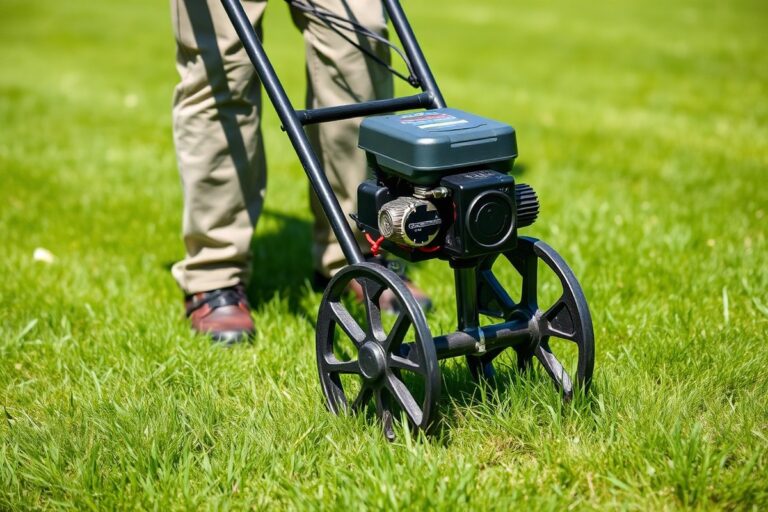
My Grass Is Brown How Do I Make It Green? 8 Proven Steps That Work
My grass is brown how do I make it green again? Start by checking if the grass is just dormant. Dormant grass is still alive and usually recovers in 10 to 14 days with proper care.
Next, water your lawn deeply but less often to encourage strong roots. Avoid shallow watering since this dries the soil and makes browning worse. Also, mow your grass to about 2.5 to 3 inches tall to protect it from heat stress.
Watch soil moisture closely. Footprints lasting over 30 minutes mean dry grass.
The grass likely needs more water. Address dryness quickly because grass loses its green color without enough turgor pressure to stay upright.
Adding a slow-release fertilizer can help your lawn recover faster. Fertilize about once a month during the growing season for best results. Avoid heavy fertilization when grass is stressed, as this can damage roots.
Key Takeaways
- Check if your brown grass is dormant before rushing into fixes.
- Water grass deeply once or twice a week, not shallow daily watering.
- Keep grass height between 2.5 and 3 inches to help withstand heat.
- Watch for footprints that stay longer than 30 minutes as a dryness sign.
- Reduce watering in cooler weather or once grass returns to 1, 2 inches tall.
- Mow with a sharp blade to avoid tearing grass blades and causing damage.
1. How to Make Brown Grass Green Again Quickly

Reviving brown grass starts with quick, focused care. Watering alone may not fix the problem if other issues like soil or pests exist. Immediate steps help you regain healthy green blades within two to four weeks.
Start by looking at moisture conditions. Dry and brittle grass needs deep watering to soak the soil well. Overwatering softens soil and harms roots, so adjust accordingly.
- Clear debris: Remove dead grass, leaves, and twigs from brown patches. This frees sunlight and air for the grass below.
- Water deeply: Aim for 1 inch of water per week. Water early morning, soaking the roots slowly to encourage growth.
- Adjust mower height: Raise your mower blade to about 3 inches. Longer blades protect grass during heat and drought.
- Check soil condition: Walk across your lawn and watch for water pooling. Aerate compacted soil using a spike or plug aerator.
- Reseed bare spots: Spread grass seed over thin patches after aeration. Keep seeded areas moist for about three weeks.
- Feed with balanced fertilizer: Use a slow-release type after watering to promote root health. Follow label rates carefully.
- Limit foot traffic: Avoid walking on stressed brown patches. Traffic delays recovery and damages new growth.
Grass can take two to four weeks to green up again. It depends on the problem and how you care for it.
Dormant grass may need less watering but more time. A lush green lawn shows healthy blades about one inch long with a springy feel.
Brown patches from dog urine or soil problems need extra care. You might need soil amendments or spot treatments.
Watering deeply and mowing higher help most other brown grass recover quickly. Avoid too much water, which worsens problems and delays greening.
2. How to Diagnose Why Your Grass Is Turning Brown

Brown grass can either be dead or dormant. Figuring out which it is will guide your next steps.
You can check with simple tests like walking on it or checking soil moisture. Look for signs that point to pests, diseases, or environmental damage.
Dormancy vs Dead Grass: How to Tell
Grass turns brown during dormancy to survive extreme heat or cold. Dormant grass usually has a uniform brown color and covers an entire area consistently. Dead grass looks patchy, feels brittle, and won’t bounce back after watering.
To test, gently press your foot down and lift it, the “footprint” test. Grass blades that spring back show dormancy, not death.
Also, use a moisture meter or dig a small hole. Dry soil often causes dormancy, while soggy soil might mean other issues.
Common Lawn Diseases and Their Signs
Diseases often cause round, brown patches with distinct yellowish rings. The grass in the center usually dies off completely.
The edges look lighter or discolored. Fungal infections often spread gradually during warm, wet weather.
You may see fungal spores or moldy-looking spots on the grass blades. Check for slimy or powdery textures, which often indicate disease. Don’t rush to apply fungicide until you rule out watering and soil problems.
Identifying Pest Damage Accurately
Pest damage often looks like irregular patches with dead grass. Sometimes you see tiny brown spots scattered across the lawn.
Find small holes or dig around the roots to check for grubs or insect larvae. Watch for patterns like a chewed grass blade or grass pulled up, which mean pests.
Some pests leave visible trails or tunnels. Others cause your grass to wilt or yellow early. Check for nail-sized brown spots or large dead patches.
These are usually surrounded by green grass. They show insects are feeding. The damage may worsen quickly without treatment.
Environmental Stress Symptoms
Brown grass often signals stress from drought, heat, or compacted soil. Uneven brown spots on slopes may mean erosion or water runoff. Salt damage from pet urine creates dead spots with dark green “halos” around them.
Improper mowing causes stress too, if you cut grass too short, it browns faster. Heavy foot traffic compacts soil, making it hard for roots to get water and nutrients. Test soil moisture in several spots with a meter to find dry areas or waterlogged soil.
- Footprint test: Press down and see if grass springs back
- Soil moisture check: Use a meter or dig a small hole
- Look for consistent brown color (dormant) vs patchy dead spots
- Check edges for yellow or discolored rings indicating fungus
- Inspect for holes, tunnels, or chewed blades signaling pests
- Note patterns like pet urine burns or erosion on slopes
- Assess mowing height and foot traffic as possible causes
Don’t jump to treat without testing. Many lawn issues look alike but need different fixes.
3. Best Watering Practices to Prevent and Fix Brown Grass
Water your lawn thoroughly about once a week or at first sign of wilting. Try to provide about one inch (2.5 cm) of water per watering session. This total includes rain and encourages the roots to grow deeper.
Watering early in the morning, between 6 a.m. And 10 a.m., is best. This timing reduces evaporation and fungal growth. Avoid watering in the evening since grass stays wet longer, inviting diseases.
Overwatering leads to shallow roots and fungal problems. Underwatering causes grass to brown and go dormant. Check soil moisture with a meter to water only when the top two inches feel dry.
Water needs differ based on grass type and seasons. Warm-season grasses like Bermuda need less watering in cooler months.
Cool-season grasses require more water during their growing seasons. Adjust based on your local climate and weather.
Water deeply fewer times per week rather than frequent shallow watering. This encourages stronger roots and healthier grass. For example, water 1.5 cm (0.6 inches) every three to four days for garden grass to keep it green.
| Watering Factor | Recommended Amount | Frequency | Best Time |
|---|---|---|---|
| General weekly amount | 1 inch (2.5 cm) including rainfall | Once a week | Early morning (6 a.m. To 10 a.m.) |
| Garden grass soak | 1.5 cm (0.6 inches) | Every 3 to 4 days | Early morning |
| Warm-season grasses | Less in cool months | Based on growth | Early morning |
| Cool-season grasses | More in active growth | During growing seasons | Early morning |
Watering too often with little water keeps roots near the surface. This makes grass less drought-resistant. Deep watering 2 to 3 times per week works better for healthy root systems.
Use tools like a soil moisture meter to check if your lawn needs water. Let grass blades wilt just a bit before watering to avoid waste. Adjust based on rain, temperature, and grass condition for best results.
4. Soil Problems That Cause Brown Grass and How to Fix Them
Brown grass often signals soil problems like compaction, pH imbalance, or nutrient deficiency. Fixing these issues helps roots grow strong and keeps grass green. Testing your soil and adding the right amendments makes a big difference.
Testing Soil pH and Nutrient Deficiencies
Start by checking your soil’s pH to know if it’s too acidic or alkaline. Grass grows best in soil with a pH between 6 and 7.
You can buy a home soil test kit for $10 to $30. These kits are available at garden centers or online.
Testing for nutrient levels shows if the soil lacks nitrogen, phosphorus, or potassium. These nutrients feed grass and keep it healthy. Soil test kits give you a clear reading so you know what to add.
Amending Soil pH: When and How
Your grass can turn brown when soil pH is below 6 or above 7. Add ground limestone to raise pH if the soil is too acidic. Use sulfur to lower pH if it’s too alkaline.
Applying 2 to 5 pounds of ground limestone per 100 square feet helps balance acidic soil. Let it sit for a week before planting new grass seed. This gives the soil time to adjust before you add seed or fertilizer.
Dealing with Soil Compaction and Thatch
Compacted soil prevents air, water, and nutrients from reaching roots. It feels hard when you walk on it, and grass looks stressed or brown. Thatch is a thick layer of dead grass and roots that blocks these too.
Check for thatch by digging a 2-inch-deep chunk of your lawn. More than half an inch of thatch means you need to rake.
You can also dethatch it to improve soil contact. Breaking up compaction can save your lawn.
Benefits and Timing of Aeration
Aerating means making small holes in your lawn. This loosens the soil. It helps roots get water and nutrients.
It helps brown patches recover and lets the soil breathe. Aerate when soil is moist, usually in spring or fall.
Don’t aerate if the soil is dry or frozen. Use a garden aerator or rent one for around $50 a day. Aeration supports healthier grass and reduces future brown spots caused by compacted soil.
- Purchase a soil pH and nutrient test kit from a local nursery or online.
- Collect soil samples from different parts of your lawn, going about 4 inches deep.
- Follow kit instructions to test pH and check nutrient levels.
- Apply ground limestone at 2-5 pounds per 100 square feet when pH is below 6.
- Apply elemental sulfur as directed on the label when soil pH is above 7.
- Dig a small section to check for soil compaction and measure thatch thickness.
- Rake or dethatch if thatch exceeds half an inch.
- Aerate your lawn during spring or fall when soil is moist but not soaked.
5. How Lawn Pests Cause Brown Spots and How to Control Them
Grubs and chinch bugs often cause brown patches in lawns by damaging grass roots and blades. Identifying these pests early helps you choose the right treatment. Both preventive and curative options exist depending on the infestation level.
Key Lawn Pests: Grubs and Chinch Bugs
Grubs are the larvae of beetles, feeding on grass roots under the soil surface. Their damage makes grass thin and easy to lift. Chinch bugs suck sap from grass blades, causing brown, dry spots above ground.
Both pests thrive in warm seasons and dry conditions, increasing stress on your lawn. Grub problems usually appear in late summer or early fall. Chinch bug damage starts in late spring and worsens into summer.
Symptoms of Pest Infestations
Brown patches often begin with irregular dead spots that spread quickly. Look for weak grass that pulls up easily, especially near dead spots. You might see small insects or larvae when you inspect these areas closely.
Check your lawn by cutting a 1-square-foot sod piece and looking underneath. Finding 10 or more grubs per square foot confirms their presence. For chinch bugs, look for tiny, fast-moving bugs near brown blades.
- Grass lifts easily and looks thin around brown spots
- Brown, drying grass blades with visible small bugs
- Dead patches that start small and grow over weeks
- Uneven grass color, especially near shaded or sunny spots
- Presence of small beetle larvae or chinch bugs on inspection
Brown patches next to healthy grass suggest an insect problem over fungal issues. Signs often resemble drought stress but don’t improve with watering. Spotting the pests or grub count confirms the cause.
Preventive vs Curative Treatments
Applying pest control early in the season works best as preventive care. Chemical products like carbaryl or nematodes stop grubs before damage starts. Preventive treatments save your lawn from serious injury and costly repairs.
For active infestations, use curative insecticides to kill pests fast. Trichlorfon products applied at 3 pounds per 1,000 square feet work well against grubs. Azoxystrobin at 3.5 pounds per 1,000 square feet helps control fungal diseases often linked to pest damage.
Natural options like nematodes are safer but slower, taking 2-3 weeks to show effects. Chemical treatments act within 24 to 48 hours but require careful timing and application. Re-treatment may be needed if brown patches return.
Safe Application Tips
Apply insecticides on calm, dry days to avoid drift and runoff. Use the recommended amounts on product labels for your lawn size. Keep children and pets off treated areas until dry, usually 24 to 48 hours.
Water your lawn a day before applying treatments but avoid irrigation immediately afterward unless specified. Check local rules for chemical use and consider hiring a lawn professional for large infestations. Mowing height affects pest damage; keep blades sharp and grass taller to reduce stress.
Always wear gloves and protective gear during pesticide application to avoid skin contact.
6. Fungal Diseases That Turn Grass Brown and How to Manage Them
Brown patch and dollar spot are two common fungal diseases that make grass turn brown. Brown patch shows as large, circular brown rings with a smoke-like border. Dollar spot looks like small, round spots on your grass.
These spots are light brown. They are usually about the size of a silver dollar.
Both diseases like warm, wet weather with poor air flow. The spots get worse if grass stays wet too long. Over eight hours of wetness can cause problems.
Warm temps between 70°F and 85°F also help it grow. Lawns with dense thatch or compacted soil are more prone to these fungal infections.
Check your lawn for these symptoms:
- Large brown rings or patches with a grayish edge (brown patch)
- Small light brown spots, often scattered
- Grass blades with water-soaked or bleached centers
- Thin or dead grass in infected areas
- Wet and humid conditions for several days
- Excessive thatch layer or poor drainage
- Grass cut too short or damaged by mower
Applying fungicides can help, but timing and safety matter. Use fungicides labeled for brown patch or dollar spot, applying them early when symptoms first show. Follow label instructions exactly about mixing, applying, and re-entry intervals.
Typically, one treatment every 14 days during wet periods can control fungi. Avoid overuse to prevent resistance and environmental harm.
Good lawn care cuts fungal risks far more than chemicals alone. Mow grass to recommended heights and remove clippings to reduce fungal spores. Water lawns deeply but less frequently, aiming for morning watering to dry leaves quickly.
Aerate compacted soil annually and dethatch if thick layers build up. These steps improve air flow, drainage, and root health.
Treat brown spots by spreading gypsum on your lawn. Use 50 pounds for every 1,000 square feet. This helps improve the soil and fix the spots.
For lawns with soil pH above 7.2, spreading sulfur helps lower pH temporarily and improves grass color. Avoid cutting sick grass too short since it stresses and weakens it further.
7. How Mowing and Fertilizing Affect Lawn Health and Brown Grass
Set your mower blade height to 3 inches for most grasses to avoid stressing the lawn. Cutting grass too short weakens roots and causes brown patches. Sharpen mower blades once a season.
Dull blades tear grass leaves. Torn blades can let disease in.
Fertilizing helps green up grass by providing nutrients, but timing and amount matter. Use about 1 pound of nitrogen per 1,000 square feet. Feed your lawn 2 to 4 times yearly.
Do it in spring and fall when grass grows best. Avoid fertilizing during drought or extreme heat, as this can burn brown or weak grass spots.
Spread fertilizer evenly. This stops pale yellow or brown streaks on grass. Uneven spreading causes these color streaks.
Water your lawn after fertilizing to help soak in nutrients, but don’t overwater. Too much fertilizer or watering can cause burn spots.
These show as brown spots 1 to 2 days after application. Burn patterns often match the fertilizer pattern.
Common mistakes are mowing grass too short or with dull blades. Also, applying too much fertilizer or fertilizing during drought harms grass. Fix mowing mistakes by raising cutting height and sharpening blades.
For fertilizing problems, cut back on fertilizer amount and avoid applying in hot weather. This helps grass recover and reduces brown spot risks.
Avoid mowing too often when your lawn is healing brown patches. Leave grass clippings on the lawn. Clippings provide natural nutrients.
Regular mowing every 5 to 7 days during growing season keeps grass healthy without causing stress. Adjust mowing height higher during hot, dry months to protect roots and reduce browning risks.
8. Managing Pet Damage and Chemical Burns That Cause Brown Lawn Spots
Your pet’s urine can make brown spots in your lawn. It contains acid that burns grass, turning it brown. Spots often have a ring of darker green grass around them.
This happens because the grass nearby gets extra nitrogen. That extra nitrogen makes the grass look greener.
Chemicals like weed killers or fertilizers can also burn grass if they’re too strong. These burns look like brown spots or patches. Protecting your lawn means using products made for grass and following the label carefully.
Fixing brown spots from urine or chemicals takes a few clear steps. You need to rinse the area first to dilute the acid or chemicals. Remove any dead grass first.
Then prepare the soil for new seed. This helps healthy grass grow again.
- Rinse the brown patches well with water several times to wash away urine or chemicals. Use a hose or bucket for this.
- Cut away dead grass, weeds, and other dead plants. Clear space in the damaged area. This helps new grass grow.
- Loosen the soil gently with a rake or hoe to help seeds settle in better.
- Spread grass seed that matches your lawn type evenly over the bare spots.
- Lightly cover the seeds with a thin layer of soil or compost to protect them.
- Water the seeded area daily, keeping the soil moist but not soaked. This helps seeds sprout in 7 to 14 days.
- Put down some mulch or straw to keep moisture in and protect seedlings.
- Train pets to avoid the same spot. You can also place barriers on that area. Keep them away until grass grows back fully.
Use lawn-safe chemicals labeled for grass, and never apply more than recommended. Overuse causes burns that look like brown spots.
To prevent pet damage, water spots right after your pet urinates to dilute acid. You can also train your pet to use different areas or a gravel patch.
Using pet-friendly lawn products reduces chemical burns. Regular lawn care keeps grass strong enough to resist damage.
Step-by-Step Action Plan to Revive Your Brown Grass
Follow these steps to get your lawn green again. Check your progress after each phase to stay on track.
- Day 1: Water your lawn deeply in the morning to soak the roots. Look for soil that feels moist 6 inches down.
- Day 2: Check your soil with a simple kit for pH and nutrients. Note any imbalances to address later.
- Week 1: Mow your grass at the right height. Don’t cut more than one-third of the blade. Healthy grass looks even and not stressed.
- Week 2: Apply a balanced fertilizer based on your soil test results. Watch for greener blades over the next 7 to 10 days.
- Week 3: Check for pest or fungus damage on your grass. Use proper control products to treat any spots you see. Signs of improvement are fewer brown spots.
- Week 4: Reduce foot traffic and keep pets off the lawn. Monitor for new damage; less wear means grass can recover.
- After 1 Month: Rethink watering frequency to keep your lawn healthy and prevent browning. Soil should stay moist but not soggy between waterings.
Frequently Asked Questions
How Long Does It Take for Brown Grass to Recover?
Brown grass often takes 2 to 4 weeks to green up if cared for properly. Regular watering and avoiding stress like mowing too short speed recovery.
Can Watering Brown Grass in the Morning Help?
Yes, watering in the morning reduces evaporation and disease risk. It gives grass time to dry before evening, which helps prevent fungal problems.
Can Grass Turn Brown from Too Much Fertilizer?
Yes, too much fertilizer can burn grass and cause browning. Use fertilizer sparingly and follow the label for safe amounts to avoid damage.
Is It Normal for Grass to Go Brown in Summer?
Brown grass in summer often means dormancy, a survival tactic against heat. It will usually green up again with cooler weather and proper care.
Can Shade Cause Grass to Turn Brown?
Shade can cause thinning and brown patches since grass needs sunlight for photosynthesis. Choose shade-tolerant grass types for shady areas.
Does Brown Grass Mean the Soil Is Dead?
Brown grass doesn’t always mean dead soil, but poor soil health contributes to browning. Testing soil pH and nutrients helps you fix underlying problems.
Before You Go
Brown grass can turn green again when you match care to its needs. Start by watering properly and checking your soil. That simple step moves you closer to a healthy lawn every day.