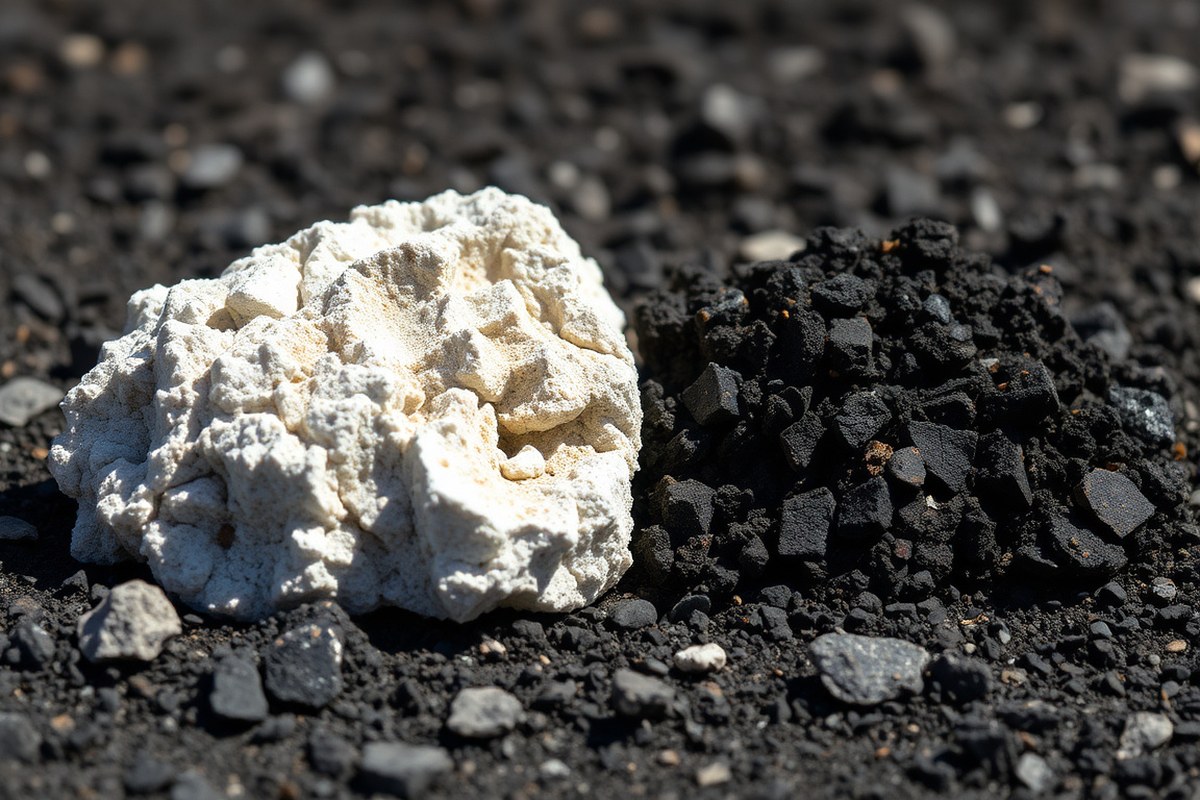
What Geologic Event Produces Pumice and Scoria: A Complete Guide to Formation and Differences
What geologic event produces pumice and scoria? Both form during volcanic eruptions but under different conditions.
Pumice forms in explosive eruptions that blast gas-rich, foamy magma into the air. Scoria forms when gas escapes from lava flowing more quietly, trapping bubbles in the cooling rock.
These rocks come from magma with different silica levels. Pumice forms from high-silica magma, which traps gas tightly and creates a light, frothy texture. Scoria forms from lower-silica magma, which flows more easily and produces larger gas pockets.
Knowing the eruption type and magma composition helps identify where pumice or scoria will form. Check the lava flow speed when studying volcanic rocks. Also, look at the gas content.
Both affect how volcanic landscapes change. These details explain their distinctive appearances and physical properties.
Key Takeaways
- Pumice forms from explosive eruptions of gas-rich, high-silica magma.
- Scoria forms during lava flows with trapped gas and lower silica content.
- Pumice has a light, frothy texture with many small gas holes.
- Scoria has large gas pockets and is heavier due to metal content.
- High silica makes pumice viscous, helping it trap gas and float.
- Lower silica magma flows faster, producing porous scoria with bigger bubbles.
What Volcanic Events Create Pumice and Scoria?

Pumice and scoria form during volcanic eruptions when molten rock releases gas. Pumice appears after violent, explosive eruptions. Scoria develops from lava flows rich in gas but with gentler eruptions.
Explosive Eruptions Forming Pumice
Pumice forms during highly explosive volcanic events. These eruptions eject rapidly expanding magma full of gas bubbles. The gas escapes so fast it creates a frothy, foamy rock texture.
This foamy magma cools quickly while airborne or after landing. Rapid cooling traps the gas bubbles inside, producing pumice’s light, porous look. This rock can float on water because of these trapped air pockets.
Eruptions throw out ash, rock bits, and pumice clasts. These bits can spread hundreds of meters away from the volcano. The explosive nature of these eruptions makes pumice common around volcanoes with silica-rich magma.
Lava Fountaining and Scoria Production
Scoria forms in less violent eruptions characterized by lava fountaining. Gas-rich lava flows out and traps bubbles inside.
The bubbles stay as the lava cools on Earth’s surface. The trapped gas creates the vesicular texture typical of scoria.
The lava involved is usually basaltic with lower silica content compared to pumice lava. This magma is more fluid, allowing gas to escape slower. It results in coarser, heavier scoria with larger vesicles.
These eruptions often display short bursts or steady lava fountains instead of massive explosions. Ash and lapilli scoria drop near the vent. They build up scoria cones or layers around the volcano.
Differences in Eruption Styles and Gas Release
Both pumice and scoria come from volcanic gas trapped in molten rock. Explosive eruptions produce pumice by releasing gas suddenly and violently. The gas expands quickly, frothing the magma into a light rock.
Scoria eruptions have gentler gas escape during lava flow. Gas bubbles rise slower, trapping less gas and creating a denser stone. The magma’s lower viscosity lets gas escape more steadily, shaping scoria’s rough texture.
These differences affect eruptive behavior, magma viscosity, and gas content. Volcanic environments with high silica content and rapid depressurization favor pumice. Less silica, fluid lava flows, and steady gas release encourage scoria formation.
Here is the step-by-step process that volcanic eruptions follow to produce pumice and scoria:
- Molten magma rises from deep inside the Earth toward the surface.
- Pressure drops as magma nears the surface, causing dissolved gases to form bubbles.
- In explosive eruptions, gas bubbles expand rapidly and violently froth the magma, creating pumice foam.
- Pumice is ejected violently and cools rapidly in the air or on the ground.
- In less explosive eruptions, gas bubbles rise more slowly, forming lava fountains full of gas pockets.
- Molten lava cools on the surface trapping gas bubbles, producing vesicular scoria rock.
- Scoria lands near the vent, building cones or thick layers over time.
- The varying silica content and gas release style determine pumice versus scoria formation.
How Magma Composition Affects Pumice and Scoria Formation

Pumice and scoria come from different types of magma with varying silica and chemical content. Pumice forms mainly from silica-rich, felsic magma that is very viscous. Scoria comes from mafic or intermediate magma.
This magma has less silica. It contains more iron, magnesium, and calcium.
Silica and Gas Content Ranges
Pumice usually forms from magma containing 63% or more silica, making it felsic or sometimes intermediate. This high silica content traps large amounts of gas, creating many small, frothy vesicles. Scoria forms from magma with about 45 to 52% silica.
This magma is mafic and less thick. It traps fewer, larger gas bubbles.
Higher gas content in pumice results in very porous, lightweight rock that can float. Scoria’s lower gas but heavier mineral content makes it denser and unable to float.
| Property | Pumice | Scoria |
|---|---|---|
| Silica content (%) | ~63, 75 (felsic) | ~45, 52 (mafic) |
| Gas content | High (many small vesicles) | Moderate (large vesicles) |
| Density | Low (floats on water) | Higher (sinks in water) |
| Color range | Light colors (white, gray) | Dark colors (red, black) |
The distinct silica range controls vesicle size and density. These differences reflect how magma chemistry shapes the rocks’ features.
Role of Iron, Magnesium, and Calcium
Scoria has more iron, magnesium, and calcium oxides than pumice, influencing its color and weight. These elements make scoria darker and heavier, contributing to its reddish or black shades. Pumice contains very little iron and magnesium, making it lighter and pale in color.
Higher iron and magnesium content allow scoria to cool with tougher, thicker walls around gas bubbles. Pumice’s low metal content means thinner vesicle walls and a more fragile structure.
Carefully distinguish scoria from pumice based on color and weight before field identification.
Effect on Magma Viscosity and Eruption Style
Magma with higher silica, like that forming pumice, is very viscous and traps gas easily. This builds pressure until explosive eruptions occur, ejecting pumice as frothy lava cools rapidly. Scoria forms from magma that is less thick.
It lets gas escape more easily. Eruptions are less explosive but create vesicular lava.
Viscous magma also slows bubble escape in pumice, leading to numerous small vesicles. In scoria, lower viscosity lets gas form larger bubbles that create its spongy texture. These eruption differences help you tell which rock came from which magma.
Differences in Physical and Chemical Traits Between Pumice and Scoria
Pumice and scoria differ mainly in appearance, density, and chemical makeup. You can spot pumice by its pale color and light, porous form.
Scoria tends to be darker and denser with thicker walls in its vesicles. These differences come from their mineral content and the way gas escapes during an eruption.
Vesicle Size and Distribution
Pumice has many tiny vesicles packed close together. These vesicles are small and evenly spread, making the rock very porous. The thin walls between bubbles give pumice a highly fractured look.
Scoria’s vesicles are larger and more irregular than pumice’s. They have thicker walls and fewer vesicles per volume. This results in a coarser texture with bigger holes that often look like cinders.
Density and Buoyancy
The high vesicle count and thin walls make pumice very lightweight. It usually has a density below 1 gram per cubic centimeter.
So it can float in water. Floating pumice can form large rafts, sometimes spanning kilometers.
Scoria is denser due to its thicker walls and larger mineral crystals. It often has a density above 2 grams per cubic centimeter.
So it sinks quickly in water. Scoria’s weight is why it’s rarely used except as decoration.
Color and Mineral Content
Pumice is typically light gray, white, or pale tan. Its composition is rich in silica and felsic minerals, giving it a glassy texture. The mineral grains are very fine, almost microscopic, or absent entirely.
Scoria rocks range from black and dark gray to reddish brown. This color variety comes from higher amounts of iron and magnesium in mafic minerals. Scoria contains minerals like pyroxene and olivine, which are rarer in pumice.
The table below shows key traits that help tell pumice and scoria apart. Use it as a quick reference.
| Trait | Pumice | Scoria |
|---|---|---|
| Vesicle size | Small, numerous, thin walls | Large, fewer, thick walls |
| Density (g/cm³) | <1 (floats) | >2 (sinks) |
| Color | Light gray, white, pale tan | Black, dark gray, brown, red |
| Chemical composition | Felsic (high silica) | Mafic to intermediate (iron-rich) |
| Typical minerals | Fine glassy texture, minimal crystals | Pyroxene, olivine crystals |
Checking vesicle size, color, and density together helps you decide if you’re holding pumice or scoria. The contrast in mineral content also shows how the rocks formed under different eruption styles. You can test density by seeing if the rock floats on water.
Why Pumice Floats and Scoria Sinks in Water
Pumice floats in water because it holds many tiny air pockets called vesicles. These vesicles are isolated and have very thin walls. The trapped air inside makes pumice less dense than water, allowing it to float.
Scoria, on the other hand, sinks because its vesicles are fewer and mostly connected. This connection lets water seep inside, which adds weight. Its thicker, glassy walls contain heavier metals that increase its overall density.
Pumice forms from felsic magma, which creates light-colored, porous rock. The thin walls of vesicles trap air inside pumice. This trapped air makes pumice very light.
Its density is less than 1 gram per cubic centimeter. Scoria forms from mafic or intermediate magma, which contains more iron and magnesium, making it denser.
For pumice, porosity stays high with separated bubbles, which keeps buoyancy high. In scoria, interconnected vesicles reduce porosity efficiency since water fills the spaces. This difference in porosity and density explains why pumice floats but scoria sinks in water.
Where Pumice and Scoria Form Around the World
Pumice and scoria form mainly in volcanic regions where magma reaches the surface. These rocks arise from explosive volcanic eruptions that eject molten rock into the air. Each rock type links to different magma types and tectonic settings.
Pumice mostly appears in subduction zones where thick, silica-rich magma is common. These zones lie around the Pacific Ring of Fire.
They include places near Japan, Indonesia, and the west coast of the Americas. The magma’s high gas content causes rapid cooling and frothy pumice.
Scoria forms when basaltic or andesitic magma cools quickly. It often appears at divergent boundaries and hot spots.
These settings include places like Iceland and Hawaii. Their magma is less viscous, allowing larger bubbles before solidifying into scoria.
- Subduction zones produce large volumes of pumice with rhyolitic to dacitic magma.
- Divergent boundaries create scoria from basaltic magma with low silica.
- Hot spot volcanoes like Hawaii generate primarily scoria in basaltic eruptions.
- Volcanic arcs produce pumice due to more silica-rich, gas-heavy magma.
- Some continental rift zones yield scoria from intermediate magma types.
- Caldera-forming eruptions in volcanic fields can expel large pumice deposits.
Both pumice and scoria can also form outside typical settings depending on magma chemistry. You can find pumice in explosive rhyolite domes and scoria in smaller cinder cones. Looking at the local tectonic boundary helps predict which rock is likely.
Check local volcanic activity maps before collecting rocks. Some sites are protected or unsafe due to ongoing eruptions.
How Vesicles Form During Eruptions in Pumice and Scoria
Gas bubbles form inside rising magma, creating the porous texture in pumice and scoria. These bubbles are called vesicles. They start when dissolved gases in magma come out as pressure drops near the surface.
As magma rises, pressure decreases. This drop lets gases like water vapor, carbon dioxide, and sulfur escape from the liquid rock. When the gases separate, they form tiny bubbles in the magma.
The size and number of vesicles depend on gas in magma. More gas means bigger or more vesicles. The speed of gas escape also changes vesicle size.
Pumice usually has many small vesicles, making it very porous. Scoria has fewer but larger vesicles and a denser texture.
Here are the main steps in how vesicles form during volcanic eruptions:
- Release magma from underground chambers towards the earth’s surface.
- Allow pressure to drop, which lowers gas solubility in magma.
- Encourage gases to come out of solution and form bubbles.
- Trap those gas bubbles in the magma as it cools and solidifies.
- Cool the magma quickly to freeze the bubbles in place.
- Adjust vesicle size by varying gas content and cooling rate.
- Solidify the rock, preserving the porous texture of pumice or scoria.
The gas content in magma matters because high gas levels produce more vesicles. Rapid cooling locks these bubbles in before they can escape. Slow cooling lets gases escape and decreases vesicle formation.
For pumice, the magma contains a lot of gas, and rapid cooling traps many microvesicles. This makes pumice so light it can sometimes float on water. Scoria forms when magma has less gas or cools slower.
This creates larger gaps inside but not enough to float. The gas pockets are bigger but fewer than pumice.
Practical Uses and Identifying Features of Pumice and Scoria
Pumice and scoria both have practical uses you can spot easily. Pumice often appears in beauty and personal care products.
People use it to scrub skin, remove calluses, and clean hard surfaces. Scoria, on the other hand, works well in landscaping and drainage because it drains water quickly.
Recognizing pumice versus scoria comes down to a few physical traits. Pumice is much lighter and usually pale, ranging from white to light gray. It feels rough but is surprisingly light because its many tiny holes trap air.
Scoria looks darker, often reddish-brown or black, and feels heavier. Its holes are bigger but fewer than pumice’s, and it usually sinks in water.
Here’s a simple checklist to help tell pumice and scoria apart:
- Check color: pumice is usually light; scoria is dark.
- Weigh the rock: pumice feels light for its size; scoria is heavier.
- Look at the holes: pumice has many small holes; scoria has fewer, larger holes.
- Try floating it in water: pumice often floats; scoria sinks.
- Note the texture: pumice feels rough and abrasive; scoria feels coarser.
A common mistake is calling any porous volcanic rock pumice. Some rocks look similar but may be pumiceous or other types.
Another slip-up is thinking scoria floats just like pumice. It usually does not, so testing it in water helps avoid confusion.
You can test this easily by dropping the rock in water at room temperature. Wait a few seconds and see if it floats or sinks.
Pumice may float for minutes before eventually getting waterlogged. Scoria goes down almost immediately due to its iron content and larger vesicles.
Using these checks takes little time and requires no special tools. A clear view, a small sample, and water give a quick ID. It takes about a minute to get reliable results.
You only need these three things to try it yourself. This method works well both outdoors and at home.
You can use it when you’re out in the field. It also helps when sorting rocks in your collection.
How Eruption Conditions and Cooling Rate Influence Pumice and Scoria
Magma cools rapidly during volcanic eruptions, causing pumice and scoria to form quickly. The rapid cooling keeps the rock mostly glassy with many trapped gas bubbles called vesicles. This fast formation happens in minutes or hours.
Molten rock meets air or water. It cools and solidifies quickly.
The speed of cooling affects the rock’s texture strongly. When lava cools fast, it becomes volcanic glass, which is very smooth and lacks visible crystals.
Slow cooling lets mineral crystals grow, making the rock coarser and less glassy. Pumice and scoria usually cool too fast for big crystals to form.
Gas bubbles play a key part in both rocks’ formation. During eruption, escaping gases create bubbles in the magma, which get trapped by quick cooling.
In pumice, bubbles are very small and tightly packed, creating a frothy texture. Scoria has larger, more spaced-out bubbles, giving it a rough, porous look.
Sometimes pumice and scoria form on the top edges of lava flows. The lava’s interior cools slower. But the surface cools fast, capturing gas bubbles just before solidifying.
This cooling difference leads to a glassy, bubbly crust over denser lava below. The thickness of this crust depends on how air or water cools the surface.
Be aware that cooling conditions vary widely in eruptions. So pumice and scoria can look different even from the same volcano.
Temperature also plays a role in the texture outcome. Magma is very hot, from 1,300°F to 2,100°F. It cools rapidly to about 70°F outside. This quick drop forms pumice and scoria.
The larger the temperature gap, the quicker the rock solidifies. Fast quenching leads to thin walls between bubbles, especially in pumice.
In some eruptions, lava may cool too slowly for pumice or scoria to form well. The gases escape first, leaving solid rock with fewer vesicles. Sometimes, violent explosions shoot magma into the air.
The magma cools instantly and breaks into pumice pieces. These pieces fall back down to the ground. These eruption conditions change textures widely.
How to Identify and Understand Pumice and Scoria Quickly
Here’s a simple plan to recognize pumice and scoria and understand their volcanic origins.
- Day 1: Examine samples closely. Look for light-colored, porous rocks (pumice) and darker, heavier ones (scoria).
- Day 2: Test buoyancy. Drop each in a glass of water. Pumice should float, scoria sinks.
- Week 1: Research local volcanoes. Find out if they have produced either rock type from explosive eruptions.
- Week 2: Note rock texture. Count vesicles and check their sizes. Larger, irregular holes hint at scoria.
- Week 3: Connect composition with color. High silica means pumice; more iron and magnesium mean scoria.
- Week 4: Understand cooling history. Fast cooling near the surface forms vesicles. Explore how eruption conditions affected these.
- Month 2: Learn practical uses. Note pumice usage in abrasives and scoria in landscaping to deepen understanding.
Frequently Asked Questions
What Geologic Event Produces Pumice and Scoria?
Explosive volcanic eruptions mainly produce pumice and scoria. These eruptions blast magma into air, trapping gas bubbles that form these porous rocks. The type of eruption and magma controls which rock you get.
Is Pumice Volcanic?
Yes, pumice is a volcanic rock formed from rapidly cooling lava. It cools so fast gas bubbles get trapped, creating its porous texture. Its light color shows it comes from silica-rich lava.
What Is the Origin of Scoria?
Scoria forms from magma that is low in silica and high in iron and magnesium. It erupts from volcanoes, with gases escaping to make bubbles. This cooling lava creates a dense, dark volcanic rock.
Which Igneous Rock Commonly Forms from Volcanic Ash and Has a Vesicular Texture?
Tuff is the igneous rock that forms from volcanic ash deposits. It often shows a vesicular texture because of trapped gas bubbles. This rock forms from compacted ash after explosive eruptions.
What Rock Group Does Pumice Belong To?
Pumice is part of the extrusive igneous rock group. It forms from magma cooling quickly on Earth’s surface, trapping gas bubbles inside. This process gives pumice its lightweight and porous nature.
How Does the Gas Content in Magma Affect Pumice Versus Scoria Formation?
Higher gas content in magma usually produces pumice by creating many tiny bubbles. Lower gas content leads to scoria, which has larger but fewer bubbles. The gas amount helps decide their texture and density.
Key Points to Remember
Pumice and scoria form from explosive volcanic activity with gas-rich magma. You can see their differences in texture and buoyancy. Check rock samples near volcanic areas to identify and learn more about their formation.