How Often to Water Tomatoes in Pots: A Complete Guide with Expert Tips
How often to water tomatoes in pots depends on several factors. Normally, they need 1 to 2 inches of water weekly.
But container plants often require more. Check the soil moisture regularly to decide when to water.
Small pots can dry out very fast, sometimes needing water twice a day. Water deeply to wet the entire root zone about 8 inches deep. This prevents shallow roots and keeps your plant healthy.
Check soil moisture about 2 inches down; water again when dry. Watch tomato leaves for signs like wilting before noon or curled edges. These signs show your plant needs water sooner.
Moving pots to afternoon shade helps if they dry out too fast in full sun. Use mulch on top of the soil to hold moisture longer. Consistent watering prevents stress and keeps tomatoes producing well.
Key Takeaways
- Only water tomatoes once the top 1 to 2 inches dry out.
- Aim to moisten soil about 8 inches deep with each watering.
- Small 5-gallon pots may need watering twice daily in hot weather.
- Check soil moisture 2 inches below the surface before watering again.
- In heat above 85°F, water container tomatoes every morning.
- Empty saucers within 30 minutes to prevent root rot from standing water.
How Often Should You Water Tomatoes in Pots?
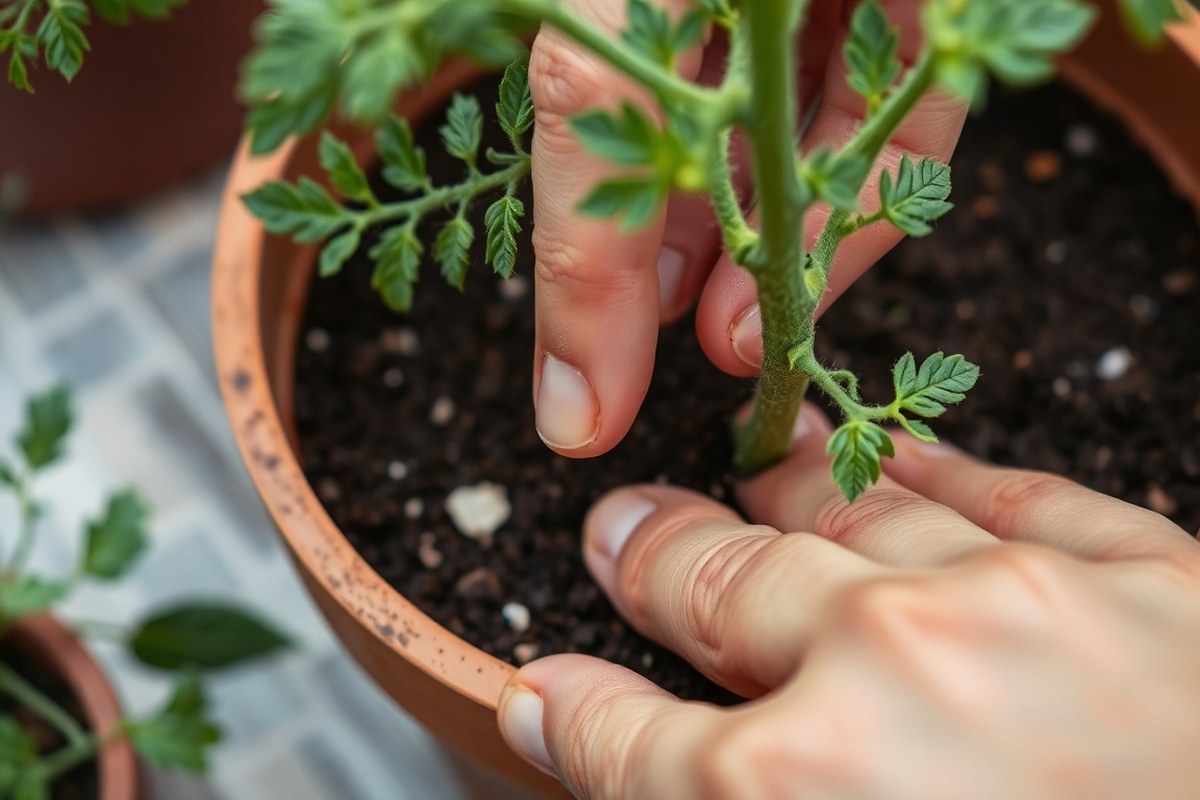
Water your tomatoes once the top 1 to 2 inches of soil dry out. Check soil moisture every day, especially in warm weather. This helps prevent overwatering that can harm roots and stress plants.
In summer heat, tomatoes in pots usually need watering once a day. The soil dries faster because of higher temperatures and sun exposure. Cooler or cloudy days mean soil stays moist for a longer time.
Water your tomatoes every two or three days on these days. This keeps watering balanced without drowning the plant.
Small pots dry out faster, so check soil moisture more frequently. Large pots hold water longer.
So watering every two to three days might suffice in mild weather. Plastic pots keep soil moist for longer than terracotta or fabric pots, so adjust checks accordingly.
Remember to water deeply each time. This means wetting the entire root zone, not just the surface.
Pots feeling light or leaves wilting show your tomato plant needs more water. Check these signs before watering again.
A daily check is best during hot, sunny, or windy weather, sometimes watering twice a day. Cooler weather or early growth stages require less frequent watering. Your watering schedule should change with the plant’s size, pot type, and weather conditions.
How Much Water Do Tomato Plants in Containers Need?
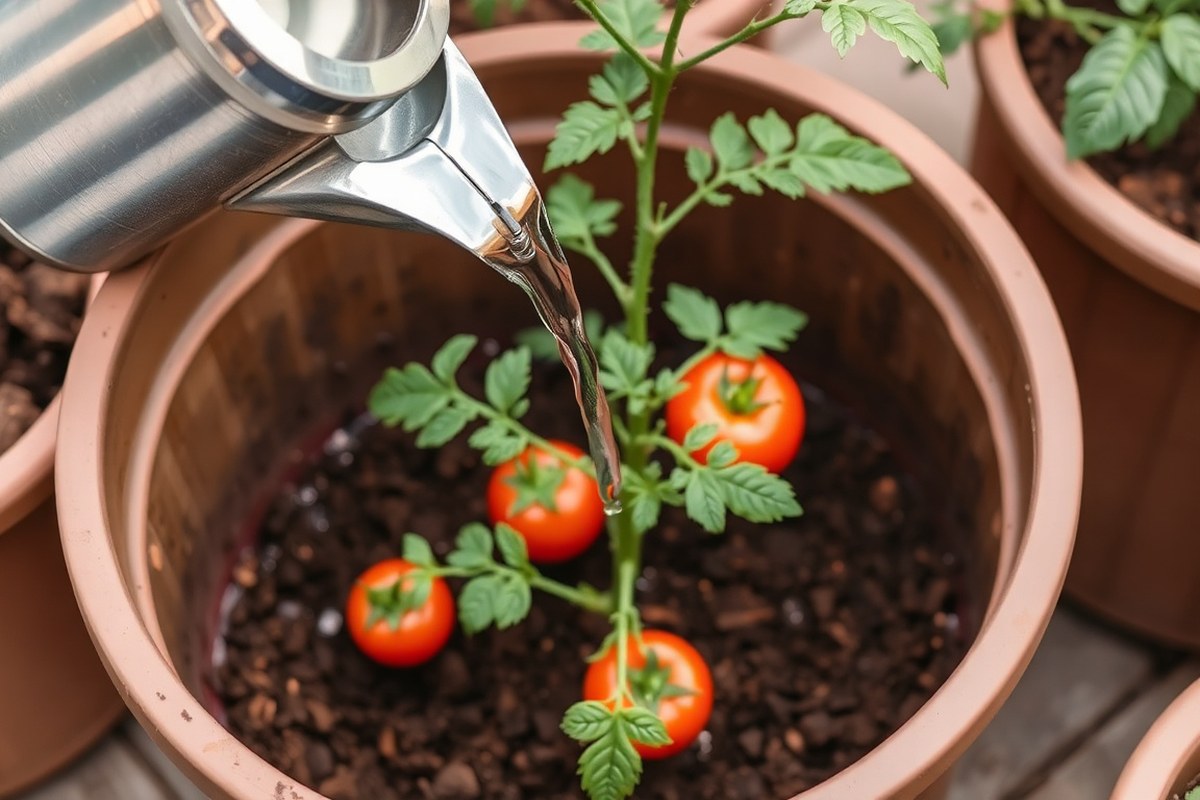
Tomato plants in containers need about 1 gallon of water per watering session in summer. Seedlings require less, around 1 to 1.5 inches of water per week. You want water to soak 6 to 8 inches into the soil.
This helps it reach the root zone where plants absorb moisture. Make sure to water deeply for healthy tomato plants.
Why Deep Watering Matters
Watering deeply encourages strong roots and keeps the soil moist longer. Shallow watering makes roots stay near the surface, risking quick drying. Potted tomato plants have limited soil, so deep watering ensures roots get enough moisture.
Without deep watering, the soil can dry out inside the pot while the top feels wet. This happens because surface soil dries faster in pots, especially in hot weather.
How Much Water to Use
A mature tomato in a 5-gallon pot needs about 1 gallon per session during summer. This amount lets water soak deep without overflowing the pot. Seedlings need less water, about 1 to 1.5 inches per week, spread out over several waterings.
For example, 1 inch of water equals 0.62 gallons per square foot of soil surface. So, a 12-inch diameter pot (about 1 square foot) needs roughly 0.6 gallons for 1 inch of watering depth.
How to Water Slowly and Deeply
Pour water slowly to let it soak in rather than run off the surface. Fast watering can cause dry spots or push soil out of the pot. Aim to water in stages over 10 to 15 minutes.
- Check dry soil depth by poking a finger or rod 6 to 8 inches deep.
- Start watering slowly around the stem base.
- Pause to let water soak before adding more.
- Move the watering stream around to cover the entire pot surface.
- Stop when water begins draining from the pot holes.
- Check soil moisture again at 6-8 inches to confirm deep wetness.
- Adjust water amount next time based on soil dryness.
Adjusting for Seedlings vs. Mature Plants
Young tomato seedlings need frequent light watering to keep soil moist, not soaked. Use about 1 to 1.5 inches a week, split into several waterings. Avoid heavy watering that drowns tiny roots.
Mature plants have larger root systems, needing deeper water sessions. One gallon per watering makes sure roots get plenty of moisture. The water should still soak 6-8 inches down to reach all root areas.
Slow and steady watering helps prevent dry patches and root stress in potted tomatoes.
How to Adjust Watering Based on Tomato Growth Stage
How to Adjust Watering Based on Tomato Growth Stage
Watering needs change as tomato plants grow from seedlings to mature fruiting plants. Seedlings require frequent but light watering to keep soil moist.
Fruiting plants need more water to support heavy fruit growth. Adjust watering gradually, watching your plants and soil to avoid over or underwatering.
Watering Seedlings in Pots
Seedlings in containers need moist soil to establish roots but not soggy soil that causes rot. Water them lightly every day or whenever the top 1/2 inch of soil feels dry.
Use clean water at about 68°F to 77°F. This keeps young roots from getting shocked. It also helps the plants grow better.
Drainage is key for seedlings. So choose pots with holes or use trays to catch excess water.
Avoid heavy watering at this stage because soggy soil encourages fungal diseases. Keep seedlings in a warm spot with indirect light to promote steady, healthy growth.
Watering Flowering and Fruiting Tomatoes
As tomato plants start flowering, increase watering frequency slightly to keep up with higher water needs. Water the soil deeply until water drains out the bottom.
Do this every 1 to 2 days in warm weather. Check soil moisture daily because containers dry faster than ground soil.
When fruit starts growing, plants need more water. They can use close to a gallon a day in hot, dry weather.
Keep soil evenly moist to prevent stress that causes blossom drop or cracked fruit. Grouping pots together helps reduce water loss by raising humidity around the plants.
Reducing Watering for Mature Plants
At about 6 weeks or once your plants begin maturing, start to slightly reduce watering frequency. Slowly reduce watering to every 2 or 3 days.
This happens as soil settles and roots grow deeper. This helps prevent overwatering and encourages stronger root growth.
Observe your plants for signs like wilting or dry soil between waterings to adjust amounts. Yellow leaves or soggy soil mean too much water.
Cut back watering or fix drainage issues. Using mulch helps keep soil moist, so you won’t need to water as often.
How Does Pot Size and Material Affect Watering Frequency?
Small pots dry out faster because they hold less soil and water. The soil warms up quickly, which speeds evaporation.
Larger pots store more water. So their soil stays moist longer, giving you more time between waterings.
Pot material also changes how often you need to water. Terracotta pots breathe and pull moisture out through their walls fast.
Plastic pots hold water better and stay moist longer. Fabric grow bags dry out quickly too, so they need more frequent checks.
Tomatoes need room for their roots to grow well. At minimum, use a 5-gallon pot for bush or determinate tomatoes.
Indeterminate tomato varieties, which grow larger, need 7 to 10 gallons. Bigger pots reduce how often you water and help plants stay healthy.
Here is a table showing pot size, material, and watering. It covers summer and cooler weather. It helps you see how often to water.
| Container Setup | Drying Speed | Watering Frequency (Summer Peak) | Watering Frequency (Cooler Weather) |
|---|---|---|---|
| Small terracotta pot (under 5 gallons) | Very fast | Check twice daily, water daily | Check daily |
| Fabric grow bag (7-10 gallons) | Fast | Check daily, water every 1, 2 days | Check every 2, 3 days |
| Large plastic pot (7-10 gallons) | Moderate | Check daily, water every 1, 2 days | Check every 1, 2 days |
| Large mulched container (10+ gallons) | Slower | Check daily, water every 1, 2 days | Check every 2, 3 days |
| Self-watering container (varied sizes) | More consistent | Keep an eye on reservoir level | Keep an eye on reservoir level |
Choosing the right pot size and material helps keep watering manageable. Use a larger pot when possible to reduce daily watering stress.
A plastic or self-watering container keeps moisture steadier than terracotta or fabric pots. Adding mulch on top slows evaporation further.
Watch for wilting or weight changes in your container. A dry, light pot means it’s time to water.
A pot that stays heavy or soggy for days can mean overwatering. Proper pot choice makes balancing moisture easier, helping your tomato thrive.
Signs Your Potted Tomato Needs Water or Is Overwatered
Tomatoes in pots show clear signs when they get too little or too much water. Droopy leaves early in the morning often mean the soil is too dry. But wilted leaves alone don’t always signal underwatering; check the soil before adding water.
Use your finger to test the soil a couple of inches deep near the plant’s base. When the soil feels dry 1 to 2 inches deep, water your tomato.
When the soil still feels moist, wait before watering. Overwatering means the soil stays soggy and may smell sour from poor drainage.
- Droopy leaves plus dry soil and a light pot indicate underwatering.
- Yellowing lower leaves and wet soil suggest too much water or bad drainage.
- Soil that is constantly wet and smelly hints at root rot risk.
- Fruit with dark sunken spots may point to uneven watering.
- Leaves curling upwards in the afternoon can mean heat or water stress.
- Check soil moisture every morning before deciding to water.
- Water slowly at the base so soil absorbs water without runoff.
Feeling the weight of the pot helps too. A dry pot often feels much lighter. Always water the soil directly, not the leaves.
Wet leaves invite diseases and don’t help the root zone. Choose pots with good drainage holes to avoid trapped water.
Check soil moisture with your finger every day. Only water when the top 1 to 2 inches feel dry.
Signs like yellow lower leaves and a sour smell show overwatering issues. If you see soggy leaves, stop watering. Empty any saucers under the pot.
Let the soil dry enough between waterings to keep roots healthy. Avoid watering daily; too often can harm root growth and cause stress.
Best Time of Day and Methods to Water Tomatoes in Pots
Water tomato plants in pots early in the morning. Use a slow and steady soak. Water the base of the plant, not the leaves.
You want to avoid overhead watering at cooler times to prevent diseases. Using drip irrigation or hand watering helps target the soil, improving water use and plant health.
Watering in the Morning vs Evening
Morning watering lets the soil dry out during the day, reducing fungal risks. When temperatures rise above 85°F, watering every morning keeps containers from drying out too fast.
Evening watering can be useful on very hot days to keep plants hydrated overnight. However, water on foliage stays wet longer, raising disease chances like blight or mildew.
Try to water right after sunset if you only have time in the evening. Water at the base, not from above, to limit leaf wetness after dark.
Hand Watering vs Drip Irrigation
Hand watering lets you control each pot’s water amount. Pour water slowly near the base.
This helps the soil absorb water right where roots need it. It takes 5 to 10 minutes per pot to soak soil thoroughly, avoiding runoff.
Drip irrigation cuts water waste by delivering a slow drip right at the root zone. A simple watering kit costs $20 to $50.
It saves you time in the long run. Using less water also saves money and helps plants thrive.
Both methods help prevent soil erosion and keep water off leaves. Drip systems work well if you have several pots or want consistent moisture.
Bottom Watering for Container Tomatoes
Bottom watering means letting your tomato pots soak up water through drainage holes. It reduces leaf wetness, lowering disease risks.
For bottom watering, fill a tray with 1 to 2 inches of water. Put the pot in the tray for 15 to 30 minutes.
Let it soak up water from the bottom. The soil draws water upward until moist.
This method works best on sunny days when the soil dries fast from the top. Avoid leaving pots standing in water for too long to prevent root rot.
How to Adjust Tomato Watering in Hot or Dry Weather
Hot weather dries out your tomato pots faster. Pots in direct sun above 30°C can lose all moisture in 24 hours, especially small ones. You may need to water once or twice a day.
This keeps soil moist about 6 to 8 inches deep. Heatwaves or droughts make this extra important.
Mulching the soil with straw or shredded leaves helps slow water loss. Put your pots where they get shade in the afternoon. You can also use a cloth to create shade.
Both reduce heat stress on your plants. Focus watering on the base of the plant to avoid wet leaves, which can cause disease.
Follow these steps to adjust your watering during hot or dry weather.
- Check soil moisture twice daily around root depth, morning and late afternoon. Use your finger or a moisture meter to feel 1 to 2 inches below the surface.
- Water deeply if the soil feels dry at 1 or 2 inches. Make sure water soaks through the entire root zone.
- Water again later the same day if soil dries fast. Also water if temperatures go above 85°F (29°C). This keeps soil moist for healthy plants.
- Apply a 2-inch layer of mulch on the soil surface to reduce evaporation.
- Move pots to places with afternoon shade. Or use shade cloth to block strong sunlight. This helps protect plants during peak sun hours.
- Empty any saucers within 30 minutes after watering to prevent standing water and root rot.
- Use a watering can or drip irrigation to wet soil. Avoid wetting the leaves when you water. This helps prevent diseases on your plants.
Daily checks let you catch drying soil before plants wilt. Twice daily watering works best in extreme heat combined with dry, windy conditions. Mulch keeps soil moist and saves water.
Shade also helps by cooling the soil. Both reduce how often you need to water deeply.
Common Watering Mistakes and How to Fix Them for Potted Tomatoes
Watering mistakes with potted tomatoes often cause serious problems like root rot and blossom end rot. These problems happen mainly because the watering is either too much, too little, or inconsistent. Making sure your pot drains well and your watering schedule stays steady helps avoid these issues.
Standing water in saucers may look harmless, but it causes root problems fast. Water trapped under pots keeps the soil soggy, which stops roots from breathing. This creates a perfect spot for root rot to start.
Always empty saucers right after you water your plants. Use pots with drainage holes that let water flow freely. This keeps the soil from staying too wet.
- Overwatering: Let the top 1 to 2 inches of soil dry before watering again.
- Underwatering during fruit swell: Water consistently to prevent blossom end rot.
- Allowing water to pool in saucers: Always pour excess water away immediately.
- Uneven watering times: Set reminders to water tomatoes regularly at the same time.
- If your pot lacks drainage holes, drill extra ones. You can also add a layer of pebbles at the bottom. This helps water drain well and prevents root rot.
- Ignoring pot size: Smaller pots need watering more often, check soil moisture daily.
One missed watering during the fruit-swelling phase can invite blossom end rot. It happens because inconsistent moisture limits calcium uptake in your tomato fruit. You may think adding more fertilizer solves it.
But watering consistency is the true fix. Cut back slightly on water as tomatoes ripen to reduce cracking and rot.
Keeping a steady watering routine takes a little effort but makes your tomatoes healthier. Use a moisture meter to check soil moisture each day. Or stick a finger into the soil to feel if it is dry.
Water only when the soil feels dry below the surface. Adjust watering amounts as the plant grows and weather changes, especially in hot or dry spells. This habit prevents common watering-related diseases and boosts your harvest.
Never let water stand in the pot’s saucer; it invites root rot quickly.
Step-by-Step Action Plan for Watering Potted Tomatoes
Follow this plan to keep your tomato plants hydrated without drowning them. Check your plants daily to adjust the watering timing.
- Before planting: Choose a pot with good drainage and fill it with quality potting mix. This helps avoid waterlogging.
- Planting time: Water the pot thoroughly after planting until water runs out the bottom. This settles roots well.
- First week: Water every 2 days with about 1 inch of water per session. The soil should stay moist but not soggy.
- Weeks 2 to 4: Check soil moisture daily. If the top inch feels dry, water enough to saturate the soil. Leaves should look fresh, not droopy.
- Flowering stage: Increase watering to every 1 to 2 days depending on heat. Watch for wilting midday. Avoid wetting leaves.
- Fruit development: Keep consistent watering every day or every other day. Consistent moisture helps prevent cracking and blossom end rot.
- Hot days: Water early morning or late evening. Add extra water on very hot, dry days. But do not let pots stay soggy.
- After heavy rain: Skip watering if the soil is still moist 1 inch down. Check drainage to prevent root rot.
Frequently Asked Questions
How Often Do Tomato Plants Need Water During Flowering in Pots?
Water tomato plants every day or every other day during flowering. This stage needs more water for fruit development but avoid letting soil stay soggy.
Can I Use Rainwater for Watering Tomatoes in Containers?
Yes, rainwater is great for tomatoes because it’s free of chemicals. It also tends to be softer than tap water, which tomatoes prefer.
How Does Wind Affect Watering Frequency for Potted Tomatoes?
Wind can dry out soil faster, so you’ll likely water more often. Check soil daily on windy days to keep moisture sufficient without overwatering.
Should I Mist Tomato Leaves in Pots to Increase Humidity?
Misting leaves isn’t necessary and can cause diseases if done too much. Tomatoes mainly need good soil moisture, not leaf humidity, for healthy growth.
Does Tomato Variety Affect Watering Needs in Pots?
Yes, some varieties need more water than others. Cherry tomatoes often need less frequent watering than large-fruited types.
Can Mulching the Soil Surface Reduce Watering Frequency for Potted Tomatoes?
Mulching helps keep soil moist longer, so you water less often. It also keeps soil cooler, which helps roots stay healthy.
Wrapping Up
Watering tomatoes in pots gets easier when you watch their leaves and soil. Stick to a regular schedule but always check for dryness. Start by checking your plant today and adjust watering as needed.