

Are Fleas Attracted to Blue Light? What Actually Works for Effective Control
Are fleas attracted to blue light? Yes, they do respond to blue light.
But not as strongly as they do to green or yellow light. Fleas are drawn to certain colors because these wavelengths help them spot their hosts more easily.
Blue light attracts fleas. But green light in the 520-560 nanometer range is more effective. Fleas use light to help find their next meal.
They also sense movement, heat, and carbon dioxide. These signals help fleas locate animals or people to feed on. That means relying on blue light alone won’t catch all the fleas.
You can use blue light traps. But for better results, combine them with heat or CO2 sources.
Also, traps that flash intermittently catch more fleas than those with constant light. This combination mimics a living host, making traps more appealing to fleas.
Key Takeaways
- Fleas respond strongest to green light between 520 and 560 nanometers.
- Blue light attracts fleas but less effectively than green or yellow light.
- Movement, heat, and CO2 cues are important for fleas to locate hosts.
- Combining blue light with heat or CO2 improves flea trap effectiveness.
- Intermittent flashing lights catch more fleas than continuous light sources.
- UV light at 280 nanometers can kill fleas with prolonged close exposure.
Are Fleas Actually Attracted to Blue Light?
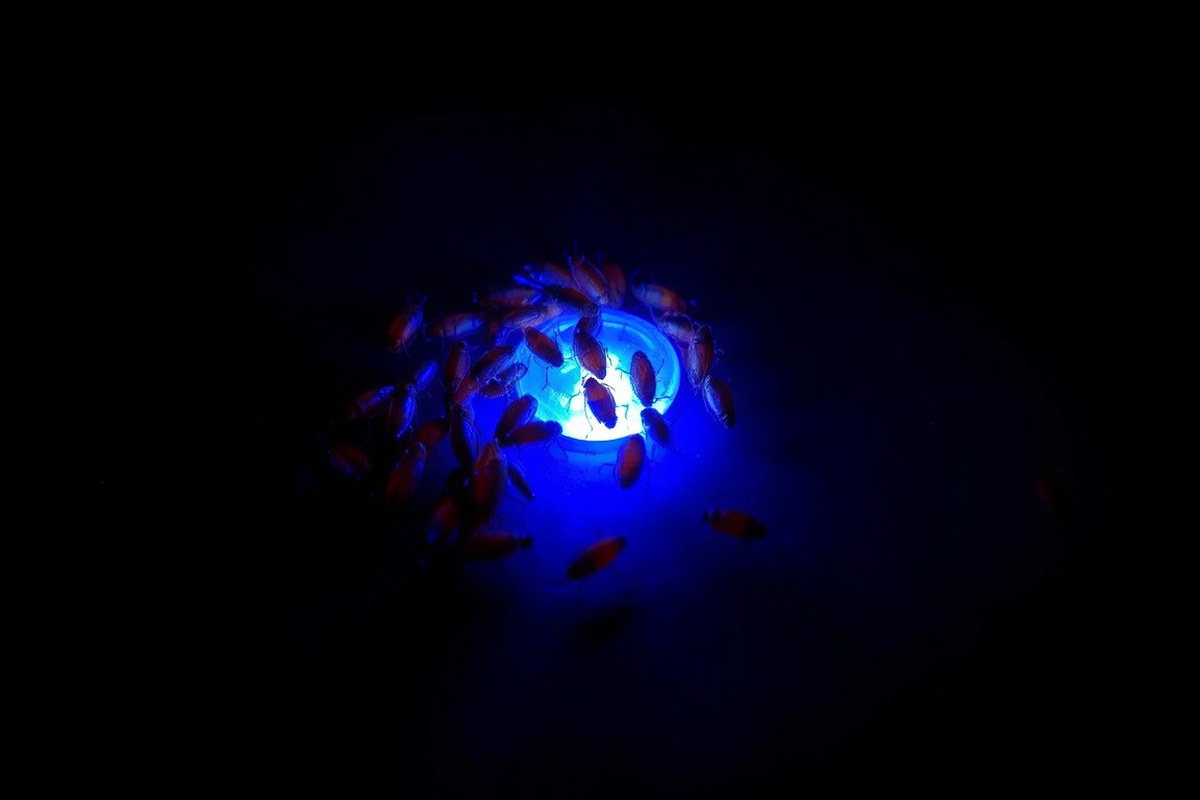
Fleas do show attraction to blue light. But it’s not the strongest compared to other colors.
They respond more to green and yellow light, which match visual cues from their natural habitats. Blue light does lure fleas consistently, especially when used in traps with intermittent lighting.
Experiments tested flea attraction to different light colors. Fleas like light between 475 and 560 nanometers. This range suits their vision best.
This range covers blue, green, and yellow colors. Blue light, around 475 nm, still attracts a strong flea response. But it’s generally behind green in the 520-560 nm range.
| Light Color | Wavelength (nm) | Flea Attraction Level |
|---|---|---|
| Green | 520-560 | Strongest attraction |
| Blue | Around 475 | Strong attraction, second to green |
| Yellow | Approx. 570-590 | Moderate attraction |
| Red | 620-750 | Attracted, but weaker than blue and green |
| Black | N/A | Attracted visually, but not by wavelength |
Light traps using blue light tend to catch many fleas, especially when the light pulses intermittently. One study showed intermittent light traps caught 82% of fleas released.
Constant light traps caught only 10%. This suggests blue light’s effectiveness depends on how the light is used.
Blue light alone may not always lure fleas perfectly across all environments. Other factors like movement, heat, and carbon dioxide also guide fleas to hosts. Blue light works well in flea traps.
It must combine with other cues and good timing. Alone, it is less effective.
Why Fleas Respond to Specific Light Wavelengths

How Fleas See the World
Fleas have simple eyes made for detecting light and movement. Unlike many insects with complex eyes, flea eyes can’t form detailed images. They mostly sense brightness and color to help find hosts in their environment.
These tiny eyes respond best to specific light ranges. Fleas are sensitive to green and yellow wavelengths more than blue or red. This helps them spot animals and people who give off reflected light in those colors.
Wavelengths That Attract Fleas
Fleas respond strongest to light wavelengths between about 500 and 600 nanometers. That’s the green and yellow part of the spectrum. Studies show these colors attract two times more fleas compared to others.
Green light around 520 nanometers attracts more fleas than blue light. Blue light is at 470 nanometers. Fleas prefer green light over blue light for attraction.
Fleas don’t respond well to red light above 630 nanometers. Their eyes can’t see those longer wavelengths. This limits their reaction to red light.
Why Fleas Use Light to Find Hosts
Light acts like a beacon for fleas searching for animals to feed on. They combine this with sensing heat, movement, and carbon dioxide to locate warm-blooded hosts. Light helps them confirm a host is near before jumping on.
Detecting certain light wavelengths means fleas know where animals are hiding or resting. This helps especially in dark, shady spots.
Other signals might be too weak. Fleas rely more on this light there.
Differences Between Flea and Other Insect Eyes
Flea eyes are less complex than flying insects like flies or beetles. They have fewer light-sensitive cells and do not see fine details. Their vision focuses on broad light signals instead of sharp images.
This limits the range and clarity of what fleas detect visually. However, it suits their lifestyle since they mostly jump on hosts rather than chase prey. Their eyes are tuned to key cues like reflective green and yellow colors.
Sensory Role Beyond Vision
Fleas rely on more than just eyesight. Other sensory organs detect heat and carbon dioxide from animal breath. These chemical cues often guide fleas closer, then their eyes check for nearby light and movement.
Fleas first sense the host’s body heat. Then, they use vision to pick the spot.
This guides them to jump on correctly. This layered sensing improves their chance of finding hosts efficiently and resting in ideal spots.
Only use light traps indoors and away from sunlight to improve flea attraction and trap success.
Light Colors Compared: Blue, Green, Yellow, and Red Flea Attraction
Green and yellow lights attract the most fleas compared to other colors. Fleas have a strong preference for green light wavelengths around 500-560 nm. Yellow light, ranging from 570-590 nm, also attracts fleas but less than green or blue.
Blue light can draw fleas but not as strongly as green. Red light does not attract fleas because they cannot see red wavelengths.
This color preference helps when choosing flea traps. A green or yellow-green LED tea light can be an effective attractant indoors. Green and yellow lights lure about twice as many fleas as other colors.
That’s why traps with these colors often work best. Meanwhile, red light won’t help because fleas can’t detect it at all.
| Light Color | Wavelength Range (nm) | Flea Attraction Level | Notes |
|---|---|---|---|
| Green | 500-560 | Highest | Strongest flea attractant |
| Yellow | 570-590 | Moderate-High | Less than green, more than blue |
| Blue | Approx. 450-495 | Moderate | Attractive but weaker than green and yellow |
| Red | 620-750 | None | Invisible to fleas |
| UV (Black Light) | 100-400 | Low | Not effective for fleas |
Using a green or yellow-green filter on a warm white light can concentrate these favorable wavelengths. That makes flea traps more efficient. Green and yellow LEDs often cost just a few dollars each and run safely indoors.
Avoid expecting results from red or UV lights. They don’t attract fleas and could waste energy and effort.
How Fleas Use Movement, Heat, and CO2 Alongside Light to Find Hosts
Fleas Track Multiple Signals to Locate Hosts
Fleas don’t rely on light alone to find a host. They respond to a mix of heat, movement, carbon dioxide, and light. These cues help fleas narrow down their target, increasing their chance of a good meal.
Each factor plays a role. Fleas combine these signals to aim their jumps toward a warm, breathing, moving animal nearby.
How Carbon Dioxide Guides Fleas
Animals exhale carbon dioxide, which fleas instantly notice. Fleas can detect CO2 from several feet away. This tells them that a living host is close.
When you’re petting your dog or cat, their breath releases CO2 clouds that attract fleas. This gas acts like a beacon signaling a free meal.
Movement Catches Flea Attention
Fleas have poor eyesight but are sensitive to movement. Quick motions in their environment look like a good host nearby. Even shadows can set fleas off to jump.
Combining movement with light makes fleas focus better on where to jump. Staying still reduces the chance of fleas spotting you.
Heat Increases Flea Activity and Jumping
Warmth tells fleas a living body is close. They feel heat from skin or a warm bulb. This encourages fleas to jump more and stay active.
Heat combined with light draws fleas to traps or pets. Fleas jump higher and more often when warmth adds to visual cues.
Stimuli That Attract Fleas
Here are key things fleas respond to when hunting hosts:
- Light, especially in certain colors like blue or UV
- Carbon dioxide from animal breath
- Heat from skin or warm objects
- Movement or vibrations from pets
- Environmental cues showing open spaces
Using several of these together works better to attract fleas than just one. Combining heat, CO2, and light can cause fleas to jump repeatedly toward the source.
Can Blue Light Be Used Effectively in Flea Traps? Best Practices
Blue light traps can catch fleas. But they only capture adult fleas and a small share of the total population.
Using the right blue bulb type and placing the trap well can help increase efficiency. Setting up these traps involves using a sticky pad and careful positioning in dark, low-traffic areas.
Choosing the Right Blue Bulb Type
Blue light works better than some colors for attracting fleas. Choose a bulb with a narrow wavelength band to boost the light’s pull. Lower-wattage bulbs can do the job if manufacturers focus the light output properly.
Look for LEDs or bulbs labeled for insect attraction with a blue range. This helps draw fleas from farther away without using much electricity. Avoid bulbs with a red or warm tone; fleas respond less to these.
Setting Up a Blue Light Flea Trap
Setting up the trap is simple and requires only a few supplies. You need a blue light bulb, a sticky catch pad, and a container.
Use a safe base to hold the bulb and pad steady. Follow these steps to get it working efficiently:
- Choose an indoor outlet with easy access but away from pets and children.
- Put the sticky pad flat on a strong surface. Use a small tray or place it under a light fixture.
- Install the blue light bulb in a lamp or fixture that points towards the sticky pad.
- Ensure the trap is stable so it won’t tip and spill sticky glue.
- Turn off surrounding lights to maximize the blue light’s visibility.
- Switch the trap on in the evening, about an hour before your pet’s active time.
- Check the sticky pad every 3 to 5 days. Replace it sooner if it’s full of fleas.
Use care handling sticky pads. The glue is tough to remove and can stain fabrics.
Optimal Placement for Maximum Flea Capture
Placing your blue light trap in a dark, quiet corner helps attract the most fleas. Fleas tend to move toward light sources when in the dark, making low-light areas ideal. Position the trap near pet resting spots, but out of reach to prevent disturbance.
High-traffic areas or bright rooms reduce flea attraction to the trap. Avoid placing traps under direct sunlight or strong indoor lights. Height matters too, keep traps low, around floor level, where fleas jump and travel most.
Maintaining and Cleaning Blue Light Traps
Regular cleaning keeps the trap effective and prevents it from being a nuisance in your home. Replace sticky pads as soon as they fill with fleas or dust. Keep the bulb clean and free of dust to maintain strong light output.
Turn off the trap before cleaning to avoid electric shocks. Inspect traps weekly during peak flea seasons to ensure they keep working well.
Try moving the trap if capture rates drop. Change the bulb for better results.
Intermittent Versus Continuous Light: Which Attracts More Fleas?
Fleas respond much better to flickering light than steady light. Research shows intermittent light traps catch 5 to 8 times more fleas than continuous light. This flickering effect mimics movement, which fleas use to find hosts.
For best results, the light should flicker on and off every 1 to 2 seconds. This gives fleas a strong cue to approach.
Longer intervals reduce effectiveness. Flickering faster than once per second offers little added benefit.
Continuous light is simpler to set up and runs without interruption. However, it attracts fewer fleas and may take longer to reduce infestations.
Intermittent light traps cost a bit more due to the electronics needed. But they pay off with faster flea control.
Use intermittent light indoors near pet resting spots or in shaded outdoor spaces. Avoid rooms where people need constant lighting, as flickering can be annoying.
Continuous light traps fit well where you want unchanging light. But plan for longer treatment time.
Do not rely on UV light alone, since fleas aren’t strongly drawn to it. Mix blue or green lights in flickering mode for best attraction around 475 to 550 nanometers. Fleas don’t get treated well by long UV light exposure.
You can’t rely on UV light at home for this. It’s not practical for flea control in your house.
You’ll need a power source or batteries to keep the flicker going for days or weeks. Check traps daily to empty captured fleas and reset lights. A well-designed intermittent light trap looks like a small lamp with a flicker circuit inside.
Safety Considerations When Using Blue and UV Light Against Fleas
Blue and UV light devices can help catch fleas. But you must use them safely around pets and children. UV light, unlike visible blue light, can harm skin and eyes with enough exposure.
Avoid shining UV light directly on your pet or family members. It can cause burns or damage eyes. Keep it away from skin and eyes for safety.
Use flea traps that combine UV or blue light with a capture system. This setup draws fleas away without exposing pets or people to harmful rays. Keep traps out of reach from pets and children.
This stops them from touching lights or wires. Place them somewhere safe and unreachable.
Limit how long you run UV light traps indoors. Use the trap only 1 to 2 hours at a time. This lowers risks but still attracts fleas.
Short sessions are safer for your family and pets. Plan to run the trap overnight?
Make sure it has safety covers. If not, shield it to cut stray UV rays.
Wear protective glasses or avoid looking directly at UV lights when handling traps. This prevents eye strain or damage from ultraviolet rays. Don’t expose your skin to UV devices for long times.
Too much causes sunburn and raises skin cancer risks. Keep usage short and careful.
Check that your flea trap is rated safe for use around animals and children. Models with enclosed bulbs and automatic shutoffs add protection. Clean traps often and replace bulbs yearly or as told.
This keeps them working well and safe to use. Follow the manufacturer’s advice exactly.
Have pets with skin problems or that are light-sensitive? Talk to your vet before using light-based flea traps. They can give the best advice.
Some pets may react poorly to even low UV exposure or bright blue lights. Your vet can suggest safe alternatives or timing that won’t upset your pet’s health.
Blue light is usually safer than UV light. Still, shining it repeatedly in eyes can cause minor irritation. Avoid shining it in eyes to be safe.
Avoid positioning blue light traps in places pets rest or play to reduce discomfort. Think about your room’s layout before placing the trap.
Notice where your pet walks or rests most. Choose a spot that won’t disturb them.
In severe flea infestations, light traps alone might not be enough. Use pet-safe insecticides recommended by a vet along with light traps.
Follow all label instructions carefully. Keep pets and kids away until treatments dry or clear to avoid chemical risks.
When to Call a Professional for Flea Infestation Control
Call a professional when fleas keep coming back despite your best efforts. Flea light traps can catch some bugs.
But they don’t get rid of the whole infestation. If you still see fleas on pets or furniture after two weeks, it’s time to ask for help.
You might also notice more flea bites on family members or pets. Flea dirt, tiny black specks that look like pepper, on bedding or carpets is another sign.
When flea problems spread beyond a small area, home methods aren’t enough. Professionals use stronger treatments and have tools you don’t.
They combine light-based traps with sprays, foggers, and other pest controls. These target eggs, larvae, and adult fleas in places traps miss. Also, pros know how to treat pets safely with vet-approved products alongside home methods.
- Fleas persist after 10 to 14 days of using light traps and cleaning.
- Seeing flea bites or flea dirt on pets or family repeatedly.
- Large infestation covering multiple rooms or yards.
- Pets scratching constantly despite flea prevention products.
- Recurring flea issues every season, suggesting untreated sources.
- Feeling unsure about safe flea treatments or pet care.
Hiring pros typically costs between $150 and $300 per treatment. You usually need more than one session spaced a week apart.
Good results mean no new fleas for weeks and healthier pets. Poor results happen if you skip recommended follow-ups or don’t treat pets.
Don’t rely on light traps alone to fix a flea problem. Use them to monitor progress, not as the sole solution.
Some flea infestations need professional help because cheap or DIY fixes won’t stop it fast enough. Professionals reduce risks to pets and home with safer, tested methods. Call an expert if you feel overwhelmed or if flea problems come back despite your efforts.
Step-by-Step Action Plan to Use Blue Light for Flea Control
Here’s a simple plan to test and use blue light in your flea control routine. Follow these steps and watch for fewer fleas around your pets and home.
- Before you start: Clean your pet’s bedding and vacuum carpets thoroughly. This removes many fleas and eggs right away.
- Day 1: Place a blue light flea trap in a dark corner where your pet rests. Check it next morning for caught fleas.
- Week 1: Run the trap for several hours each evening, when fleas are most active. Note if you catch more fleas after a few days.
- Week 2: Add a source of CO2 or warmth near the trap to simulate a host. Fleas should be more attracted and trapped.
- Week 3: Clean or replace the trap’s sticky pads weekly to keep it effective. Keep vacuuming and washing pet bedding during this time.
- Week 4: Keep using the trap if it still catches fleas. Use it along with your pet’s flea treatments. Try moving the trap or changing the light to improve results.
- After 4 weeks: Evaluate flea levels. Seeing fewer bites and fleas means the blue light trap is working. Call a pest pro when flea problems just won’t go away.
Frequently Asked Questions
Can Blue Light Alone Keep Fleas Away?
Blue light alone does not repel fleas effectively. Fleas are attracted to blue light.
Using it may bring more fleas. It can backfire if you rely on it to keep fleas away.
Do Fleas Prefer Blue Light at Night?
Fleas are attracted to blue light regardless of time. However, other cues like heat and CO2 are more important in finding hosts. Night or day doesn’t change their basic light preference much.
Is Blue Light Safer for Pets Than Chemical Flea Traps?
Blue light traps avoid chemicals but may attract fleas indoors. They are safer for pets but should be used alongside other methods for best results. Always watch your pet’s reaction.
What Room Conditions Improve Blue Light Flea Trap Effectiveness?
Traps work best in dark, quiet rooms with minimal competing light. Blue light easily attracts fleas in these settings because it stands out more to them.
Can Blue Light Help Monitor Flea Infestations?
Yes, blue light traps can help detect fleas early in an infestation. They attract fleas so you can tell if your home has a problem before it worsens.
Why Do Fleas Not Swarm Directly on Blue Light Sources?
Fleas are attracted to but avoid landing directly on light sources. Fleas follow light to find hosts.
Then they sense heat and CO2. This helps them jump onto you or pets.
The Bottom Line
Blue light can attract fleas but works best with heat or CO2 nearby. Use traps with these features to catch more fleas effectively.
Start by setting a blue light trap where your pets spend time. Watch the difference in flea activity.


