Where Do Pomegranates Grow: A Complete Guide to Climate and Location
Where do pomegranates grow? They thrive best in warm, dry climates with plenty of sun. These plants prefer areas with hot summers and mild winters to develop their sweet, red fruit.
Pomegranates need six to eight hours of direct sunlight daily. This sunlight is key for flowering. It also helps the fruit to grow.
They do well in soil that drains quickly but holds some moisture without staying soggy. Start by checking your local climate and soil conditions to see if they match these needs.
Although pomegranates usually grow in warm zones, some varieties handle cold down to about 5°F (-15°C). That means you can grow them outdoors in warmer U.S. States or try container growing in cooler areas with extra care.
Key Takeaways
- Pomegranates need six to eight hours of direct sun each day to fruit well.
- They grow best in warm, dry climates with hot summers and mild winters.
- Well-draining soil that’s moist but not soggy suits pomegranate roots.
- Some frost-hardy varieties handle temperatures as low as 5°F (-15°C).
- Check your local climate zone to match pomegranates’ temperature needs.
- Container growing can protect pomegranates in colder zones if moved indoors in winter.
Where in the World Do Pomegranates Naturally Grow?

Pomegranates originate from the region stretching from the Middle East to the Himalayas. This area includes parts of modern-day Iran, Afghanistan, and northern India. These native regions have the dry, hot climate that suits pomegranate growth well.
In the wild, pomegranates grow as bushy shrubs that can reach 12 to 15 feet tall. Farmers often train them to grow like small trees for easier fruit harvesting.
Their natural range includes parts of Asia, the Mediterranean, and North Africa. These areas have hot summers and mild winters.
Later, pomegranates spread beyond their origin. Spanish missionaries introduced them to the Americas around 1521.
Early settlers planted pomegranates in California in the late 1700s. The trees adapted well to local warm climates.
Today, pomegranates grow in southern Europe, parts of Asia, and the US. California and Arizona are common US growing areas.
Pomegranates prefer USDA zones 8 to 10. Some types survive cold down to about -15°C. This allows limited growth in places like the UK.
The global distribution reflects their versatility. They grow best in well-drained soils and full sun. This helps the fruit get its deep color and flavor.
Iran’s high plateaus produce some of the best pomegranates. These fruits balance acidity with intense sweetness.
Which Climate Zones and Temperatures Suit Pomegranate Growth?
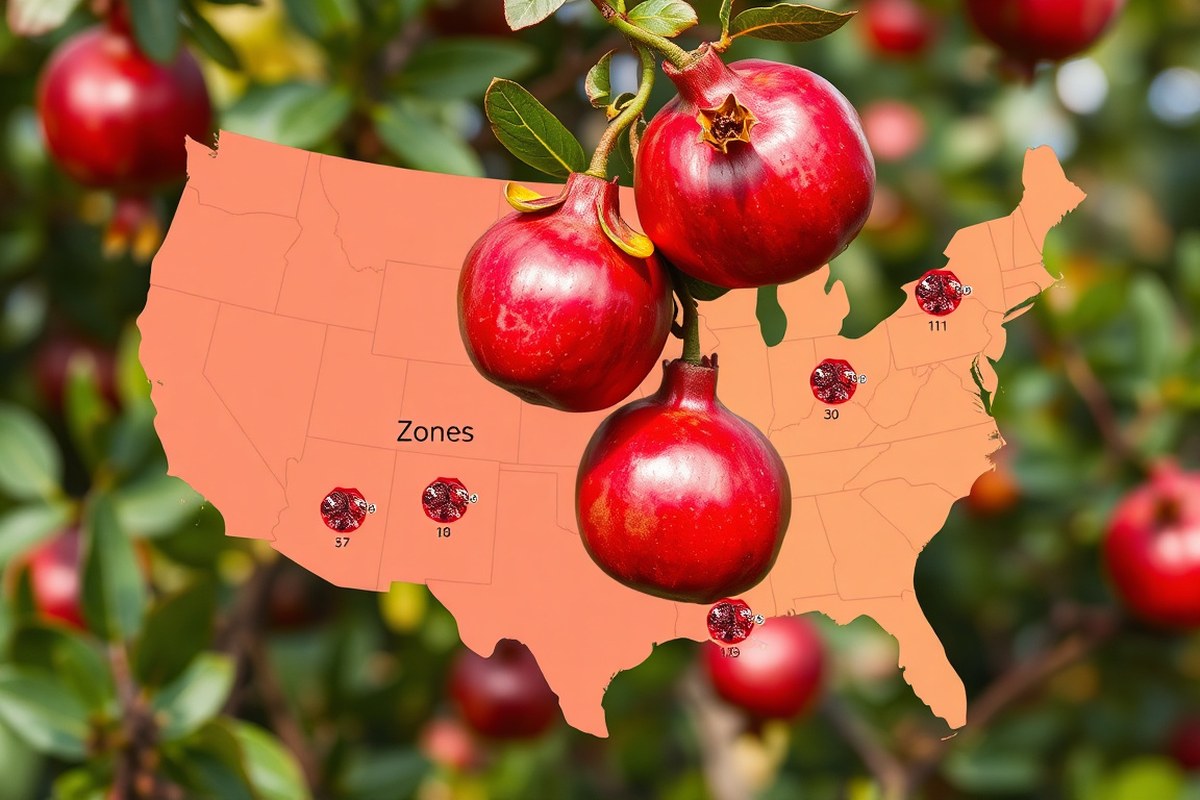
Pomegranates do well in USDA zones 7b to 11 with warm summers and gentle winters. They need enough heat over the summer to produce good fruit. Some types handle cold down to 5°F (-14.9°C), though frost tolerance differs.
USDA Zones Where Pomegranates Thrive
The ideal zones for growing pomegranates are between 7b and 11. Zones 8 to 10 are often the most reliable for fruit production. Plants in zone 7b may survive winter but risk some frost damage.
Container growing is a great option if you live outside these zones. You can move pots indoors when freezing temperatures arrive. This flexibility helps grow pomegranates in colder areas.
Temperature Ranges for Different Varieties
Most pomegranates do best with summer temperatures that are hot and dry. These plants like at least 6 to 8 hours of full sun daily. They grow well where summers reach consistently warm to hot temperatures.
Winter temps above 20°F (-6°C) are needed to prevent freezing damage. Some varieties tolerate brief exposure to temps as low as 5°F (-14.9°C). The hardiest can survive near -15°C if shielded from wind.
Frost Tolerance and Winter Needs
Frost tolerance depends on age and type of pomegranate. Mature trees can survive colder spells better than young plants. Still, extended freezes below 20°F (-6°C) often kill buds or top growth.
Protect young plants and container trees during winter with insulation or by bringing them indoors. A sheltered spot can improve winter survival. Avoid letting roots freeze; damage is usually fatal.
Keep young or container-grown pomegranates inside or well-wrapped if frost is expected.
| Feature | Details |
|---|---|
| USDA Hardiness Zones | 7b to 11 (optimal: 8-10) |
| Minimum Temperature Tolerance | 5°F (-14.9°C) for hardy varieties |
| Preferred Summer Climate | Hot, dry with 6-8 hours full sun daily |
| Winter Temperature Needs | Above 20°F (-6°C) to avoid bud damage |
| Container Growing Advice | Bring indoors during freezing weather |
Use this table to decide if pomegranates suit your climate. Remember, hot summers and mild winters produce the best fruit. Be ready to protect your trees in zones with regular frosts.
What Soil Types and Conditions Do Pomegranates Need?
Pomegranates grow best in soil with good drainage to avoid root rot. They do not tolerate standing water.
So the soil must drain quickly after rain or irrigation. Adding coarse sand or planting in raised beds helps keep water away from the roots.
The ideal soil texture for pomegranates is sandy loam. It holds moisture without staying soggy and allows air to reach the roots.
Heavy clay or very dense soil will suffocate roots and slow growth. Amending soil with organic matter improves texture and fertility.
Soil pH should be slightly acidic to neutral, ranging from 6.0 to 7.0, to help the tree absorb nutrients well. Pomegranates can handle a wider pH range, from about 5.5 to 8.5.
But they grow best in this middle zone. Test your soil every few years and adjust with amendments like lime or sulfur if needed.
- Use sandy loam for balanced moisture and air
- Ensure rapid drainage with coarse sand or raised beds
- Maintain soil pH around 6.0, 7.0 for nutrient uptake
- Add moderate organic matter annually, such as compost or manure
- Mulch to keep moisture consistent during fruiting
- Avoid waterlogged, heavy clay soils to prevent root diseases
Adding well-rotted manure or compost yearly feeds hungry pomegranate trees. Mulching keeps moisture steady and soil nutrients balanced. Watch for signs of water stress or yellow leaves on plants.
These signs often mean drainage problems. They may also show nutrient imbalances. Proper soil care helps your tree grow strong limbs and produce juicy fruit.
Which Countries and US States Are the Top Pomegranate Producers?
Pomegranates grow best where the climate is warm and dry. Worldwide, India leads commercial production.
Growers there can harvest fruit all year, thanks to the climate and practices. Iran, Turkey, and Mediterranean countries also produce large quantities for fresh sales and processing.
In the US, California dominates pomegranate growing. Its Central Valley has hot summers and mild winters that pomegranates like.
Arizona also grows pomegranates commercially, but on a smaller scale. States with colder winters or humid summers do not produce fruit as well.
Here’s a quick look at top pomegranate producers worldwide. It covers their growing habits. It also shows what they mostly use the fruit for.
| Country | Growth Profile | Primary Use |
|---|---|---|
| India | Year-round growth with varied climates | Fresh fruit and juice production |
| Iran | Origin region with traditional orchards | Fresh fruit and exports |
| Turkey | Bridge between Europe and Asia, large-scale farming | Bulk export and fresh consumption |
| Spain | Southern regions with high-density farms | Fresh fruit and juice |
| California (USA) | Central Valley, arid climate with irrigation | Commercial fresh fruit and processing |
California’s Central Valley suits pomegranates due to its hot summers and dry air. This climate helps the fruit develop color and sugar.
Arizona’s desert climate works but with smaller orchards. Other southern states may grow pomegranate trees in gardens but face challenges for commercial yields.
India and Iran have an edge with traditional knowledge and climates that support frequent harvests. Turkey balances export volume and quality.
Mediterranean producers tend to focus on fresh sales and culinary uses. When you decide where to grow pomegranates, matching the climate and water availability is key.
What Varieties Are Best for Different Growing Regions?
Pomegranate varieties differ in cold tolerance, size, fruit taste, and best growing uses. Choosing the right type helps you grow strong plants in your climate and space. Hardy varieties suit outdoor gardens where winters get chilly.
| Variety | Toughness | Size | Fruit | Best for |
|---|---|---|---|---|
| Provence | Hardier | 2-3 m | Medium, sweet-sharp | Wall training outdoors |
| Nana | Fairly hardy | 0.8-1 m | Small, mostly for show | Pots, ornamental |
| Kazake | Hardier | 2-2.5 m | Medium, sweet | Colder gardens |
| Mollar de Elche | Tender | 3-4 m | Large, very sweet | Greenhouse only |
| Wonderful | Tender | 3-5 m | Large, sharp | Heated greenhouse |
| Acco | Tender | 2.5-3 m | Medium-large, sweet | Conservatory or greenhouse |
For colder zones, choose hardy types like ‘Provence’ or ‘Kazake’. They handle frost better and still produce decent fruit. ‘Nana’ suits pots because of its small size and fairly hardy nature. Tender sorts such as ‘Wonderful’ and ‘Mollar de Elche’ need heated greenhouses to grow well.
Hardy varieties cope better with drought and heat outdoors. Tender ones need protected, warmer spots with more humidity control.
Growing pomegranates in containers demands patience because fruiting takes a few years. Container types tend to be smaller and often grown more for ornament than fruit.
Prune carefully to keep fruit production high, pomegranates fruit on old wood, so avoid heavy trimming.
How to Identify Ideal Planting Locations for Pomegranates
Pomegranates need full sunlight for at least six hours daily. Find a spot that gets morning sun and afternoon shade if you want extra protection. Too little sun shrinks fruit size and lowers yield.
Well-drained soil is essential. Test drainage by digging a hole 12 inches deep and filling it with water. The spot is good if water drains within 24 hours.
Slow drainage means trouble for your plants. Add sand to improve it. You can also plant on raised beds to avoid root rot.
Cold air hurts pomegranates more than cold soil but wet soils freeze harder. Choose a site sheltered from strong, drying winds.
Plant near a fence or wall for winter wind protection. Using fleece cover is smart in zones 6 and 7 where hardier varieties grow.
- Pick a sunny spot with at least six hours of direct sun daily.
- Check soil drainage by timing water absorption in a 12-inch hole.
- Use raised beds if your soil stays soggy longer than 24 hours.
- Look for places shielded from harsh winter winds with natural barriers.
- In cooler areas, wrap young plants in horticultural fleece for cold snaps.
- Adjust soil pH toward 6.5 to 7.0 using lime if it’s too acidic.
Raised beds or mounds cost around $20 to $40 in materials if you build them yourself. This small investment prevents waterlogging and root damage. Cold-hardy cultivars like ‘State Fair’ reduce cold damage.
Dwarf ‘Nana’ also works well. These still need a good spot to grow.
Check your site for daily sun by observing shadows at midday during spring and summer. Avoid spots where trees or buildings cast shade.
For good airflow, choose open locations but with windbreaks nearby to protect in winter. This balance helps keep fruit healthy and your plant strong.
Can Pomegranates Grow Outdoors in Colder Zones or Containers?
You can grow pomegranates outside in zones colder than 7b if you protect them well. Container-grown plants let you move them indoors to avoid winter damage. Young plants need more care because frost can easily kill or injure them.
Growing Pomegranates in Cold Climates
Pomegranates mostly like warmer climates but some types can handle colder zones. The Russian series is bred for cold and grows well down to Zone 6.
Plant these outdoors in zones 6 and 7. But be ready to protect them in hard freezes.
Young pomegranate plants suffer frost damage below about 10°F (-12°C). You’ll want to shelter them from hard freezes if possible. For colder zones, growing pomegranates in containers and bringing them indoors is the safest bet.
Container Size and Soil Mix Recommendations
Select a container at least 15 gallons wide and deep for a small pomegranate tree. Bigger containers hold more soil, which helps keep roots warmer in winter. Use a well-draining potting mix that includes sandy loam or orchard soil.
Make sure your container has drainage holes to avoid root rot. Fill your container with 40% garden soil and 40% compost. Add 20% sand to ensure good drainage and nutrition.
Mix these parts well before planting. The soil should remain moist but not wet during the growing season.
Winter Protection and Moving Plants Indoors
Plan to bring container pomegranates indoors before temperatures drop near freezing. Keep plants near a sunny window in a cool room around 50°F to 60°F. Reduce watering to once every two weeks in winter.
For outdoor plants, protect trunks and roots with mulch, straw, or frost cloths. Wrap plants in breathable frost fabric when frost is forecasted. Check plants for damage after cold snaps and prune dead wood in early spring.
Follow this winter care routine for container pomegranates in colder zones:
- Watch the weather for frost warnings by late October.
- Stop fertilizing by September to harden off growth.
- Prune lightly in late fall to remove weak branches.
- Move containers to a bright, cool indoor spot before frost hits.
- Water sparingly indoors, keeping soil moist but not soggy.
- Avoid placing plants near heat vents or cold drafts.
- In spring, gradually reintroduce plants outdoors after the last frost.
What Common Mistakes Affect Pomegranate Growth by Location?
Pomegranates often fail to grow well because of poor site choices. Planting them in places with too much shade or poor air circulation stops good fruit growth. Choose a sunny spot with good airflow for your pomegranate trees.
A south-facing location works best. This helps plants grow well and produce fruit.
Water issues are another big problem. Too much water causes root rot and poor growth. Too little water stresses the plant and reduces fruit size.
You can fix waterlogging by planting on a slight slope or building raised beds. For drought, water deeply once or twice a week, especially during dry spells.
Frost can kill young pomegranate shoots or damage fruit buds. Avoid pruning late in the season because new shoots won’t harden off. Use frost cloth or blankets to cover trees during frost threats.
This is important in colder places like northern USDA zones. Covering helps protect your trees from the cold. Plant near a wall or fence to shelter trees from cold winds.
- Pick a full-sun location with good air flow
- Plant pomegranates on well-draining soil or raised beds
- Water deeply but avoid standing water around roots
- Stop fertilizing after August to prevent late new growth
- Avoid heavy pruning in late fall or early winter
- Cover plants with frost cloth when temperatures drop below 28°F (-2°C)
- Use windbreaks or plant near heat-retaining walls in colder zones
Never fertilize after August; that causes vulnerable late growth that frost kills.
Choosing the right spot and watching water are the most important steps. You want soil that drains well but still holds some moisture.
During winter, keep new growth from frost with blankets or windbreaks. Being careful about these details helps you get fruit instead of just leaves.
How Do Regional Climates Affect Pomegranate Fruit Quality and Yield?
Pomegranate fruit quality and yield depend heavily on heat, sun, water, and soil in each region. Warm temperatures and full sun increase sugar content in the fruit.
Proper watering boosts fruit size and overall harvest weight. Soil helps roots grow strong and healthy.
Impact of Temperature and Sunlight
Heat is the main factor that drives pomegranate sweetness. Strong summer sun concentrates sugars inside the arils, making fruit taste sweeter and brighter. Without enough heat, the fruit may grow but remain bland and less colorful.
Long sunny days let the skin turn vibrant red or deep brown, signaling ripeness. Shady spots or cooler climates cause dull, pale fruit with lower sugar levels. Consistent exposure to sun also encourages larger fruits by supporting good photosynthesis.
Effect of Watering and Drought Stress
Water amount influences fruit size more than sugar content. Regular watering during fruit development helps pomegranates swell and fill out. Drip irrigation is ideal because it delivers steady moisture without overwatering.
Too little water triggers drought stress, which can shrink fruit and reduce yield. However, too much water close to harvest dilutes sugars and softens the skin. Balancing water from flowering through ripening is the key.
Regional Quality Differences: Examples
California’s Mediterranean climate matches pomegranate needs well, giving lots of heat and sun. Advanced drip irrigation and soil care here produce large, sweet fruits sold worldwide. The West Coast’s warm fall lets farmers pick fruit fully ripe with rich flavor.
In contrast, cooler UK gardens limit fruit sweetness and color despite sunshine. The shorter and cooler growing season means smaller fruit with less sugar. Gardeners there often grow pomegranates more for looks than eating quality.
For example, a pomegranate grown in central California might score 16-18% sugar at harvest. The same variety in a cooler region may only reach 12-14% sugar. This affects both taste and market value directly.
Step-by-Step Action Plan for Growing Pomegranates in Your Area
Follow these clear steps to pick the best spot and start your pomegranate successfully. Watch for signs showing your tree is happy and growing well.
- Before planting: Test soil pH and drainage to confirm suitability. Good soil feels crumbly and drains well within a few minutes.
- Week 1: Choose a sunny area with at least 6 hours of daily light. You’ll see healthy leaf color and no shade spots.
- Month 1: Plant in spring after frost risk passes to protect young plants. Check that new shoots start growing vigorously.
- Month 2-3: Water deeply but infrequently, allowing soil to dry between. Avoid soggy conditions that stunt growth.
- Month 4-6: Watch for pests and diseases common in your region. Healthy trees have no holes or discolored patches on leaves.
- Year 1: Prune lightly to shape and improve airflow. Look for better branch spacing and new healthy growth.
- Late year 1: Start mulching with organic material to retain moisture and control weeds. Soil should feel moist and cool.
- Year 2: Expect fruit buds to form if climate and care suit the variety. Healthy fruit sets leave branches slightly heavy.
Frequently Asked Questions
Can Pomegranates Grow Indoors in Colder Climates?
Yes, you can grow pomegranates indoors in cold climates. Use grow lights for 14 to 16 hours daily to mimic sunlight.
Can Pomegranates Grow from Cuttings at Home?
Pomegranates can grow from cuttings taken from fruiting trees. This improves your chances of getting fruit compared to seed-grown plants.
Does Soil pH Above 7.5 Harm Pomegranates?
Pomegranates prefer soil pH up to 7.5, but can tolerate slightly alkaline soils. Too high pH may affect nutrient uptake and growth.
How Tall Can Pomegranate Plants Grow in a Garden?
Pomegranate plants grow 12 to 15 feet tall if trained as small trees. Without training, they grow as bushy shrubs.
Do Pomegranates Need Full Sun All Day?
Pomegranates need full sun for best fruit sweetness and quality. Partial shade can reduce their sugar content and flavor.
Are Pomegranates Drought-Tolerant Once Established?
Yes, pomegranates tolerate drought well after establishment. Regular watering improves fruit size, but they survive dry spells.
Wrapping Up
Pomegranates grow best where warm, dry summers and mild winters prevail. Choosing a sunny, well-drained spot is key. Try planting a test tree this spring.
This helps check if pomegranates suit your area. Only expand your orchard after this test.