

How Many Yards of Mulch Do I Need? A Complete Guide with Calculations & Tips
Trying to figure out how much mulch your garden needs? Start by measuring the total square feet of your garden space. Then multiply that number by the depth you want the mulch to cover, in feet.
Then divide that number by 27 to find cubic yards needed. This gives you the right amount of mulch to buy.
Say you have a circle 10 feet across and want mulch 3 inches deep. That needs almost 0.73 cubic yards. Good measurements help you order just the right amount of mulch.
Keep in mind that depth is the biggest factor in how much mulch you need. Going from 2 inches to 3 inches can increase your mulch volume by around 50%.
Key Takeaways
- Measure your garden area carefully in square feet before calculating mulch volume.
- Convert desired mulch depth from inches to feet for calculations (e.g., 3 inches = 0.25 feet).
- Divide cubic feet volume by 27 to convert to cubic yards of mulch.
- Expect to need about 0.7 cubic yards for a 10-foot diameter circle at 3 inches depth.
- Mulch depth controls quantity, adding an inch can boost needed mulch by 50%.
- Buy mulch in bulk yards rather than bags for lower costs and less waste.
How to Calculate the Exact Yards of Mulch Needed

- Measure the length and width of your garden bed in feet.
- Multiply length by width to find the area in square feet.
- Choose the mulch depth in inches, normally 2 or 3 inches.
- Convert depth from inches to feet by dividing by 12.
- Calculate volume in cubic feet: multiply area by depth in feet.
- Convert cubic feet to cubic yards by dividing by 27.
- Add 10% extra volume to cover settling and waste.
Start by measuring your bed’s length and width with a tape. Multiply these numbers to get your area in square feet. For example, a 20-foot by 10-foot bed equals 200 square feet.
Select your mulch depth, say 3 inches. Divide this by 12 to switch to feet: 3 ÷ 12 = 0.25 feet. Multiply your area by this depth: 200 × 0.25 = 50 cubic feet.
To get cubic yards, divide 50 cubic feet by 27. One cubic yard equals 27 cubic feet. Use this to convert cubic feet to cubic yards.
That equals about 1.85 cubic yards. You should buy around 2 cubic yards to be safe.
Add about 10% more mulch to handle settling and any spill or waste. So multiply your cubic yards by 1.1: 1.85 × 1.1 = 2.04 cubic yards.
This approach works well for rectangular or square beds. For circular beds, measure the diameter, then calculate area with Area = π × (radius)². Use the same steps afterward.
Recommended Mulch Depths for Different Garden Uses
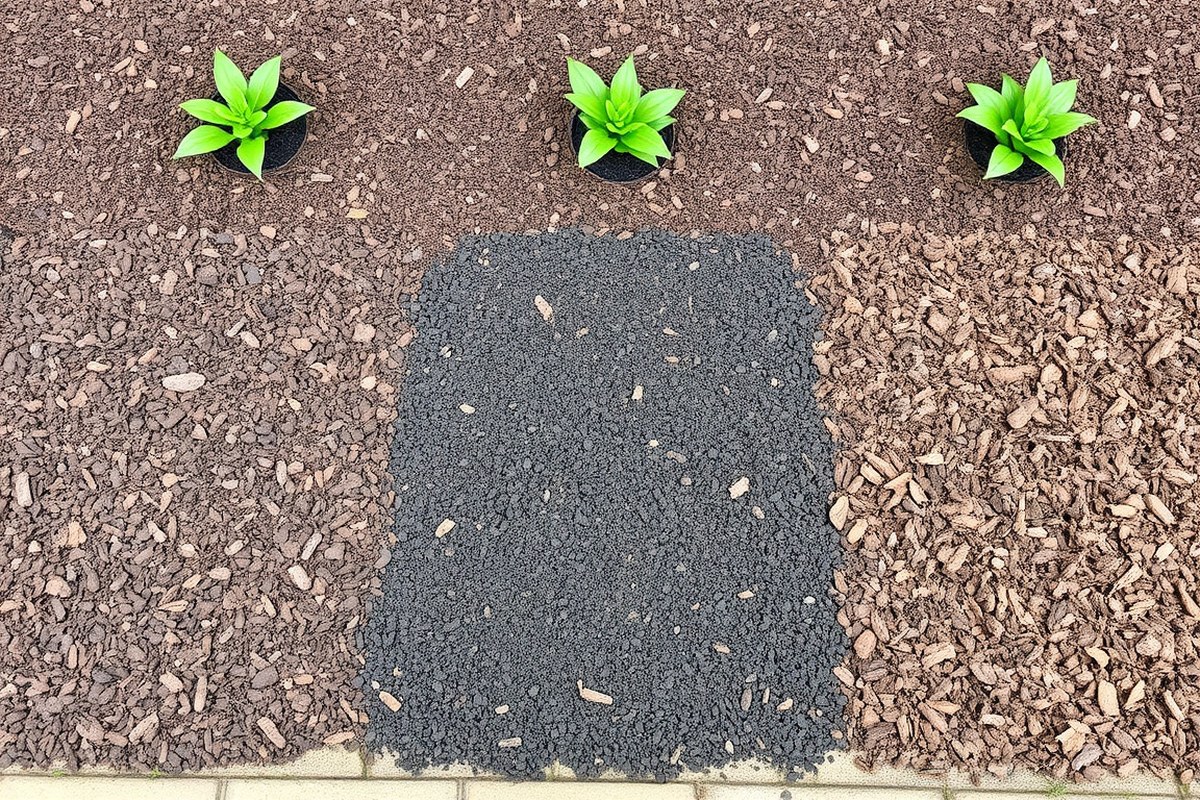
Apply mulch 2 to 3 inches deep for most flower and vegetable beds. This depth holds moisture and blocks light to weed seeds. For tree rings, use 2 to 4 inches of mulch depth.
Pull mulch away from the trunk. This helps avoid rotting at the base.
Depths for Organic Mulch Types
Organic mulches like shredded hardwood, bark nuggets, pine needles, and leaves work well in garden beds. A 2 to 3 inch layer suits flower beds and vegetables best. It holds moisture while allowing air flow to roots and blocks annual weeds.
Use 3 to 4 inches on paths or new beds. It helps keep weeds down. It also holds moisture better.
Lighter mulches like pine needles require thicker layers to stay put. Leaf mold or shredded leaves should stay thinner to avoid matting and rot.
| Type | Best For | Typical Depth | Lasts | Pros | Considerations |
|---|---|---|---|---|---|
| Shredded hardwood | Beds, trees, paths | 2, 3 in | Medium | Looks neat, stays put | Can tie up nitrogen if mixed into soil |
| Bark nuggets | Decorative beds | 2, 3 in | Long | Slow to break down | Can float on slopes/heavy rain |
| Shredded leaves/leaf mold | Veg and flower beds | 2, 3 in | Short-Medium | Feeds soil, free or cheap | Apply mulch in thin layers to stop it from packing down. Thin layers let air and water flow. Thick layers may smother plants. |
| Straw, pine needles | Veg beds, berries | 2, 3 in | Short | Light, easy to spread | Needs thicker layers to control weeds |
Most organic mulches last a medium time and break down into soil nutrients. Some mulches, like shredded hardwood, can lower soil nitrogen for a while.
Avoid mixing these deeply into soil. This keeps plants healthier.
Depths for Inorganic Mulch Types
Inorganic mulches such as rubber or gravel have different depth needs. Rubber playground mulch needs 6 or more inches for safety cushioning. For decorative areas, 2 inches usually looks good and weighs less.
Inorganic mulch won’t improve soil health but stops weeds and holds some moisture. It’s best for paths, playgrounds, and places you don’t want mulch mixing with soil. Keep layers thicker on slopes or areas prone to wash-off.
Avoid piling mulch higher than 3 to 4 inches in flower beds to prevent plant stress.
Special Considerations for Tree Rings
Spread 2 to 4 inches of mulch around trees. Keep mulch 3 to 6 inches away from the trunk. This stops moisture build-up and rot.
Mulch piled against bark can cause rot and invite pests. Extend the mulch ring as the tree grows to conserve moisture and stop weeds.
Near perennials and young plants, use 1 to 2 inches of mulch. Thin mulch stops too much moisture near crowns. This keeps roots safe.
Organic mulches like shredded bark or pine straw are ideal for tree rings. Don’t let mulch form “volcanoes” around the trunks.
Converting Between Mulch Bags and Cubic Yards
You usually need 13 to 14 bags of 2 cubic feet each. This amount makes one cubic yard of mulch.
Larger 3 cubic feet bags need roughly 9 bags per cubic yard. Knowing this helps you plan how many bags to buy and compare costs better.
Bags per Cubic Yard for Common Sizes
Most mulch bags sold hold 2 or 3 cubic feet of material. Two cubic feet is the most common size at hardware stores. To get bag count, divide 27 by the bag size in cubic feet.
This converts cubic yards to bags. That’s why you get 13.5 bags for 2 cubic foot bags and 9 bags for 3 cubic foot bags.
Here’s a quick way to estimate bags or coverage at 3 inches deep. Use this for planning your mulch needs.
| Bag Size | Volume (cubic yards) | Bags per Cubic Yard | Coverage at 3 in. Depth (sq ft) |
|---|---|---|---|
| 2 cu ft bag | 0.074 | 13.5 | 8 |
| 3 cu ft bag | 0.111 | 9 | 12 |
Use these numbers when you measure your bed. Divide your mulch volume in cubic feet by bag size to find bags needed. This helps with accurate purchasing.
You can count bags from area size by finding total cubic yards first. Then convert yards to bags.
Price Differences Between Bags and Bulk
Buying mulch in bulk is usually cheaper than buying bags. Bulk mulch costs between $20 and $45 per cubic yard, depending on type. A single 2 cubic foot bag often costs between $3 and $6 at garden centers.
For example, 1 cubic yard of bulk mulch at $35 runs about $65 for the material. To cover the same volume with bags, you would pay roughly $100 to $125.
That price difference grows as you buy more mulch. So bulk is best for big jobs over ten bags.
Bulk mulch arrives in large piles or trucks at your driveway. It saves money but needs a wheelbarrow or tool to transport. Bags are easier and neater but more costly for the amount of mulch you get.
Adjusting for Moisture and Compression
Mulch volume can shrink or swell depending on moisture. Wet mulch packs tighter and weighs more. A cubic yard can weigh 400 to 800 pounds, depending on moisture and mulch type.
This matters if you’re carrying mulch bags in and want to avoid surprises with heaviness. Bulk mulch settles over time, reducing depth and sometimes requiring topping up.
Check bag labels for size and weight, since some types like cedar might compress more. Add extra mulch to your estimate. It covers settling and changes from moisture.
Measuring Irregularly Shaped Garden Beds Accurately
Measuring irregular garden beds means breaking them into simple shapes. Find each shape’s area. Then add all those areas together.
Use formulas for circles, triangles, and trapezoids to get exact numbers. Accurate measurements help you buy just enough mulch without extra waste or shortfall.
Calculating Area for Circles and Ellipses
For circular beds, measure the radius from the center to the edge. Use the formula area = π × radius² to get the area in square feet.
Elliptical beds need two measurements: the longest length and the shortest width. Calculate area with π × (length ÷ 2) × (width ÷ 2) for a good estimate.
These formulas work well for rounded beds. They turn curved spaces into simple shapes. You can multiply these shapes by mulch depth.
Formulas for Triangles and Trapezoids
Triangular beds require you to measure the base and height. The formula is area = 0.5 × base × height.
For trapezoids, measure both parallel sides and the height (the perpendicular distance between them). Use area = 0.5 × (side1 + side2) × height.
You need accurate base, side, and height measurements. These shapes are common in garden edges and paths. Measure carefully for best results.
Breaking Complex Beds into Sections
Start by sketching your bed and dividing it into rectangles, circles, triangles, or trapezoids. Measure each piece separately using a tape or laser measure.
Add up all individual areas to get the total bed area. Then multiply by mulch depth and convert to cubic yards (divide cubic feet by 27).
Using apps or online area calculators helps here. Take photos or draw the bed and input points to get irregular areas faster. Follow these steps to measure irregular garden beds:
- Sketch the bed shape on paper, breaking it into familiar shapes.
- Measure lengths, widths, radii, bases, and heights with a tape measure.
- Use the circle area formula for round parts: π × radius².
- Apply the ellipse area formula for elliptical sections.
- Calculate triangle areas using 0.5 × base × height.
- Find trapezoid areas with 0.5 × (side1 + side2) × height.
- Add all shape areas to determine the total square footage.
- Multiply total area by desired mulch depth in feet, then divide by 27 for cubic yards.
Choosing Bulk vs Bagged Mulch: Cost and Convenience
Buying mulch in bulk usually costs less when you need more than 1 cubic yard. Bags stay convenient for small projects under that size.
Bulk mulch runs about $20 to $45 per cubic yard delivered. Bagged mulch typically costs more per cubic yard after you add delivery fees.
Delivery and handling add to the total cost with bulk orders. Delivery fees range from $50 to $150. You want to measure your beds carefully to avoid ordering too much.
Bulk mulch saves you time handling fewer bags but needs room for delivery and storage. Bags are easier to store and carry but create more waste with plastic.
| Type of Mulch | Price per Cubic Yard | Typical Bag Size | Bags per Cubic Yard | Delivery Fee | Best for Project Size |
|---|---|---|---|---|---|
| Bulk Wood Mulch | $20 – $45 | N/A | N/A | $50 – $150 | Over 1 cubic yard |
| Bagged Mulch | $40 – $60 (estimated) | 2 – 3 cubic feet | 14 (2 ft³) or 9 (3 ft³) | Usually $0 or small fee | Under 1 cubic yard |
For example, covering 265 square feet at a 2-inch depth needs about 33 cubic feet. That equals roughly one and a quarter cubic yards.
Bags holding 2 cubic feet require around 14 bags. Buying bulk here might save money if ordering near or over 1 cubic yard.
Choosing between bulk or bags boils down to size and your storage space. Bulk mulch suits large areas as it cuts down on bag handling and plastic waste. Bags are best for small areas.
They make moving mulch easier. You won’t have to wait for delivery.
Double-check your bed measurements before ordering bulk mulch to avoid overspending on extras.
Safe Mulching Practices to Protect Plants and Trees
Keep mulch 3 to 6 inches away from tree trunks to prevent rot. Piling mulch right against the bark traps moisture, which invites decay and pests. This mistake, called volcano mulching, can harm trees and invite insects and fungi.
Apply mulch in a doughnut shape around the trunk, not a pile. Keep the layer 2 to 4 inches deep near trees and shrubs.
Coarser mulch should be about 3 to 4 inches deep. Fine mulch needs only 1 to 2 inches.
Landscape fabric under mulch can affect mulch depth and plant health. It helps control weeds but may hold moisture and reduce soil aeration. Use fabric sparingly and ensure mulch depth stays within recommended levels to avoid root suffocation.
- Keep mulch 3 to 6 inches from trunks and stems
- Use 2 to 4 inches depth around trees. 1 to 2 inches for fine mulch
- Avoid piling mulch up against bark (“volcano mulching”)
- Top up mulch annually if depth drops below 2 inches
- Consider a fall mulch layer to insulate roots from frost
- Choose coarse mulch for sensitive plants to improve airflow
- Limit use of landscape fabric to prevent waterlogging
Add mulch every year when it gets thin, especially during spring or fall. This keeps roots insulated and soil moist without suffocating them. Adding a fresh, thin layer is better than piling up mulch, which can stress plants.
For sensitive plants, pick coarse or shredded mulch. These materials breathe better and reduce rot risk. Avoid fine, dusty mulches that pack tightly, especially near delicate roots.
Accounting for Mulch Settling and Annual Top-Ups
Mulch typically settles by about 5 to 10 percent in the first few weeks. This happens because the mulch pieces compress and break down slightly. Add 10 percent more mulch than your initial calculation.
This helps avoid running out. Plan for a little extra volume when buying mulch.
For example, if your garden needs 3 cubic yards, multiply by 1.1. That gives you 3.3 cubic yards to order.10.
That means you should buy 3.3 cubic yards to account for settling. This small buffer ensures your mulch layer stays the right depth after it settles down.
You should add fresh mulch every year to keep a healthy layer. Add one to two inches of new mulch each time.
This goes on top of the old, settled mulch. This refresh keeps your beds looking neat and keeps weeds down.
After adding new mulch, keep the total depth at about two to three inches. This depth protects plants without causing moisture problems or suffocating roots. Shallow mulch loses its benefits quickly, so topping off is essential.
Mulch type plays a role too. Heavier mulches like bark chips settle less than lighter, shredded types. Shredded mulch compacts faster and requires a bit more buffer.
Pick mulch based on what your garden needs. Adjust how much extra you buy for different mulch types.
Maintaining your mulch on a yearly schedule can save you time and money. You usually need one to two extra inches yearly.
For 100 square feet, that’s 8 to 16 cubic feet. This regular top-up prevents you from having to redo the bed completely.
How Mulch Type Affects Quantity and Coverage
Different types of mulch change how much you need to cover your garden well. Coarse mulches, like bark or wood chips, usually need a thicker layer. Fine mulches, such as shredded leaves or compost, spread more easily and can be thinner.
Rubber mulch is denser and heavier. So it covers less area than wood or organic mulch at that depth.
It also lasts far longer and won’t break down like organic mulches. That means you don’t need to add more often.
Organic mulches compress and settle more over time. You should add about 25% more at first to allow for this.
Rubber or stone mulches compress very little. So their initial depth stays pretty much the same.
| Mulch Type | Typical Depth | Density | Longevity | Replenishment Frequency |
|---|---|---|---|---|
| Wood Mulch (bark, chips) | 2, 4 inches | Lightweight, compresses 20, 30% | 1 year, breaks down | Annually |
| Rubber Mulch | 2, 3 inches | Dense, little compression | 10+ years | Rarely |
| Stone / Gravel | 2 inches | Very dense, no compression | Indefinite | Never |
| Fine Organic Mulch (shredded leaves) | 1.5, 2 inches | Lightweight, compresses 30, 40% | Less than 1 year | Twice annually |
When measuring your mulch needs, add more depth for coarser mulches. For example, choose 3 to 4 inches of bark mulch if your plants tolerate it.
Use only 1.5 to 2 inches of fine mulch to avoid smothering plants. Rubber mulch needs less depth, about 2 inches, because it doesn’t compress much.
Adjust your mulch volume if the product is lighter or heavier. Lightweight organic mulches settle more and seem like they cover more. Expect to buy about 20% extra volume at the start.
For dense mulches like rubber, you can order exactly what the coverage calculator gives you. You’ll spend more upfront on rubber mulch but save money long term.
For instance, wood mulch in a 100 sq ft bed costs $30-$45 a year. But rubber mulch might cost $150-200 one time and last 10 years or more.
Don’t put organic mulch deeper than 4 inches. Too much mulch can smother roots. This can cause plant problems.
Step-by-Step Action Plan for Mulching Your Garden Beds
Follow these steps to mulch your garden beds with the right amount. You’ll protect your plants and save money by avoiding extra mulch.
- Before you start: Measure your garden beds carefully. Use a tape measure to find length and width or sketch irregular shapes with approximate dimensions.
- Day 1: Calculate how many cubic yards you need based on your measurements and recommended depth. Check your numbers twice to avoid ordering too much mulch.
- Day 2: Decide between bulk and bagged mulch. Think about the cost of mulch and how you will get it. Moving mulch to your beds should not make a big mess. Choose easy-to-handle options for your garden work.
- Day 3: Order or buy the mulch. Buy slightly more mulch than calculated, about 10% extra, to cover settling and any measurement mistakes.
- Day 4: Spread mulch evenly over your garden beds. Keep the mulch depth to the recommended level. Leave a few inches from stems and trunks clear.
- Week 2: Check the mulch thickness after it settles. Add a thin layer if it looks too thin, especially after heavy rain or wind.
- Annually: Plan to add mulch yearly to keep your beds protected and looking fresh. This also helps control weeds and retain soil moisture.
Frequently Asked Questions
How Many Cubic Yards of Mulch Do I Need for a 20×10 Foot Bed at 3 Inches Deep?
You’ll need about 1.85 cubic yards for that size and depth. Multiply the square feet by the mulch depth in feet.
Then divide the number by 27. This gives you the cubic yards needed.
Can I Use Less Mulch If I Plan to Top It Up Annually?
Yes, using slightly less mulch works if you plan to refresh it each year. Mulch compresses and settles, so topping up keeps the coverage neat and effective.
What’s the Best Way to Estimate Mulch Needed for a Sloped Garden Bed?
Measure the length of the slope. Multiply it by the average width.
Adjust the result for the slope angle. Use that number to find volume as usual, then add 10% extra for slope irregularities.
How Many Bags of Mulch Equal One Cubic Yard?
About 27 bags of 2-cubic-foot mulch equal one cubic yard. That’s because 1 cubic yard equals 27 cubic feet. Bags are handy for small jobs or touch-ups.
Should I Buy Mulch in Bulk or Bags for a Small Backyard Garden?
For small gardens under 100 square feet, bags may be easier to handle. Bulk mulch usually costs less per cubic yard.
It comes in big amounts. You need a spot for the delivery pile.
How Does Mulch Depth Differ for Vegetable Gardens Compared to Flower Beds?
Vegetable gardens usually get 2 to 3 inches of mulch depth for moisture and weed control. Flower beds may use slightly thicker layers around shrubs for better insulation.
The Bottom Line
Knowing how many yards of mulch you need helps you cover your garden beds correctly. Order slightly more mulch to allow for settling and easier application. Start measuring your beds today so you can place your mulch order soon.


One Comment