

How Much Is a Yard of Mulch: Detailed Costs, Coverage & Savings Tips
How much is a yard of mulch? It usually costs between $30 and $150 per cubic yard.
The average price nationwide is about $75. Prices depend a lot on the type of mulch and where you live.
For example, undyed pine mulch is usually the cheapest, around $30 per yard. Cedar mulch costs more, up to $100, but lasts longer and resists bugs better. You want to pick mulch that fits your budget and purpose.
One yard of mulch spreads over roughly 324 square feet at 1 inch depth. You have the choice to buy it loose or bagged.
Buying in bulk usually saves money on large areas. Next, calculate the total amount your space will require.
Key Takeaways
- Cedar mulch is good for bug resistance but costs $38 to $100 per yard.
- Undyed pine mulch often costs the least at around $30 per cubic yard.
- Hardwood mulch averages $40 per yard, with regional price variations.
- A cubic yard of mulch covers about 324 square feet at 1 inch thick or 162 square feet at 2 inches thick.
- Dyed mulch usually costs $5 to $10 more per yard than undyed types.
- Bulk mulch tends to be cheaper than bagged mulch if you need a lot.
How Much Does One Yard of Mulch Cost Today?

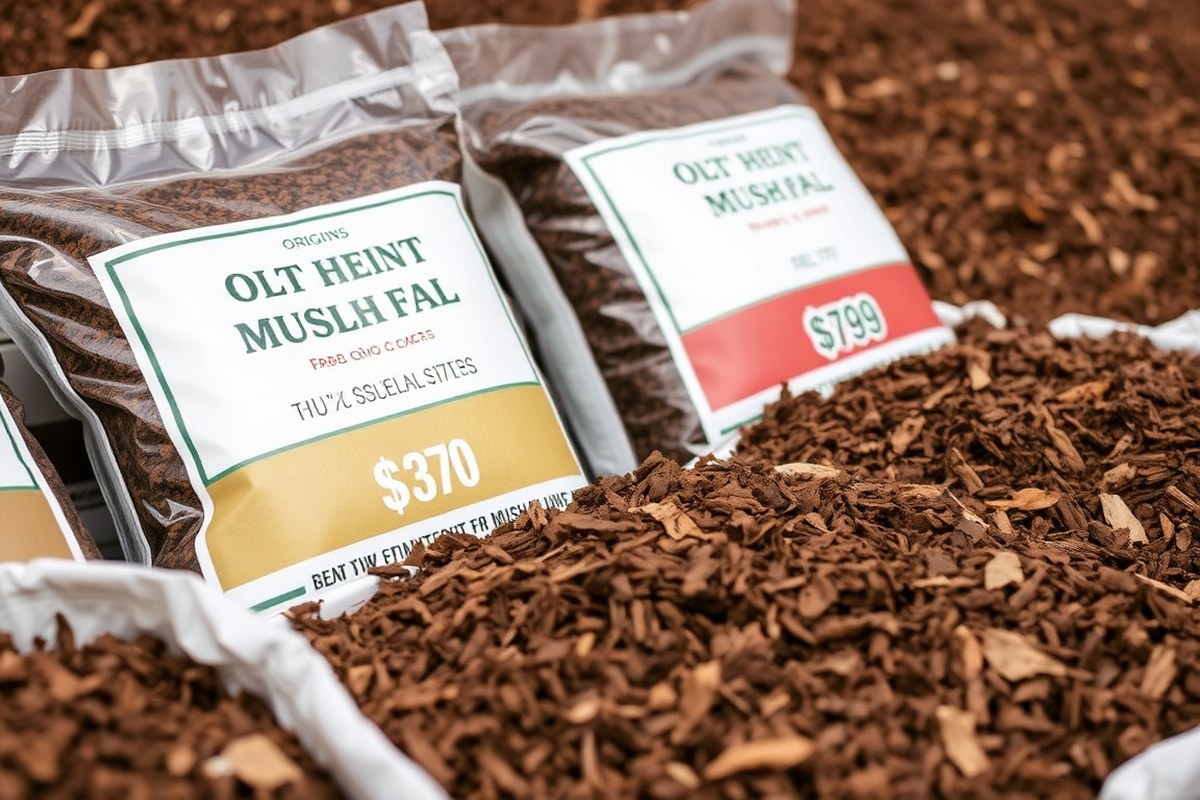
The price for one yard of mulch varies widely by type and purchase method. Bulk mulch usually costs between $30 and $75 for material only. Bagged mulch prices, which come in 2-cubic-foot bags, run from about $3.50 to $7.50 each, adding up to $55 to $110 per cubic yard.
Mulch color and material affect costs, too. Natural shredded hardwood costs less than dyed or cedar mulch, which tends to last longer.
Dyed mulch prices reflect the color treatment and curb appeal. Cedar mulch often costs more because it helps repel pests and lasts several years.
| Material Type | Bulk Cost (Per Cubic Yard) | Bagged Equivalent (Per 2 cu. Ft. Bag) | Expected Lifespan | Best Application |
|---|---|---|---|---|
| Shredded Hardwood (Natural) | $30 – $45 | $3.50 – $4.50 | 1 – 2 Years | General garden beds, slopes |
| Dyed Mulch (Black/Brown/Red) | $35 – $55 | $4.00 – $5.50 | 2 – 3 Years (Color) | High-visibility curb appeal |
| Pine Bark Nuggets | $40 – $60 | $4.50 – $6.00 | 3 – 4 Years | Flat beds, acid-loving plants |
| Cedar Mulch | $50 – $75 | $5.50 – $7.50 | 3 – 5 Years | Pest deterrent |
Material costs cover just the mulch itself. Adding delivery and installation can double the price. For example, installed mulch, meaning it’s spread by pros, averages $70 to $120 per yard.
Delivery fees depend on distance and load size. Choosing professional installation saves your time and heavy lifting but costs more.
Bagged mulch affects your budget differently. It costs more per cubic yard but lets you buy only what you need. You might pay around $55 to $110 for the bagged equivalent of one cubic yard.
Bulk mulch is cheaper per yard but requires transport and handling. Weigh these options based on your project size and equipment availability.
What Factors Influence Mulch Pricing?
Mulch prices change mainly because of the type and quality of material. Cedar mulch usually costs more than pine because it’s more durable and bug resistant. Cedar may run $45 to $90 a yard.
Pine often costs $30 to $45. Premium mulches like hardwood or dyed types also cost more due to processing.
Where you live affects the price too. Areas far from suppliers may pay extra for shipping. Delivery fees often add $60 to $150 for a few yards.
Some suppliers charge flat fees, others add fees per mile. You can reduce these by ordering in bigger amounts or picking up the mulch yourself.
Season influences cost, especially before or after peak landscaping seasons. Prices usually rise in spring and summer when demand peaks.
Fall or winter buys tend to be cheaper but check if suppliers still deliver. Weather and local supply chain issues also sway prices in certain regions.
Labor costs add up if you hire pros to spread mulch. Expect $30 to $60 extra per yard for installation.
Some crews charge more for hand spreading compared to blowing mulch onto beds. Doing it yourself saves that extra cost when you have time.
Ask suppliers about delivery fees before you order. Check if you get free delivery on big orders.
Picking the right mix of material and delivery options matters. Cedar costs more for its benefits, but undyed pine can save money.
Compare delivery charges to the material price before ordering. Last-minute orders or small loads usually have higher delivery fees.
How Much Area Does One Yard of Mulch Cover at Different Depths?
One cubic yard of mulch covers different areas depending on the depth you apply. At 1 inch, it spreads over about 324 square feet. At 2 inches deep, it covers about 162 square feet.
This is roughly half the coverage at 1 inch. When spread 3 inches deep, expect closer to 108 square feet per yard.
These standard depths suit different garden needs. One inch works for a light refresh on existing mulch.
Two inches is best for flower beds and established plants. New landscape beds usually need 3 inches to control weeds and retain moisture.
| Depth | Area One Cubic Yard Covers | Typical Use |
|---|---|---|
| 1 inch | 324 square feet | Light refresh over existing mulch |
| 2 inches | 162 square feet | Flower beds and established plantings |
| 3 inches | 108 square feet | Most new landscape beds |
| 4 inches | 81 square feet | Extra weed and moisture control |
| 6 inches | 54 square feet | Usually excessive for garden beds |
Keep in mind that mulch settles after you spread it. You might lose up to 25 percent of thickness in a month or two.
To avoid bare spots, add a little extra mulch above your target depth. For a 3-inch finish, spread about 3.5 to 4 inches initially.
Here’s how to figure out coverage for a bed. Say your bed is 18 feet long and 9 feet wide. Multiply length and width to get 162 square feet.
A cubic yard at 2 inches covers exactly that. So you need one cubic yard.
You want a 3-inch mulch depth. Divide 162 by 108 to get 1.5 cubic yards.
Adjust depth based on the type of plants you have. Avoid too much mulch on shallow-rooted or low-growing plants to prevent rot. Around trees, mulch should be 3 to 4 inches thick.
Keep mulch away from the trunk. This helps prevent pests and disease. Using this approach helps your plants stay healthy and your mulch last longer.
How to Calculate Exactly How Much Mulch You Need
You can calculate mulch needed by measuring your garden area in square feet. Then multiply by the depth you want in inches. Divide that number by 324 to get cubic yards of mulch required.
Measuring Your Garden Beds Accurately
Start by measuring the length and width of your garden bed in feet. For irregular shapes, divide the area into smaller rectangles or triangles. Add all these smaller areas to get the total square footage.
Slopes can increase the volume of mulch needed. Measure the slope length separately and multiply by the slope’s steepness factor. Add this extra amount to your flat area total for better accuracy.
- Measure the length and width of each garden bed area in feet.
- Break down odd shapes into basic squares, rectangles, or triangles.
- Calculate each small area and add together for total square feet.
- Measure any slopes’ length and steepness to estimate extra mulch volume.
- Add slope volume to flat square foot total for a full area size.
Converting Dimensions into Volume
The formula to find cubic yards needed is: (Square feet × Depth in inches) ÷ 324. Depth is how thick the mulch layer will be. Two to three inches is common for most garden beds.
For example, your bed is 500 square feet. You want 3 inches deep. So use this: (500 × 3) ÷ 324.
That equals approximately 4.63 cubic yards. Round up to 5 cubic yards to cover the area fully.
A cubic yard covers about 100 square feet at 3 inches deep. Keep in mind, deeper layers or slopes will require more mulch volume.
Calculating Number of Bags Needed
Bagged mulch usually comes in 3 cubic feet bags. One cubic yard equals 27 cubic feet.
Divide 27 by 3 to find bags per yard. This means 9 bags equal 1 cubic yard of mulch.
You need 5 cubic yards. Multiply 5 by 9 bags. The total is 45 bags.
Some bags are smaller, like 0.8 cubic feet rubber mulch bags. For those, you’ll need about 33.75 bags per yard.
Using bags is helpful for small projects. For larger beds, bulk mulch cost and delivery may be cheaper and easier to manage.
Comparing Bulk and Bagged Mulch: Which Is More Cost Effective?
Buying mulch in bulk usually costs less per cubic yard than bagged mulch. Bulk is better for larger projects because fewer bags and delivery fees add up quickly. Bagged mulch works well for small jobs.
It also suits touch-ups. You get exact amounts without delivery.
Number of Bags per Cubic Yard
A cubic yard holds 27 cubic feet of mulch. So the number of bags depends on bag size.
For 2-cubic-foot bags, it takes about 14 to 14.5 bags to equal one cubic yard. For smaller 1.5-cubic-foot bags, you need around 18 bags to cover a cubic yard.
Volume confusion often leads to ordering too little or wasting excess mulch. Multiply the number of bags by the bag volume. This helps avoid ordering too little or too much.
It matches your yardage exactly. Keep a few extra bags handy for touch-ups after spreading the bulk mulch.
Cost Differences Between Bulk and Bagged
Bulk mulch ranges from $30 to $75 per cubic yard, depending on the type. Bagged mulch costs more, about $54 to $95 per cubic yard. Bags cost more because of convenience.
This raises the price compared to bulk. You could save up to 40% by buying bulk instead of bags for the same volume.
Also factor in hidden costs like delivery fees and unloading space for bulk orders. Bulk deliveries usually charge a fee. Ordering 3 cubic yards or more saves money.
This is the best way to avoid extra charges. Bagged mulch has no delivery cost but requires more physical effort to carry many bags.
Situations Best Suited for Each Option
Bulk mulch fits medium to large landscaping jobs. Use it for multiple garden beds or planter areas. It covers more space at once.
It minimizes packaging waste and reduces trip time spent loading bags. However, you need space to unload and store the large quantity before spreading.
Bagged mulch fits small, detailed projects where getting the exact amount matters. Small beds and pathways do better with bagged mulch. You can buy just what you need for last-minute fixes.
This avoids waste. Bags keep mulch fresh and dry longer.
Store them on a porch or in a shed. This protects the mulch from rain and sun.
Plan your mulch order carefully. Avoid buying too many bags or a bulk load that’s too big. This saves money and prevents waste.
What Are Typical Delivery and Installation Costs?
Delivery and installation often add $40 to $110 per cubic yard to mulch costs. Delivery fees usually range from $40 to $80 per load depending on your region. Professional installation usually costs between $40 and $100 per yard.
The price depends on local labor rates and the included services. This can change based on your location and what you need.
Delivery Fees by Region
Delivery costs differ mostly by nearby supply availability and climate. Southern areas have lower delivery fees since mulch is produced and available almost year-round. Regions farther from production hubs face steeper delivery charges.
| Region | Typical Delivery Fee |
|---|---|
| The South | $40 to $65 per load |
| National Average | $40 to $80 per load |
| Other Regions | Up to $80 or more per load |
Checking local mulch suppliers for delivery deals may save money. Expect delivery fees near the low end when you buy in bulk or off-season.
Labor Costs and Installation Options
Professional mulch installation costs vary based on scope and terrain. Labor rates typically fall between $40 and $80 per cubic yard for spreading and cleanup. Some landscapers charge hourly rates, so confirm what the quote covers.
Mulch blowing, a common installation method, costs about $38 to $60 per cubic yard. Adding this to the material price and delivery can bring per-yard totals to $90 or more. Installing mulch yourself usually costs $15 to $60 per yard, mainly material expenses.
Reducing Delivery and Labor Expenses
You can cut expenses by combining several yards in one delivery. Ask suppliers for discounts on larger orders and negotiate fees upfront. Scheduling delivery and installation during slow seasons might also reduce costs.
Doing some prep work yourself, like clearing old mulch or debris, lowers labor charges. You can place the mulch yourself if you have a wheelbarrow and rake. For example, three yards cost $50 each.
Delivery is $60. Labor is $45. The total comes to about $255 installed.
Tips to Avoid Common Mulch Buying Mistakes
Mulch can shrink by about 30% after delivery because it settles and dries out. To avoid overpaying, order extra mulch, about 25% more than you think you need. Double-check your yard’s square footage and calculate volume carefully, using depth and area.
People often underestimate the depth or area needed for mulch. This mistake causes bare patches or forces you to buy mulch again soon.
You’ll spot poor quality mulch by color and texture. It should smell fresh and not sour or moldy. Avoid mulch with large amounts of sticks, dirt, or fines clumping together.
Check the supplier’s source and ask for a sample if shopping in bulk. High-quality mulch offers consistent particle size and holds color well, especially dyed types.
- Order 25% extra mulch to cover shrinkage and settling
- Measure your garden beds twice, factoring in desired depth
- Look for fresh, natural mulch without dirt or moldy smell
- Inspect bags or piles before buying, checking texture and color
- Ask suppliers about the mulch’s origin and processing date
- Request samples when buying large amounts of bulk mulch
- Plan for even spreading to avoid thin spots and clumps
Hidden fees like delivery and installation can push costs higher. Some companies charge for spreading mulch by the hour, yard, or project. So clarify this up front.
Uneven spreading wastes mulch and leaves sections bare, inviting weeds or soil erosion. Take your time spreading.
Use a rake to spread mulch evenly. Keep the layer smooth and close to 2 to 3 inches.
To double-check your mulch volume, write down your bed’s length and width. Then use the formula: length × width × depth (in feet) ÷ 27 to get yards. Have a second person measure too.
Cross-verify your results with the mulch supplier or a mulch calculator online. This extra step avoids costly volume mistakes.
How to Save Money When Buying and Using Mulch
The best time to buy mulch cheaply is late fall or early spring. Nurseries and garden centers often discount leftover mulch during these times. You can save $10 to $30 per cubic yard.
This compares to peak prices in spring and summer. Buying mulch off-season is usually cheaper.
Choosing the right mulch type also cuts costs. Cypress mulch costs about $110 per cubic yard but lasts longer. So you don’t need to refresh it often.
Rubber mulch costs around $100 per cubic yard and lasts well too but is pricier upfront. Colored mulch prices vary widely, from $27 to $120 per cubic yard including installation. So pick simple, natural mulches to stay on budget.
- Buy mulch at the end of the growing season or early spring
- Choose longer-lasting mulch like cypress to reduce refresh costs
- Compare bulk mulch prices by the cubic yard, not bags
- Install mulch yourself to avoid $50 to $70 per hour labor fees
- Use a wheelbarrow and garden rake to spread mulch evenly
- Buy slightly more mulch (5%-10%) upfront to avoid extra delivery charges
Doing mulch installation yourself saves money easily. Renting or using simple tools helps spread mulch fast. A wheelbarrow and rake are all you need.
It often takes just a few hours. You avoid paying $50 to $70 per hour for professional labor. Lay mulch 2 to 3 inches deep so plants stay healthy but mulch doesn’t suffocate roots.
Say you need 3 cubic yards for your garden beds. Think about the quantity before buying mulch. Buying cypress mulch at $110 per yard costs $330 but lasts longer without adding fresh mulch.
Cheaper colored mulch costs $30 per yard or $90 total. It wears out and needs topping off later.
You’ll spend more time doing upkeep. Doing your own installation saves about $150 on labor, making even pricier mulch affordable.
Mulch too thick or piled against plant stems traps moisture and causes rot.
Decide based on your garden’s needs and budget. Spending more on durable mulch means less work later. It lasts longer without needing extra layers.
This suits gardeners who want low maintenance. Yearly mulch refresh works well if you don’t mind upkeep. Cheaper mulch saves money upfront but needs regular topping.
It’s good if you stick to a schedule. Either way, buy in bulk and install yourself to cut the largest costs.
Step-by-Step Action Plan to Buy and Use Mulch Wisely
Follow these steps to get the right mulch amount, save money, and keep your garden healthy.
- Before you start: Measure your garden bed accurately using length and width. This helps you calculate how much mulch you really need.
- Day 1: Decide on mulch type based on your soil and plant needs. Choose from hardwood, pine, or rubber mulch, considering cost and appearance.
- Day 2: Figure out the area one yard of mulch covers. Use a depth of 2-3 inches, which is common. This avoids buying too much or too little.
- Day 3: Compare prices from local suppliers for bulk and bagged mulch. Include delivery fees and check if installation is offered.
- Day 5: Place your order for mulch considering the best price and delivery time. Confirm the supplier’s quality and return policy.
- After delivery: Spread your mulch evenly at the recommended depth. Check that coverage looks uniform and no plants are smothered.
- Week 2: Monitor mulch for a few days after installation. See exposed soil or loose mulch? Add more in those areas.
- Ongoing: Plan to refresh mulch yearly or as needed to keep plants protected and garden neat. Use leftover mulch in small patches or compost it properly.
Frequently Asked Questions
How Much Mulch Do I Need for a 10×10 Foot Garden?
You need about 0.3 cubic yards for 2 inches of coverage. Multiply area in square feet by depth, then divide by 324 to find cubic yards.
What Is the Best Mulch Type for Insect Resistance?
Cedar mulch works well because it’s naturally bug resistant. It’s often pricier but lasts longer against pests compared to pine or hardwood.
Can I Use Playground Mulch for Other Landscaping Needs?
Playground mulch is safe and stable but usually costs more. It’s best for safety zones, not regular garden beds.
How Long Does Mulch Typically Last Before Needing Replacement?
Most mulches last 1 to 2 years before thinning out noticeably. Keep an eye on coverage and refresh as needed to control weeds.
Is Dyed Mulch Safe for Vegetable Gardens or Edible Plants?
Dyed mulch is best avoided near veggies since chemicals might leach into soil. Use natural mulch for edible garden beds.
Does Mulch Cause Problems with Lawn Mowing or Maintenance?
Thick mulch near grass edges can catch mowers and create clumps. Keep mulch a few inches away from grass blades to avoid issues.
Key Points to Remember
A yard of mulch costs about $30 to $60 depending on type and delivery. Measure your space carefully to avoid extra spending. Order your mulch now, so your garden stays healthy and looks great all season.


