How Much Oil Does a Lawn Mower Take: Detailed Guide with Capacity Table & Care Tips
Wondering how much oil does a lawn mower take? Most walk-behind mowers hold about 0.5 to 1 quart of oil. Riding mowers usually need between 1.5 and 2 quarts to run properly.
Check your owner’s manual first for your mower’s exact oil capacity. Using the right amount ensures your engine stays lubricated and runs smoothly.
Too little oil can damage the motor. Too much can cause leaks or smoke.
Always add oil slowly and use a funnel to avoid spills. Remember to clean the area around the oil fill cap before opening it. This keeps dirt from getting into the engine.
Start by making sure the mower is off and cooled down before adding oil. Use the dipstick to measure the oil level as you fill, so you don’t overfill. This simple step protects the engine and keeps your mower running long.
Key Takeaways
- Most walk-behind mowers take 0.5 to 1 quart of oil.
- Riding mowers need about 1.5 to 2 quarts of oil.
- Always check your mower’s manual for exact oil capacity.
- Use the dipstick to avoid overfilling or underfilling oil.
- Add oil only when the mower is off and the engine is cool.
- Proper oil level keeps the engine lubricated and prevents damage.
How Much Oil Does a Lawn Mower Typically Take?

Different types of lawn mowers need different amounts of oil. Typical push mowers hold about 15 to 20 ounces, which equals roughly 0.44 to 0.59 liters. Their smaller engines need less oil to stay properly lubricated.
Riding mowers usually need more oil. They use 1 to 2 quarts. That’s 32 to 64 ounces of oil.
This is because their engines are bigger, often between 20 and 25 horsepower. Zero-turn mowers often need more oil than riding mowers. They take 2 to 3 quarts.
That equals 64 to 96 ounces. This is due to larger engines and sometimes bigger oil pans.
Knowing how much oil your mower needs prevents overfilling or running with too little oil. Too much oil can cause engine damage. Too little can lead to overheating and wear.
Always check your mower’s manual for the exact oil amount. This helps avoid problems. It keeps your mower running smoothly.
What Factors Affect Lawn Mower Oil Capacity?
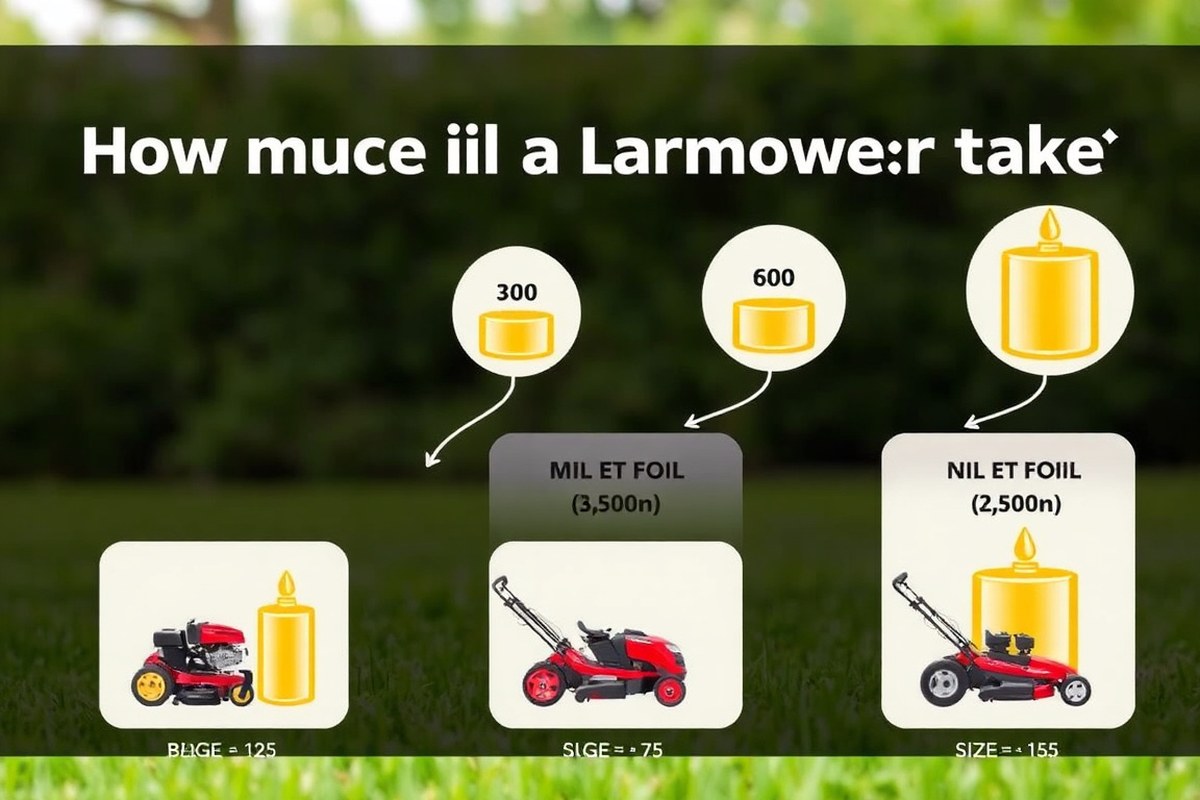
How much oil your lawn mower needs mainly depends on engine size. Bigger engines hold more oil in their crankcases.
Small push mower engines often need 15 to 30 ounces. Riding mowers may require 70 ounces or more.
Besides engine size, the mower model and design also matter. Different manufacturers design engines with varying crankcase volumes and oil systems. A mower with a 140cc engine uses less oil.
A 190cc engine mower needs more oil. Both can be push mowers but have different needs. Also, some compact models have tighter engine compartments, limiting oil capacity further.
You need to match oil volume based on the specific engine type your mower uses. Four-stroke engines, which are common in mowers, hold oil in a crankcase below the engine. Oil amount depends on engine temperature.
Hotter or cooler engines differ. Air-cooled and liquid-cooled engines also need different oil amounts.
Cooler-running engines might need less oil. But you must follow the manufacturer’s recommendations closely to avoid damage.
Look up your mower’s model and engine before adding oil. Adding too much oil damages the engine. Check this to avoid overfilling.
How to Find Your Lawn Mower’s Exact Oil Capacity
You can find your lawn mower’s exact oil capacity easily. Check the owner’s manual first. You can also look up the engine model number or trusted online sites.
The manual holds the best info. But if you lost it, the engine’s model can guide you. Searching the manufacturer’s website or trusted sites also helps you get the precise amount.
Check the Owner’s Manual First
The owner’s manual is the most reliable source for oil capacity details. It usually lists the exact amount and type of oil your mower requires. Always use the manual’s instructions to avoid engine damage.
Don’t have a manual? Search online for a digital copy instead.
Manufacturers often offer downloadable manuals on their support pages. Enter your mower’s make and model number on their site to find it.
Locate Engine Model Number
Your mower’s engine usually has a model number on a sticker or plate. Check the frame or near the engine housing for this label. The engine number gives you details specific to that motor’s oil needs.
Use this model number to search online if the owner’s manual isn’t available. Enter the engine brand and model followed by “oil capacity.” This information often comes directly from the engine maker’s official site.
Here’s a simple way to find your oil specs using the engine number:
- Turn off the mower and let the engine cool down.
- Locate the engine label on the mower frame or engine itself.
- Write down the full engine model number exactly as shown.
- Go to the engine manufacturer’s website or a trusted search engine.
- Type the engine model number followed by “oil capacity.”
- Look for official specs or user manuals mentioning oil volume.
Use Manufacturer or Reliable Websites
Manufacturer websites provide accurate oil capacity data and are your best resource. These sites often have search tools for your mower make and model to get exact specs. Always confirm the oil volume and type directly from these sources.
Forums and gardening communities may also help, but use them cautiously. User-generated info sometimes varies. Stick with official or well-known websites for safety.
Some mower brands provide basic oil capacity info even if the manual is missing. For example, many push mowers take about 18 to 20 ounces of oil. Still, checking your specific model’s specs avoids overfilling or underfilling risks.
What Type of Oil Should I Use in My Lawn Mower?
Choosing the right oil type keeps your mower’s engine running smooth. Most mowers work well with SAE 30 oil in warm weather. Using 10W-30 or synthetic oils helps if temperatures drop or change a lot.
You can use regular car motor oil if it matches your mower’s needs. Synthetic oil often performs better in cold starts and lasts longer.
Mixing synthetic and conventional oils is okay. But try to use the same brand when possible.
| Oil Type | Best Use | Pros | Cons |
|---|---|---|---|
| SAE 30 | Warm temperatures (above 40°F) | Affordable, widely available, adequate engine protection | Thick at cold temperatures, harder cold starts |
| 10W-30 | Cold to moderate temperatures (below 40°F) | Easier cold starts, good all-season use | A bit more expensive than SAE 30 |
| Synthetic 5W-30 or 10W-30 | Cold or changing temperatures, hard-use mowers | Better lubrication, longer oil life, stable viscosity | Costs more than conventional oils |
| Regular car motor oil | Any, if weight matches mower specs | Easy to find, affordable | May lack additives made for mower engines |
You want to match oil viscosity to your climate. For example, choose SAE 30 if you mow mostly in summer.
Use 10W-30 or synthetic if you mow early spring or late fall. That makes starting your mower easier and protects the engine better.
For synthetic oils, expect to pay double or triple what SAE 30 costs. But you can extend oil change intervals and avoid engine wear.
Check your owner’s manual for any specific oil recommendations. It’s the best way to protect your investment and keep mowing without trouble.
How Often Should You Change Your Lawn Mower Oil?
Change your lawn mower’s oil every 25 hours or once a year. This keeps your engine running well and stops damage from old oil. Check your manual because some mowers need a first oil change earlier.
The frequency depends on how you use the mower. Mowing a small lawn weekly usually means changing oil once a year works fine. Heavy use or tough conditions need more frequent oil changes.
Dust and heat wear your engine faster. More oil changes stop overheating and keep it safe. Fresh oil helps the engine parts stay lubricated and cool.
- New mower: check manual for first oil change timing
- Normal home use: at least once yearly, ideally in spring
- Heavy use or harsh conditions: every 25 hours or sooner
- Before winter storage: change oil to avoid sludge buildup
- Consider high-performance oil if you use mower hard or often
Delaying oil changes risks engine damage, poor performance, and higher fuel use. Dirty oil contains particles that wear the engine’s parts faster.
Thick, old oil doesn’t flow well, causing overheating and shortened mower life. Clean oil keeps your engine protected and efficient.
Check oil level before each use. Running low or dirty oil can cause costly engine damage.
Changing oil regularly is a small job that can save hundreds in repairs. Changing oil takes about 10 to 15 minutes in total. Motor oil costs between $5 and $10 per quart.
This is an affordable and quick task for mower care. First, drain the old oil fast and wipe the dipstick clean.
Then, refill with the right oil type for your mower. This simple step keeps your mower ready all season.
How to Check and Add the Right Amount of Oil Safely
Check your lawn mower’s oil level with the engine off and cool. Use the dipstick to see if the oil is at the right mark. Add oil little by little to avoid overfilling or spilling.
Park and Cool the Mower
Turn off your mower and place it on flat ground. Give the engine at least 5 minutes to cool before checking oil.
A cool engine ensures an accurate oil level reading. It also keeps you safe from burns while handling the dipstick or oil cap.
Remove and Clean the Dipstick
Find the dipstick or oil cap on your mower. Take it out and clean it with a lint-free cloth or paper towel.
Cleaning removes old oil and dirt. This step helps you read the correct oil level on the dipstick.
Check Oil Level Accurately
Insert the cleaned dipstick fully without screwing it in. Pull it out carefully to check where the oil reaches on the stick. Check the level against the dipstick’s marks, usually labeled “FULL” and “ADD” or “LOW.”
Oil below the “LOW” mark means you should add more. Oil too high can cause smoke or engine damage.
Add Oil Gradually and Recheck
Use a funnel to add oil slowly, pouring a small amount at a time. Avoid dumping the full amount in one go.
After adding oil, wait a moment so it can settle. Put the dipstick back in, then take it out to check again. Repeat as needed.
Stop adding oil when it reaches the “FULL” line. Wipe any spilled oil immediately to prevent mess and fire risk.
- Park the mower on a flat surface and let the engine cool.
- Locate and remove the dipstick or oil fill cap.
- Wipe the dipstick clean with a lint-free cloth.
- Fully insert the dipstick without screwing it in, then remove it to check the oil level.
- Add oil slowly through a funnel. Pour just a little at a time.
- Wait a minute, then recheck the oil level with the dipstick.
- Repeat adding oil and checking until the level reaches “FULL.”
- Secure the dipstick or cap back in place tightly.
How to Change Lawn Mower Oil Cleanly: Tools and Steps
Changing your lawn mower’s oil cleanly takes about 20 to 30 minutes. You’ll need a few basic tools and a good plan to avoid spills. Following the right steps helps keep your workspace tidy and your mower running smooth.
Gather Necessary Tools and Materials
Start by collecting all tools and materials before you begin. Having everything on hand keeps the job quick and neat.
You need the right engine oil for your mower model. Get a clean container to catch the old oil.
You will also need a wrench to remove the drain plug. Get a clean funnel for refilling oil.
Use gloves to protect your hands and rags for cleanup. Keep these ready to avoid interruptions during the oil change.
Drain Old Oil Safely
Drain the used oil into a proper pan to catch every drop without making a mess. You want to avoid splashes and spills, which cause cleanup headaches later. The mower should be cool before starting to keep you safe and the oil flowing smoothly.
Set the drain pan under the oil plug or drain bolt. Use your wrench to carefully loosen the plug.
Let the oil run out completely, which usually takes 5 to 10 minutes. After draining, securely tighten the drain plug to prevent leaks during refilling.
- Warm up the mower engine slightly, then switch it off and disconnect the spark plug.
- Place the mower on a flat surface and position the drain pan under the oil plug.
- Use the wrench to slowly unscrew the oil plug, allowing oil to drain into the pan.
- Wait until the oil flow stops to ensure complete drainage.
- Clean the drain plug and surrounding area with a rag.
- Reinstall and tighten the oil plug securely using the wrench.
Refill with Correct Amount of New Oil
Using a clean funnel, pour the proper amount of new oil slowly into the fill tube. Pouring slowly avoids splashing and helps you stop when you reach the right level. After filling, check the oil dipstick to verify the amount before replacing the oil cap.
Most push mowers need about 15 to 20 ounces of oil. Riding mowers can use 1 to 2 quarts.
Check your mower’s manual to find the exact requirement. Don’t overfill, the right level protects your engine and keeps the mower running well.
Dispose of Used Oil Properly
Never pour old oil down drains or onto the ground. It can harm the environment and may be illegal.
Put the used oil in a sealed container. Take it to a recycling center or auto parts store that accepts used oil.
Using a clean, leak-proof container prevents spills during transport. Many communities offer free recycling for motor oil, so check your local options. Proper disposal helps protect the soil and water around your home.
Common Lawn Mower Oil Mistakes and How to Fix Them
Using the wrong oil type can harm your lawn mower’s engine fast. This mistake may cause overheating and carbon buildup, which leads to early engine failure. Always pick the oil recommended by your mower’s manual to avoid these problems.
Overfilling the oil is another common error that you want to avoid. Too much oil can cause smoke, poor performance, or even damage to the engine’s seals. Too little oil means the engine won’t get enough lubrication.
This causes parts to wear out faster. You risk more damage over time without enough oil.
- Use the right oil type specified for your mower.
- Measure oil carefully; don’t guess how much to add.
- Check oil level before every use with the dipstick.
- Change oil on schedule, usually after 25 hours of use.
- Address leaks or unusual engine noises quickly.
- Don’t run the mower if it smokes or overheats.
Neglecting regular oil changes can let dirt build up inside the engine. This causes poor running and shortens your mower’s life.
Also, ignore strange smells, smoke, or loss of power. Those signs mean your oil needs attention or the engine needs a pro.
Adding or changing oil is easy, but unusual engine problems need professional service.
Stop mowing when you see oil leaks or hear knocking sounds. Get help from a professional to avoid further damage.
Overfilling or wrong oil might have damaged parts needing a mechanic. Repair costs vary but acting early saves more money than waiting till the engine fails.
Step-by-Step Action Plan for Lawn Mower Oil Care
Follow these steps to keep your lawn mower oil at the right level and condition. This helps your mower run smoothly and lasts longer.
- Before you start: Check your owner’s manual for the exact oil type and capacity. Knowing this prevents using the wrong oil or amount.
- Day 1: Measure and add oil to the recommended level using the dipstick or fill port. Your mower should start without smoke or stalls.
- After 5 hours of use: Check the oil level again and add if it’s low. Consistent oil level means no leaks or burning oil.
- Every 25 hours of use or once a season: Change the oil as your mower’s guide says. Use fresh oil to keep the engine running well. Fresh oil looks clean, not dark or gritty.
- After an oil change: Run the mower a few minutes first. Then check the oil level again to be sure. It should stay steady in the safe range.
- Monthly during mowing season: Check the oil level each time you mow. Look for leaks or dirt near the oil fill. Fix leaks promptly to avoid damage.
- Before winter storage: Change the oil to protect the engine from rust. Store the mower with a full oil level to keep seals moist.
Frequently Asked Questions
How Do I Know When My Lawn Mower Oil Is Low?
Check the oil dipstick; if it’s below the full mark, add oil. Always do this on a level surface to get an accurate reading.
Can Using Too Much Oil Damage My Lawn Mower Engine?
Yes, overfilling can cause engine damage and poor performance. Too much oil can lead to smoking and fouling the spark plug.
How Long Does It Take to Change Lawn Mower Oil Properly?
Changing lawn mower oil usually takes about 15 to 30 minutes. Allow the engine to cool before draining the oil for safety.
Can I Use Car Engine Oil in My Lawn Mower?
You can use car oil if it meets the mower’s specs, usually SAE 30 or 5W-30. Always check your mower’s manual first to confirm compatibility.
Why Does My Lawn Mower Use Oil Faster Than Usual?
Faster oil consumption can mean leaks or engine wear. Check for visible leaks and consider a service if the problem persists.
Is It Okay to Mix Synthetic and Conventional Oil in a Lawn Mower?
Mixing oils isn’t ideal but won’t harm the engine temporarily. Stick with one type for the best engine protection over time.
Key Points to Remember
Knowing your lawn mower’s oil needs keeps the engine healthy and working right. Checking and changing oil on time saves you repairing costs later. Grab your manual and measure your oil level today to start caring for your mower properly.