

How to Preserve Tomato Seeds: Complete Guide for Long-Term Viability
Knowing how to preserve tomato seeds keeps your garden going year after year. The best way is to dry, clean, and store the seeds properly. Keep seeds in cool, dry, and dark places.
This helps preserve them well for future planting. This process keeps seeds viable for 4 to 6 years, sometimes even longer.
First, pick fully ripe tomatoes, about 90% fully colored, to get the best seeds. Then, use fermentation to improve seed quality by removing the gel coat that blocks germination. Finally, dry the seeds completely, which usually takes 5 to 7 days depending on humidity.
Store the dried seeds in airtight containers, preferably in a cool spot below 70°F. Avoid moisture and heat, as they reduce seed life quickly. Freezing seeds can help them last over 10 years.
Make sure seeds are completely dry before freezing. This step isn’t needed for short-term seed storage.
Key Takeaways
- Harvest tomato seeds from fruits that are 90% ripe for best viability.
- Use fermentation to remove the seed’s gel coat and improve germination.
- Dry tomato seeds completely, usually within 5 to 7 days depending on humidity.
- Store seeds in cool, dry, and dark places to keep them viable for years.
- Avoid moisture and heat, especially temperatures above 70°F, to prevent seed damage.
- Freezing dry seeds can preserve them for 10 years but requires thorough drying.
How to Harvest and Prepare Tomato Seeds
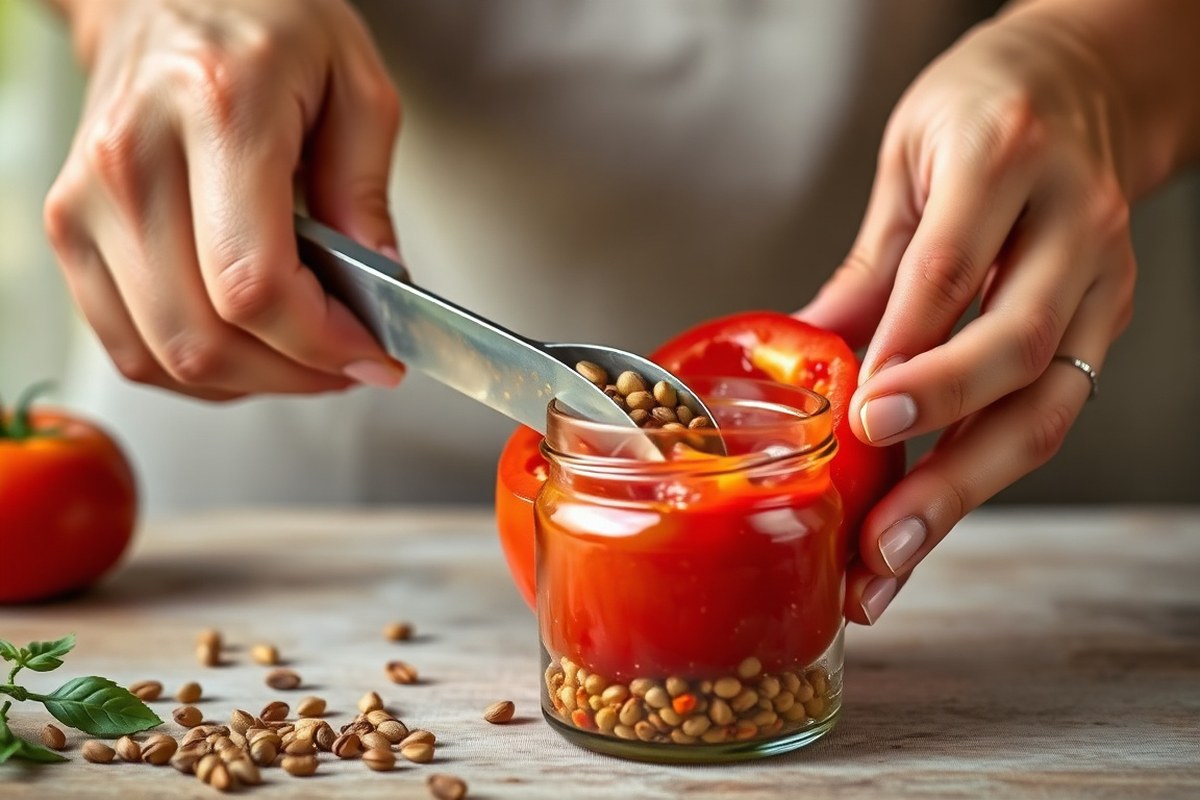
Choose fully ripe tomatoes to get the best seeds. Look for deep, rich color that matches the tomato type. The fruit should feel slightly soft but not overripe or shriveled.
Next, carefully extract the seeds to avoid damaging them. Use a spoon or your fingers to scoop out the seed pulp from the tomato’s interior. Handle gently to keep seeds intact for further cleaning and drying.
- Select one or more ripe tomatoes with mature color and slight softness. These have fully developed seeds ready to grow.
- Cut the tomato in half or quarters over a bowl to catch seeds and juice. This prevents losing any seeds during removal.
- Scoop out the inner gel and seeds with a spoon or fingers. Include the jelly-like pulp as it contains important seed coatings.
- Place the seed pulp into a clean glass jar or container with a loose lid. This is where fermentation will start later.
- Label the container with the tomato variety and date. This helps track seeds if you save multiple types.
- Store the container at room temperature, out of direct sunlight. Preparing seeds for fermentation.
Each ripe tomato can yield 50 to 100 seeds or more. So one fruit often supplies enough seeds for several plantings. Ripe tomatoes ensure mature seeds that can sprout well in later seasons.
Avoid using green tomatoes. Underripe tomatoes might have undeveloped seeds. These seeds could fail to germinate.
Why Fermentation Improves Tomato Seed Quality

How Fermentation Works for Tomato Seeds
Tomato seeds are covered with a sticky gel that holds chemicals stopping early sprouting. Fermentation breaks down this gel and removes those chemicals.
This process mimics nature by rotting the fruit bits around the seeds gently. It clears the seeds, so drying and storing them works better.
Why Fermentation Matters for Seed Quality
Removing the gel with fermentation helps stop seed diseases and speeds up seed germination later. The seed coat also gets a slight protective coating during fermentation.
Without fermenting, seeds might clump or carry germs that reduce their chances of growing strong plants. Fermentation gives seeds a higher chance of lasting 4 to 6 years.
The Step-by-Step Fermentation Timeline
Start by scooping seeds and pulp into a clear jar or cup. Fill the jar halfway, then add some water to cover the seeds fully.
Leave the jar uncovered or covered loosely at room temperature for 2 to 4 days. Stir or swirl the mixture daily to keep it oxygenated.
Bubbles, a sour smell, and bubbling thin skin breaking off means fermentation is happening. Stop fermenting once a layer of mold appears on top or after 4 days.
Recognizing and Avoiding Over-Fermentation
Over-fermented seeds smell rotten or like bad vinegar. They have thick mold layers above or below the pulp. This damages seed viability and can kill seeds.
Keep fermentation no longer than 4 days to avoid this problem. Check daily and scoop out floating mold or bad pulp if you see it early.
Different Situations and Fermentation Tips
Warm, humid weather speeds fermentation while cold, dry conditions slow it down. In cool weather, expect closer to 4 days. In heat, 2 to 3 days max.
You can skip fermentation by washing seeds thoroughly. Dry them well after washing. But fermenting is best when you save seeds from juicy or fresh tomatoes.
After fermentation, rinse seeds under running water. Then dry them on paper towels to finish properly.
Don’t ferment seeds for more than four days. Overdoing it kills their ability to grow.
How to Clean, Dry, and Store Tomato Seeds for Longevity
Start by thoroughly cleaning tomato seeds after fermentation. Next, dry them completely in a cool, ventilated spot for several days. Then store seeds in a cold, dark, and dry place for maximum viability.
Cleaning Seeds After Fermentation
Fermentation loosens the gel around tomato seeds. But you still need to clean them well.
Rinse seeds under cool running water to remove pulp and any floating debris. Removing leftover jelly prevents mold during drying and storage.
Here’s a step-by-step cleaning process after fermentation:
- Pour the fermented seed mixture into a fine mesh strainer.
- Rinse gently with cool water to wash away the pulp.
- Use your fingers or a spoon to remove any clumps of pulp.
- Swirl the seeds in a bowl of water; discard any seeds that float.
- Drain seeds on a clean paper towel or cloth to remove excess water.
Drying Methods and Duration
Seeds must dry completely to avoid mold or rot in storage. Place cleaned seeds on a paper towel or coffee filter in a single layer. Choose a cool, well-ventilated area away from direct sunlight for drying.
Drying usually takes 4 to 7 days. You’ll know they’re dry when seeds feel hard, not sticky or damp. Check daily and gently stir seeds to ensure even drying on all sides.
Ideal Storage Conditions and Containers
Seeds last longest when kept cold, dry, and dark. A good spot is a refrigerator.
Keep the temperature between 35 and 50°F. Using airtight containers like glass jars helps keep humidity out. Adding a small desiccant packet prevents moisture buildup inside the container.
Paper envelopes inside a jar work well for labeling and organizing seeds. Avoid plastic bags alone, as trapped moisture can reduce viability. Keep seeds away from heat and light.
This helps them stay good for 4 to 6 years. Store them in a cool, dark place.
| Storage Location | Expected Viability | Best For |
|---|---|---|
| Refrigerator (not freezer) | 4, 6+ years | Long-term storage, ideal |
| Cool basement or closet | 3, 5 years | Good option without refrigerator |
| Room temperature (dark cabinet) | 1, 3 years | Seeds you’ll use next season |
Freezing Seeds for Extended Storage
Freezing tomato seeds can extend their viability for over 10 years. Seeds need to be fully dry before freezing. Ice crystals can form if they are wet.
These crystals can damage the seeds. Dry seeds thoroughly in low humidity, then seal in airtight containers.
Keep seeds in the freezer only if they are bone dry. Thaw them slowly to room temperature before opening the container. Freezing works best for long-term gardeners saving seeds for many years.
Choosing Which Tomatoes Are Suitable for Saving Seeds
Heirloom and open-pollinated tomatoes work best for saving seeds. They usually give seeds that grow plants identical to the parent. Since all heirlooms are open-pollinated, their seeds keep the same traits.
Hybrids, often marked as F1 or simply “hybrid,” don’t work well for seed saving. You can save their seeds. But the next generation may differ widely from the original.
This can lead to plants with different flavors, sizes, or colors. Gardeners often feel disappointed when hybrids don’t grow true from saved seeds.
One risk when saving seeds, especially from open-pollinated and heirloom tomatoes, is accidental cross-pollination. Tomatoes usually pollinate themselves, but wind and bees can carry pollen between nearby plants.
Growing different tomato varieties closer than 10 feet risks mixed seed traits. So planting distance is key to keeping your seed lineage pure.
| Tomato Type | Seed Type | True-to-Type Seeds | Seed Saving Advice | Risk of Cross-Pollination |
|---|---|---|---|---|
| Heirloom | Open-pollinated | Yes, very reliable | Save seeds freely; adapt well over time | Moderate; keep 10+ feet apart from other varieties |
| Open-Pollinated (non-heirloom) | Open-pollinated | Usually | Save seeds; watch for nearby different varieties | Moderate; isolation reduces mixing |
| Hybrid (F1) | Hybrid | No; offspring vary widely | Not recommended to save; buy fresh seeds yearly | Low impact since seeds won’t replicate parent traits |
Spend time identifying your tomato types by reading seed packets or searching the variety name. Seed packets usually label heirlooms clearly. Look for terms like “heirloom” or “open-pollinated.”
Hybrids usually say “F1” or “hybrid.” Knowing which you have helps you save seeds that meet expectations.
Saving seeds from heirlooms connects you to varieties that improve regionally. Gardeners in colder or hotter zones can select seeds from plants that thrived locally.
This process takes years but results in tomatoes that suit your soil and climate best. Starting with heirlooms lets you grow plants with stable traits year after year.
How Temperature and Humidity Affect Seed Viability
Tomato seeds last longest when kept cool, around 32°F to 50°F (0°C to 10°C). Each 10°F increase roughly cuts seed life in half. For example, seeds stored at 70°F (21°C) will not last as long as those kept cooler.
Humidity plays a role too. Seeds must be fully dry before storage.
Too much moisture can cause mold or early sprouting. Aim for relative humidity below 50% inside your seed container.
Room temperature storage is okay short-term, but seeds lose viability faster this way. Storing seeds at 70°F leads to lower germination rates after one year. The best option is to store seeds in the fridge in a sealed container.
| Storage Temperature | Seed Longevity Effect |
|---|---|
| 32°F to 50°F (0°C-10°C) | Ideal for long life, slow aging |
| 70°F (21°C) | Rapid aging, shorter lifespan |
Without a fridge, pick the coolest, driest spot inside your home. Avoid heat, humidity, and sunlight.
Use airtight containers to keep seeds dry. Paper envelopes can absorb moisture and are less reliable for long storage.
Freezing seeds is possible but requires very dry seeds. Otherwise, ice crystals can damage seed cells. Keep in mind, sudden temperature changes might harm viability.
Tomato seeds stored properly can germinate above 80% even after two years. Warm and humid conditions drop germination below 50% within a year.
Keep your seeds cool and dry. These small steps help a lot.
Store tomato seeds in airtight containers. Add silica gel packs or rice to soak up moisture.
How to Prevent Cross-Pollination When Saving Seeds
Tomato flowers mostly pollinate themselves. So they don’t need insects or wind to set fruit.
Still, small pollen transfer can happen between nearby varieties through insects or wind, risking cross-pollination. To keep seeds true to the parent tomato, you must separate different varieties.
Plant tomato varieties 10 to 20 feet apart to stop pollen mixing. It works best in small gardens. This space helps keep seeds pure.
Larger gaps of 50 feet or more give better protection if space allows. Your garden may be crowded. Keep each tomato type in its own spot to stop pollen mixing.
Here are some practical ways to protect your tomato seeds from cross-pollination:
- Grow one tomato variety at a time to guarantee pure seeds.
- Space different varieties at least 10-20 feet apart for small gardens.
- Label and store each variety’s seeds separately to prevent confusion.
- Use physical barriers like fine mesh bags or cages around flowers.
- Hand-pollinate flowers if you want full control over pollination.
- Harvest seeds from fully ripened fruit on healthy plants only.
- Avoid saving seeds from plants growing near unknown or volunteer tomatoes.
Bagging flowers means slipping a breathable mesh bag over the blossom before it opens. This blocks stray pollen but allows air and light. You’ll need to hand-pollinate inside the bag with a small brush.
Mesh bags cost a few dollars. They protect seeds but need extra time and care. Using them keeps seeds pure.
Marking and storing your seeds carefully stops mixing. Use small envelopes or containers with clear labels showing the variety and date.
Saving seeds only from ripe, healthy fruit ensures better plants next season. Seeds from stressed or diseased plants may not grow well or true to type.
Keeping varieties apart and controlling pollination prevents unwanted crosses. Without simple steps, seeds might mix, and you could lose your favorite tomato traits. This makes protecting seeds a key part of keeping garden favorites alive year after year.
Testing and Troubleshooting Seed Viability Before Planting
Testing saved tomato seeds before planting ensures you won’t waste time and space. You only plant seeds with a good chance to sprout. Germination tests show which seeds are still strong and which need attention or should be tossed.
Germination Test Setup
A simple germination test needs just a few things: paper towel, water, and a warm spot. This checks how many seeds sprout out of a small sample. Try 10 seeds to get a clear sense of the batch’s viability.
- Soak a paper towel until it’s damp but not dripping wet.
- Place 10 tomato seeds spaced evenly on the towel.
- Fold the towel over the seeds to cover them gently.
- Put the towel inside a plastic bag or between two plates.
- Label the bag with the date and seed variety if needed.
- Set it in a warm location around 70, 80°F (21, 27°C).
- Keep the towel moist by checking every day and spraying water as needed.
- Inspect daily for sprouting during 5 to 7 days.
Interpreting Test Results
Count how many seeds sprout by day 7 to judge seed health. A good batch will have 80% or more sprout. Lower rates mean some seeds won’t grow well or may be dead.
Look for odd signs like seeds that swell but don’t sprout or sprout slowly. These may be weak. Seeds that stay hard or sink in water also show poor viability.
Solutions for Poor Germination
Try a quick water test before the germination test. Seeds sinking in water usually have better chances than ones floating on top. Discard seeds that float as a first filter.
To help weak seeds, soak them in warm water for 12 to 24 hours before planting. This softens the seed coat and can speed sprouting. Avoid soaking longer to stop mold or rot.
You can plant seeds a bit deeper than usual. Use a seed-starting mix to keep moisture steady. This helps seeds grow better.
This helps weak seedlings push through soil. Plant more seeds when fewer than half sprout. Or use fresh seeds for better results.
Common Mistakes When Saving Tomato Seeds and How to Avoid Them
One main cause of seed failure is drying seeds too fast. Using heat sources like ovens can harm seeds. This often kills them or stops germination.
High heat damages seeds and lowers germination. Dry seeds naturally at room temperature instead. Stir seeds gently every one or two days.
This helps keep moisture even throughout. This process usually takes about three days without special equipment.
Another common error is storing seeds in places with frequent temperature swings. Seeds exposed to changing temperatures can lose viability faster.
Keep seeds in a dry, stable spot around 50°F to 60°F. Avoid basements or garages that get hot in summer or cold in winter. Consistency helps seeds last several years, even up to five with good care.
Mold often develops when seeds stay damp too long or dry unevenly. It ruins seeds and reduces germination rates. To prevent mold, spread seeds in a thin layer on paper towels or a screen.
Make sure air circulates well but avoid direct sunlight, which can overheat the seeds. Regular stirring breaks up clumps and helps seeds dry evenly.
- Don’t skip fermenting seeds, it boosts germination by removing pulp.
- Avoid mixing seeds from different tomato varieties; it causes cross-pollination.
- Store seeds in airtight containers like glass jars with labels.
- Don’t dry seeds on cloth that holds moisture, use paper towels instead.
- Check seeds yearly by germinating a small batch to track viability.
Saving seeds from tomatoes that don’t mature fully or come from unhealthy plants harms seed quality. Use fully ripe, disease-free tomatoes for better results.
Also, drying seeds too thick causes uneven moisture loss, increasing mold risk. Thin layers dry faster and help preserve seed health.
Don’t rush drying with heat. Slow and steady room temperature drying keeps seeds alive longer.
Step-by-Step Action Plan for Saving Tomato Seeds
Follow these steps to harvest and store your tomato seeds right. Each step ensures the seeds stay healthy for future planting.
- Day 1: Choose fully ripe tomatoes from healthy plants. They should look fully colored and feel slightly soft.
- Day 2: Scoop out the seeds and surrounding gel into a jar. Add a little water to cover the seeds.
- Days 3, 5: Let the jar sit at room temperature to ferment. You’ll see a whitish mold forming, that’s normal and good.
- Day 6: Rinse the seeds under running water using a fine strainer. Remove any clumps or leftover pulp.
- Day 7: Spread the cleaned seeds on a paper towel or screen to dry. Keep them in a warm, dry place away from direct sun.
- Week 2: Check that seeds are fully dry and no longer sticky. They should snap easily between your fingers.
- Week 2 onward: Store seeds in a labeled, airtight container. Keep the container in a cool, dark, dry spot for best results.
Frequently Asked Questions
Can I Reuse Tomato Seeds from Store-Bought Tomatoes?
Yes, but store tomatoes may be hybrids, giving unpredictable plants. For reliable results, save seeds from heirloom or open-pollinated tomatoes you trust.
How Should I Label Stored Tomato Seeds for Later Use?
Label each seed packet with the variety and harvest date. This helps track seed age and type for planting.
Is Refrigeration Necessary for Storing Tomato Seeds?
Refrigeration helps but isn’t required if seeds stay dry and cool. Avoid moisture inside storage containers to prevent mold.
Can I Save Seeds from Cherry Tomatoes the Same Way?
Yes, save seeds from cherry tomatoes like any other tomato variety. Ensure full ripeness for good germination rates.
What Kind of Container Is Best for Tomato Seed Storage?
Use airtight containers like glass jars or sealed plastic bags to keep moisture out. Store them in a dark, cool place.
Can I Save Seeds from Hybrid Tomato Plants Successfully?
You can save seeds but the offspring might vary widely. Hybrids don’t produce true-to-type plants.
Before You Go
You’ve got your tomato seeds ready for many seasons to come. Plant a few seeds first to check they sprout strong. Start saving seeds regularly to build your garden’s future.



One Comment