What Can I Plant with Strawberries: Companion Plants That Boost Growth and Flavor
Plant nitrogen-fixing lupine every 2-3 feet near strawberries to enrich the soil naturally. Herbs, vegetables, and flowers that attract pollinators and repel pests also make great companions. Proper spacing avoids overcrowding and root competition, helping strawberries get enough air and nutrients.
Keep bulky plants like rhubarb far from strawberries because they crowd them out. Plant broccoli rows 2-3 feet away to help prevent fungal diseases. Avoid planting strawberries where nightshades or brassicas grew in the last 3-4 years to reduce disease risk.
Most strawberry roots stay within the top 6 inches of soil. Choose companions with different root depths, like beets, to loosen soil. Space beets 12-18 inches apart and leave 18 inches between strawberry runners to reduce competition.
Maintain 4 feet between strawberry rows to keep good air circulation. This helps prevent fungal problems and supports healthy growth.
Key Takeaways
- Lupines planted every 2-3 feet fix nitrogen near strawberries.
- Plant broccoli 2-3 feet away to reduce soil pathogens.
- Keep rhubarb at least 4 feet away due to its large size.
- Space beets 12-18 inches from strawberries to avoid root competition.
- Use tulsi with 1-2 feet spacing as a beneficial border plant.
- Practice crop rotation, avoid planting strawberries after nightshades or brassicas.
Best Companion Plants to Grow with Strawberries

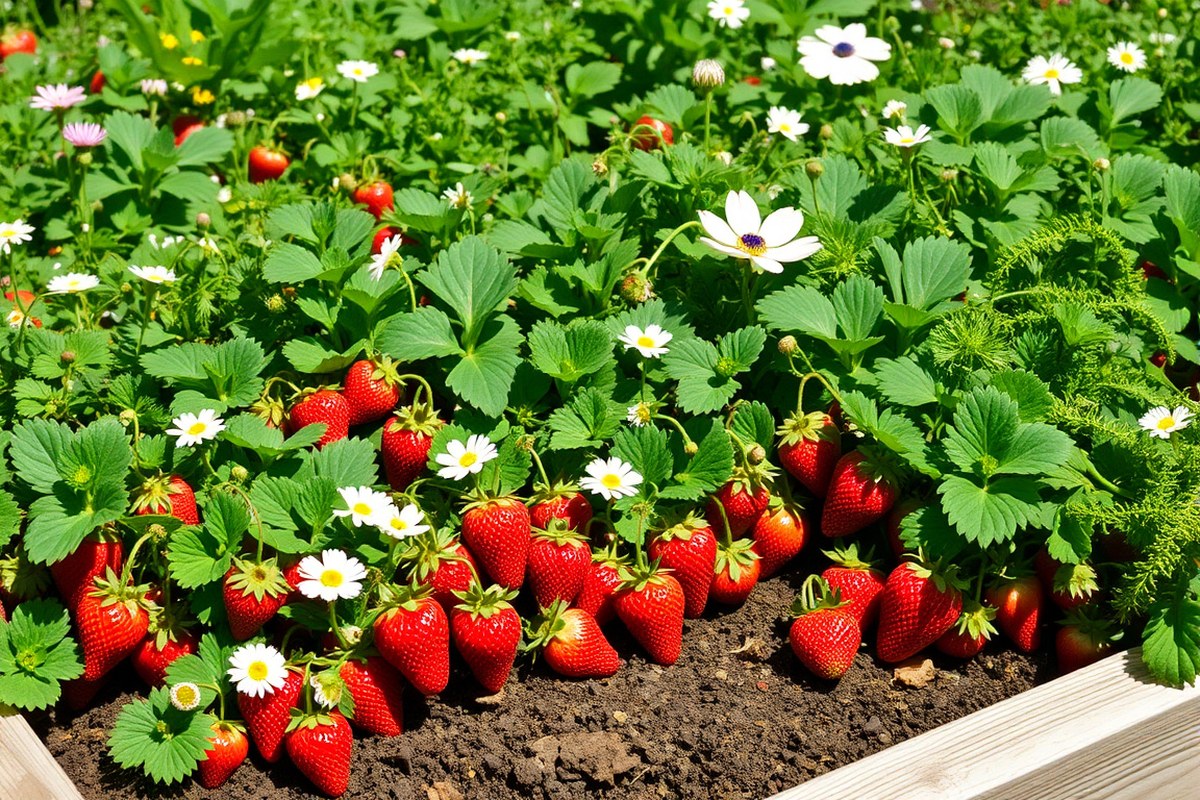
Planting companions near strawberries can boost their health, flavor, and yield. Herbs like basil and thyme improve growth, making berries sweeter and more abundant. Flowers such as marigolds attract pollinators and keep pests away, helping strawberries flourish.
Vegetables like lettuce and spinach grow well next to strawberries without competing for nutrients. Beets also work but plant them 12-18 inches away to avoid nutrient competition. Radishes grow quickly and can be harvested before strawberries start fruiting, occupying little space.
Here’s a quick reference table for top companion plants for strawberries. It shows their benefits and planting tips.
Use it to plan your garden better. This will help you pick the right plants for your garden setup.
| Companion Plant | Benefit | Planting Tips |
|---|---|---|
| Basil | Improve flavor and increases yield by 20-30% | Plant near strawberries, allow room for airflow |
| Thyme | Repels pests and improves strawberry health | Interplant among strawberry plants, thin patches regularly |
| Marigolds | Attract pollinators and deter harmful insects | Plant around borders or walkways near strawberries |
| Beets | Aerate soil and complement strawberries | Keep 12-18 inches distance to reduce competition |
| Radishes | Use space efficiently, quick harvest before berries | Plant rows 4-6 inches from strawberries |
| Spinach & Lettuce | Grow well without nutrient competition, fill gaps | Plant in between strawberry rows or raised beds |
In smaller gardens or containers, start with herbs like thyme or basil for easy care. Your strawberry bed may have walking paths. Marigolds and nasturtiums work well along these aisles.
But keep them trimmed to control growth. Always leave enough space for good air circulation to reduce disease risk.
Visible signs of success include bigger berries and fewer pests. Pests or slow strawberry growth may signal overcrowding or wrong companion plants. Avoid planting too close, especially with vegetables like beets, and manage companion plant size regularly.
Which Plants to Avoid Planting Near Strawberries
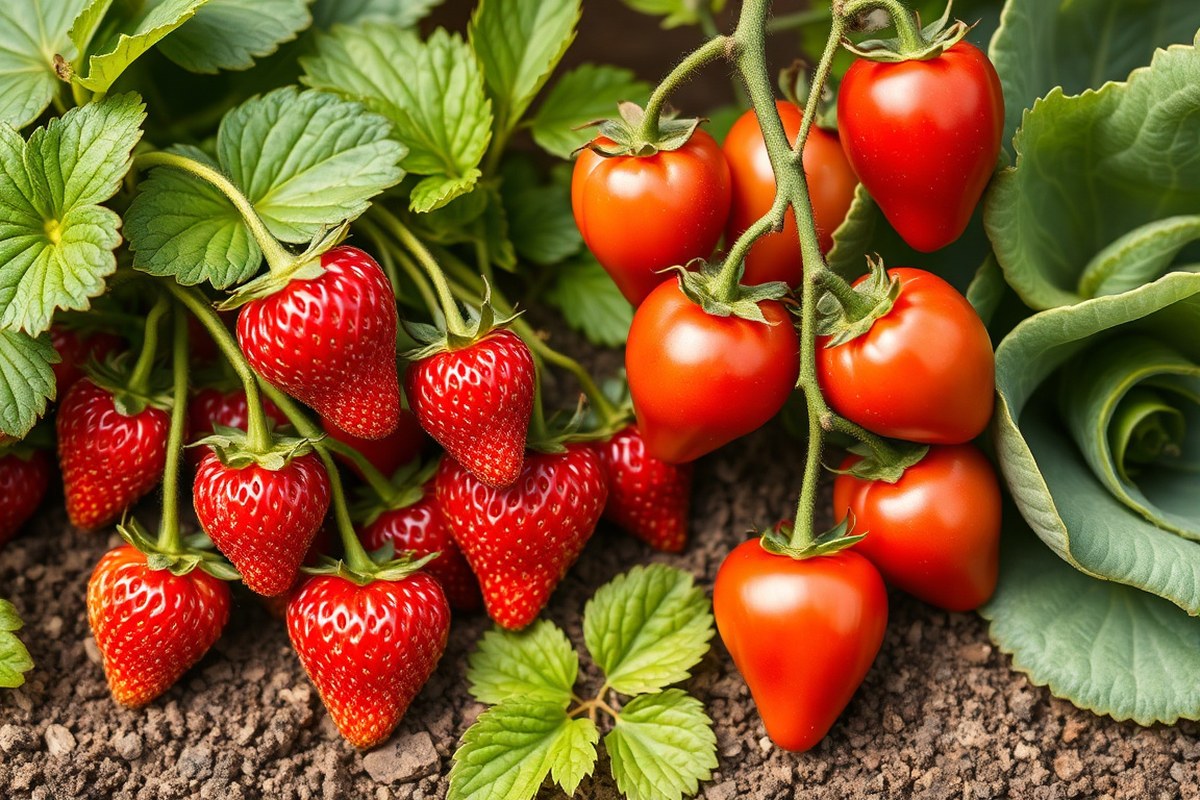
Some plants compete with strawberries for nutrients, space, or light. They can also attract pests or diseases harmful to strawberries. Avoid planting these near your strawberry bed to keep your plants healthy and productive.
Zucchini is one to skip because of pest issues that affect both plants. Rhubarb grows large, up to 4 feet wide and tall, and will crowd your strawberries. Keep them well apart to prevent shading and root interference.
- Zucchini, attracts shared pests harmful to strawberries
- Rhubarb, grows too large and crowds strawberry plants
- Cauliflower and other cabbage family plants, compete for nutrients and invite cabbage pests
- Leek and garlic, can stunt strawberry growth due to root competition
- Mint, spreads aggressively and reduces strawberry space
- Lettuce planted too close, may invite pests and shade strawberries
- Climbing plants, shade strawberries and reduce sunlight exposure
Plants like bush beans, kale, and mustard family members can also draw pests that attack strawberries. Watch for signs like yellowing leaves, stunted growth, or slow fruiting. These symptoms point to competition or pest damage from nearby plants.
Check your strawberry bed regularly. If you notice poor growth or spots on leaves, review your garden layout.
Moving or removing antagonistic plants improves strawberry health and yield. Choose companions that share similar water and light needs instead.
Avoid wetting strawberry crowns during watering to prevent fungal issues like grey mould.
How Companion Plants Improve Strawberry Yield and Flavor
Companion plants help strawberries produce more berries by improving pollination and soil health. Flowers like borage attract bees and hoverflies. These pollinators visit strawberry flowers more often, leading to bigger, more uniform fruit.
Adding nitrogen-fixing plants like beans or white clover also boosts strawberry growth. They enrich the soil, feeding strawberry plants with natural nutrients.
Many companion plants repel pests, reducing the need for chemicals. Garlic and onions emit strong smells that keep slugs and aphids away. Horseradish roots grow deep, acting as a barrier to harmful insects without crowding strawberry roots.
Using these companions can lower pest damage by up to 80%, according to gardeners’ reports. This means fewer bugs nibbling your strawberries and healthier plants overall.
Some companions even improve strawberry flavor. Plants like rhubarb release natural chemicals into the soil. These compounds can improve the taste and sweetness of your strawberries.
Caraway is great too, as it loosens soil and acts like a conditioner. Plant it about two to three feet from your strawberries to avoid crowding. It helps strawberries absorb nutrients better, supporting growth and juicier fruit.
These benefits take some planning and care. Choose companion plants that don’t overshadow or steal nutrients from your strawberries. Keep spacing in mind, allowing airflow and sun to reach each plant.
Good companions are low-growing or root-focused, avoiding crowding the shallow strawberry roots. Companion planting can save money on fertilizers and pesticides.
It also improves yield. Plus, it can boost taste.
Timing and Spacing for Planting Companions with Strawberries
Plant companion herbs and vegetables when you set your strawberries in the garden. Space companions 12 to 18 inches away from strawberries to stop crowding. This keeps roots and leaves from competing for nutrients and sunlight.
Planting Timeline by Season and Frost Date
Plant strawberries in early spring after the last frost date for your area. You can add companion plants at the same time if they like similar temperatures. Cool-season companions like scallions and parsley do well planted with strawberries in spring.
Warm-season herbs and vegetables should wait until the soil warms. Plant tomatoes or basil about 2 to 3 weeks after strawberries appear. That gives your berries a head start without shading them out or stealing nutrients.
Fall planting works for some herbs like chives or garlic. These will grow slowly with strawberries but won’t crowd them before winter. Time your plantings so no one is competing at peak growth times.
Recommended Spacing Distances for Common Companion Plants
Spacing keeps strawberries and companions happy. Keep strawberry plants 14 to 16 inches apart in rows about 30 inches wide. Leave 12 to 18 inches between strawberries and other companions like carrots, onions, and parsley.
Some plants need more room. Borage belongs at the bed’s edge, 1 to 3 feet from strawberries.
It attracts pollinators without crowding strawberry roots or runners. You can plant scallions or chives right along the border since they stay small.
- Strawberries: 14-16 inches apart in rows 30 inches wide
- Herbs like parsley and chives: 12-18 inches from strawberries
- Vegetables like carrots and onions: at least 12 inches away
- Borage: 1-3 feet from strawberry plants on bed edges
- Scallions: near strawberries, as they don’t compete much
This spacing allows air circulation and enough soil nutrients for all plants. Avoid planting crowding to prevent disease and weak growth.
Managing Runners to Avoid Crowding Companions
Strawberries spread by runners, which can crowd companion plants if you don’t control them. Pinch or trim runners early to keep your bed tidy and give companions room. You can also plant individual runners in small pots beside strawberries for new plants.
Plan about 18 inches between runner plants so they don’t compete. Keeping runners managed also stops disease spread and ensures good airflow. Let your strawberry patch grow out evenly for best companion benefits.
Best Herbs to Plant Alongside Strawberries
Planting herbs with strawberries helps keep pests away, attracts pollinators, and improves soil health. Herbs like thyme, borage, and mint work well near strawberries. They don’t shade the strawberries.
These herbs also offer natural pest control. You’ll also encourage beneficial insects to visit your strawberry patch.
Thyme: Benefits and Planting Tips
Thyme makes a great border plant for strawberries. Its strong scent repels worms, deer, and insect pests. It also masks the strawberry smell, which helps confuse pests.
Plant thyme in full sun where it won’t block light from your strawberries. It stays low.
So it won’t cast shade on the berries that need plenty of sunlight. Thyme prefers well-drained, loamy soil just like strawberries.
Follow these steps to plant thyme:
- Choose a sunny edge near your strawberry patch for thyme.
- Prepare well-draining soil with compost mixed in.
- Space thyme plants 8 to 12 inches apart to cover the border.
- Water newly planted thyme weekly for the first few weeks.
- Trim back each spring to encourage fresh growth.
- Harvest thyme leaves as needed during the growing season.
Thyme’s scent fades in heavy rains. So keep an eye on pest activity after storms.
Borage’s Role and Growth Requirements
Borage is a powerhouse companion herb that benefits strawberries in many ways. It deters aphids and nematodes, attracts pollinators, and helps retain soil moisture. Its flowers also draw parasitic wasps and hoverflies that prey on pests.
Borage grows quickly and spreads easily. So plant it near but not inside the strawberry bed.
It prefers full sun and well-drained soil. Taller than thyme, borage won’t shade small strawberry plants if you give it room.
To add borage effectively, follow these steps:
- Pick a sunny spot near your strawberries but allow 1 to 2 feet space.
- Loosen the soil and amend with compost before planting.
- Sow seeds in early spring after last frost or transplant seedlings.
- Thin seedlings to 10-12 inches apart to prevent overcrowding.
- Water moderately, keeping soil moist but not soggy.
- Remove flower heads after bloom to prevent excessive self-seeding.
Borage leaves can be prickly; wear gloves when handling young plants.
Mint and Other Herbs That Deter Pests
Mint is another good herb to plant near strawberries. It keeps ants and beetles at bay with its strong smell. Mint spreads aggressively, so plant it in containers to avoid crowding strawberry roots.
Chives also repel pests like aphids and improve soil health. Plant chives in partial sun near your berry patch but avoid overcrowding. Both mint and chives help reduce pest problems without chemicals.
For successful mint planting:
- Use a container to restrict mint roots from spreading.
- Place the container near your strawberry bed for pest control.
- Choose a spot with partial to full sun and well-drained soil.
- Water mint regularly to keep soil moist but not soggy.
- Trim mint often to prevent flowering and keep growth manageable.
Planting mint directly in the ground can lead to it overpowering your strawberries.
Vegetables That Thrive When Planted Near Strawberries
Spinach and lettuce thrive near strawberries because they like the same sun and soil. Spinach grows on a similar schedule, so you can pick both at once. Lettuce roots stay near the surface, so they don’t compete for nutrients or room.
Asparagus and rhubarb also work because their roots go deeper than strawberry roots. That way, they don’t compete underground. You can plant sage near strawberries too.
It grows upright. Sage’s smell helps keep pests away from the plants.
Plant these vegetables and herbs about 12 to 16 inches apart from strawberries. This spacing helps air flow between plants and reduces disease risk. Build raised mounds if your soil is heavy or has clay.
Add compost to help water drain well. This improves conditions for all your plants.
| Vegetable | Why It’s Good Near Strawberries | Spacing (inches) | Root Depth |
|---|---|---|---|
| Spinach | Same growth conditions, similar harvest time | 12, 16 | Shallow |
| Lettuce | Shallow roots, complements growth habit | 12, 16 | Shallow |
| Asparagus | Roots deeper than strawberries, no competition | 18, 24 | Deep |
| Rhubarb | Deep roots, doesn’t compete with strawberries | 24 | Deep |
| Sage | Vertical growth, pest deterrent via aroma | 12 | Moderate |
Use well-draining soil with a pH around 6.0 to 6.3 for these plantings. This pH level suits strawberries and most companion vegetables.
Adding 4 or more inches of compost helps if you have clay soil. Creating raised beds or mounds avoids water logging.
Keep strawberries’ roots in mind; they stay in the top 6 inches of soil. So, avoid deep-tilling near your strawberry plants. Instead, gently loosen the soil when planting companions to prevent harming shallow roots.
These vegetables help keep your strawberry bed healthy for years. Rotate your crops every 3 to 4 years to avoid problems.
This maintains good soil and plant growth. Rotation helps prevent disease build-up and soil tiredness, which can lower berry production and flavor.
Flowers That Attract Pollinators to Strawberry Beds
Flowers like marigolds, sweet alyssum, and yarrow attract pollinators that boost strawberry yields. Planting these near your strawberry bed attracts honeybees. These bees pollinate your strawberries and control pests.
Beneficial insects also help keep pests away. You want flowers that don’t shade the strawberries and fit well into your garden space.
Marigolds: Pest Control and Pollinators
Marigolds are easy to grow and repel many harmful insects with their strong scent. They attract pollinators like bees, which improve strawberry fruit production. Plant them around the border of your strawberry patch to avoid shading your berries.
Bright orange or yellow marigold flowers add color and keep pests like aphids and nematodes away. Their smell masks the strawberry scent that draws unwanted bugs. You can pick their flowers to eat in salads.
Make sure pests haven’t eaten the flowers first. These flowers add a fresh touch to your salad.
Sweet Alyssum Roles in the Garden
Sweet alyssum is low-growing and perfect for planting directly near strawberry plants. It attracts tiny green lacewings and honeybees that control aphids and beetles. This flower’s sweet smell also helps lure those good bugs to your strawberry bed.
Plant sweet alyssum in clusters between strawberry rows for best results. It stays short, so it won’t compete for sunlight or overshadow the fruit. Expect it to bloom throughout the growing season, offering continuous benefits.
Other Beneficial Flowering Plants
Several other flowers help your strawberries by attracting pollinators and predatory insects. Yarrow draws lacewings and predatory wasps that feed on pests. Borage’s bright blue flowers lure wild bees and also improve soil health with their roots.
White clover offers fragrant blooms popular among pollinators and beneficial insects. Nasturtium not only attracts good bugs but serves as a trap plant for aphids. Add these flowers around your strawberry patch to invite more insects.
A diverse insect population helps control pests naturally. This keeps your strawberries healthier.
- Yarrow improves soil structure and attracts predatory wasps
- Borage brings many wild bees for strong pollination
- White clover attracts pollinators and many beneficial insects
- Nasturtium traps aphids away from strawberries
- Lupine provides nitrogen to enrich the soil
- Plant flowers in sunny spots for best growth with strawberries
- Space flowers so strawberries get 6 to 10 hours of full sun
Keep flowers trimmed if they start crowding strawberry plants. Taller flowers like lupine should be at the edges, so berries get enough sun. These steps help your strawberries stay healthy and yield plenty of fruit.
Preparing Soil and Managing Diseases with Companion Planting
Companion plants can boost your soil by adding nutrients and improving structure. For example, purslane grows well near strawberries and helps reduce salt stress. Spinach releases saponins that naturally keep some pests away, reducing damage and disease risks.
Sage is another good choice since it masks berry scent and attracts helpful pollinators. Planting companions also helps stop diseases like mold and root rot. Strawberries need dry air around leaves and soil that isn’t soggy to avoid fungal problems.
Start soil prep by thoroughly clearing old plants and debris. Avoid planting strawberries in spots used for nightshades or brassicas over the last 3 to 4 years. Rotating crops helps stop diseases from stacking up in the dirt.
Mix in compost or organic material to improve soil health. Maintain a slightly acidic pH of 5.5 to 6.5 for best growth. Use mulch under plants to keep berries dry and free from soil rot.
- Test soil pH and amend if not 5.5, 6.5
- Rotate crops every 3, 4 years
- Add compost before planting
- Use mulch or straw under berries
- Space plants for good airflow
- Include pest-repelling companions like spinach
- Avoid planting where disease was detected
Maintaining this setup takes regular inspection and weed control. Check plants often for signs of mold or pests. Airflow matters; don’t crowd companion plants too close.
Crop rotation will keep diseases down without pesticides. Replace plants each year to keep berry quality high.
Never plant strawberries after nightshades or brassicas for at least three years to prevent soil diseases.
Step-by-Step Action Plan for Planting Companions with Strawberries
Follow these steps to plant companions with strawberries and boost your garden’s health and yield.
- Before planting: Choose companion plants like borage, spinach, and marigolds. These support strawberry growth and attract pollinators.
- Week 1: Prepare soil with compost or aged manure. It provides nutrients and improves drainage for strong roots.
- Week 2: Space strawberries about 12 inches apart. Plant companions 6 to 12 inches away from strawberries for proper air flow.
- Month 1: Water regularly but avoid waterlogging. Check soil moisture to keep roots healthy and prevent disease.
- Month 2: Mulch around plants with straw or wood chips. Mulch keeps soil cool and stops weeds that compete with your plants.
- Month 3: Watch for pests like aphids or spider mites on both strawberries and companions. Remove pests by hand or use insecticidal soap carefully.
- Month 4: Pick herbs and leafy veggies close to your strawberries. This helps the plants grow more. It also keeps them healthy.
- After harvest: Rotate companion plants if possible. This helps prevent soil-borne diseases and keeps your garden productive.
Frequently Asked Questions
Can Planting Lupines with Strawberries Improve Soil Nitrogen Levels?
Yes, lupines fix nitrogen, benefiting strawberries. Space lupines 2-3 feet at margins for best results.
Is It Okay to Plant Rhubarb Near Strawberries in the Same Bed?
No, rhubarb grows large and needs space. Plant it far from strawberries to avoid crowding.
How Far Should Broccoli Be Planted from Strawberry Rows?
Plant broccoli 2-3 feet away to prevent disease spread. This spacing keeps pathogens at bay.
Can Beets and Strawberries Share a Garden Bed Successfully?
Beets can grow near strawberries with 12-18 inches spacing. This avoids nutrient competition between them.
Why Should Lettuce Be Planted Cautiously Near Strawberries?
Lettuce can deter fleas but planting too close harms strawberries. Keep some distance for healthy growth.
Are Garlic and Onions Good Companions for Strawberry Pest Control?
Yes, their smell repels pests and may lower fungal risks in strawberries. They act as natural protectors.
The Bottom Line
Planting companions like herbs, vegetables, and flowers helps strawberries grow better. Good timing and spacing keep plants healthy and fruitful. Start by adding a few companion plants to your strawberry patch this week.