
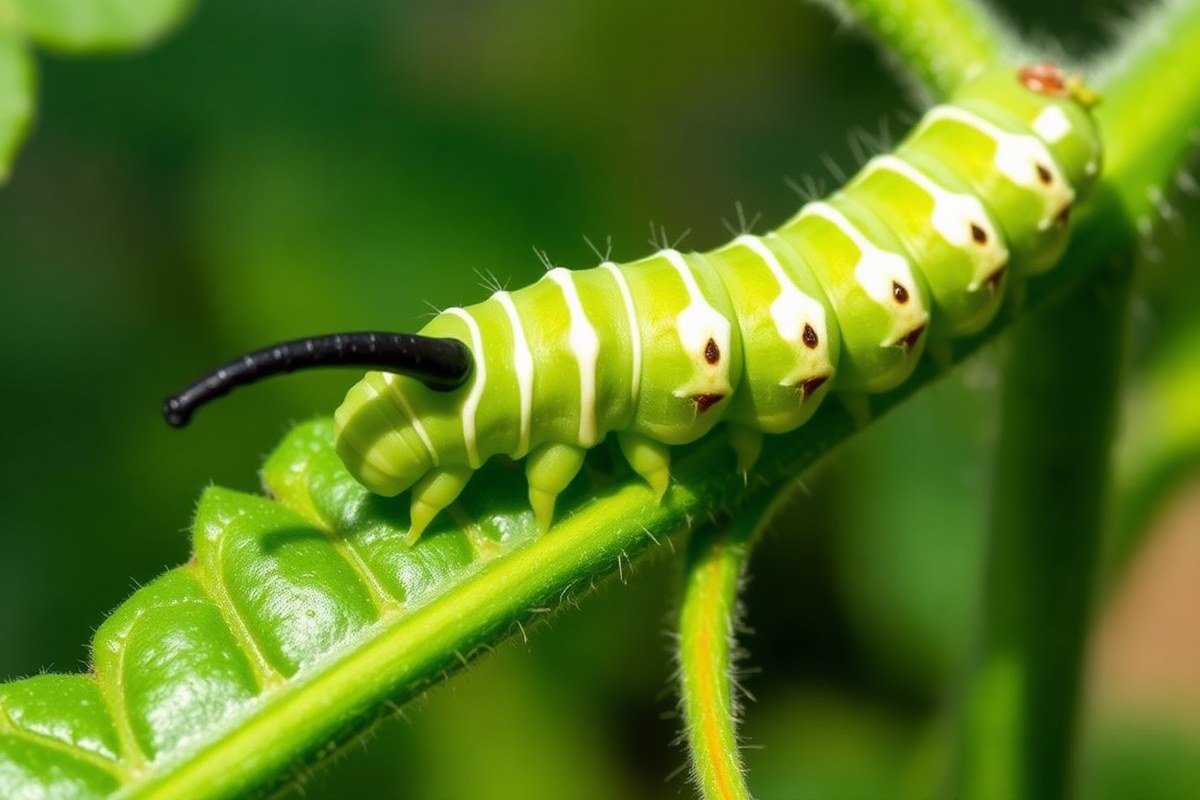
What Does a Horn Worm Turn into? A Complete Guide with Lifecycle Details
What does a horn worm turn into? It grows up into a large moth called a hawkmoth. This moth is known for its strong flying ability and often visits flowers at night.
The hornworm goes through complete metamorphosis to become a moth. After feasting on plants like tomatoes or tobacco, the caterpillar finds a spot underground to pupate. It stays buried beneath the soil for two to four weeks while it transforms.
During this pupal stage, the hornworm looks inactive but is changing inside. The moth that emerges has a thick body and narrow wings built for fast flight. It becomes active mainly after dark and helps pollinate night-blooming flowers.
Watch your garden closely for hornworm caterpillars before they disappear underground. Removing them early can save your plants from severe damage. This gives you a better chance to protect vegetables like tomatoes and peppers.
Key Takeaways
- Hornworms become hawkmoths after pupating in the soil for 2 to 4 weeks.
- They burrow 3 to 4 inches deep into the soil before beginning metamorphosis.
- Maintaining garden temperatures between 75 and 85 degrees F helps their development.
- Hornworms feed on tomato and tobacco plants, which affects their growth rate.
- Tobacco hornworms have 7 white lines and a distinct red, curved horn.
- Adult hawkmoths emerge after about 3 weeks in summer temperatures.
What Does a Hornworm Turn Into?

Hornworms turn into moths known as sphinx moths, also called hawk moths or hummingbird moths. These large moths have wingspans ranging from four to six inches. They hover around flowers, feeding on nectar, which is why some people call them hummingbird moths.
Not all hornworms become the exact same moth species. For example, the tobacco hornworm, Manduca sexta, turns into the Carolina sphinx moth. This moth has six yellow markings on its abdomen.
Meanwhile, the tomato hornworm changes into a sphinx moth. This moth is closely related but has different colors. It also has slight differences in its markings.
There is a common misconception that tobacco hornworms transform into hummingbird moths in the strictest sense. Both tobacco and tomato hornworms grow into large sphinx moths. These moths are often called hummingbird moths.
They belong to the same group. They look broadly alike and play similar roles as pollinators in your garden.
You can tell some species apart by their caterpillar features before they turn. Tobacco hornworms have seven white diagonal stripes and a red, curved horn.
Tomato hornworms sport a black horn and fewer white markings. Despite these differences, both mature into beneficial sphinx moths that help pollinate night-blooming flowers.
Supporting these moths means planting flowers they visit, like evening primrose or four o’clocks. These plants provide nectar for the adult moths to feed on.
The timing and success of hornworm metamorphosis depend on temperature, humidity, and food availability. Cooler or drier conditions can slow down their transformation.
How the Hornworm Transforms into a Moth

The hornworm changes into a moth through a process called metamorphosis. This happens in stages: larva, pupa, and adult moth. The full transformation takes about 2 to 4 weeks, sometimes longer in cooler weather.
Larval Stage Feeding and Growth
The hornworm starts as a small caterpillar after hatching from the egg. It spends 3 to 4 weeks eating leaves, especially from tomato or tobacco plants. The hornworm grows fast and sheds its skin five times.
These stages are called instars. Each stage shows a bigger larva.
Each instar makes the caterpillar look bigger and more vivid green with white and black markings. At the last stage, the hornworm is large and stops eating. It gets ready for the next step.
This is the prep phase. This feeding phase builds up the energy it needs for metamorphosis.
Burrowing and Pupation Process
When the hornworm is fully grown, it leaves the plant to find soft soil nearby. It digs a small underground chamber where it forms a dark brown pupa casing. This stage lasts about two weeks.
If it overwinters, it can take longer. It pauses growth until the weather warms.
Inside the pupa, the caterpillar’s body breaks down and reorganizes completely. It changes from a leaf-munching larva into a moth with wings and antennae. The nervous system also transforms, growing new branches unique to the adult moth’s form.
Emergence of the Adult Moth
When the pupal stage ends, the moth pushes out of the soil. It sheds the pupal skin at this time. The moth’s wings are soft when it emerges.
It takes a few hours for them to harden. Only then can it fly. The adult moth is a strong, night-flying pollinator that lives for 1 to 2 months.
The moth’s job is to find flowers for nectar and reproduce. It starts the cycle again by laying eggs on host plants. The adult hornworm looks very different than the caterpillar.
It has a stout body with brown or gray wings. The horn is missing.
Keep soil moist but not soggy for pupation; dry soil can kill the pupa.
Timeline of the Hornworm’s Life Cycle
The hornworm life cycle begins when the female moth lays tiny eggs on host plants. These eggs hatch into green caterpillars that cause most of the garden damage. The caterpillar stage lasts about two to four weeks depending on temperature and food supply.
After the caterpillar grows fully, it buries itself shallowly in soil to pupate. During the pupal stage, the caterpillar turns into a moth inside a pupa. The pupa is dark brown, oval shaped, and about 45 to 60 mm long.
It stays inside this protective casing as it changes. The moth usually takes two to four weeks to fully develop underground.
This happens faster when the weather is warm. The moth stays hidden until it is ready to emerge.
Environmental factors like temperature and daylight length influence how long each stage lasts. Warmer spring and summer weather speeds up growth and development. Cooler temperatures, shorter days, or dry soil slow down the pupal stage.
Instead of weeks, it can last several months under these conditions. The moth waits for better weather to finish developing.
| Life Cycle Stage | Duration | Notes |
|---|---|---|
| Egg | 4 to 7 days | Laid on leaves of tomato or related plants |
| Caterpillar (Larva) | 2 to 4 weeks | Feeds heavily; causes garden damage |
| Pupa | 2 to 4 weeks (can extend to months) | Occurs underground; duration varies by environment |
| Adult Moth | Emerges after pupal stage | The moth is ready to mate and lay eggs. It emerges from the pupa when fully developed. Then it finds a place to start the next generation. |
Breaking the pupal stage by tilling soil destroys pupae before moths emerge. The adult moth then flies away to mate and lay eggs, restarting the cycle. Knowing these timelines helps gardeners decide when to act and where to watch for hornworms.
Differences Between Tomato and Tobacco Hornworms
The tomato hornworm and tobacco hornworm look similar but differ in specific physical traits and behaviors. You can tell them apart by their markings on larvae and adult moths. They mostly feed on similar plants but have slight preferences in host choice.
Physical Markings on Larvae
Tomato hornworms have eight distinctive V-shaped white stripes along each side. Their horn is dark blue or black and slightly curved. Tobacco hornworms feature seven diagonal white lines and a red horn, making them easier to spot.
These markings help you identify which worm is damaging your garden. The number of stripes and horn color are the clearest signs to look for.
Host Plant Preferences
Both species mainly feed on plants in the nightshade family. Their common hosts are tomato, eggplant, and pepper plants. Tobacco hornworms have a stronger preference for tobacco and can tolerate nicotine’s effects better.
Their feeding behavior can affect which plants you’ll find them on in your garden. While they overlap, tobacco hornworms thrive more in southern regions where tobacco grows.
- Tomato hornworms prefer tomatoes, peppers, and potatoes
- Tobacco hornworms favor tobacco, tomato, and eggplant
- Both may eat eggplant, pepper, and some Solanum weeds
- Tobacco hornworms handle nicotine from the tobacco plant
- Mild preference differences shift their common garden locations
Knowing these preferences can help you protect specific crops better. It also guides where to check carefully for hornworm damage.
Adult Moth Characteristics
Adult tomato hornworm moths, Manduca quinquemaculata, show two separate wavy bands on each hind wing. Tobacco hornworm moths, Manduca sexta, have fused wavy bands in that same area. This difference is subtle but consistent for identification.
Tobacco hornworm moths are slightly larger and more common in southern gardens. Tomato hornworm moths appear more frequently in northern areas. Their wing pattern and size are your best clues when spotting adults.
Environmental Factors Affecting Hornworm Development
Temperature strongly affects how hornworms grow and pupate underground. They thrive best between 75 and 85 degrees Fahrenheit. When they pupate during summer, the moth emerges in about two weeks.
When the caterpillar pupates in late autumn, it stays underground. It stays there through the cold winter months. It comes out in spring or early summer.
Soil conditions also play a key role in their survival. Hornworms burrow into the soil and form pupae inside small chambers. This soil cover keeps them safe from freezing and predators.
However, normal soil tillage often moves pupae to the surface. Here, they face harsh cold and can freeze, which causes up to 90% pupae mortality.
During colder months, hornworm pupae survive winter underground near the old garden sites. Wet and cold winters, like in the Pacific Northwest coast, kill many of them.
Gardens with soil left undisturbed or covered maintain warmth better, helping more pupae survive winter. But open soil plots expose pupae to freezing and predators, reducing hornworm numbers in spring.
To reduce hornworm numbers, till your soil after harvest. This exposes pupae to cold air and natural enemies.
In contrast, leaving soil undisturbed or mulched can encourage hornworm survival. Knowing these factors helps you manage your garden’s hornworm levels.
Till the soil 1 to 3 inches deep after harvest. This exposes pupae to cold and animals that eat them. This helps control hornworms.
Natural Predators and Control of Hornworms
Hornworms face a group of natural enemies that kill them and keep their numbers low. Braconid wasps, especially Cotesia congregata, lay eggs inside hornworms. The wasp larvae feed on the hornworm from the inside, eventually killing it.
These tiny wasps don’t sting people and are safe around kids and pets. You can help them stay by not using chemical insecticides. Letting some hornworms live also lets them grow as hosts.
This encourages their presence naturally in your garden. Removing parasitized hornworms interrupts natural control, so don’t pick off every caterpillar.
Other natural killers include parasitic wasps like Trichogramma species. Diseases help keep hornworm numbers down. Cold weather and heavy rain also reduce them.
Birds eating hornworms adds to controlling their population. Hornworm populations often stay under damaging levels thanks to all these natural checks.
- Braconid wasps lay eggs inside hornworms, killing them from within
- Trichogramma wasps also parasitize hornworm eggs and larvae
- Diseases like viral or fungal infections can reduce hornworm numbers
- Birds and predatory insects feed on hornworms regularly
- Extreme weather such as frost or heavy rain harms hornworm survival
- Non-chemical methods attract these natural enemies and protect your plants
Hornworms are not poisonous to touch, but some gardeners avoid handling them. Their smooth bodies and the “horn” on the rear make them look scary.
But they don’t sting or bite. Touching them won’t harm you or your plants.
Wasps control hornworms by using them as hosts for their young. A single parasitized hornworm might have dozens of tiny wasp cocoons on its back.
Once the cocoons emerge, the wasp adults fly off to find more hornworms to parasitize. This natural cycle helps keep your garden tomato and tobacco hornworms under control without chemicals.
Raising Hornworms into Moths at Home
You can keep hornworms as pets by raising them from caterpillars to moths. Providing fresh food and a safe space helps them pupate and emerge. Watching the transformation is fascinating and educational.
Setting Up Suitable Habitat
Choose a container at least 8 inches deep with ventilation holes. Use a clear plastic or glass container for easy observation. Add a layer of loose soil or peat moss, about 2 inches deep, for pupation.
Keep the habitat indoors at room temperature, ideally between 70°F and 80°F. Avoid direct sunlight, which can overheat or dry out the habitat. Provide a place for the hornworm to climb, such as small sticks or leaves.
Feeding and Care Tips
Hornworms eat fresh leaves from tomato, tobacco, or related plants. Replace the leaves daily to keep them fresh and free of mold. You can mist the leaves lightly to maintain moisture.
Make sure to remove uneaten food and frass (caterpillar droppings) regularly. This helps prevent mold growth and keeps the habitat clean. Avoid overcrowding by raising no more than 3 to 4 hornworms per container.
- Provide fresh tomato or tobacco leaves daily
- Mist leaves lightly to maintain humidity
- Clean out droppings and leftover food every day
- Keep no more than 4 caterpillars per container
- Maintain temperature around 70°F to 80°F
Hornworms need minimal care but do best with consistent conditions. You can see them grow quickly, reaching 3 to 4 inches when fully grown.
Monitoring Pupation and Emergence
After two or three weeks, the hornworm stops eating. Next, it burrows into the soil. It does this to pupate.
Keep the soil moist but not wet to support the pupal stage. The pupa can take 2 to 3 weeks to become a moth.
Check the pupae gently for firmness and color changes, which signal development. When the moth is ready, it pushes out of the pupal case.
Then, it rests on nearby surfaces. The adult moth can fly soon after its wings expand and dry.
When and How to Manage Hornworms in Your Garden
Spotting hornworms early saves your plants. Check plant tops where they like to feed. Look for stripped stems and fruit scars to catch damage fast.
Handpicking hornworms works well. Wear gloves and gently pull them off the plant.
Relocate them far from your garden or, if needed, safely dispose of them. This method harms no other insects.
Use organic insecticides like Bacillus thuringiensis (Bt). Bt targets caterpillars, leaving beneficial insects alone.
Apply in the early morning or late evening for best results. Repeat every 7 to 10 days if needed.
Invite natural predators into your garden. Parasitic wasps and ladybugs reduce hornworm numbers without chemicals. Avoid broad-spectrum pesticides that kill these helpful insects.
Hornworm control matters if you spot six or more caterpillars. This number can cause quick leaf loss on tomato plants.
Act fast to protect your garden. Small damage is normal and often tolerable.
A home garden rarely needs professional help unless infestations get large. Regular checks and early action keep hornworm numbers manageable. Watch carefully during warm months when hornworms grow fastest.
Don’t apply chemical pesticides unless hornworms threaten most plants; they hurt helpful bugs too.
Step-by-Step Action Plan to Identify and Manage Hornworms
Follow these steps to watch hornworms turn into moths and control their garden impact effectively.
- Before You Start: Look for hornworms on tomato or tobacco plants first. Check their size. Notice their markings to be sure. Spotting the larvae early helps you track their growth correctly.
- Week 1: Look for feeding signs like chewed leaves or green droppings. Confirm the caterpillars’ presence and size as they grow quickly during this stage.
- Week 2: Check for when the hornworms stop eating and burrow into the soil. This indicates they’ll soon pupate underground and transform.
- Week 3 to 4: Watch the soil near your plants for pupae. Look for signs of new moths. Check regularly during this time. Successful pupation means the hornworm is turning into a moth.
- After 4 Weeks: At dusk or night, look for large white sphinx moths. These moths are adult hornworms. They’ll be near your garden. Their presence confirms the life cycle is complete.
- Any Time During the Cycle: Use natural predators like parasitic wasps or handpick hornworms for removal. This helps control damage without chemicals.
- When Moths Appear: Prepare to protect your plants from new egg-laying to prevent another hornworm generation. Check leaves regularly for small white eggs.
Frequently Asked Questions
What Does a Hornworm Turn Into?
A hornworm turns into a hawkmoth, a large moth in the Sphingidae family. These moths hover like hummingbirds and are less known than the caterpillars.
Are Hornworms Good for Anything?
Yes, hornworms play a role in ecosystems by serving as food for birds and beneficial insects. They also become hawkmoths, important pollinators at night.
Are Hornworms Poisonous to Touch?
Hornworms are not poisonous and safe to touch. Their sharp horn looks scary but it’s harmless to humans.
What Naturally Kills Hornworms?
Braconid wasps naturally kill hornworms by laying eggs inside them. The wasp larvae then consume the hornworm from within.
How Long Do Hornworms Live?
Hornworms live about 3 to 4 weeks as caterpillars before turning into moths. The full life cycle varies with temperature and food available.
Can Hornworms Harm Plants Other Than Tomatoes?
Yes, hornworms also eat peppers, eggplants, and other nightshade family plants. Keep an eye on those if you spot hornworms nearby.
Wrapping Up
Hornworms become large white sphinx moths after pupating in soil. Knowing their life cycle helps you manage or watch them safely. Start by checking your plants regularly for these caterpillars today.


2 Comments