
How Long Can Ants Live Underwater? A Complete Guide with Species Comparison
How long can ants live underwater? Most ants can survive from 8 to 24 hours underwater.
They do this by slowing down their breathing and conserving energy in low-oxygen conditions. Their tiny bodies help reduce the need for oxygen during these periods.
Ants close tiny openings called spiracles to reduce oxygen loss. This lets them hold their breath and enter a sort of rest mode underwater.
Temperature and species type affect how long they last. Cooler water often helps them survive longer by slowing metabolism.
Some species, like black garden ants, have been recorded living underwater up to 8 hours. Others, like certain Formica ants, can survive even longer, sometimes for days. After coming out of the water, they usually take several hours to fully recover their activity.
Key Takeaways
- Most ants survive underwater by closing spiracles and lowering metabolism.
- Ant survival time underwater typically ranges from 8 to 24 hours.
- Species like fire ants and harvester ants tolerate 24 to 48 hours underwater.
- Ants can switch partly to anaerobic respiration when oxygen runs low.
- Temperature influences how quickly ants use up oxygen underwater.
- Some ants appear to “come back to life” after prolonged submersion.
How Long Can Ants Actually Survive Underwater?
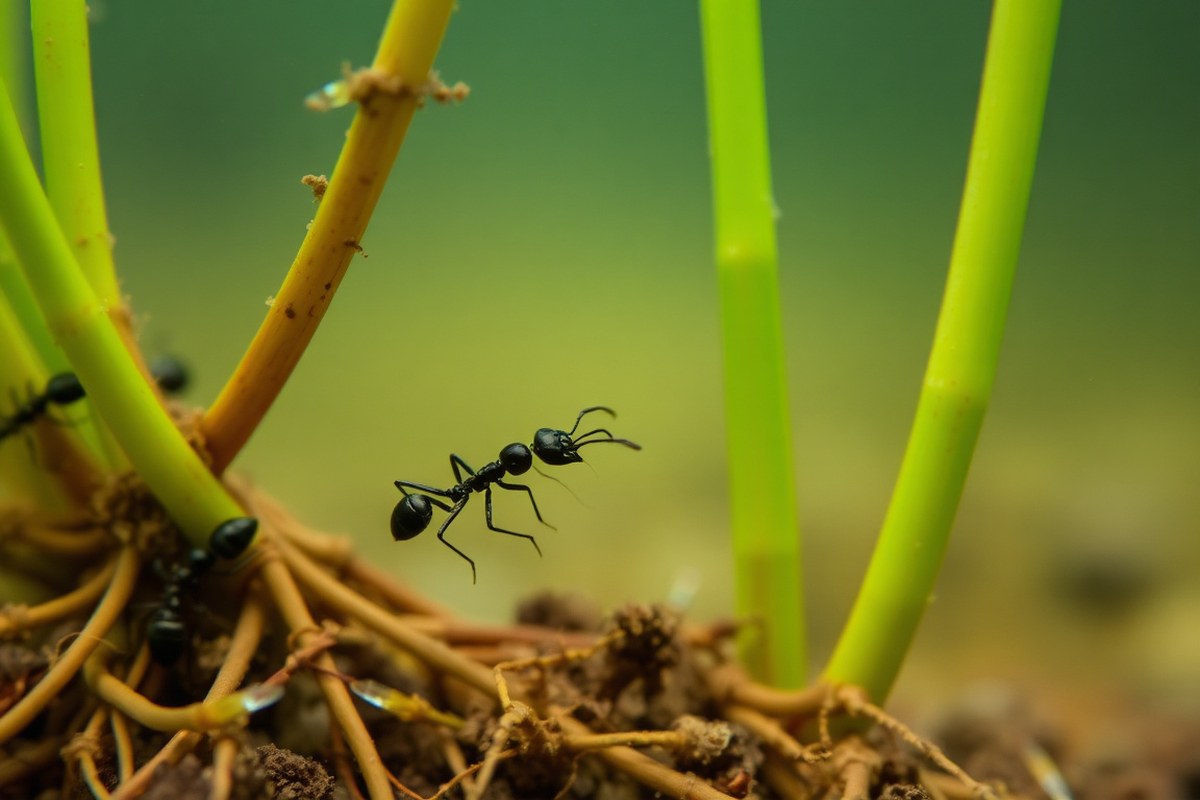
Ants can live underwater anywhere from a few hours to about two weeks. Most species survive between 8 and 24 hours underwater. They close their spiracles to stop water from entering.
This helps them stay alive longer. This reduces oxygen use, letting them stay submerged longer without damage.
Survival times vary depending on the ant species and their environment. Some ants, like certain Formica species, can survive underwater up to 14 days.
They enter a low-energy state, cutting oxygen consumption to 5, 20% of normal. Others, like black garden ants, typically survive around 8 hours underwater before recovering.
The underwater endurance of ants depends a lot on their adaptations. Raft ants and diving ants are more resilient. They survive longer than ants not suited for wet conditions.
Their special skills help them in water. Temperature also influences survival because cooler water slows metabolism and oxygen use.
Here’s a comparison of survival times for different ant species that shows this range clearly:
| Ant Species | Typical Underwater Survival | Special Notes |
|---|---|---|
| Black Garden Ant | About 8 hours | Recovered after 8 hours underwater |
| Most Ant Species (general) | 8 to 24 hours | Close spiracles, enter low-energy mode |
| Diving Ant | Up to 24 hours | Can get food underwater |
| Raft Ant | Longer than 24 hours | Better suited to flooding and water |
| Formica Species (queens and workers) | Up to 14 days or more | Reduce oxygen use drastically |
This table shows some ants last only hours while others survive days. It depends on their body’s ability to limit oxygen and their behavior underwater. Still, no ants live underwater permanently, they all eventually need to breathe air.
Thus, most ants can’t live underwater for days. But a few species manage to last quite long.
Their survival is a mix of biological adaptations and environmental conditions. This explains why you sometimes see ants surviving seemingly long underwater events after flooding or rain.
How Do Ants Breathe and What Happens Underwater?

Ants cannot breathe underwater because water blocks their breathing holes called spiracles. They take in oxygen through these tiny openings on their bodies. Underwater, ants close their spiracles to hold their breath and prevent water from entering.
Structure and Role of Spiracles
Spiracles are small holes along an ant’s sides that allow air to enter its body. They connect to a network of tubes called tracheae. These tubes carry oxygen directly to the ant’s tissues.
This system helps ants get oxygen efficiently. Spiracles can open and close to control airflow and keep out dust or water.
Without these openings, ants would not get enough oxygen and would suffocate. Their breathing system works differently than lungs.
It relies on direct air intake through spiracles. The placement of spiracles allows ants to breathe even underground or in tight spaces.
Why Ants Cannot Extract Oxygen from Water
Water blocks the spiracles, stopping air from reaching the ant’s respiratory system. Ants do not have gills or any structures to extract oxygen from water like fish do. They depend on air and must surface to breathe or rely on stored oxygen.
Holding air bubbles underwater does not allow them to breathe permanently. The water creates a physical barrier that prevents oxygen exchange. Oxygen inside their bodies drops over time.
This makes ants slow down. Eventually, they enter a coma-like state.
How Spiracle Closure Preserves Oxygen
When submerged, ants close their spiracles tightly to keep water out. This action traps oxygen inside their bodies, allowing them to survive without breathing for hours. Closing spiracles also slows oxygen use and reduces carbon dioxide build-up.
Some ants can manage their spiracles to cut their respiration rate below 20%. Even down to 2% in sealed environments. This slows metabolism and helps them survive longer underwater or in low-oxygen places.
The steps to close spiracles underwater are simple but effective:
- Detect submersion by sensing water pressure around the body.
- Signal muscles around spiracles to contract and seal the openings tightly.
- Hold breath by stopping airflow and preventing water entry.
- Slow metabolism to reduce oxygen consumption inside the body.
- Maintain sealed spiracles for as long as possible without damage.
- When safe to surface, open spiracles swiftly to take in fresh air.
Never try to submerge ants intentionally. Ants use spiracles to get oxygen. They need this supply to survive. If trapped underwater too long, ants can drown quickly.
Physiological Adaptations That Allow Ants to Survive Submersion
Ants survive underwater by slowing their metabolism, switching partly to anaerobic respiration, and managing oxygen carefully. These changes help them last longer without fresh air. Their body systems adjust to control oxygen use and carbon dioxide buildup during submersion.
Metabolic Rate Reduction During Submersion
When submerged, ants lower their metabolic rate to slow oxygen consumption. This reduction can be significant, especially in cooler temperatures, which help ants conserve energy. Harvard University Press reports show ants enter a torpor-like state, dropping activity dramatically.
Research on Formica ants shows metabolic rates underwater can fall to around 20-30% of normal. This slowdown allows ants to survive longer on limited oxygen supplies. However, lowering metabolism also limits movement and slows down bodily functions.
Partial Anaerobic Respiration and Energy Production
Ants switch to partial anaerobic respiration to generate energy without oxygen. This process creates less energy than normal respiration but sustains important functions. Some energy-producing pathways shift to anaerobic metabolism during flooding or submersion.
Studies on Lasius niger show ants can live without oxygen briefly. They survive by using a process called anaerobic respiration. This helps them when air is low.
It helps keep cells alive until oxygen becomes available again. The downside is a harmful buildup of byproducts inside the ant. This can hurt the ant if the exposure lasts too long.
Oxygen Storage and Carbon Dioxide Management
Ants use physical adaptations, like trapping air bubbles near their spiracles, to store oxygen underwater. Some species, such as mangrove ants, rely on these air pockets during tidal flooding. These trapped air compartments offer a temporary oxygen supply while submerged.
Managing carbon dioxide buildup is another challenge. Too much carbon dioxide makes ants lose consciousness, similar to low oxygen. They can revive after hours in a CO2-rich environment if oxygen returns promptly.
- Air pockets act as temporary oxygen reservoirs
- Spiracles adjust opening sizes to regulate gas exchange
- Anaerobic metabolism reduces oxygen demand
- Lower temperatures reduce metabolic rate further
- CO2 tolerance depends on species and health
- Age affects ability to handle gas buildup
- Some ants carry small oxygen stores internally
The ability to manage gases underwater varies by species and individual health. Ants with better oxygen storage or slower metabolism survive flooding longer. Too much carbon dioxide or long oxygen shortages cause failure in these adaptations.
Which Ant Species Are Best Adapted to Survive Flooding?
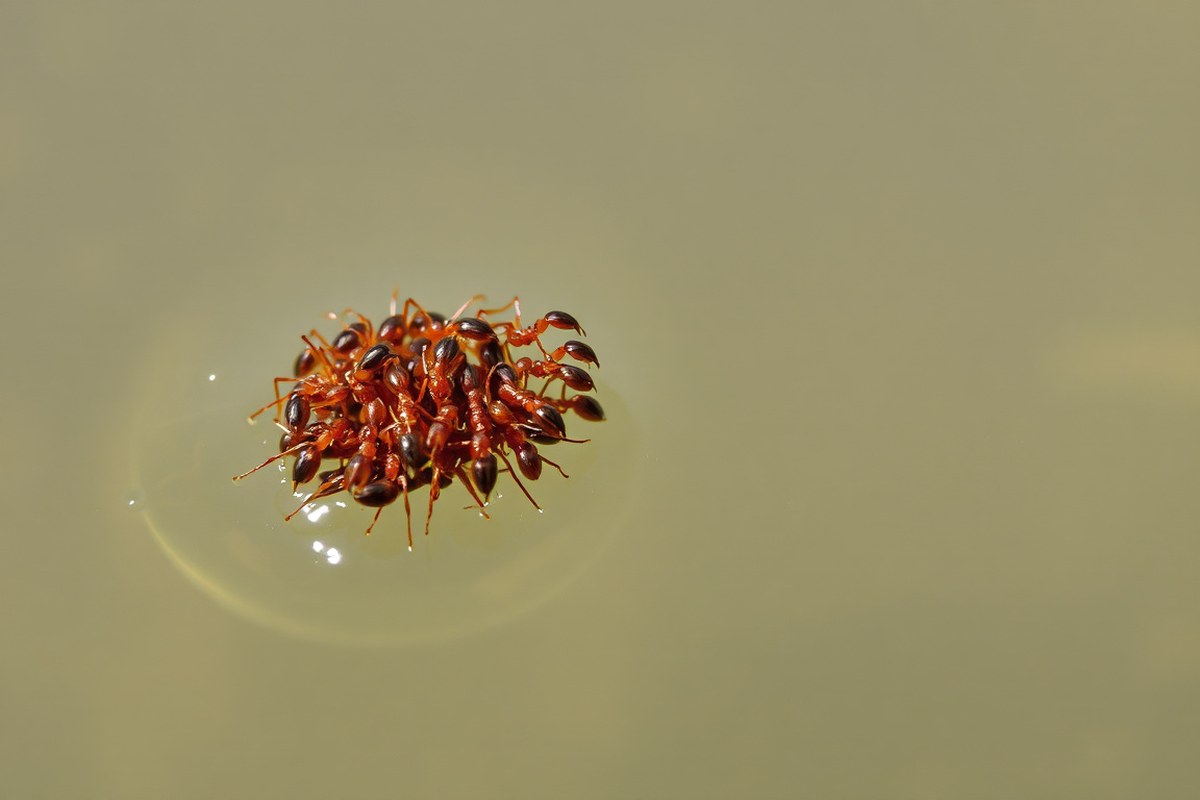
Fire ants, especially Solenopsis invicta, are among the best at surviving flooding. They build rafts from their own bodies to stay afloat on water. These rafts can last from 12 hours to 12 days.
Ants keep rotating spots to breathe. This helps them survive longer underwater.
Raft formation lets fire ants float safely until dry land is found. This behavior helps colonies survive floods in their natural, wet habitats. Other species, like diving ants, swim and hunt underwater, showing different water survival skills.
| Ant Species | Survival Strategy | Maximum Underwater/Water Survival | Key Adaptation |
|---|---|---|---|
| Fire Ants (Solenopsis invicta) | Form living rafts with bodies | Up to 12 days afloat | Rotating positions to access air |
| Diving Ants | Swim underwater actively | Hours underwater (varies) | Ability to close spiracles tightly |
| Flood-Adapted Ants | Close spiracles tightly to avoid drowning | Longer submersion (varies by species) | Evolutionary spiracle control |
Different species live in flooded or rainy environments. Fire ants thrive in flood-prone areas by quickly linking together in rafts. They can stay afloat for days, which gives colonies a real survival boost.
Diving ants show diving and swimming skills not found in many ants. They live near water and rely on tight spiracle control to survive underwater. Flood-adapted ants have evolved to shut their spiracles tighter for longer submersion than most ants.
How Environmental Factors Influence Ants’ Underwater Survival
Water temperature plays a big role in how long ants last underwater. Colder water slows an ant’s metabolism, helping it survive longer. Warmer water speeds up oxygen use, making survival times much shorter.
Oxygen availability in the water affects ants differently than you might think. Ants close their spiracles quickly to keep water out, so they don’t breathe underwater. Instead, they rely on the oxygen trapped in their bodies.
This means low oxygen in the water isn’t as critical as on land. But it still influences how long they can stay submerged.
Water quality matters a lot. Pollutants or chemicals in water can hurt ants by damaging their shell. These chemicals also affect their breathing openings, which are very important.
Clean water helps ants survive longer. Dirty or contaminated water lowers their chances significantly.
- Lower water temperatures extend survival by reducing metabolism
- Higher temperatures increase oxygen demand and shorten survival
- Ants stop breathing by closing spiracles, limiting oxygen intake underwater
- Oxygen availability underwater is less important than on land
- Chemicals and pollution in water reduce survival times
- Physical factors like currents and water pressure impact behavior and survival
- Floating and raft-building can help colonies survive long water exposure
Physical water conditions play a role too. Strong currents can sweep ants away or force them to use more energy, reducing their survival.
Also, water pressure is usually low enough not to cause harm. But deep or turbulent water might stress ants more.
Ants last longer in cool, clean water. They can hold their breath underwater briefly by closing their spiracles.
Because ants can adapt their activity to low oxygen situations, they often slow down when submerged. This conserves energy and oxygen held inside their bodies. Their survival depends on having enough trapped air and avoiding harmful substances in the water.
Why Do Some ‘Drowned’ Ants Appear to Come Back to Life?
Ants often look dead after being underwater, but they can come back to life. They enter a torpor-like state, slowing their metabolism and movement to save energy. This state helps them survive low oxygen and prevents permanent damage.
This torpor helps ants reduce their oxygen needs during submersion. They stop most body functions to conserve air trapped in tiny body spaces. This trapped air works like a small oxygen reserve while they stay still and unresponsive.
How long ants stay in this state varies by species and conditions. In a 2014 study, 79% of Formica selysi ants revived after eight hours underwater. Others might start moving again within 45 minutes after water exposure ends, showing slow recovery.
These revival times depend on temperature and how long ants stay submerged. Cooler water slows their metabolism more, letting them survive longer but also delaying recovery. Warmer conditions speed up recovery but reduce survival time underwater.
After coming out of water, ants need time to regain full activity. They usually start stirring within 30 to 45 minutes if put on a dry surface. This gradual process means they aren’t actually dead but deeply inactive.
This ability isn’t perfect though. Prolonged submersion or rough handling can cause real harm.
Many ants can only survive hours underwater before injury sets in. So keeping them dry is safer.
How Do Ant Colonies Cope with Flooding and Extended Water Exposure?
Ant colonies rarely die out completely from floods because of their strong survival behaviors. They quickly move the queen to safety and use collective actions to shield the entire group. Nest designs and behaviors help them manage extended water exposure too.
Nest Evacuation Behaviors
Ants sense rising water and spring into action fast to save their queen and others. Worker ants build emergency paths out of the nest. They move eggs and larvae to dry places.
This keeps the young safe during floods. This quick response lowers the chance of drowning for the whole colony.
During evacuation, workers stick together, often carrying the queen on their backs. This social coordination allows the queen to stay protected. They also pause to rebuild tunnels or entrances if flooding cuts off their original exits.
- Detect rising water inside or near the nest.
- Carry the queen to a safer, dry location nearby.
- Transport larvae and eggs carefully along the escape routes.
- Seal off water-logged tunnels to prevent wetting the brood.
- Scout for new nest sites above flood levels.
- Establish temporary shelters using leaves or debris.
- Return once waters recede to rebuild their main nest.
Raft-Making and Collective Survival
Some species form living rafts when floods trap them in water. They link bodies to create a floating platform, protecting the queen and brood. This raft can last for days until ants find dry land.
The ants line up carefully inside the raft. Workers at the bottom stay wet in the water. Others stay dry up on top.
Ants at the raft’s base can survive underwater briefly. Small air pockets between their bodies help them breathe. This keeps them alive during floods.
Adaptations in Flood-Prone Habitats
Nests built in moist or flood-prone areas have extra water-resistant layers. Some ants line tunnels with wax or resin to keep water out. These nests often have higher entrances or raised chambers for safety.
Species living near rivers or swamps know how to use natural materials to slow flooding inside. Some create tiny air chambers that help trapped ants breathe longer. These adaptations lower colony losses during heavy rains or floods.
Common Myths and Misconceptions About Ants and Water Survival
Many people assume ants can survive exactly 24 hours underwater. But this isn’t true for all ants.
Some species can last longer or shorter depending on the environment and their physiology. The ’24-hour rule’ is a simplification and varies widely among ant types.
Another myth says ants breathe underwater, but they don’t. Ants breathe air through small holes called spiracles on their sides. These holes connect to air tubes named tracheae inside their bodies.
Air moves through these tubes to reach their tissues. Water blocks these airways, so ants can’t use oxygen from water like fish do.
Some think ants survive underwater by holding air bubbles. Ants can trap tiny air bubbles on their bodies when underwater. These bubbles don’t hold enough oxygen for long periods.
So, ants can’t rely on them for breathing underwater. The trapped air helps for a short time. But ants mainly survive by slowing down their metabolism.
- The ’24-hour underwater survival’ rule only applies to some ant species.
- Ants breathe through spiracles, not gills or lungs.
- They cannot extract oxygen directly from water like aquatic animals.
- Trapped air bubbles on ants’ bodies are temporary oxygen reserves.
- Extended underwater survival depends on metabolism slowing and species traits.
- Misinformation often comes from mixing ant species or ignoring environment factors.
To avoid mistakes, check if the source specifies ant species when discussing underwater survival. Look for scientific details on spiracles and breathing methods. Be wary of exact time claims unless backed by study or observation.
Beware of broad survival times; ants’ underwater endurance varies by species and conditions.
Claims that ants can survive underwater indefinitely lack evidence. Even species adapted to flooded habitats have limits. They arrest activity and hold breath-like states but will drown if submerged too long without oxygen.
Correcting these myths helps you understand ant biology better and spot false facts. Some say ants live exactly one day underwater or breathe in water.
The truth depends on species, body limits, and how their metabolism works. These factors change how long ants survive underwater.
Step-by-Step Action Plan to Observe Ants’ Underwater Survival
Start by watching how long ants can stay underwater safely. Follow these steps to measure and understand their survival.
- Before you start: Choose an ant species common in your area. Collect a small, healthy group.
- Day 1: Place ants in a clear container with shallow water. Note how many survive the first 10 minutes.
- Day 2: Increase the water depth slightly. Watch for signs of distress or movement underwater.
- Day 3: Try submerging ants with debris or air bubbles around. Check survival time again.
- Week 1: Attempt longer water exposure, up to 30 minutes. Record which ants come back to life.
- After 2 weeks: Compare different species if possible, noting which live longest underwater.
- After 1 month: Observe colonies during wet weather or controlled flooding. See how ants manage group survival.
- Continuous: Keep notes on water temperature and oxygen levels. They affect survival times greatly.
Frequently Asked Questions
How Long Can Ants Hold Their Breath Underwater?
Ants can hold their breath from 8 to 24 hours underwater. They close spiracles to seal off water and reduce oxygen use.
Do Ants Drown If They Stay Underwater Too Long?
Yes, ants eventually drown after about a day underwater. Their low oxygen use only delays this.
Can Ants Swim to Avoid Drowning?
Most ants can’t really swim but can float or cling to debris. They try to escape water this way.
How Do Ant Colonies Survive Floods Without All Ants Drowning?
Colonies survive floods by sheltering in raised chambers or tree nests. Some ants also evacuate with the queen.
Are There Ants That Hunt Underwater or Spend Time Submerged?
Some ants like diving ants catch underwater prey briefly but do not live underwater. They hunt small aquatic bugs.
Does Water Temperature Affect How Long Ants Live Underwater?
Yes, warmer water lowers survival time by increasing metabolism and oxygen use. Cooler water helps ants last longer submerged.
Final Thoughts
Ants can survive underwater for minutes, sometimes longer based on species and conditions. Your best bet is to observe local ants in wet environments. Try a simple experiment to see their recovery and understand their resilience firsthand.


