How Much Grass Seed Do I Need for 1 Acre: A Complete Guide with Exact Calculations
To seed one acre, use between 80 and 300 pounds of grass seed based on the type and rate. Bermuda grass usually requires around 87 pounds per acre. Kentucky Bluegrass typically calls for about 44 pounds.
Multiply the recommended pounds per 1,000 square feet by 43.56 to get your total for one acre. Start by checking the seed label for seeding rate and purity. That helps avoid under- or over-application, which can waste money or cause patchy growth.
Also keep in mind germination rates. The label’s coverage assumes about 85% of seeds will sprout. Adjust your amount higher if purity or germination is lower.
Soil conditions and climate also influence how much seed you need. Compacted soil may need more seed to ensure good coverage. Plan extra seed for overseeding to fill bare spots after your initial planting.
Key Takeaways
- Multiply seeding rate per 1,000 sq ft by 43.56 to find pounds per acre.
- Bermuda grass needs about 87 pounds per acre at 2 lb/1,000 sq ft seeding rate.
- Kentucky Bluegrass requires roughly 44 pounds of seed per acre.
- Seed labels assume 85% germination; adjust amount for lower purity or germination.
- New lawns require 5, 10 pounds of seed per 1,000 sq ft. Overseed at half rate.
- Calculate seed bags from total weight, considering common bag weights (10, 20, 50 lbs).
How to Calculate Grass Seed Needed for One Acre

To find how much grass seed you need, start with your seeding rate. This is how many pounds per 1,000 square feet you should use. Knowing this helps you calculate the total amount for an acre.
This rate is usually given in pounds per 1,000 square feet. Multiply your seeding rate by the number of 1,000 sq ft units in an acre.
This shows the total pounds of seed you’ll need. One acre equals 43,560 square feet, so it equals 43.56 units.
An acre covers 43,560 square feet. Seed amounts usually come listed per 1,000 square feet. So, break one acre into 1,000-square-foot sections.
This step makes the math simpler and clearer. For example, if the label says 5 pounds per 1,000 sq ft, multiply 5 by 43. This gives the pounds of seed needed for one acre.56 to get the pounds per acre.
- Know your seeding rate. Find the pounds of seed needed for 1,000 square feet on the package or recommended chart.
- Calculate the number of 1,000 sq ft units. Divide your total area in square feet by 1,000. For an acre, this is 43,560 ÷ 1,000 = 43.56.
- Multiply seeding rate by units. Multiply the pounds per 1,000 sq ft by 43.56 to get pounds needed per acre.
- Adjust for germination.Your seed’s germination rate may not be 85%. Adjust the seed amount by dividing by (germination % ÷ 100). This ensures you buy enough viable seed. For example, 5 ÷ (72 ÷ 85) = 5.9 pounds per 1,000 sq ft adjusted.
- Add a waste buffer. Add 10% to cover seed loss during spreading. Multiply your total by 1.10.
- Calculate total seed for your acreage. Multiply single-acre pounds by your acres. For two acres, double it.
- Convert to bags.Divide your total pounds of seed by the bag size to find needed bags. Bags usually hold either 5 or 50 pounds. This helps you know how many bags to purchase.
Multiply 5 pounds per 1,000 sq ft by 43 for one acre. This shows how much seed you need before adjusting for germination.56 = 217.8 pounds.
Add 10% waste: 217.8 × 1.10 = 239.6 pounds. A 50-pound bag means 239.6 ÷ 50 = about 5 bags.
This method works for all grass types. Adjust your seeding rate from the seed label or recommendations. You get a clear amount to buy with less guesswork or waste.
Recommended Seeding Rates for Popular Grass Types
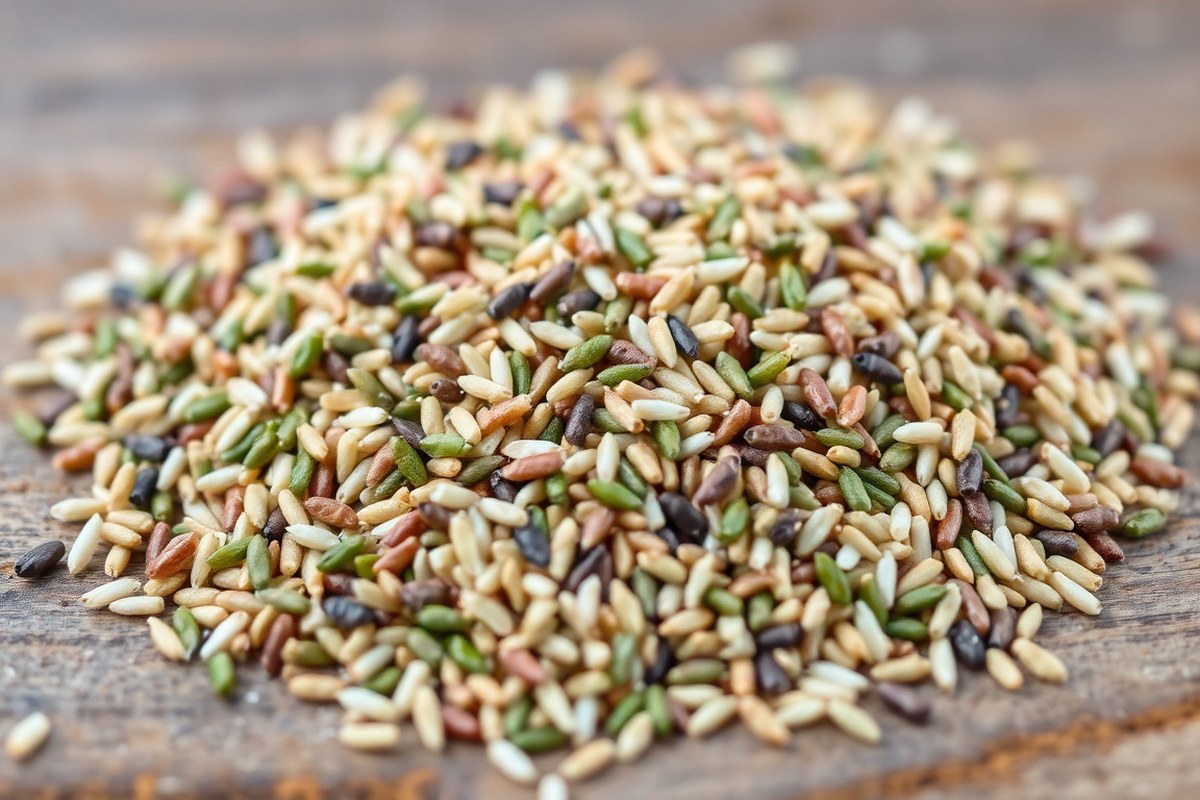
Different grass types need different amounts of seed to grow well. New lawns usually require more seed than overseeding because they start from bare soil.
Overseeding just fills in thin areas. So you use about half the seed of a new lawn.
Warm-season grasses like Bermuda and Zoysia need less seed per acre. Cool-season grasses like Tall Fescue and Perennial Ryegrass require more seed.
The seed size also matters. Bigger seeds like those of ryegrass need more pounds per square foot.
| Grass Type | New Lawn (lbs/acre) | Overseeding (lbs/acre) | New Lawn (lbs/1,000 sq ft) |
|---|---|---|---|
| Kentucky Bluegrass | 130, 175 | 65, 87 | 3, 4 |
| Tall Fescue | 261, 348 | 130, 174 | 6, 8 |
| Perennial Ryegrass | 348, 435 | 174, 218 | 8, 10 |
| Bermuda Grass | 87, 130 | 43, 65 | 2, 3 |
| Buffalo Grass | 43, 87 | 22, 43 | 1, 2 |
You’ll seed Kentucky Bluegrass with about 130 to 175 pounds per acre for a new lawn. Overseeding it usually takes half that, around 65 to 87 pounds. Ryegrass has big seeds and needs 348 to 435 pounds for new lawns.
For overseeding, plan on 174 to 218 pounds. Bermuda grass needs less, about 87 to 130 pounds new and under 65 pounds when overseeding.
Using the right amount helps seedlings grow evenly and compete well with weeds. Too little seed slows lawn development, and too much wastes money and causes crowding. Seed bags often weight 50 pounds.
So you can estimate bags from the pounds per acre you need. Kentucky Bluegrass needs about three bags of seed per acre for new lawns. For overseeding, use one to two bags per acre.
Don’t skip soil preparation; it improves seed contact and boosts germination rates.
Understanding Pure Live Seed and Germination Effects
Pure Live Seed (PLS) is the percentage of viable seed in a bag. It accounts for seed purity and germination rates. You must use PLS to figure out how much bulk seed to buy for one acre.
Calculating PLS and Adjusting Quantities
PLS is found by multiplying the seed purity percentage by the total germination percentage. Total germination includes germinating seeds plus dormant seeds.
A seed pack shows 80% purity and 75% germination. Multiply 0.8 by 0.75 to get viable seed amount.80 by 0.75 to get a 60% PLS.
Knowing the PLS helps you adjust how much bulk seed to buy. The target seed amount is always based on viable seed, not bulk weight. To find bulk seed, divide your desired planting rate by the PLS as a decimal.
Impact of Low Germination Rates
Low germination rates mean you must buy more seed to get enough viable seeds. Poor germination often happens with older or damaged seed. Buy 30% extra seed to cover loss from poor germination.
Birds or wind can also cause seed loss. This extra seed helps ensure full lawn coverage.
Germination rates below 85% require proportionally more seed. For example, 70% germination takes 20% more seed than 85%.
Good seed tags will list purity and germination, helping you plan better. Ignoring this leads to thin lawns and wasted money.
Examples of Bulk Seed Adjustments
You want 200 pounds of pure Tall Fescue seed per acre. The seed tag shows 80% purity and 75% germination. That means a 60% PLS (0.80 × 0.75).
Divide 200 pounds by 0.60 to get 333 pounds of bulk seed needed. Buying 333 pounds of this seed covers the goal of 200 pounds of viable seed. This practical math ensures your lawn grows thick without extra trips to buy seed.
How to Translate Seed Weight into Bags and Costs
Grass seed bags usually come in 5, 10, 20, 25, 40, and 50-pound sizes. Knowing the bag sizes helps you. You can figure out how many to buy.
This is for one acre of lawn. The total pounds needed depends on the grass type and seeding rate you choose.
For example, you need 240 pounds of Tall Fescue seed per acre. You can pick from different bag sizes. This choice affects how many bags you buy.
Divide the total pounds by the bag weight to get the number of bags. Buying slightly more seed covers waste or uneven spreading.
| Bag Size (lbs) | Covers (New Lawn) sq ft | Bags Per Acre (New Lawn) |
|---|---|---|
| 5 | 500, 1,000 | 43, 87 |
| 10 | 1,000, 2,500 | 17, 44 |
| 20 | 2,000, 5,000 | 9, 22 |
| 25 | 2,500, 6,250 | 7, 17 |
| 40 | 4,000, 10,000 | 4, 11 |
| 50 | 5,000, 12,500 | 3, 9 |
To buy 10-pound bags when you need 240 pounds, divide 240 by 10. This gives you the number of bags to get.
That gives 24 bags to cover a full acre. Costs vary by seed type, with Tall Fescue around $3 to $6 per pound.
At $3 per pound, 240 pounds of Tall Fescue costs about $720. At $6 per pound, expect up to $1,440.
Premium blends or specialty seeds cost more. Budgeting with these numbers helps you avoid surprises.
Factors That Affect How Much Seed You Actually Need
Slope and erosion have a big effect on how much grass seed you need. On steep slopes, soil and seed often wash away during rain. You need to boost the seed amount by 25 to 50 percent.
This helps make up for losses. It also ensures better grass coverage.
Overseeding an existing lawn calls for less seed than starting fresh. You usually need 25 to 50 percent less seed.
This is because you’re only filling bare or thin patches. Using a new lawn rate on established grass can waste seed and smother the old turf.
Wind and birds also reduce seed effectiveness by carrying it away. You can expect around 10 to 20 percent of the seed to be lost this way.
Placing mulch or a light soil layer after seeding cuts down losses. It also keeps the seed in place.
- Increase seed by 25% to 50% on slopes prone to erosion
- Use 25% to 50% less seed when overseeding existing grass
- Cover seed lightly with mulch or soil to prevent loss
- Expect 10% to 20% seed loss to wind and birds without cover
- Check your seed label for specific rates for overseeding or new lawns
- Account for soil type: sandy or rocky soils may need more seed
Existing vegetation affects seed needs, too. A thick lawn needs less seed. But sparse grass may require full new lawn rates.
Also, sandy or rocky soil doesn’t hold seed or moisture well. Adding 10 to 20 percent extra seed in these cases helps. It improves the chance that seeds will sprout.
Don’t overseed in dry or windy weather without covering seed; you’ll just lose it.
Best Practices for Spreading and Protecting Grass Seed on Large Areas
Spreading grass seed evenly on one acre requires the right tools and technique. Use a seed spreader to avoid clumps and bare spots. Protect the seed with a thin layer of straw or mulch.
It keeps moisture in and stops birds from eating the seed. This helps the seed grow better.
Choosing the Right Spreader and Calibration
A broadcast or drop spreader works best for large areas like one acre. Broadcast spreaders scatter seed wider, covering uneven ground better. Calibrate your spreader by checking the seeds per square foot using the manufacturer’s settings.
Measure a small test area, spread seed, then weigh the seed used. Adjust the spreader setting until you hit your target seeding rate per 1,000 square feet. For example, turf-type tall fescue needs 6 to 8 pounds per 1,000 sq ft.
Walk at a steady pace in overlapping passes to ensure even coverage. Avoid dumping seed in one place or walking too fast. For uneven terrain, pick hydroseeding.
It mixes seed, water, and mulch. This costs about $1,800 to $2,800 per acre.
Covering Seed with Straw or Mulch
Cover seed with clean, weed-free straw or seed-starting mulch. This protects the seed from wind, birds, and rain. Keeping the seed safe helps it grow.
Use about one bale of straw per 1,000 square feet. Spread it thin to let 50% of soil show through.
This way, the seed gets enough air and light. This thin layer protects seed without smothering it.
Don’t rake seed deep or apply too thick a straw layer. Deep seed placement of half an inch or more keeps seedlings from emerging. Gently cover seed with a thin layer of mulch or straw.
Or leave the seed just on the surface. This helps the seed get air and moisture.
Peat moss is a good alternative but can be more expensive. Straw is practical and helps retain soil moisture. For one acre, you will need about 40 to 50 bales of straw.
Spread the straw thinly to let the soil breathe. This protects the seed without suffocating it.
Watering and Soil Moisture Tips After Seeding
Keep the seeded soil moist but not soaked until you see grass sprouting. This usually takes 10 to 21 days depending on grass type and temperature. Use light, frequent watering to keep the top half inch evenly damp.
Too much water can wash seeds away or cause rot. Too little stops germination.
Early morning watering reduces evaporation and fungus risks. After the grass grows out, reduce watering gradually to encourage deep roots.
For dead spots, remove the old grass down to soil before reseeding. This helps seeds contact soil directly for better growth. Watch the weather and avoid seeding before heavy rain or drought stretches.
Common Mistakes in Calculating and Applying Grass Seed
Applying too much seed happens when people use the new-lawn rates over existing grass. Existing lawns need about half that amount or less to avoid overcrowding. Bermuda grass needs 2 lbs per 1,000 sq ft for new lawns.
Use 1 lb for overseeding. This amount fits each purpose well. Using the full new-lawn rate without prepping soil can harm old grass.
It may also waste seed. Soil prep is important first.
Another frequent mistake is misjudging seed depth during application. Many spreaders don’t control depth well. Seeds planted deeper than 1/4 inch often don’t sprout.
They use up energy reaching the surface. Keep seeds shallow for best growth.
Spreaders should be set to scatter seed evenly and shallow. Avoid piling seed in one spot, which hurts germination and creates patchy growth.
Mixing seeds improperly or unevenly is another common error. People sometimes guess seed amounts by eye or do not shake bags during mixing. This causes uneven coverage and bare spots.
Mixing should happen in a clean container with enough shaking to spread seed evenly. Check the bag label for seed blend ratios, especially when overseeding.
- Use overseeding rates, not new lawn rates, on grown lawns.
- Core aerate or verticut before overseeding for better seed-to-soil contact.
- Keep seed depth shallower than 1/4 inch for best sprouting.
- Mix seed blends thoroughly before spreading.
- Check seed package for specific seeding rates.
- Apply seed evenly with a calibrated spreader.
Buying too little seed leaves thin lawns vulnerable to weeds. Too much seed causes grass to compete for water and nutrients. This weakens the lawn and invites diseases.
A precise calculation helps avoid wasting seed or spending more than necessary. Buy extra seed to cover uneven spots or mistakes.
A little buffer helps with bare patches. It’s smarter to have some left over.
Spread seed evenly to get uniform coverage and avoid clumps. After spreading, lightly rake or roll the area to ensure good soil contact. Poor coverage leads to patchy lawns and slow growth that disappoints.
Getting the seed amount, depth, and spread right is important. It takes care but leads to a healthy lawn. Your acre will look great.
Timeline and Care After Seeding One Acre Lawn
Grass seed generally begins to sprout within one to three weeks. The timeline depends on the grass type you choose. Proper watering and mowing are key to healthy growth during this stage.
Typical Germination Periods by Grass Type
Kentucky Bluegrass usually takes 14 to 21 days to germinate in warm soil. Tall Fescue can sprout within 7 to 14 days, making it faster for new lawns. Buffalo grass might take up to 30 days, as it prefers warmer and drier conditions.
Soil temperature affects germination speed significantly. Most grass seeds start well once soil reaches 50°F to 65°F. Cooler soil can slow or delay sprouting. So timing your planting matters.
First Mowing Guidelines
Wait until new grass blades reach 3 to 4 inches tall before mowing. Cutting too soon causes stress and weak roots. Use sharp mower blades.
Never cut more than one-third of the grass. Cut grass in short, healthy lengths each time you mow.
Keep the mower height at 2.5 to 3 inches for most grass types during first mowing. This encourages stronger growth and helps shade out weeds. Avoid heavy foot traffic on the lawn until after the first mowing.
Ongoing Watering and Maintenance
Water newly seeded lawns lightly several times a day for the first two weeks. Aim for a thin, moist layer of soil rather than soaking, which can wash away seeds. After seeds sprout, water less often.
Water once daily. Give about half an inch of water weekly.
Once grass is established, switch to deeper, less frequent watering to encourage roots growing down. Mornings are the best time to water to reduce disease risks. Keep applying lawn fertilizer about six to eight weeks after germination for the strongest results.
Avoid letting your lawn dry out during germination. This period is critical for seed survival.
Step-by-Step Action Plan for Seeding One Acre
Follow these clear steps to seed your acre successfully. Each step shows you what to do and how to check your progress.
- Before you start: Calculate the exact seed amount using your grass type’s rate. Check your math with a seed calculator or supplier advice.
- Day 1: Prepare the soil by mowing and removing debris. Test soil moisture, it should be damp but not soggy.
- Day 2: Spread seed evenly using a broadcast spreader. Walk at steady pace and overlap swaths slightly to avoid skips.
- Day 3: Lightly rake the seed into soil or cover with a thin layer of soil. This helps protect seeds from birds and wind.
- Week 1: Water daily with light sprays to keep soil moist. Check that soil stays damp without puddling.
- Week 3: Look for germination signs like small green shoots. Reduce watering slightly if soil stays moist naturally.
- Week 4: Begin a gentle mowing once the grass reaches 3 inches tall. Avoid cutting below 2 inches to protect roots.
- Month 2: Apply fertilizer suitable for new lawns as per label instructions. Watch for healthy growth and color improvement.
Frequently Asked Questions
How Much Seed Should I Buy If the Lawn Has Patchy Grass?
Buy more seed than the usual amount to fill bare spots. This helps the lawn grow evenly after seeding.
Can I Reduce the Seed Amount If Overseeding an Existing Lawn?
Overseeding needs less seed since grass is already there. Use about half or less of what a new lawn requires.
Does Seed Type Affect the Amount I Need for an Acre?
Yes, different grasses need different amounts. For example, Tall Fescue requires about 400 pounds per acre for new lawns.
Should I Adjust Seed Quantity for Uneven Terrain?
Yes, uneven areas often need more seed. Put extra where soil is thin or patchy.
What’s the Best Time of Year for Seeding a Full Acre?
Seeding in early fall often works well for cool-season grasses. Warmer months suit warm-season types better.
Do I Need Special Equipment to Seed One Acre?
A spreader helps distribute seed evenly over large areas. Without it, you risk uneven growth and thin spots.
Before You Go
Knowing your exact seed needs saves money and avoids waste. Measure your acre and buy the right seed weight before planting. Start your soil prep and seed with confidence today to grow a healthy lawn.