How Deep Do You Plant Gladiolus? Precise Depths and Tips That Work
How deep do you plant gladiolus? Plant gladiolus corms between 3 and 6 inches deep. The exact depth depends on corm size, soil type, and the variety’s height.
Larger corms need to sit deeper, about 4 to 6 inches. Smaller corms do better around 2 to 3 inches deep. Taller flowers require 6 to 8 inches of soil on top for support.
Start planting about two weeks before your last frost date in spring. Watch soil moisture and loosen clay soil to improve root growth. Proper depth helps shoots break through and protects corms from weather.
Avoid planting too shallow, which can dry out corms or expose them to frost. Planting too deep might delay sprouting or weaken stems. Use a planting stick or trowel to measure depth precisely for best results.
Key Takeaways
- Plant large gladiolus corms 4 to 6 inches deep for best growth.
- Smaller gladiolus corms should be planted 2 to 3 inches deep.
- Give tall gladiolus 6 to 8 inches of soil above the corm.
- In heavy clay soil, loosen soil up to 12 inches deep before planting.
- Space gladiolus corms 6 to 8 inches apart for healthy growth.
- Plant gladiolus two weeks before the last frost date in your area.
Optimal Gladiolus Planting Depth by Corm Size and Variety

Planting depth for gladiolus depends mainly on corm size and plant height. Smaller corms need shallower planting to allow easy sprouting. Larger corms require a deeper bed for stability and proper root development.
Taller gladiolus varieties benefit from a deeper planting depth. This depth helps support their long flower spikes and protects them from wind damage. The right depth also guards the corms against temperature swings and moisture loss.
| Corm Size | Recommended Planting Depth | Typical Gladiolus Height |
|---|---|---|
| Small (1 inch or less) | 2 to 3 inches | 2 to 3 feet (compact varieties) |
| Medium (1 to 1.5 inches) | 3 to 4 inches | 3 to 4 feet (standard varieties) |
| Large (1.5 to 2 inches) | 4 to 6 inches | 4 to 6 feet (tall varieties) |
For example, use a trowel to dig a hole 2 inches deep for small corms. Place the corm with the pointed side up. Cover with soil gently and water thoroughly.
Plant medium-sized corms at an average depth of 3 to 4 inches. This depth supports medium-height gladiolus well while allowing roots to establish. For large corms, dig 5 inches deep.
Give extra root room for tall flowers. Dig 6 inches if the corms are very large.
Spacing should complement the depth by keeping corms 6 to 8 inches apart. Adjust deeper planting if your gladiolus variety grows over 4 feet. This choice helps keep the flower stems upright and steady throughout the growing season.
How Soil Type Influences Gladiolus Planting Depth
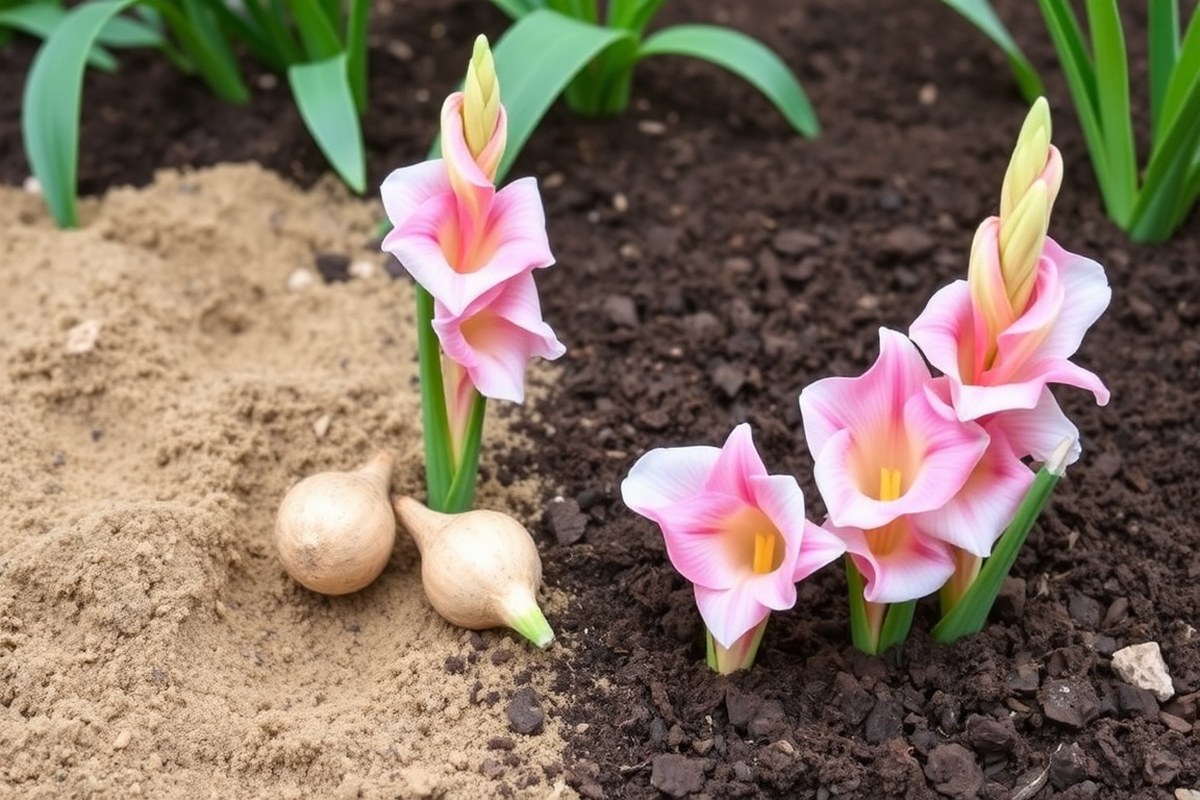
Soil type affects how deep you plant gladiolus corms. Clay, sandy, and loam soils need different depths for planting. This helps avoid rotting or drying out.
Adjust depth based on your soil type. Preparing soil properly helps corms grow strong roots and stay healthy.
Planting in Clay Soil
Clay soil holds water longer, which can cause corms to rot if planted too deep. Plant gladiolus about 4 to 5 inches deep to avoid excess moisture around the corms. Raised beds work best to improve drainage and keep soil loose.
Loosen clay soil about 12 inches deep before planting. Add organic matter like compost. This helps water flow and root growth.
This improves air flow and water movement, reducing the risk of soggy roots. Raised beds boost drainage and keep the planting area warmer.
Spread out corms in raised beds to prevent water logging in heavy clay soils.
Adjusting Depth for Sandy Soil
Sandy soil drains quickly and warms up faster in spring. Plant gladiolus corms slightly deeper here, about 6 to 7 inches, to keep roots moist longer. This helps prevent the corms from drying out between waterings.
Since sandy soil is loose, a deeper planting also supports the stem better. Keep soil moist without overwatering, sandy soils need more frequent watering than clay or loam. Mulch can help retain soil moisture.
Soil Preparation and Amendments
Good soil prep gives gladiolus corms the best start. Measure soil depth before you plant. Loosen soil 6 to 12 inches deep.
The exact depth depends on your soil type. This allows roots to expand without resistance.
Add organic matter such as compost or aged manure to improve soil texture and fertility. For clay soil, this breaks up heavy clumps.
For sandy soil, it helps hold moisture better. Avoid over-amending or soil can become uneven.
- Test soil drainage by digging a hole and filling with water
- Add compost to increase nutrients and moisture retention
- Loosen soil deeply to allow root growth
- Build raised beds if soil stays soggy or drains poorly
- Remove rocks or debris that block root expansion
- Use mulch to keep moisture consistent after planting
Well-prepared soil lets you plant corms at the right depth without worry. Roots will grow steadily and gladiolus will bloom on time.
Spacing Gladiolus: Depth and Distance for Best Growth and Blooms
Plant gladiolus corms 6 to 8 inches apart for best air flow and blooming. Closer spacing than 6 inches can hurt airflow and invite disease. Space them wider, up to 10 inches, if you want bigger blooms and easier harvesting.
Planting distance does not change the depth much. Gladiolus corms need planting 4 to 6 inches deep. This covers roots well.
It also lets shoots grow above the soil. This depth protects the corms from weather and keeps them stable while growing.
Here’s a quick guide for planting gladiolus with the right depth and spacing:
| Planting Purpose | Spacing | Depth |
|---|---|---|
| Cut flowers | 8 to 10 inches | 4 to 6 inches |
| Garden display | 6 to 8 inches | 4 to 6 inches |
| Containers | 4 to 6 inches | 4 to 6 inches |
Clusters spaced 6 inches apart offer vibrant summer color in flower beds. Give wider spacing when cutting flowers often. This lets you harvest without harm.
Neighbors stay healthy and strong. For pots, keep bulbs 4 to 6 inches apart with deep soil for roots. Consistent watering also matters here.
Dig holes 4 to 6 inches deep for proper planting. Space corms evenly in each hole. This helps plants grow well.
Avoid planting dwarf varieties too deep to prevent stunted growth. Planting gladiolus too shallow makes them weak.
They become more likely to get pests. Depth and spacing create healthy plants that bloom strong and hold up for cutting.
Step-by-Step Planting Instructions for Correct Gladiolus Depth
Plant gladiolus corms by digging holes 4 to 6 inches deep. Place each corm upright with the pointed side facing up. Cover with soil, water gently, and mulch to keep moisture.
Preparing the Soil and Digging Holes
Start by loosening the soil with a garden fork or trowel. Gladiolus need well-drained soil to avoid rotting. Dig straight holes or a shallow trench 4 to 6 inches deep.
This depth protects corms from frost and supports tall flower spikes. Avoid holes that are too shallow, as corms might dry out or fall over. Make sure the bottom of the hole is soft enough for the corm to sit evenly.
Planting the Corm at Correct Depth and Orientation
Place the corm in the hole with the pointy end facing up. The pointed side will grow shoots, so orientation matters. The flat base should rest on the bottom of the hole.
Planting around 5 inches deep suits most corm sizes, about 1 to 2 inches tall. Deeper planting keeps stems steady and protects from hot weather. If you feel the corm is planted too deep, dig it up carefully and replant it shallower.
Covering, Watering, and Mulching
Cover the corm with soil gently, pressing it lightly to remove air pockets. Water the area well but do not soak it. Keep the soil moist to help roots establish but avoid standing water.
Add a thin layer of mulch to hold soil moisture and reduce weeds. Mulch also keeps temperature stable around the corms. Check the soil regularly, especially during dry spells, watering as needed.
- Loosen soil and dig 4 to 6 inches deep hole or trench.
- Place the gladiolus corm pointy end facing up in the hole.
- Make sure the corm base rests flat on the soil bottom.
- Cover corm with soil carefully, pressing gently to remove air pockets.
- Water the soil thoroughly but avoid waterlogging it.
- Apply a light mulch layer to keep soil moist and cool.
- Check moisture regularly, watering during dry periods as needed.
How Planting Depth Affects Gladiolus Growth, Stability, and Blooming
Planting gladiolus too shallow often results in weak stems that flop over. Shallow roots can’t anchor the tall flower spikes well, so staking becomes necessary. Planting at the right depth helps stems grow strong.
Strong stems might need little or no staking. This keeps your plants sturdy and healthy.
Deeper planting helps support stem stability by securing the corm firmly in the soil. Usually, planting gladiolus corms 4 to 6 inches deep does the job. The deeper soil layers keep the roots cool and moist, encouraging better growth and sturdier stems.
Blooms take longer if you plant too deep. Shoots need more time to reach the surface. This delays flower growth noticeably.
Too shallow planting can cause rapid but weaker growth with shorter flowering periods. Staggering planting times every two weeks can also stretch blooming from mid to late summer.
Wrong planting depth also risks poor plant health. Too much wet soil around deep corms can cause root rot. This might stunt the plant’s growth.
Shallow planting lets corms feel temperature swings. It can dry them out and weaken plants. This hurts how well the plants grow and bloom.
Always plant gladiolus corms 4 to 6 inches deep. This avoids weak stems and uneven flowers. Keep the depth steady for best growth.
Good stem strength reduces the need for extra care like staking or frequent support. Push the corm down with the pointy root facing down. Cover it firmly with soil to hold it tight.
This helps the plant grow well. Check soil drainage; soggy soil at planting depth means root rot risk.
Bloom timing depends on depth and planting schedule. Direct sun and well-drained soil help flowers open on time and last longer.
Gladiolus planted too deep bloom later. Their flowering can be shorter due to delayed shoot emergence.
Adjusting Depth for Containers, Raised Beds, and Cold Climates
Plant gladiolus bulbs 4 to 6 inches deep in containers and raised beds. In cold climates, adding extra depth helps protect them from frost. Late season planting may need deeper planting to shield corms from cold spells.
Planting Depth in Containers
Containers need good drainage and enough soil for roots to grow. Plant gladiolus bulbs about 4 inches deep in containers to give roots room to spread. Dwarf gladiolus varieties suit containers better.
They have smaller corms. They need less space to grow well.
Choose a pot at least 12 inches deep and fill it with loose, well-draining soil. Place the bulb flat side down, then cover with soil and water gently. Keep containers in a spot with good sunlight and avoid letting the soil dry out.
Depth Recommendations for Raised Beds
Raised beds allow better drainage, which gladiolus bulbs need to avoid rot. Plant bulbs 5 to 6 inches deep in raised beds. This helps bulbs stay stable.
Strong stems grow better this way. This depth helps keep the bulbs cool and moist, ideal for flowering.
Build raised beds with well-draining soil. Add organic matter like compost to improve texture.
It helps the soil hold moisture yet drain excess water. Using raised rows within the bed can prevent water pooling near the bulbs.
Extra Depth for Frost Protection
In frost-prone zones, plant gladiolus deeper. Go about 6 to 7 inches down. This protects them from cold.
The extra soil above the bulb acts as insulation. It protects corms from freezing temperatures during early spring or late fall.
Lift and store corms indoors before the first hard frost hits. Store them in a cool, dry place away from freezing. For late season, plant corms 6 inches deep or more.
This shields them from cold snaps. It keeps them safer.
- Use well-draining soil to prevent waterlogged roots and rot
- Choose dwarf varieties in containers for easy care and better fit
- Plant 4 inches deep in containers, 5-6 inches in raised beds
- Increase depth to 6-7 inches in cold climates for frost protection
- Store corms indoors in freezing zones during winter
- Water bulbs lightly after planting and keep soil moist
- Plant in spring after danger of heavy frost has passed for best results
Best Practices for Watering, Mulching, and Aftercare Post-Planting
Watering gladiolus correctly after planting helps roots grow deep and strong. The soil should stay moist but not soggy, as too much water can cause rot. Water thoroughly once or twice a week, depending on rainfall and soil type.
Mulch around the plants keeps the soil cool and retains moisture. A 2-inch layer of organic mulch like straw or shredded leaves works well. Mulch also lowers weed growth, which saves water and prevents competition for nutrients.
Planting depth affects how well gladiolus resists diseases and pests. When planted too shallow, corms may dry out or get damaged by insects. Good soil preparation with compost or aged manure supports healthy roots and helps prevent disease.
- Water the soil to about 6 inches deep to reach roots.
- Apply 2 inches of organic mulch around each plant.
- Add compost or manure before planting for better soil fertility.
- Check soil moisture regularly, especially in sandy soils.
- Support tall varieties with stakes installed at planting time.
- Hill soil around 6-inch shoots to protect stems from wind.
Sandy soil drains water quickly. You need to water deeply. This helps plants reach the moisture they need.
Applying mulch helps keep water where it’s needed most. Adding nutrients through organic material before planting improves root health and overall growth.
Aftercare includes removing weeds and monitoring for pests. Shallow planting can invite problems as corms are less protected underground. Keeping soil slightly moist and mulched reduces disease risk and encourages gladiolus to flourish.
Common Gladiolus Planting Mistakes Related to Depth and How to Fix Them
Planting gladiolus bulbs too shallow is a common error. They may sprout early but often fall over or dry out in hot sun.
Bulbs left close to the surface struggle to support the tall flower spikes you expect. Signs include weak stems and paler leaves, often seen by mid-season.
Planting too deep creates other problems. The gladiolus may take longer to emerge or fail to flower at all.
The soil above can stay overly cool or moist, causing bulbs to rot. You’ll notice slow or no growth and possibly missing plants where you set bulbs.
When your gladiolus bulbs sit too shallow or deep, fix them fast. Carefully dig around the bulbs without damaging roots. Take them out carefully.
Replant them at the right depth. This depth is usually 4 to 6 inches, depending on their size. This adjustment should happen early in the growing season, as late fixes can stunt bloom development.
- Check if bulbs sit firmly in soil, not exposed or too sunken.
- Use a ruler or trowel to measure 4-6 inches depth depending on bulb size.
- Replant bulbs promptly, covering them firmly to avoid drying out.
- Water immediately after replanting to settle soil and encourage roots.
- Avoid replanting once spikes start to grow; wait until the next season.
Too shallow planting can cause bulbs to dry out or blow over in wind. Plant at least 4 inches deep to prevent this.
Fixing depth mistakes takes effort but saves your blooms. Make this a planting standard to avoid weak gladiolus and poor flowers. Checking depth with each batch of bulbs will help you skip these common slip-ups entirely.
Step-by-Step Action Plan for Planting Gladiolus at the Right Depth
Follow these easy steps to plant gladiolus corms at the correct depth. You will see strong, stable plants with great blooms.
- Before planting: Choose corms sized 1 to 2 inches and pick loose, well-draining soil. Healthy corms and soil are the first signs of success.
- Planting day: Dig holes 4 to 6 inches deep, adjusting for smaller or larger corms. The hole depth confirms the right planting depth.
- Planting the corm: Set each corm with the pointed end facing up. This ensures shoots will grow straight up.
- Spacing: Put corms 6 to 8 inches apart for good air flow and room to grow. Proper space shows in fewer diseases and better blooms.
- Right after planting: Water the soil lightly to settle it around each corm. Soil that stays moist but not soggy helps roots start well.
- First two weeks: Add a 2-inch layer of mulch to keep soil moist and prevent weeds. Mulch that stays in place means less work for you later.
- Weekly care: Check soil moisture and water if the top 1 inch feels dry. Keeping soil evenly moist gives your gladiolus a strong start.
- Mid-season check: Look for sturdy, upright shoots about 6 inches tall. This shows your planting depth was just right.
Frequently Asked Questions
How Deep Should I Plant Gladiolus Corms for the Best Blooms?
Plant gladiolus corms 3 to 6 inches deep based on their size. Bigger corms need about 6 inches of soil on top for stability.
Does Soil Type Change How Deep I Plant Gladiolus?
Yes, sandy soils may require deeper planting to keep moisture. Clay soils hold water longer, so shallower planting helps avoid rot.
How Far Apart Should Gladiolus Corms Be Planted?
Space gladiolus bulbs 6 to 8 inches apart for growth and air flow. For rows, leave 20 to 36 inches for easier harvesting.
Can I Plant Gladiolus Corms in Containers or Raised Beds?
Yes, plant at similar depths but use well-draining mix and watch moisture levels. Raised beds may dry faster, so adjust watering.
What Is the Best Time to Plant Gladiolus Corms Outdoors?
Plant about two weeks before your last frost date in spring. This helps corms establish before hot summer weather.
How Does Planting Depth Affect Gladiolus Flower Height and Stability?
Deeper planting gives gladiolus stalks more support and steady moisture. Shallower planting can lead to weaker stems that fall over.
Final Thoughts
Plant gladiolus corms about 4-6 inches deep to grow tall, stable stems with big blooms. Adjust depth with corm size and soil type for best results. Start digging now and enjoy bright flowers this season.