How to Germinate Rosemary Seeds: Simple Steps for Fast, Reliable Growth
Rosemary seeds take time to sprout, so start by planting them in warm soil. Keep the soil temperature between 65 and 70 degrees Fahrenheit for better sprouting.
Expect the first shoots to appear in two to three weeks. During this time, keep the soil moist and warm.
Soak rosemary seeds in warm water for 24 hours before planting. This softens the tough outer shell and helps them sprout more easily. Then plant the seeds in well-draining soil that stays moist but not soggy.
Don’t disturb the seeds while they start, as they are fragile and slow to sprout. Keep the soil temperature steady around 70 degrees Fahrenheit to speed up germination. Place the seed tray in a warm, bright spot but avoid direct sunlight for the best results.
Key Takeaways
- Soak rosemary seeds in warm water for 24 hours before planting.
- Keep soil temperature steady between 65 and 70 degrees Fahrenheit.
- Plant seeds in moist, well-draining soil to avoid rotting early sprouts.
- Don’t disturb seeds once planted to prevent damaging slow germinators.
- Place seeds in bright, indirect light to promote steady growth.
- Expect rosemary seeds to take at least two weeks to sprout.
How to Germinate Rosemary Seeds Step-by-Step

Germinating rosemary seeds takes patience and careful attention to detail. These tiny seeds need just the right soil, depth, warmth, and moisture to sprout. Follow these steps to get your rosemary seeds growing successfully indoors or outdoors.
First, soak your rosemary seeds in lukewarm water for about 12 hours before planting. This softens the seed coat, helping to kick-start germination. Use a seed-starting mix that drains well.
Rosemary seeds do not like soggy soil. Good drainage helps prevent too much moisture.
- Soak the seeds. Place the rosemary seeds in a small bowl with room-temperature water. Let them soak for 12 hours, then drain and pat dry before planting.
- Prepare the soil. Use a light, well-draining seed-starting mix. Fill your seed tray or pots with the mix and moisten it evenly, but avoid sogginess.
- Sow the seeds shallowly. Sprinkle seeds on the soil surface and press them lightly. Cover them with about 1/8 to 1/4 inch (0.3 to 0.6 cm) of seed-starting mix or vermiculite.
- Keep the soil warm. Place the containers in a warm spot at 65-70°F (18-21°C). This temperature range optimizes germination speed and success.
- Maintain consistent moisture. Mist the soil surface gently or use a spray bottle daily. Avoid overwatering, which can drown the seeds.
- Provide indirect light. Rosemary seeds don’t need strong light to germinate. But they do need some illumination to grow healthy seedlings.
- Be patient. Expect germination to take between two and four weeks. Resist disturbing the soil during this period to avoid harming delicate sprouts.
- Thin seedlings.Once tiny leaves show, thin seedlings by snipping weaker ones. Leave room for stronger plants. This helps them grow better.
These steps ensure rosemary seeds have a good chance to sprout and grow. Soaking helps improve germination rates slightly. Shallow planting and good drainage prevent seed rot.
The soil must stay moist but never soggy. Maintaining warmth steady at about 70°F speeds up the process.
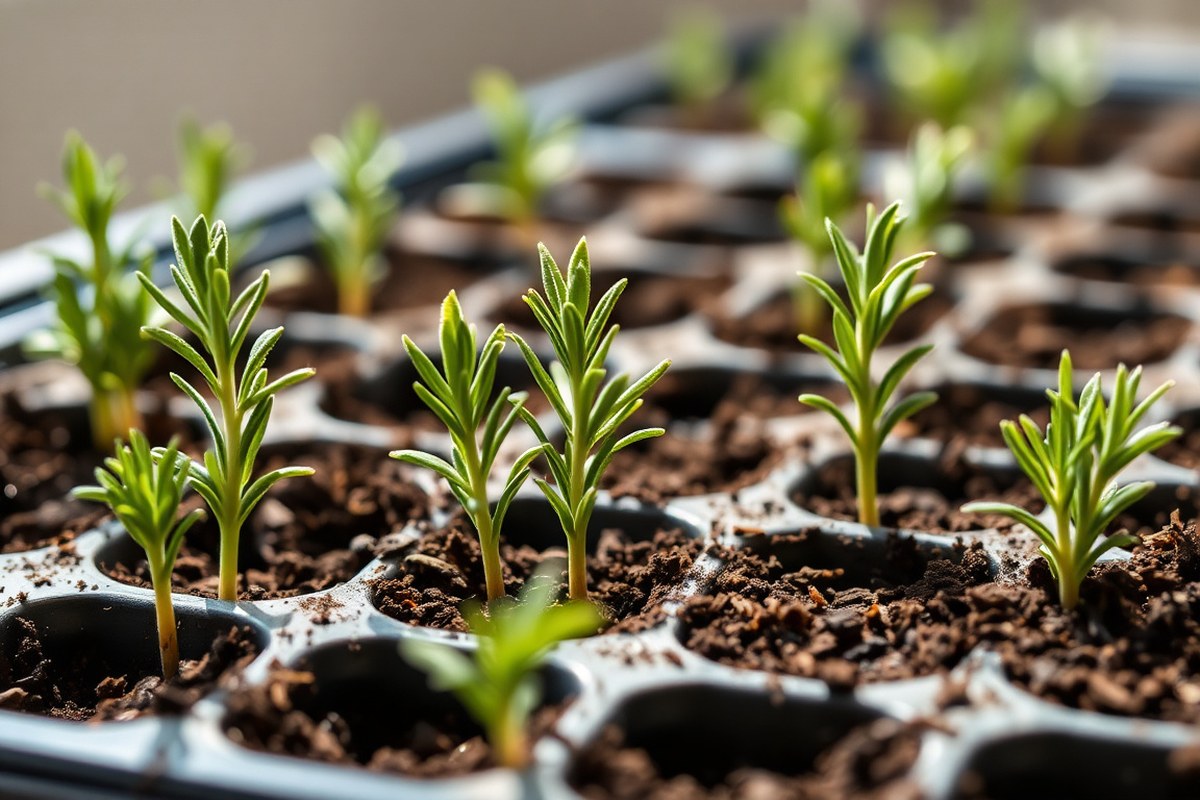
Seedlings that appear after about two weeks usually look like tiny green shoots. Check your soil drainage and temperature when seeds don’t sprout. These factors affect seed germination success.
Avoid burying seeds too deep, as they rely on light to trigger sprouting. You’ll find growing rosemary from seed slow but rewarding once they begin growing strong.
What Conditions Help Rosemary Seeds Germinate Fast?

Rosemary seeds germinate best at a steady temperature between 65 and 70°F. Keeping soil around 70 to 75°F speeds up sprouting, especially in cooler rooms. Use a heat mat under your seed trays to keep soil warm.
It warms the soil without drying it out. This helps seeds start growing.
Light is key for rosemary seeds since they need brightness to start growing. Place the seed trays where they get indirect sunlight for about 14 hours a day.
Avoid burying the seeds deeply. Press them lightly into the soil surface to keep them in the light.
Maintain moisture with consistent but gentle watering. Use a spray bottle to mist the seed-starting mix lightly every day. This prevents waterlogging, which rosemary hates, and keeps the tiny seeds moist until they sprout.
Humid air around the seeds can help speed germination and keep the soil from drying. Cover the seed tray with a dome or plastic wrap to hold humidity near 70, 80%. Remove the cover once you see seedlings pop up to avoid mold.
Keep rosemary seed soil moist but never soggy; too much water kills seeds.
Should You Soak or Stratify Rosemary Seeds Before Planting?
Soaking or cold stratifying rosemary seeds before planting improves germination rates. Soaking softens the seed coat, while cold stratification mimics winter conditions. You can also plant seeds directly without pre-treatment, but results may vary.
Soaking Rosemary Seeds
Soaking rosemary seeds in warm water for 24 hours helps soften their hard outer shell. This allows moisture to penetrate, promoting quicker sprouting. Use clean water at about 70°F (21°C) and keep the seeds submerged.
After 24 hours, drain the water and plant the seeds immediately. Avoid soaking for longer than a day to prevent seed rot. This simple soak step can boost germination in most climates.
Cold Stratification Method
Cold stratification means chilling the seeds in moist conditions for about 4 weeks. It breaks seed dormancy by mimicking winter’s cold, moist soil. This process works especially well in cold or variable climates.
To cold stratify rosemary seeds, place them on a damp paper towel inside a zip-top bag. Store the bag in your refrigerator at 35, 41°F (2, 5°C) for 4 weeks. Check periodically and keep the towel moist but not soggy.
After stratification, plant the seeds immediately. This step increases germination odds, especially when growing rosemary indoors in mid-winter.
No Pre-Treatment Option
Planting rosemary seeds without soaking or stratification is possible but less reliable. The seeds may take longer, usually 2 to 4 weeks, to start germinating. Expect a lower germination rate, so sow extra seeds.
You can skip pre-treatment if you have fresh, high-quality seeds and summer temperatures. Direct sowing outdoors works best in warm, steady climates where soil doesn’t stay wet. Here is a practical comparison of these pre-treatment methods:
| Pre-Treatment | Time Needed | Temperature | Benefits | Best Climate |
|---|---|---|---|---|
| Soaking | 24 hours | ~70°F (21°C) | Softens seed coat, faster germination | Any, easy step for all gardeners |
| Cold Stratification | 4 weeks | 35, 41°F (2, 5°C) | Breaks dormancy, higher germination rates | Cold or variable winters |
| No Pre-Treatment | None | Depends on outdoor conditions | Quick start, but lower success | Warm, stable summer climates |
Soaking is quick and works well almost everywhere as a start. Cold stratification takes longer but helps in chilly zones. No treatment saves time but might need more patience and extra seeds.
When and Where to Start Rosemary Seeds Indoors or Outdoors
Start sowing rosemary seeds indoors 10 to 12 weeks before frost ends. This lets seedlings grow strong before planting outside. In cooler zones 5 to 7, sow seeds indoors 6 to 8 weeks before last frost.
Place seed trays in a bright spot with 6 to 8 hours of sunlight daily. A south-facing window or under a LED grow light works best. This light helps rosemary develop into a healthy, bushy plant indoors.
Direct sowing outdoors can work well in warmer zones 8 to 10. But wait until after the last frost date. Keep soil temperature above 60°F (16°C) for best seed growth.
Night temperature should stay over 50°F (10°C). This helps rosemary seeds sprout more quickly. Rosemary seeds take 15 to 25 days to germinate, so timing matters.
- Start seeds indoors 10, 12 weeks before last frost for best growth
- Use a south-facing window or grow light for 6, 8 hours of direct light
- In cool zones, transplant outdoors after night temps exceed 50°F
- Direct sow outdoors 1, 2 weeks after last frost in warm zones
- Keep soil at least 60°F for outdoor seed germination
- Indoor seeds germinate in 15, 25 days, speed varies by warmth
Growing rosemary indoors first lets you control temperature and light easily. It reduces risk from pests and cold snaps during early growth. However, it takes more effort and space than direct sowing.
Direct sowing outdoors skips transplant shock and lessens early care needs. But seeds may struggle if the soil is too cold or wet. In places with late frosts, starting indoors is safer to avoid losing seedlings.
How to Care for Rosemary Seedlings After Germination
Rosemary seedlings need plenty of light to grow well. Aim for 6 to 8 hours of direct sunlight daily.
A south-facing window works well in summer. But artificial full-spectrum lights can help in darker months.
Keep soil moist but not soaked during early growth. Water lightly every two to three days or when the soil surface feels dry. Overwatering encourages fungal diseases like damping off, so good drainage is essential.
Use well-draining soil to stop water standing at the roots. Let the top half inch dry out before watering again. Yellow leaves or white mold on seedlings mean water less and air more.
When seedlings have 2 or 3 sets of true leaves, start feeding them. Use a diluted balanced liquid fertilizer for best results.
Feed them every two weeks at half strength. Avoid heavy feeding early on, which may burn tender roots.
Maintain indoor temperatures between 65°F and 75°F to encourage steady growth. Cooler or fluctuating temperatures stress seedlings and slow growth. Avoid drafts and sudden temperature drops near your plants.
Spacing is important to avoid disease and ensure even growth. Thin seedlings to 6 inches apart once they reach an inch tall. Crowding can cause stunted growth or crispy leaf edges.
Keep seedlings spaced and never let soil stay damp after watering to prevent damping off.
How to Transplant Rosemary Seedlings Successfully
Transplant rosemary seedlings after they have grown strong leaves and roots. Wait for the risk of frost to pass and the soil to warm. Choose a sunny spot for best growth and space plants well apart.
Signs Seedlings Are Ready
Look for seedlings with several pairs of sturdy leaves. Roots should fill the seed tray or small pot showing healthy growth. Seedlings often need 4 to 6 weeks to reach this stage.
Seedlings that seem weak or leggy need more time to grow strong. Also, ensure outdoor temperatures stay above 50°F to avoid stress. This timing helps plants adjust and thrive when moved.
Preparing Seedlings for Transplant
Before moving seedlings, water them lightly to reduce stress. Harden off seedlings by gradually exposing them to outdoor conditions over a week. This step prevents shock from direct sun and wind.
Choose pots or garden spots with well-drained soil and full sun exposure. Use a potting mix with added compost or sand for proper drainage. Avoid heavy or clay soils that hold water.
Transplanting Step-by-Step
Follow these steps to move your rosemary seedlings safely to a new home:
- Water seedling roots lightly a few hours before transplanting.
- Create a hole just a bit bigger than the plant’s root ball.
- Gently remove seedlings by squeezing the tray sides or pot bottom.
- Place seedlings carefully in the holes or pots without damaging roots.
- Fill around roots with soil and press gently to remove air pockets.
- Water the seedlings immediately to settle the soil properly.
- Provide partial shade for a few days if the sun is very strong.
Check seedlings daily for signs of dryness or wilting during the first two weeks. Protect seedlings from strong winds and sudden temperature drops.
Recommended Spacing
Rosemary plants grow wide and need plenty of room. Space each plant 12 to 24 inches apart depending on your garden layout.
Closer spacing works for pots or small raised beds. But wider spacing helps prevent disease. Give plants enough room to get sun from all sides for fuller growth.
Common Problems and Mistakes When Germinating Rosemary
Rosemary seeds often fail to germinate because the soil stays too wet. Overwatering causes seeds to rot before they sprout.
To fix this, water just enough to keep the soil moist but not soggy. Let the top layer dry slightly between watering sessions to stop root rot.
Seed rot and mold can also happen if the soil is heavy or compacted. Rosemary prefers loose, light potting mixes without heavy garden soil.
Use a sandy or rocky mix that drains quickly. This helps air reach the seeds and reduces damp spots where mold likes to grow.
Lack of warmth and light slows germination or stops it entirely. Rosemary seeds need temperatures around 70°F (21°C) and good natural or artificial light. Keep the seed tray in a warm, bright spot.
Avoid direct sun that dries the seeds. This helps keep them moist and alive. Too cold soil, below 60°F (16°C), can keep seeds from waking up.
Low germination rates often come from old or improperly stored seeds. Rosemary seeds lose viability fast and don’t last long if kept damp or too warm. Always collect dry seed pods from healthy plants.
Store seeds in an airtight container. Keep them in a cool, dry place. Germination is slow and tricky for rosemary seeds.
Plant at least four times more seeds than needed. This increases your chance of success.
Damping off is a common problem with rosemary seedlings. It’s a fungal disease that kills young plants when conditions are too wet and crowded. Space seeds well to avoid problems.
Use fresh, sterile potting mix for planting. Let the soil dry a bit between watering.
Air circulation also helps. Don’t cover seeds with plastic too tightly unless you lift it daily.
To improve your chances, plant only viable seeds in loose, dry potting mix. Keep the soil warm but not hot, and water carefully.
Watch for mold or soggy patches and adjust watering or airflow right away. Taking these steps can turn a frustrating start into healthy young rosemary plants ready for transplant.
How Different Climates Affect Rosemary Seed Germination Methods
Climate shapes how and when to start rosemary seeds. Cooler zones need indoor seed starting and careful transplant timing.
In warm climates, seeds can tolerate outdoor conditions sooner. Humidity and stratification also adjust your seed-starting approach.
Cold Climate Adjustments
In USDA zones below 7, start rosemary seeds indoors. Soil outside stays too cold for good germination. Use a heating mat if room temperature drops below 70°F to keep seeds warm.
Transplant seedlings outdoors only after the last frost date. This usually means 6 to 8 weeks after starting seeds indoors in spring. The extra warmth prevents shock and slow growth.
Warm Climate Tips
In zones 8 and above, you can sow rosemary seeds outdoors once soil temperature hits 65°F. This often happens early spring. Direct sowing works best in hot, dry Mediterranean-like climates where rosemary thrives naturally.
Transplant seedlings less than 4 inches tall or with several true leaves. Move them outside in the morning or late afternoon for less sun stress. This keeps leaves from wilting when adapting.
Humidity Considerations
Rosemary prefers dry air like its native Mediterranean climate. In humid zones, use containers with excellent drainage to stop root rot. Place seedlings where air flows well to reduce mildew risks.
Use mildew-resistant rosemary varieties if you live in humid or greenhouse settings. These tolerate moisture better and need less pesticide. Water only when soil is nearly dry to replicate dry conditions.
Stratification Recommendations
Rosemary seeds don’t need cold stratification in most conditions. Their germination takes longer, but chilling isn’t necessary. Cold stratification might slow growth rather than help.
Keep seeds warm (around 70°F) with good airflow to avoid mold. Overly wet soil causes seed rot more than lack of chilling. Water lightly and allow drying between watering sessions.
| Cultivar Type | Best Climate | Notes |
|---|---|---|
| Standard culinary rosemary | Hot, dry Mediterranean | Susceptible to root issues in wet soil |
| Hardy ‘Arp’ | Cooler, wetter conditions | Lower stress tolerance, but better wet-weather survival |
| Compact/trailing forms | Containers, good drainage needed | Prone to damage from damp soil |
| Mildew-resistant | Humid or greenhouse | Fewer leaf spot issues |
Use this chart to pick the right rosemary type for your zone. Better-matched plants start easier and need less care. Starting seeds indoors in colder areas means fewer risks of seed damp or frost damage.
Always err on the side of underwatering rosemary seeds. Too much moisture kills them faster than dryness.
Step-by-Step Action Plan to Germinate Rosemary Seeds
Follow these easy steps to start your rosemary seeds indoors and watch them grow well.
- Before you start: Gather fresh rosemary seeds and a seed-starting tray with well-draining soil.
- Day 1: Plant seeds 1/4 inch deep and water gently until moist but not soaked.
- Week 1: Put the tray in a warm spot. Keep it out of direct sunlight. Soil temperature should stay near 70°F.
- Week 2: Keep soil moist by misting daily. Check for seeds that start to sprout.
- Week 3: Once seedlings show two sets of true leaves, thin them by snipping weaker ones.
- After 4 weeks: Feed seedlings with half-strength liquid fertilizer once a week.
- Week 5 or later: Get the seedlings ready to move outside or bigger pots. Do this after the last frost date.
- Ongoing: Harden off seedlings by placing them outdoors for 1, 2 hours daily before full transplant.
Frequently Asked Questions
How Long Does It Take for Rosemary Seeds to Sprout?
Rosemary seeds usually sprout in 14 to 30 days. You must keep the soil warm and moist to help them grow.
Can Rosemary Seeds Germinate Without Light?
No, rosemary seeds need light to start germinating. Don’t bury them deeper than 1/8 inch to ensure they get enough light.
Should I Cover Rosemary Seeds with Plastic When Germinating?
Yes, covering with plastic keeps humidity high and soil moist. Make sure to air it out daily to stop mold growth.
Can Rosemary Seeds Be Frozen for Later Planting?
Freezing rosemary seeds is not recommended because it lowers germination rates. Store seeds in a cool, dry place instead.
Do You Need to Use Seed-Starting Mix for Rosemary Seeds?
Using a seed-starting mix is best because it drains well and is free of pests. Avoid heavy garden soil that holds too much water.
Is It Better to Use Fresh Rosemary Seeds or Old Ones?
Fresh seeds usually germinate better and faster than old ones. If your seeds are over two years old, expect slower growth or lower success.
Key Points to Remember
Growing rosemary from seeds takes patience but pays off with tasty herbs. Start your seeds indoors early to get the best results. Check your seedlings daily and enjoy watching them grow into healthy plants.