Is It Rhubarb or a Weed? Clear Identification and Safe Removal Guide
Is it rhubarb or a weed? The best way to tell is by checking the leaves and stems closely. Rhubarb has large, thick stalks with bright colors, unlike most common garden weeds.
The stalks usually grow 12 to 18 inches tall before harvest. They come in red, pink, or green colors.
Weeds that look like rhubarb often have thinner, taller stalks or different leaf shapes. Burdock, for example, can grow up to 6 feet tall and has smaller leaves.
Watch out for plants with sap that irritates your skin. Giant Hogweed has very large leaves like rhubarb.
Start by comparing stem colors and textures when you spot a rhubarb-like plant. Also, check the leaf veins and size.
Rhubarb leaves have distinct patterns and are usually wider than most look-alikes. This simple step saves time and prevents confusing safe edible plants with harmful weeds.
Key Takeaways
- Rhubarb stalks are thick, red or green, and 12-18 inches long at harvest.
- Burdock grows taller than rhubarb, reaching up to 6 feet with smaller leaves.
- Giant Hogweed can be dangerous; avoid plants with sap that irritates skin.
- Look for broad rhubarb leaves with clear vein patterns to spot it correctly.
- Check stem texture: rhubarb stalks are smooth, while weeds often feel rough.
- Compare stalk height and leaf size before deciding if it’s rhubarb or a weed.
How to Tell Rhubarb from Common Weeds
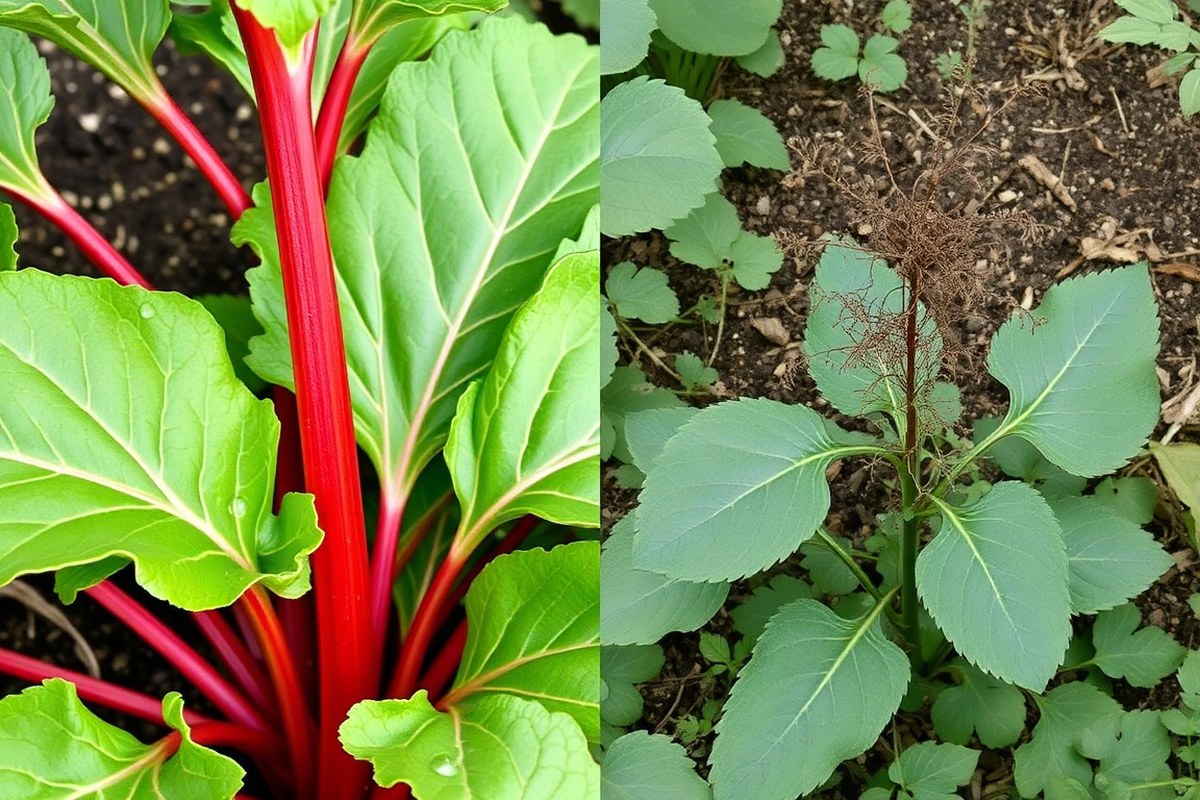
Look for large, heart-shaped leaves with thick, reddish-green stalks to confirm rhubarb. Rhubarb leaves can grow very wide, even up to 2 feet or more. The stalks feel thick and fleshy, unlike most weeds.
Some common weeds that mimic rhubarb include burdock, garden sorrel, curly dock, and broadleaf plantain. Burdock is often called wild rhubarb. It grows much taller.
It does not have rhubarb’s red and white flowers. Absence of these flowers during flowering season signals a weed.
Check flowers to identify rhubarb confidently. Real rhubarb has red and white flower clusters during its bloom.
Weeds like burdock do not produce these flowers. This difference helps especially in spring and early summer when plants flower.
| Feature | Rhubarb | Garden Sorrel | Curly Dock | Broadleaf Plantain |
|---|---|---|---|---|
| Leaf Shape | Large, heart-shaped | Arrow-shaped | Long with wavy edges | Broad oval |
| Stem Color | Bright red to pink | Green | Reddish-brown | Green |
| Growth Habit | Upright, tall | Low-growing | Upright, spindly | Flat, close to ground |
| Vein Pattern | Branching, palmate | Simple veins | Central midrib | Parallel veins |
| Stem Texture | Thick and succulent | Thin, fibrous | Thin, fibrous | Flat, flexible |
Use the table above as a quick guide. Start by feeling the stalk, rhubarb is thick and juicy.
Look closely at the leaf shape and veins next. The stem color offers a quick clue.
Observing all stages matters. Small or young plants may lack flowers, making stem and leaf checks critical.
During flower time, presence or absence of red-white flowers confirms what you see. This helps avoid pulling out your rhubarb by mistake.
Recognizing rhubarb early avoids confusion and saves safe and tasty stalks. When uncertain, mark the plant and watch for flowers or growth changes before removal. This tracking adds a few weeks but prevents costly garden mistakes.
Distinct Stem Colors and Textures Between Rhubarb and Look-Alikes
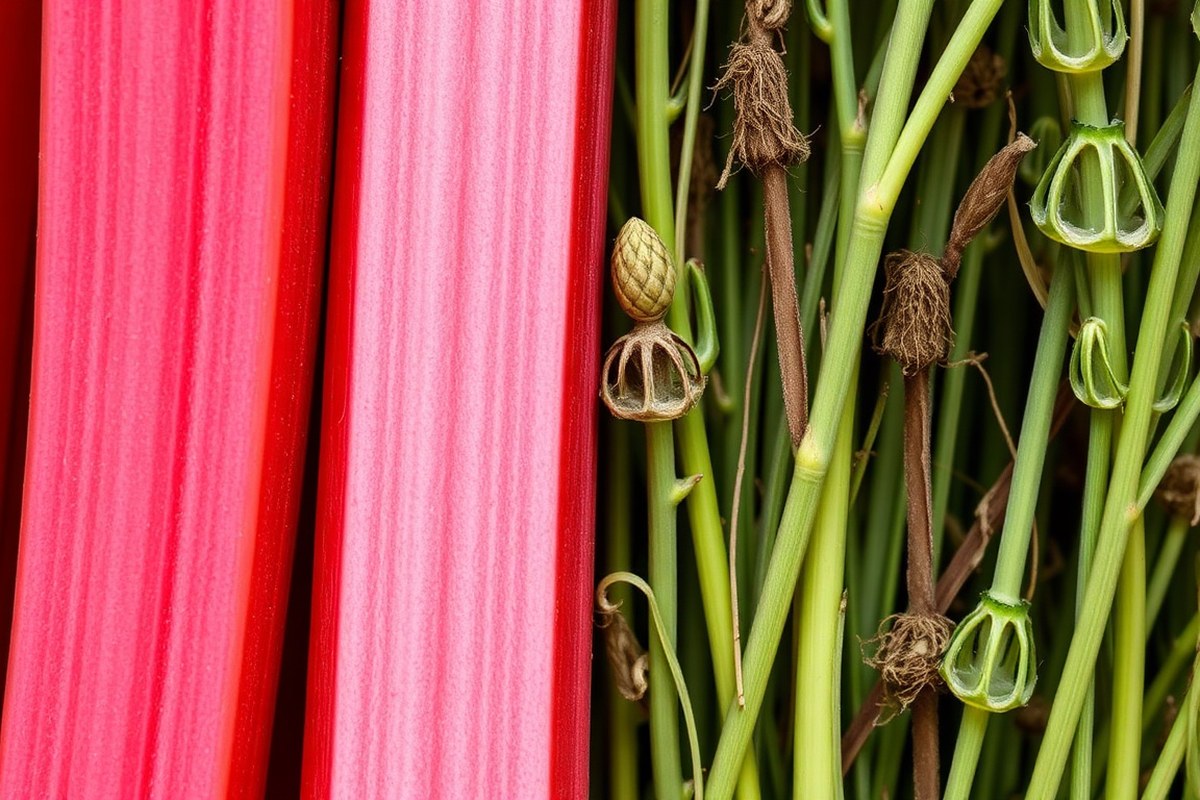
Rhubarb stems usually show a clear red or green color. The red stems often have streaks or patches of green mixed in. Unlike rhubarb, burdock and pokeweed stems don’t have red tint.
Their stems lean more toward green or brown. You can use this to tell them apart easily.
The texture of rhubarb stalks feels solid and crunchy when you press them. You can notice tiny ridges along the stem, which are smooth but firm. Burdock stems are hollow inside.
They feel lighter and less firm when sliced. This helps you spot burdock quickly.
Some wild plants called giant rhubarb, like burdock, have prickly stems that look jagged and upright. Their leaves tend to be rust-colored or less curly. Rhubarb’s leaves have deep veins and curl more.
This difference shows right away. You should handle pokeweed carefully, as its stems and leaves can be toxic.
The stem colors and textures offer a reliable method to identify rhubarb in your garden. Try snapping off a stalk around 12 to 18 inches long. It should feel crisp and solid, showing red or green shades.
A hollow stalk or one without red tint is usually a weed. You can check this quickly before pulling plants.
Be careful when touching unknown plants; some look-alikes like pokeweed can irritate your skin.
Red coloration on rhubarb stems also signals the best time for harvesting. Mature rhubarb stalks show the most vivid red, while weed stems keep duller tones.
Remember that the leaves of rhubarb are toxic even if the stalk is tasty. So only use this part.
Knowing these stem differences helps you protect your rhubarb patch from weeds competing for nutrients. Checking stem color and firmness only takes a few seconds. Doing this saves time and stops you from removing rhubarb by mistake.
Misidentifying stalks by relying solely on leaf shape can cause mistakes. So focus on these stem clues first.
Leaf Vein Patterns and Shapes in Rhubarb and Its Mimics
Rhubarb leaves show a palmate vein pattern, which helps you spot it among weeds. Leaf shape matters when telling rhubarb apart from weeds. Veins on the leaf also help you spot the difference.
These features help you avoid confusing rhubarb with burdock or curly dock. Checking these details keeps you from mixing edible stalks with toxic look-alikes.
Palmate Vein Pattern of Rhubarb
Rhubarb leaves have big lobes with veins spreading from a single point at the base. These veins fan out like fingers spreading from one palm. This palmate pattern stands out compared to parallel or pinnate veins in other plants.
The veins on rhubarb leaves are thick and clear. They give the leaf a sturdy, fleshy look. This vein style supports the large, broad leaves that can grow 2 to 4 feet wide.
Leaf Shape Differences in Common Mimics
Look-alikes like wild rhubarb (burdock) and curly dock often have similar size leaves but different shapes. Burdock leaves are rounder and less lobed.
Curly dock leaves appear narrower and pointed. Swiss chard leaves resemble rhubarb but have a smoother edge and less defined lobes.
Rhubarb leaves have deep, jagged edges. Burdock leaves may seem fuzzier and smaller, about 2 to 4 cm wide.
Curly dock leaves are longer with a wavy edge but lack the broad lobes of rhubarb. Swiss chard tends to have a slimmer, less fuzzy leaf.
Vein Patterns Unique to Toxic Look-Alikes
Some weeds with veins similar to rhubarb have parallel or pinnate vein patterns. Curly dock often shows pinnate veins, with one main vein and smaller ones running off sideways. This vein arrangement differs from rhubarb’s palmate style.
Leaves from toxic look-alikes may also feel fibrous or stringy, unlike the fleshy rhubarb leaf. The veins are less prominent and the texture is rougher. These differences help confirm plant identity before any harvesting.
Here is a simple comparison table to spot vein and leaf shape differences:
| Plant | Leaf Shape | Vein Pattern | Leaf Texture |
|---|---|---|---|
| Rhubarb | Large, broad with deep lobes | Palmate, veins spread from one point | Thick, fleshy |
| Wild Rhubarb (Burdock) | Rounder, less lobed | Pinnate | Fuzzy, smaller (2-4 cm) |
| Curly Dock | Longer, wavy edges | Pinnate | Fibrous, stringy |
| Swiss Chard | Smooth edge, less lobed | Pinnate | Smooth, fleshy |
Notice how the rhubarb’s palmate veins and leaf lobes differ clearly from these weeds. This visual method is reliable where stems or smells might confuse you. Check both vein pattern and leaf shape to avoid picking the wrong plant.
Identifying Dangerous Rhubarb Look-Alikes to Avoid
Some toxic plants look like rhubarb, so spotting the difference keeps you safe. Giant hogweed is one bad example. It has huge leaves and purple blotches on thick stems.
Its sap causes severe skin burns and blisters, especially under sunlight. Its size and purple spots help you recognize it, often growing near roadsides and waste areas.
Poison hemlock is another dangerous plant that can be confused with rhubarb. It has smooth stems with purple splotches and blooms small white flowers in clusters. This plant thrives in fields and disturbed soil.
Consuming any part of poison hemlock causes life-threatening poisoning. So never touch or taste it.
Water hemlock is very toxic with tuberous roots hidden underground. It prefers marshy spots or stream banks.
Unlike rhubarb, its roots contain poison that causes rapid central nervous system failure. Avoid digging or disturbing damp soil patches near water just to be safe.
Visual checks help you avoid these risks. Look for large leaves with purple blotches on thick stems for giant hogweed. Notice smooth stems with purple markings for poison hemlock.
Check marshy ground for plants with swollen underground roots like water hemlock. Never handle unknown plants without gloves and wash skin immediately if you do.
Wear thick gloves and long sleeves when clearing plants near your rhubarb patch. Dispose of unwanted plants in sealed bags to prevent spreading toxins. Keep children and pets well away from suspicious plants.
Wash the area right away if your skin feels irritated. Get medical advice if symptoms continue.
Always double-check before eating or harvesting rhubarb. Recognizing these toxic look-alikes helps avoid dangerous mistakes in your garden. Spend time identifying harmful plants first.
Removing them stops costly medical treatments. It also keeps your outdoor space safe.
Step-by-Step: How to Safely Remove Rhubarb-Like Weeds
Removing weeds that look like rhubarb requires careful digging and the right tools. Use garden forks and hand tools to avoid harming your rhubarb patch. Follow specific steps to uproot roots deeply and stop regrowth effectively.
Using Garden Forks and Hand Tools
Garden forks and hand trowels are your best choices for safe removal. The garden fork lifts soil gently, keeping roots intact and preventing damage. A hand trowel helps you dig closely around the plant to follow roots precisely.
Using these tools protects your rhubarb while getting rid of weeds. The right tool depends on the root size and soil conditions.
For large roots or compact soil, a garden fork works best. For tight spots or small roots, choose a hand trowel.
Proper Root Extraction Techniques
Get as much of the root as possible to stop the weed from growing back. Start by digging a four-foot radius around the rhubarb to catch all connected roots. For stubborn deep taproots, use a root slayer tool.
It helps remove the entire root without breaking it. This tool makes digging easier and cleaner.
Careful, slow digging works better than pulling weeds hastily. Pulling can leave root fragments that regrow quickly. Try this step-by-step plan for thorough root removal:
- Use a garden fork to loosen soil around the weed’s base.
- Switch to a hand trowel for detailed digging close to rhubarb stems.
- Insert a root slayer straight down beside deep taproots to lift them.
- Clear all soil around the roots, exposing as much as possible.
- Gently lift the entire weed root without snapping it.
- Check the hole carefully and remove any leftover root pieces.
- Dispose of the weed and roots away from your garden.
Stop digging before you damage rhubarb stems, especially since they’re hollow.
Applying Mulch and Herbicides Safely
After root removal, apply a thick mulch layer to block weed regrowth. Mulch also protects rhubarb roots and keeps roots cool and moist. Organic mulches such as straw or bark work well.
They cost roughly $20 to $40 per cubic yard. These mulches help keep your garden moist and weed-free.
Use herbicides only if mulch and hand removal don’t keep weeds down. Mix water and vinegar for an organic herbicide alternative that’s safe around rhubarb. Always spray on windy days when no rain is forecast to avoid spreading the solution.
Herbicides or vinegar work better after the weed has some leaf growth. You’ll need multiple applications spaced 7 to 10 days apart for best results. Keep chemicals off rhubarb stems to avoid damage, especially its edible parts.
Common Edible Rhubarb Look-Alikes and How to Use Them
Some plants look like rhubarb but are safe to eat and useful in cooking. These edible mimics often belong to different families.
So their flavors and texture can vary. Knowing how to recognize and prepare them lets you enjoy more garden harvests safely.
Burdock is also called Wild Rhubarb. It has big leaves like rhubarb. People mostly use burdock root for its value.
Unlike true rhubarb stalks, burdock leaves are not eaten. But its roots are edible when cooked.
Prepare burdock root by peeling it, then boiling or sautéing until tender. It tastes earthy and slightly sweet, great in soups or stir-fries.
Another look-alike is sorrel, which has elongated leaves and a tangy flavor. Sorrel leaves add sharp freshness to salads, sauces, and soups.
You can use fresh sorrel leaves raw, or cook them briefly to soften the taste. But avoid large quantities due to natural oxalates.
- Burdock root: peel, boil 30-40 minutes, use in soups or stir-fries
- Sorrel leaves: eat raw in salads or cook 3-5 minutes for sauces
- Swiss chard stems: cook like rhubarb stalks, milder flavor
- Lovage stalks: chop finely, cook in soups or stews, celery-like taste
- Rhubarb leaves: do not eat, they contain toxins
Swiss chard stalks look like rhubarb stalks. They taste less tart. You can cook them as a vegetable.
Cut the stalks into pieces then steam or sauté for about 5-7 minutes until tender. The leaves can be used like spinach, while stalks add texture in dishes.
Lovage is another rhubarb look-alike. Its stalks and leaves have a celery-like flavor, which is good in soups and stews. Use fresh lovage stalks chopped like celery, cooking them about 10 minutes to release flavor.
Always avoid eating rhubarb leaves, which contain oxalic acid and toxins. Cooking stalks well removes most acidity and bitterness, making them safe and tasty. Understanding these edible look-alikes adds variety to your kitchen and helps prevent mistakes in the garden.
When to Harvest Rhubarb and How to Store It Safely
Harvest rhubarb stalks when they reach about 10 to 15 inches long. Handle the stalks gently to avoid bruising or damaging the plant. Store stalks wrapped in a damp cloth and refrigerate or freeze for longer use.
Determining Harvest Readiness
Look for stalks that are firm and at least 10 inches tall before harvesting. Stalks shorter than 10 inches are too young and not worth picking. Wait until spring or early summer for the best harvest.
You can harvest for about 6 to 8 weeks each growing season. Stop harvesting by mid-summer so plants can store energy. Leaves should be large and healthy, but never eat them as they are toxic.
Harvesting Tips to Avoid Damage
Pull stalks gently near the base, twisting slightly to break them off. Avoid cutting too close to the crown to prevent bruising the plant. Use a trowel to remove damaged stalks or weeds carefully.
Harvest only edible rhubarb stalks, not weeds or look-alike plants. Check the stalks for firm texture and bright red or pinkish color. Avoid harvesting any stalks that are too thin or pale green.
Methods for Refrigeration and Freezing
Cover unwashed rhubarb stalks with a moist cloth before refrigerating. Keep them inside a plastic bag with holes to let air pass. This method preserves stalks for about 1 to 2 weeks in the fridge.
To freeze rhubarb, slice it first. Blanch the slices in boiling water for one minute, then plunge into ice water.
Dry and freeze in a single layer on a tray before placing them in bags. Frozen rhubarb keeps well for 6 to 8 months this way.
- Cut stalks at least 10 inches long from known rhubarb plants.
- Rinse stalks gently under cool water to remove dirt.
- Wrap stalks in a damp cloth or paper towel.
- Place wrapped stalks into a perforated plastic bag.
- Refrigerate for up to two weeks if using soon.
- For freezing, slice stalks evenly into 1-inch pieces.
- Blanch slices in boiling water for one minute, then cool quickly in ice water.
- Dry slices thoroughly and freeze them spread in a single layer on a tray.
- Transfer frozen slices into airtight bags for storage up to eight months.
Garden Maintenance Tips to Manage Rhubarb Patches and Prevent Weeds
Controlling weeds in rhubarb patches helps your plants grow strong and healthy. You can cut down weed growth by adding a thick mulch layer. Use shredded leaves or straw for organic mulch.
Mulch keeps weeds from growing strong around plants. It keeps the soil cool, moist, and blocks sunlight from weed seeds below.
Sheet mulching is very effective for rhubarb beds. Lay down plain cardboard or several layers of newspaper to smother existing weeds.
Cover that with about 3 to 4 inches of mulch. This method stops weeds from sprouting while feeding the soil as the materials break down.
- Remove any visible weeds before mulching to avoid extra competition
- Mulch should stay 3-4 inches thick but kept away from rhubarb stems
- Check mulch every couple of months and add more to maintain thickness
- Water after mulching to help materials settle and start decomposition
- Repeat sheet mulching every 1-2 years depending on weed pressure
- Control invasive look-alikes or spreading weeds by pulling them out
- Cut back dead leaves in late fall to prepare for fresh growth in spring
Add more mulch when it thins or blows away. Reapplying mulch often helps stop weeds from reappearing. Keep the mulch layer thick for best weed control.
Usually, you’ll need to add more once or twice per growing season. Mulching in early spring works well, before new weeds sprout. Avoid piling mulch directly on rhubarb stems or crown to prevent rot.
Don’t let weeds flower and drop seeds. Pull them out early to reduce future problems.
Seasonal maintenance includes cutting old leaves after frost ends your harvest. This keeps your patch tidy and reduces hiding places for pests and weeds. Your rhubarb patch in heavy clay needs soil loosening.
Aerate or turn soil gently in early spring. This helps the roots grow deeper and stronger.
Step-by-Step Action Plan to Identify and Manage Rhubarb vs. Weeds
Follow these steps to tell rhubarb from weeds and manage your garden safely.
- Before you start: Get a field guide or plant ID app. Look at pictures of rhubarb and common weeds. This helps you spot them in your garden. This helps you know what to expect.
- Day 1: Check stem color and texture on plants. Rhubarb has thick, reddish-green stalks. Weeds usually differ in color or feel.
- Day 2: Look closely at the leaf veins and shapes. Rhubarb leaves have broad, slightly wrinkled veins that spread from the center. Weed leaves look different.
- Week 1: Identify any dangerous look-alikes. Avoid touching plants like giant hogweed near your rhubarb spots. Wear gloves if you must remove any. This protects your skin from harm.
- Week 2: Remove confirmed weeds carefully. Use gloves and clear tools to pull out roots and prevent regrowth. Check the area after a few days for new sprouts.
- Week 3: Note any edible look-alikes you want to keep, like sorrel or Swiss chard. Research proper uses to avoid confusion when harvesting.
- Harvest time: Pick rhubarb stalks when they are firm and at least 10 inches long. Avoid the leaves which can be toxic.
- Ongoing: Keep your rhubarb patch mulched and check weekly for weeds. This keeps rhubarb healthy and reduces unwanted plants.
Frequently Asked Questions
How Can I Tell If a Large Leafy Plant Is Rhubarb or a Weed?
Look at the stem color and leaf veins closely. Rhubarb usually has thick, bright red to pink stems with palmate leaf veins. Weeds often differ with green or rusty red stems and simpler vein patterns.
Is Burdock the Same as Rhubarb?
No, burdock is a weed often called “wild rhubarb” because its leaves look big like rhubarb’s. It grows taller and has rusty red leaves, which are different. Avoid touching burdock leaves, they are rough and can irritate skin.
What Herbicide Works Best on Rhubarb-Like Weeds?
Broadleaf weed killers containing Dimethylamine salt are effective. Spray carefully on weeds to avoid harming nearby rhubarb plants. Always read and follow product labels for safety.
How Tall Do Rhubarb Plants Usually Grow Compared to Look-Alikes?
Rhubarb plants generally reach about 2 to 3 feet tall. Some look-alike weeds like burdock can grow much taller, up to 6 feet. Height can help identify the plant in question.
Can Rhubarb Stalks Be Frozen for Later Use?
Yes, you can blanch sliced rhubarb briefly, then cool it in ice water. Dry the pieces and freeze in a single layer. Properly frozen rhubarb can last up to eight months.
Why Should I Avoid Touching Leaves of Certain Rhubarb Look-Alikes?
Some plants like burdock have rough leaves that can irritate skin. They can also have spines or tiny hairs that cause discomfort. Always examine suspect plants carefully and use gloves.
Key Points to Remember
Rhubarb stands out from weeds by its thick red stalks and wide veined leaves. Start by learning these key traits on your plants. Next, carefully remove any weeds and keep watching your garden weekly for new growth.