How Much Sun Do Lilies Need: A Complete Guide for Healthy Blooming
Lilies need at least six hours of direct sunlight daily to thrive. This helps them grow strong and bloom fully during summer. With less sun, lilies develop weaker stems and smaller flower clusters.
Too little sun makes lilies spindly and reduces flower production. Too much harsh afternoon sun can stress some lilies and dry out soil quickly. This dryness can damage bulbs under the ground.
Choose a garden spot with morning sun and afternoon shade. This lets lilies get warmth without overheating in the hottest hours. Most lilies do best with some shade, though a few types handle more sun.
Keep lily soil moist but not soggy. Mulching helps retain moisture and protects roots from heat. Adjust sun exposure and watering to your climate for healthy growth.
Key Takeaways
- Lilies need a minimum of six hours of direct sunlight daily for best growth.
- Border lilies prefer early to late summer sun and grow 14 to 18 inches tall.
- Orienpet lilies, or giant lilies, grow tall and bloom from early to mid summer.
- Provide some afternoon shade if you live in hot climates to protect lilies.
- Space lilies at least six inches apart to ensure they all get enough sun.
- Apply high-potassium fertilizer every two weeks from spring to six weeks post-bloom.
How Much Sunlight Do Lilies Need Daily for Best Growth
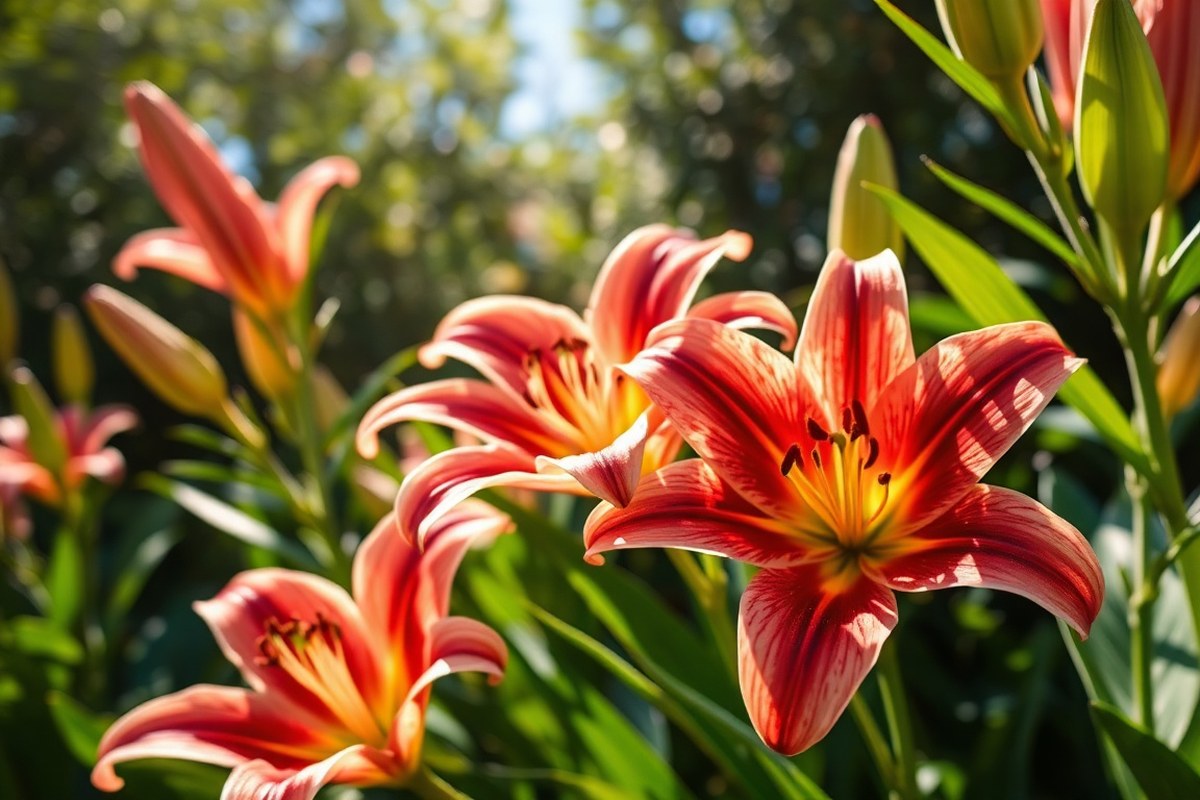
Lilies need at least six hours of direct sunlight every day to grow well. Daily sun helps bulbs grow and powers photosynthesis. This process gives the plant energy.
Energy produces strong stems and many flowers. Aim for six to eight hours of sun for the best blooming results.
Morning sun suits lilies better than harsh afternoon heat, especially in warm regions. The softer morning light supports healthy growth.
Afternoon shade protects lilies from intense heat that can weaken blooms. Plant lilies where they get shade after lunch in hot afternoons.
Lilies tolerate partial shade but won’t bloom as well with less than six hours of sun. In partial shade, expect fewer flowers and weaker stems because the bulbs get less energy. Too little sun causes sparse blooms, slow bulb growth, and leggy plants that look stretched out.
Martagon lilies like four to six hours of indirect light. These lilies can handle more shade than others. Asiatic and Trumpet lilies need full sun for six to eight hours for strong blooms.
Most lilies do well with full sun in the morning. Give them some afternoon shade if it is very hot.
Check your lilies regularly for signs of low light, such as thin stems or few flowers. Notice shading issues?
Move plants to sunnier spots or trim shade-casting plants nearby. Proper sunlight keeps lilies healthy and vibrant, making your garden colorful and lively all season long.
Sunlight Needs by Lily Variety: What Each Type Prefers

Different lily varieties need different amounts of sun. Asiatic and Trumpet lilies want full sun for strong stems and bright blooms. Martagon and some Daylilies do better in part shade, making them good for shadier spots.
Asiatic Lilies Sunlight Preference
Asiatic lilies thrive in full sun, about 6 to 8 hours daily. They bloom early to midsummer, with plenty of flowers per bulb. Sunlight helps them develop strong, colorful blooms that can reach up to 12 flowers each.
Plant Asiatic lilies where they get morning sun and some afternoon light. This exposure encourages earlier and fuller blooming. Make sure each bulb has space so it gets light without being crowded by other plants.
Oriental and Trumpet Lilies Light Needs
Oriental lilies prefer full sun but tolerate slightly less than Asiatic types. They bloom mid to late summer, often after Asiatic lilies fade. Less sun can delay flowering and cause thinner stems.
Trumpet lilies also love full sun and are close to Oriental lilies in bloom time. Both types do best with six or more hours of sun daily. Orienpet hybrids, crosses between Trumpet and Oriental lilies, share similar sunlight needs.
Shade-Tolerant Martagon and Daylilies
Martagon lilies stand out for handling part shade well. They bloom early and have a unique layered look. You can plant them where other lilies might suffer from too little sun.
Daylilies vary, but many can do well in part shade. They offer flexibility if your garden has shady patches. Keep in mind, too much shade can reduce the number of flowers and cause leggier growth.
Here is a table comparing sunlight needs, bloom times, and shade tolerance for common lily types:
| Lily Type | Sunlight Requirement | Bloom Time | Shade Tolerance |
|---|---|---|---|
| Asiatic Lilies | Full sun, 6-8 hours | Early to midsummer | Low |
| Oriental Lilies | Full sun, can tolerate slight shade | Mid to late summer | Moderate |
| Trumpet Lilies | Full sun, 6+ hours | Mid to late summer | Low |
| Martagon Lilies | Part shade to full sun | Early summer | High |
| Daylilies | Full sun to part shade | Summer, varies by variety | Moderate to high |
Plant Asiatic and Trumpet lilies in the sunniest spots for the best results. Choose Martagon or Daylilies if your garden has shade areas. Watch how much sun each area gets before planting because lilies react differently.
Give lilies at least a 6-inch radius from shaded areas. This clears space around them. It also helps them get enough sunlight.
Choosing the Best Garden Spot for Planting Lilies
Pick a spot where lilies get sun but not all day long. Good soil and space for air to flow help lilies stay healthy. Plant bulbs deep and keep them apart to avoid problems.
Assessing Daily Sun Patterns
Check your garden’s sunny spots throughout a day. Lilies do best where they catch morning sun and shade in afternoon. Avoid places with full sun all day; it can stress the plants.
Observe the area after rain to see where water dries fastest. These spots usually have better drainage, which lilies need. Poor drainage leads to bulb rot and weak plants.
Preparing Soil and Planting Depth
Choose soil that feels loose and drains well. Mix in compost to give lilies rich nutrients for growth. Avoid heavy clay soil unless you improve drainage.
Plant bulbs 5 to 8 inches deep to protect against heat. Dig holes 12 to 15 inches deep if you want extra support for tall stems. Cover bulbs with 2 to 4 inches of soil above the bulb’s neck.
For Peruvian lily hybrids and others, planting depth matters a lot. Plant bulbs about three times their height deep, except white lilies which go shallower.
Spacing and Airflow Considerations
Keep lilies about 10 inches apart to allow good airflow around each plant. Proper spacing reduces risks of fungal diseases and keeps leaves dry. Crowded bulbs also compete for nutrients and sunlight.
Plant lilies in groups or clusters for a natural look and better bloom impact. Air circulation is key near the base and leaves to prevent mildew and rot.
- Pick a sunny but partly shaded garden spot
- Check where water drains quickly after rain
- Plant bulbs 5-8 inches deep, 12-15 inches for stability
- Space bulbs 10 inches apart for airflow
- Use rich, loose soil or amend clay soil
- Group bulbs for best blooms and airflow
- Use containers when ground sun is limited
If garden sun is limited, plant lilies in pots with rich soil and good drainage. Use large containers with drain holes and plant bulbs 4 inches deep. This lets you move them to better light when needed.
Protecting Lilies from Too Much Afternoon Sun and Heat
Lilies can get leaf burn if they face harsh afternoon sun without any protection. Using shade cloth after about 2 p.m. Cuts leaf temperature and lowers the risk of damaged edges. Pick a shade cloth that filters 30% to 50% of light.
It blocks enough heat but still lets useful light in. This helps protect your lilies from too much sun.
You can plant lilies where a trellis or shrub creates shade. This shade should cover them in the hot afternoon sun. It helps keep them cooler during the day.
This method lets the plants get plenty of morning sun, which lilies need for strong growth. Morning sun helps them make food without the stress caused by hot late-day rays.
Move pots with lilies to places with morning sun. Make sure they get shade in the afternoon heat. This helps prevent sun damage to container lilies.
Those pots can heat up quickly in full sun, cooking the roots and leaves. Shifting them takes just a few seconds and keeps lilies from wilting or trailing.
Put low-growing annuals or grasses around lilies to shade their roots while the top stays sunny. This practice keeps roots cooler and helps lilies absorb water better during hot spells. Cooler roots also reduce droopy leaves later in the day.
Too much afternoon sun causes lilies to curl or develop brown leaf tips. That means you need to act fast with shade methods. Check your lilies during the hot afternoon hours for stress.
Add shade cloths or move pots if they look stressed. This protects them from heat damage. So your lilies keep blooming well.
Sunlight’s Impact on Lily Watering and Fertilizing Needs
Lilies in full sun need more frequent watering because strong sunlight dries soil quickly. Check soil moisture every day during hot seasons. Water deeply when the top inch of soil feels dry.
This is usually every two to three days. Keep the roots moist but avoid soggy soil.
Less sun means lilies use less water. So watering once a week may be enough.
Overwatering can lead to root rot, especially if your soil doesn’t drain well. Well-drained soil mixed with organic matter helps balance moisture and sunlight effects.
Fertilizing lilies under intense sun boosts their growth and flower size. Use a balanced fertilizer with low nitrogen, like 10-10-10. This helps lilies grow strong stems.
It also encourages bright and healthy blooms. Apply every four weeks during the growing season, stopping after bloom to prevent weak growth.
Adding mulch helps keep the soil cool and moist, reducing evaporation from sun exposure. Spread 2 to 3 inches of organic mulch around your lilies. Use shredded bark or leaf mold for best results.
Mulch helps keep soil moist and weeds down. This also helps prevent weeds and supports soil health.
- Water deeply in the morning for best absorption.
- Check soil moisture before watering to avoid overwatering.
- Apply balanced fertilizer every month during active growth.
- Use 2-3 inches of organic mulch to retain moisture.
- Adjust the watering frequency based on sunlight intensity daily.
- Avoid fertilizing after lilies finish blooming for the year.
Mulch and organic soil amendments also protect roots from midday heat spikes. Cooler soil helps lilies use water more efficiently and supports better nutrient uptake. Without mulch, soil dries faster and stresses plants, reducing flower quality.
Overwatering lilies in full sun can cause root rot. Always confirm soil feels dry before watering again.
Recognizing and Fixing Signs of Sunlight Stress in Lilies
Lilies show clear signs when they get too much or too little sun. Too much sun often burns their leaves, leaving brown, crispy edges. The stems might droop because the plant loses water faster than roots can replace it.
On the other hand, too little sun makes lilies weak. Trumpet lilies in deep shade grow thin stems with few flowers. Daylilies also stretch out, looking leggy with small, pale blooms.
Here’s a checklist to spot sun-related stress in your lilies and what you can do:
- Leaf burn: brown, crispy patches on leaves.
- Drooping stems: limp, weak stems that bend over.
- Sparse blooms: fewer flowers or small, pale petals.
- Leggy growth: tall, thin stems with wide gaps between leaves.
- Slow growth in spring: bulbs may be rooting but not thriving.
Check your lilies daily during hot spells. If you see leaf burn, provide afternoon shade.
Use shade cloth or plant near taller shrubs. Water deeply in the morning to help roots stay cool and moist.
Drooping stems usually mean your plant lost water faster than it absorbed. Water the lilies early or late in the day.
Mulch around the base keeps roots cooler and retains moisture. Avoid watering in full sun, which can burn leaves.
Sparse blooms often follow energy stress from too little sun or too much heat. Move lilies to a location that gets at least 6 hours of sun daily. Beware too much afternoon sun above 85°F. Consider adding a sun block from 2 to 5 p.m.
Leggy, thin growth means your plant stretches for light. Thin daylilies in heavy shade can show this.
Trim back crowded plants to improve airflow and light. Relocate lilies if shade is too dense.
How Climate Zones Affect Lilies’ Sunlight Requirements
The climate zone you live in affects lilies’ sun needs. It also guides how to care for them well. Most lilies grow well in USDA zones 5 to 8.
These zones offer moderate temps and steady sunlight. In warmer zones, like 8 and above, afternoon shade helps protect lilies from heat stress.
Lilies naturally grow in woodland areas. So some types only need 4 to 6 hours of sun each day. These lilies do best in partial shade spots.
Plant them near garden edges or paths. They get morning sun and afternoon shade. Gardeners in hotter climates should provide shade during afternoon hours to keep flowers from wilting.
Seasonal changes affect lily care too. In spring, when temperatures hover between 50°F and 70°F, lilies can handle full sun. By mid-summer, shade lilies during hot afternoons.
This is important if it’s over 85°F for days. This keeps petals from fading and bulbs from drying out.
In cooler zones like 3 or 4, lily bulbs stay cool. They usually don’t get overheated there. You can plant lilies where they get sun all day since heat damage is rare.
However, mulch helps keep roots from freezing. Bulbs in these zones might need extra protection to avoid winter injury.
Adjust for your zone by picking the right spot for lilies. Protect them from too much sun. Hot climates call for partial shade after noon, using trees or shade cloth.
Cooler zones allow more sun but watch soil moisture. Good results show as steady blooms, vibrant petals, and healthy bulbs ready for next year’s growth.
Indoor and Container Lilies: Adjusting Sunlight and Care
Lilies grown indoors or in pots still need plenty of sunlight to thrive. They require at least 6 hours of bright, indirect light daily. Without this, they may grow weak or fail to bloom well.
Selecting Indoor Locations for Light
Place container lilies near a south- or west-facing window where they get bright, indirect sun. Avoid direct afternoon rays that can scorch the leaves. East-facing windows offer milder morning light good for sensitive varieties.
If natural light is limited, move your potted lilies throughout the day to track the sun’s movement. Keep lilies away from drafts or heat vents, as sudden temperature changes stress the plants. Good air circulation helps lilies stay healthy without drying the soil too fast.
Using Reflective Surfaces and Grow Lights
Reflective surfaces nearby can boost light levels. Put a white wall, mirror, or aluminum foil behind the plant to bounce sunlight onto it. This helps lilies get more even light indoors without extra sun exposure.
For rooms with very little natural light, invest in a full-spectrum LED grow light. Position the light about 12 inches above the lily, running it 10, 12 hours daily. This supplements sunlight and supports strong leaf and flower growth.
A grow light should not stay on overnight; mimic a natural day-night cycle.
Watering and Soil Considerations for Containers
Potted lilies need well-draining soil that doesn’t stay soggy. Use a mix of potting soil and sand or perlite to improve drainage. Avoid planting bulbs in heavy, moisture-retentive soil inside containers.
Check the top inch of soil before watering; water only when dry. Overwatering easily causes bulb rot and fungal issues. Make sure your pot has drainage holes to prevent water buildup.
- Plant bulbs about 7 inches deep in the container
- Use pots at least 10 inches wide for root space
- Choose containers with drainage holes
- Water moderately, avoiding soggy soil
- Move pots outdoors briefly on sunny days if possible
- Turn the pot weekly to keep growth balanced
- Fertilize lightly every 4 weeks during growing season
Step-by-Step Action Plan for Healthy Lilies
Follow these steps to give your lilies the right sunlight and care. Watch how your plants respond to adjust your routine.
- Before planting: Choose a spot with morning sun and afternoon shade. Your lilies should get 4 to 6 hours of sunlight daily for best blooms.
- Day 1: Plant lilies in well-draining soil with some mulch. Check soil stays moist but not wet after watering.
- Week 1: Monitor lily leaves for color and texture. Pale or scorched leaves may mean too much sun or heat.
- Week 2: Adjust watering schedule based on weather and sunlight. Lilies in hotter sun usually need more water.
- Month 1: Add fertilizer monthly, using a balanced bloom-formula. Healthy growth and more flower buds show it’s working.
- Growing season: Use shade cloth on very hot afternoons if leaves look stressed. Watch for improvement in leaf color and plant vigor.
- Late season: Gradually reduce watering as flowers fade. Lilies prefer drier soil when resting.
- Year-round: Rotate your indoor or container lilies weekly. This helps them get even sun and grow strong stems.
Frequently Asked Questions
Do Lilies Prefer Morning or Afternoon Sun?
Lilies like morning sun and afternoon shade, especially in warm areas. This gives them light when temperatures are cooler, preventing heat stress later.
Should You Water Lilies Every Day?
Water lilies deeply but not daily, about once a week is enough. They need moist soil. But too much water or frequent watering can cause bulb rot.
Are Lilies Better in Pots or Ground?
Lilies usually grow better in the ground with room to spread. Pots work but must drain well and may need more frequent watering and fertilizing.
Where Is the Best Place to Plant a Lily?
Choose a spot with full morning sun and some afternoon shade. Make sure the soil drains well and plant bulbs right away for best growth.
Can Lilies Bloom Well in Partial Shade?
Some lilies, like Martagon, bloom well in partial shade with 4 to 6 hours of sunlight. Others need full sun for best flowers, so check your variety.
How Far Apart Should I Space Lily Bulbs?
Give each lily about a 6-inch radius for air and sun exposure. Crowding can reduce airflow, raising disease risk and limiting blooms.
The Bottom Line
Lilies thrive with about half a day of sunlight, clear watering, and some afternoon shade. Start by picking a spot that matches their needs right now. Watch your plants closely and give them gentle care to enjoy beautiful blooms soon.